,regionOfInterest=(2462.5,2275))
,regionOfInterest=(2462.5,2275))
Best Christmas markets in Florence
,regionOfInterest=(3067,2036))
,regionOfInterest=(3067,2036))
Culture
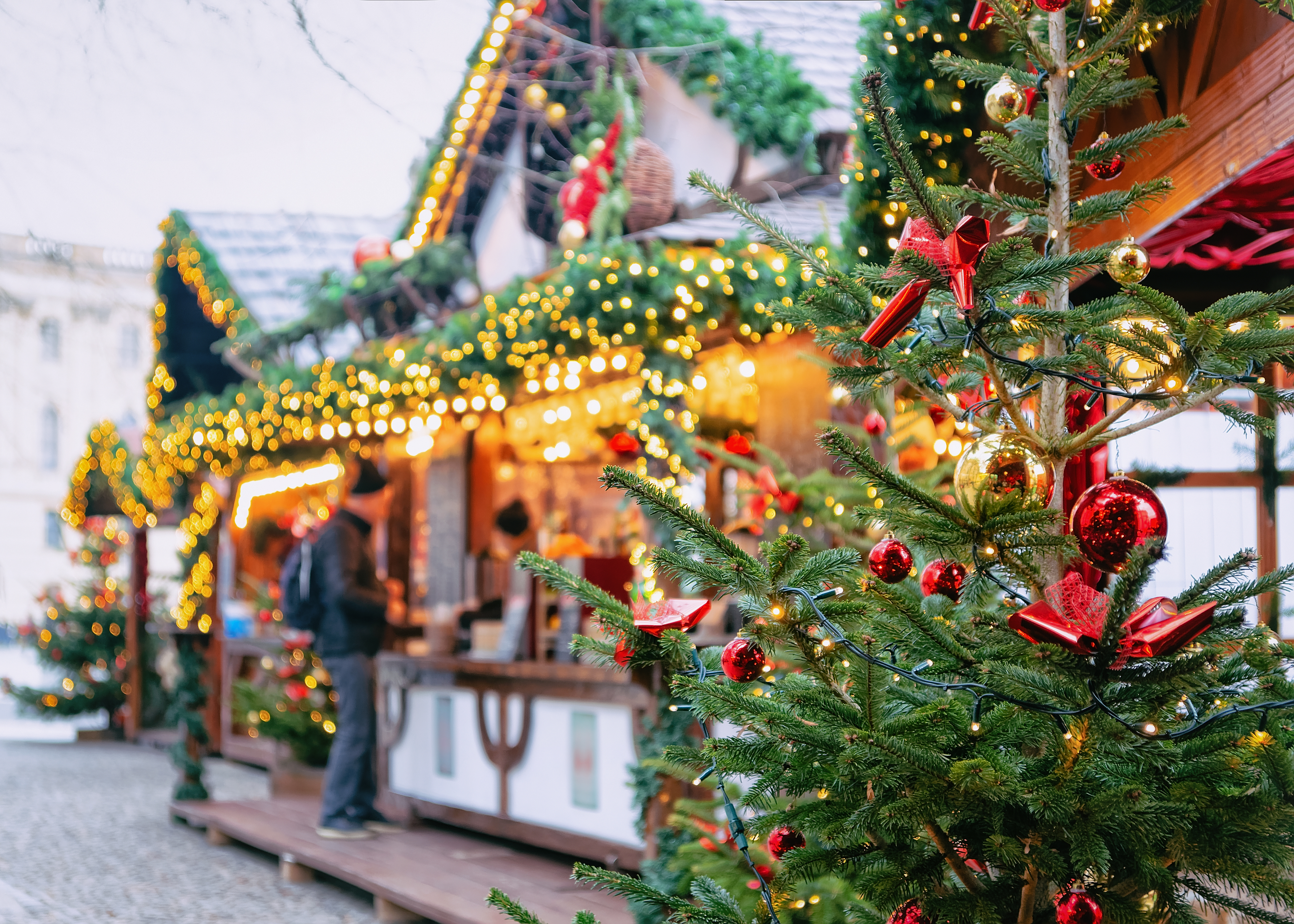,regionOfInterest=(2660,1900))
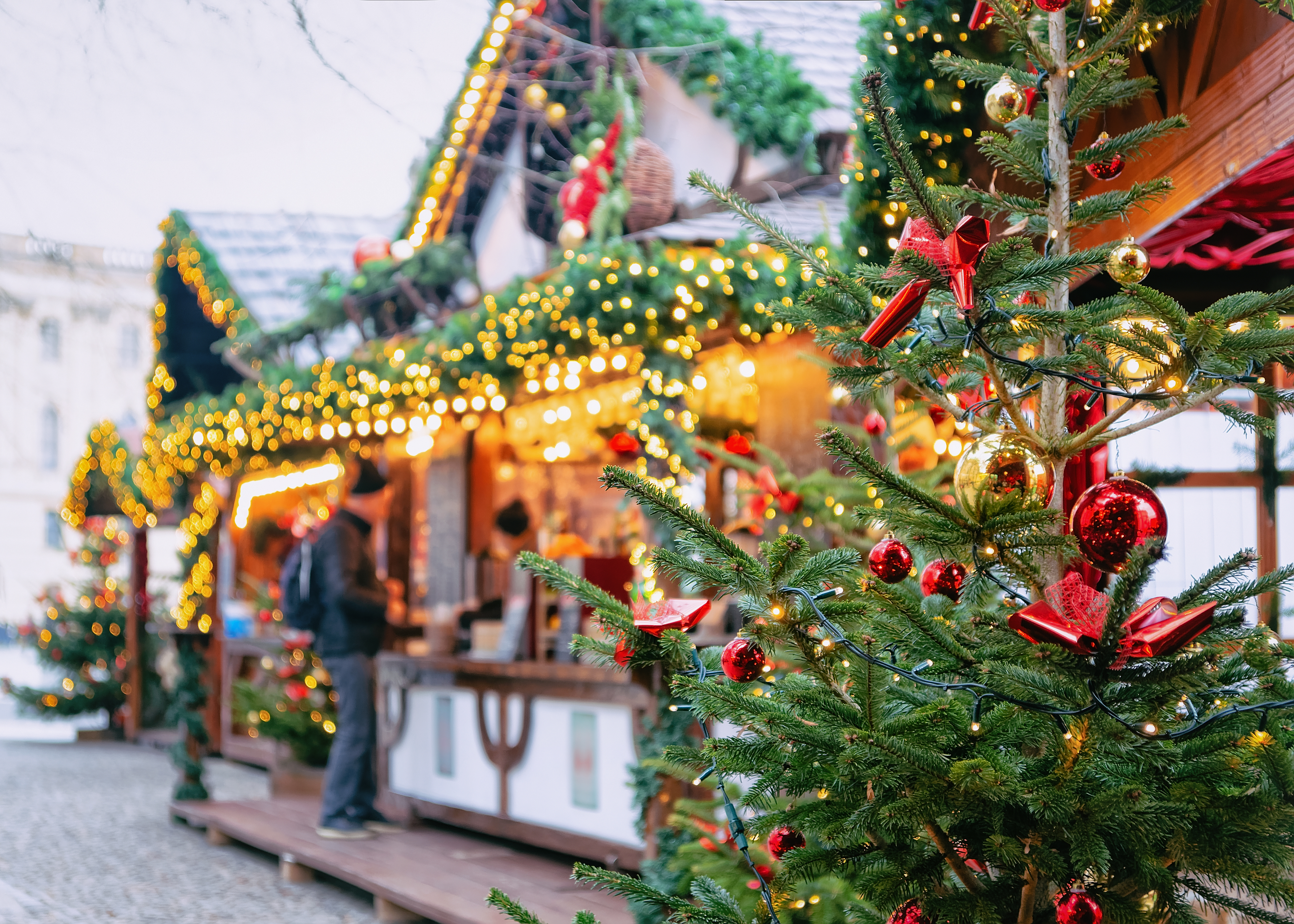,regionOfInterest=(2660,1900))
Christmas markets have been part of the European winter for centuries. What began as fairs to stock up before the colder months ended up becoming a tradition linked to Advent, especially deep-rooted in Germany and Austria, and extended today across practically the entire continent.
But not all Christmas markets in Europe are the same. Each destination has adapted this tradition to its own history and way of celebrating these dates. Some retain the appearance of the large Central European markets, with wooden stalls, handicrafts and traditional recipes; others are linked to local customs, historical fairs, typical products or celebrations that last until New Year and Epiphany.
This selection brings together some of the best Christmas markets in Europe in 2026, from the great Advent classics to historical fairs and markets in different European cities, each with its own atmosphere, gastronomy and traditions.
,regionOfInterest=(500,500))
,regionOfInterest=(500,500))
All-terrain writer specialising in tourism, fashion and trends. A curious soul, traveller, reader and sports enthusiast, keen to discover every corner of the world.
Culture
Tradition
Culinary experiences
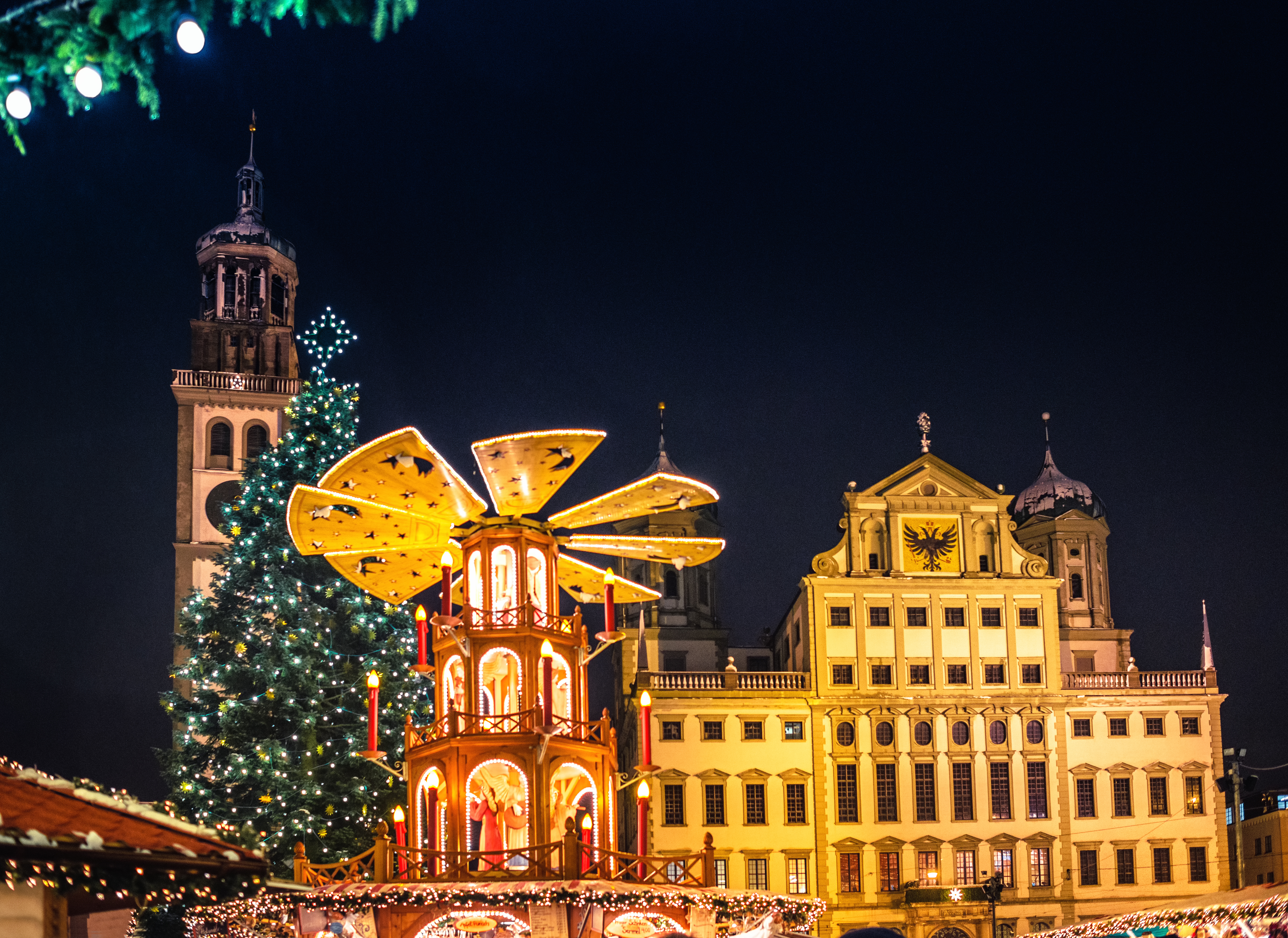,regionOfInterest=(2388,1739.5))
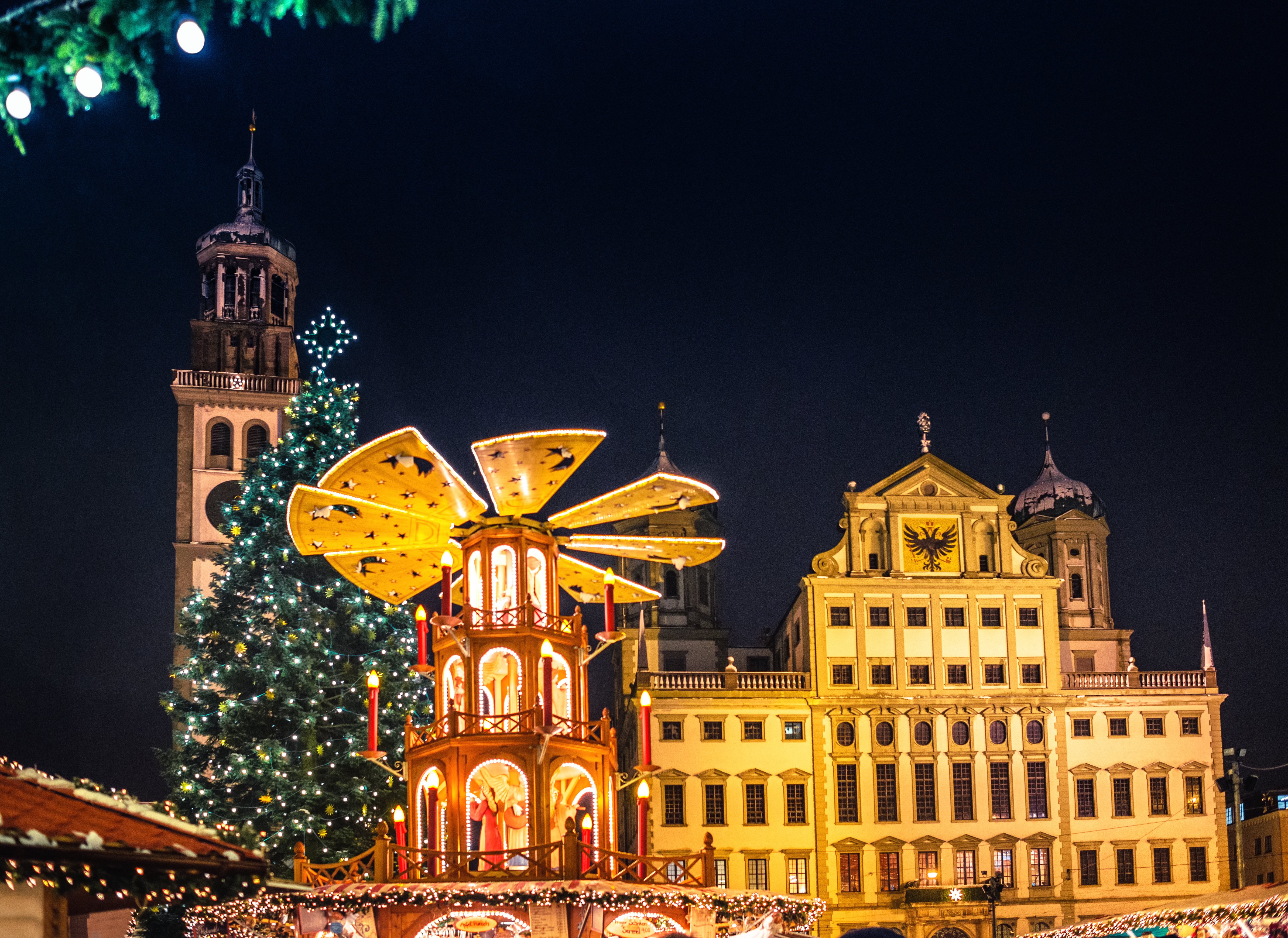,regionOfInterest=(2388,1739.5))
,regionOfInterest=(4145.5,2714.5))
,regionOfInterest=(4145.5,2714.5))
,regionOfInterest=(2645,1763.5))
,regionOfInterest=(2645,1763.5))
,regionOfInterest=(3680,2456))
,regionOfInterest=(3680,2456))
,regionOfInterest=(2836,1890.5))
,regionOfInterest=(2836,1890.5))
To find the origin of Christmas markets you have to travel to Central Europe at the end of the Middle Ages, especially to German-speaking territories. Before becoming a celebration associated with Christmas, they were winter markets where the population could stock up on meat, food and other products necessary to face the colder months.
Among the oldest antecedents is Vienna. In 1296, Duke Albert I granted Viennese merchants the privilege of organising a December market to supply the city's inhabitants. However, those medieval fairs were still far from the Advent markets we know today.
One of the great milestones arrived in Dresden in 1434, when the celebration of a one-day market on Christmas Eve was authorised. Known later as Striezelmarkt, it owes its name to the Striezel, a sweet bread that over time would evolve into the current Dresdner Christstollen. Today it is considered one of the oldest Christmas markets in Germany.
As these fairs grew, they ceased to be only places to buy provisions. Artisans, bakers, toy makers and other merchants began to set up their stalls and many of the elements that we still associate with Christmas markets appeared: wooden toys, candles, tree ornaments, figures, sweets, nuts and hot drinks.
The tradition was especially consolidated in Germany and Austria and later extended throughout much of Europe. Each territory, however, adapted it to its own customs. Hence, there are currently such marked differences between a German Christkindlmarkt, an Italian fair linked to a religious festival or Spanish markets specialised in nativity scene figures and decoration.
That evolution explains, also, why visiting a Christmas market allows you to know something more than a succession of stalls. Many retain products, recipes and trades closely related to the history of the city or region where they are held.
,regionOfInterest=(2390,1641))
,regionOfInterest=(2390,1641))
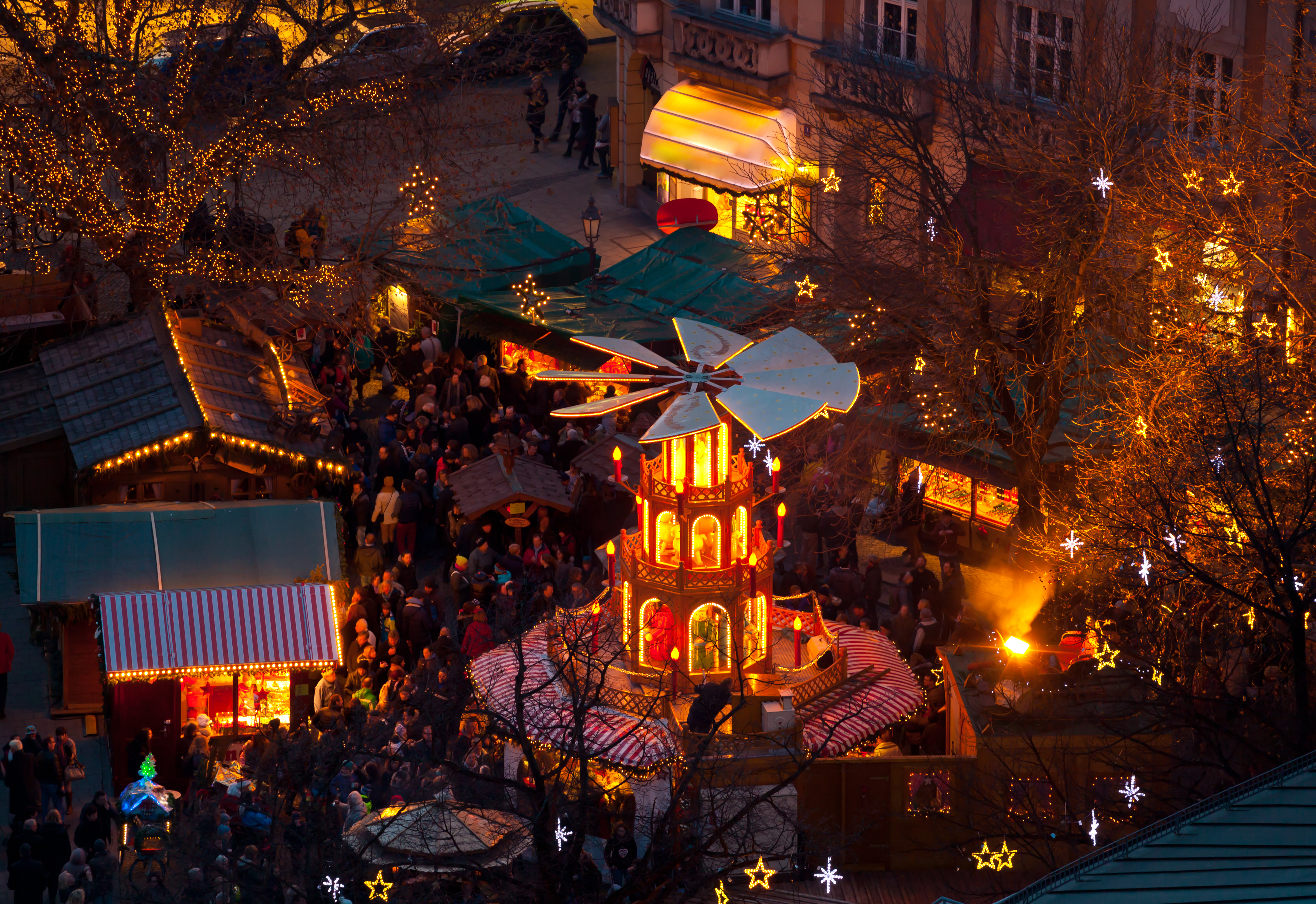
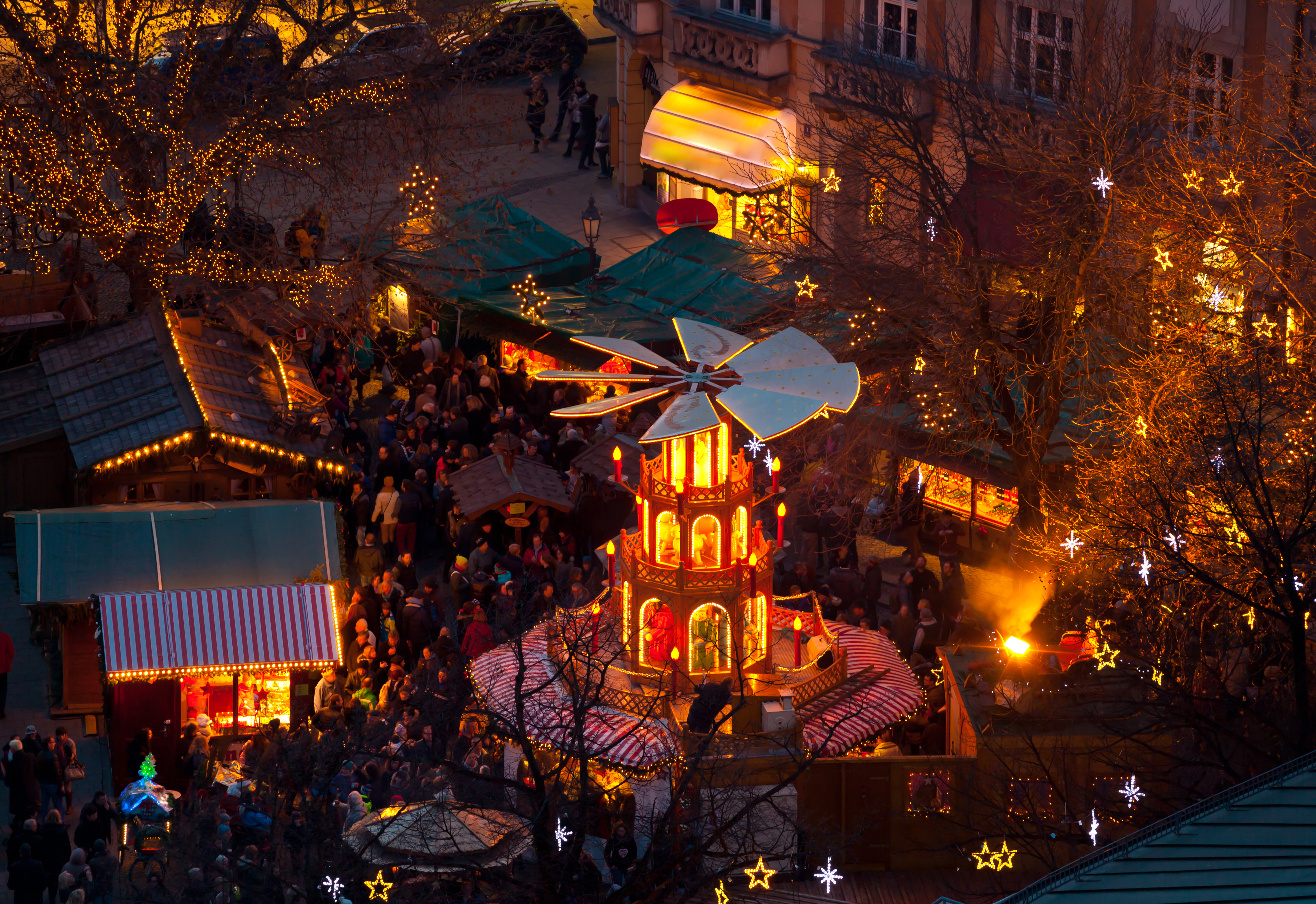
Germany concentrates some of the best-known Christmas markets in Europe. There is no single model: there are large historic markets, small artisan fairs, medieval proposals and markets spread across different neighbourhoods. Gastronomy is part of the journey. Glühwein —spiced mulled wine— coexists with sausages, toasted almonds, Lebkuchen and regional sweets. Crafts also continue to have a lot of weight, from wooden ornaments and candles to ceramics, toys and decorations.
The Dresdner Striezelmarkt occupies a special place in the history of the German Christmas. Its origin dates back to 1434 and its name is related to the Striezel, the predecessor of the current Dresdner Christstollen, one of the great Christmas sweets of Saxony. In addition to its age, one of its distinctive features is the presence of Saxon artisan traditions. Among the stalls are woodwork from the Ore Mountains, Christmas pyramids, nutcrackers, stars and other elements associated with the traditional decoration of the region. The city completes the Striezelmarkt with other smaller markets, so a visit allows you to compare different environments without leaving the historic centre. 🗓️ Dates: to be confirmed for 2026. 📍 Location: Altmarkt, Dresden.
The historic centre of Bremen provides an especially appropriate setting for Advent markets. The Bremer Weihnachtsmarkt is set up around the Market square, the City Hall, the cathedral and the nearby streets. A short distance away appears a different proposal: Schlachte-Zauber, next to the Weser river. Its historic and maritime-inspired setting recalls the city's commercial past and allows it to be easily combined with the market in the centre. Bremen is thus interesting for those who prefer a city where several Christmas spaces can be visited on foot during a short getaway. 🗓️ Dates: to be confirmed for 2026. 📍 Location: Marktplatz and Schlachte promenade, Bremen.
Berlin approaches Christmas in a different way. Instead of concentrating it in a single market, the city distributes dozens of proposals between squares, palaces and neighbourhoods, from traditional markets to spaces dedicated to design or medieval re-enactments. One of the largest is located next to the Kaiser Wilhelm Memorial Church, with around 170 historic stalls and a luminous roof of about 400 metres. In 2026 it will be held from 23 November to 3 January 2027. Another of the great settings is Berliner Weihnachtszeit, between the Rotes Rathaus and St. Mary's Church. In addition to traders and artisans, it incorporates a medieval market and different attractions. For 2026 it is confirmed between 23 November and 3 January 2027. If you are looking for something more focused on crafts and small producers, Sophienstraße brings together more than 80 traders, workshops and local companies during the weekends of Advent.
The reference for Munich is the Münchner Christkindlmarkt in Marienplatz, surrounded by the historic buildings of the centre and presided over by the Neues Rathaus. It is one of the most recognisable traditional markets in Bavaria and in 2026 it will launch a somewhat broader schedule. The Munich City Council has confirmed that the Christkindlmarkt will begin on 20 November 2026 and will end on 24 December. The city also explains that the first Munich markets will start to open in mid-November. The appeal of Munich is also in the alternatives to the main market. During Advent, proposals with their own identity appear in different areas of the city, from markets for artists and designers to spaces with historic settings. 🗓️ Dates: 20 November-24 December 2026. 📍 Location: Marienplatz, Munich.
Düsseldorf distributes its Christmas across different squares in the centre, which allows you to tour several markets practically as if they formed a single route. Altstadt, Königsallee and the surroundings of the City Hall concentrate a good part of the activity. Among the usual spaces, Altstadt-Markt, the Marktplatz market and the surroundings of Burgplatz stand out, as well as the Engelchen-Markt, recognisable by a decoration inspired by angels. The information available for 2026 contemplates the start of the Christmas season from 19 November, although the complete programme must be checked when all the markets and their respective schedules are definitively published. 🗓️ Dates: to be confirmed for 2026. 📍 Location: different squares in the centre of Düsseldorf.
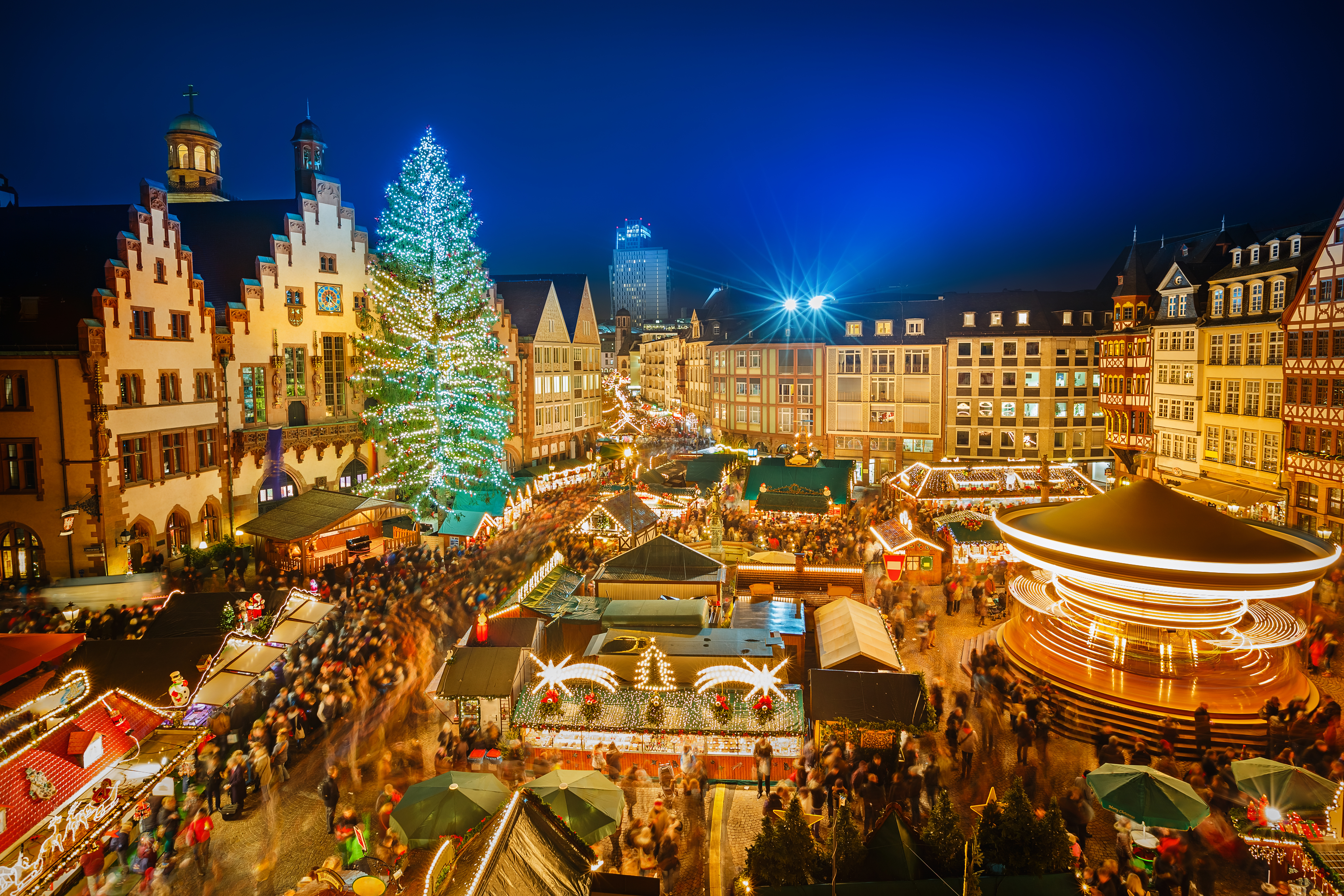
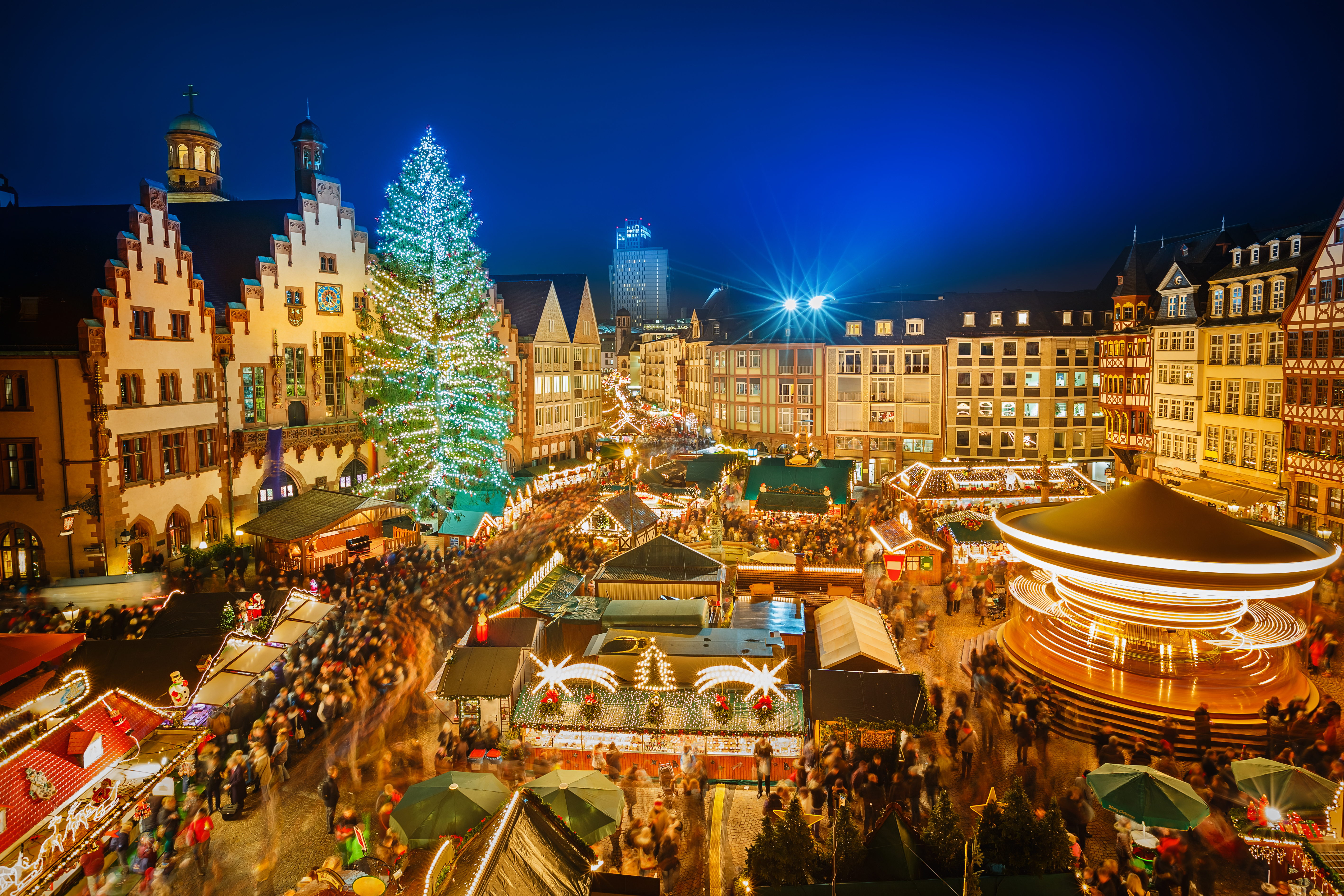
Frankfurt has one of the great German markets by size. The Frankfurter Weihnachtsmarkt brings together more than 230 stalls and extends from Roßmarkt and Hauptwache to Paulsplatz, Römerberg and Mainkai. The municipal tourist forecast places its influx at around 2.5 million visitors. Römerberg provides its most recognisable image, with the large tree in front of the facades of the historic centre. In the stalls, crafts, decorations and gastronomy are mixed with local products such as Bethmännchen, small marzipan sweets, and hot Apfelwein. The market also incorporates differentiated spaces, such as Rosa Weihnacht, in Friedrich-Stoltze-Platz, and a children's market in Mainkai. 🗓️ Dates: 23 November-22 December 2026. 📍 Location: Römerberg, Paulsplatz, Mainkai, Hauptwache, Roßmarkt and Friedrich-Stoltze-Platz.
Hamburg takes advantage of its architecture, its canals and its port character to offer markets that are quite different from each other. The most classic is the Historischer Weihnachtsmarkt of the Rathausmarkt, in front of the City Hall. For 2026, Hamburg Tourism already records its opening on 23 November. However, it is not the only option. During Advent, markets appear in different neighbourhoods and spaces in the centre. The Christgrindelmarkt, for example, has a programme from 14 November 2026, while the Stadthöfe courtyards host their Marché de Noël from the 12th. Added to this are proposals with their own personality such as Santa Pauli, in St. Pauli, which shows to what extent Hamburg adapts the concept of a Christmas market to the different neighbourhoods of the city.
,regionOfInterest=(1925.5,1283.5))
,regionOfInterest=(1925.5,1283.5))
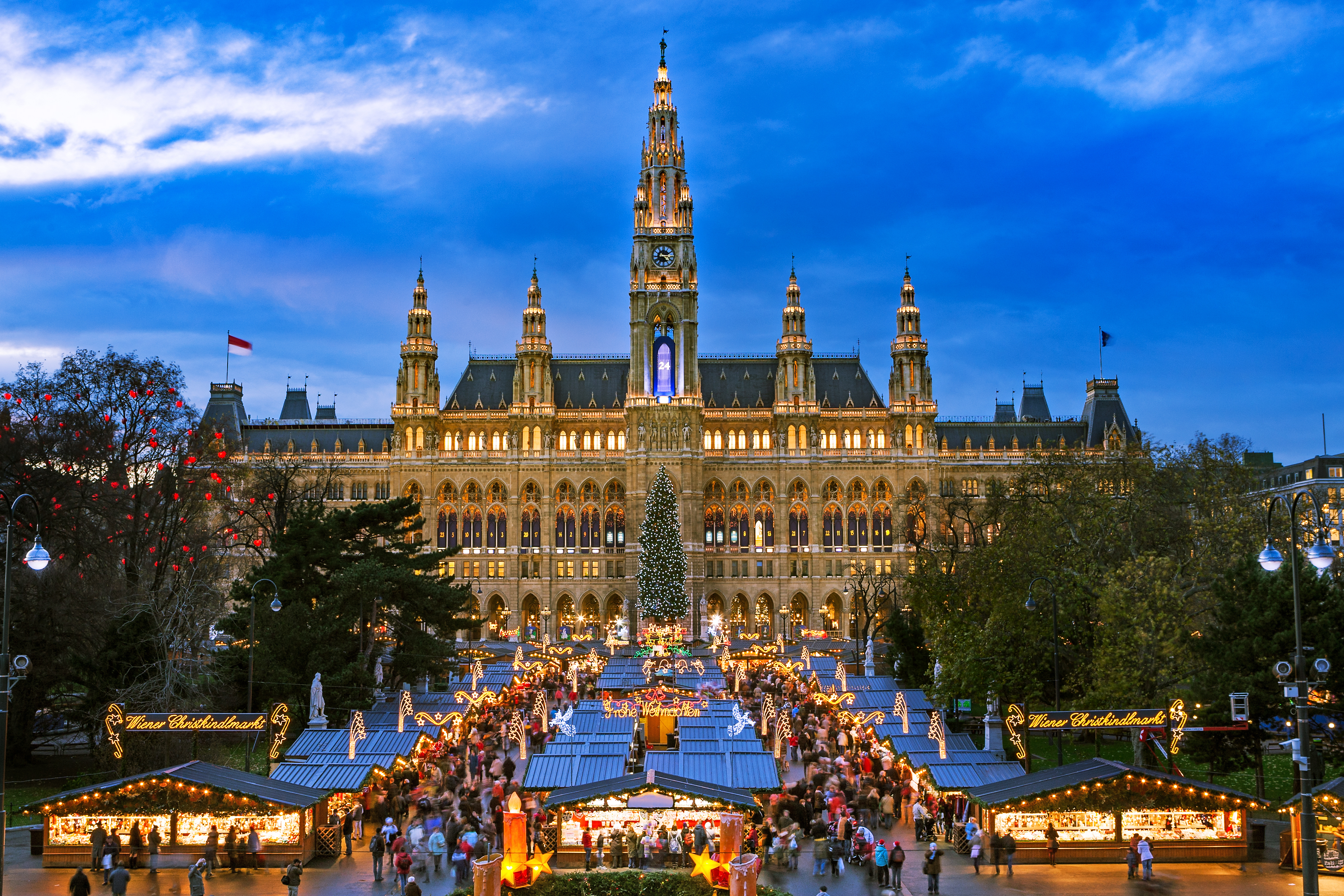
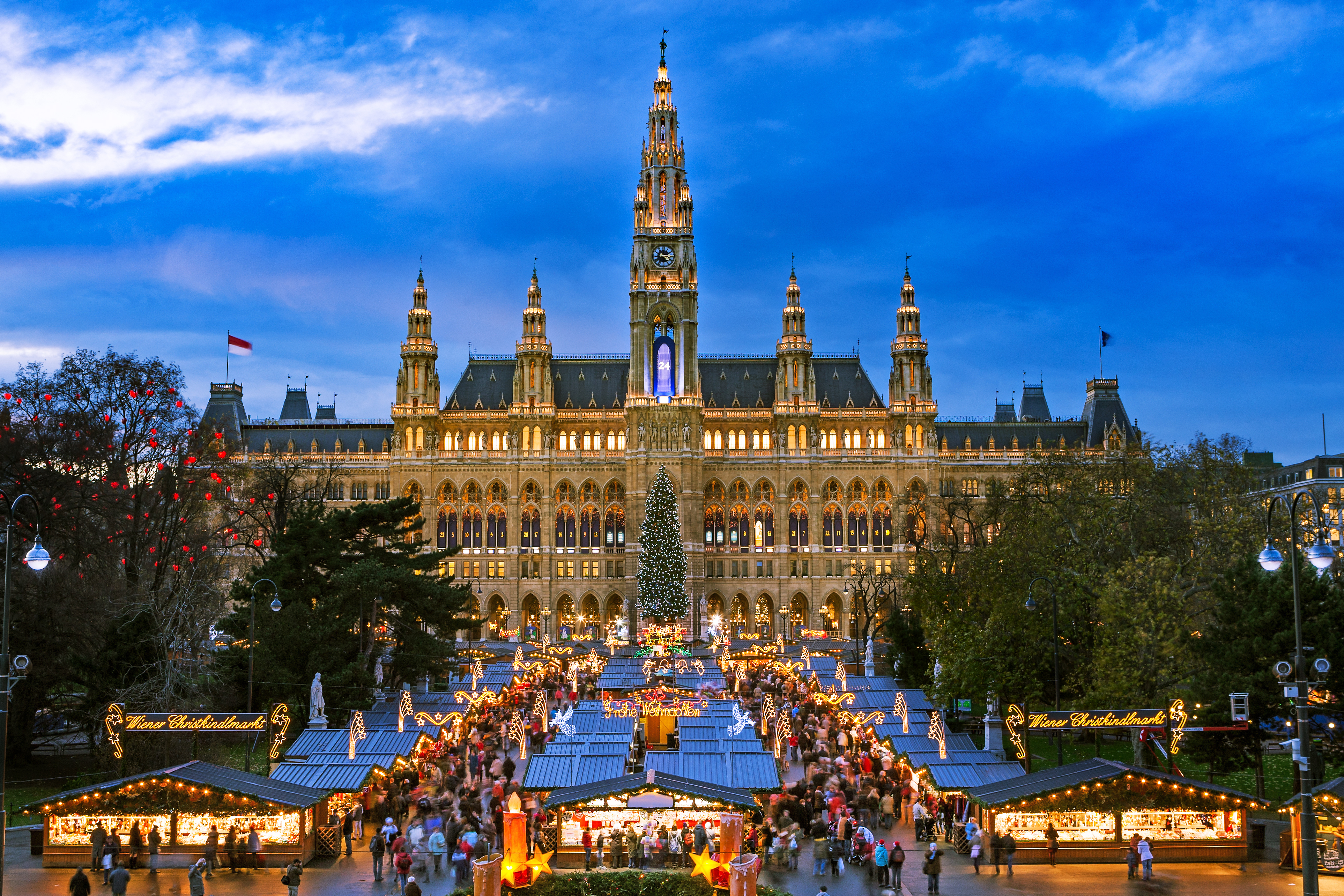
With the arrival of Christmas in Austria, it shares much of the Central European Advent tradition with Germany. Vienna is its great showcase: palaces, monumental squares and gardens host markets with crafts, decorations and gastronomy for several weeks.
Vienna allows you to dedicate several days exclusively to its markets. The most well-known is installed in Rathausplatz, in front of the City Hall. The Wiener Christkindlmarkt will feature gifts, decorations, crafts, sweets and hot drinks in 2026 and will be open from 13 November to 26 December. The Schönbrunn Palace offers one of the widest schedules: from 6 November 2026 to 6 January 2027. Maria-Theresien-Platz will be open from 20 November to 26 December; the traditional Freyung market, from 14 November to 23 December; and Am Hof, from 13 November to 23 December. This variety makes Vienna especially interesting after Christmas Eve: while some markets end before Christmas, Schönbrunn continues until Epiphany.
,regionOfInterest=(3179.5,2332))
,regionOfInterest=(3179.5,2332))
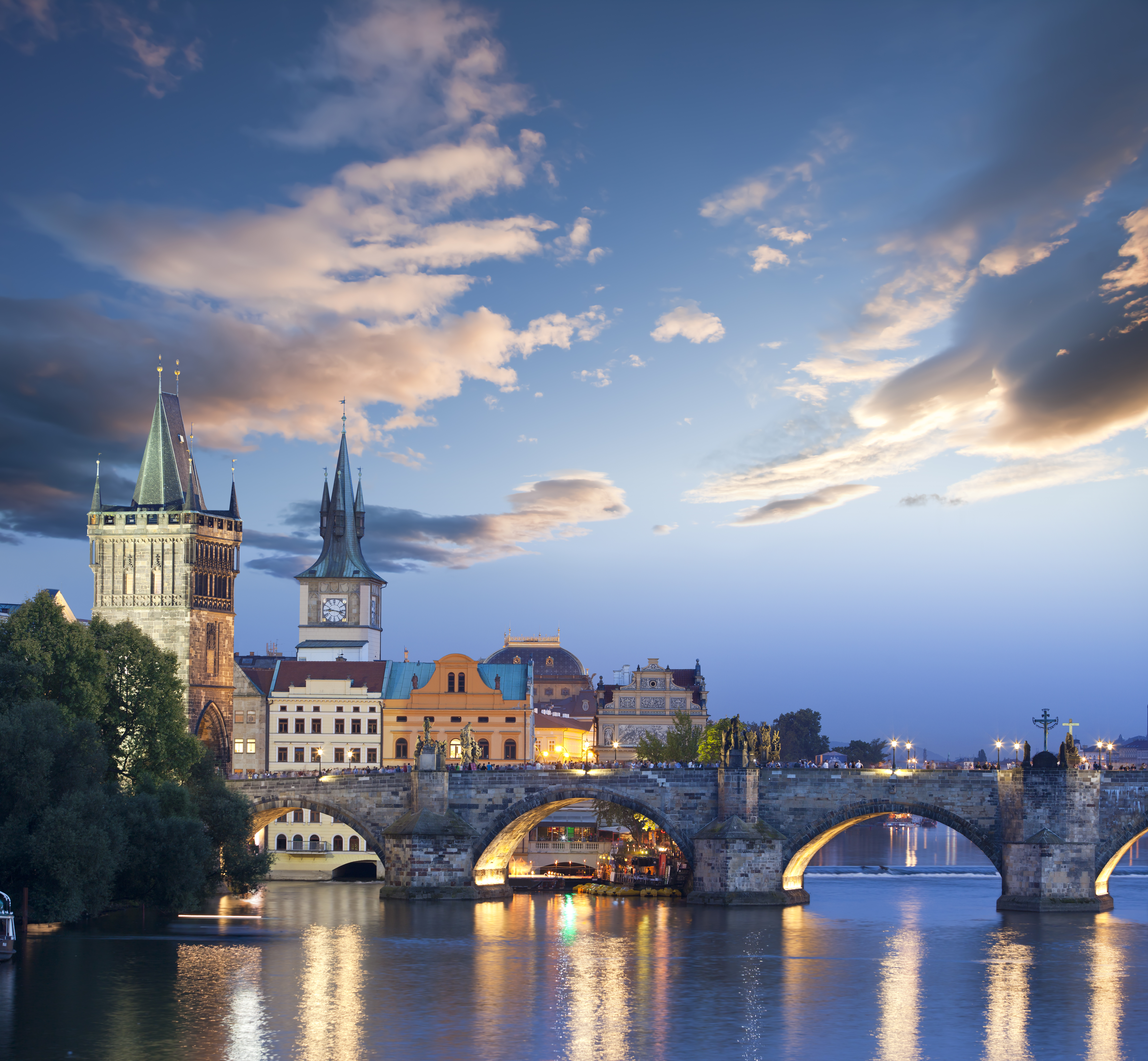
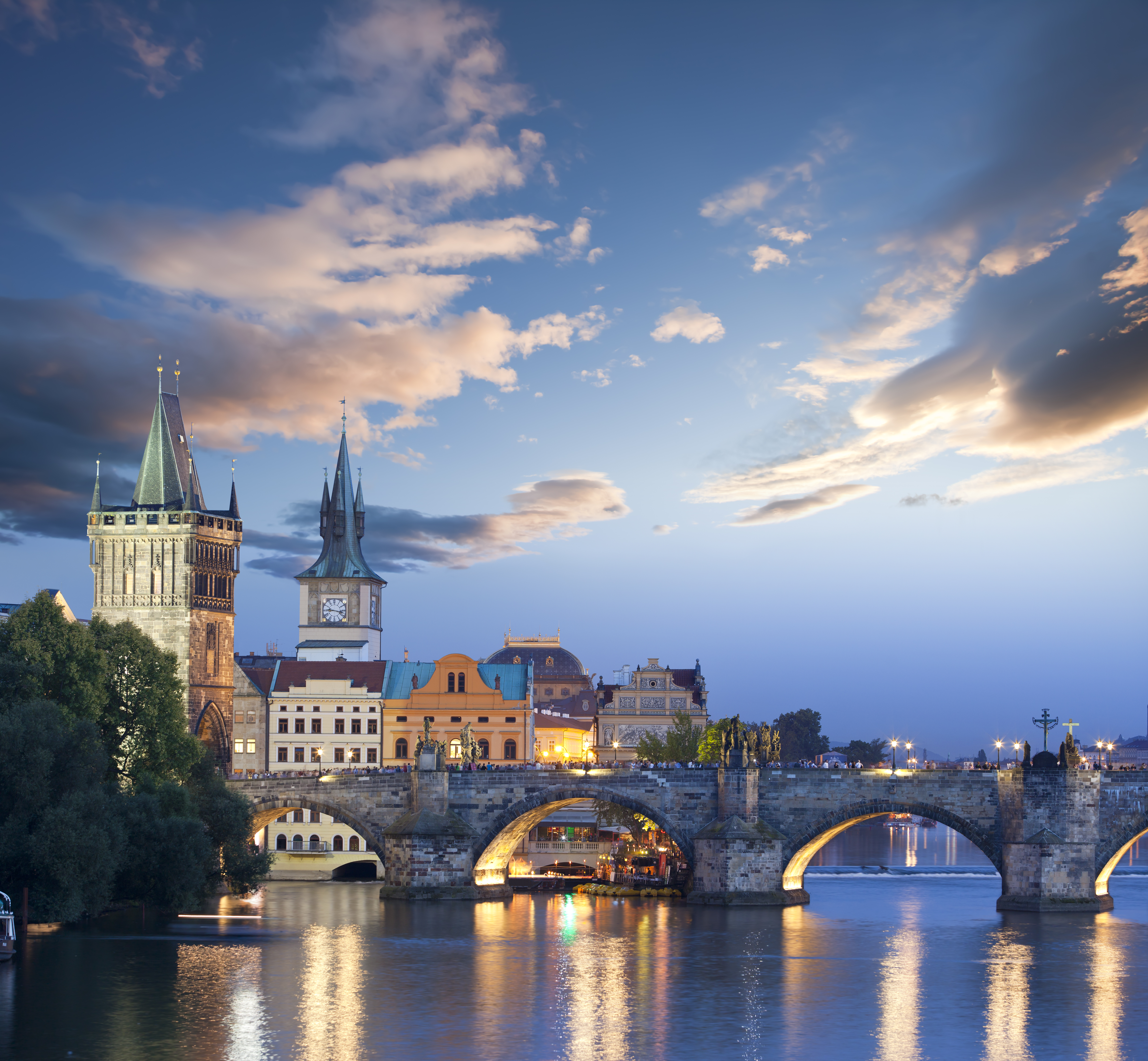
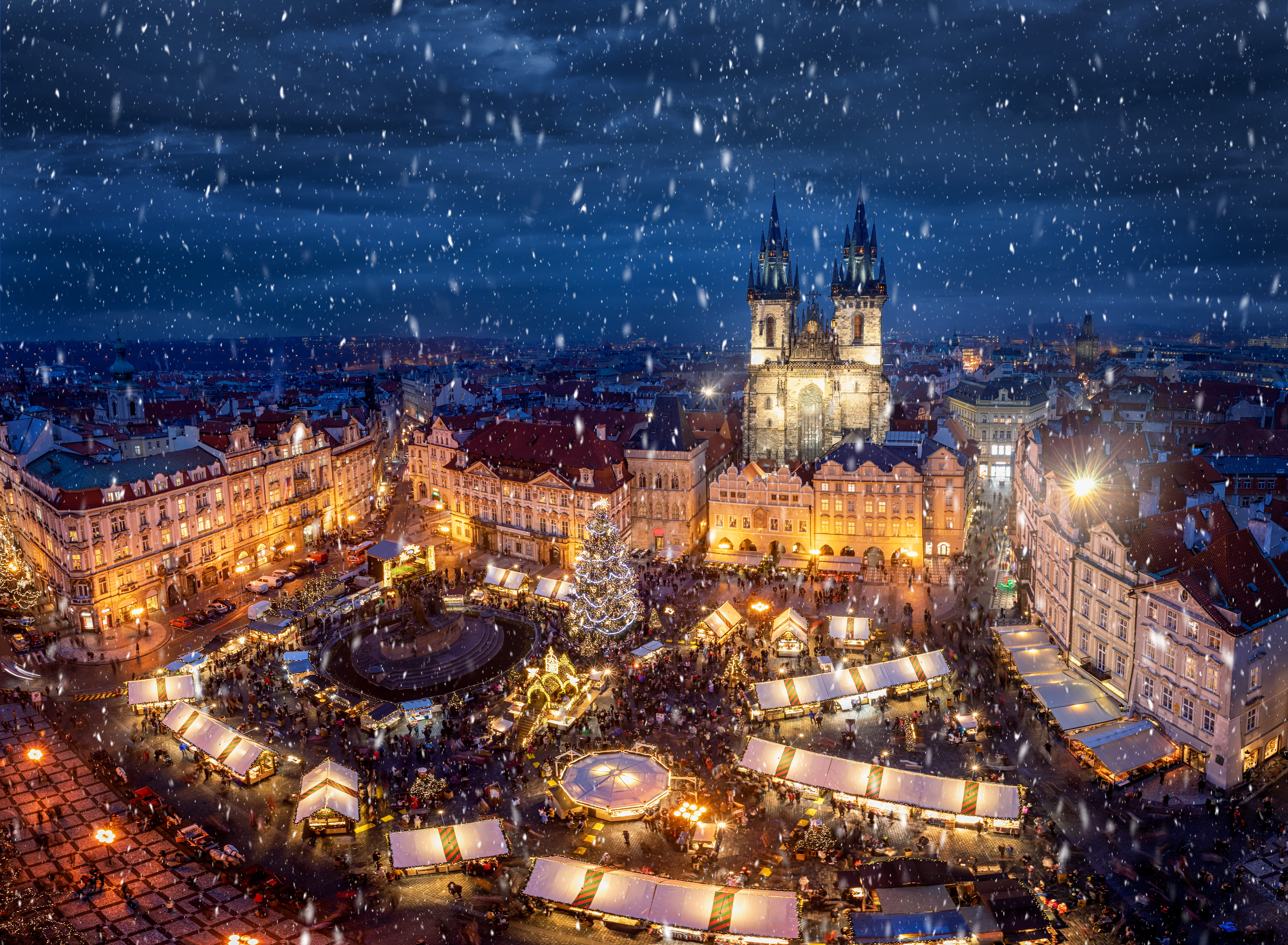
Prague concentrates its best-known markets in some of the large squares of the historic centre. The contrast between the wooden huts and the Gothic and Baroque architecture allows you to tour them while visiting some of the city's main monuments. In 2026, the náměstí Míru —Peace Square— market will open first, from 20 November to 24 December. The náměstí Republiky market will run from 25 November to 24 December. The two large tourist markets, Old Town Square and Wenceslas Square, will begin on 28 November 2026 and will remain open until 6 January 2027. This makes Prague one of the cities in this selection where it is easiest to find markets still open after Christmas and during the first days of the year.
,regionOfInterest=(2731.5,1536.5))
,regionOfInterest=(2731.5,1536.5))
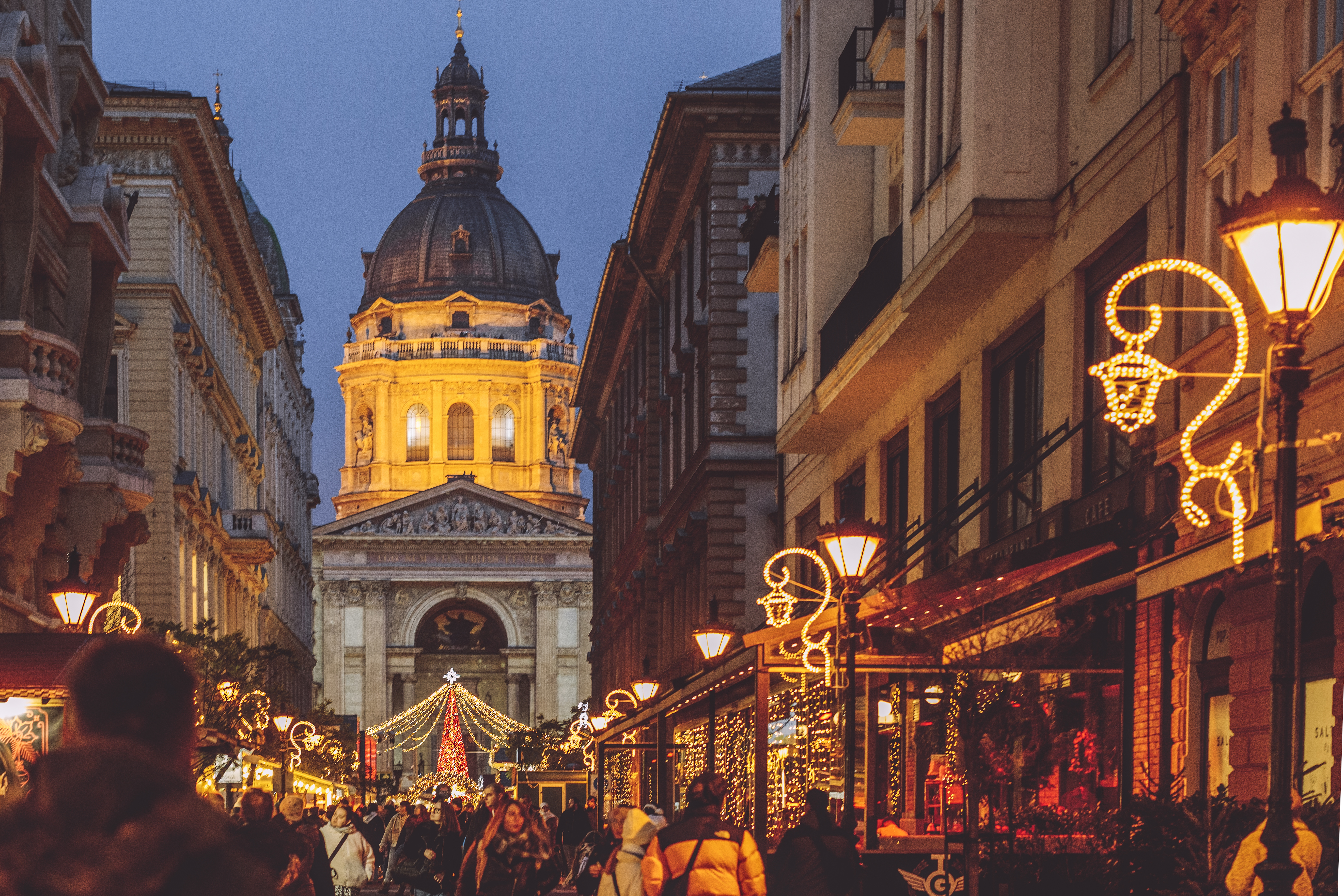
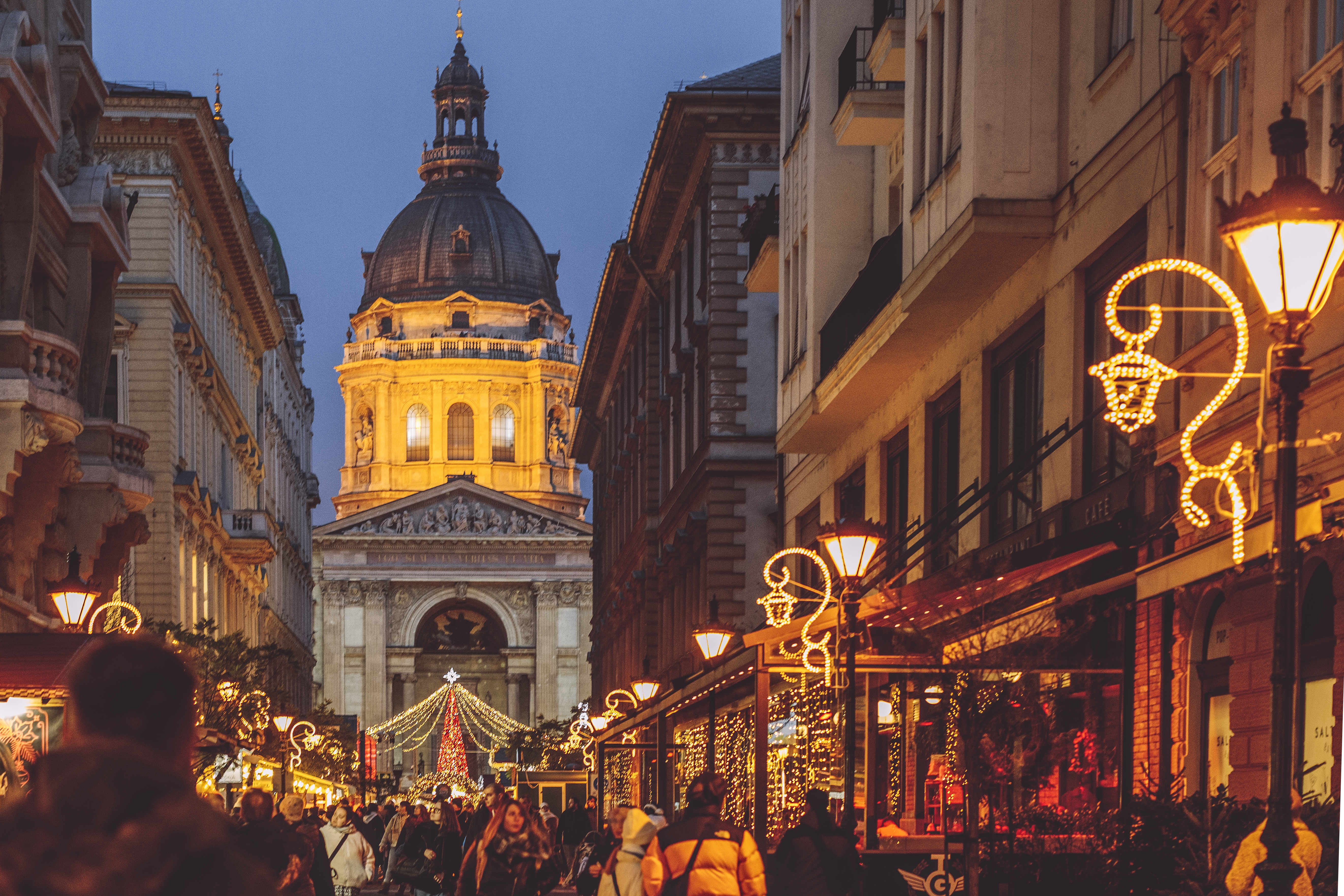
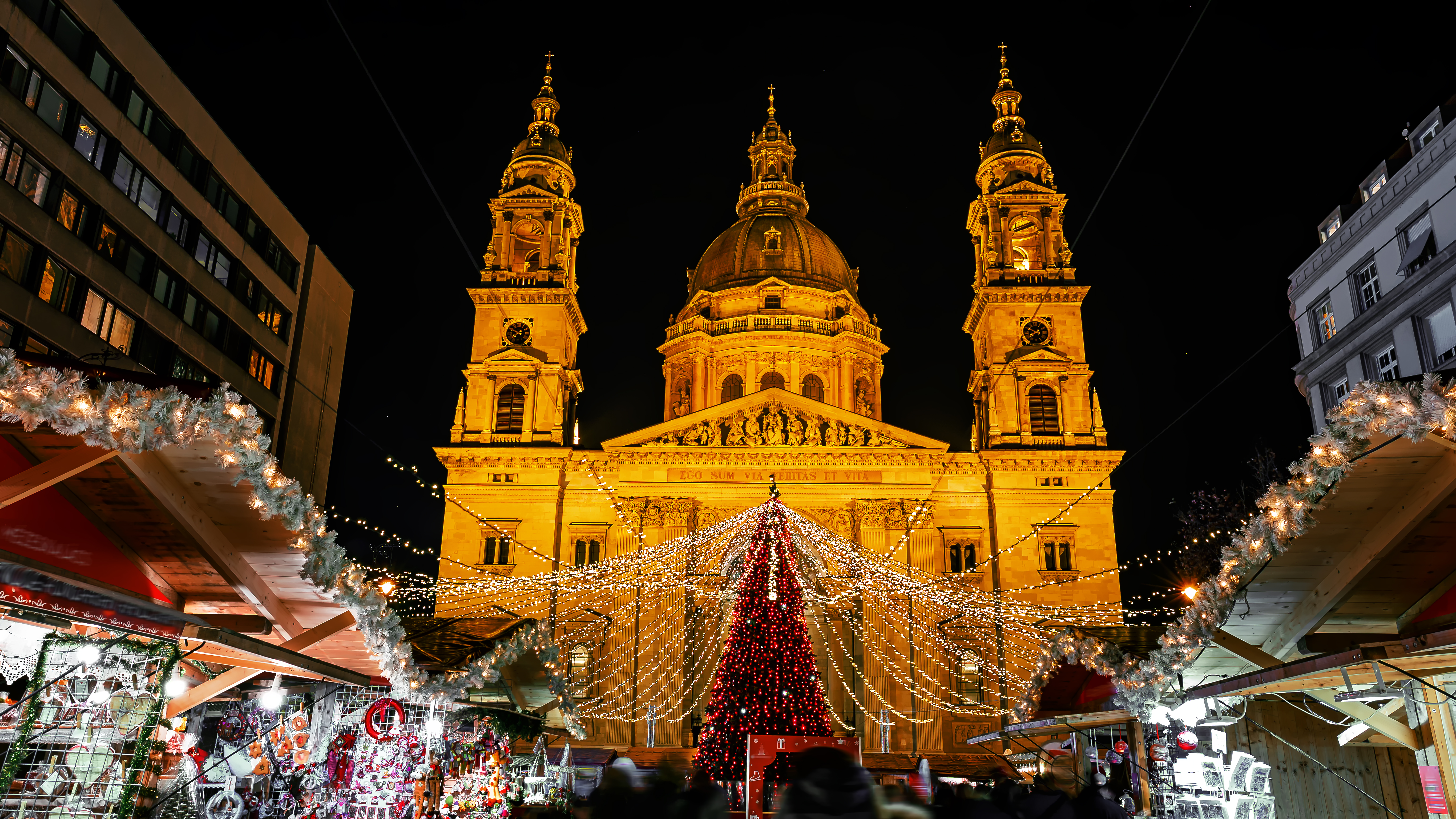
Budapest combines large markets in the centre of Pest with neighbourhood proposals, design fairs and small markets in Buda. Two names stand out especially: Advent Bazilika, in front of St. Stephen's Basilica, and Vörösmarty Classic Xmas, in Vörösmarty tér. Advent Bazilika brings together artisans, gastronomy and lighting in front of one of the city's main monuments. Vörösmarty tér, for its part, is linked to the modern history of Budapest's Christmas markets and maintains an important component of Hungarian crafts. To these are added the Városháza Park and Deák tér market, the Óbuda Advent and proposals such as the Gozsdu Christmas Market. Gastronomy allows you to try products such as kürtőskalács, gingerbread and other winter specialities.
,regionOfInterest=(3680,2456))
,regionOfInterest=(3680,2456))
Paris does not have a single market that concentrates all of Christmas. Its marchés de Noël appear in different neighbourhoods and combine large Christmas villages with small fairs specialising in crafts and French products. Among the usual references are Tuileries, Saint-Germain-des-Prés, Notre-Dame and La Défense. For the end of 2026, the Notre-Dame Christmas market is once again planned for Square René Viviani, in front of the cathedral, with French crafts, local creators and regional gastronomy. To get an idea of the diversity, in previous seasons Tuileries has remained open until the beginning of January, while Notre-Dame has had a schedule more concentrated around Advent and Christmas. 🗓️ Dates: to be confirmed for 2026. 📍 Location: various points in Paris and La Défense.
,regionOfInterest=(2726.5,1604.5))
,regionOfInterest=(2726.5,1604.5))
Italy interprets Christmas markets in a different way depending on the region. In the north, the influence of Central European markets is more clearly appreciated, while other cities link the fairs with their own religious festivals, artisan products and local traditions.
Milan has one of the Christmas fairs with the most personality in this selection: Oh Bej! Oh Bej!, celebrated around the feast of Sant'Ambrogio, the city's patron saint. The fair surrounds the Castello Sforzesco and its history extends over more than five centuries. Among the stalls are crafts, toys, books, prints, gastronomic products, iron and copper work and the traditional Firunatt, necklaces made with chestnuts. Piazza Duomo completes the offer with a longer market of wooden huts around the cathedral, while other fairs focus on crafts and gifts. The panettone, originating from Milan and having become one of the best-known Italian Christmas sweets, also provides a particularly clear gastronomic connection with the city. 🗓️ Dates: to be confirmed for 2026. 📍 Location: Castello Sforzesco and Piazza Duomo, among other spaces.
Rome links an important part of its Christmas commercial tradition with Piazza Navona. During the holidays, the square recovers its historic fair, especially related to the Befana, a character from Italian tradition associated with Epiphany. She is a lovely old lady with the appearance of a good witch who, on the night of 5 to 6 January, visits Italian homes to distribute sweets and gifts to children. In the 2025-2026 edition, the Festa di Piazza Navona brought together crafts, selected products, gastronomy and children's activities until 6 January. Its great difference compared to Central European markets is precisely the context: Baroque fountains, churches and palaces replace the usual Alpine setting, while the celebration extends towards Epiphany, a particularly important date in the Italian Christmas. 🗓️ Dates: to be confirmed for 2026. 📍 Location: Piazza Navona, Rome.
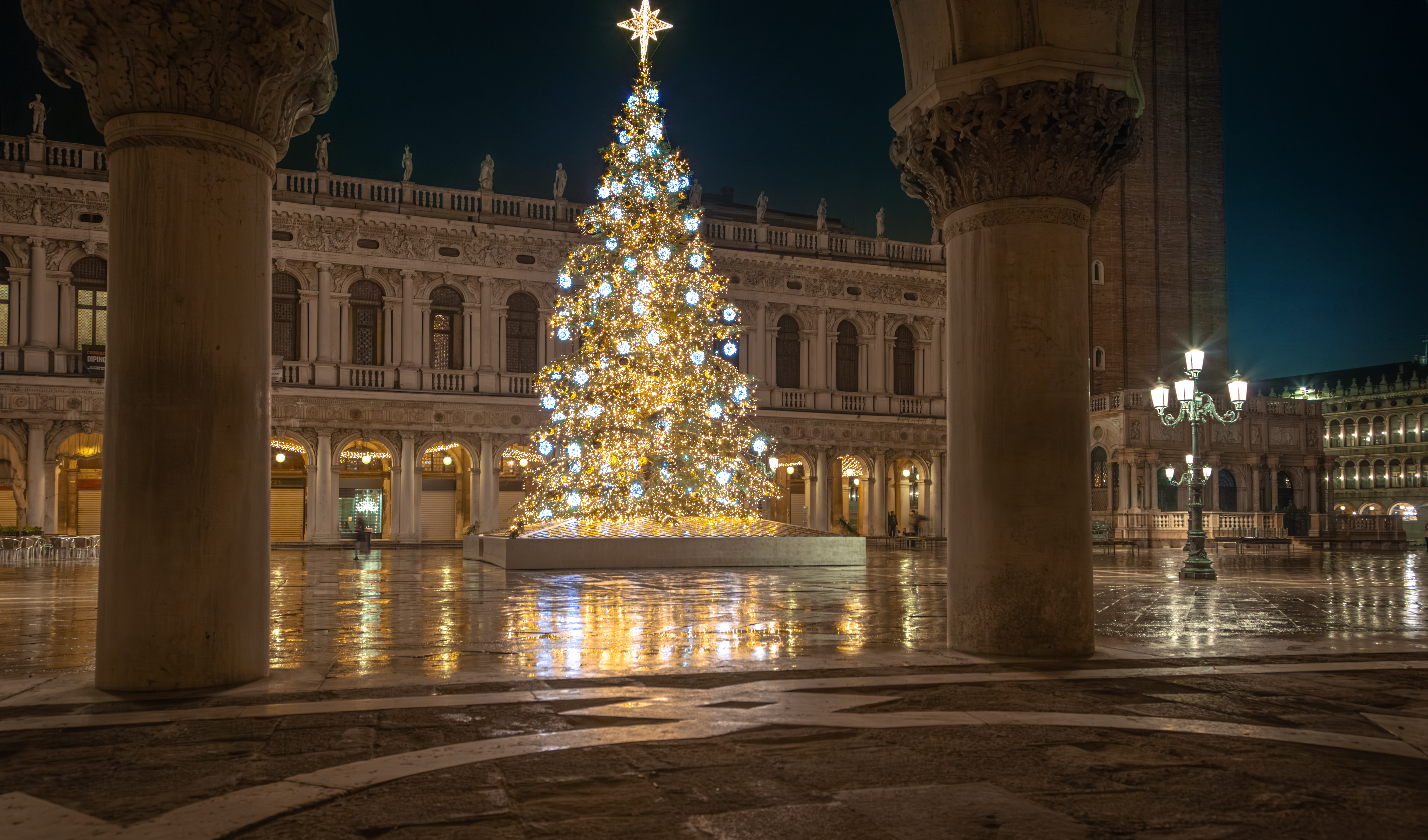
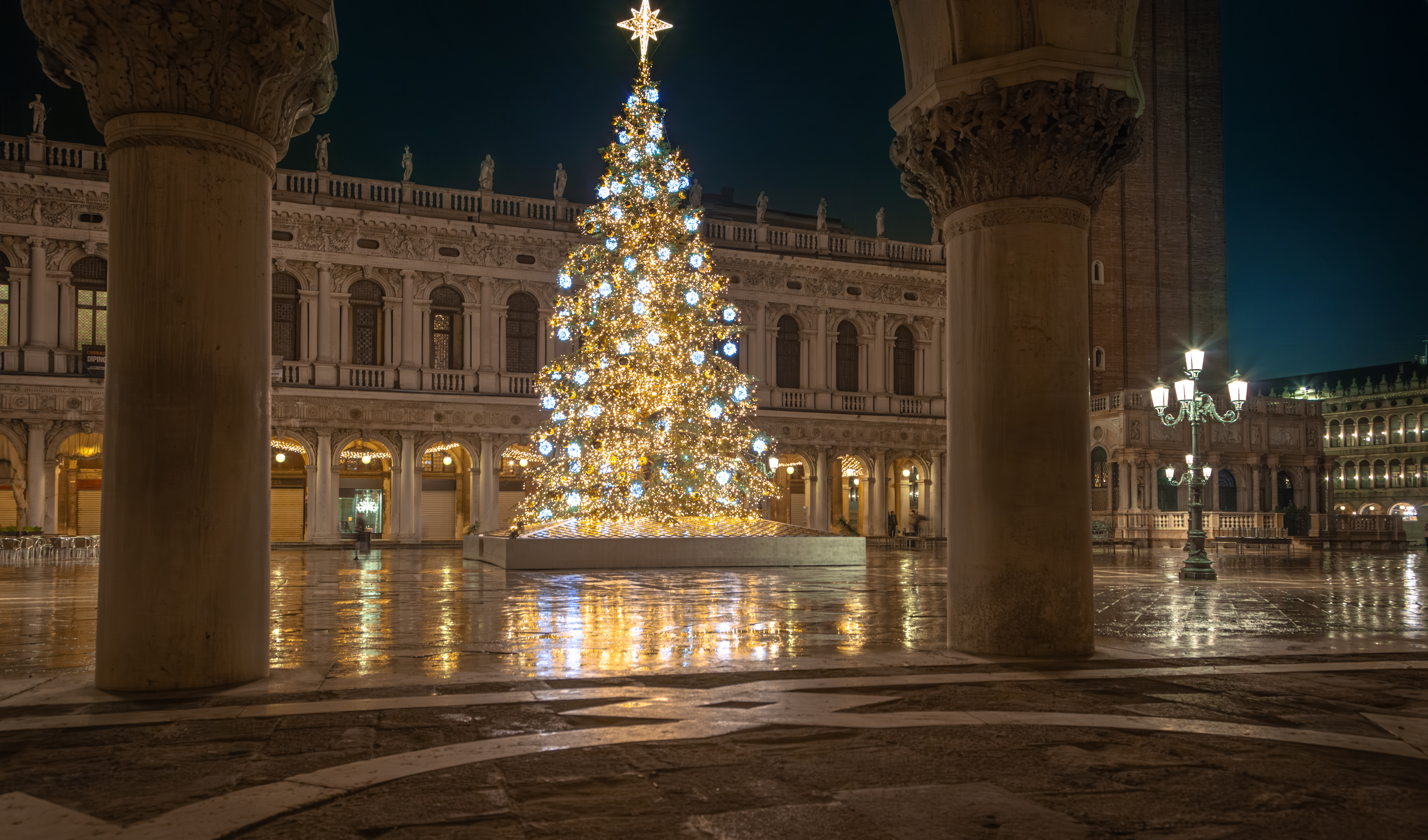
Venetian Christmas is divided between small fairs, artisan shops and temporary events distributed throughout the city and its surroundings. Its scale is different from Frankfurt, Vienna or Munich: here, the combination of Christmas shopping and Venetian artisan tradition is especially interesting. Glass, masks, small decorative objects and gastronomic products allow you to search for gifts linked to the territory, while the squares and campi provide a very different setting to that of other European markets. For the 2026 season, there is still not enough official information to publish a definitive market schedule without resorting to previous dates. 🗓️ Dates: to be confirmed for 2026. 📍 Location: different spaces in Venice.
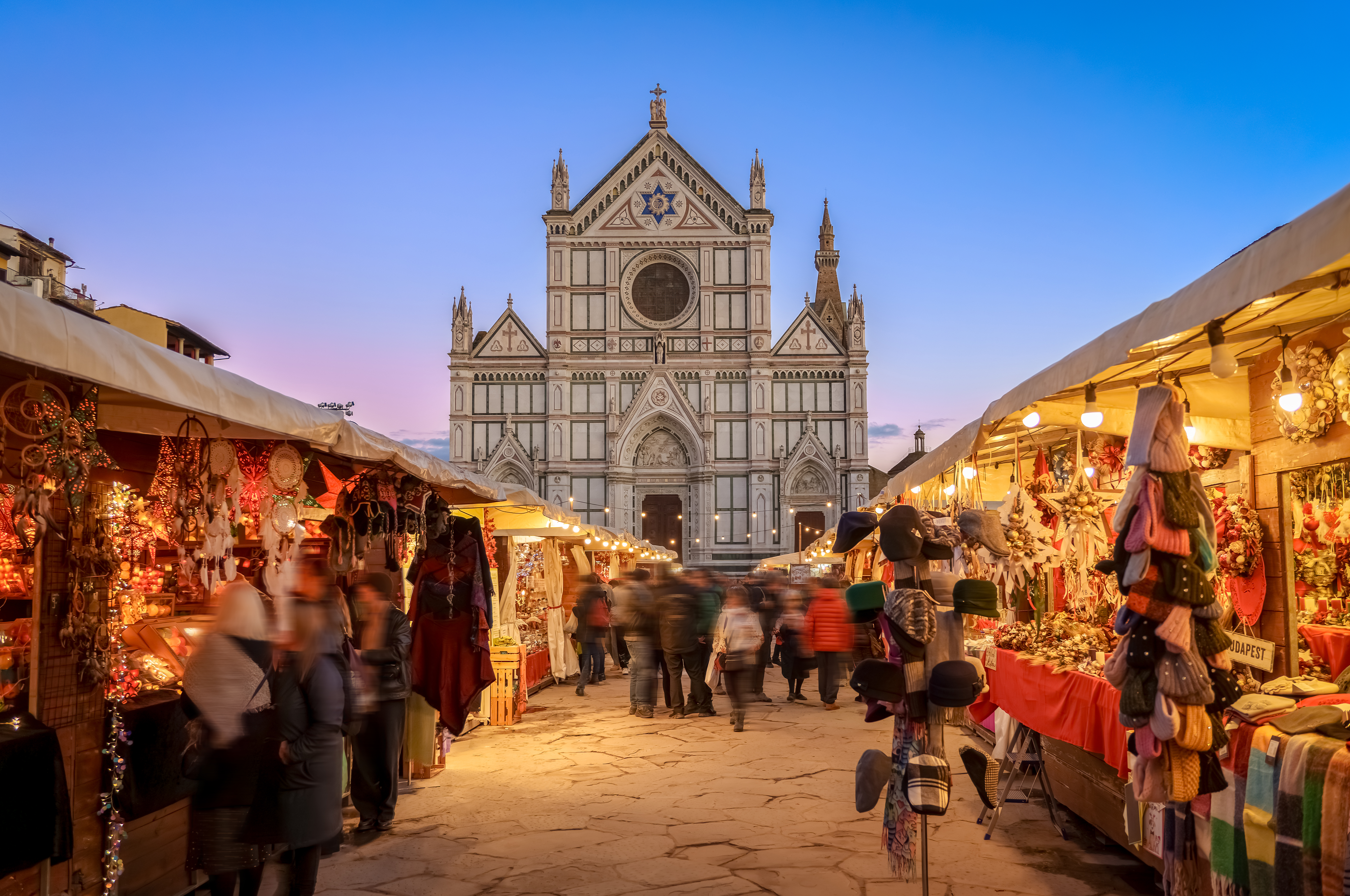
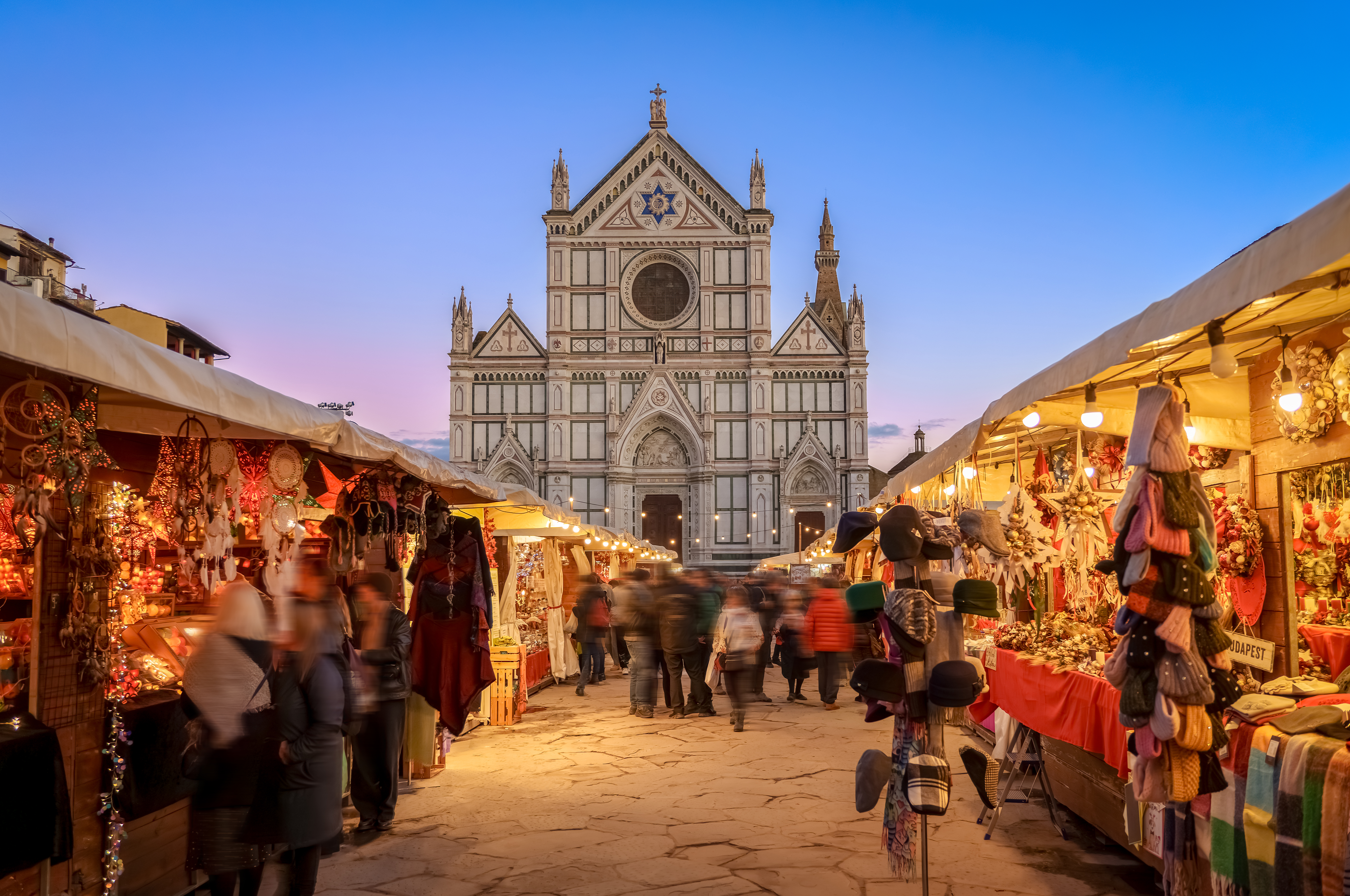
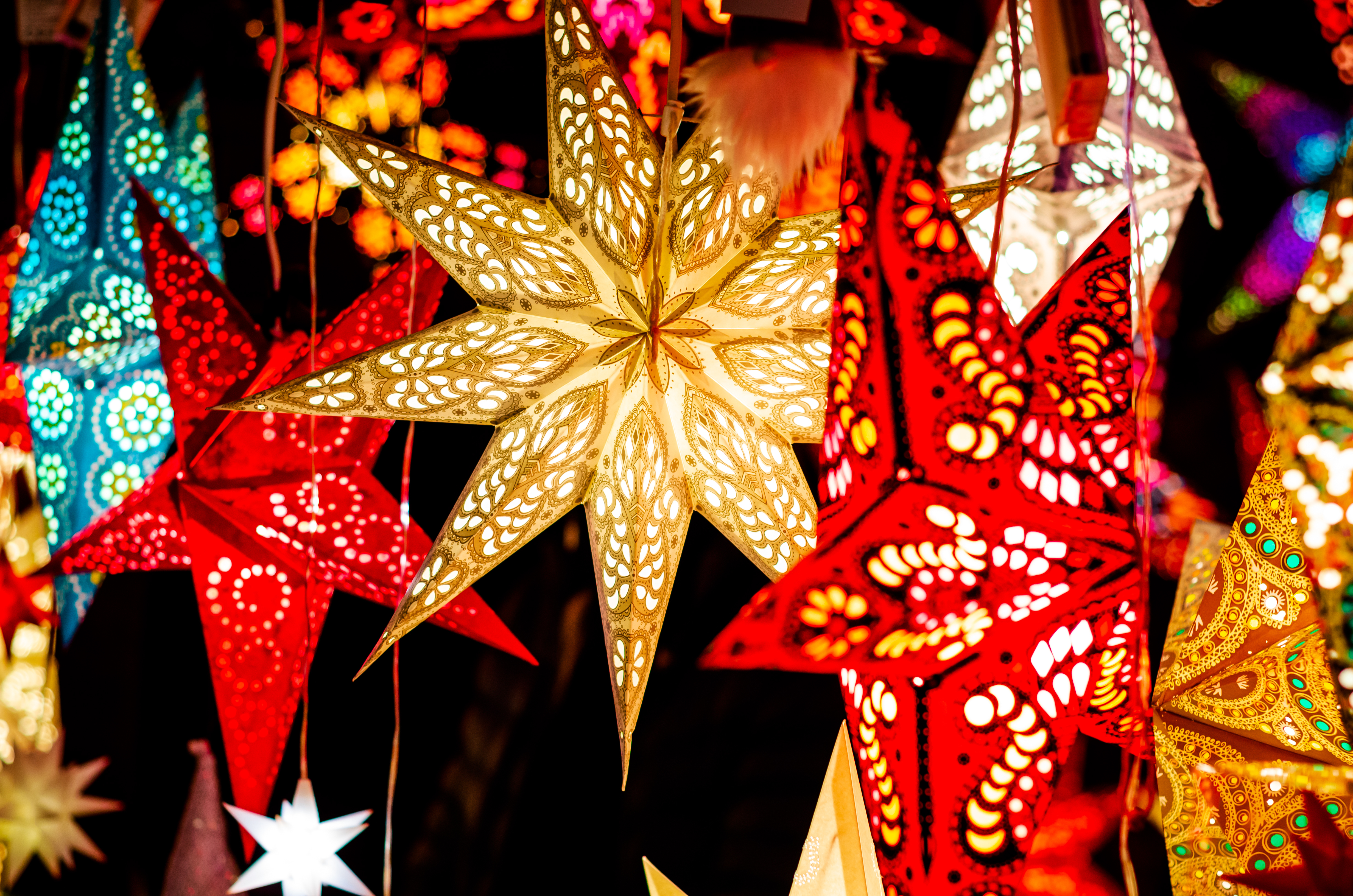
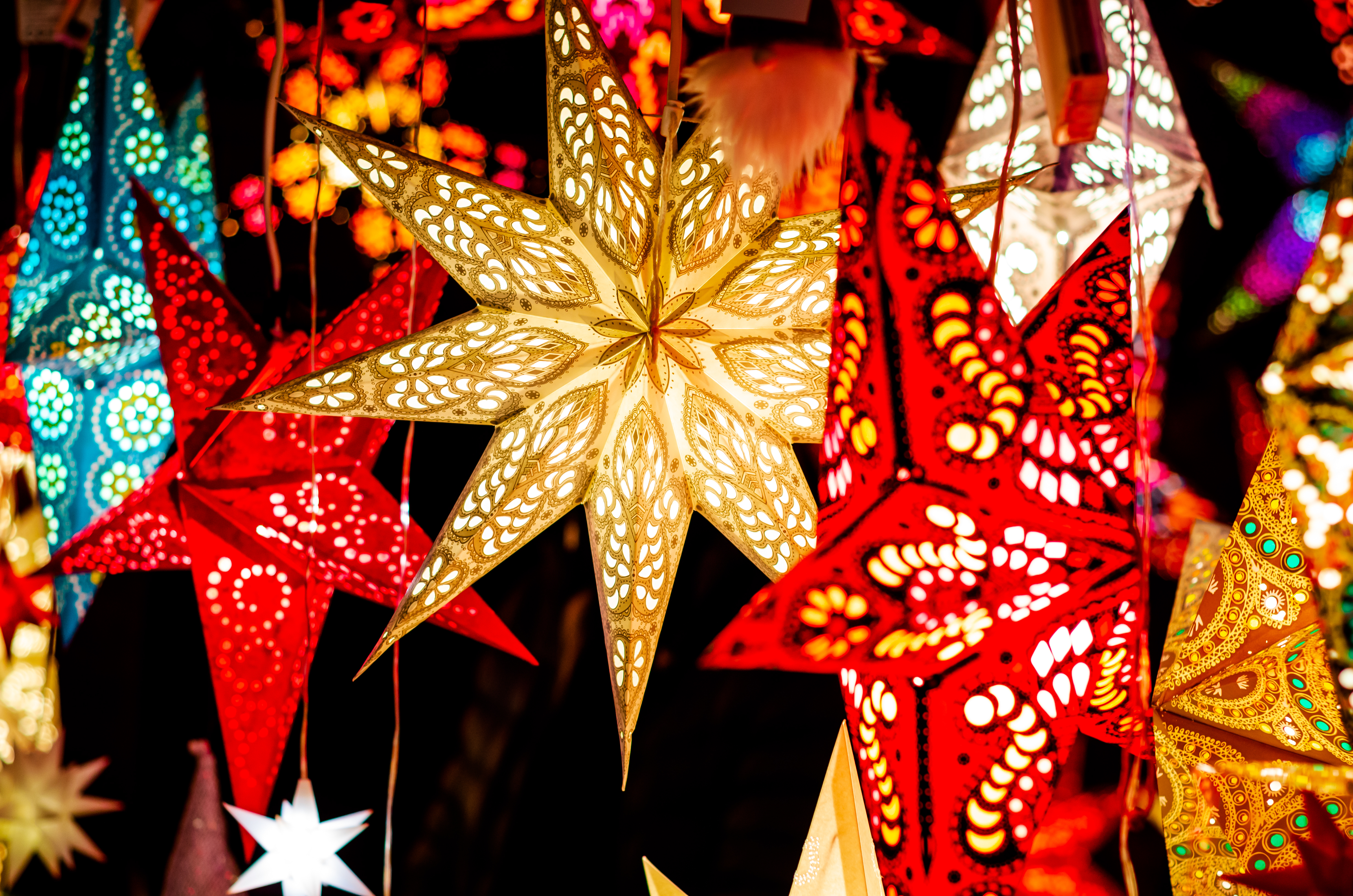
Florence does have a Christmas market with a clearly Central European format. The Weihnachtsmarkt in Piazza Santa Croce sets up its wooden huts in front of the basilica and combines gastronomy with gifts, decorations and artisan products. For 2026, official tourist information confirms more than 50 stalls and dates from 14 November to 20 December. Its location is one of its great selling points. Piazza Santa Croce is in the heart of the historic centre and allows you to incorporate the market into a day dedicated to churches, squares and museums without making specific journeys. 🗓️ Dates: 14 November-20 December 2026. 📍 Location: Piazza Santa Croce, Florence.
,regionOfInterest=(2464,1632))
,regionOfInterest=(2464,1632))
Lisbon provides one of the most different Christmases in this selection. Temperatures are milder than in Central Europe and the markets coexist with squares, avenues and parks that allow you to spend a good part of the day outdoors. Two proposals stand out especially. The Rossio Christmas Market, in Praça Dom Pedro IV, combines craft and gastronomy stalls with entertainment in the heart of the Baixa. In 2025 it doubled the number of wooden stalls compared to the previous edition. The largest-scale proposal is Wonderland Lisboa, in Parque Eduardo VII. Lisbon Tourism presents it as the largest Christmas market in Portugal. In addition to dozens of craft and gastronomy stalls, it incorporates a Ferris wheel, an ice rink and family spaces. 🗓️ Dates: to be confirmed for 2026. 📍 Location: Rossio and Parque Eduardo VII, Lisbon.
,regionOfInterest=(2655.5,1770.5))
,regionOfInterest=(2655.5,1770.5))
Spain has a tradition of Christmas fairs closely linked to the purchase of nativity scene figures, ornaments, crafts, sweets and gifts. Madrid and Barcelona preserve some of the most recognisable historic examples, while Seville incorporates a strong artisan and nativity scene tradition.
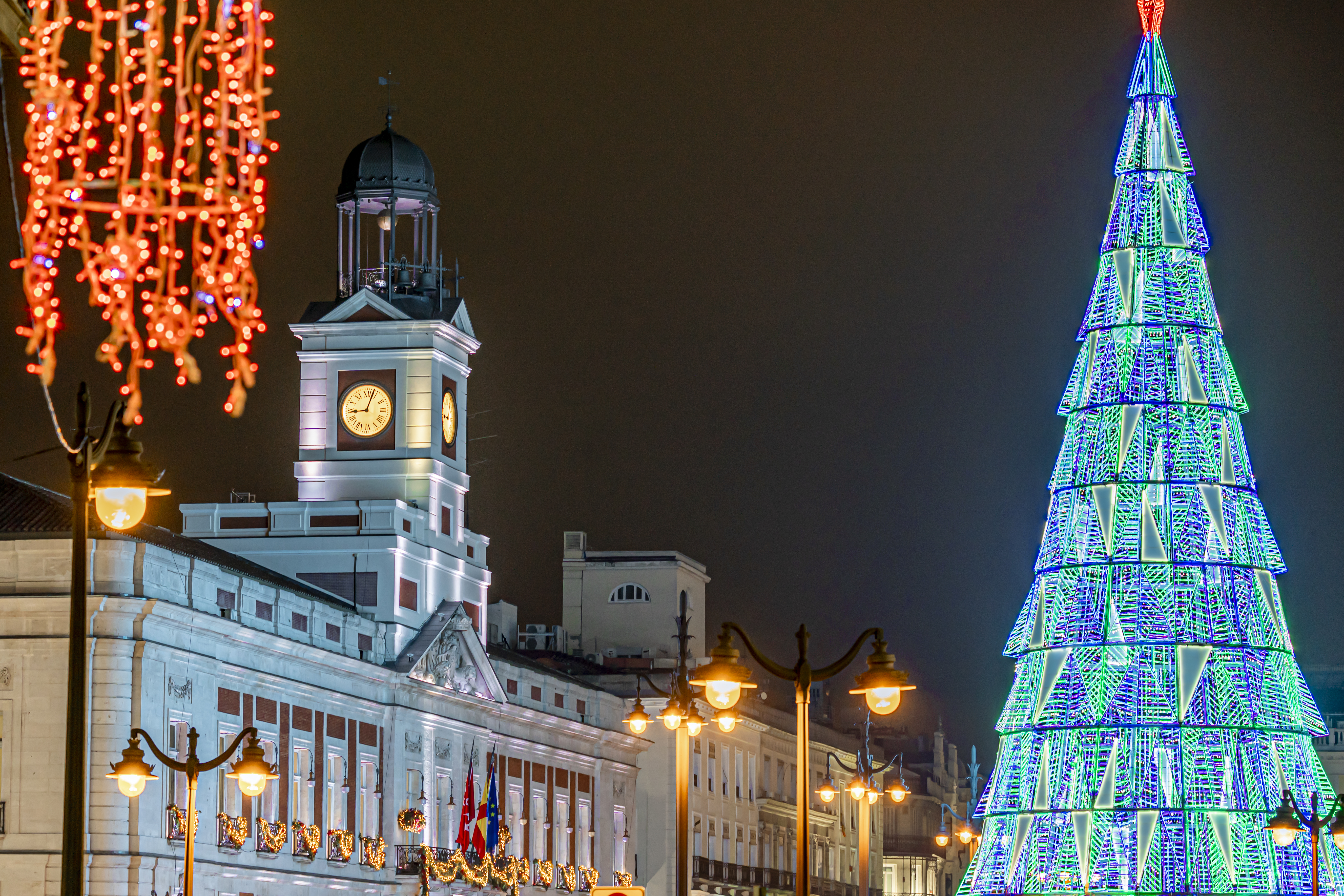
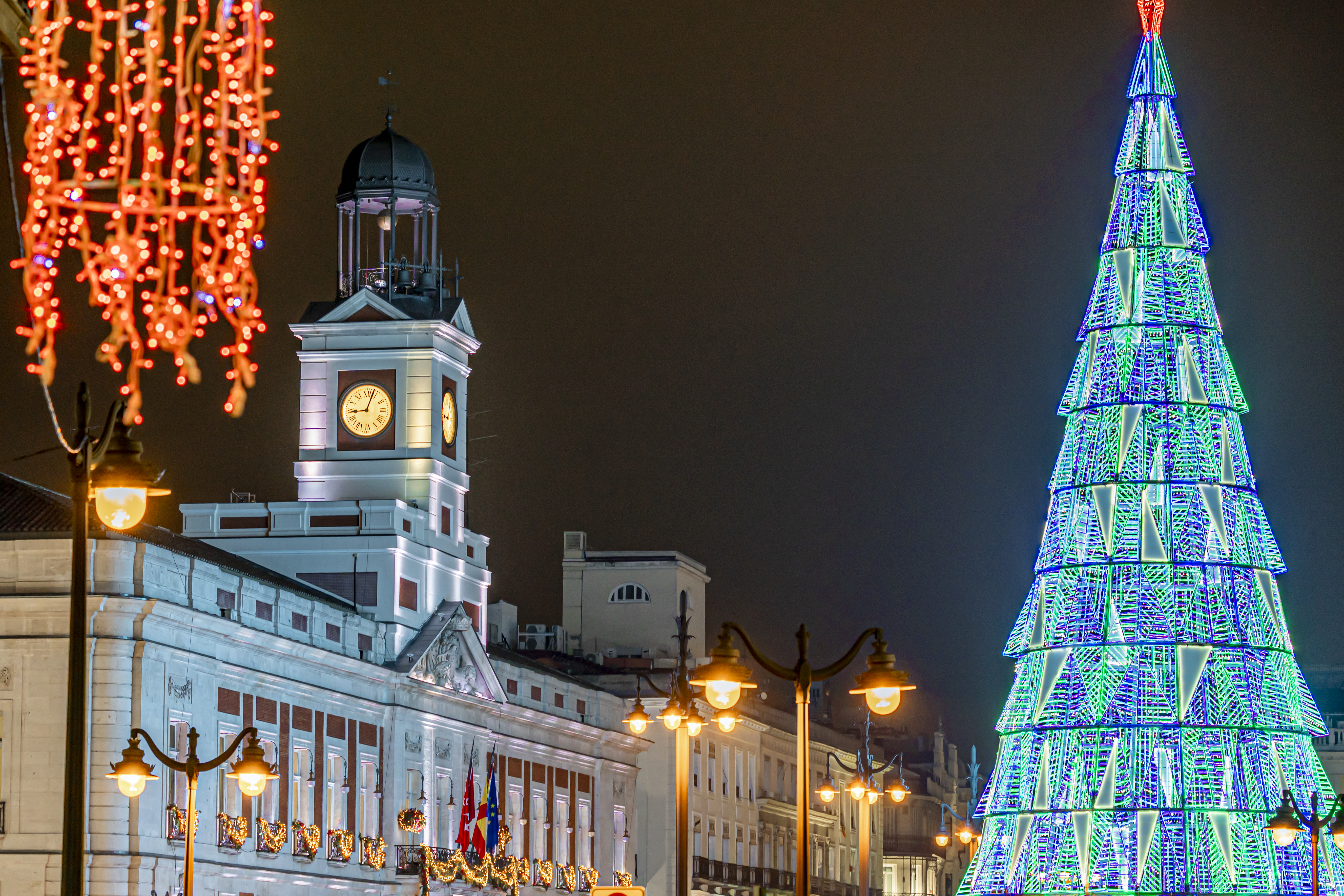
Madrid has one of the most recognisable Christmas market traditions in Spain. Its main reference is the Plaza Mayor Christmas Market, whose 104 stalls are specialised in figures and accessories for nativity scenes, Christmas ornaments and festive items, maintaining a commercial tradition closely linked to these dates. In 2026, the market is planned from the end of November until 31 December. The offer continues on the Paseo de Recoletos, where the Community of Madrid Artisan Market Fair will celebrate its 39th edition from 1 to 30 December, bringing together around 130 workshops of ceramics, jewellery, leather, textiles, glass and other trades. To these markets is added La Navideña in Plaza de España, which expands the proposal with stalls and activities. Madrid thus brings together three different profiles: the tradition of Plaza Mayor, the crafts of Recoletos and a broader proposal of Christmas leisure in Plaza de España. 🗓️ Dates: end of November-31 December 2026 (Plaza Mayor); 1-30 December 2026 (Paseo de Recoletos). 📍 Location: Plaza Mayor, Paseo de Recoletos and Plaza de España, Madrid.
Barcelona preserves one of the most interesting historic Christmas fairs in Spain: the Fira de Santa Llúcia, held in front of the Cathedral. Its origins date back to 1786, which makes it one of the great historic references of the Barcelona Christmas. Its personality is closely related to Catalan traditions. Among the stalls appear figures for the manger, caganers, moss, small houses, tree decorations, mistletoe and the characteristic tions. The city also has the Fira de Nadal de la Sagrada Família and other fairs that allow you to extend Christmas shopping through different neighbourhoods. 🗓️ Dates: to be confirmed for 2026. 📍 Location: Avinguda de la Catedral and other spaces in Barcelona.
Zaragoza has established itself as one of the Spanish destinations with the most activity around Christmas markets and celebrations. The centre of the programme is in the monumental Plaza del Pilar, where the Christmas Exhibition transforms one of the most iconic spaces in the city into a large venue dedicated to these dates. The City Council itself presents its Artisan Market as one of the reference Christmas markets in Spain and Europe. The market brings together craft and agri-food product stalls, with a significant presence of Aragonese artisans. Its appeal is also in everything that happens around it: workshops, shows, music, family activities and the traditional Belén de Judea, considered by the City Council to be the largest life-size nativity scene in Europe, with more than a hundred figures. The ability to attract crowds helps to understand the importance that the Zaragoza Christmas has acquired. During the last season, more than 3.3 million people passed through Plaza del Pilar between the Christmas lighting and 6 January, while Zaragoza received 342,000 tourists and excursionists during this period. The city also has an Artisan Gourmet Product Christmas Market in the Parque Grande José Antonio Labordeta, expanding the offer beyond the historic centre. 🗓️ Dates: to be confirmed for 2026. 📍 Location: Plaza del Pilar, Zaragoza.
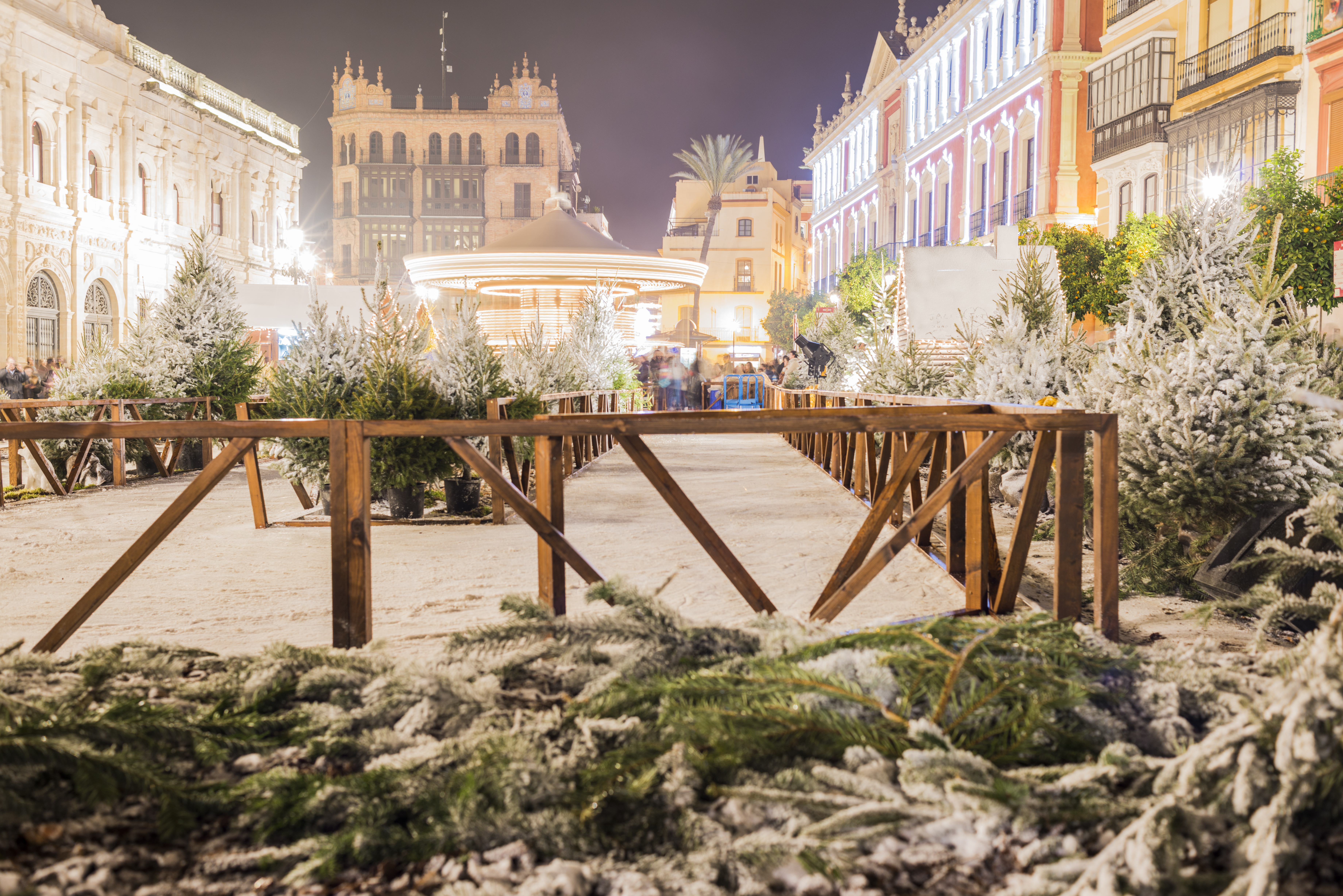
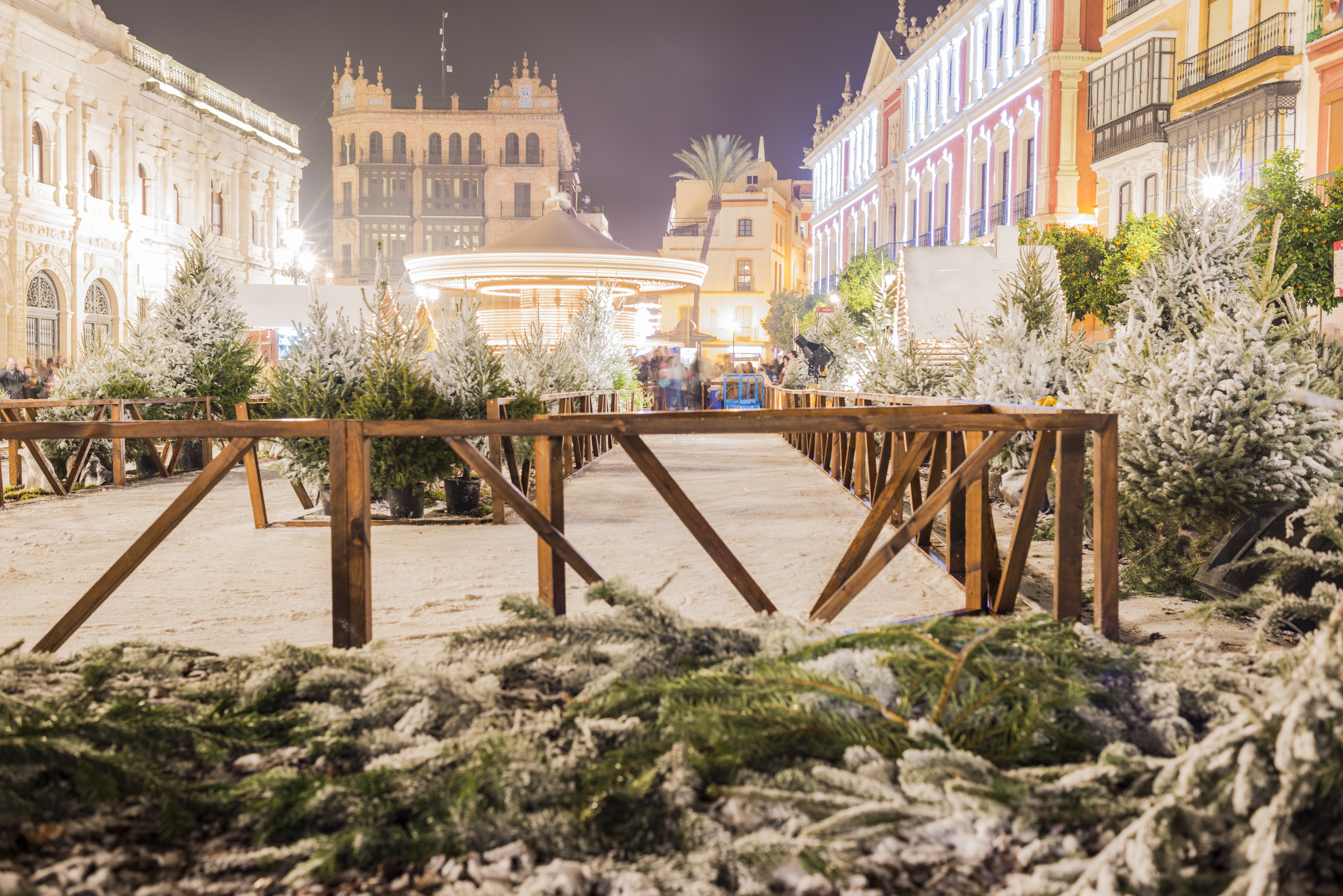
Seville completes this Spanish selection with an approach very related to crafts and the nativity scene tradition. During December, different markets and fairs appear in the centre, which allows them to be combined with a tour of the historic centre. Among the usual events, the Christmas Creative Craft Fair stands out, which brings together workshops and creators and allows you to find ceramics, jewellery, leather, textiles and other artisan disciplines. The city also celebrates its traditional Nativity Scene Fair and different temporary markets during the holidays. 🗓️ Dates: to be confirmed for 2026. 📍 Location: different spaces in the centre of Seville.
,regionOfInterest=(4200,2800))
,regionOfInterest=(4200,2800))
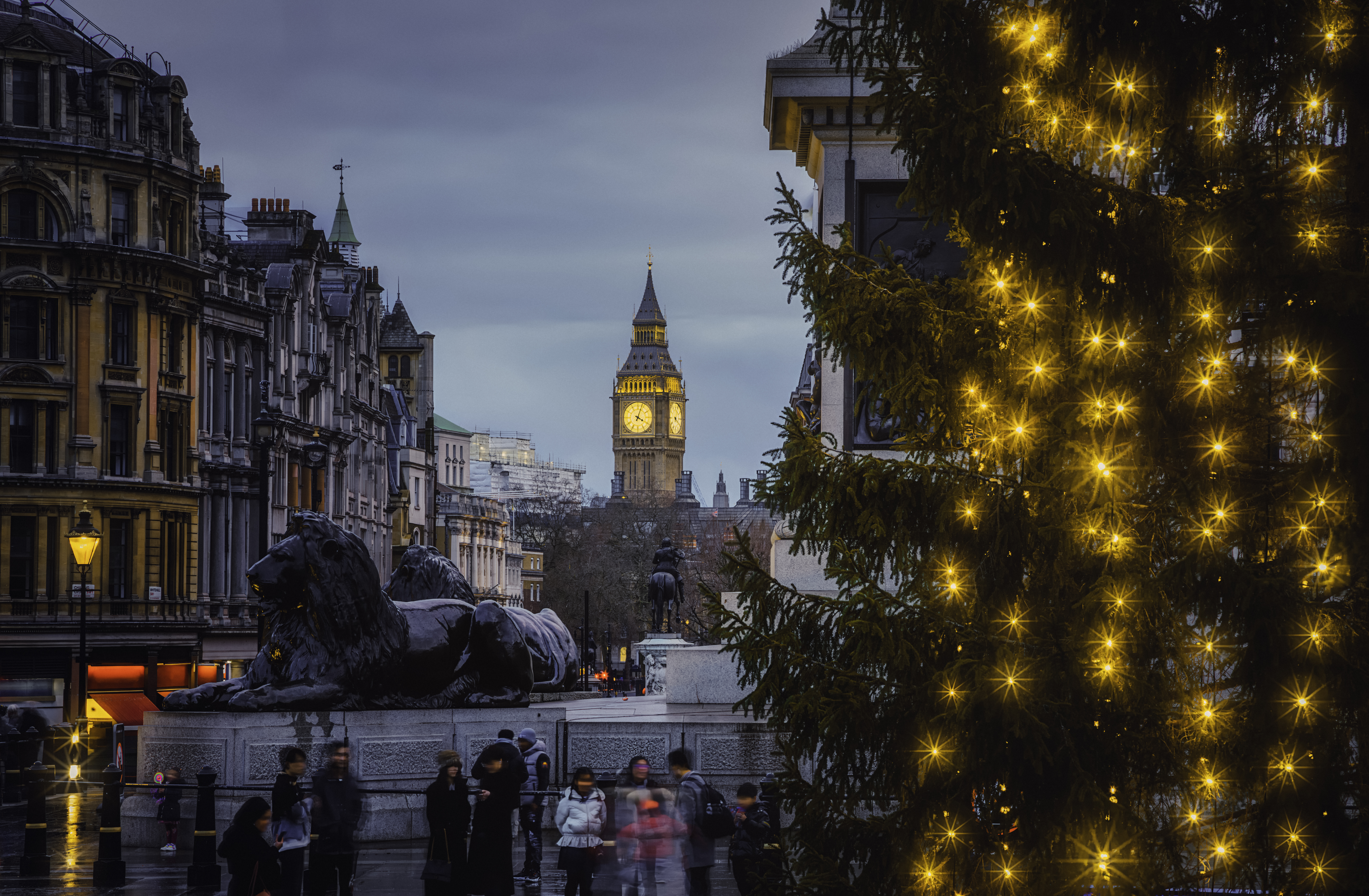
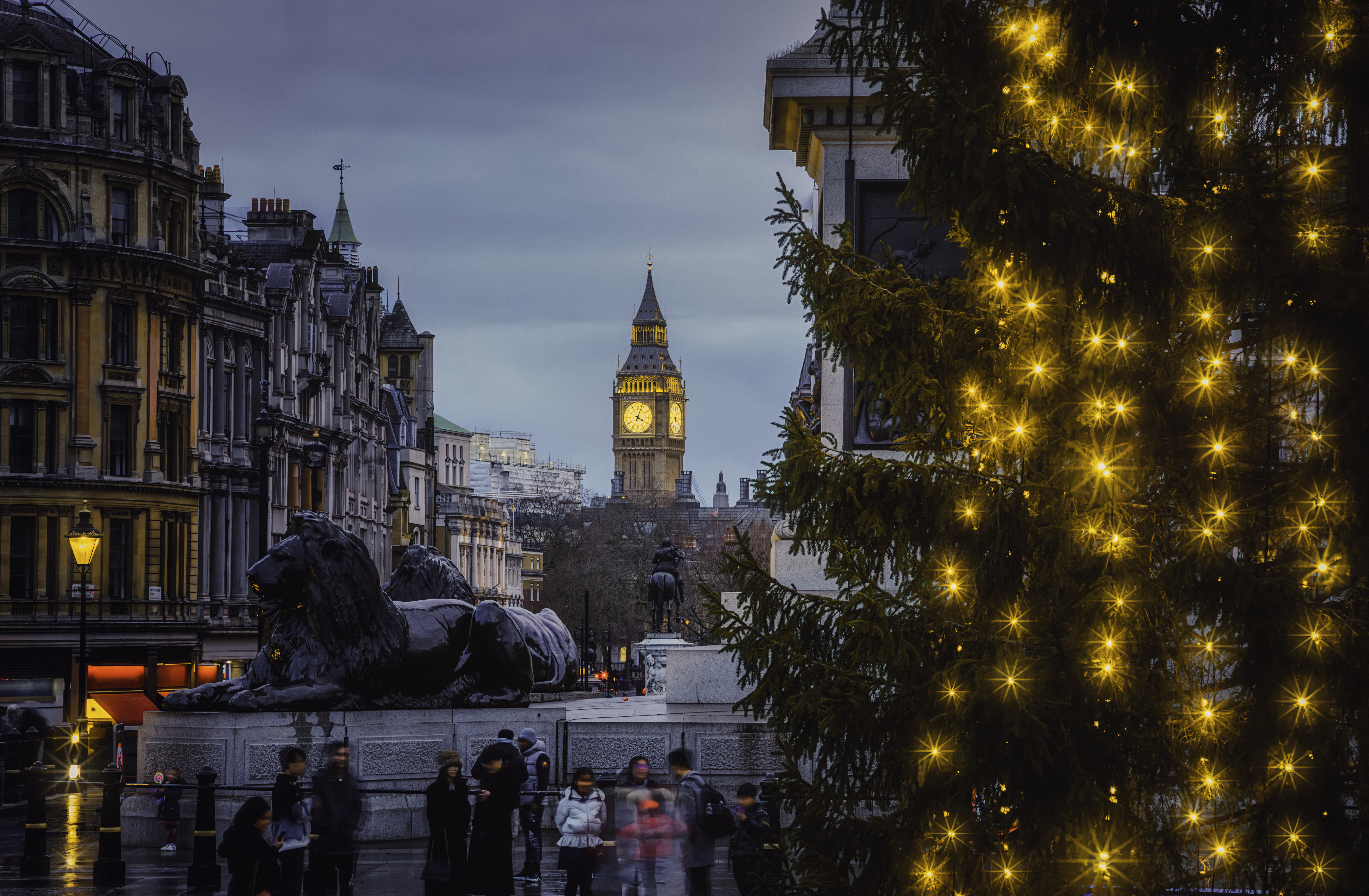
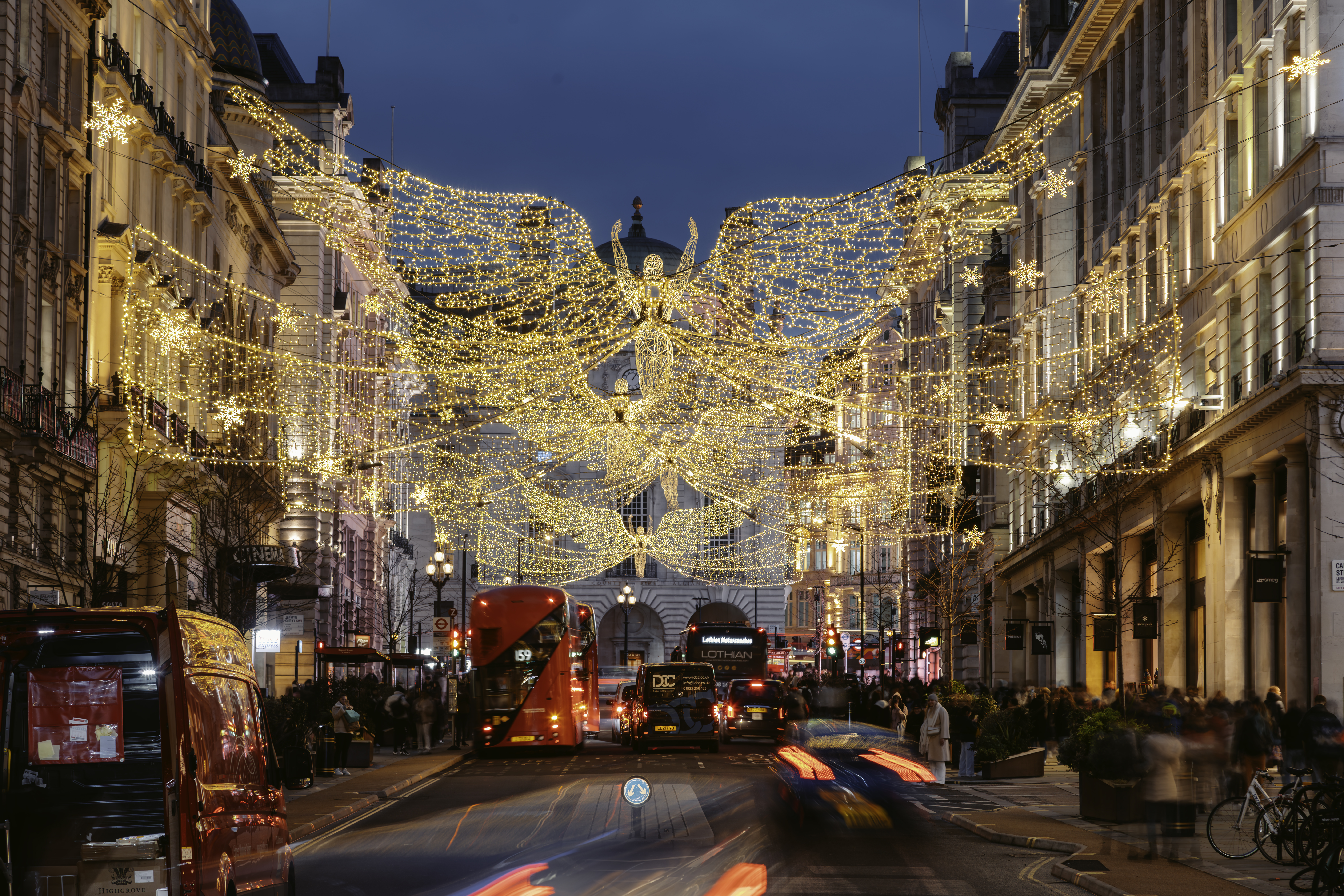
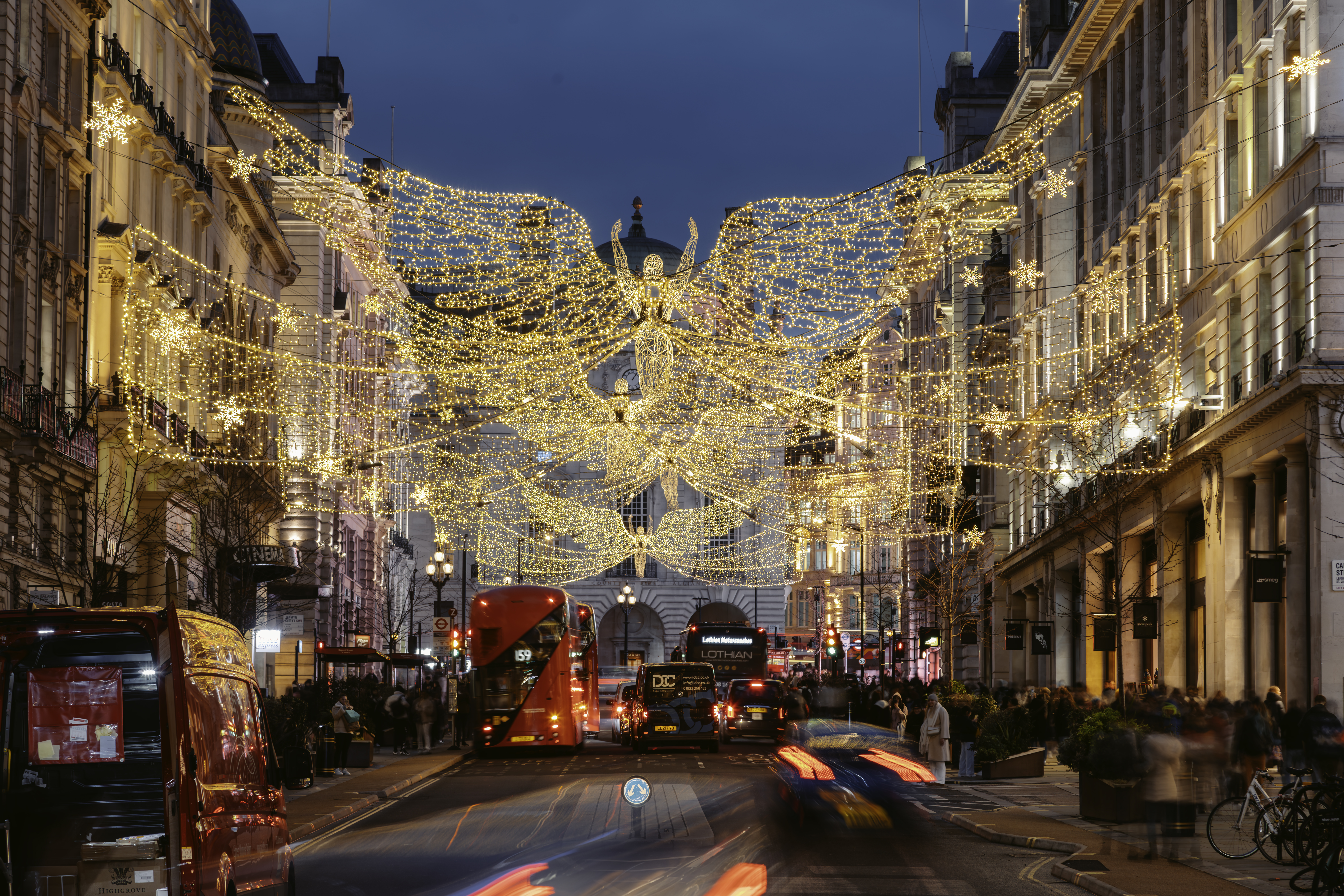
London has markets with very different profiles, from small gastronomic and craft offerings to huge leisure venues. The most well-known example is Hyde Park Winter Wonderland, which brings together more than 100 stalls, as well as rides, shows, gastronomy and an ice rink. For those who prefer something more focused on strolling and shopping, the Southbank Centre Winter Market occupies the banks of the Thames, while Greenwich, Leicester Square and other neighbourhoods have their own offerings. An advantage of London is the schedule: several markets continue after 25 December and some reach the first days of January. 🗓️ Dates: to be confirmed for 2026. 📍 Location: Hyde Park, South Bank, Leicester Square and other points in London.
Manchester offers one of the largest collections of markets in the United Kingdom. For 2026, 210 stalls are confirmed, distributed throughout the city centre, forming a wide commercial and gastronomic route between different squares and streets. The offer combines handmade gifts, artisan products, independent traders, international gastronomy and seasonal specialities. Furthermore, we already know the schedule: the Manchester Christmas Markets will open on 6 November and close on 22 December 2026. Albert Square and Cathedral Gardens will extend their activity until 3 January 2027. 🗓️ Dates: 6 November-22 December 2026; Albert Square and Cathedral Gardens until 3 January 2027. 📍 Location: different points in Manchester city centre.
There is no single date. The season begins progressively from the beginning or middle of November and reaches its maximum activity during the four weeks of Advent.
In 2026 we find important differences. The market of the Schönbrunn Palace in Vienna begins on 6 November, as do the Manchester markets. Florence opens Santa Croce on 14 November; the Munich Christkindlmarkt, on the 20th; Berlin concentrates many of its openings around the 23rd; and Frankfurt also begins on 23 November.
Therefore, the second half of November is the time when most of the large European markets are already starting to be active.
It also depends a lot on the tradition of each city.
In Germany it is common for some traditional markets to end on 22, 23 or 24 December. Frankfurt, for example, will close on 22 December 2026 and the Munich Christkindlmarkt will end on the 24th.
In other cities the calendar continues during the holidays. The Rathausplatz market in Vienna reaches 26 December and Schönbrunn continues until 6 January. The markets in the Old Town Square and Wenceslas Square in Prague will also reach 6 January 2027.
Manchester keeps Albert Square and Cathedral Gardens until 3 January and some London markets also continue after Christmas.
If the trip is made between Christmas and Epiphany, it is advisable to check specifically the calendar of the chosen market: that a city maintains Christmas lighting and activities does not necessarily mean that all its markets remain open.
Gastronomy is an essential part of European Christmas markets and changes considerably depending on the destination. Although some specialities have crossed borders, many markets continue to offer recipes typical of their region, especially sweets, baked goods and hot drinks.
In Germany, one of the most characteristic images is the mug of Glühwein, hot red wine usually spiced with cinnamon and cloves. It is accompanied by sausages, toasted almonds, biscuits and Lebkuchen, a spiced sweet especially associated with German Christmas. Each city also adds local specialities: in Frankfurt, the Bethmännchen stand out, small sweets made with marzipan and almonds, while Dresden is closely related to the Christstollen, a sweet Christmas bread with centuries of tradition.
Austria shares the culture of mulled wine and spiced sweets, but its markets also allow you to try specialities such as Krapfen, roasted chestnuts and different preparations of potato, sausages and breads. In Vienna, food and drink are part of the ritual of meeting at the markets during the weeks of Advent.
In Prague, the stalls mix hearty Czech dishes with sweets and hot drinks. Sausages, potato and meat preparations, mulled wine and medovina, a drink made from honey, are common. The trdelník (a traditional sweet with a hollow cylindrical shape made of flour dough rolled on a wooden or metal skewer and roasted over embers, crispy on the outside and tender on the inside, with an outer layer of sugar, cinnamon and, sometimes, almonds or ground walnuts) although today it is very present in tourist areas and city centre markets, should not be confused with an ancient exclusively Prague Christmas tradition.
In Hungary, and especially in the Christmas markets of Budapest, gastronomy has a marked Central European character. One of its most recognisable products is the kürtőskalács, a sweet dough rolled into a cylinder shape, baked and traditionally covered in sugar, cinnamon or nuts. Roasted chestnuts, gingerbread and forralt bor, the Hungarian mulled wine spiced with herbs, are also common. For those looking for something heartier, the stalls offer specialities such as sausages, roasted meats and hot dishes typical of Hungarian cuisine. These flavours, designed largely to combat the cold, make gastronomy one of the most characteristic parts of the Advent markets in Budapest.
In Italy, Christmas gastronomy changes notably from one region to another, something that is also reflected in its markets. In Milan, the great protagonist is the panettone, born in the city and converted into one of the best-known Italian Christmas sweets, while in other destinations regional specialities, cheeses, sausages, chocolates, nuts and artisan products appear. Nor is the pandoro missing, originally from Verona and recognisable by its star shape and icing sugar coating. In markets such as those in Milan, Rome or Florence, the gastronomic stalls allow you to approach this culinary diversity and discover products from different areas of the country. A variety that reflects very well the importance of the table and traditional recipes in Italian Christmas.
In France, Christmas markets incorporate regional specialities, cheeses, charcuterie, chocolates, pain d’épices, crêpes and mulled wine. Paris also functions as a showcase for products from different French regions, so its markets allow you to try flavours that are not exclusively Parisian. And when the celebrations approach Epiphany, one of the most traditional sweets of the French winter appears: the galette des Rois, usually made with puff pastry and almond cream and shared around 6 January. Inside, a small fève (a figurine, originally a dried bean) is hidden and whoever finds it is crowned king or queen, a custom that continues to be part of French family celebrations.
Portugal brings a different Christmas. In Lisbon, the markets combine contemporary proposals with Portuguese products and traditional sweets. During these dates, the bolo-rei, easily recognisable by its crown shape and candied fruits, rabanadas and other sweets typical of Portuguese Christmas take on special prominence.
In Spain, Christmas markets share the limelight with a gastronomy especially linked to these dates. In their stalls it is common to find roasted chestnuts, churros with chocolate, turrones, mazapanes, polvorones and other traditional sweets, along with candied almonds and specialities that change according to the region. Pastry shops, confectioneries and historical shops complete this offer with recipes that return every December and are part of family celebrations. And when Christmas nears its end, one of its great gastronomic symbols arrives: the roscón de Reyes, the protagonist around 6 January. From Madrid to Barcelona, Seville or Zaragoza, these flavours accompany walks through the markets and allow you to discover a Christmas in which gastronomy, meetings around the table and recipes passed down from generation to generation continue to occupy an essential place.
In the United Kingdom, Christmas markets combine Central European influences with flavours typical of British holidays. Mulled wine, similar to spiced mulled wine, is one of the most common drinks, along with hot cider. Among the sweets, the mince pies stand out, small tarts filled with dried fruits and spices that have been part of British Christmas for centuries, in addition to Christmas pudding, chocolates and seasonal confectionery products. Markets such as those in London and Manchester also incorporate numerous international food stalls, from sausages and cheeses to European specialities. This mix between British recipes and continental gastronomy reflects well the current character of the country's large Christmas markets.
That is why eating and drinking in these markets is not just a break during the visit. It is another way of understanding how each country celebrates Christmas: the Glühwein and the Lebkuchen speak of the Germanic tradition as much as the panettone of Milan, the kürtőskalács of Budapest or the bolo-rei of Lisbon.
Before booking your trip, check the dates of the specific market you want to visit. Within the same city there can be differences of several weeks between one fair and another, and some markets close before Christmas Eve while others reach Epiphany.
In the larger markets, try to go during the week or during the first hours of opening. Friday afternoons and weekends tend to concentrate more visitors, especially in small squares and historical centres.
Use public transport whenever possible. Berlin, Vienna, London, Paris, Prague or Munich have networks that allow you to move easily between markets and avoid having to look for parking in areas with restrictions during these dates.
It is also worth carrying some cash even though there are more and more electronic payments. Conditions vary depending on the country, the market and each merchant.
And, above all, do not try to visit all the markets in a large city in a single afternoon. In destinations like Berlin, Vienna, London or Budapest it is much more interesting to select two or three areas and combine them with the neighbourhoods, monuments and gastronomy that surround them.
The Christmas markets of Europe are also a way of knowing the differences between cities that, at first glance, share the same tradition. Frankfurt retains one of the great German markets; Vienna distributes Advent between palaces and monumental squares; Milan maintains a fair linked for centuries to Saint Ambrose; Barcelona continues selling nativity scene figures in front of the Cathedral; and Lisbon adapts Christmas to the climate and character of the Portuguese capital.
When December approaches, these squares change for a few weeks. The lights turn on, wooden stalls appear, it smells of freshly made sweets and hot drinks and traditions return to occupy the streets. Each city celebrates these dates in its own way, but all share that ability to make you want to wrap up warm, go for a walk and enjoy Christmas without rushing.
Perhaps that is where the true charm of European Christmas markets lies: in reminding us that, for a few days, we can still look at Christmas with the same excitement as always.
,regionOfInterest=(2852,1899.5))
,regionOfInterest=(2852,1899.5))
,regionOfInterest=(3008,2008))
,regionOfInterest=(3008,2008))
,regionOfInterest=(849,566))
,regionOfInterest=(849,566))
,regionOfInterest=(2162,1441))
,regionOfInterest=(2162,1441))