Best golf courses in Riviera Maya

Culture

Ask a Chiang Mai local where they actually eat dinner, and the answer is rarely the Night Bazaar.
It is more often a stretch of pavement on the south side of the Old City walls, where the food stalls outnumber the tourists most nights of the week.

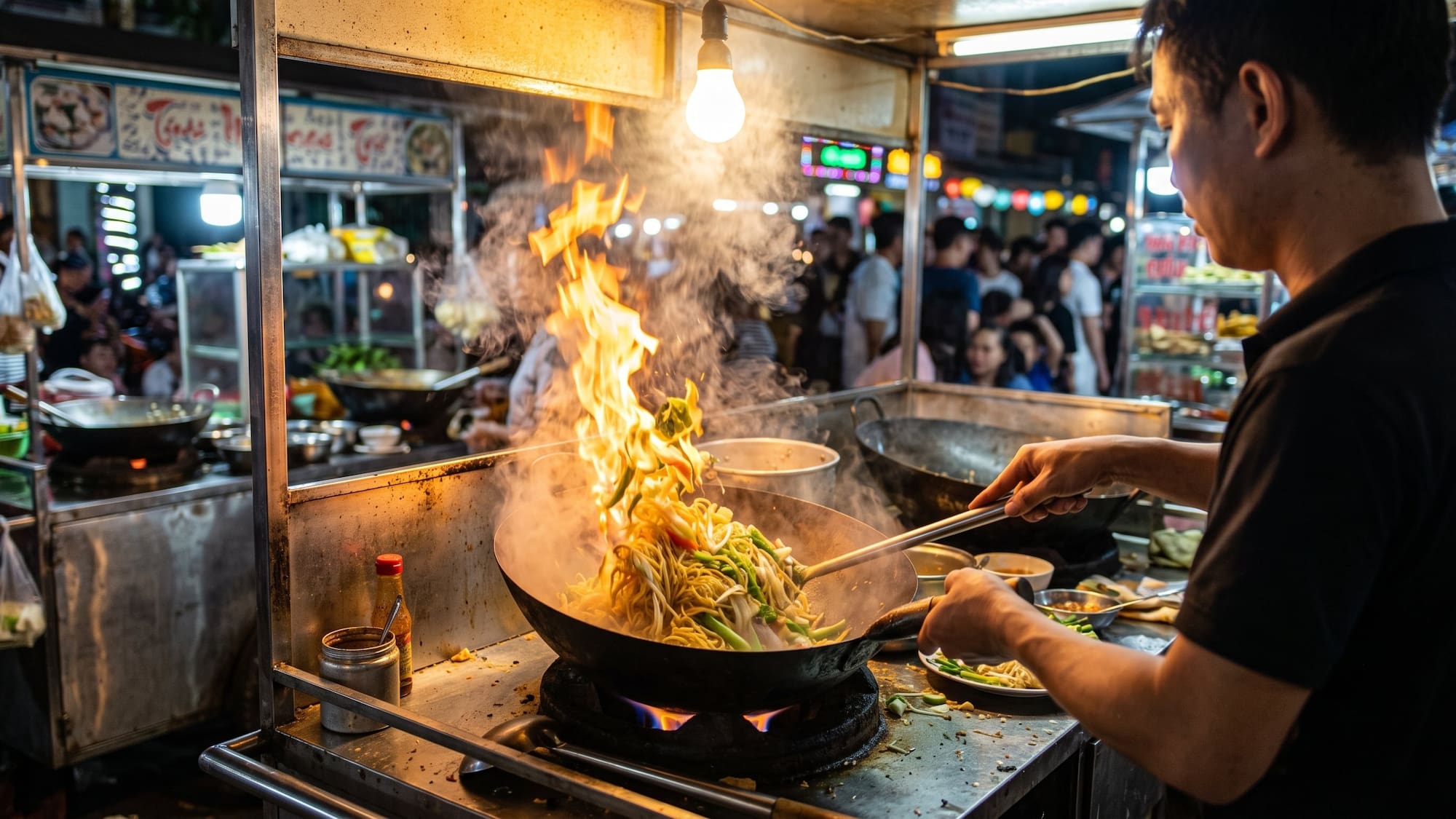


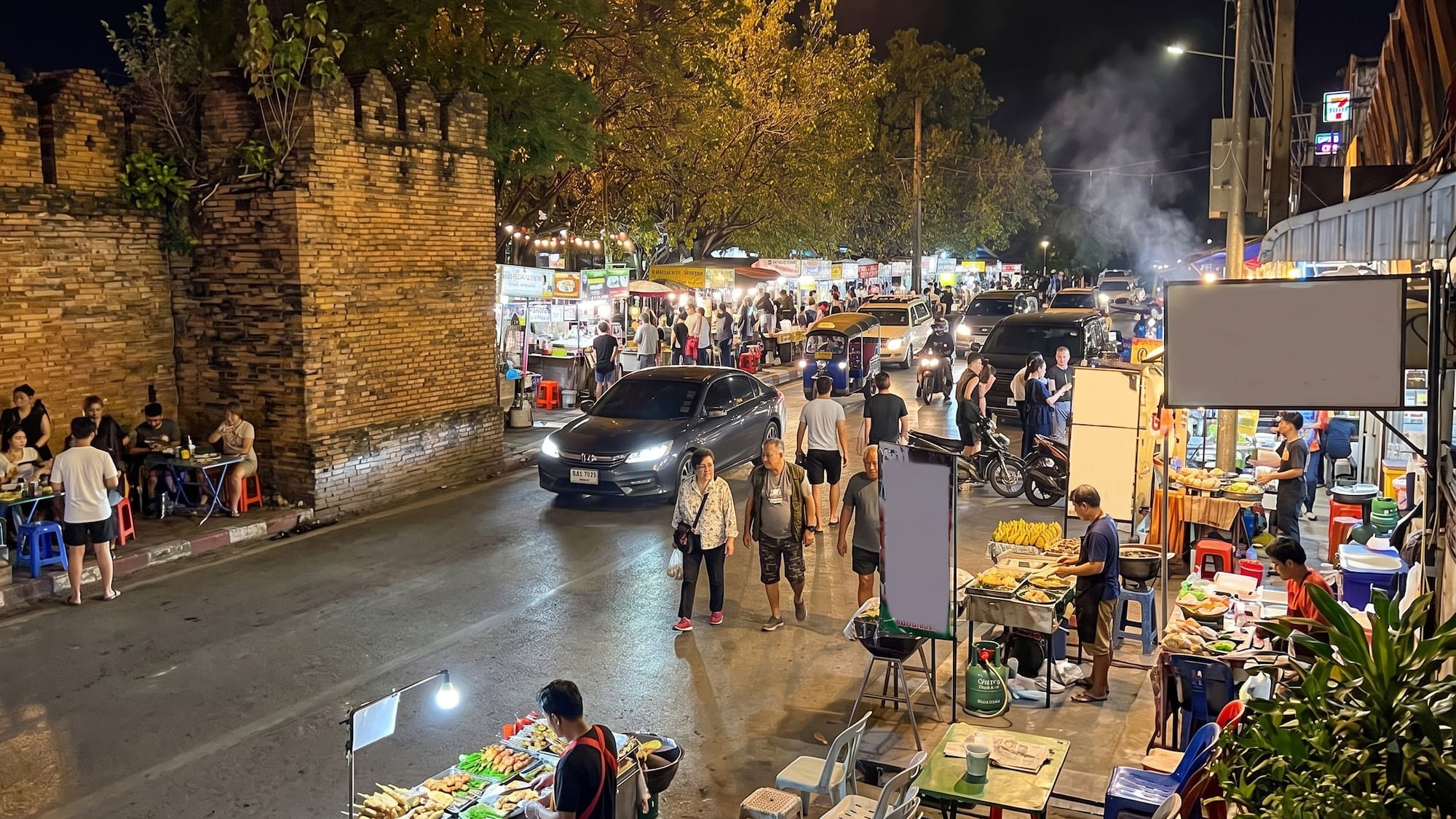


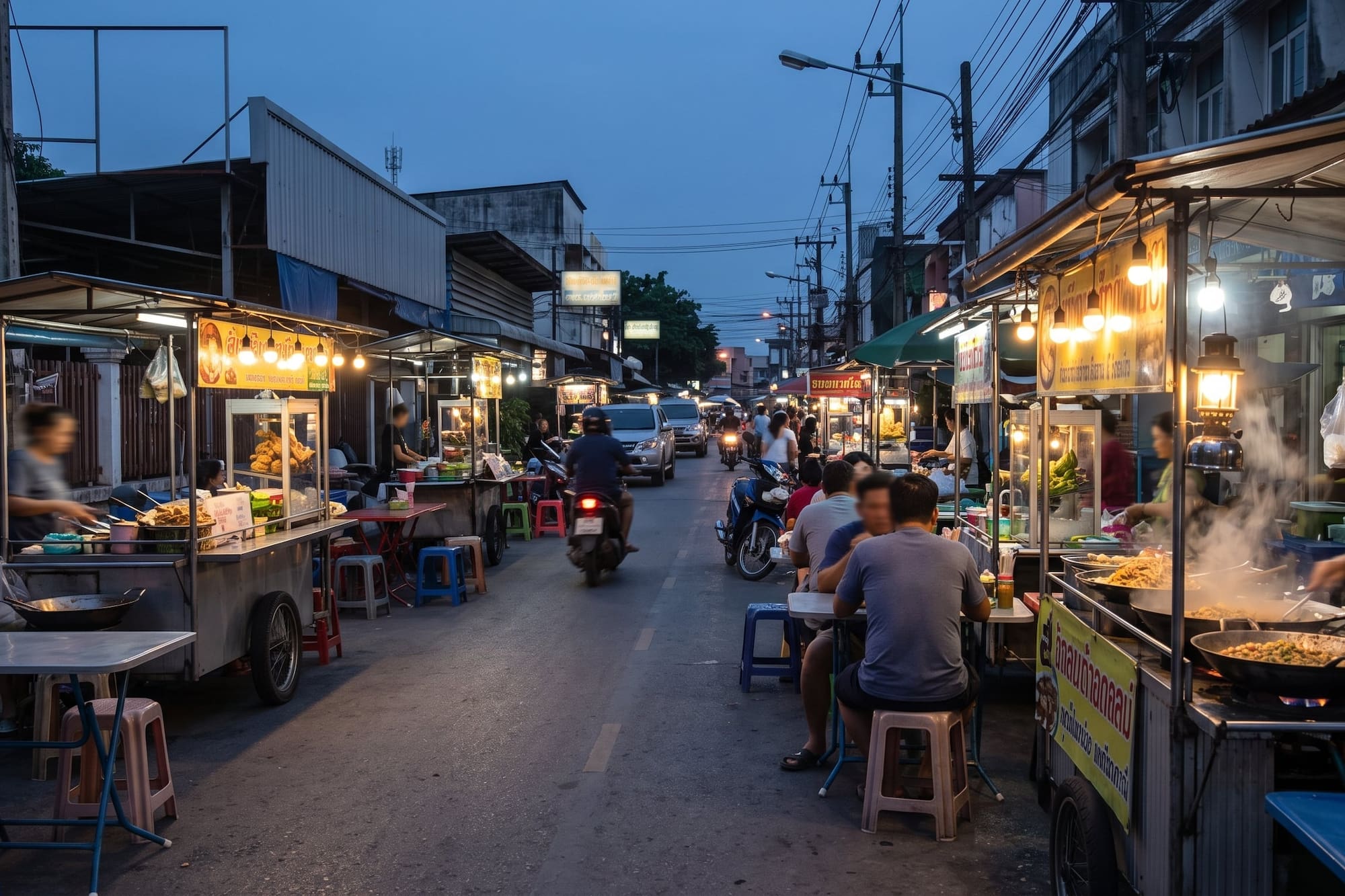
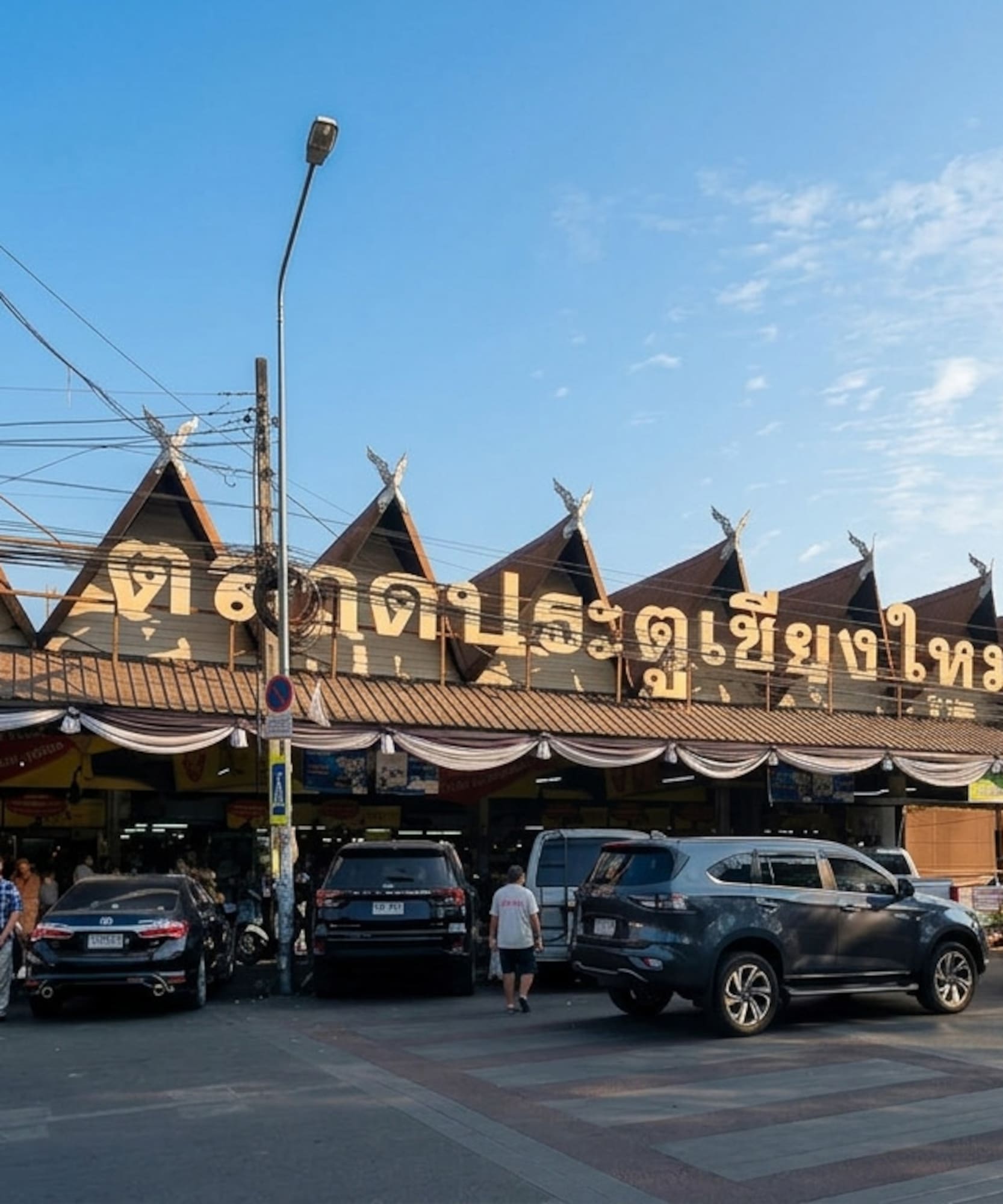
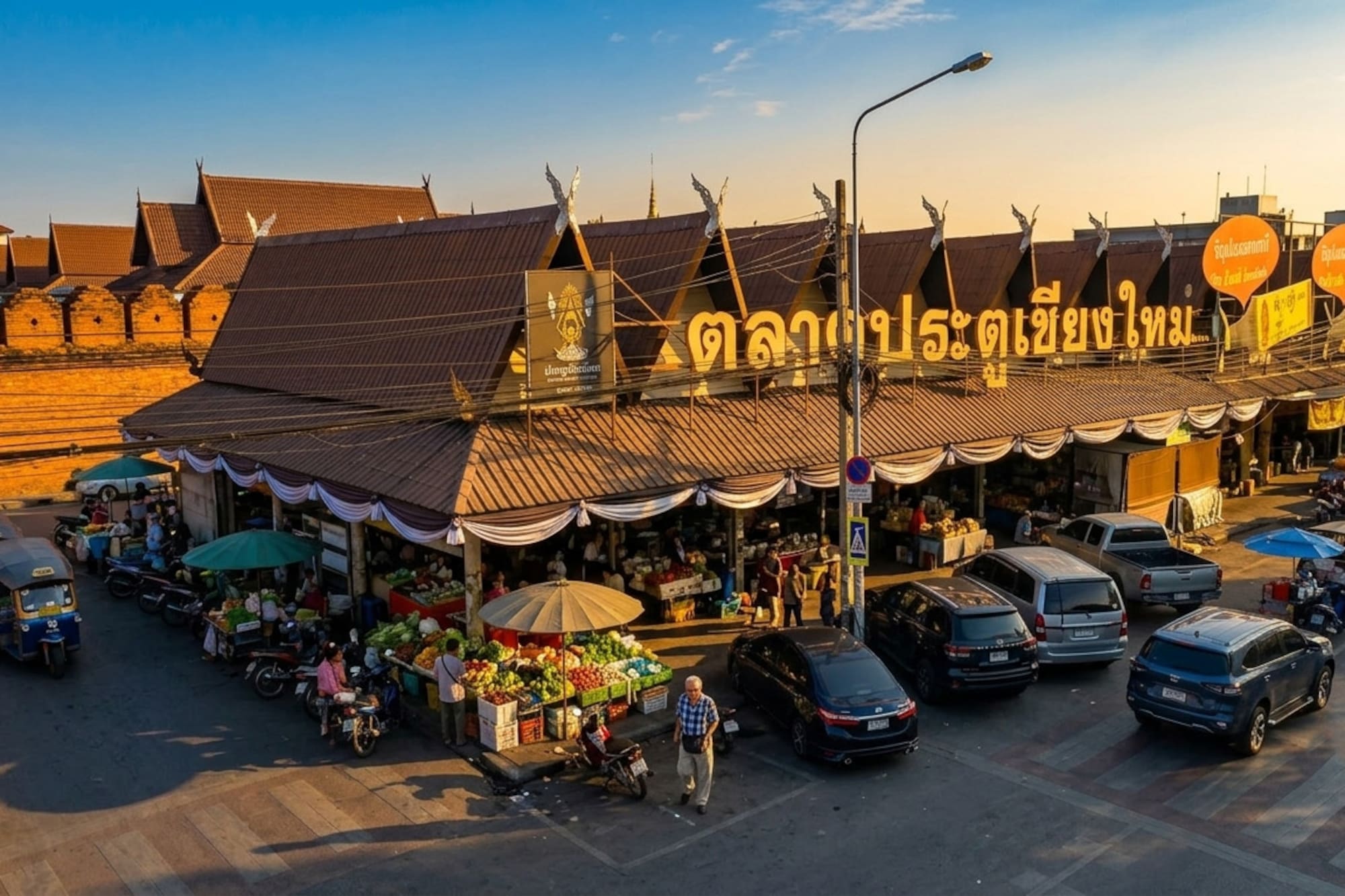
The Chiang Mai Gate Night Market sits right along Bumrung Buri Road, just outside the southern edge of the Old City moat. Unlike the Night Bazaar's souvenir-heavy stalls, this market runs almost entirely on food, dozens of vendors set up along the same stretch of road every evening.
It genuinely leads a double life, and both halves are worth understanding before visiting. Mornings bring a wet market selling fresh vegetables, herbs, pork, and northern curry pastes to nearby households. By evening the same stretch fills with cooking woks, grills, and folding tables, a full transformation rather than just a few extra stalls added on.
That dual identity is part of why locals rate it so highly. It never set out to be a tourist attraction, it simply grew as a genuine neighbourhood market that happens to be excellent, and the food reflects that: authentic, generously portioned, and priced for regulars rather than visitors.
The Chiang Mai Gate Night Market draws a noticeably more local crowd than the markets closer to the Old City's main gates, worth knowing for any traveler who wants a more grounded, less curated version of a Chiang Mai evening out.

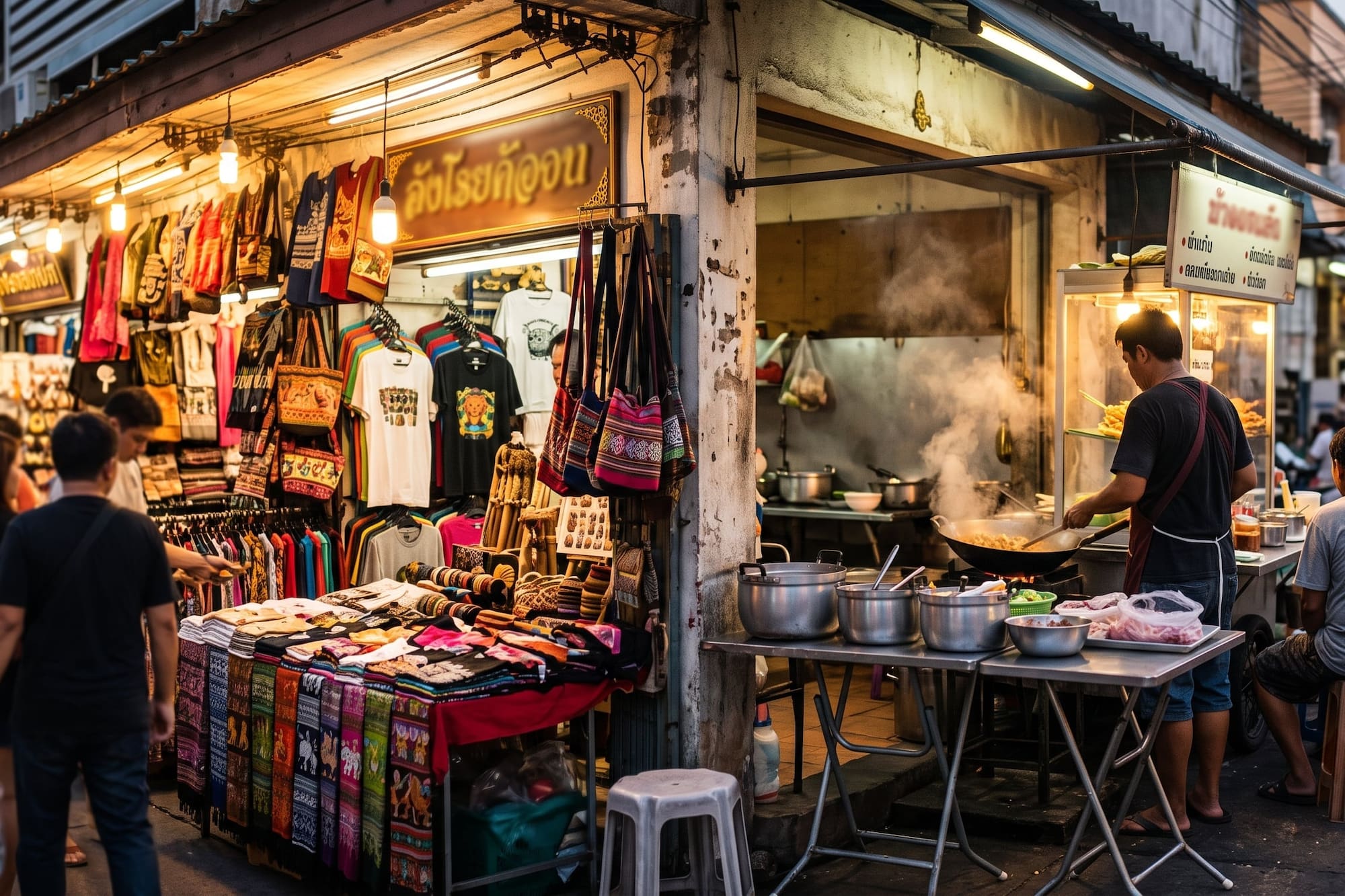
The Night Bazaar is built around shopping, clothing, souvenirs, and handicrafts, with food as a secondary draw. The Chiang Mai Gate Night Market flips that balance entirely, food is essentially the whole point, and there is very little shopping to speak of beyond a few produce stalls left over from the morning market.
Prices also run noticeably lower here overall than at the more tourist-facing markets nearer the river, a reflection of who the market is actually built to serve. A full meal, main dish plus a drink, often costs less at the chiang mai gate night market than a single dish at some of the more polished Night Bazaar food courts.
For a traveler choosing between the two on a given evening, the Night Bazaar suits a night built around browsing and souvenir shopping with food as a side note, while the Chiang Mai Gate Night Market suits an evening built entirely around eating well and watching a genuine neighbourhood market do its thing.
Neither market is really a replacement for the other, and many visitors end up doing both across a longer stay, the Night Bazaar for an evening of shopping closer to the hotel, and the chiang mai gate night market for a dedicated, food-focused evening on a completely different night of the trip.

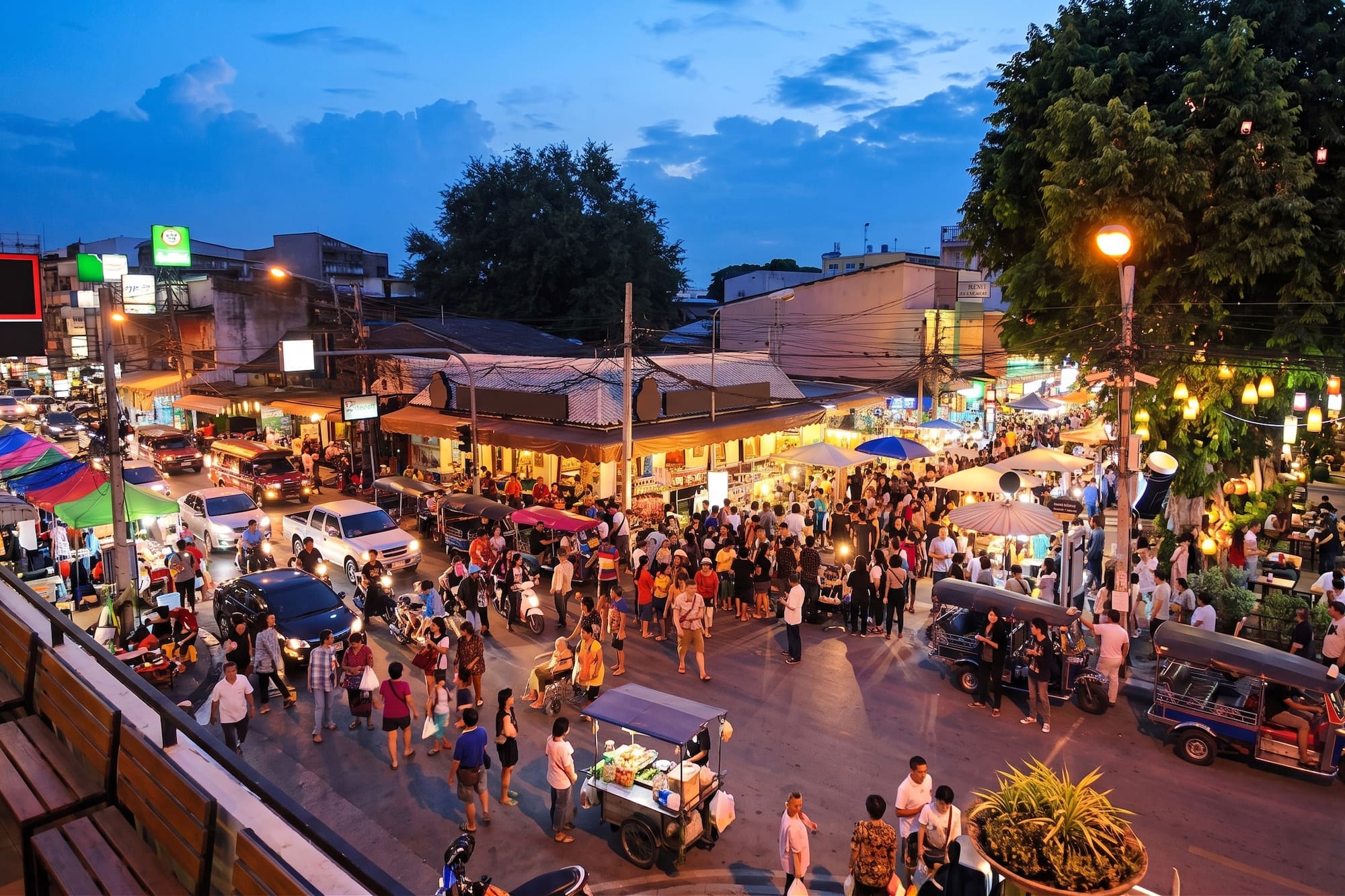
Chiang Mai Gate itself is one of five original gates built into the Old City's square brick wall, first constructed in the late 13th century when King Mengrai founded the city. The gate marks the southern entrance, directly facing the market that has grown up just outside it.
The wall and its wide moat still ring the entire Old City today, brick corner bastions and carefully reconstructed sections visible along most of the perimeter, a genuine piece of 700-plus years of history rather than a modern recreation built for visitors.
Eating dinner at the chiang mai gate night market means eating literally in the shadow of that history, market stalls set up along the moat's edge with the old brick gate visible from several points along the row, a backdrop that adds real character without the market needing to try.

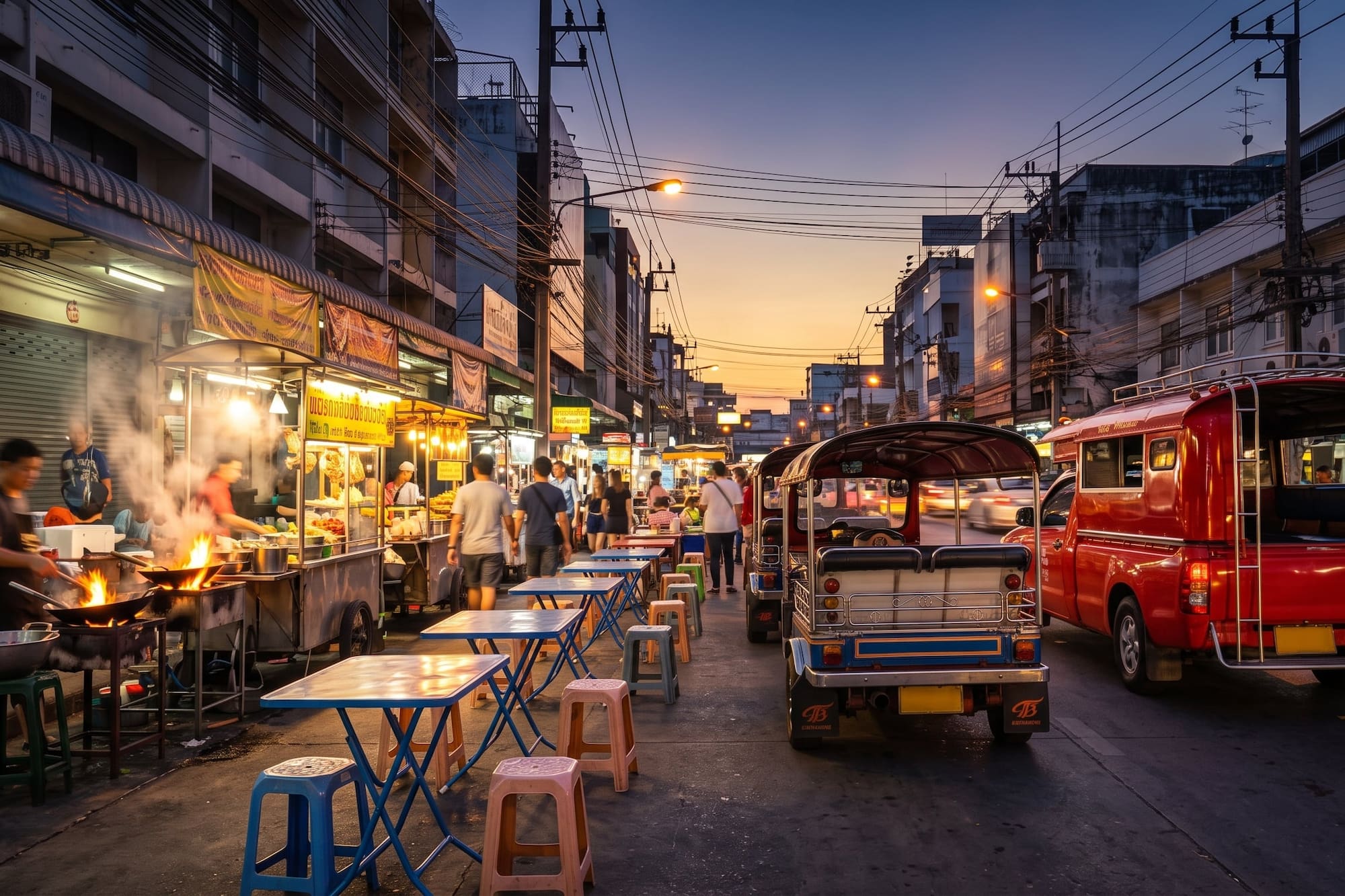
The market runs along Bumrung Buri Road at the southern edge of the Old City, opposite the old moat. It is a well-known landmark locally, so naming it to any driver is enough, no exact address is really needed.
This is not a market within easy walking distance of Meliá Chiang Mai. A short Grab ride or tuk-tuk covers the distance in well under fifteen minutes, the more sensible way to reach it rather than attempting the walk, especially after dark.
Songthaews (the shared red trucks common across the city) also pass along this route regularly and cost less than a private Grab, a reasonable option for anyone comfortable flagging one down and confirming the direction with the driver first.
Traffic around the Old City's southern moat road can slow a ride slightly during the early evening rush hour, worth building in a small buffer of extra time rather than timing an arrival too precisely around a specific stall's busiest hour.
|
Detail |
Information |
|
Morning Hours |
4:00 AM to Noon (wet market) |
|
Evening Hours |
5:00 PM to Midnight (food market) |
|
Location |
Bumrung Buri Road, south side of the Old City moat |
|
Distance from Meliá Chiang Mai |
A short Grab or tuk-tuk ride, not walking distance |
Food is really the entire reason to visit, and the range on offer here leans more toward genuine Northern Thai cooking than the more internationally minded food courts nearer the river.

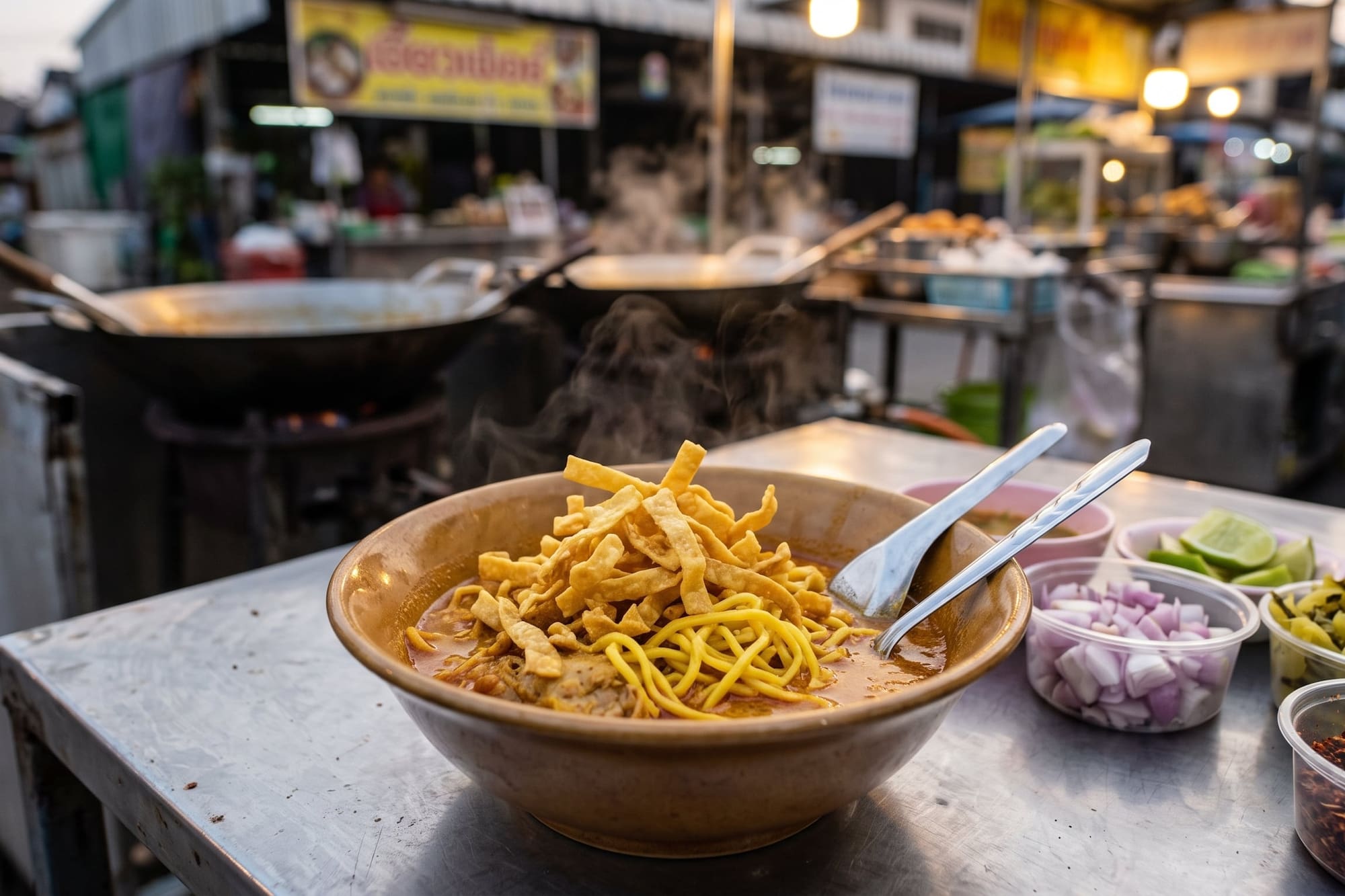
Khao soi, the coconut curry noodle soup Chiang Mai is famous for, turns up at several stalls, each with its own slightly different broth. Sai oua, a coarsely chopped pork sausage seasoned heavily with lemongrass, galangal, and kaffir lime leaf, is another dish worth seeking out specifically at this market.
Nam prik ong, a mild tomato and chilli dip eaten with sticky rice and fresh vegetables, and khanom jeen nam ngiao, rice noodles in a tomato and pork broth, round out the market's strongest local specialities. Huan Chao Bua Tip, a long-running family-run stall, is known specifically for all three.
These dishes rarely appear together on one menu at a single restaurant elsewhere in the city, part of why a market stall, rather than a sit-down restaurant, is often the more genuine way to try several Northern Thai specialities side by side in one sitting.
Read more: What to eat in Chiang Mai: 15 local dishes you must try in 2026

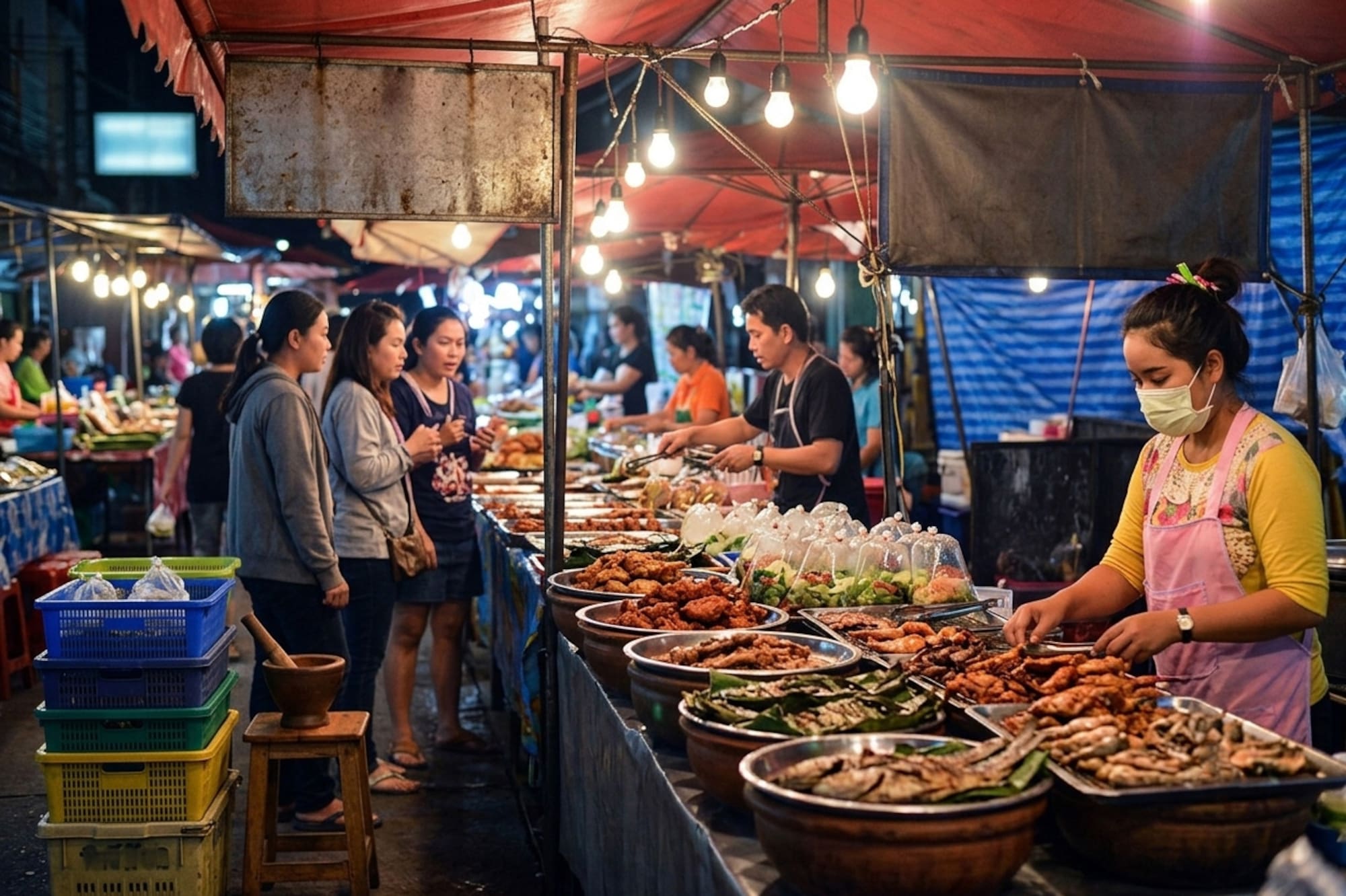
None of these dishes lean toward chilli-shy palates by default, though most vendors will happily adjust the spice level on request, a normal part of ordering at a market built around regulars rather than one-time tourist visits.
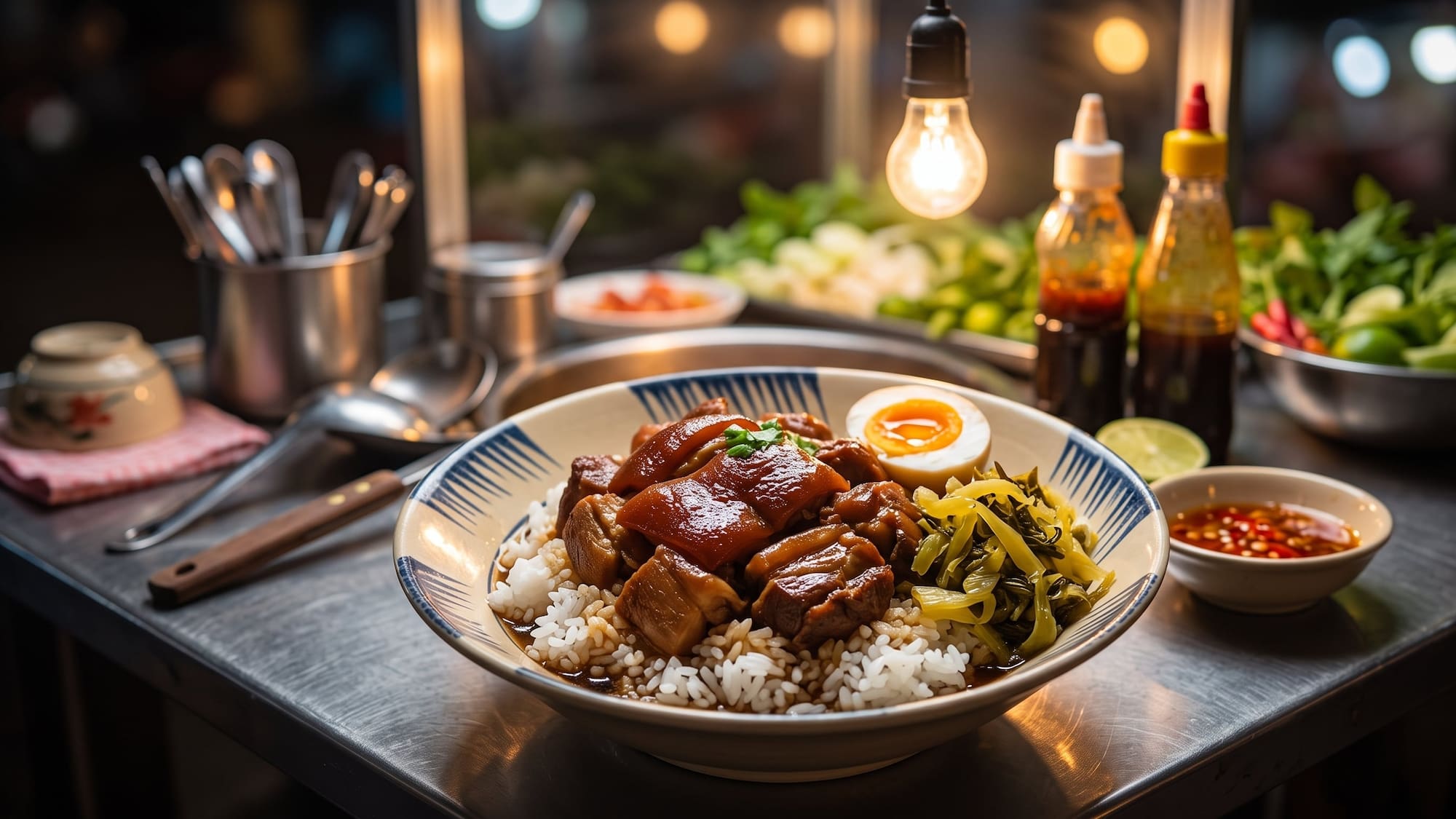
Braised pork leg over rice is another dish worth watching for while walking the stalls, soft, slow-cooked meat and a dark, slightly sweet gravy spooned generously over steamed rice, usually finished with a boiled egg and a side of pickled greens.

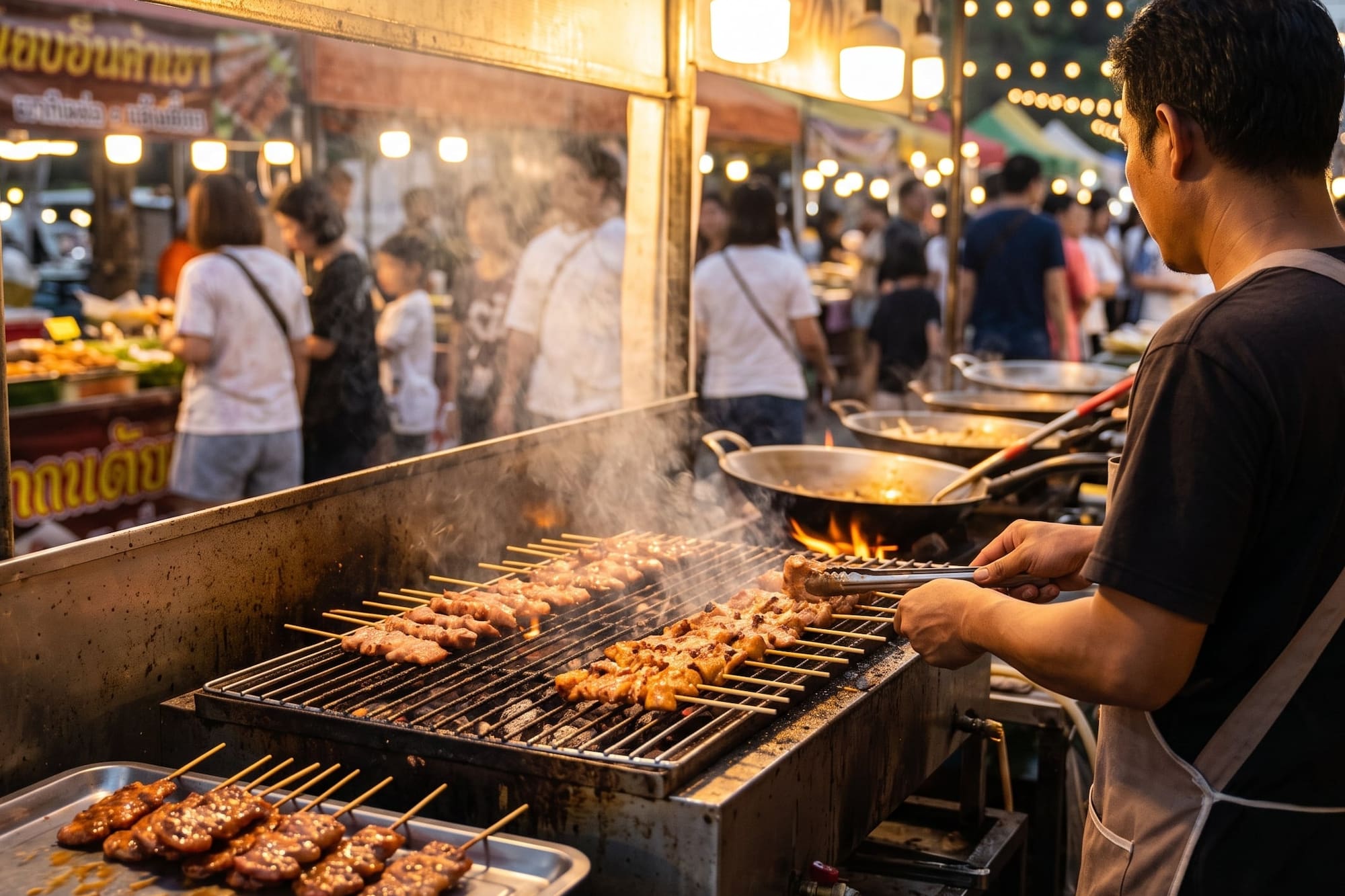
Grilled meats and skewers are common throughout the evening stretch, alongside simpler street snacks, roti, small dumplings, and khanom krok, a coconut pudding cooked in a distinctive half-moon pan.
Grilled pork skewers in particular turn up at several different stalls, each with a slightly different marinade, sweeter at some, more heavily charred and smoky at others, worth trying more than one version across a single evening to compare.
Mango sticky rice appears here too, as it does at nearly every Chiang Mai market, though the fruit itself tends to be fresher given how close the market sits to the produce coming through its own morning wet-market side.
A handful of dessert stalls also sell Thai-style pancakes folded around banana and chocolate, cooked fresh on a flat griddle, a familiar closing note for anyone who has eaten their way through several savoury stalls already.

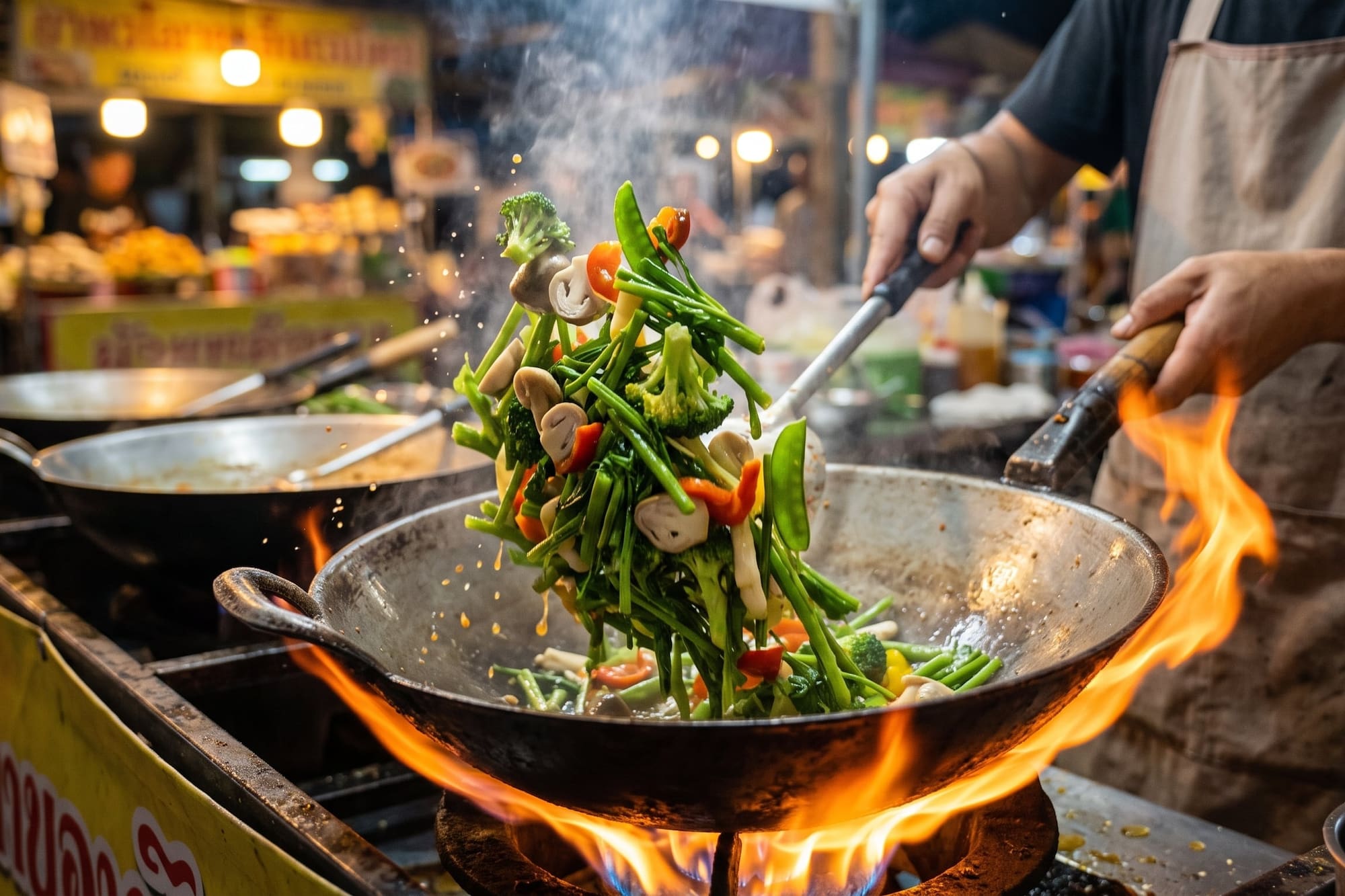
Vegetable-forward stir-fries and simple noodle soups without meat are available at several stalls, worth asking about directly since a menu board in Thai does not always make the vegetarian options obvious at a glance.
A simple phrase like 'mai sai neua sat' (no meat) written on a phone or spoken slowly is usually enough to get a genuinely meat-free version of most noodle or rice dishes at the market, even at a stall that does not advertise vegetarian options directly.
Vegetarian diners should also check whether dishes contain fish sauce, oyster sauce or shrimp paste as these are common ingredients in Thai cooking and may not always be obvious from the menu.
Fresh fruit stalls, a holdover from the market's morning wet-market side, sell whole and cut fruit by the bag, a light, cooling option between heavier savoury dishes on a warm evening.

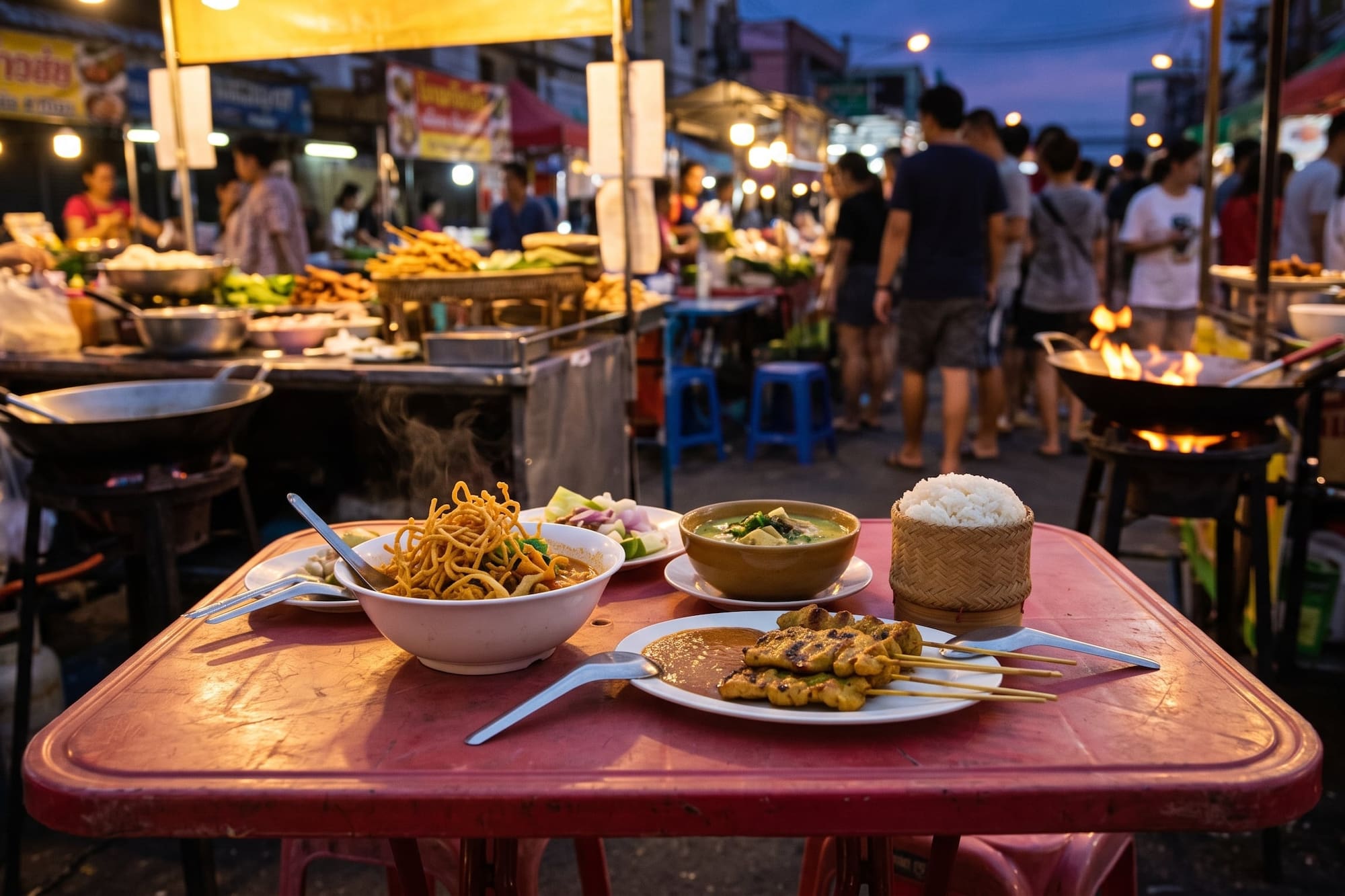
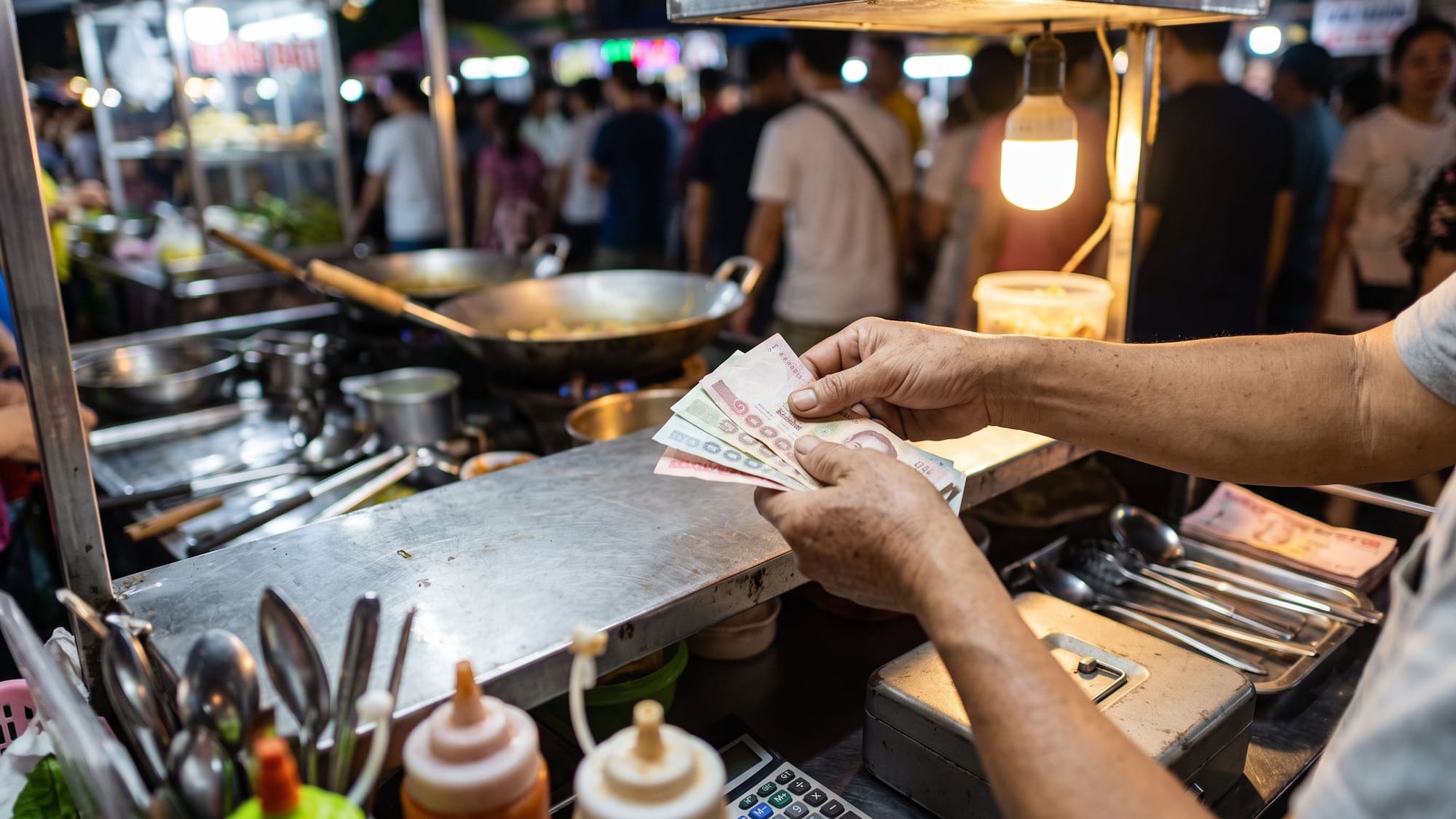
Most stalls sell food to go rather than offering their own seating, though a handful of adjacent tables serve several vendors at once, a shared arrangement common at markets built this way. Ordering usually means pointing at a dish or naming it if the pronunciation is close enough, then paying on the spot before the food is handed over.
It is entirely normal to order from three or four different stalls across one visit and carry everything back to the same shared table, mixing a noodle dish from one vendor with grilled skewers from another and dessert from a third, rather than committing an entire meal to a single stall.

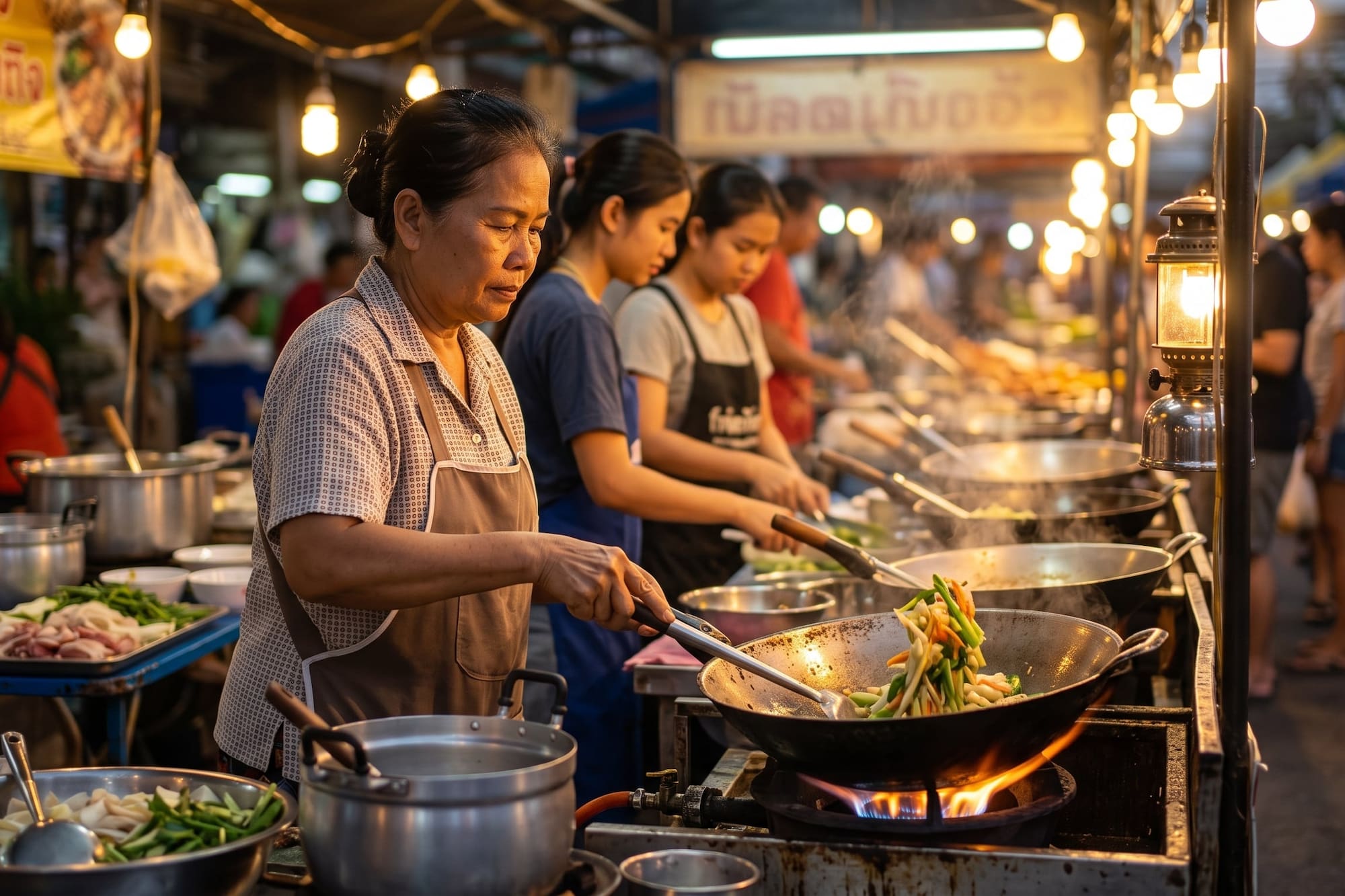
Huan Chao Bua Tip is one of the market's better-known family-run stalls, operating for years along the same stretch of Bumrung Buri Road. It specialises in exactly the trio of dishes the market itself is best known for, khao soi, nam prik ong, and sai oua, all made fresh each evening rather than reheated from earlier batches.
It is a useful first stop for anyone visiting for the very first time and unsure where to start, a single stall that genuinely represents the market's strongest local specialities in one place, before branching out to other vendors for grilled food or dessert.
Stalls like this one, run by the same family across years rather than turning over season to season, are part of what gives the market its consistency. A dish ordered here on one visit tends to taste the same on the next, a reliability that is harder to find at markets built more around rotating pop-up vendors.
Detailed Information:
Timing shapes the experience here more than at most markets, since the crowd, the heat, and the atmosphere all shift noticeably depending on the day and hour. Here's what to expect once you're there.

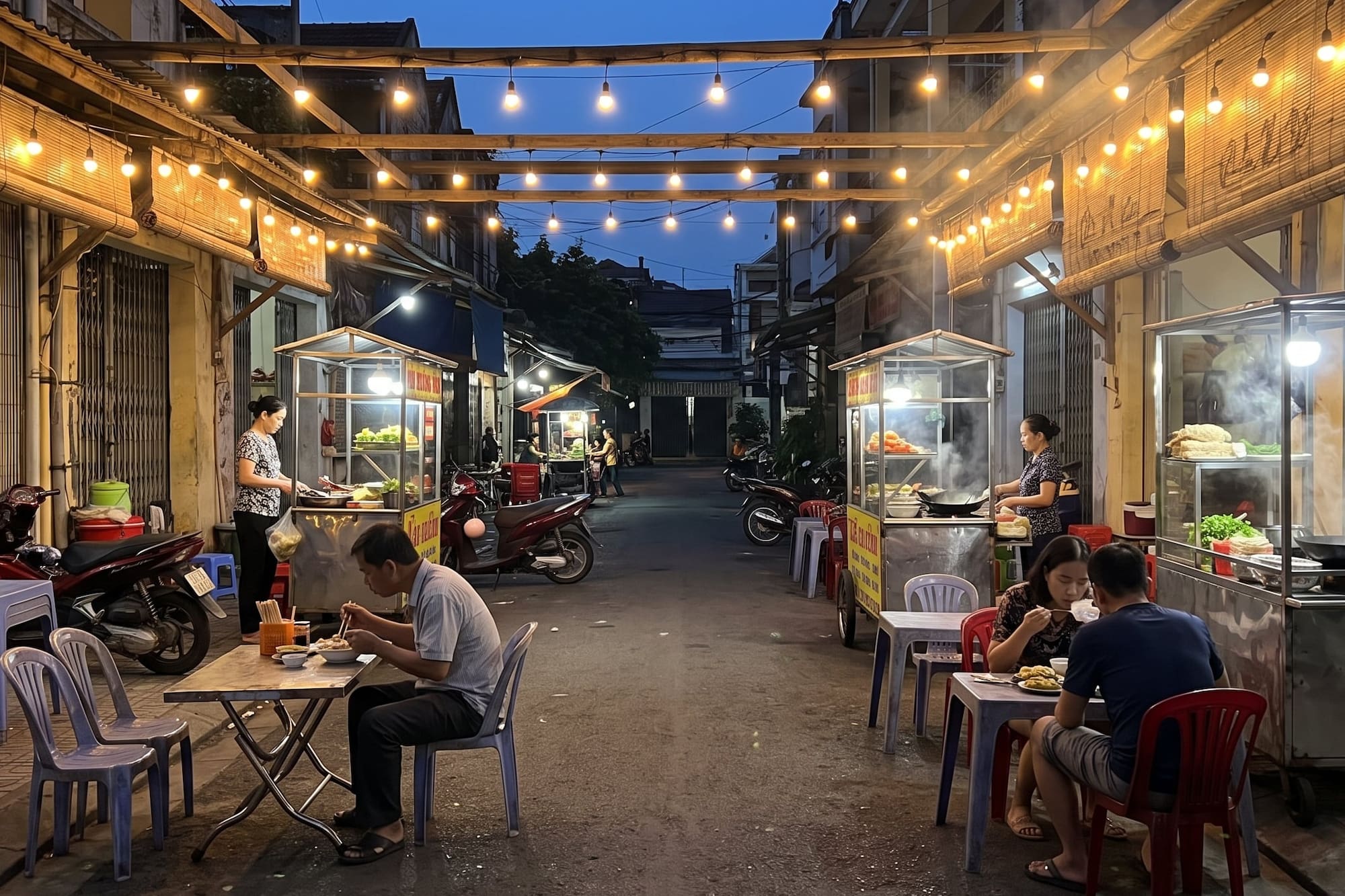
The chiang mai gate night market runs every evening, not just weekends, one of its real advantages over the Sunday Walking Street or Saturday Market, which only happen once a week. Arriving around 6:00 PM to 7:00 PM catches most stalls freshly set up and cooking.
Weeknights tend to run noticeably quieter than weekends, closer to how the market feels on an ordinary evening for the people who actually live nearby, a genuine option for travelers who specifically want to avoid a big tourist crowd.
Friday and Saturday evenings bring a noticeably bigger crowd, both local diners out for the weekend and a modest increase in visitors, still nowhere near the density of the Sunday Walking Street a few streets away but worth planning around if a quiet visit matters more than a lively one.

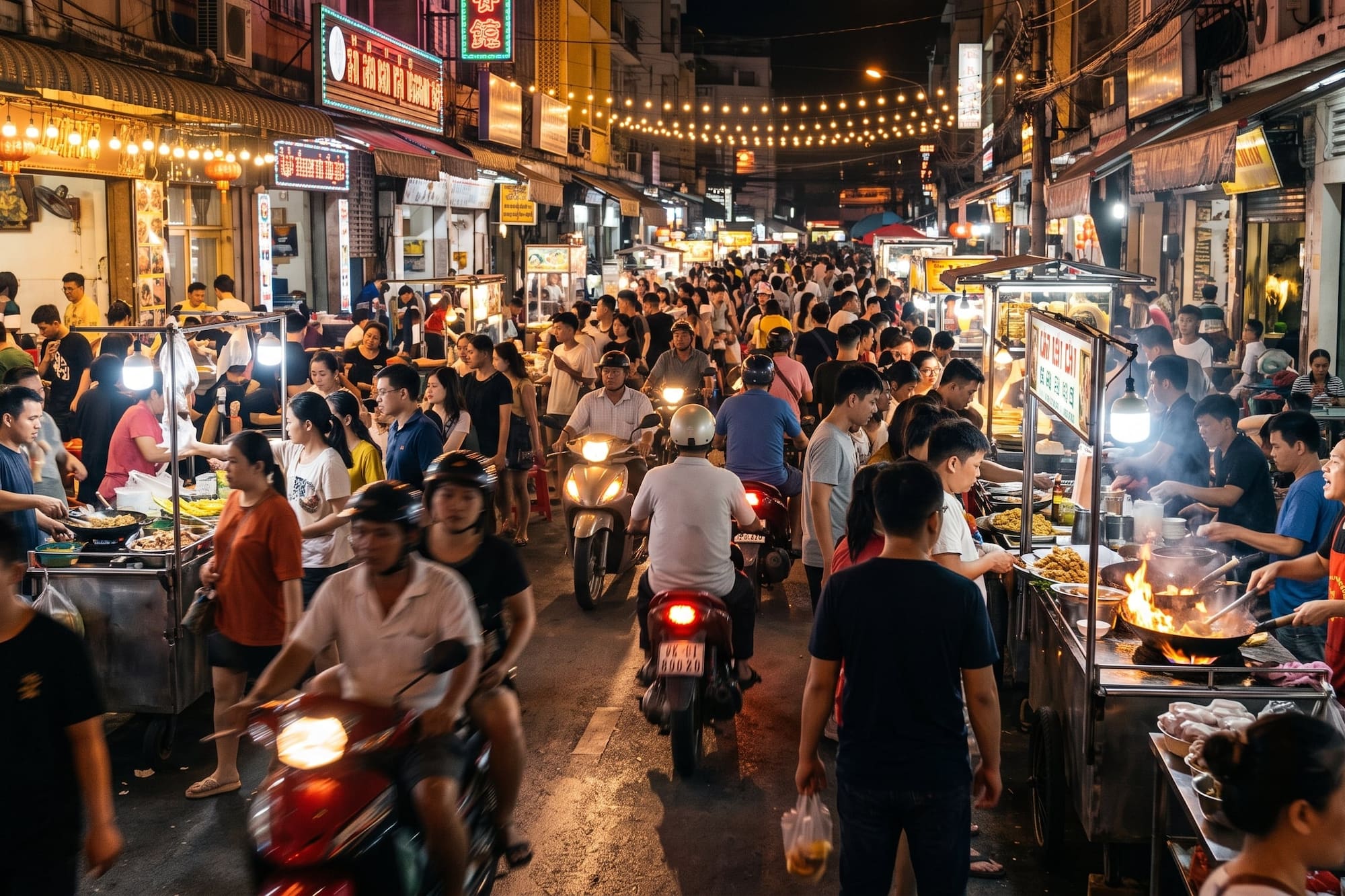
The atmosphere leans practical rather than performative, plastic stools and folding tables rather than styled seating, locals collecting takeaway boxes on their way home from work alongside a handful of visitors eating in.
It is louder and more chaotic in the best sense than a curated food court, woks clanging, orders called out in Thai, motorbikes weaving past the edge of the stalls, a genuinely unfiltered slice of everyday Chiang Mai rather than a market built with tourists specifically in mind.
None of this makes the market unwelcoming, it simply was not designed around visitors, and a little patience with the pace and noise pays off quickly once the food starts arriving.
Seating is informal and often shared, small plastic tables set up directly outside a stall rather than a dedicated communal food court area, so it is entirely normal to eat standing or to share a table with strangers during a busy stretch of the evening.

The Old City's temples, walking streets, and the rest of its market scene all sit within a fairly compact area once inside the moat, close enough to combine with a Chiang Mai Gate evening for anyone planning a fuller day around the southern part of the city.
A common pattern is spending the afternoon exploring a temple or two inside the walls, then finishing the day at the market once the evening stalls open, rather than treating the two as separate trips on separate days.
The Sunday Walking Street, which fills much of the Old City's main road once a week, sits within the same general area too, worth checking the calendar before a trip in case a visit happens to land on a Sunday evening and both experiences can be combined in one outing.
Songthaews and Grab both cover the short distance between the Old City's interior and the market easily and cheaply, so there is no real logistical reason to split the two across different days unless time is genuinely tight.
Read more: Chiang Mai Map 2026: Top Tourist Attractions & Hotels
A little planning goes a long way at a market built more for locals than visitors, mostly around payment, ordering, and setting the right expectations before arriving.
Portion sizes run generous by design, this is a market feeding regulars, not plating for photos, so pacing across a few stalls beats committing everything to one dish.
A budget of around 150 to 250 baht (roughly US$4 to US$7) comfortably covers a genuinely full meal sampled from two or three different stalls, one of the better value evenings available anywhere in the city for that price.

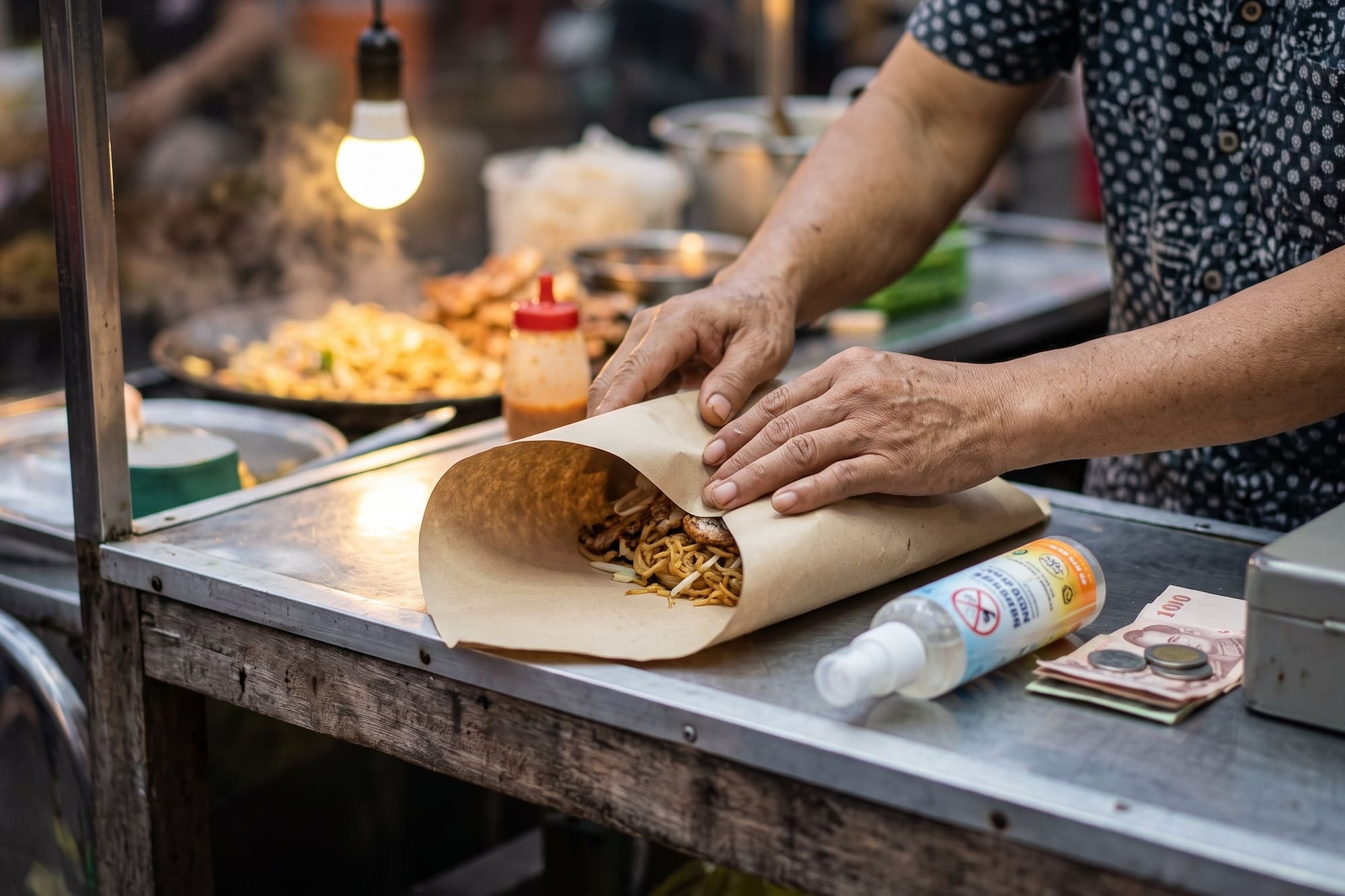
Photographing food or stalls is generally fine and rarely draws objection, though it is still polite to ask before photographing a vendor directly rather than assuming it is welcome, ordinary courtesy at a market that serves working locals first.
Rainy season evenings, roughly June through October, can bring a sudden downpour that scatters diners under whatever cover is nearest. Most stalls have some kind of awning, but it is worth checking the forecast before heading out on a cloudy evening.
Mosquito activity tends to pick up right around dusk when the market is just getting going, another reason repellent is worth packing alongside cash and a phone with the Grab app already installed before setting out for the evening.
A trip built around several different Old City markets goes more smoothly with a base that is a short ride from all of them, without giving up the comfort of a full-service hotel at the end of the evening. Here is what that kind of base covers, from the room itself through to winding down afterward.


A guesthouse tucked directly inside the Old City walls might sit a few minutes closer to the Chiang Mai Gate Night Market, but it rarely comes with a rooftop bar, a full breakfast buffet, or a front desk staffed around the clock. Meliá Chiang Mai on Charoen Prathet Road trades a few of those minutes for exactly that kind of comfort, still within a short ride of the market and about 1.5 kilometres from Tha Phae Gate.
The property itself is built as a 22-floor tower with a separate 7-floor podium building attached, which is part of why it can offer that rooftop bar and full breakfast setup a guesthouse simply does not have the scale for.
Joining the free MeliáRewards programme before booking is worth doing regardless of which room ends up chosen, since member rates and perks apply the same way to a market-hopping stay as to any other.


Several evenings spent on foot across different Old City markets call for a room that rewards coming back to, not just a bed. The Premium Room, 44 square metres with a king or twin layout and teakwood bedside tables, covers that well, roomy enough for a couple to genuinely unwind rather than just collapse after a full evening standing at stalls.
For a couple who wants The Level's private check-in and concierge desk folded into the same market-hopping trip, the Level Premium Room matches the same 44 square metres with a garden view and Thai-inspired decor, the concierge a genuinely useful resource for confirming which market runs which night.
Splitting evenings between a market like this one and the hotel's own dining venues is a genuinely good way to experience Chiang Mai, a night at the market for something unfiltered and local, another evening at the resort's own restaurants for something more polished, rather than picking one approach for the whole trip.


The hotel's front desk can arrange a Grab or taxi at any hour, useful for the return trip from Chiang Mai Gate once the market winds down toward midnight, rather than trying to flag down transport on an unfamiliar stretch of road late at night.
Guests without a fixed itinerary often find it easiest to head out toward evening, spend an hour or two working through the market's stalls, and be back at the hotel within about half an hour door to door, a manageable evening even for a shorter stay in the city.


MAI The Sky Bar on the 22nd floor stays open later than most rooftop bars in the city, a fitting last stop after a market evening spent standing and eating at street level.
The Serrano ham, Catalan fuet, and chorizo Cold Cuts Board, or the Chiang Mai Cheese Board with local cheeses and dried fruit, both work as a light second course for anyone who wants a bite alongside a drink without committing to a full second dinner after the market's own food stalls.
Entry carries no cover charge for hotel guests or outside visitors, closing midnight nightly and opening at 5:00 PM September through March or 6:00 PM April through August, so the exact timing is worth checking against the season before heading up.

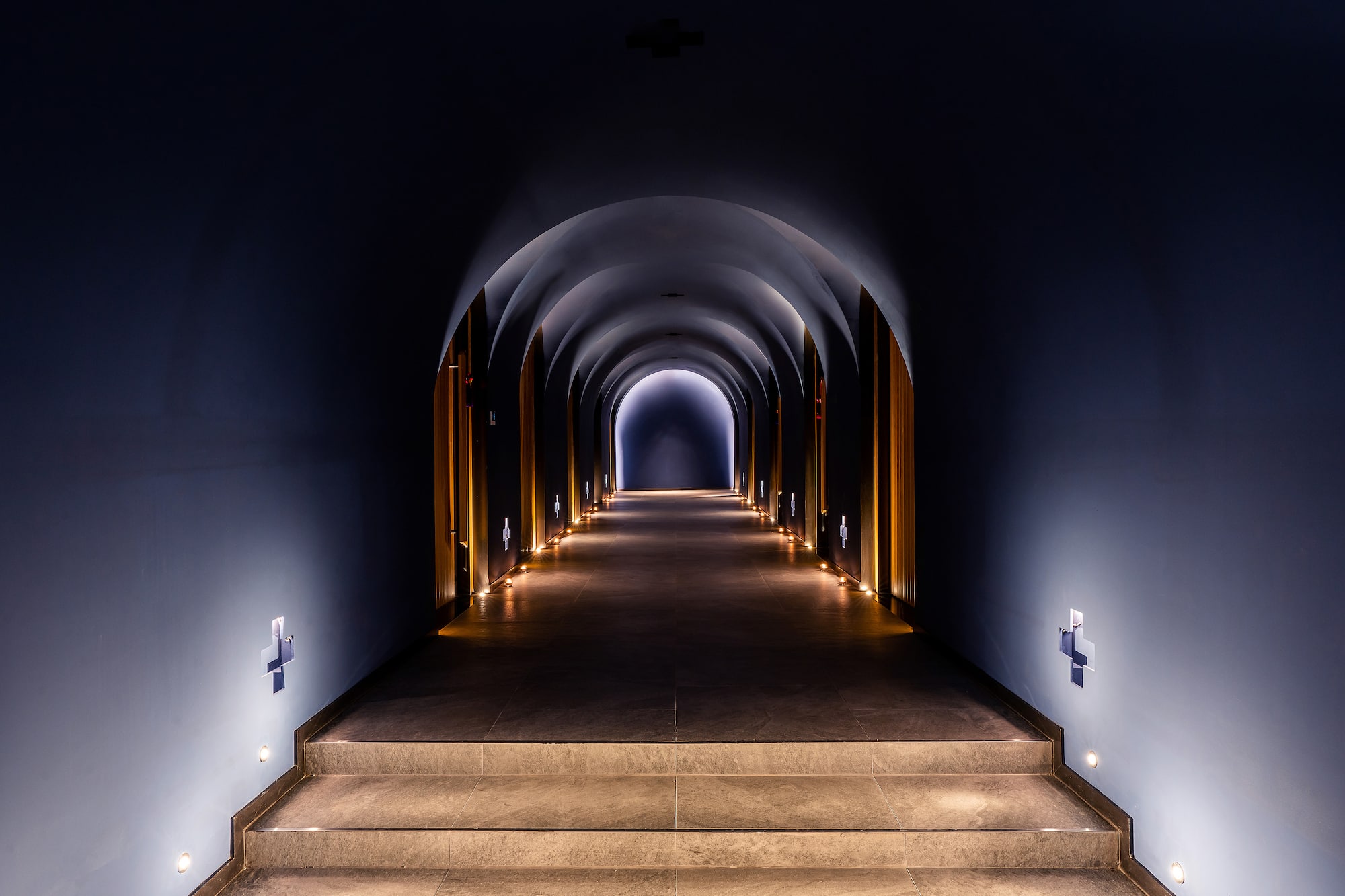
For a quieter finish, YHI Spa opens early enough the next morning to work out any soreness from a long evening spent walking between market stalls, a practical way to ease into the next day of sightseeing.
A Traditional Thai massage in one of the spa's seven treatment rooms, each with an underwater theme, suits the morning after a market night better than a longer treatment, enough to loosen up without eating into a full day of sightseeing.
Guests who prefer a lighter start after a heavy market dinner the night before can also begin the next morning at the hotel's own outdoor Swimming Pool instead, a quiet, unhurried option before heading back out to see more of the Old City and its many markets.


Between genuine Northern Thai cooking, an every-night schedule, and a crowd that skews far more local than touristy, the Chiang Mai Gate Night Market rewards anyone willing to go a little further than the Night Bazaar for a proper dinner in the city.
Book a stay at Meliá Chiang Mai and use it as the comfortable base for a night out at Chiang Mai Gate, a short, easy ride from a full-service resort to one of the city's most genuine, best-value food markets.

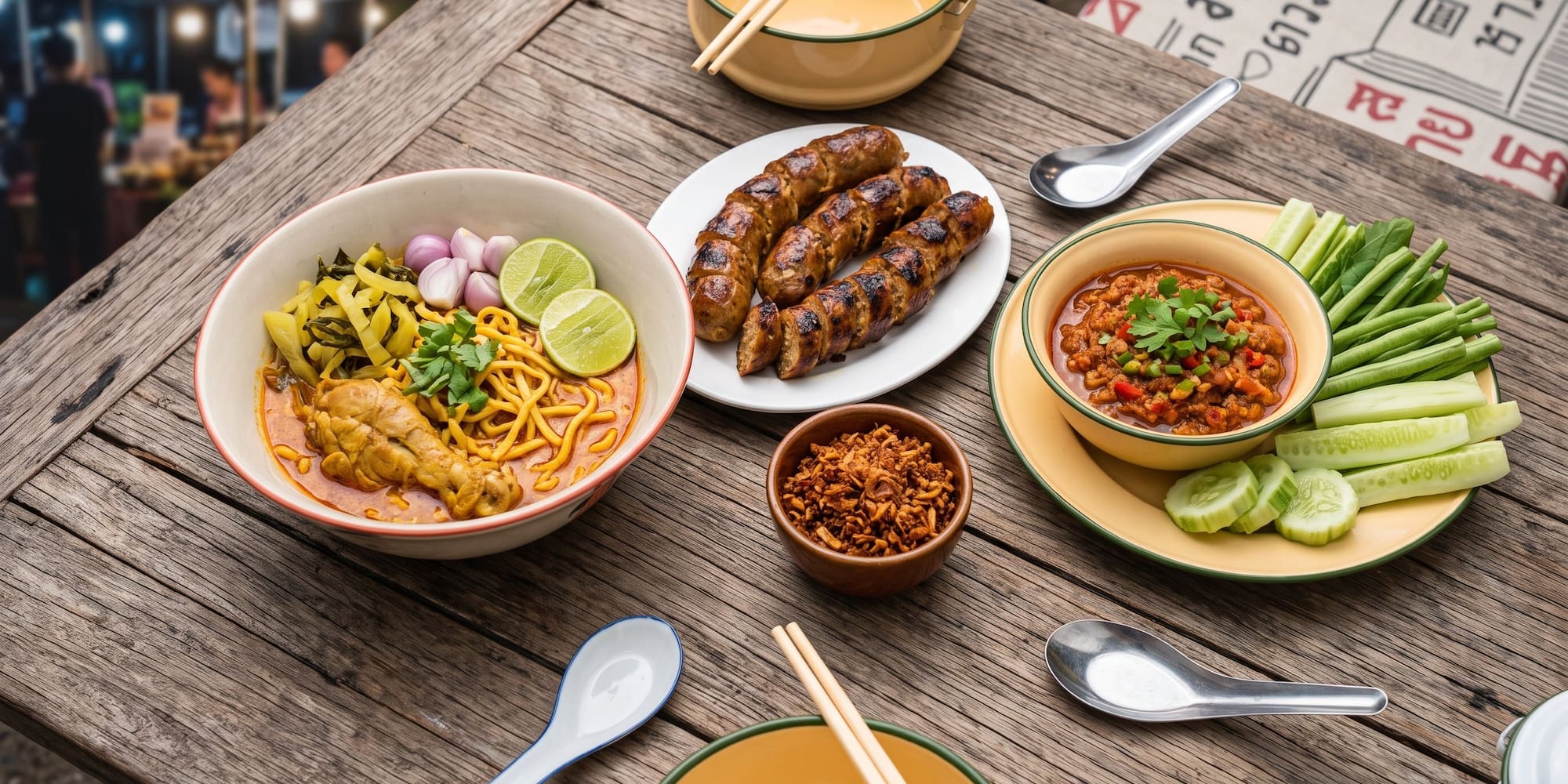
It is best known for Northern Thai specialities like khao soi, sai oua sausage, nam prik ong, and khanom jeen nam ngiao, alongside grilled meats, street snacks, mango sticky rice, and braised pork leg over rice.
It runs every day, a wet market from 4:00 AM to noon and a food-focused night market from 5:00 PM to midnight, unlike weekly markets that only operate one day a week.
It is primarily a local market. Tourists visit too, but the crowd, prices, and food selection all lean toward regulars rather than being built around visitor expectations, which is exactly what makes it worth the short trip from the Night Bazaar area.
A short Grab ride or tuk-tuk from the Night Bazaar area covers the distance in well under fifteen minutes. It is not within comfortable walking distance, so arranging a ride is the more practical option, especially once it gets dark.
Culture