,regionOfInterest=(2900.5,1949.5))
,regionOfInterest=(2900.5,1949.5))
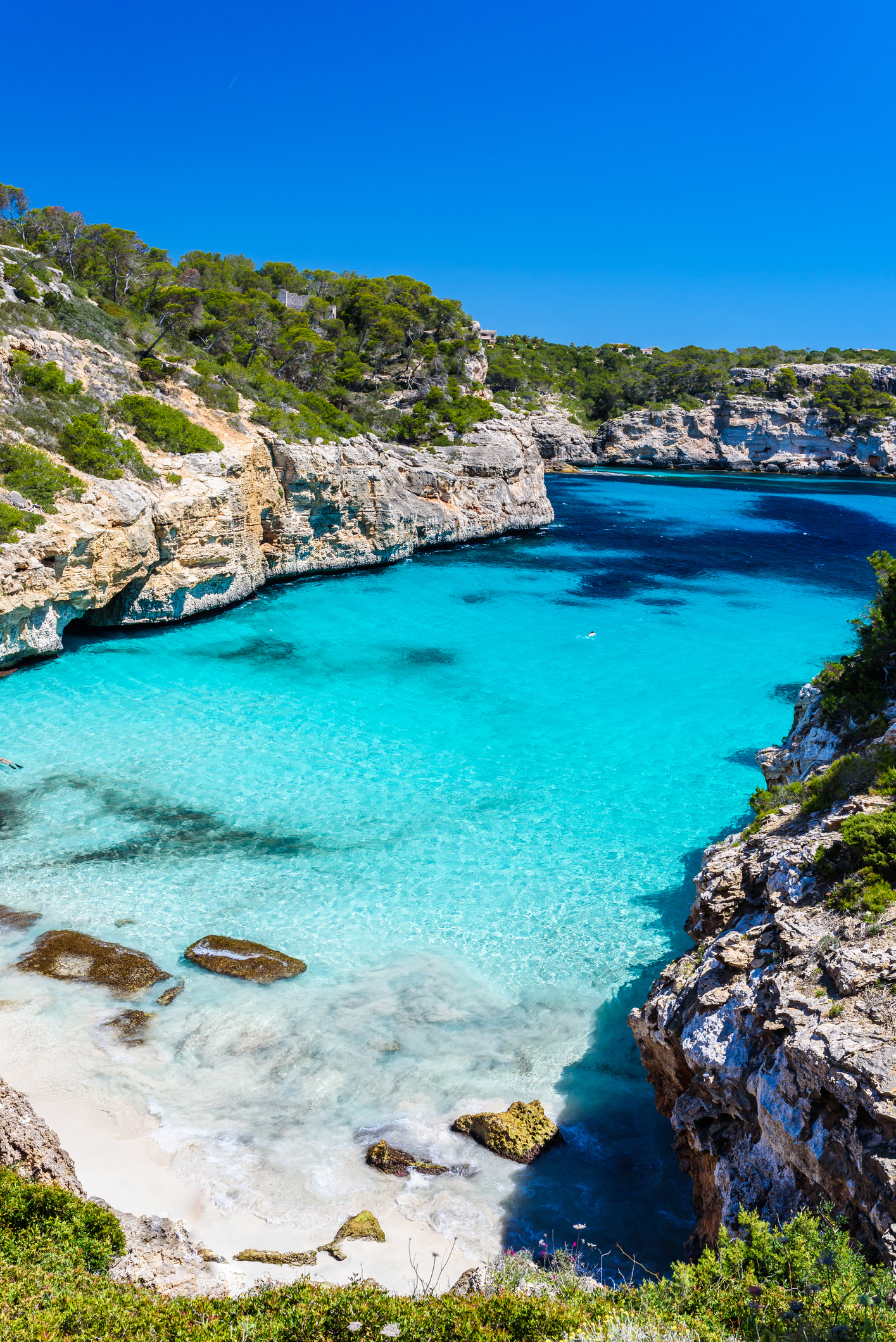
The best coves in Mallorca
,regionOfInterest=(707.5,1059.5))
,regionOfInterest=(707.5,1059.5))
Culture
,regionOfInterest=(1023,575.5))
,regionOfInterest=(1023,575.5))
Culture
,regionOfInterest=(500,500))
,regionOfInterest=(500,500))
All-terrain writer specialising in tourism, fashion and trends. A curious soul, traveller, reader and sports enthusiast, keen to discover every corner of the world.
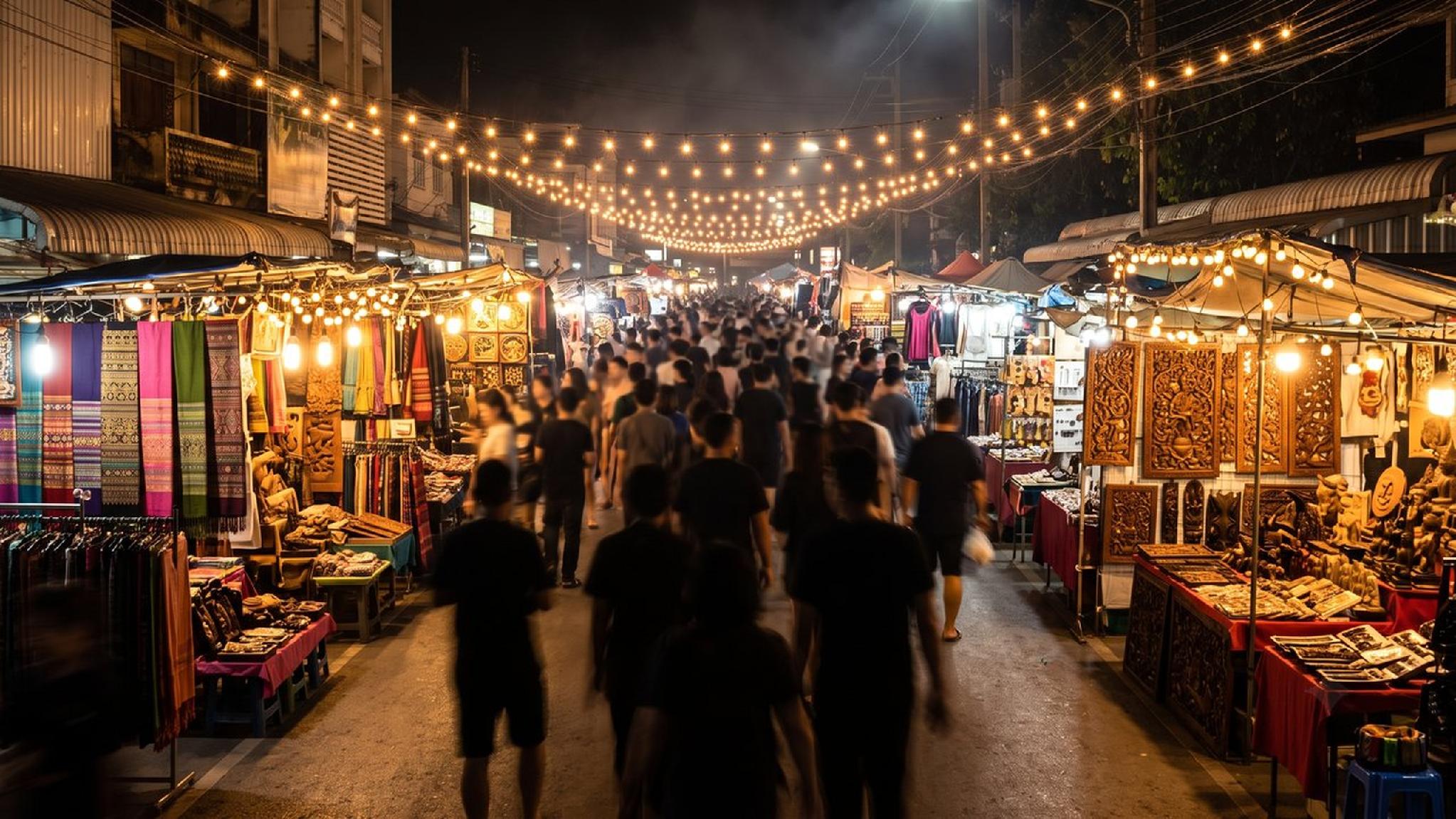
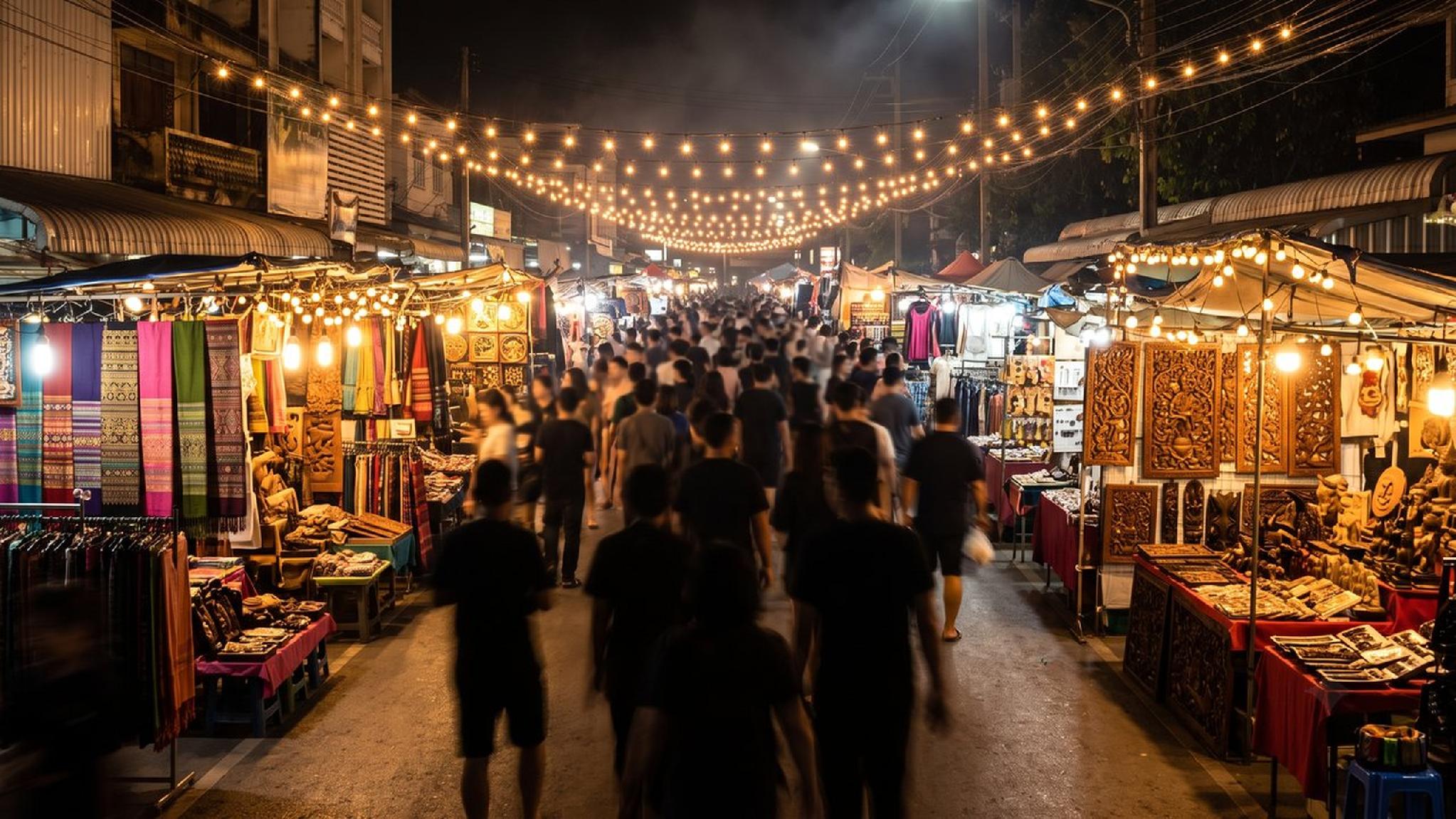
You don't need to hop between five different markets to have a proper Chiang Mai night out. One does most of the job, and it happens to be the one running every single night of the year.
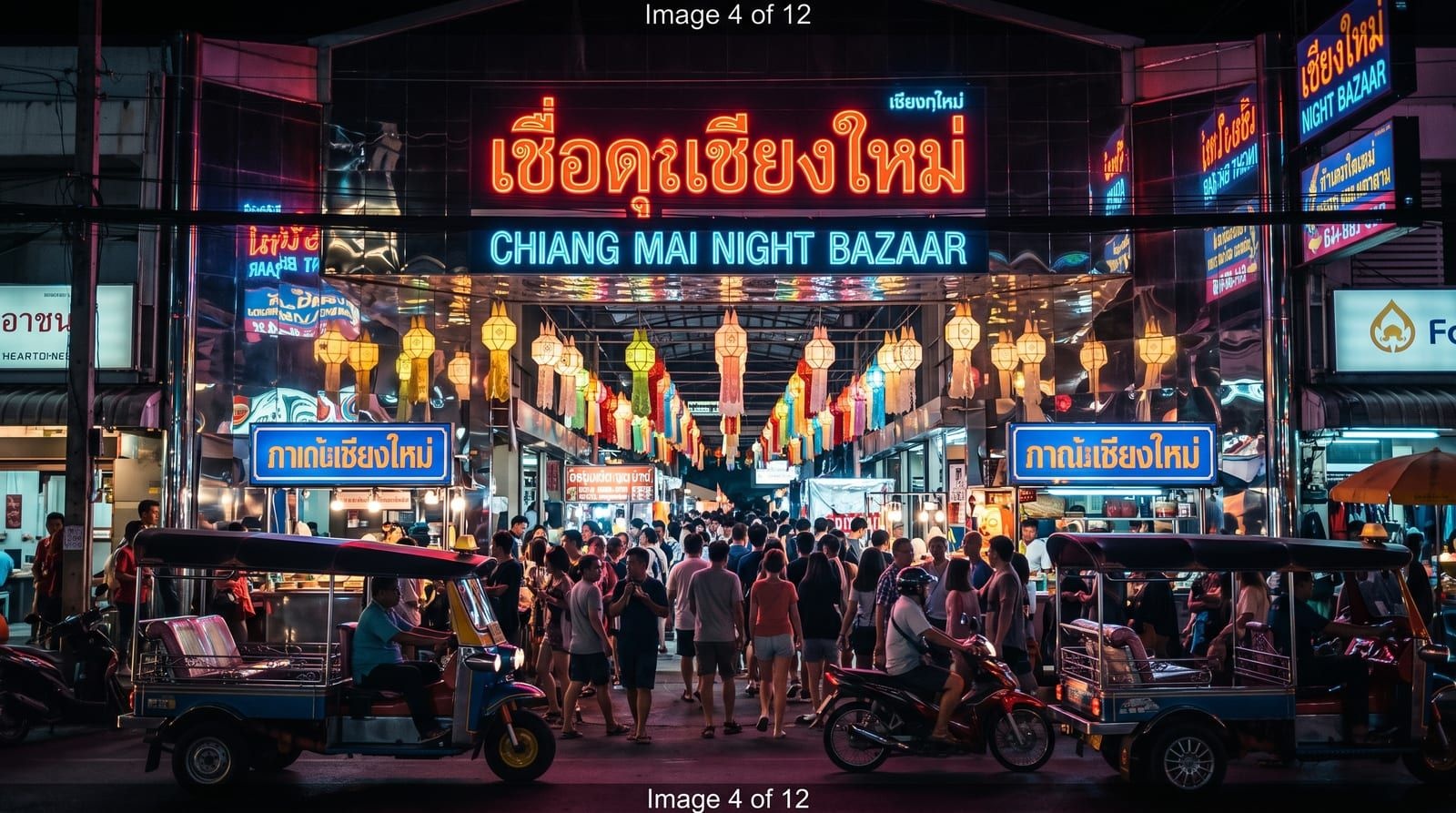
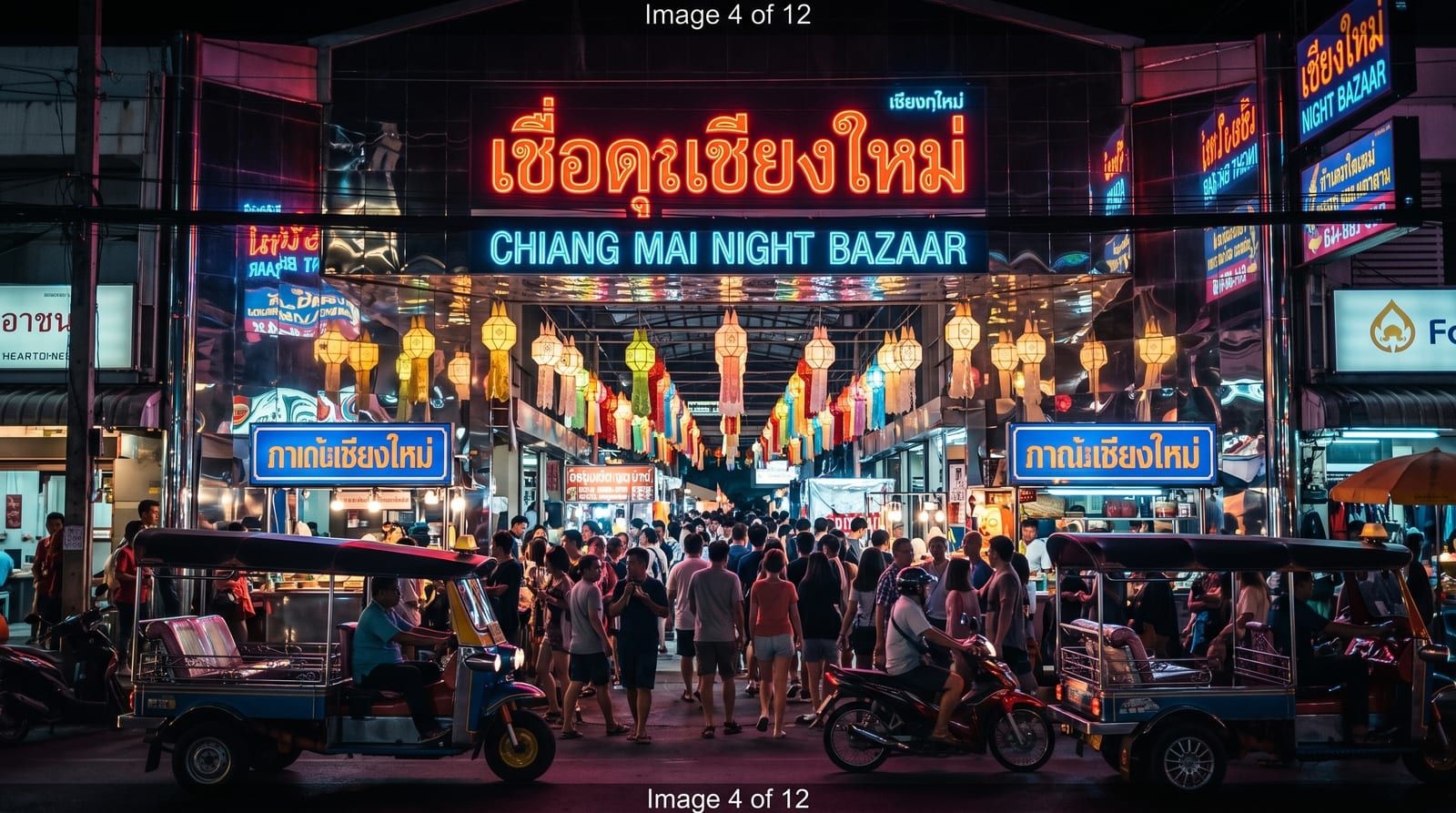
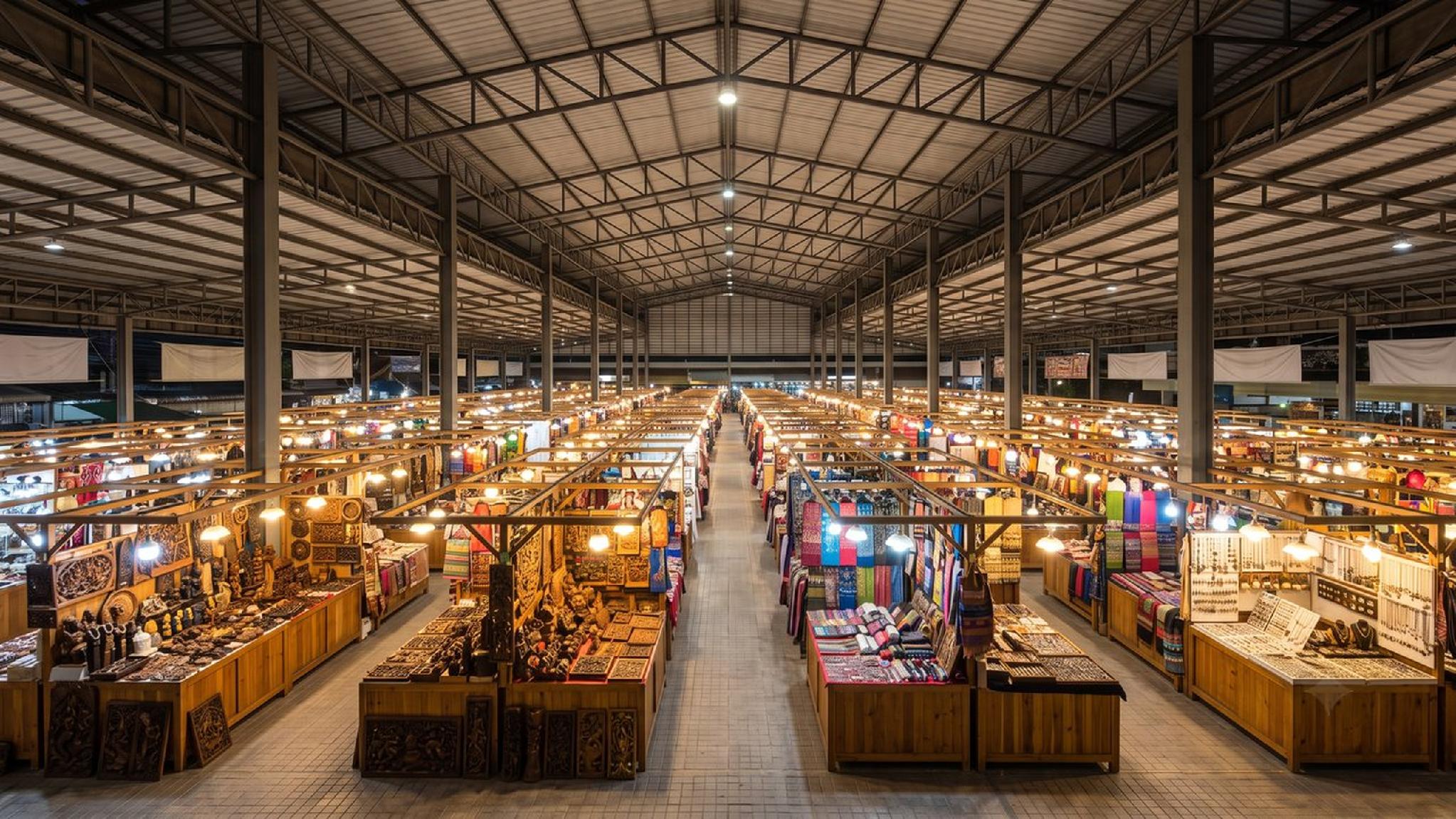
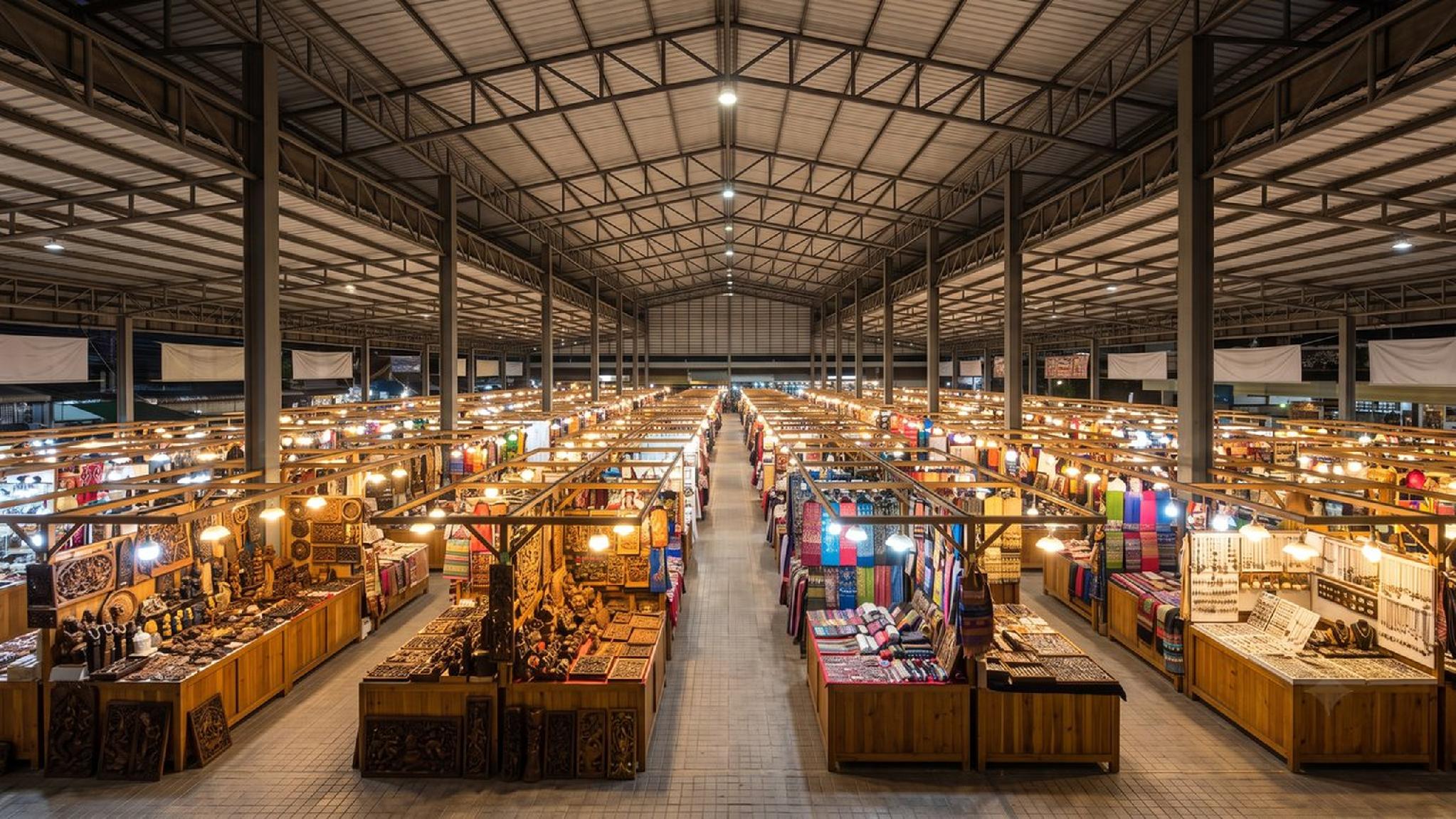
The Chiang Mai Night Bazaar is less a single market than a whole district that took shape along an old caravan trade route, and it still works the same way after dark today: shopping, food, and a bit of theatre, all within a few hundred metres of Chang Khlan Road. What follows is a full breakdown of what it actually is, what is worth buying and eating there, and how to spend an evening, or several, without working it out on the fly.
,regionOfInterest=(800,446.5))
,regionOfInterest=(800,446.5))
,regionOfInterest=(800,446.5))
,regionOfInterest=(800,446.5))
,regionOfInterest=(800,446.5))
,regionOfInterest=(800,446.5))
,regionOfInterest=(800,446.5))
,regionOfInterest=(800,446.5))
,regionOfInterest=(1023,575.5))
,regionOfInterest=(1023,575.5))
The story usually starts in 1977, when tour buses began stopping at a hotel on Chang Khlan Road and local vendors, many tied to craft workshops out in San Kamphaeng, started setting up tables to sell to guests once they were back for the evening. What began as a handful of tables grew, through the 1980s and into the 1990s, into permanent buildings and a nightly market that never really stopped.
The commercial history of the road itself runs much further back than that. Chang Khlan sat along an old trade route linking Yunnan, Burma, and Laos, where caravans once stopped to deal in silk, tea, and other goods long before the first souvenir stall appeared.
Kalare Night Bazaar was added in the late 1980s as the district kept expanding, and the international attention Chiang Mai received around the 1995 Southeast Asian Games helped cement the area as the city's main evening shopping destination. Ownership has shifted over the decades too, from the Chinese merchant families who first ran the stalls to the mostly Thai proprietors who operate them today.
,regionOfInterest=(1023,575.5))
,regionOfInterest=(1023,575.5))
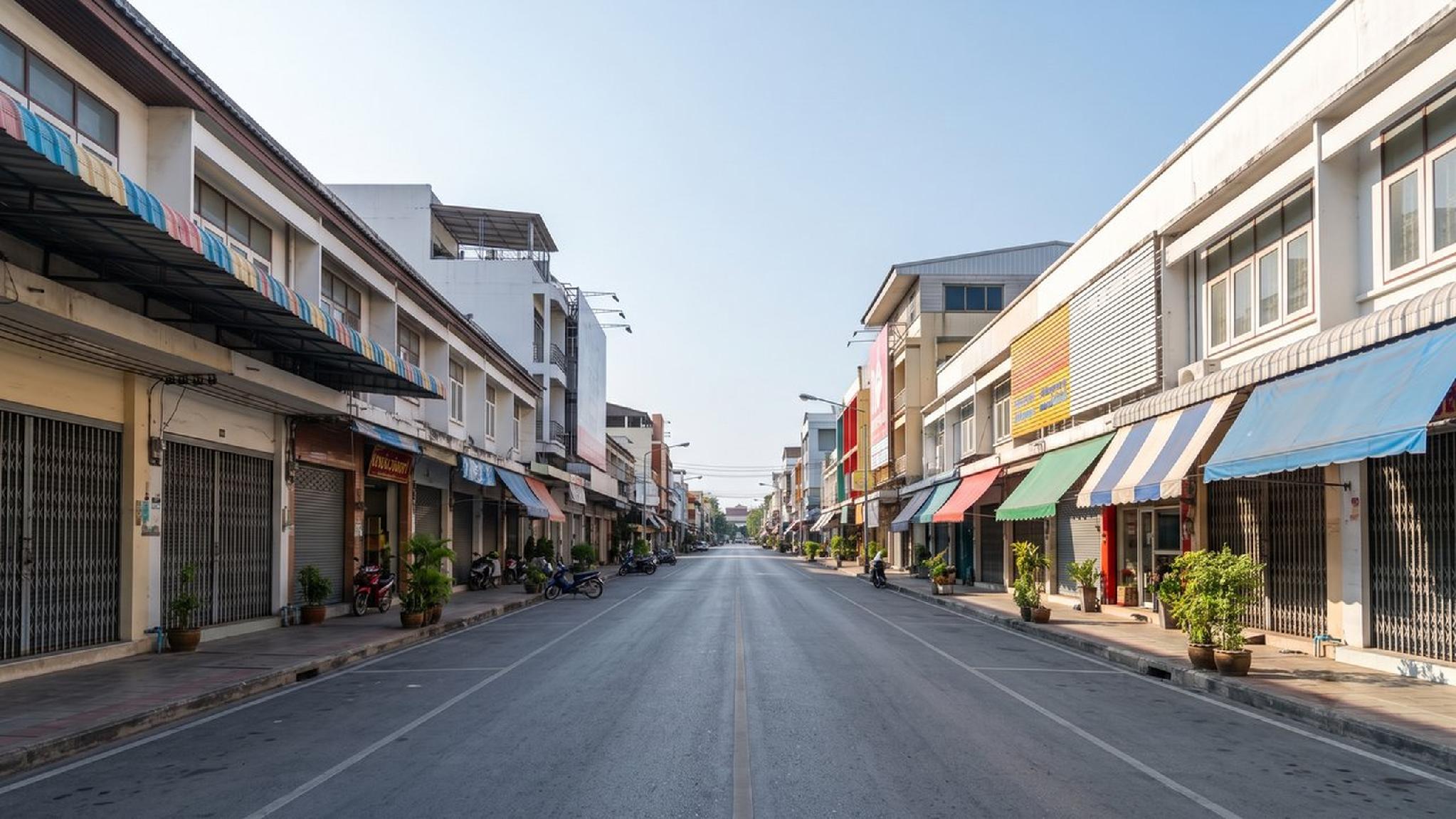
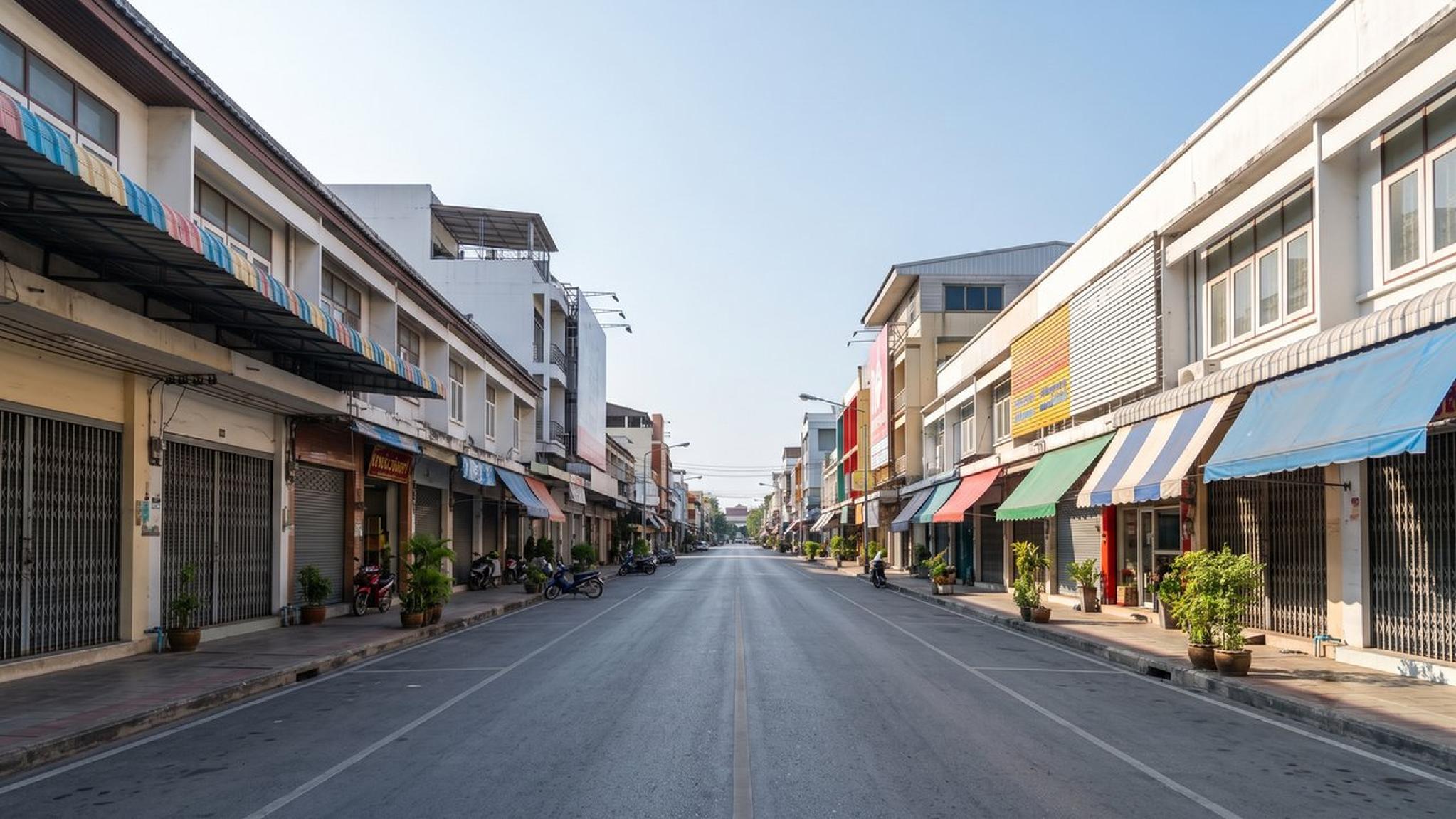
The Chiang Mai Night Bazaar runs along Chang Khlan Road between Tha Phae Road and Sridonchai Road, on the eastern edge of the Old City and a short stretch from the Ping River. It sits in the Chang Khlan district, one of the most walkable pockets of the city once evening falls and the road fills with pedestrians rather than traffic.
A songthaew (shared red truck taxi), a tuk-tuk, or a ride-hailing app all reach the Chiang Mai Night Bazaar for a modest fare from almost anywhere in the city, typically 10 to 15 minutes from the Old City moat and usually well under 100 baht (about US$3) by songthaew for a short hop across town.
Chiang Mai International Airport sits about 6 kilometres away, roughly a 15-minute drive, which makes the bazaar an easy stop straight after landing or on the way to a late flight.
Most first-time visitors find walking the easiest option once they are actually in the Chang Khlan district, since the precinct's own internal streets are flat, well lit, and closed to most through traffic once the stalls set up for the night.
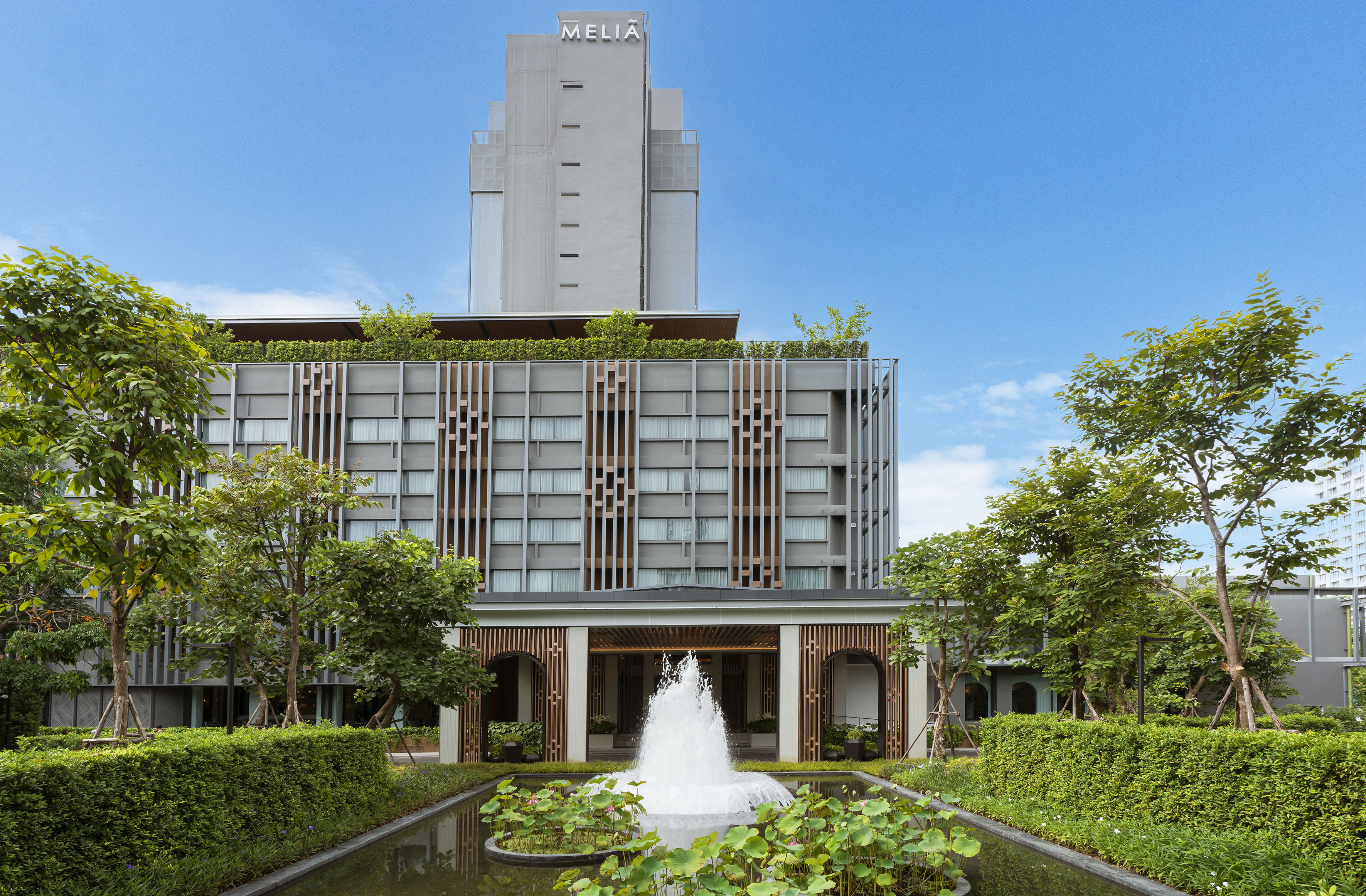
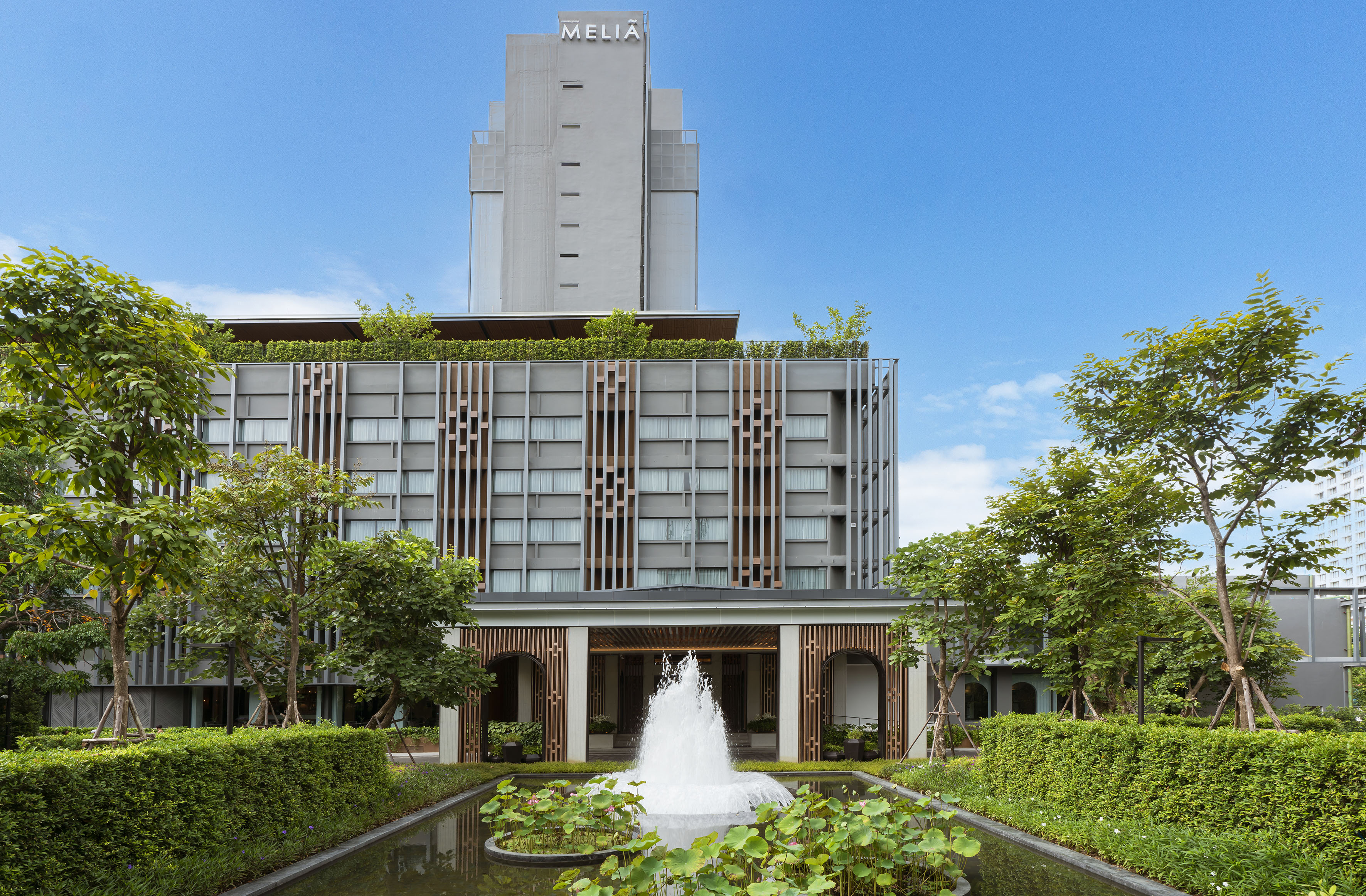
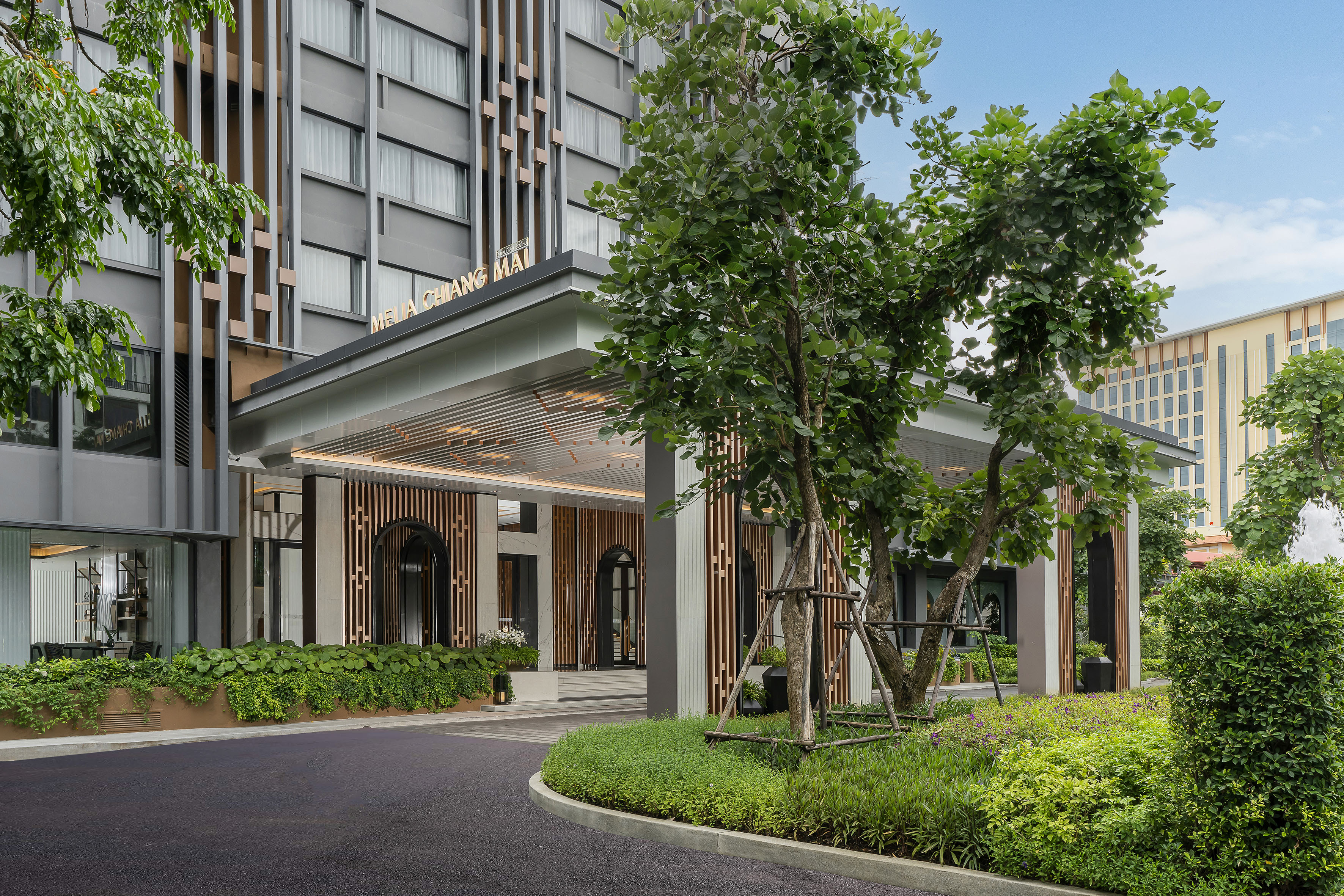
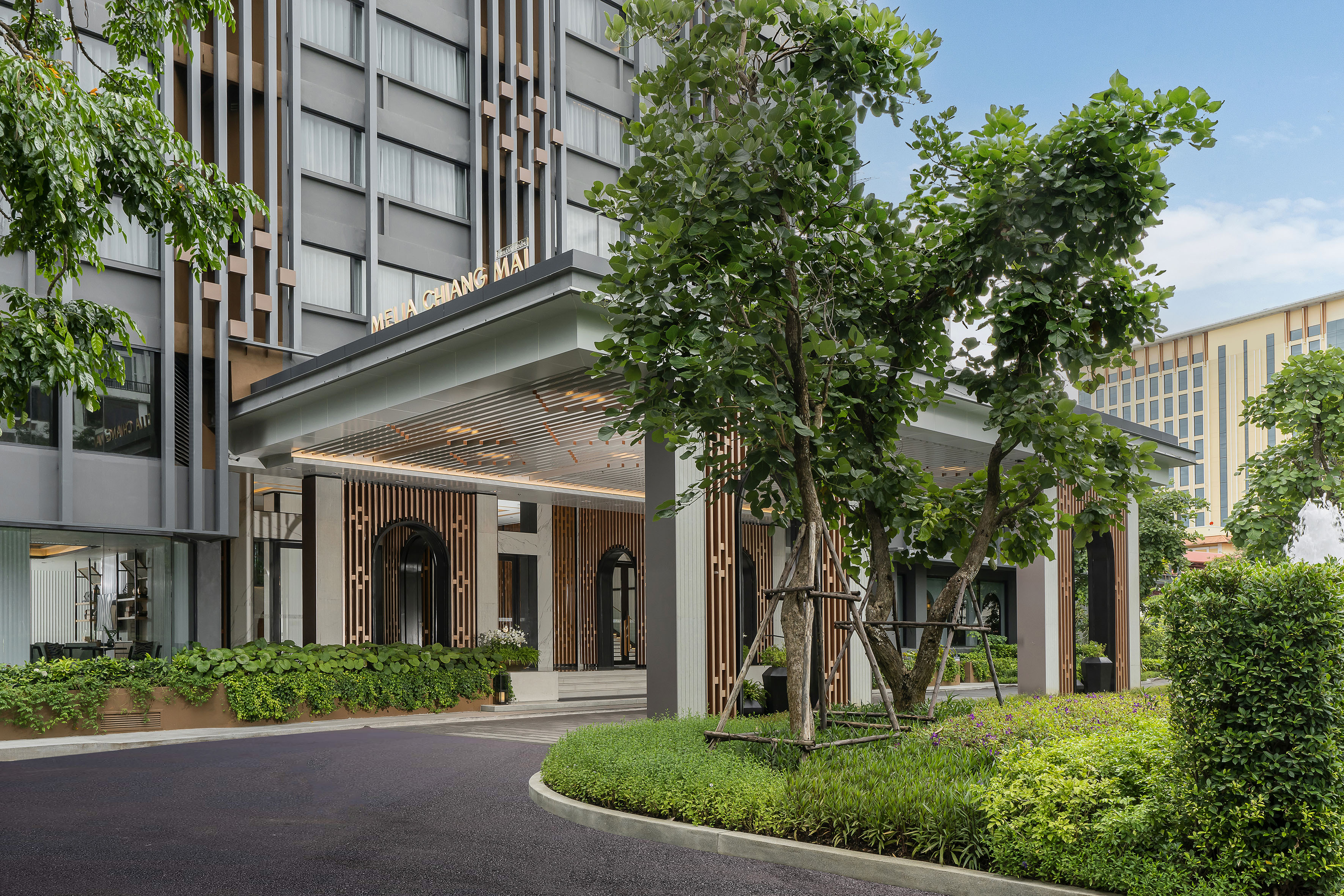
Staying inside the Chang Khlan district removes the commute altogether. Meliá Chiang Mai sits on Charoen Prathet Road at the doorstep of the Chiang Mai Night Bazaar, close enough to reach the main strip, Kalare, Anusarn, and PhaPloen Market
on foot in a few minutes.
Because the bazaar runs nightly rather than on one fixed day, a guest based there can return two or three times over a longer stay instead of trying to fit everything into a single rushed evening, something the weekend-only walking streets elsewhere in the city do not allow for.
The stalls and buildings here sort loosely into a handful of categories rather than one undifferentiated mass of souvenirs. Here is what to look for in each.
,regionOfInterest=(1023,575.5))
,regionOfInterest=(1023,575.5))
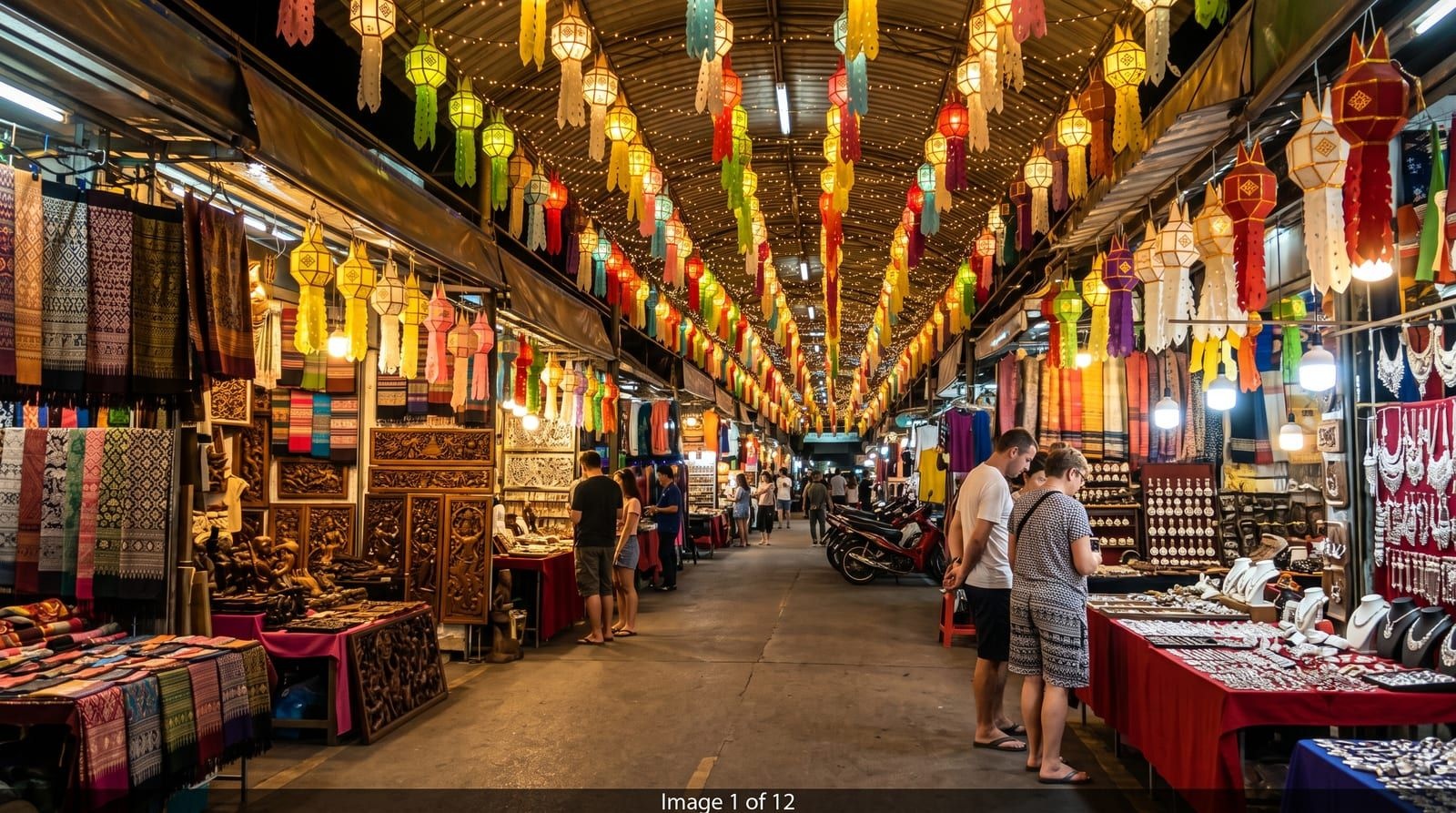
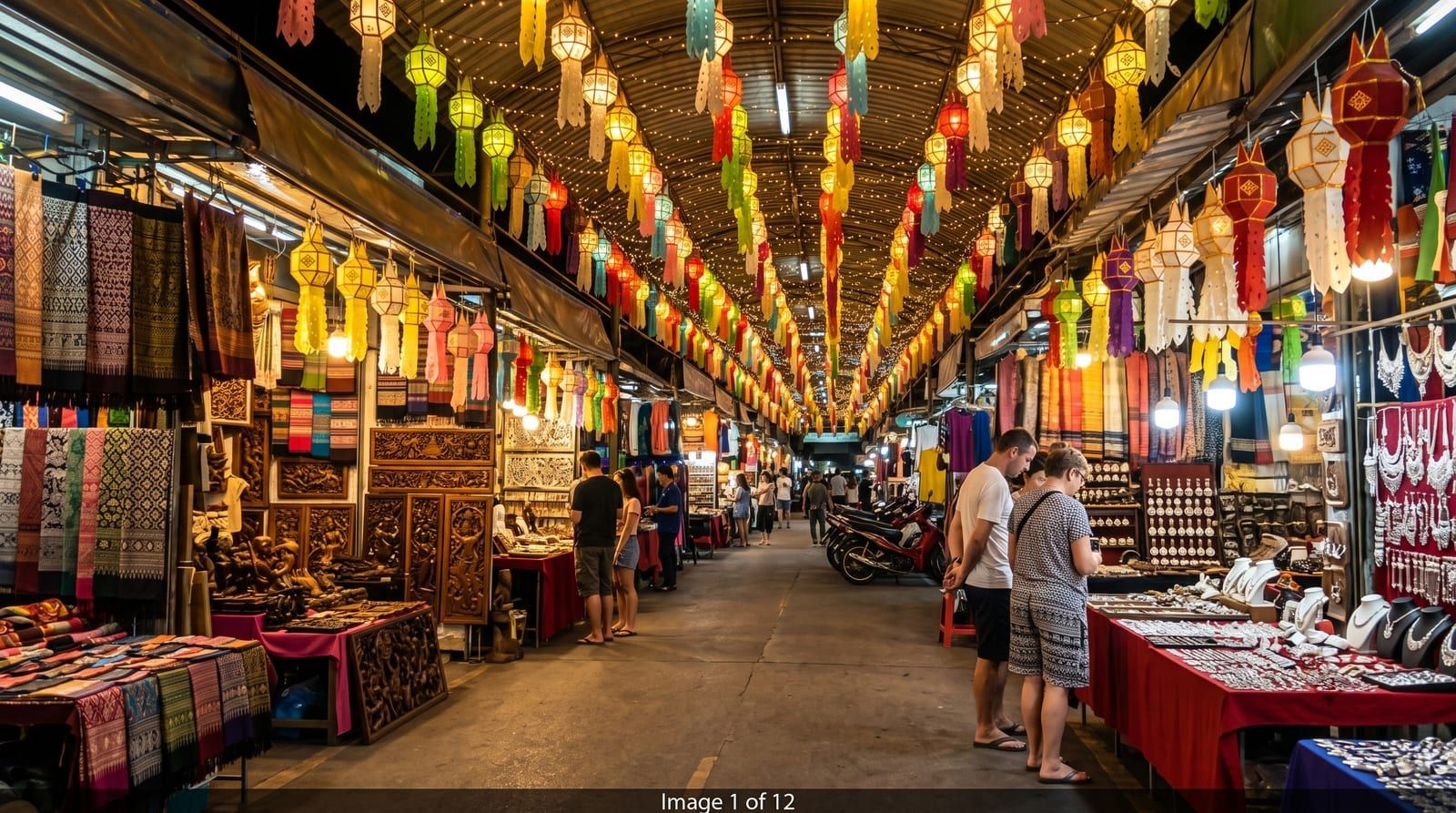
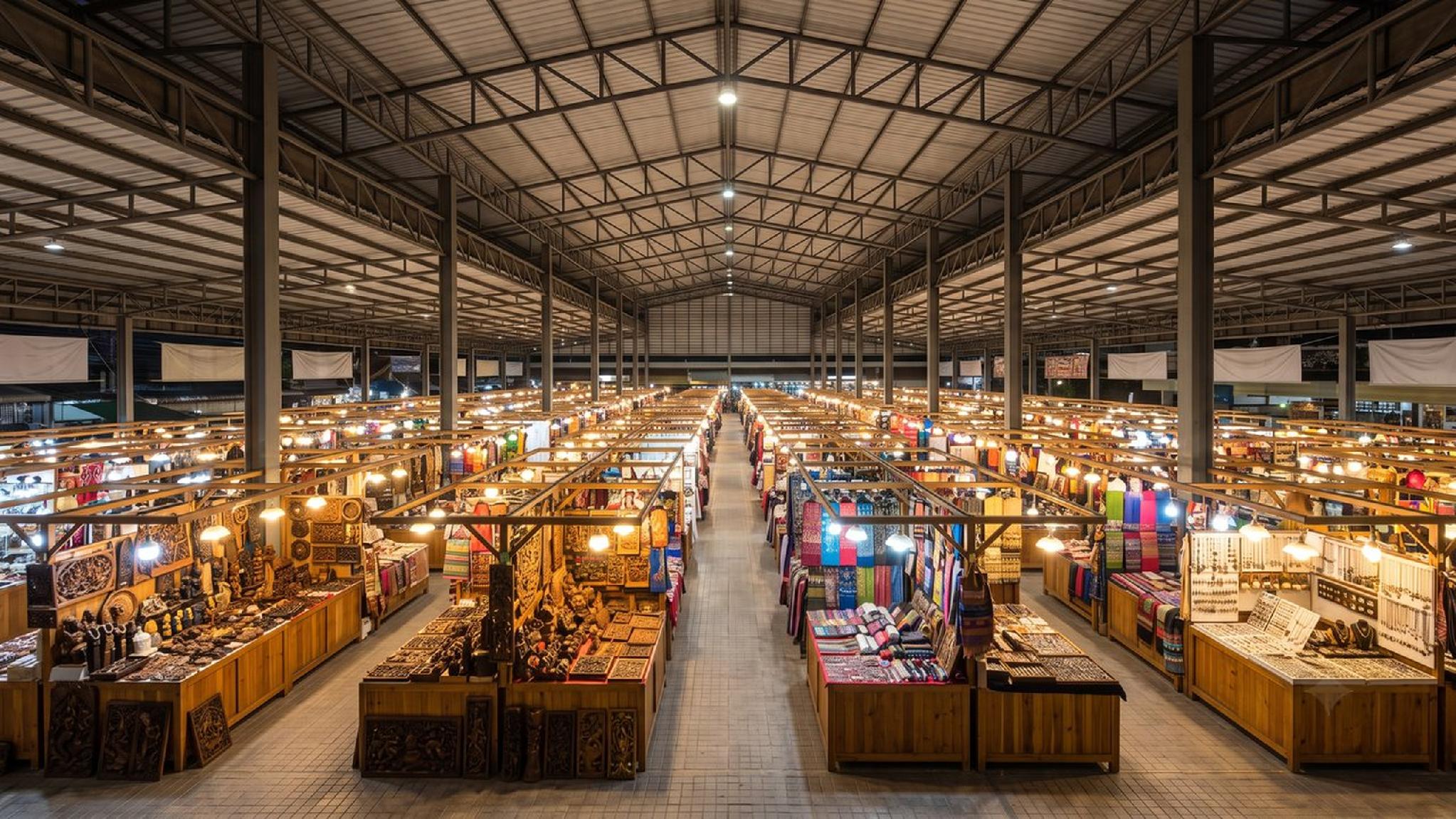
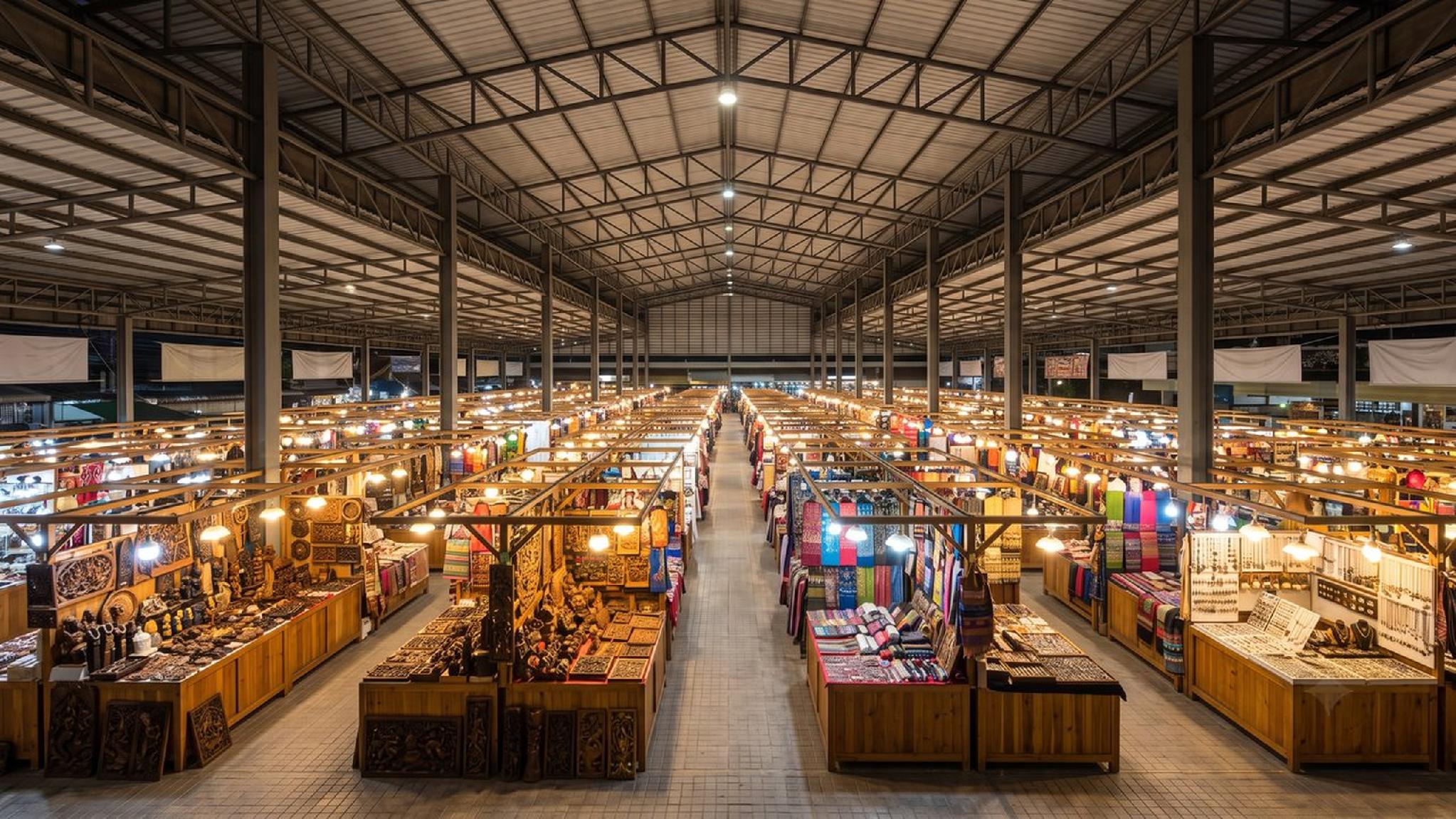
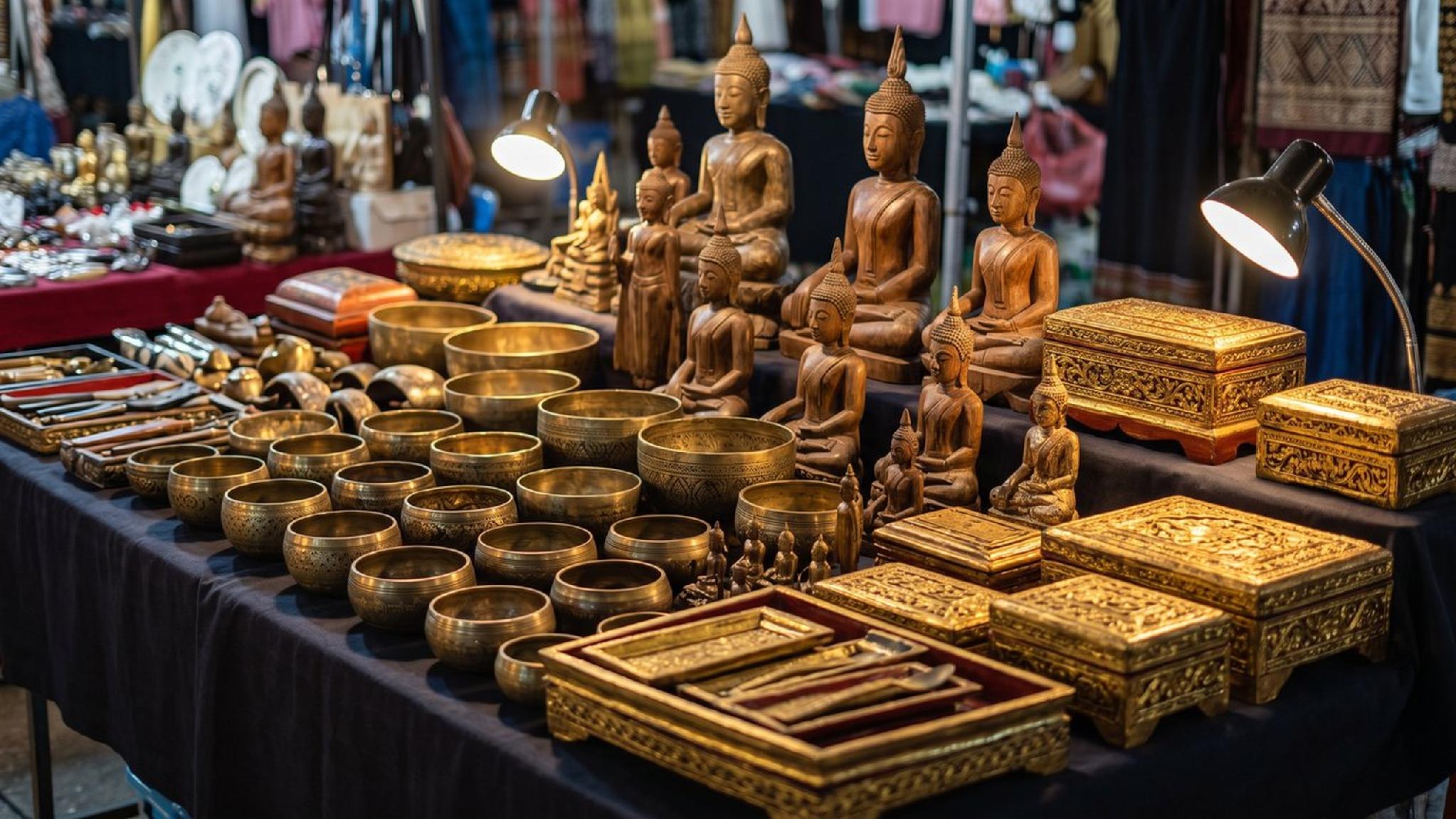
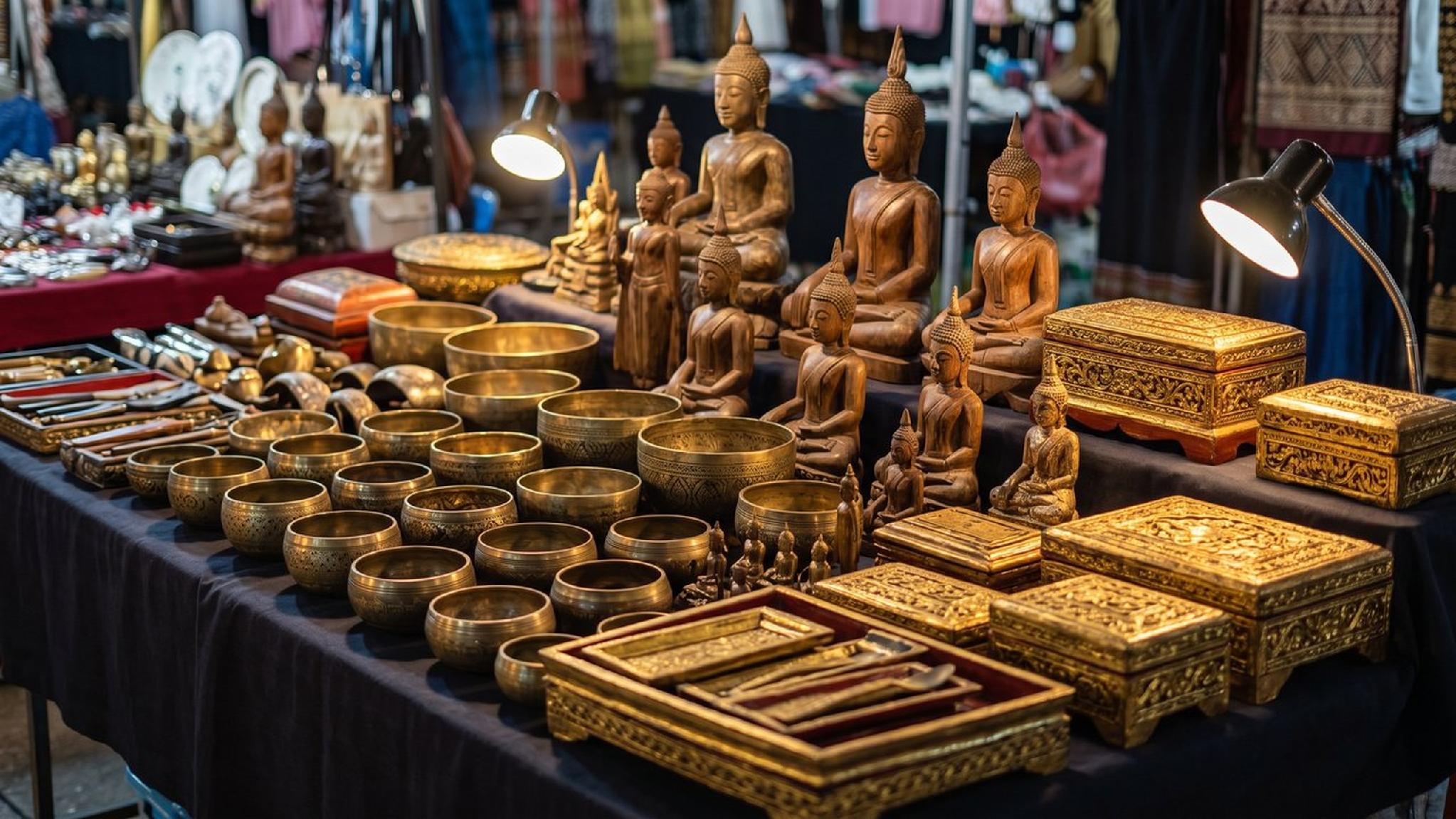
Antiques and reproduction Buddhist art, carved wooden pieces, brass bowls, and framed textiles cluster inside the covered Night Bazaar building rather than the open-air stalls outside, appealing to a shopper after something more considered than a quick souvenir. Prices inside tend to be fixed or only lightly negotiable, since a number of these shops also ship purchases internationally and price accordingly.
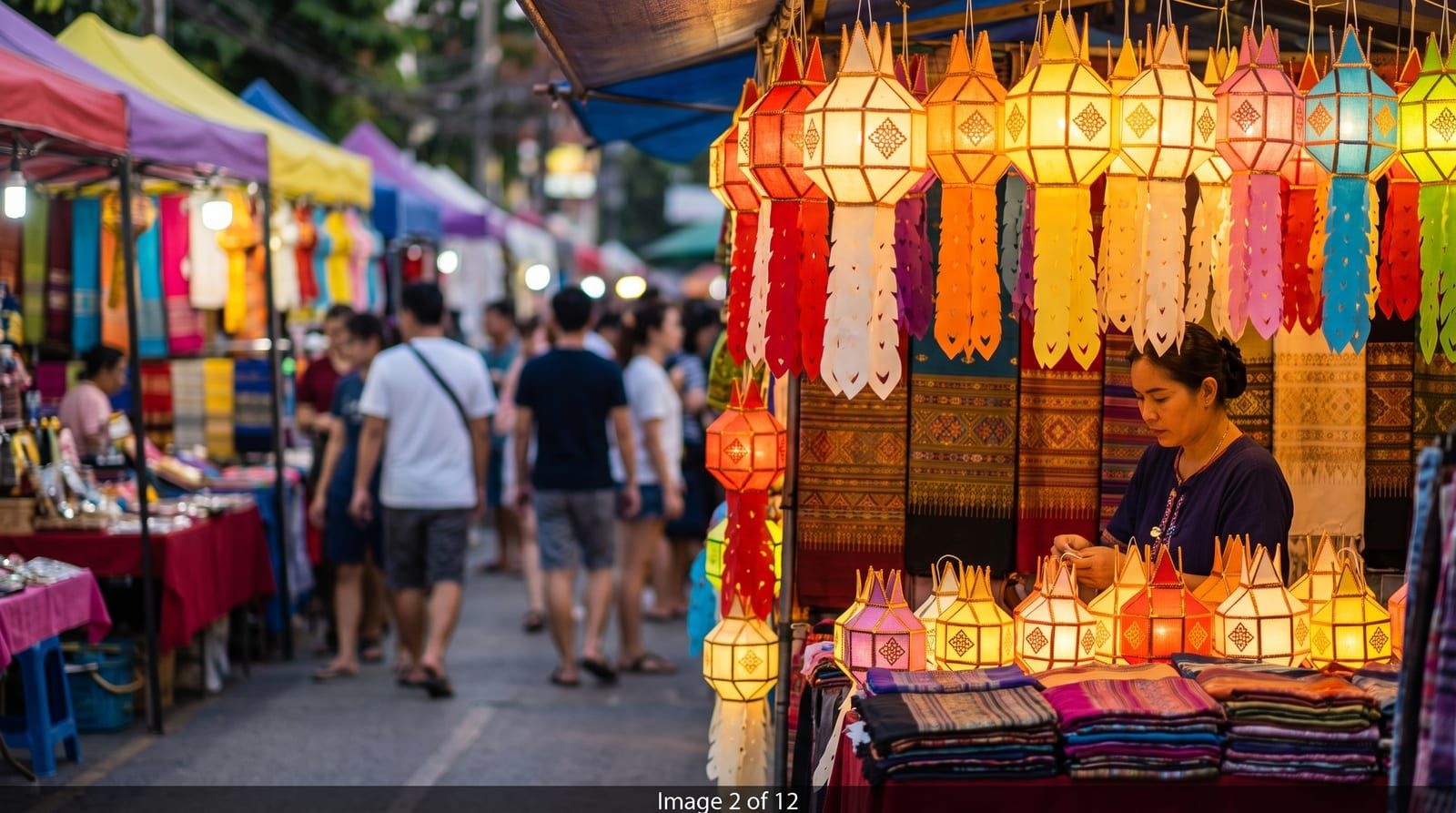
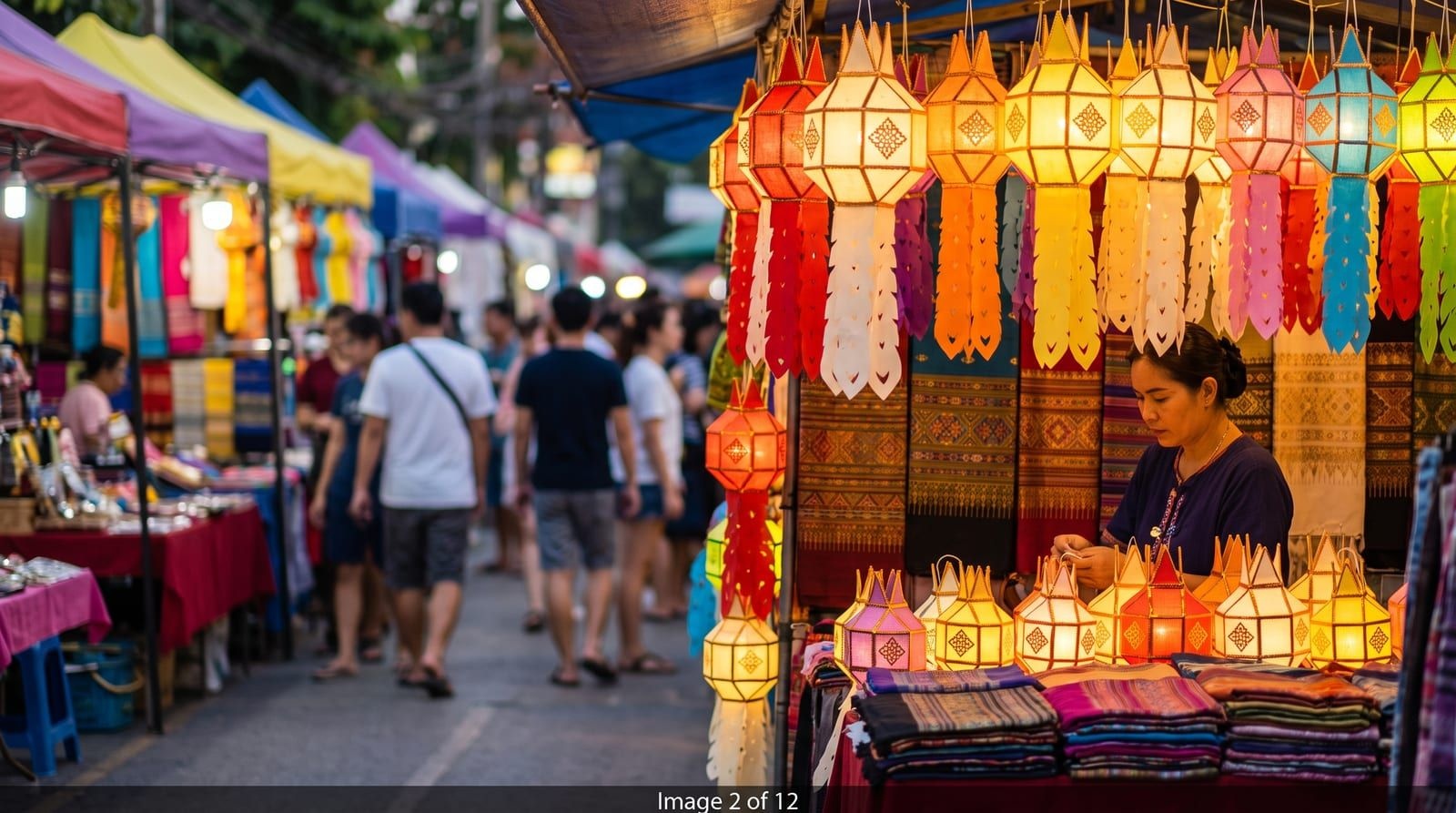
Hand-hammered silver jewellery, hill-tribe textiles and embroidery from Hmong, Karen, and Akha artisans, and hand-painted umbrellas from nearby Bo Sang village show up across most of the stalls, alongside Lanna-style lacquerware finished in gold leaf or mother-of-pearl inlay.
,regionOfInterest=(1023,575.5))
,regionOfInterest=(1023,575.5))
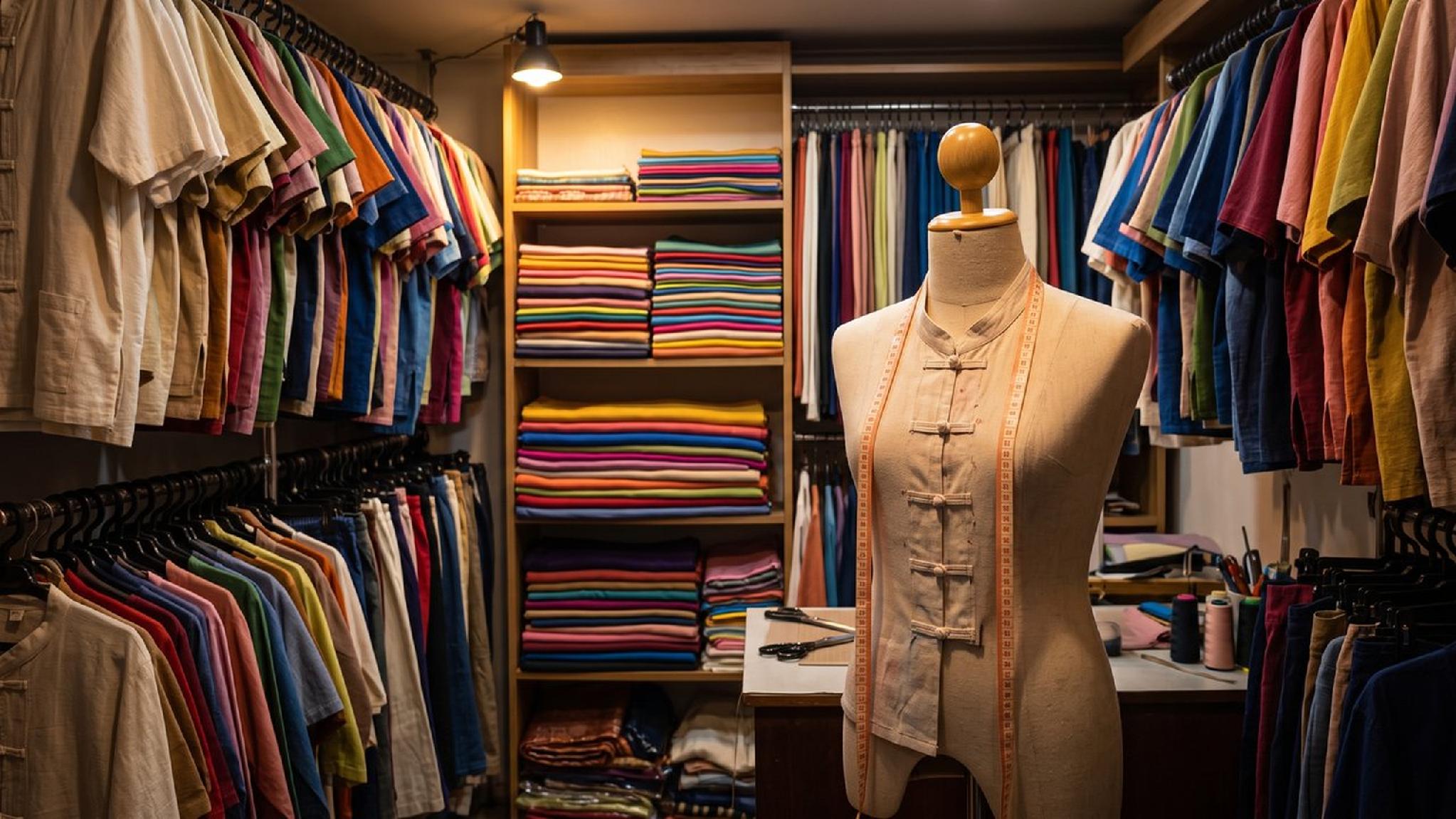
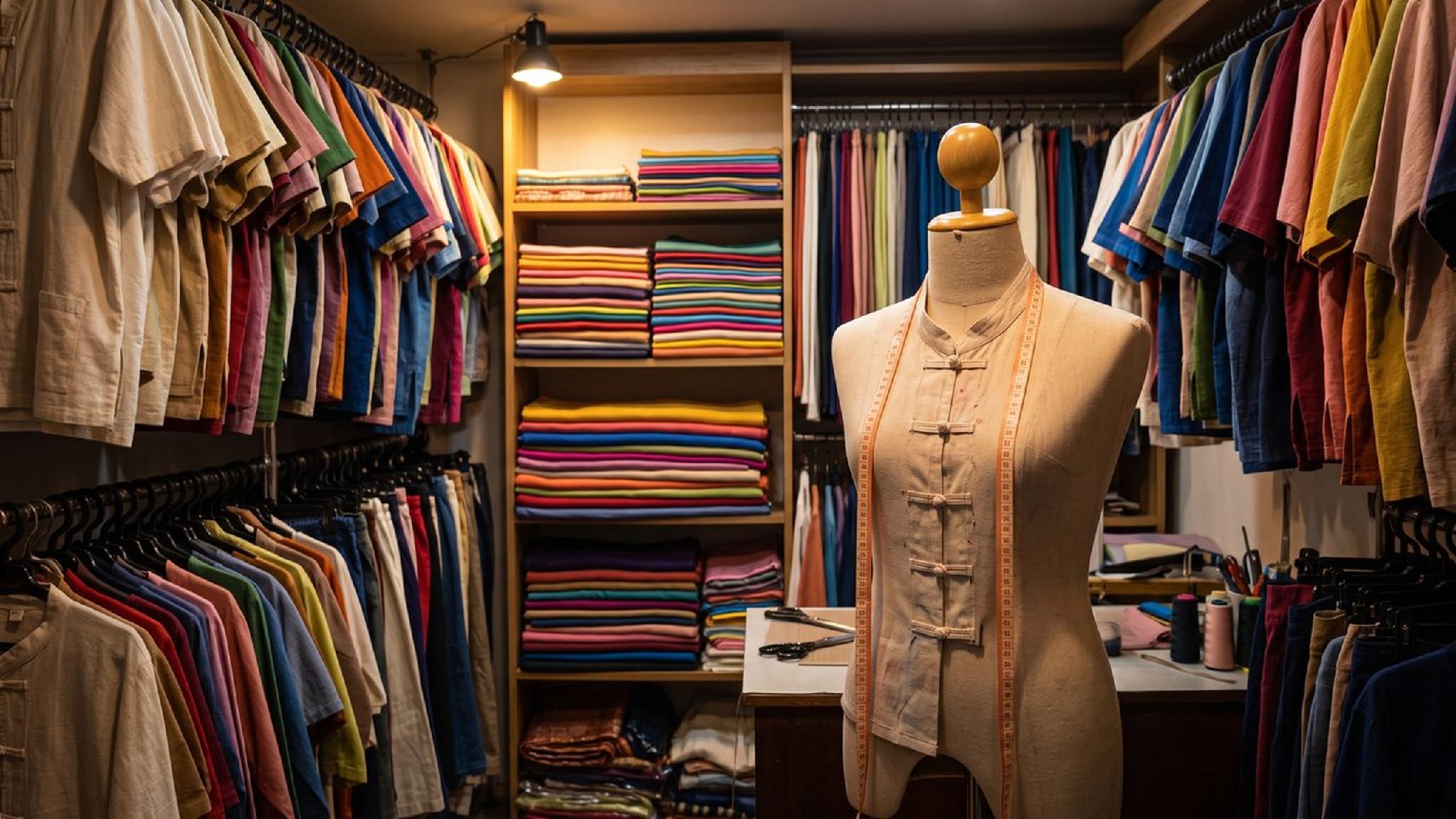
The Galare Night Bazaar building across the street specialises in more upmarket clothing and home decor, a useful stop for anyone after something less like a souvenir and more like a piece worth keeping. Custom tailoring is one of the district's long-running specialities, with several shops able to measure, cut, and finish a suit or dress within 24 to 48 hours. Portrait painters and caricature artists work the street stalls most evenings too, and clothing here ranges from cheap printed t-shirts up through those made-to-order pieces, alongside the usual mix of electronics, watches, and phone accessories that fill the more commercial stretches of the Chiang Mai Night Bazaar.
,regionOfInterest=(1023,575.5))
,regionOfInterest=(1023,575.5))
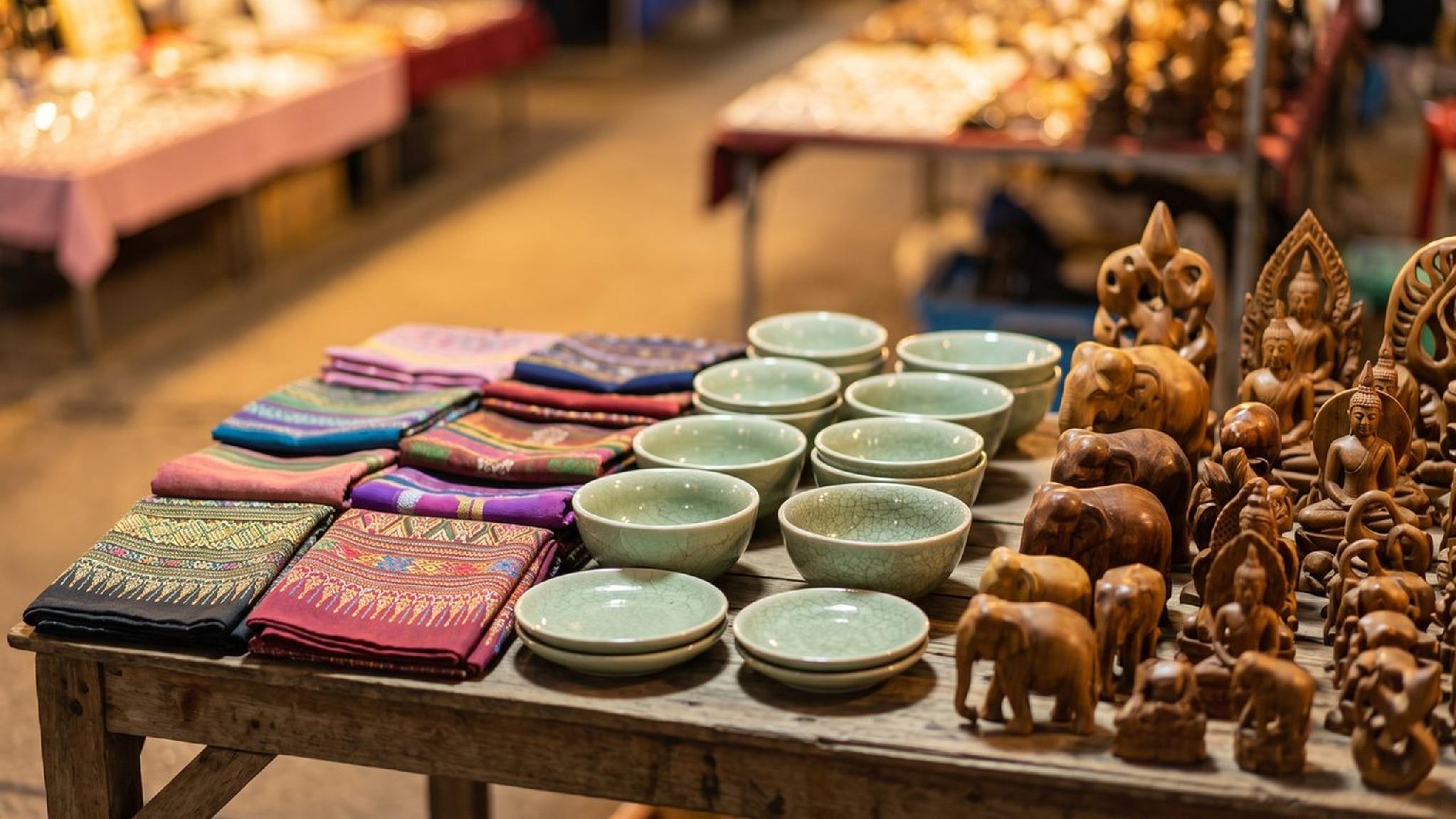
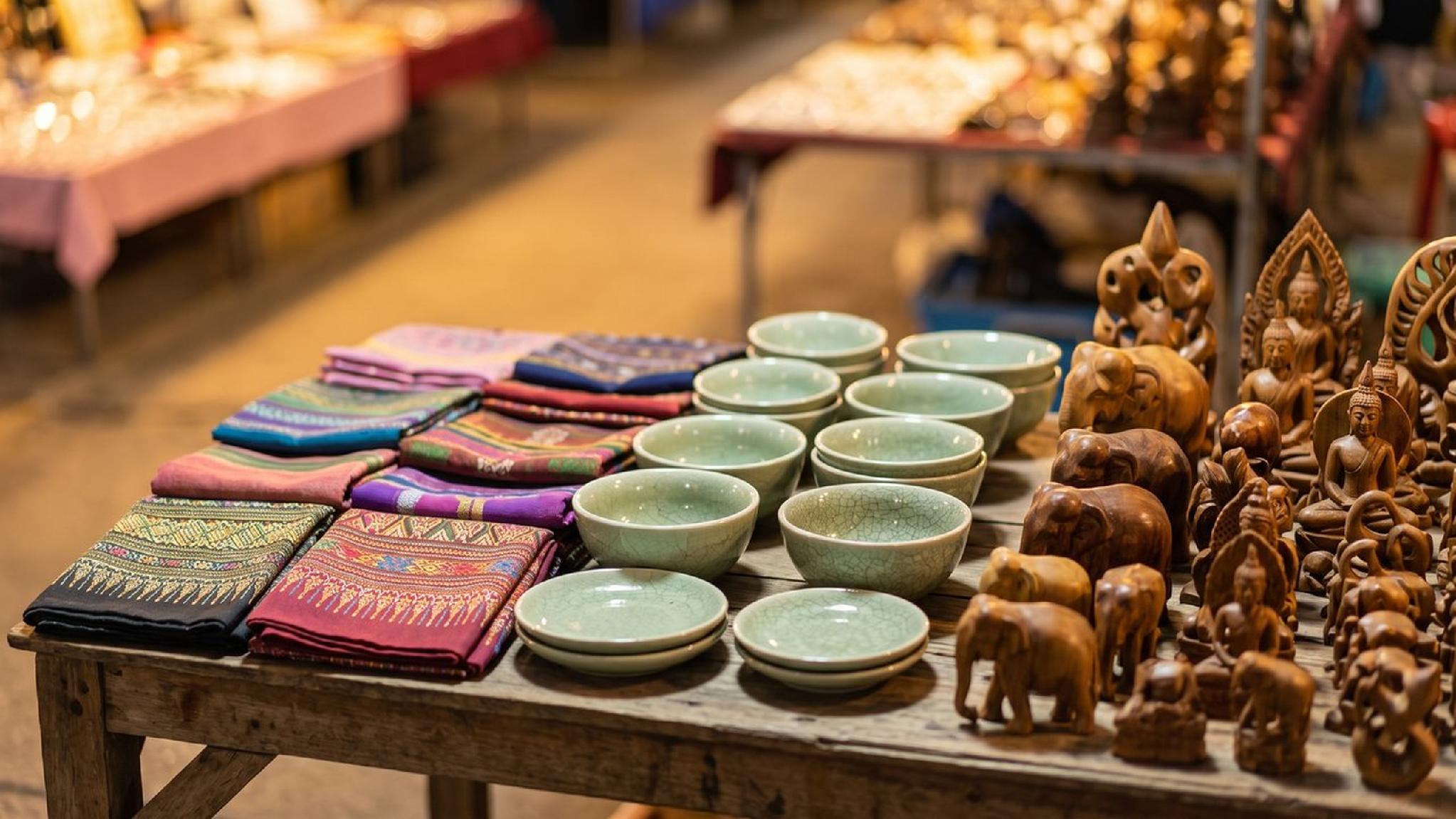
Thai silk scarves and cushion covers, celadon ceramics in the pale green glaze the region is known for, and small teakwood carvings round out the categories worth setting aside time for, particularly inside the covered buildings where the selection tends to be more curated than the fast-turnover stalls on the street. None of these need to be hunted down in a single shop, since most of the district's stalls carry some overlap with their neighbours, so a slow walk through a few blocks usually turns up several versions of the same item at different price points.
Specialities do cluster loosely by stretch rather than sitting in a completely random order. The northern end nearer Tha Phae Road leans more toward antiques and framed art, the middle carries the bulk of the clothing and accessory stalls, and the stretch closest to Kalare and Anusarn favours souvenirs and gift-sized items, useful to know when planning where to spend the most time rather than covering the whole road at the same unhurried pace.
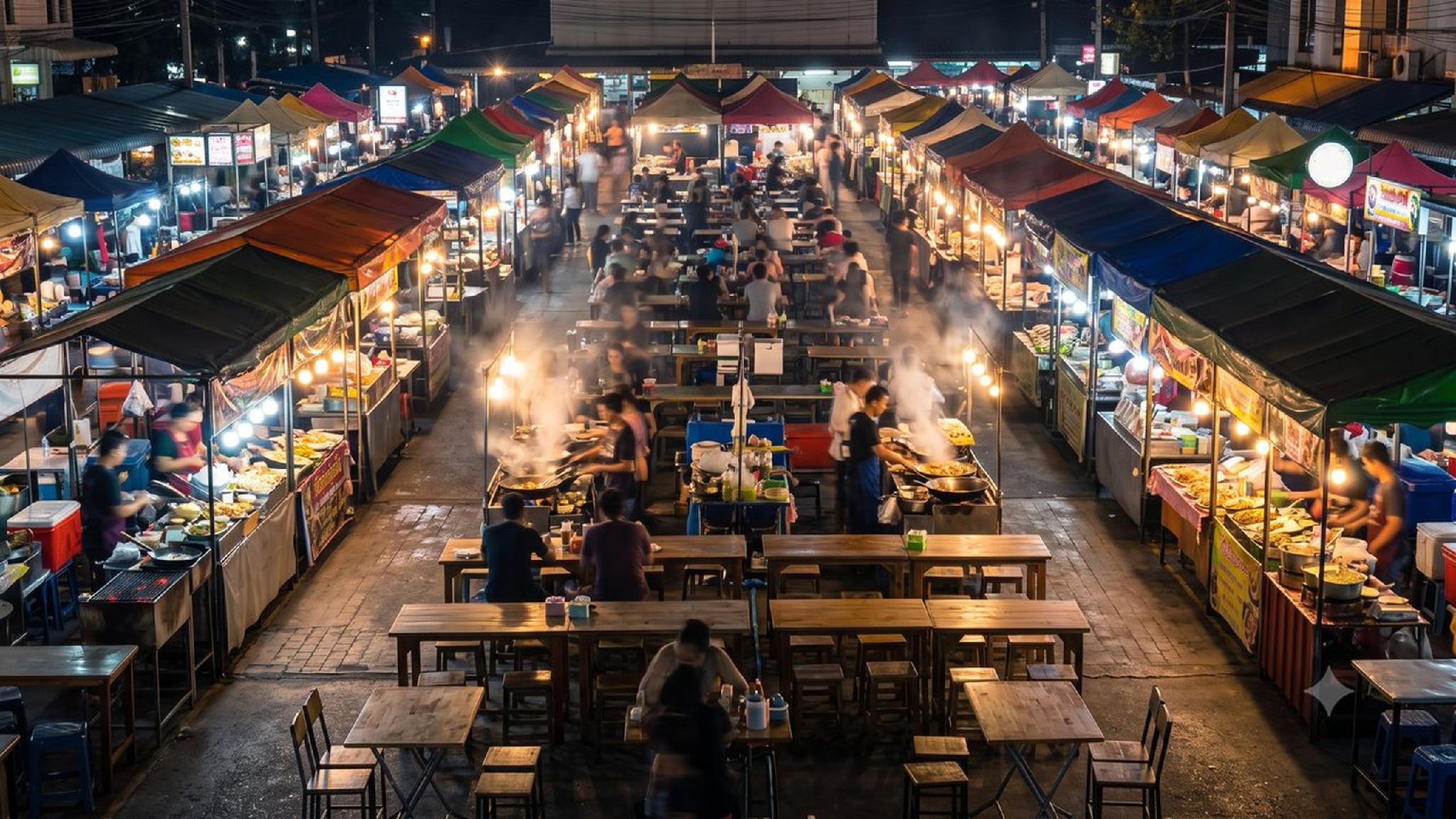
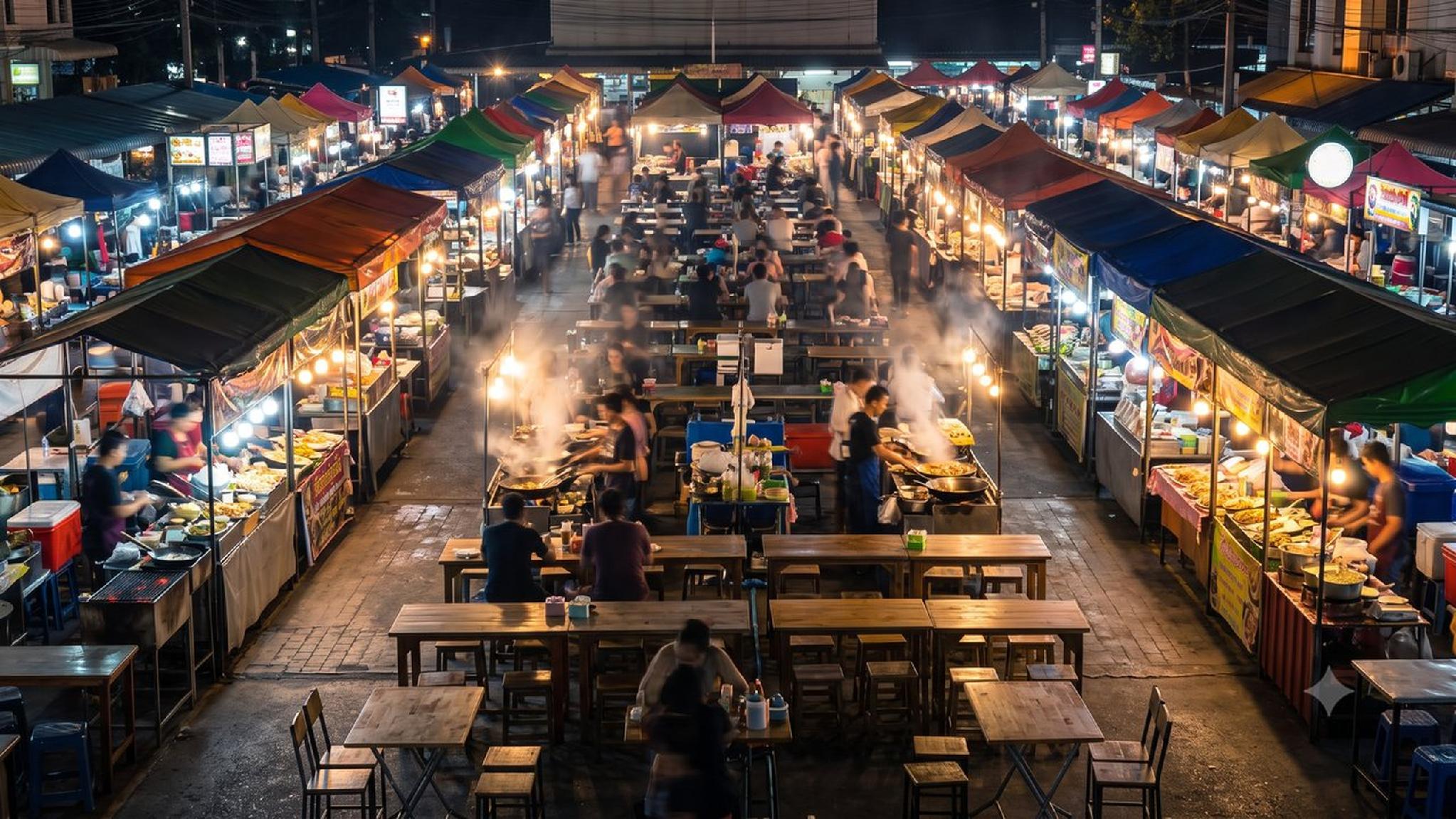
Eating here splits into where to sit down and what to actually order once there. Below is both.
,regionOfInterest=(1023,575.5))
,regionOfInterest=(1023,575.5))
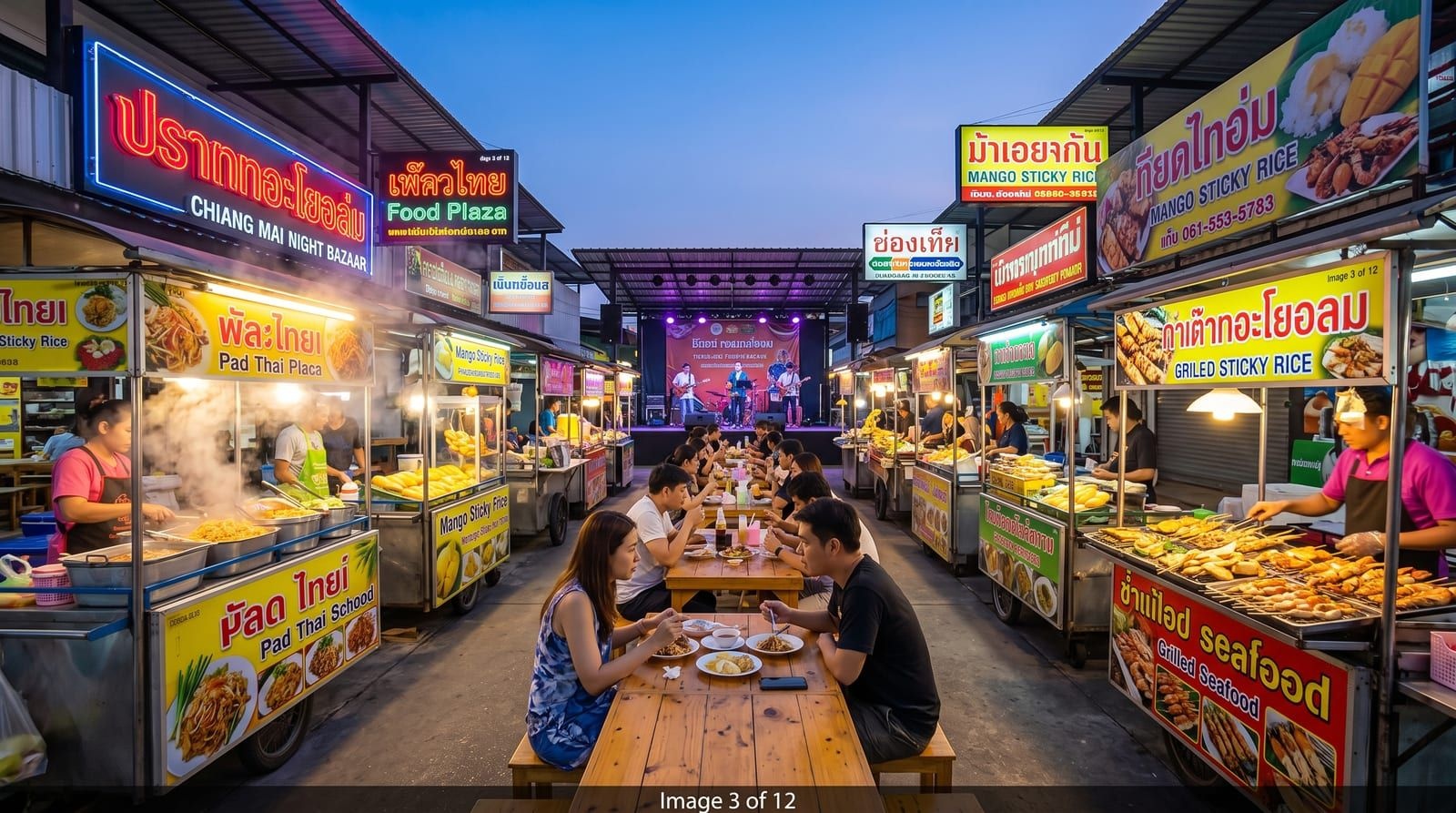
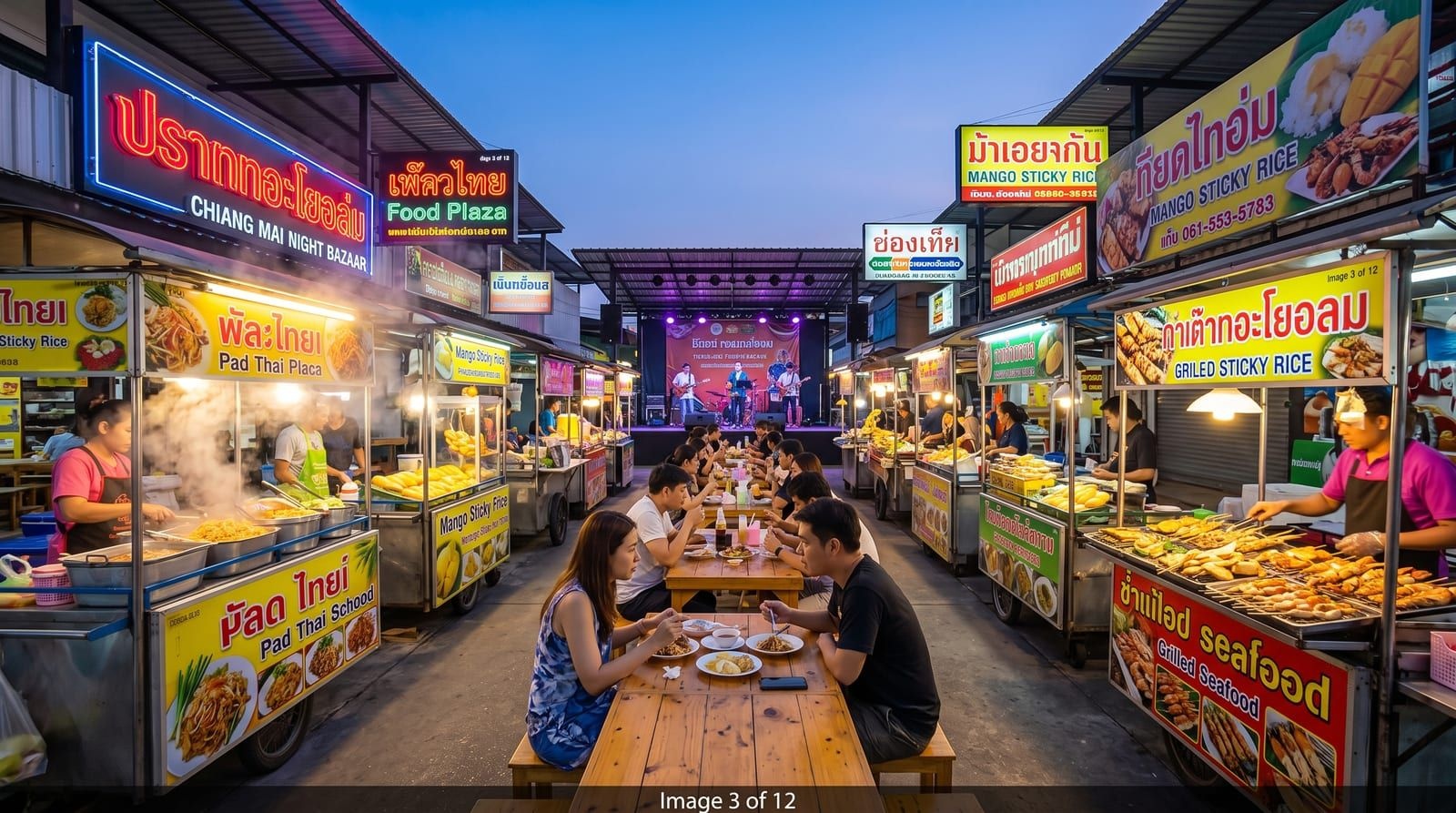
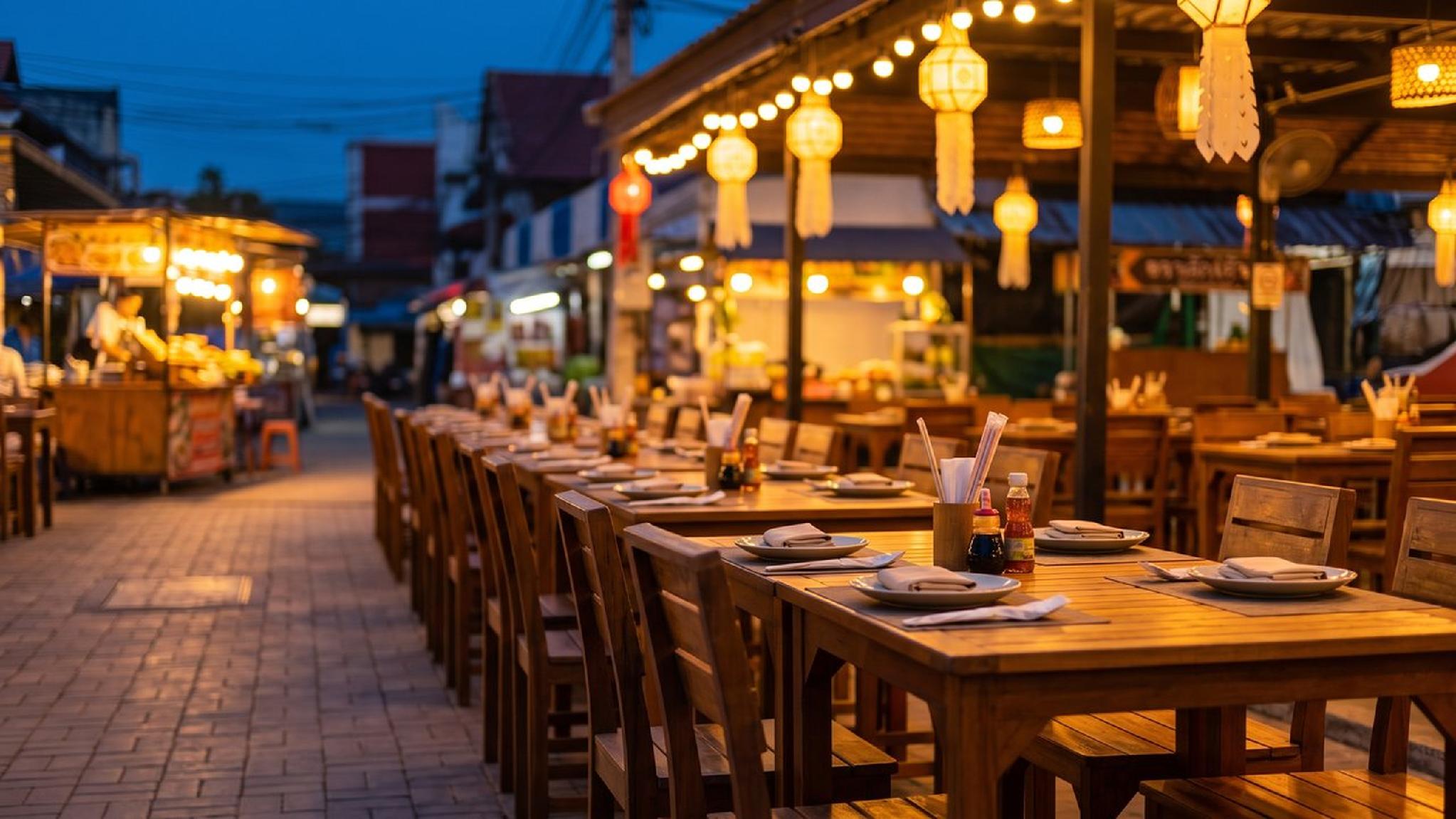
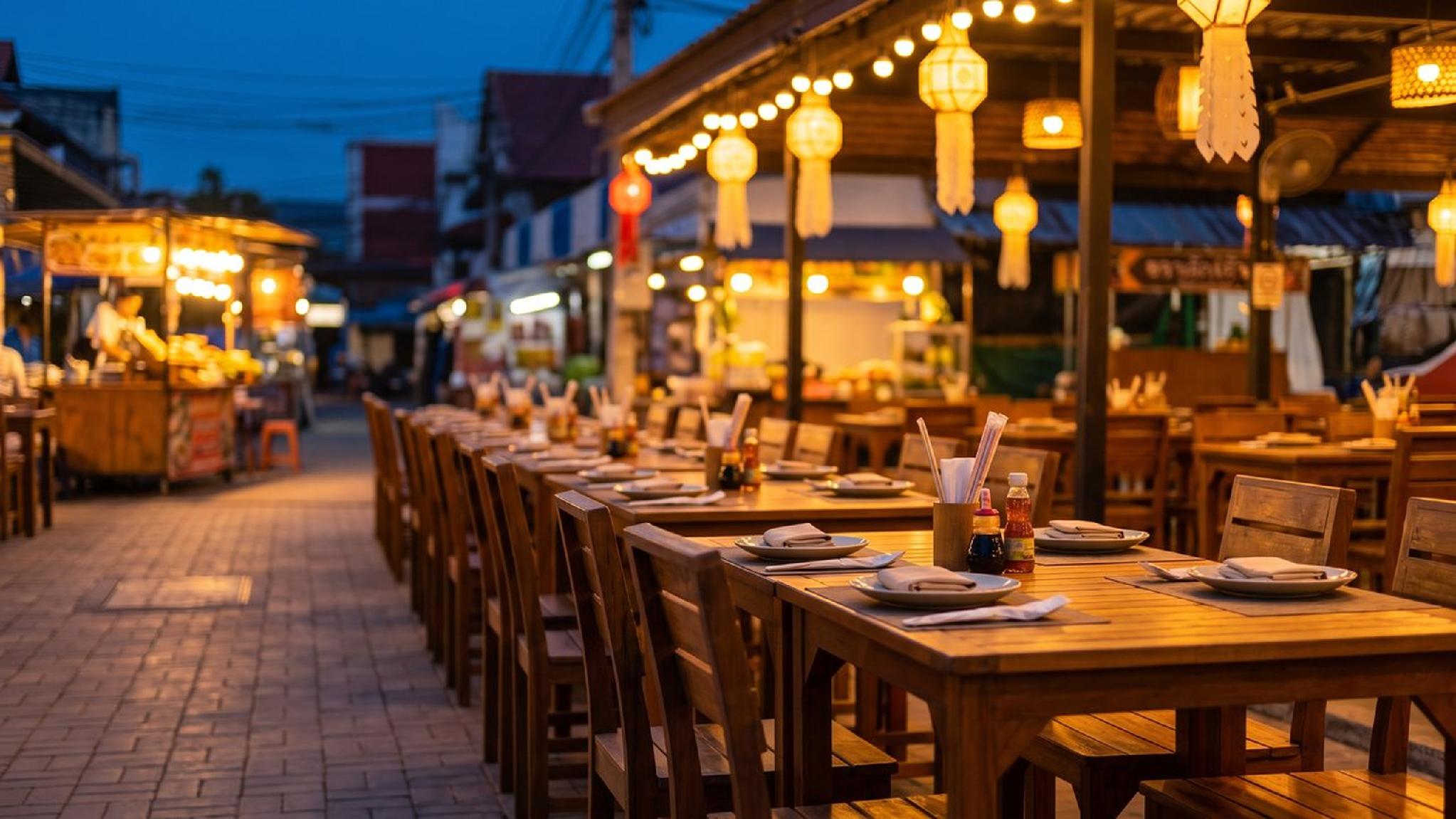
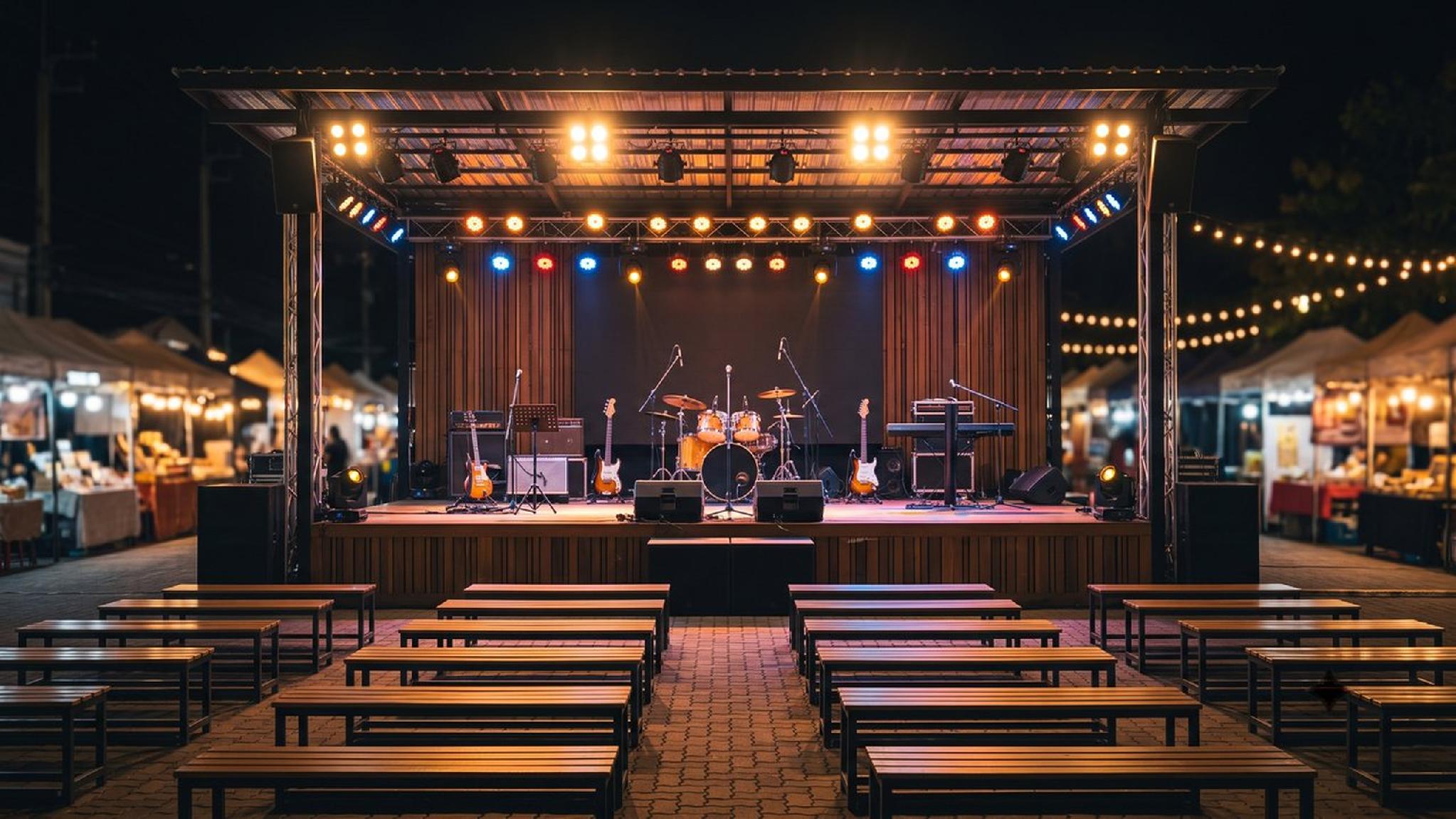
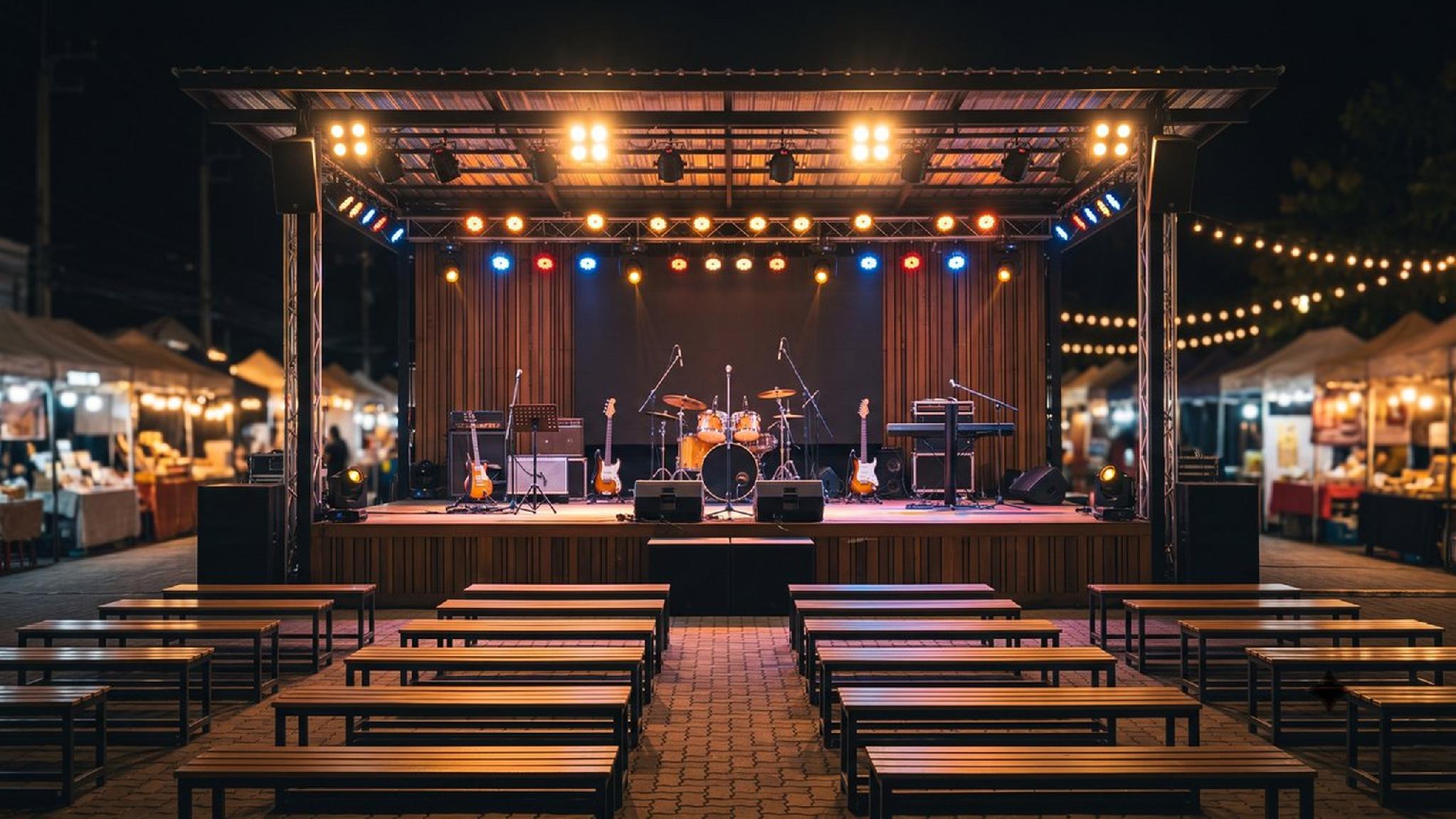
The Galare Food Centre, tucked behind the main Night Bazaar building, serves a straightforward mix of Thai standards at food-court prices. Kalare Night Bazaar runs its dining on a coupon system: buy a card at the entrance, then spend it at whichever stalls look good, all facing a central stage where live music and cultural performances run most evenings.
Anusarn Night Market has the widest range in the whole precinct, from cheap food-court plates to sit-down seafood restaurants serving whole fish and prawns by weight, plus Western, Indian, and Chinese kitchens mixed in among the Thai stalls. PhaPloen Market, the newest addition, swaps the food-court format for more than thirty food trucks and container kitchens, backed by craft beer and cocktail bars rather than the usual soft drink stands.
| FOOD COURTS | HOURS | FORMAT |
| Galare Food Centre | Nightly, roughly 6pm to 11pm | Straightforward Thai food court |
| Kalare Night Bazaar | Nightly, roughly 5pm to midnight | Coupon system, stage with live shows |
| Anusarn Night Market | Nightly, roughly 6pm to midnight | Food court plus sit-down seafood restaurants |
| PhaPloen Market | Monday to Saturday, roughly 5pm to 11pm | Food trucks, craft beer and cocktail bars |
,regionOfInterest=(1023,575.5))
,regionOfInterest=(1023,575.5))
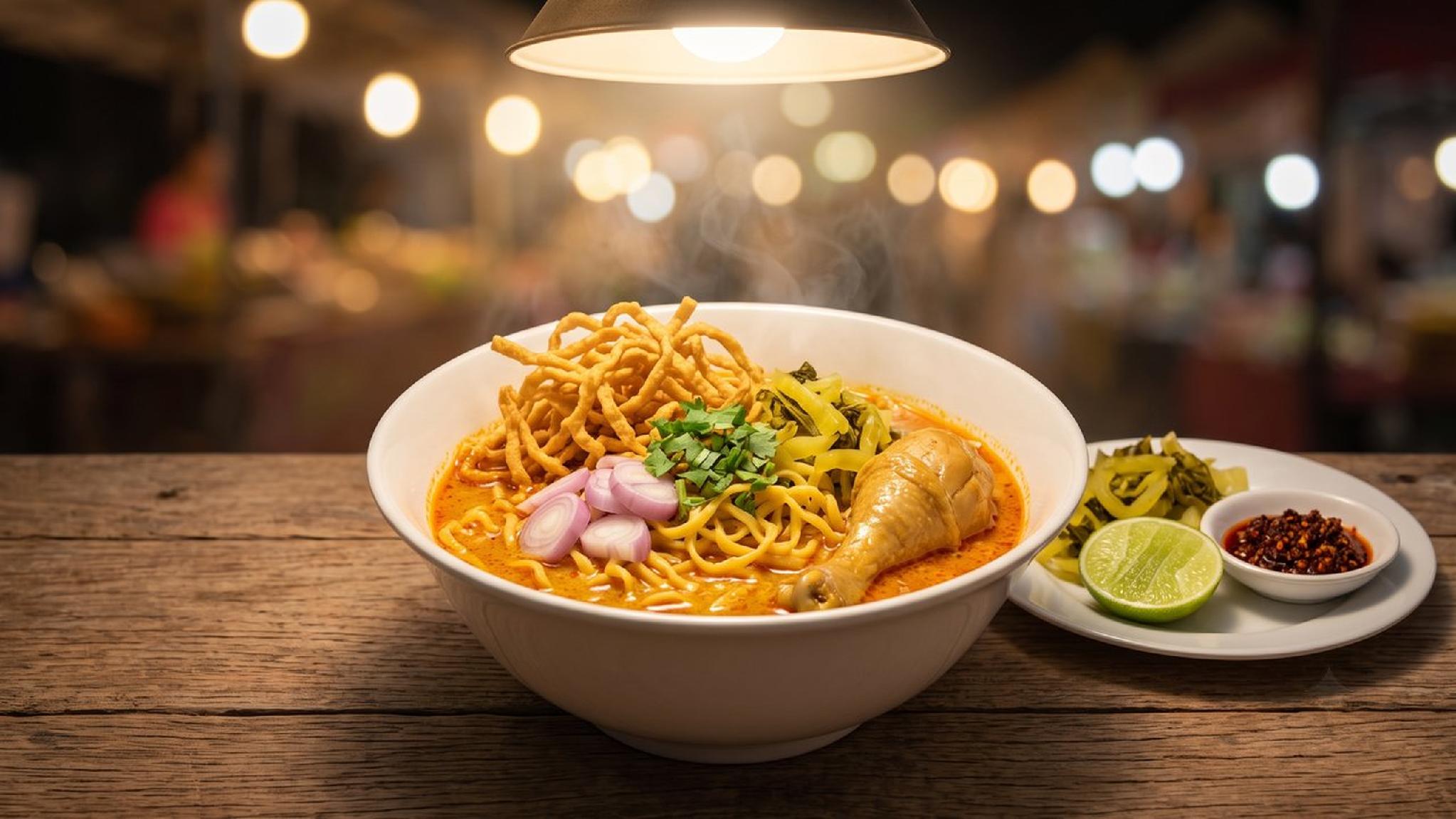
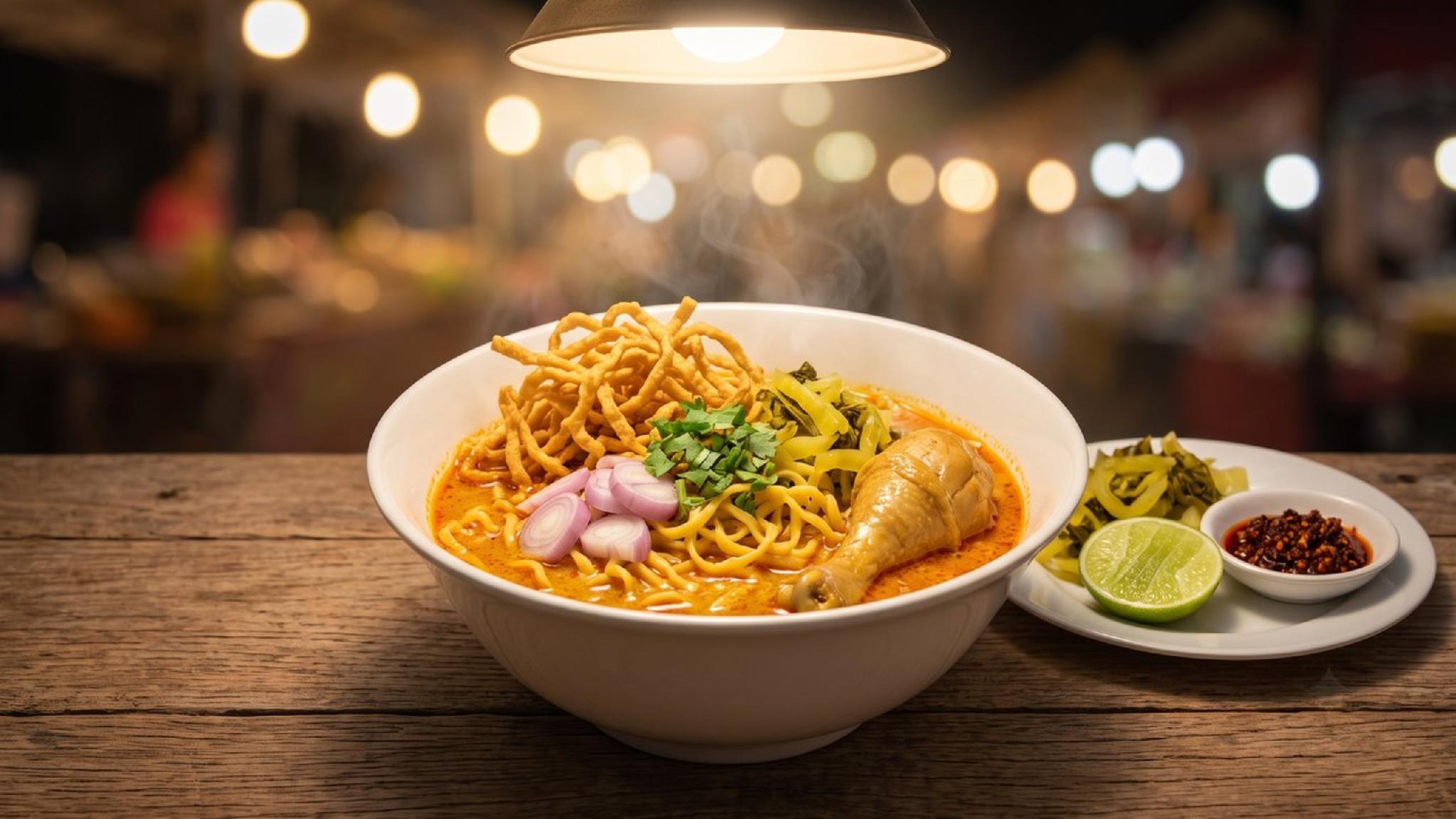
Khao Soi, the city's signature curried noodle soup, and Sai Oua, a herb-packed grilled pork sausage, turn up in some form at nearly every stall cluster, alongside pad thai, satay skewers, and fresh seafood at the sit-down restaurants. Mango sticky rice and fresh fruit shakes are the easiest way to close out a meal, and a full plate rarely runs past 100 to 150 baht (roughly US$3 to US$4.30) outside the restaurant tables at Anusarn.
Fresh coconut water served straight from the shell, Thai iced tea, and local craft beer at the PhaPloen Market
bars cover the drinks side, and vegetarian and vegan versions of the classic stir-fries and noodle dishes have become easier to find across the precinct in recent years, sitting right alongside the meat-based originals rather than tucked away in a separate corner.
,regionOfInterest=(1023,575.5))
,regionOfInterest=(1023,575.5))
Timing a meal around the crowd works better than picking a table at random. Arriving for dinner right at 6pm or 7pm, before the busiest window sets in, usually means a free table at Anusarn's sit-down restaurants without a wait, while pushing dinner past 8:30pm often means standing room only at the more popular stalls until a table clears.
,regionOfInterest=(1023,575.5))
,regionOfInterest=(1023,575.5))
Anusarn hosts a Muay Thai boxing arena and a cabaret show featuring transgender performers, Thai dance, and comedy, with performances typically around 8:30pm and 10pm most nights. Kalare's central stage runs cultural shows and live music through the evening, and PhaPloen Market
adds its own live band most Wednesdays with DJ sets taking over on Friday and Saturday, giving each corner of the Chiang Mai Night Bazaar a slightly different after-dinner mood.
The Muay Thai arena at Anusarn runs informal exhibition bouts rather than a professional stadium card, a low-key way to see the sport for anyone who has not made it to one of the city's dedicated boxing stadiums.
Entry is typically bundled with a drink or a small cover charge rather than sold as a standalone ticket, so it works well as something to duck into between dinner and dessert rather than a whole evening commitment.
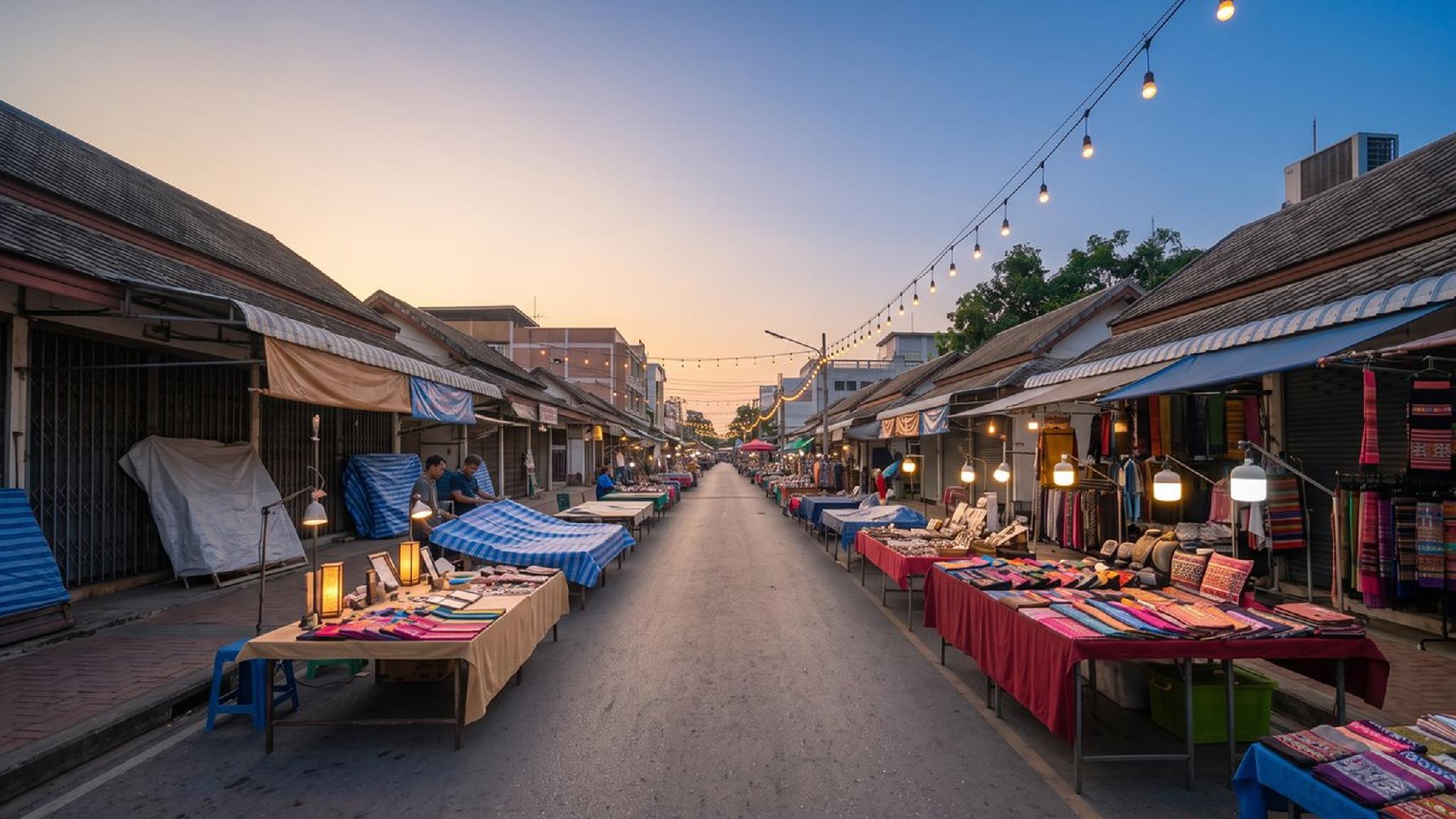,regionOfInterest=(1023,575.5))
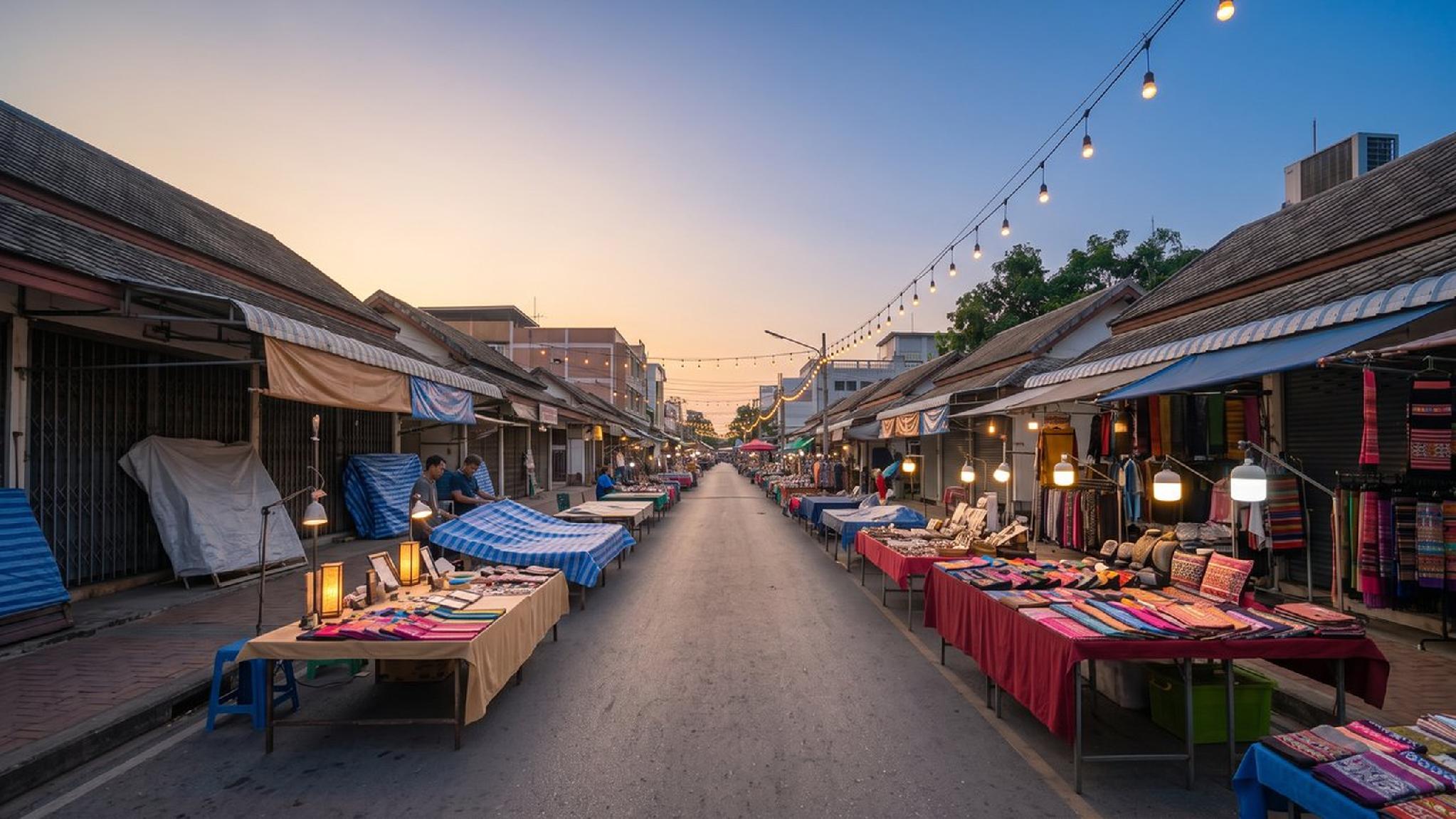,regionOfInterest=(1023,575.5))
Navigating the Chiang Mai Night Bazaar is an incredible experience, but getting the best prices requires knowing the unwritten rules of the market. While fixed-price indoor shops are non-negotiable, bargaining is fully expected at nearly every open-air street stall.
Because initial markup rates are often inflated by 50 to 100 percent, knowing how to haggle politely and what items should actually cost will keep your budget on track while ensuring a fair deal for both you and the vendor.
Here is how to approach negotiations and budget your evening at the market:
| Expense Item | Estimated Cost (Baht) | Estimated Cost (USD) |
| Street Meal & Drink | 100 – 300 baht | $3.00 – $8.50 |
| Small Souvenirs / Handicrafts | 150 – 500 baht | $4.00 – $14.00 |
| Total Average Evening (per person) | 500 – 1,500 baht | $14.00 – $43.00 |
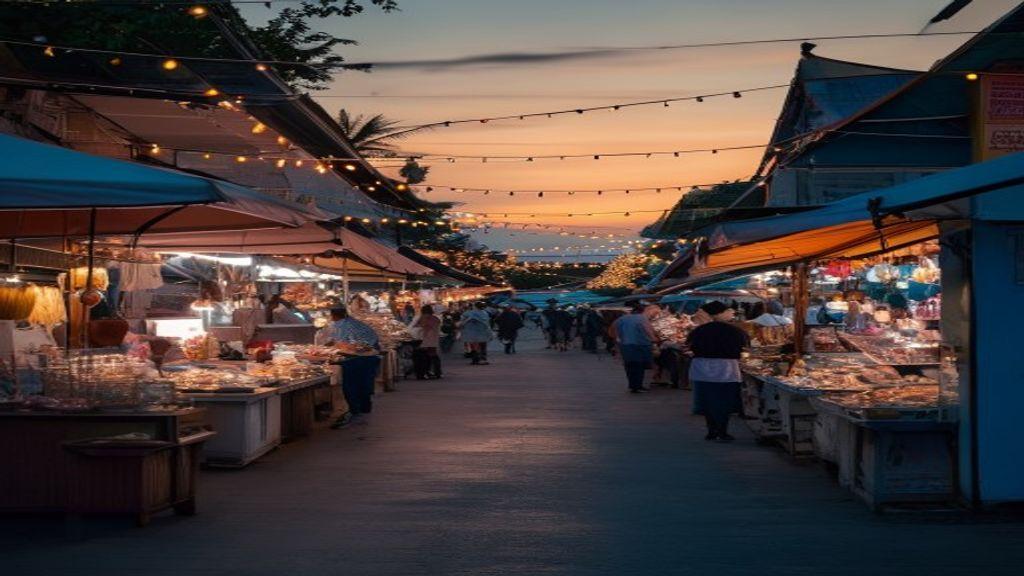,regionOfInterest=(512,288))
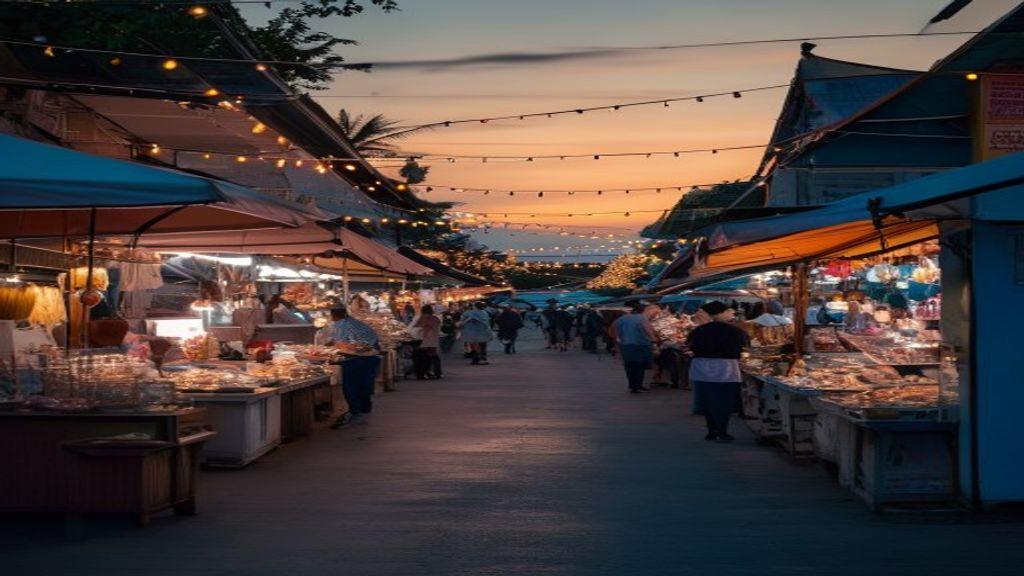,regionOfInterest=(512,288))
The Chiang Mai Night Bazaar runs nightly, roughly from 6pm to 11pm, though vendors along the busiest stretches often carry on toward midnight. Arriving right at opening, between 6pm and 7pm, gives the most breathing room to browse before the street fills in, and the busiest window generally falls between 7:30pm and 9:30pm once both locals and tourists are out in force.
Weeknights, particularly Tuesday and Wednesday, tend to run noticeably quieter than weekends. Weekends bring their own twist though: many visitors shift toward the Old City's weekend-only walking streets on Saturday and Sunday evenings, which can leave the Chiang Mai Night Bazaar itself feeling emptier than the guidebooks suggest on exactly the nights people expect it to be busiest.
For an efficient route through the precinct, starting at Anusarn on the southern end tends to ease newcomers in with a calmer pace and less aggressive hawking, then walking north through the street stalls before finishing at Kalare works well for pacing an evening around dinner and dessert.
Cool season, November through February, is the most comfortable stretch for the open-air sections, while rainy season, roughly June through October, is worth pairing with a plan to duck into the covered buildings if a downpour rolls through.
,regionOfInterest=(1771.5,1162.5))
,regionOfInterest=(1771.5,1162.5))
Landing at Chiang Mai International Airport and being at the bazaar's doorstep in under 15 minutes removes most of the friction from a trip built around shopping here more than once.
Meliá Chiang Mai runs its own airport transfer service, and with the hotel sitting right on Charoen Prathet Road, the Night Bazaar building, Kalare, Anusarn, and PhaPloen Market
are all a short walk away for every night of a longer stay, not just the one.
Groups shopping together, or a family splitting up the antiques and clothing runs before comparing notes over dinner, tend to outgrow a standard room fast. The Level Presidential Suite, at 113 square metres with two bedrooms and two bathrooms, gives everyone their own space to spread out a day's worth of lacquerware, silver, and clothing finds before it all needs packing.
Every room keeps a safe worth using on a trip built around buying things, whether that is a silver bangle from the covered building or a tailored shirt picked up earlier in the evening, plus a flat-screen television with Chromecast for whoever wants a quiet night in after a few evenings out on Chang Khlan Road.
The 24-hour Fitness Centre is there for anyone who wants to counter a night of Kalare's coupon-dining food court or Anusarn's sit-down seafood tables with something more active than a walk between market stalls, open regardless of what time a late evening at the bazaar wraps up.
Laan Na Kitchen runs a breakfast buffet every morning, a practical way to fuel up before a full day that ends with an evening back at the bazaar, with Mediterranean and Thai stations covering everyone in a group without a debate over where to eat first. It is a different visit to the restaurant than its better-known monthly Sunday brunch, built for an ordinary morning rather than a special occasion.
A day spent bargaining and walking the length of Chang Khlan Road adds up faster than it feels at the time, and a short foot or shoulder treatment at YHI Spa before heading back out for another evening tends to do more good than an extra coffee would.
Between the transfer straight from the airport, the extra space in the bigger suites, and a spa or a meal on hand without leaving the building, the logistics around a repeat-visit trip to the bazaar mostly take care of themselves.
,regionOfInterest=(1771.5,1181.5))
,regionOfInterest=(1771.5,1181.5))
Between the antiques inside the main building, the food courts and container bars scattered through Kalare, Anusarn, and PhaPloen Market
, and a bit of live entertainment thrown in most nights, the Chiang Mai Night Bazaar earns its reputation as the one market in the city that never asks a traveller to check the calendar first.
Basing a stay right at its edge turns a single planned evening into an open invitation to come back, whether that means finishing a bargain left unsettled the night before or simply working through the food stalls one cluster at a time over a longer trip.
,regionOfInterest=(1023,575.5))
,regionOfInterest=(1023,575.5))
Yes. Unlike the weekend-only walking streets elsewhere in the city, the Chiang Mai Night Bazaar runs every night of the week, generally from around 6pm to 11pm, with some vendors and food stalls staying open later on busy nights.
Handicrafts and antiques, hand-hammered silver, lacquerware, hill-tribe textiles, hand-painted Bo Sang umbrellas, tailored clothing, and souvenirs of every kind fill the stalls and buildings that make up the Chiang Mai Night Bazaar, alongside portrait painters and a wide spread of street food.
For most travellers, yes. It combines shopping, dining, and a bit of live entertainment in one walkable precinct that runs every night, which makes it one of the easiest ways to spend an evening in the city without needing to plan around a specific day of the week.
A comfortable evening covering dinner, a drink, and a souvenir or two runs about 500 to 1,500 baht (roughly US$14 to US$43) per person, though a sit-down seafood dinner or a larger handicraft purchase can push that higher. Cash is the default currency, since most street stalls at the Chiang Mai Night Bazaar do not accept cards.
,regionOfInterest=(2880,1920))
,regionOfInterest=(2880,1920))
,regionOfInterest=(1619.5,1121))
,regionOfInterest=(1619.5,1121))
,regionOfInterest=(1476.5,634.5))
,regionOfInterest=(1476.5,634.5))
,regionOfInterest=(2273,1523))
,regionOfInterest=(2273,1523))
,regionOfInterest=(1564,1200))
,regionOfInterest=(1564,1200))