Best Christmas markets in Andorra
,regionOfInterest=(3008,2008))
,regionOfInterest=(3008,2008))
Culture
,regionOfInterest=(849,566))
,regionOfInterest=(849,566))
When Advent arrives, the aroma of mulled wine and spices returns to the squares, lights appear along the historic streets and the wooden stalls announce that Christmas is near. In Austria, these weeks are part of a tradition that is experienced both in large cities and in small villages surrounded by mountains.
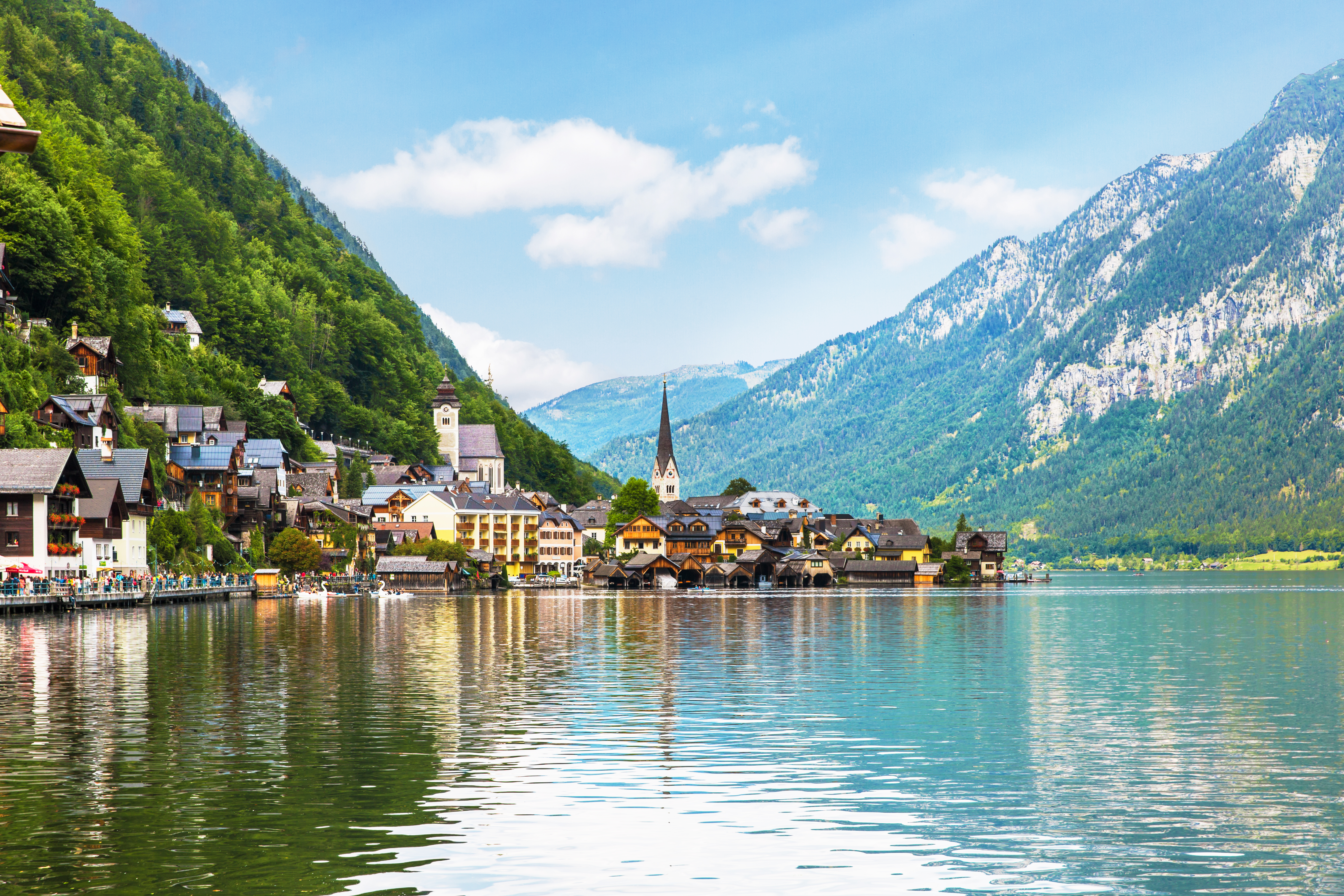
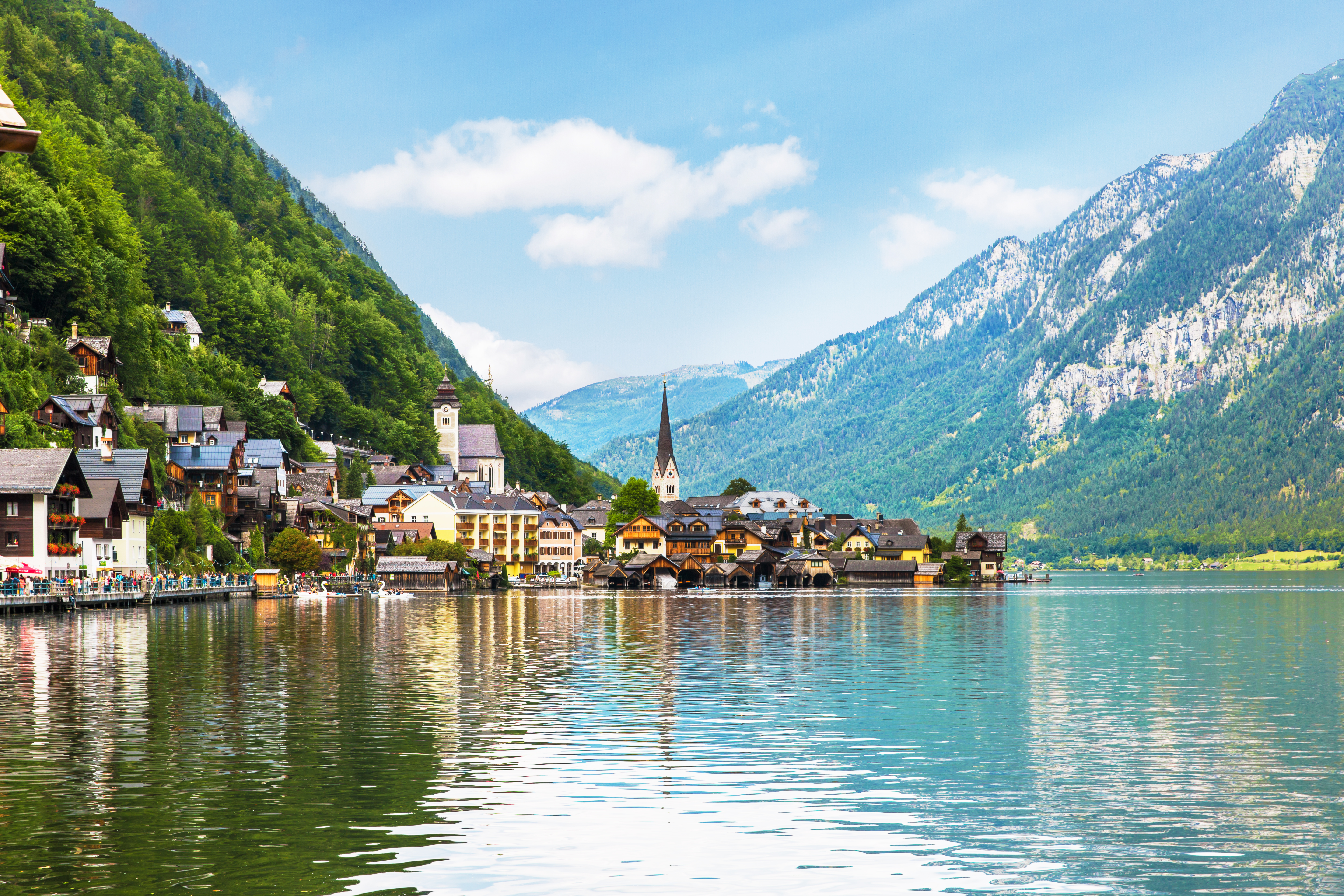
Austria celebrates Advent with markets set up in historic squares, medieval streets and courtyards of old palaces. Vienna concentrates some of the most well-known offerings, while Salzburg, Innsbruck and Graz show other ways of experiencing these weeks, from markets surrounded by Baroque architecture to stalls with views of the Tyrolean mountains.
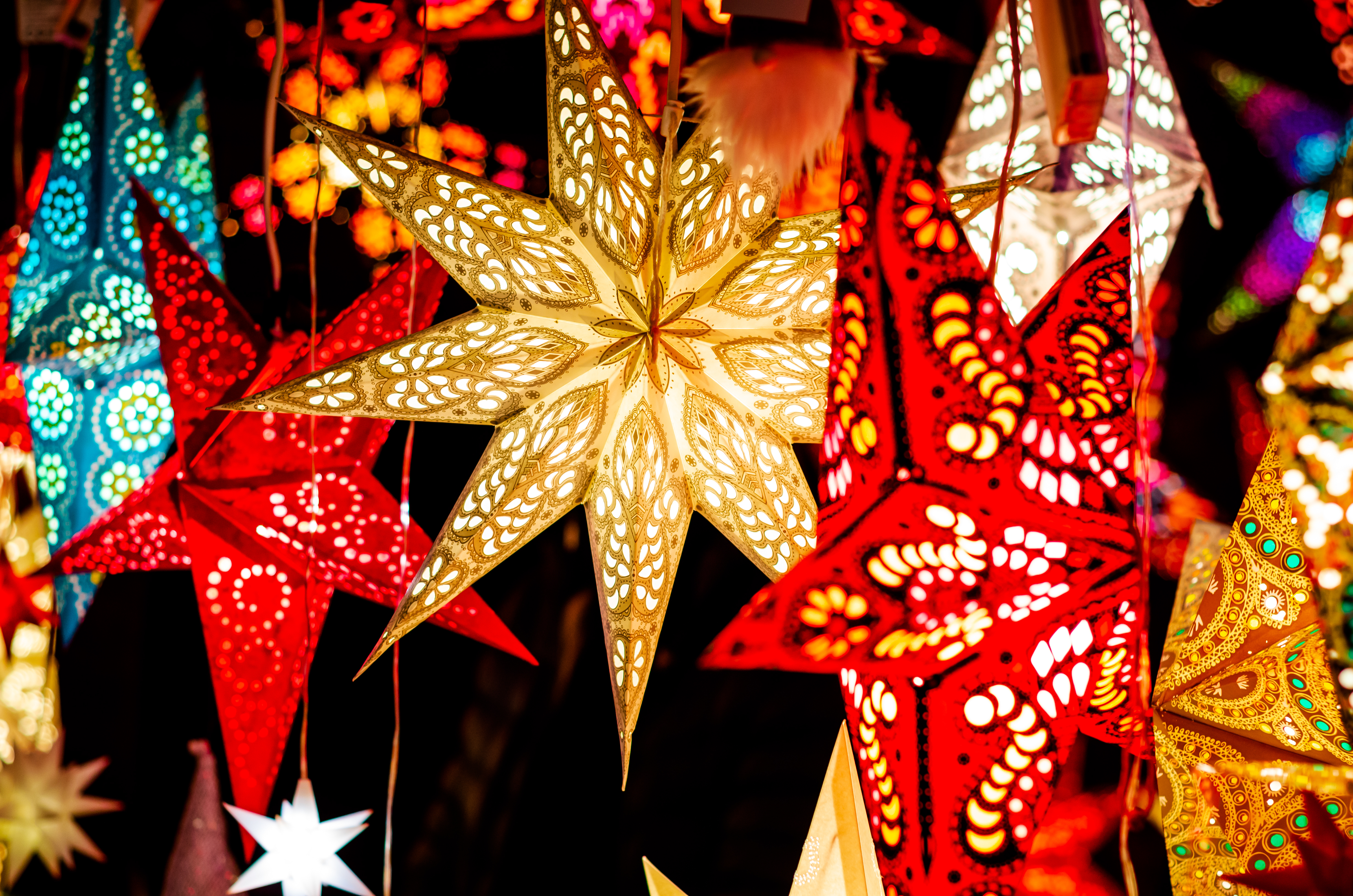
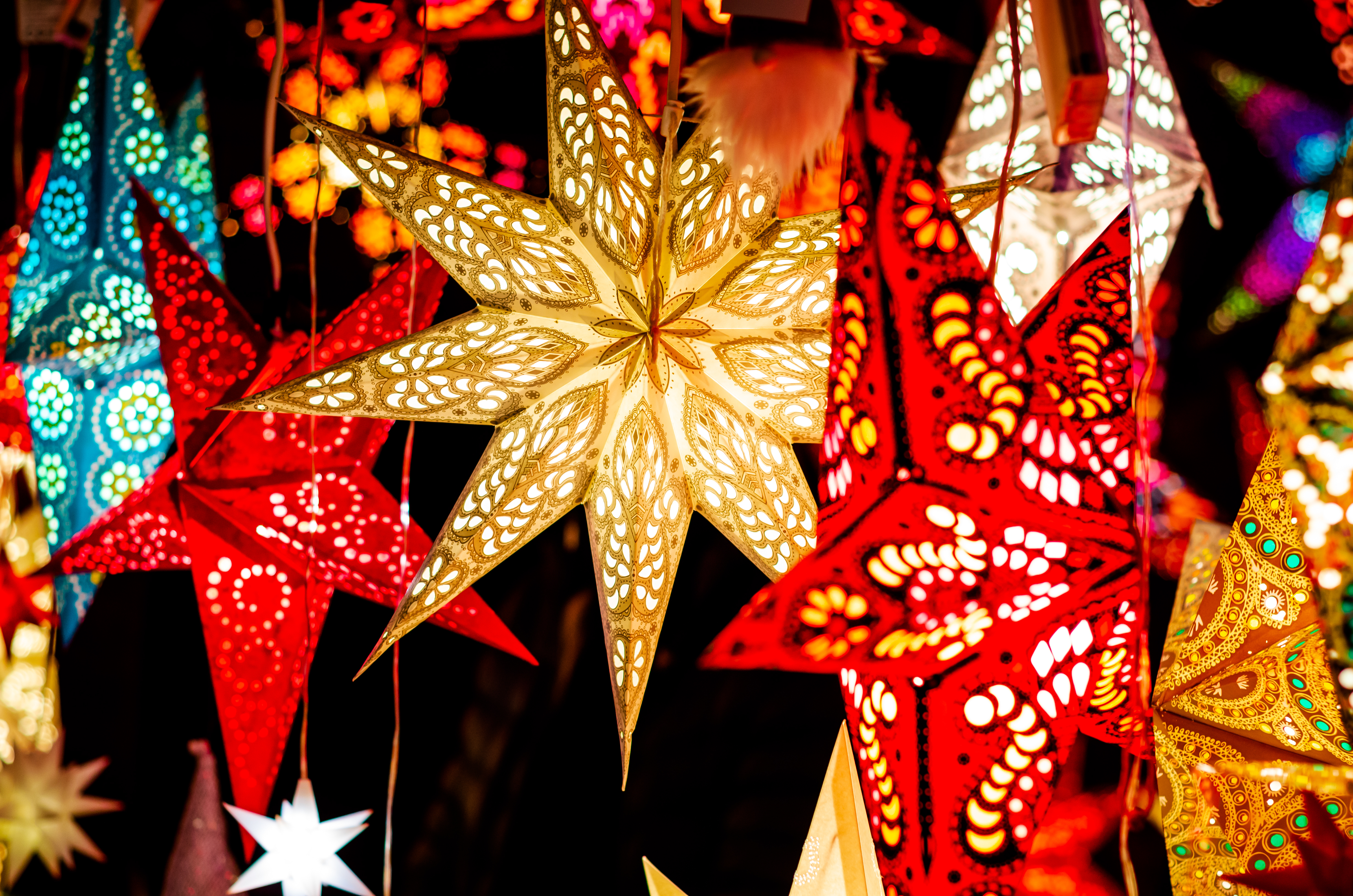
The Christmas markets in Austria begin in some cases during the first half of November and extend until Christmas, New Year's Eve or even Epiphany. Handicrafts, tree decorations, toys, gifts and gastronomy are part of markets where Glühwein, punch, candied almonds and Advent sweets accompany every stroll.
Culture
,regionOfInterest=(500,500))
,regionOfInterest=(500,500))
All-terrain writer specialising in tourism, fashion and trends. A curious soul, traveller, reader and sports enthusiast, keen to discover every corner of the world.
,regionOfInterest=(2880,1920))
,regionOfInterest=(2880,1920))
,regionOfInterest=(2464,1632))
,regionOfInterest=(2464,1632))
,regionOfInterest=(1925.5,1283.5))
,regionOfInterest=(1925.5,1283.5))
Advent has a special significance in the Austrian calendar. During the weeks before Christmas, Christkindlmärkte and Adventmärkte appear in the nine federal states, in large cities as well as in villages, castles and mountain areas. The offering combines commercial stalls with gastronomy, handicrafts and different regional traditions.
Vienna has more than twenty official Advent markets. Salzburg concentrates some of its best-known offerings around the Cathedral, Mirabell and Hellbrunn. Innsbruck spreads its markets throughout different parts of the city, from the Goldenes Dachl to Hungerburg, while Graz allows you to link several markets on foot through the centre.
There are also more rural markets. The official 2026 programme includes offerings in places such as St. Wolfgang, Rattenberg, Bad Hofgastein, Maria Alm, Steyr, Eisenstadt or Lech Zürs. Many of these small markets do not open daily, but rather during specific Advent weekends.
Most Christmas markets in Austria begin during the second half of November, although some of the large markets in Vienna start earlier. In 2026, the Schönbrunn Palace Christmas market and the Stephansplatz Christmas village will open on 6 November.
The Wiener Christkindlmarkt at Rathausplatz will begin on 13 November, as will the markets in the old town and Marktplatz in Innsbruck. Freyung will open one day later, on 14 November.
Salzburg concentrates a good part of its openings on 19 November. That day, the Salzburger Christkindlmarkt, the Mirabellplatz market and the Hellbrunner Adventzauber begin. Graz joins in from 20 November, when its main markets in the centre open.
Therefore, from mid-November it is already possible to organise a wide route through the Austrian markets. By the end of that month, practically all large cities have Christmas activity.
The selection combines urban, historic, palatial and alpine markets to show different ways of celebrating Advent. Markets relevant for a trip through Austria and with official information available for the 2026 season have been prioritised.
| Market | Editorial rating | Location | Ideal for |
|---|---|---|---|
| Wiener Christkindlmarkt | ★★★★★ | Rathausplatz, Vienna | Large urban Christmas market |
| Weihnachtsmarkt Schloss Schönbrunn | ★★★★★ | Schönbrunn Palace, Vienna | Handicrafts and imperial setting |
| Salzburger Christkindlmarkt | ★★★★★ | Domplatz and Residenzplatz, Salzburg | Tradition and historic centre |
| Christkindlmarkt Altstadt Innsbruck | ★★★★★ | Old Town, Innsbruck | Alpine Christmas |
| Hellbrunner Adventzauber | ★★★★★ | Hellbrunn Palace, Salzburg | Families and palatial setting |
| Weihnachtsmarkt Spittelberg | ★★★★☆ | Spittelberg, Vienna | Handicrafts and historic streets |
| Christkindlmarkt am Hauptplatz | ★★★★☆ | Hauptplatz, Graz | Visiting several markets on foot |
| Altwiener Christkindlmarkt | ★★★★☆ | Freyung, Vienna | Tradition and handicrafts |
| Weihnachtsmarkt Mirabellplatz | ★★★★☆ | Salzburg | Small and central market |
| Christkindlmarkt Hungerburg | ★★★★☆ | Hungerburg, Innsbruck | Views over Innsbruck and the Alps |
| Weihnachtsmarkt Maria-Theresien-Straße | ★★★★☆ | Innsbruck | Christmas until Epiphany |
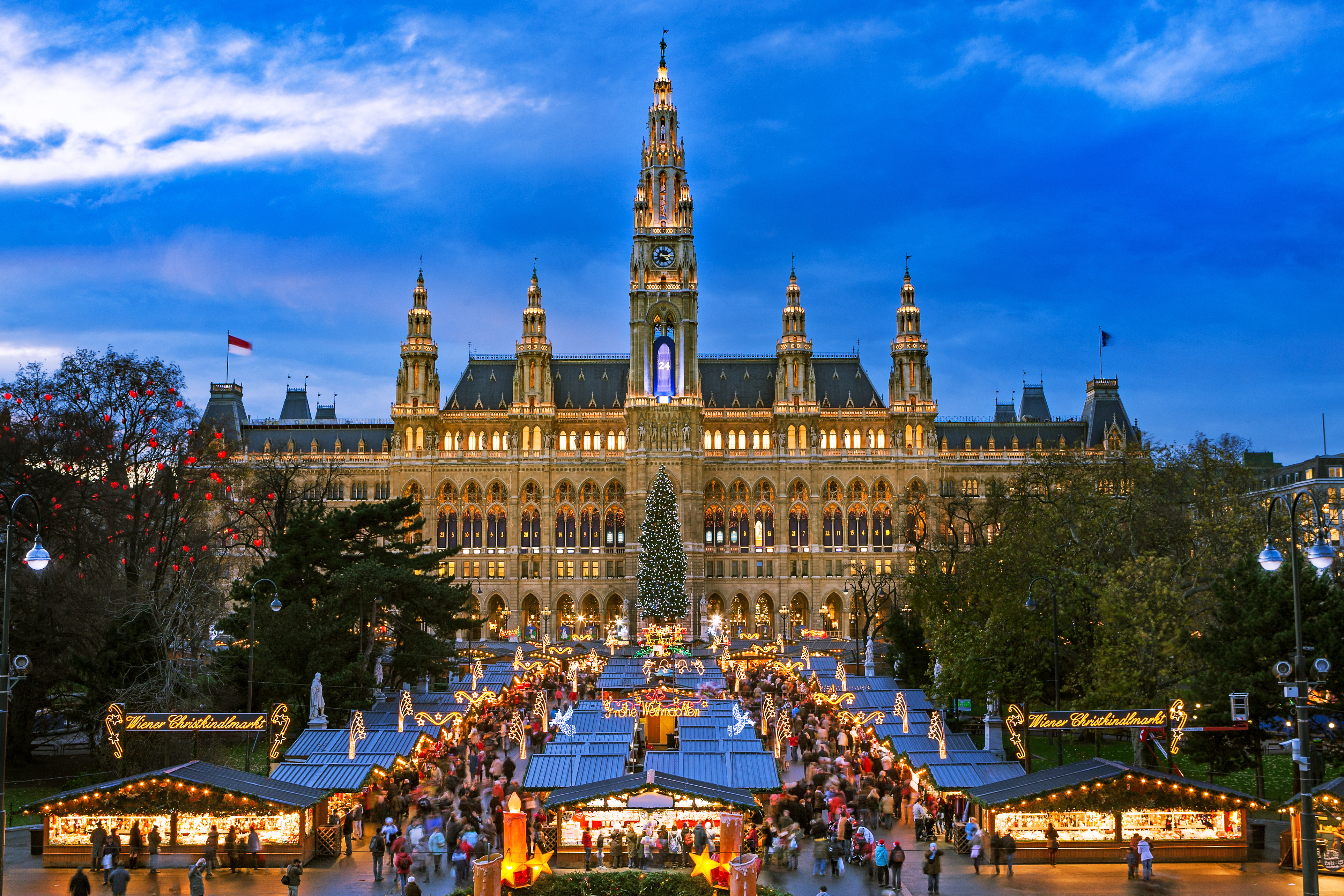
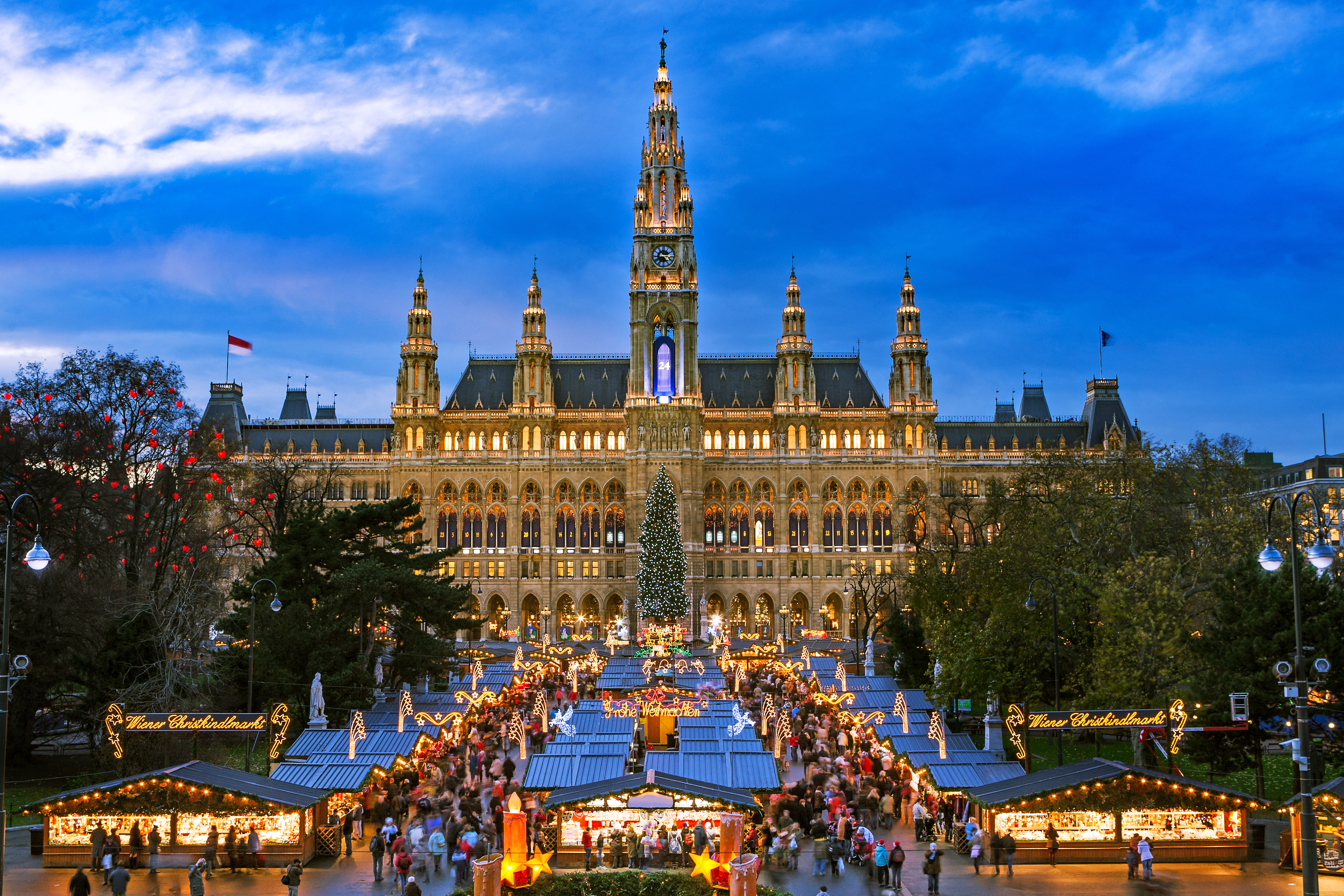
The Rathausplatz market is one of the great references for Christmas in Vienna. It is set up in front of the City Hall and brings together stalls selling Christmas gifts, tree decorations, handicrafts, sweets, gastronomy and hot drinks.
The market extends towards the Rathauspark. In 2026 it will once again have its skating area, as well as different family offerings, such as a carousel, children's spaces and a nativity scene route. The rink will remain open longer than the stalls themselves, until 6 January 2027.
Its location is especially convenient for starting a route through the Viennese markets. From Rathausplatz you can continue towards Freyung and Am Hof and then advance towards Stephansplatz.
🗓️ Dates: 13 November - 26 December 2026.
📍 Location: Rathausplatz, 1010 Vienna.
The Schönbrunn Palace market combines the architecture of the former imperial residence with one of the most extensive Christmas calendars in Vienna.
Among the products associated with this market are handicrafts, handmade Christmas decorations, toys and figures for nativity scenes. The Austrian Tourist Office highlights the market's traditional handicrafts, from wood carvings to toys and decorations.
Its calendar is one of its great advantages. It is one of the first relevant markets in the country to open and remains active after Christmas Eve, New Year's Eve and New Year's Day. For this reason, it is especially interesting for those travelling during the last days of December or in the first week of January.
🗓️ Dates: 6 November 2026 - 6 January 2027.
📍 Location: Schloss Schönbrunn, 1130 Vienna.
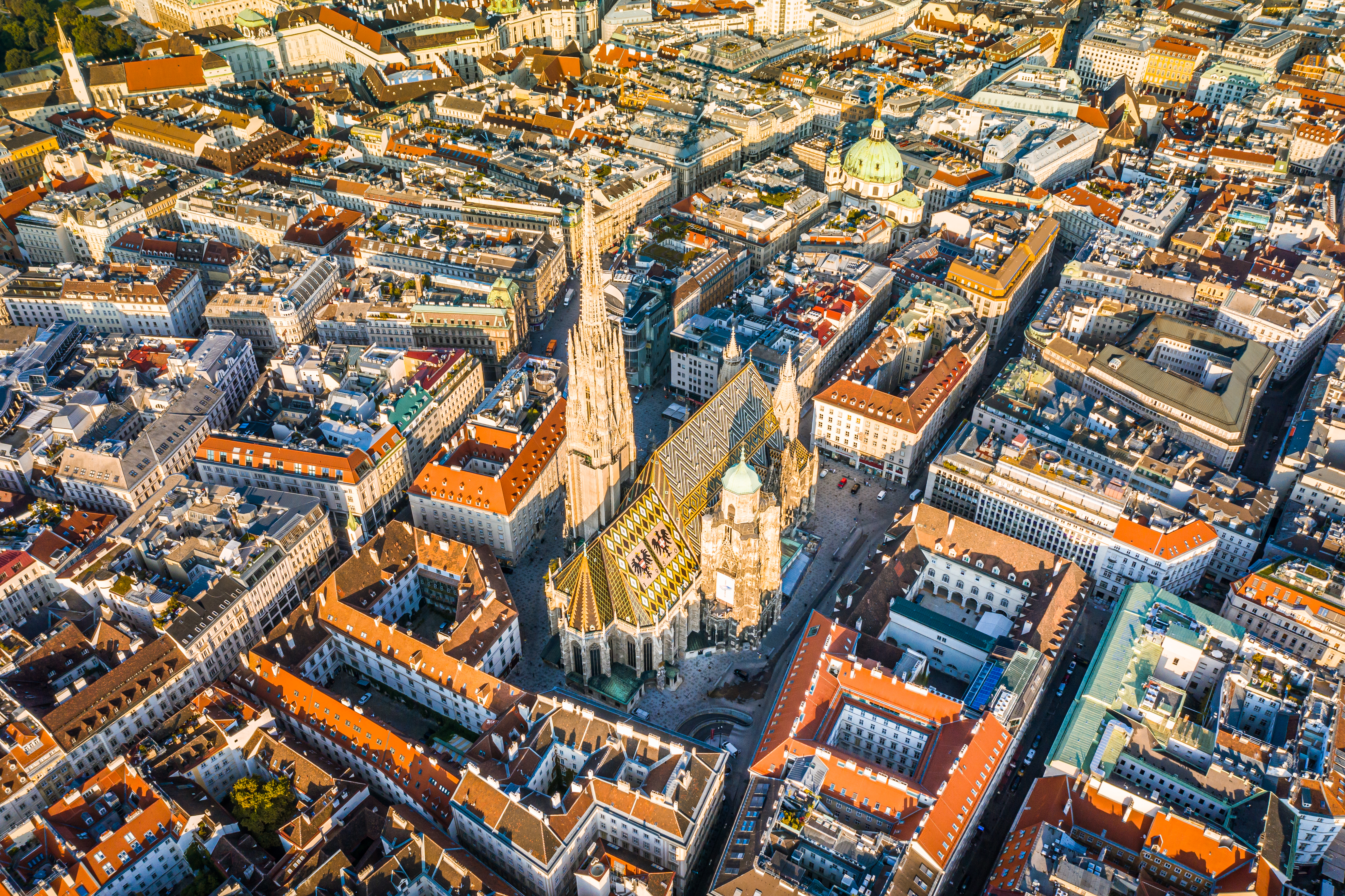
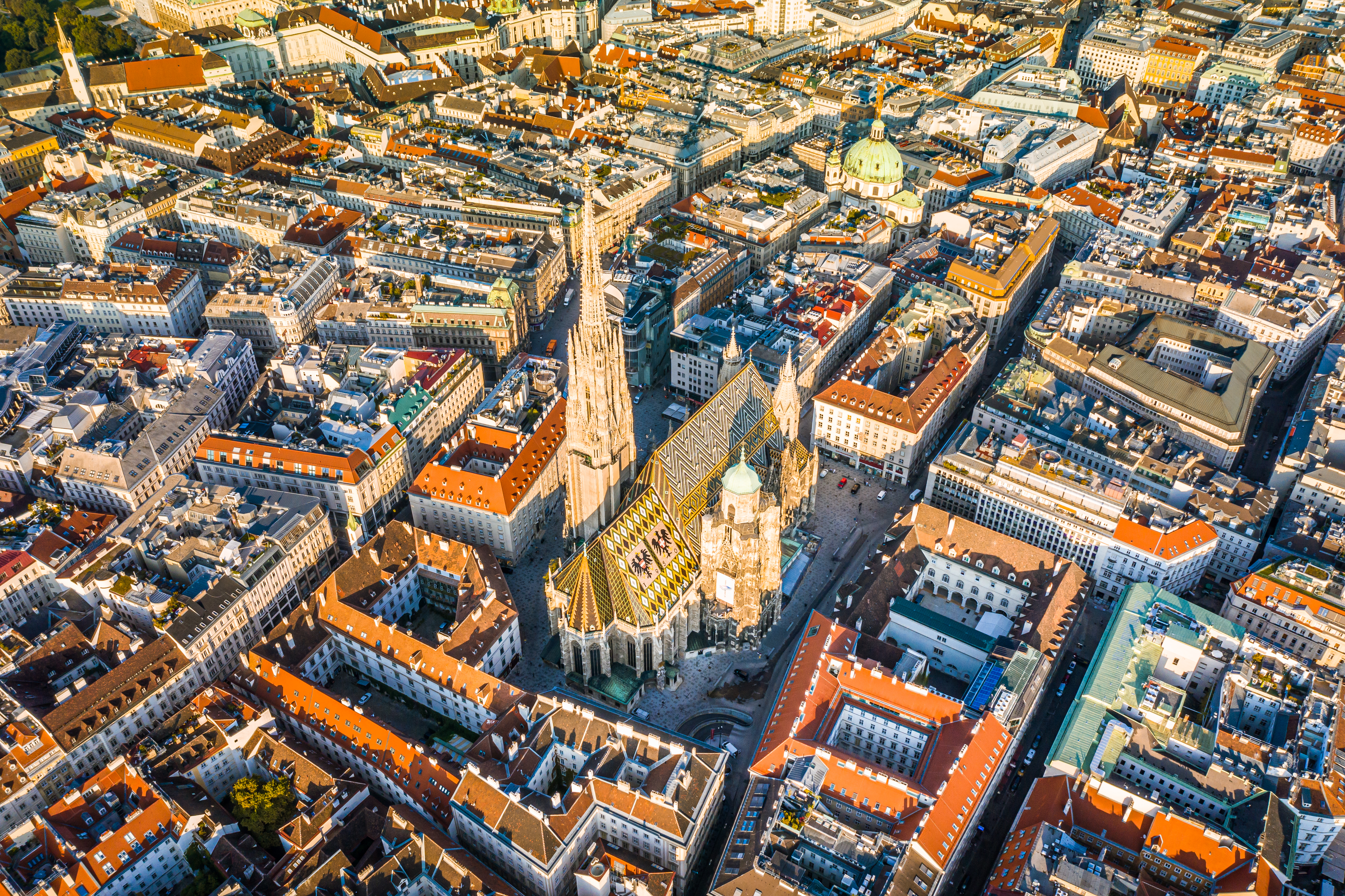
The Stephansplatz market occupies one of the most central points in Vienna, next to St. Stephen's Cathedral. Its main advantage is precisely that location: it can be easily integrated into any walking route through the historic centre.
Its setting is very different from that of Schönbrunn or Rathausplatz. Here the Christmas stalls are distributed next to one of the capital's great monuments, surrounded by the commercial streets of the centre.
It also stands out for opening very early. In 2026 it begins on 6 November, the same day as Schönbrunn, and remains active until after Christmas Eve. From Stephansplatz you can continue walking towards Graben, Kohlmarkt, Am Hof and Freyung.
🗓️ Dates: 6 November - 26 December 2026.
📍 Location: Stephansplatz, 1010 Vienna.
Spittelberg brings a different scale to the Viennese Christmas. Instead of occupying a large monumental square, the market is distributed along the streets of a historic neighbourhood characterised by its Biedermeier-era houses and narrow paths.
This layout encourages a more leisurely walk among small stalls and shops. It is an especially interesting option for those looking for handicrafts and gifts and who prefer to get away from the large open spaces of Rathausplatz or Schönbrunn.
In addition, its location allows it to be combined with MuseumsQuartier and with the cultural axis located around Maria-Theresien-Platz. Unlike other markets in Vienna that continue after Christmas, Spittelberg maintains the traditional Advent calendar and ends before Christmas Eve.
🗓️ Dates: 13 November - 23 December 2026.
📍 Location: Spittelberggasse and nearby streets, 1070 Vienna.
The Salzburger Christkindlmarkt occupies Domplatz and Residenzplatz, in the heart of Salzburg's historic centre. The traditional stalls are surrounded by the Baroque architecture of the centre and next to the Cathedral.
The commercial tradition of this space dates back several centuries. Its current location allows you to combine the market with some of the main places of interest in the old town without depending on transport.
In addition to the stalls, the Salzburg Christmas maintains traditions such as the appearances of Saint Nicholas and the parades of Krampus and Perchten, figures closely related to the alpine Advent calendar.
Another peculiarity is its duration. After Christmas it remains active during the last days of the year and reaches New Year's Day.
🗓️ Dates: 19 November 2026 - 1 January 2027.
📍 Location: Domplatz and Residenzplatz, 5020 Salzburg.
The Hellbrunner Adventzauber is celebrated around Hellbrunn Palace, on the outskirts of the centre of Salzburg. In 2026 it celebrates its 25th anniversary: it began in 2001 with six small cabins and has been growing since then.
The market combines handicraft stalls and alpine specialities with especially extensive decoration. The programme also includes choirs, folk music, an Advent café and children's activities.
For families there are offerings such as a Christmas train, a post office to write to the Christkind and children's activities. The palace's water gardens are also incorporated into the tour through lighting.
It is important to know that part of the visit is paid: for 2026 the organisation publishes an entrance fee of 8 euros at certain times, with a hot drink included. After 19:00 and on 24 December entry is free.
🗓️ Dates: 19 November - 24 December 2026.
📍 Location: Fürstenweg 37, 5020 Salzburg.
,regionOfInterest=(3000,2000))
,regionOfInterest=(3000,2000))
The Mirabellplatz market offers a smaller alternative to the large Christkindlmarkt in Domplatz and Residenzplatz. It is located in front of the Mirabell Palace grounds and the St. Andrä church.
The stalls combine artisanal products and gastronomy. Among its offering are Christmas decorations, ceramics, wool products, herbs, incense, decorative objects, bread and Brezen, as well as punch and Glühwein.
Its location is especially practical for travellers arriving by train: the central station of Salzburg is a few minutes' walk away. Unlike many Advent markets, it remains open after 24 December and lasts until New Year's Eve.
🗓️ Dates: 19 November - 31 December 2026.
📍 Location: Mirabellplatz, 5020 Salzburg.
The market in the old town of Innsbruck is set up in front of the Goldenes Dachl or Golden Roof, one of the main symbols of the city. Its position among historic buildings and with the mountains around it well summarises the alpine character of the Tyrolean Christmas.
The organisation announces for 2026 65 stalls and a natural tree approximately 20 metres high. Every day at 17:00, the traditional tower trumpeters perform Christmas music from the Goldenes Dachl.
The market can be easily combined with other Christmas spaces in Innsbruck. Marktplatz is especially aimed at families, while Maria-Theresien-Straße offers a more contemporary offering and Hungerburg allows you to contemplate the city from a greater height.
🗓️ Dates: 13 November - 23 December 2026.
📍 Location: Herzog-Friedrich-Straße, 6020 Innsbruck.
Hungerburg offers one of the most unique locations of the markets included in this guide. It is located above Innsbruck and is reached from the centre via the Hungerburgbahn, whose route passes through stations designed by Zaha Hadid.
The journey from the centre lasts about eight minutes. Up there awaits the Christmas market located at the highest altitude in the city, with ten stalls selling Christmas souvenirs, artisanal pieces and traditional specialities.
Its main difference is in the panoramic views of Innsbruck and the mountains. In addition, its calendar is much longer than that of the old town market, as it continues after Christmas and remains open until Epiphany.
🗓️ Dates: 20 November 2026 - 6 January 2027.
📍 Location: Hungerburg, Innsbruck.
Maria-Theresien-Straße represents the most contemporary face of the Innsbruck markets. It is set up on one of the main commercial streets of the city and uses illuminated trees and light and glass elements in its decoration.
In 2026 it will have 30 stalls where gifts from diverse origins, gastronomy and artisanal products are offered.
Its calendar also differentiates it from the traditional Goldenes Dachl market. It opens later, at the end of November, but continues during Christmas, New Year and the first days of January.
This makes it one of the clearest options for those travelling to Austria during the holidays after Christmas Eve.
🗓️ Dates: 25 November 2026 - 6 January 2027.
📍 Location: Maria-Theresien-Straße, 6020 Innsbruck.
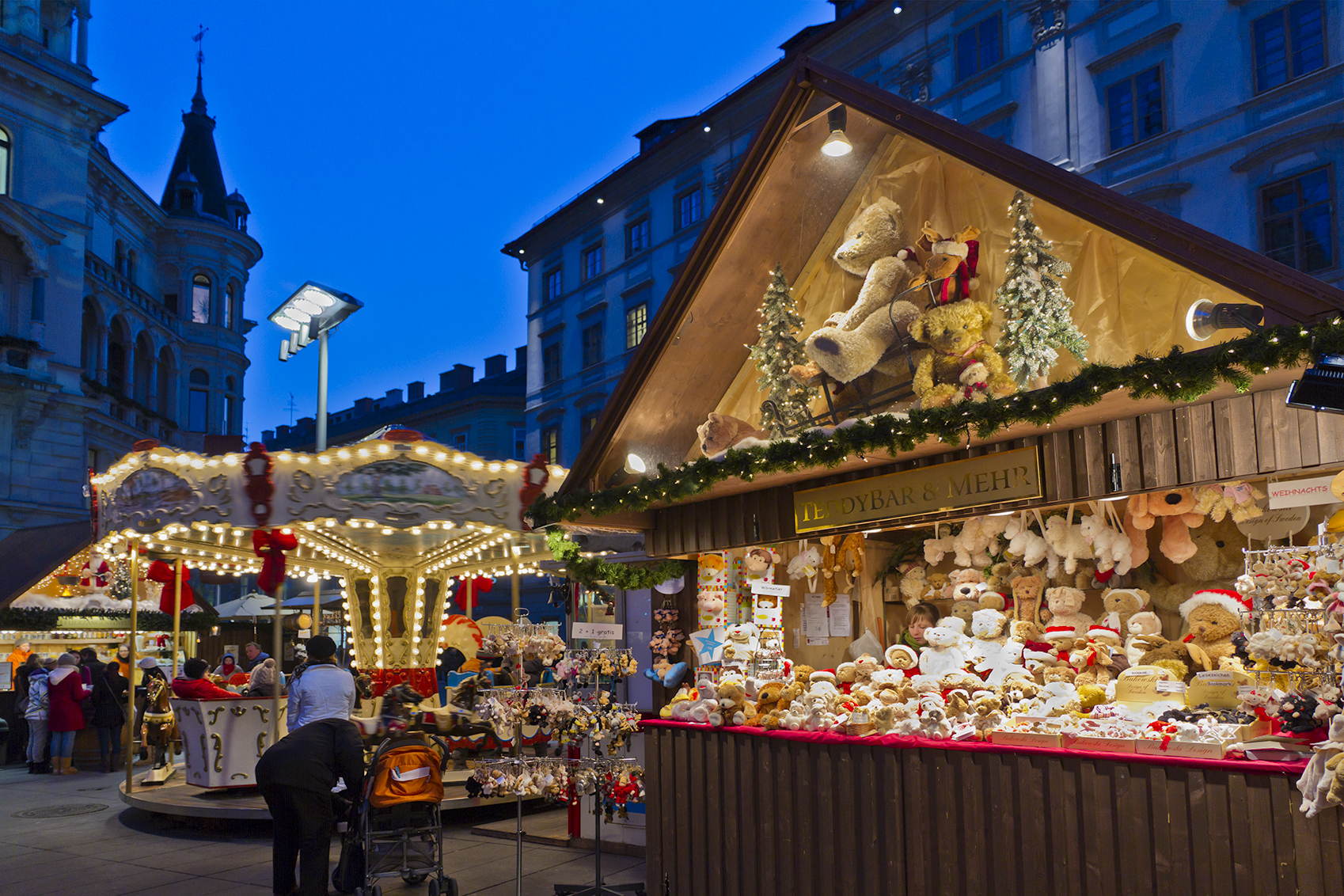
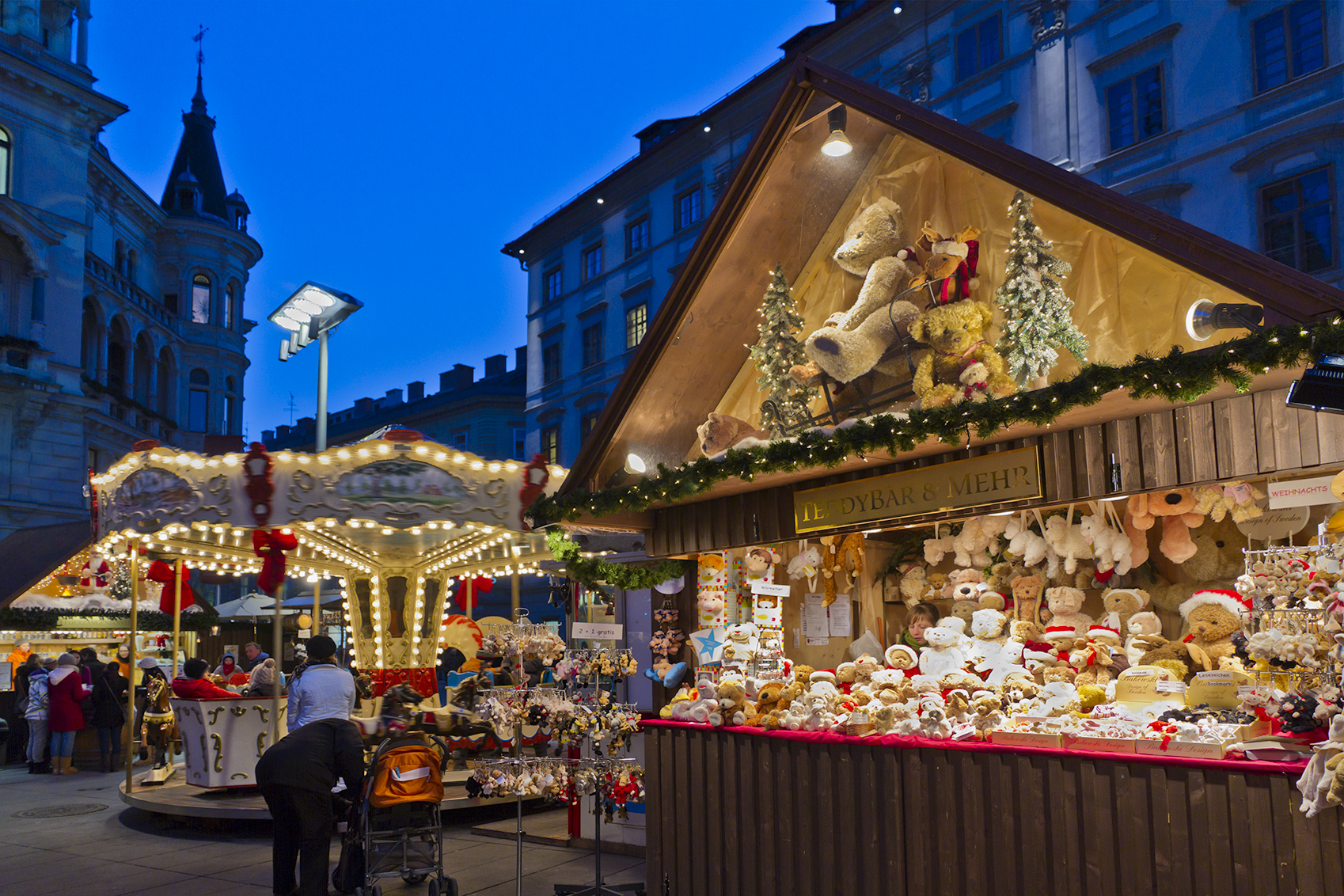
Graz organises Christmas in a way that is especially convenient to walk around. Its markets are spread over different squares and spaces in the historic centre, so it is possible to go from one to another without major travel.
The Christkindlmarkt at Hauptplatz functions as one of the main points of this network. It is set up in the central square, in front of the City Hall, and allows you to continue afterwards towards other Christmas spaces such as Franziskanerviertel and Joanneumsviertel.
The official Austrian programme confirms for 2026 several markets in Graz from 20 November. In addition to the one at Hauptplatz, there is the craft market in Joanneumsviertel, the Christkindlmarkt in Franziskanerviertel and the Aufsteirern Christmas market in Schlossberg.
🗓️ Dates: 20 November - 24 December 2026.
📍 Location: Hauptplatz, Graz.
Freyung hosts a market on a smaller scale than Rathausplatz and with an orientation especially linked to tradition. It is located in the heart of Vienna's historic centre and can be easily linked on foot with Am Hof and the streets that lead towards Stephansplatz.
The offering includes handicrafts, toys, jewellery, leather, textiles and candles, along with gastronomic products and hot drinks. It is, therefore, an especially interesting alternative for looking for artisanal gifts.
Its calendar ends before Christmas Eve, something common among the more traditional Advent markets. Those travelling after 23 December will have to opt for other Viennese offerings such as Rathausplatz, Schönbrunn, Stephansplatz or Belvedere.
🗓️ Dates: 14 November - 23 December 2026.
📍 Location: Freyung, 1010 Vienna.
The gastronomy of the markets and the traditional food of family celebrations are not exactly the same. In the stalls, products that are easy to consume while walking around the market predominate, while dishes such as carp or certain roasted meats are more linked to Christmas tables.
The Glühwein is probably the most recognisable drink in Austrian markets. It is mulled wine flavoured with spices. Alongside it appears Punsch, which is served in numerous variants and is also associated with Advent markets.
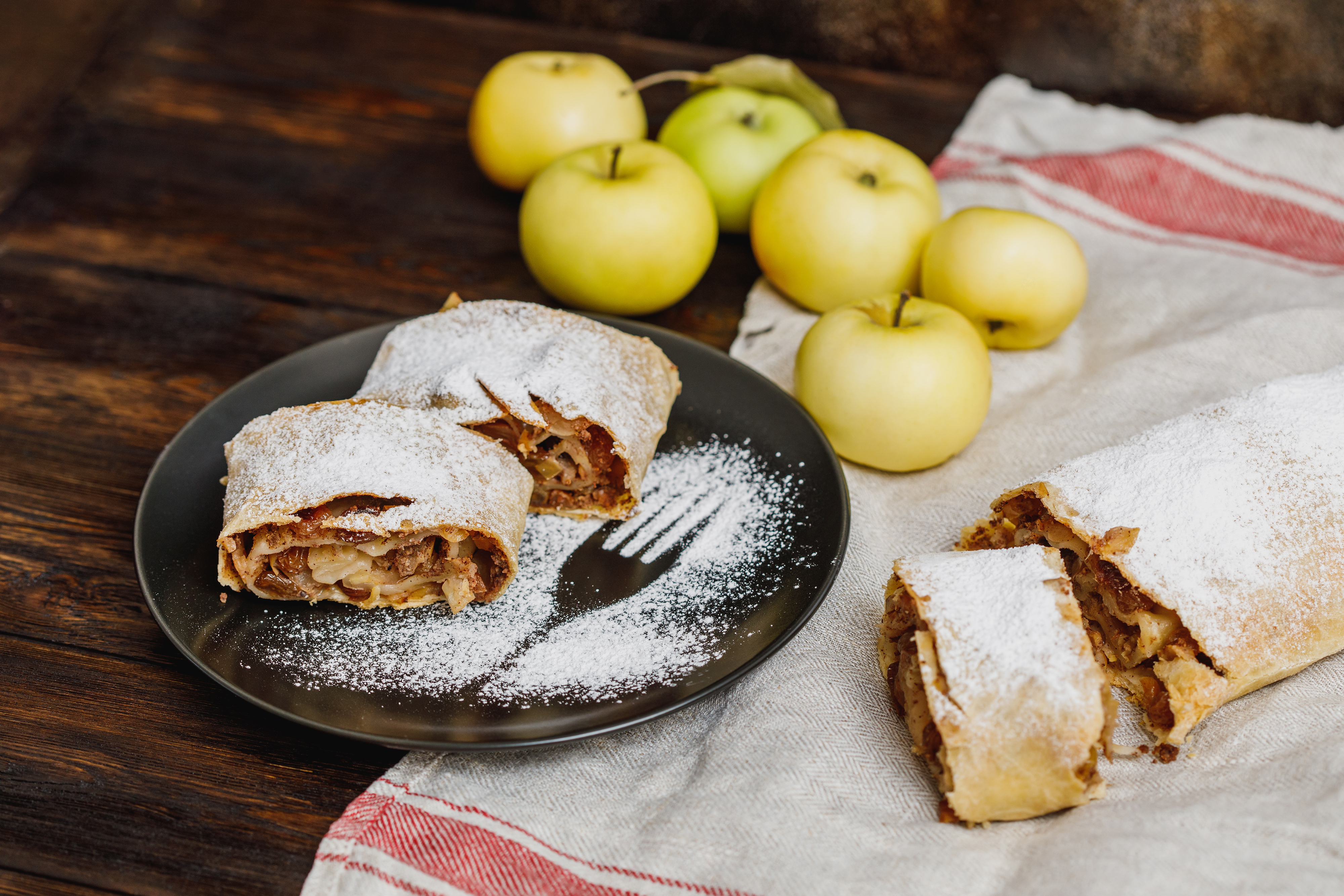
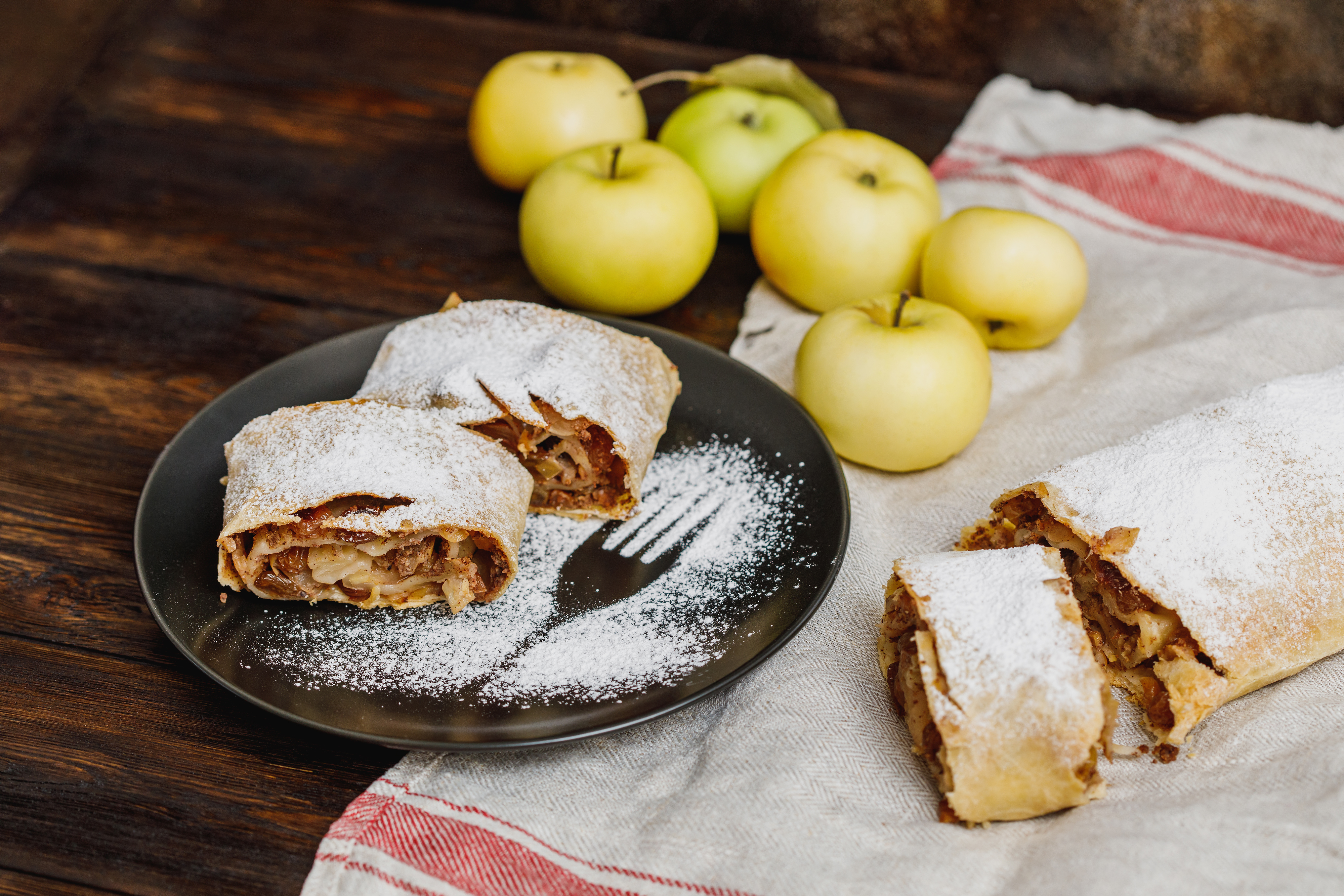
Candied almonds and roasted chestnuts are other common products. Among the sweets, Lebkuchen stands out, made with spices and closely associated with the Central European Advent. Vanillekipferl, small crescent-shaped biscuits flavoured with vanilla, are also part of Austrian Christmas confectionery.
In Salzburg and other markets, you can also find bread, Brezen, regional products and alpine specialities. Mirabellplatz features stalls with bread and Brezen, while Hellbrunn expressly highlights its alpine specialities.
Outside the stalls, Christmas gastronomy is broader. Carp —Karpfen— is part of the Christmas Eve traditions of certain Austrian families and regions and can be prepared fried. Roast goose —Weihnachtsgans— is another dish associated with winter celebrations, although it should not be understood as a universal dish in every home in the country.
In Salzburg, there are also family traditions linked to soups and sausages during Christmas Eve. Customs vary by region and family, so these dishes are more useful for understanding Austrian Christmas gastronomy than for describing the specific offering of every market.
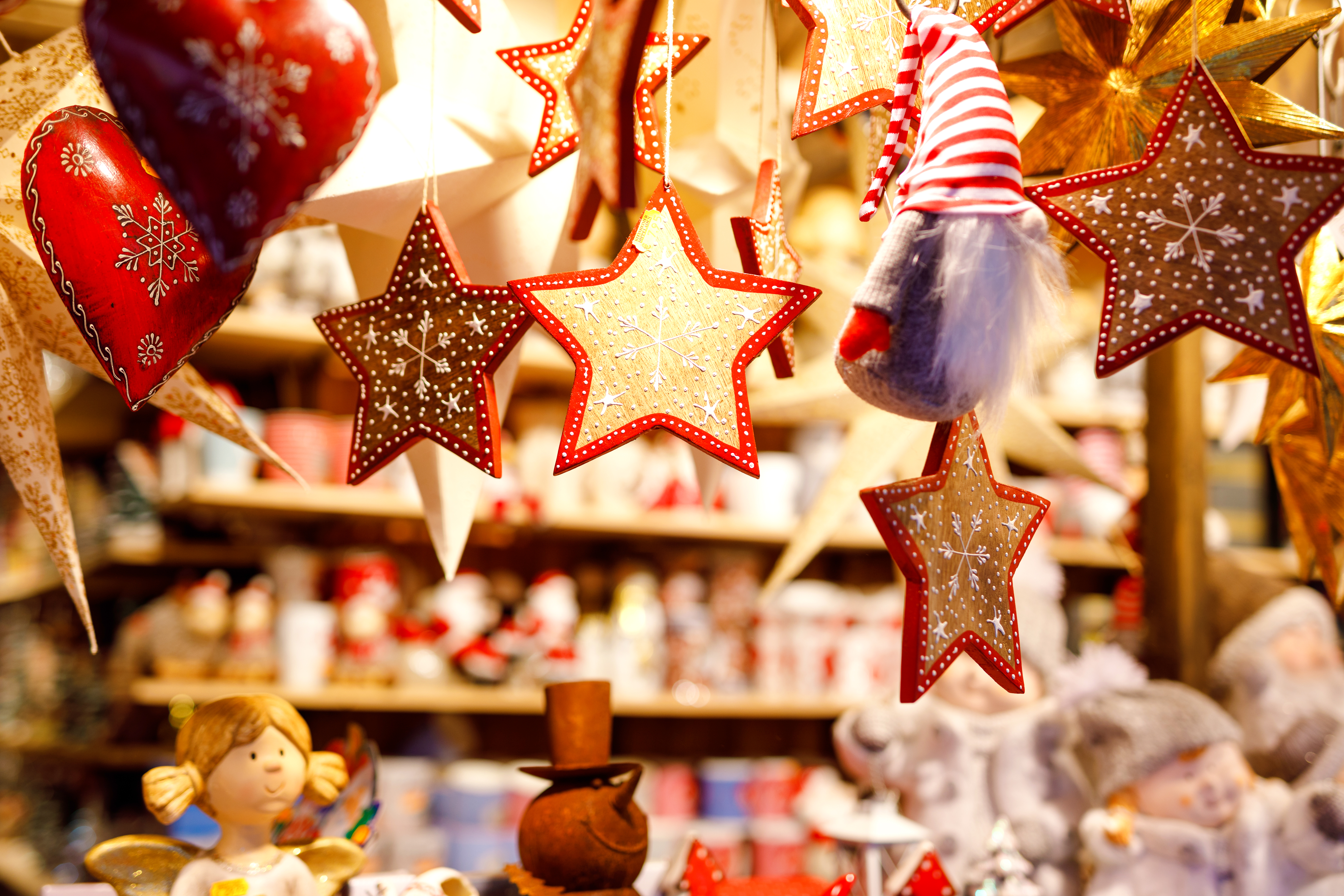
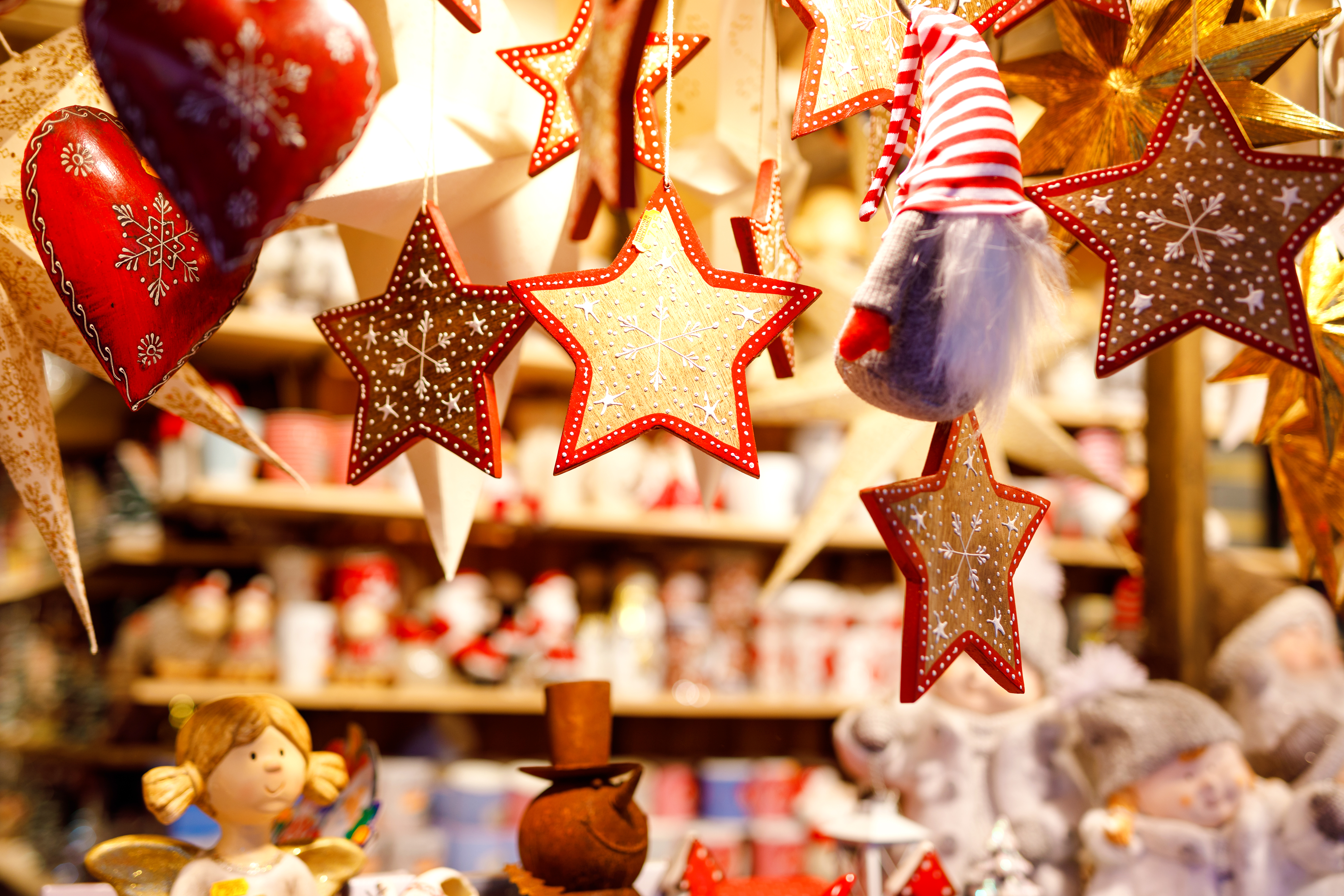
For shopping, it is worth paying special attention to handicrafts. Schönbrunn stands out for its wood carvings, toys and handmade decorations; Freyung for its artisanal products; Hellbrunn combines traditional handicrafts with regional products, and Hungerburg offers souvenirs and handmade pieces.
Tree decorations, candles, ceramics, textiles, wooden objects, nativity scene figures and small gifts are, therefore, some of the purchases most linked to Austrian markets.
,regionOfInterest=(2000,1333.5))
,regionOfInterest=(2000,1333.5))
Closing dates vary considerably. Markets more linked to the Advent period usually end just before Christmas Eve. In Vienna, Spittelberg, Freyung and Am Hof close on 23 December 2026. The traditional market in the old town of Innsbruck ends on that same day.
The 24 December is when the main markets in Graz and the Hellbrunner Adventzauber in Salzburg, among others, end. In Hellbrunn, the last day has special reduced hours.
Other markets continue after Christmas Eve. Rathausplatz and Stephansplatz in Vienna last until 26 December. Belvedere and Mirabellplatz remain until the 31st, while the Salzburger Christkindlmarkt continues until 1 January 2027.
For those travelling during Epiphany, there are still several options. The Schönbrunn market and the Wintermarkt at the Prater in Vienna remain until 6 January 2027, as do the markets in Hungerburg and Maria-Theresien-Straße in Innsbruck.
Austria therefore allows you to organise a Christmas trip even after 25 December, but it is essential to check the specific calendar: some of the more traditional markets will have already ended.
Vienna is one of the most practical bases for starting a route through the Christmas markets of Austria and also has a Meliá Hotels International establishment: Meliá Vienna, located in Donau City.
| Hotel | Nearby market | Distance/transport | Approximate time | Advantage |
|---|---|---|---|---|
| Meliá Vienna | Stephansplatz, Rathausplatz, Freyung, Spittelberg and Schönbrunn | Metro and public transport from Donau City | Variable depending on market and connection | Meliá base for visiting the main markets in Vienna and continuing a route through Austria |
Meliá Vienna is located at Donau-City-Straße 7, within the modern area of Donau City. It is not located next to the main markets of the historic centre, so travel is mainly carried out using the Vienna public transport network.
From the point of view of an itinerary through Austria, Vienna also allows you to continue the trip towards Graz, Salzburg or Innsbruck. The four cities are connected by rail, although specific times must be checked for the chosen day and service.
For a route exclusively about Christmas, a reasonable option is to dedicate several days to Vienna and then continue towards Salzburg or Innsbruck, where the markets have a more alpine character.
The Advent weeks include traditions that go far beyond commercial stalls. Advent wreaths, calendars, homemade biscuits and family gatherings are part of these weeks throughout the country.
One of the most particular figures in the alpine calendar is the Krampus, which appears in celebrations and parades related to Saint Nicholas. Salzburg maintains this tradition and several markets incorporate Krampus events into their programme.
Salzburg also has a special relationship with “Stille Nacht” —“Silent Night”—. The carol was performed for the first time in 1818 in Oberndorf, near Salzburg, and today it is part of the cultural heritage associated with Christmas in this region.
In Vienna, the Christmas route can combine markets with palaces and monuments. Schönbrunn and Belvedere allow you to combine cultural visits with the markets installed in front of both complexes, while Stephansplatz, Freyung and Am Hof can be linked by walking through the historic centre.
Innsbruck offers a different experience thanks to the proximity of the Alps. The Hungerburg market is especially representative: the funicular ascends from the centre to the market in about eight minutes and allows you to contemplate Innsbruck and the mountains from an elevated position.
Graz stands out for the concentration of markets in its historic centre. In addition to Hauptplatz, in 2026 there will be offerings in Franziskanerviertel, Joanneumsviertel and Schlossberg, among other spaces. This makes it easy to build a route based on small, successive stops.
Austria thus allows you to plan very different Christmas trips. Vienna combines urban markets and old palaces; Salzburg unites tradition, Baroque architecture and alpine celebrations; Innsbruck adds the mountain landscape; and Graz concentrates a good part of its Advent in a historic centre that is easy to walk around. The markets are the common thread, but the gastronomy, handicrafts and regional traditions help to understand why these weeks have such a presence in the Austrian winter.
And perhaps that is part of the charm of Christmas in Austria: warming up around a cup of Glühwein, choosing a small ornament to take home or sharing some sweets while the evening falls and the lights are switched on. These are simple gestures that recall the cosiest side of this season and turn the trip into a way of getting closer to traditions that, every winter, bring families and friends together again.
,regionOfInterest=(2732,1820))
,regionOfInterest=(2732,1820))
,regionOfInterest=(3680,2456))
,regionOfInterest=(3680,2456))
,regionOfInterest=(2857.5,1856.5))
,regionOfInterest=(2857.5,1856.5))
,regionOfInterest=(1944,1296))
,regionOfInterest=(1944,1296))
,regionOfInterest=(2500,1454))
,regionOfInterest=(2500,1454))
,regionOfInterest=(2720.5,1813.5))
,regionOfInterest=(2720.5,1813.5))