Best golf courses in Estepona


Culture

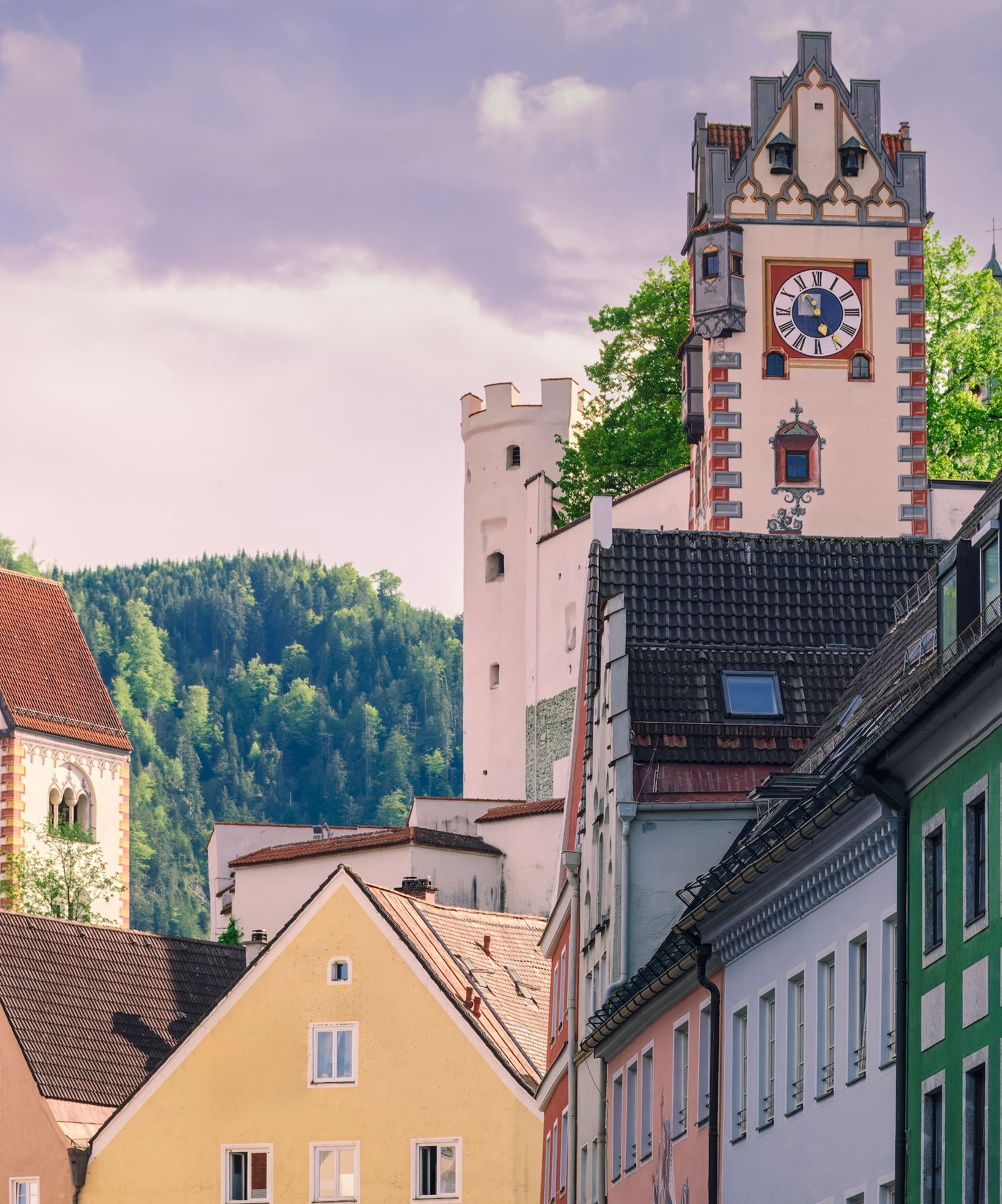
Located at the southern tip of Bavaria, in the Ostallgäu region, at the foot of the Alps and very close to the Austrian border, Füssen is one of the most picturesque cities in southern Germany. Its medieval old town, Baroque churches, the waters of the Lech River and the spectacular alpine landscape that surrounds it make it one of the most attractive destinations in the Allgäu region.
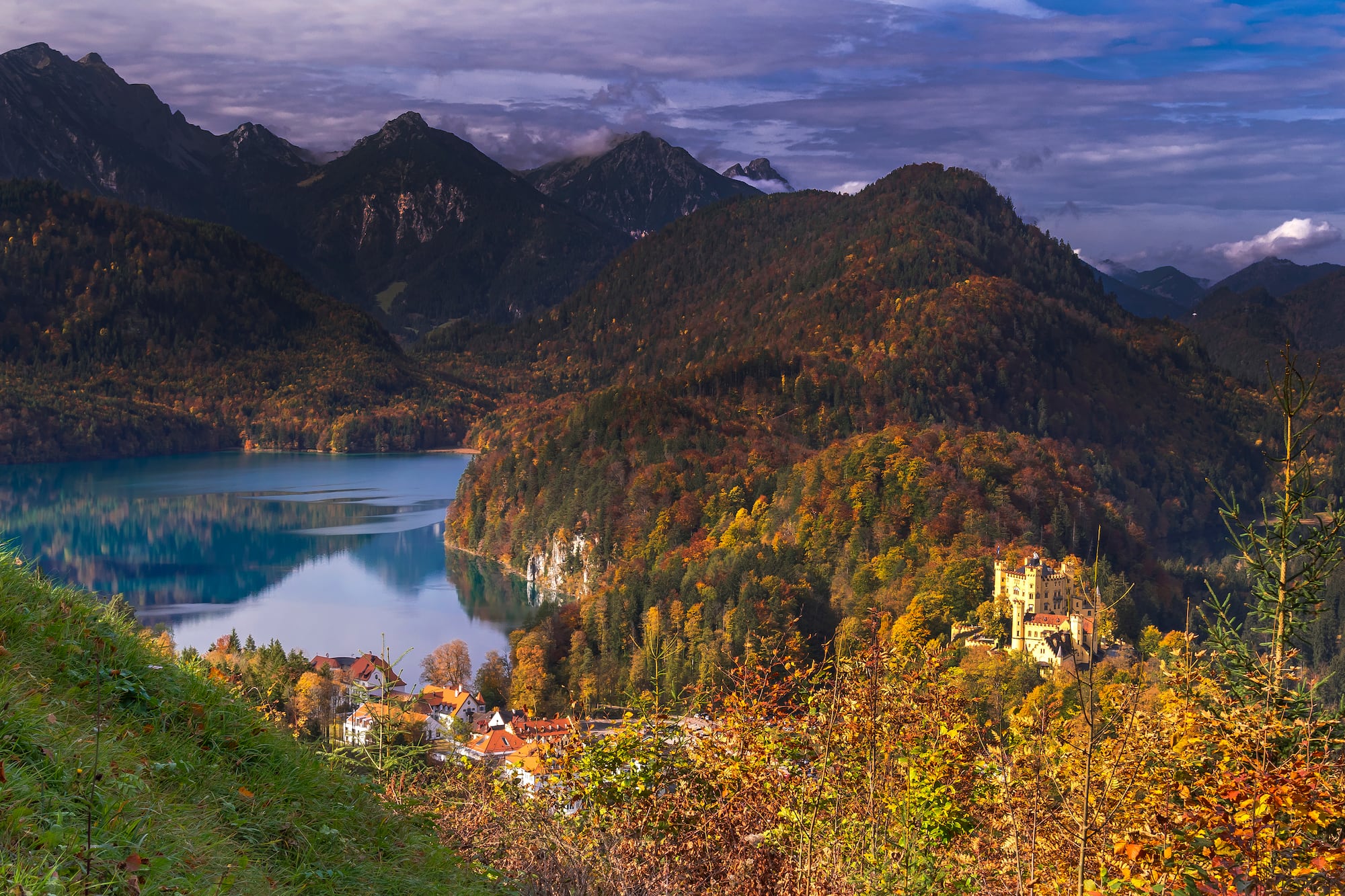
However, much of its international fame is due to the proximity of the famous Neuschwanstein and Hohenschwangau castles, located just a few kilometres from the city centre. Neuschwanstein is particularly well-known, considered one of the most iconic and visited castles in Europe.
In addition to being the main gateway to these palaces, Füssen boasts an important historical and natural heritage that deserves to be discovered at a leisurely pace. This guide on what to see in Füssen compiles the main places of interest, activities and recommendations for getting to know one of the most charming corners of Bavaria.
Culture


Digital marketing specialist with a passion for travel, writing, and discovering what makes every destination unique.

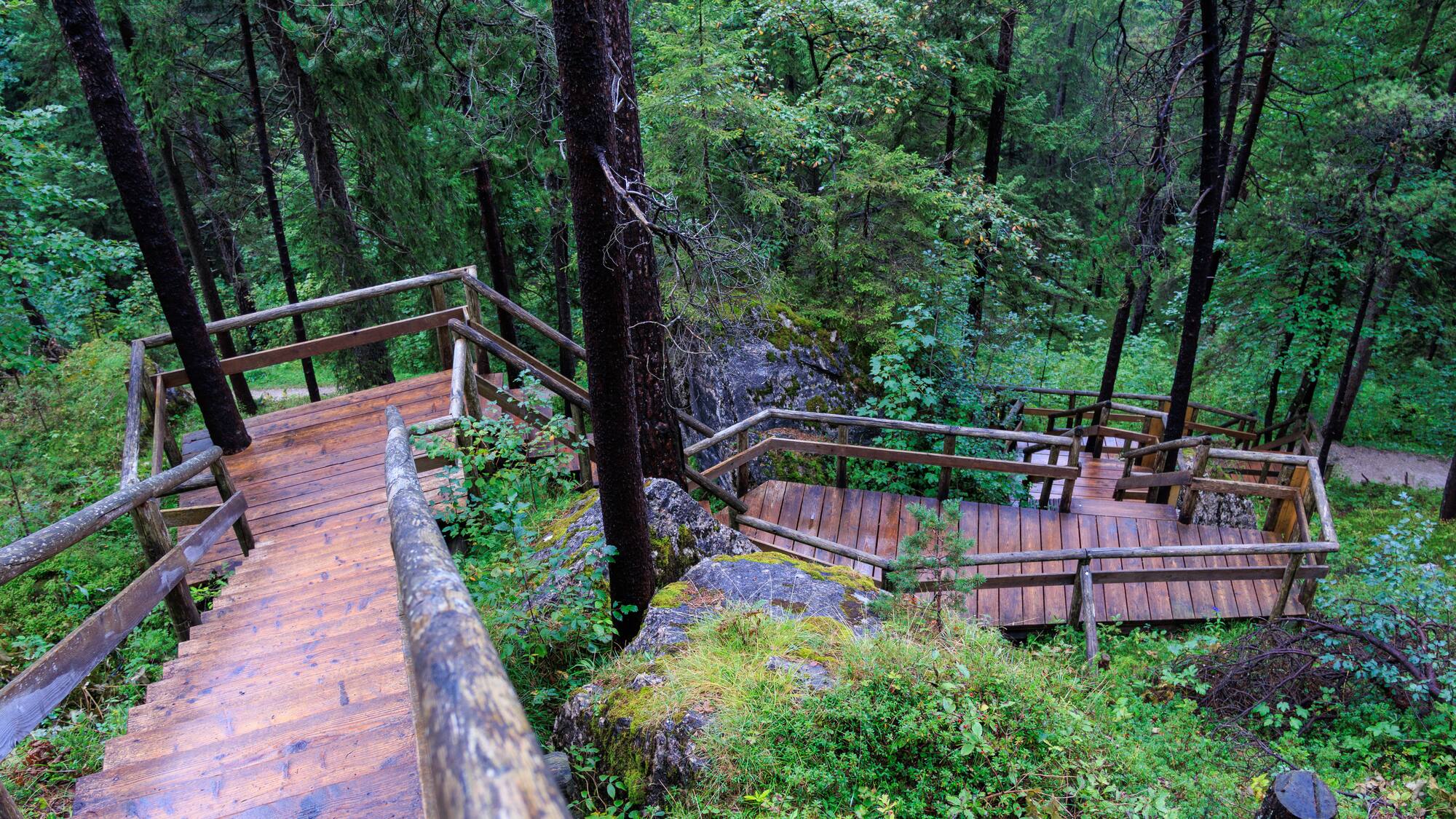

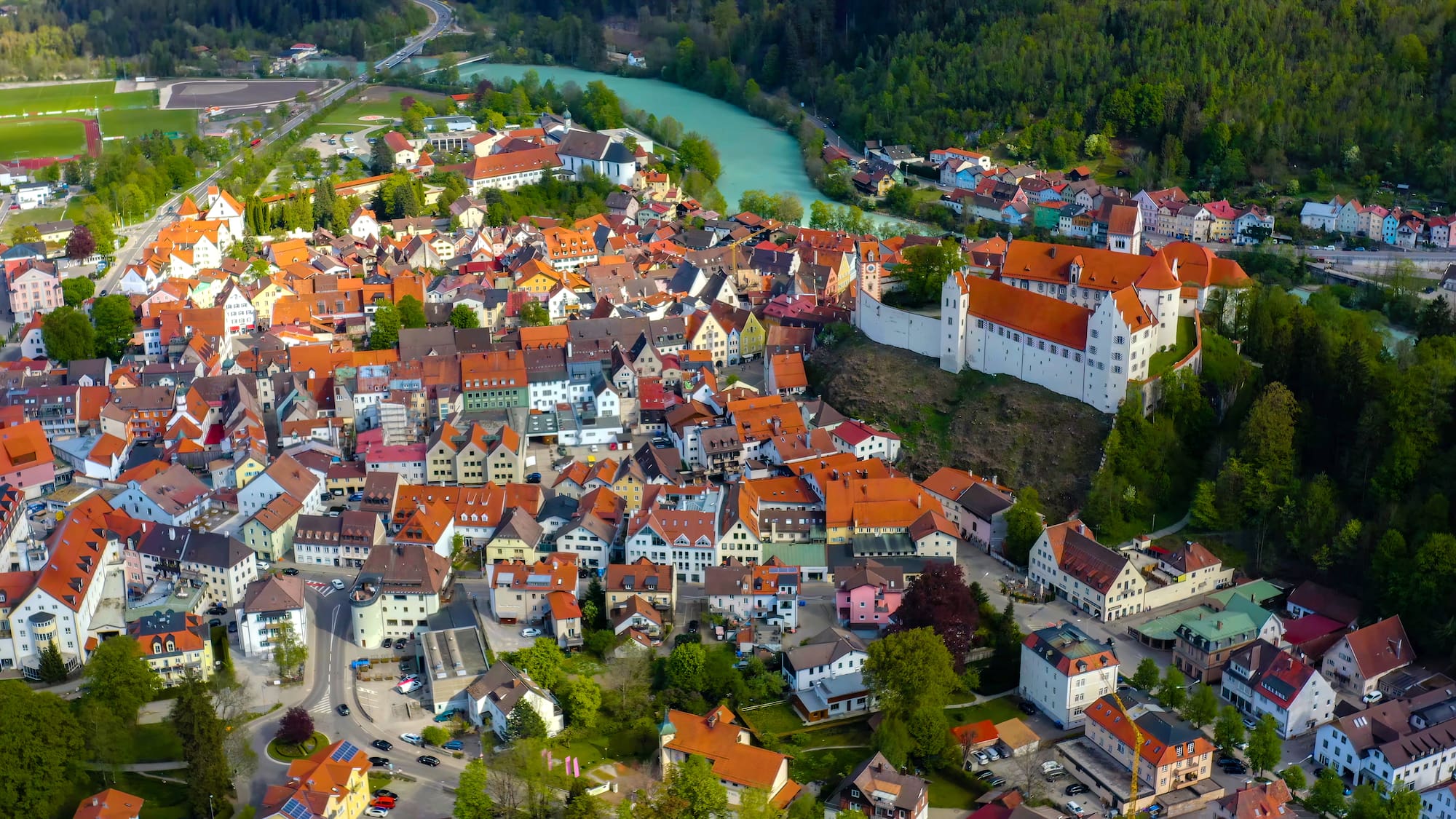

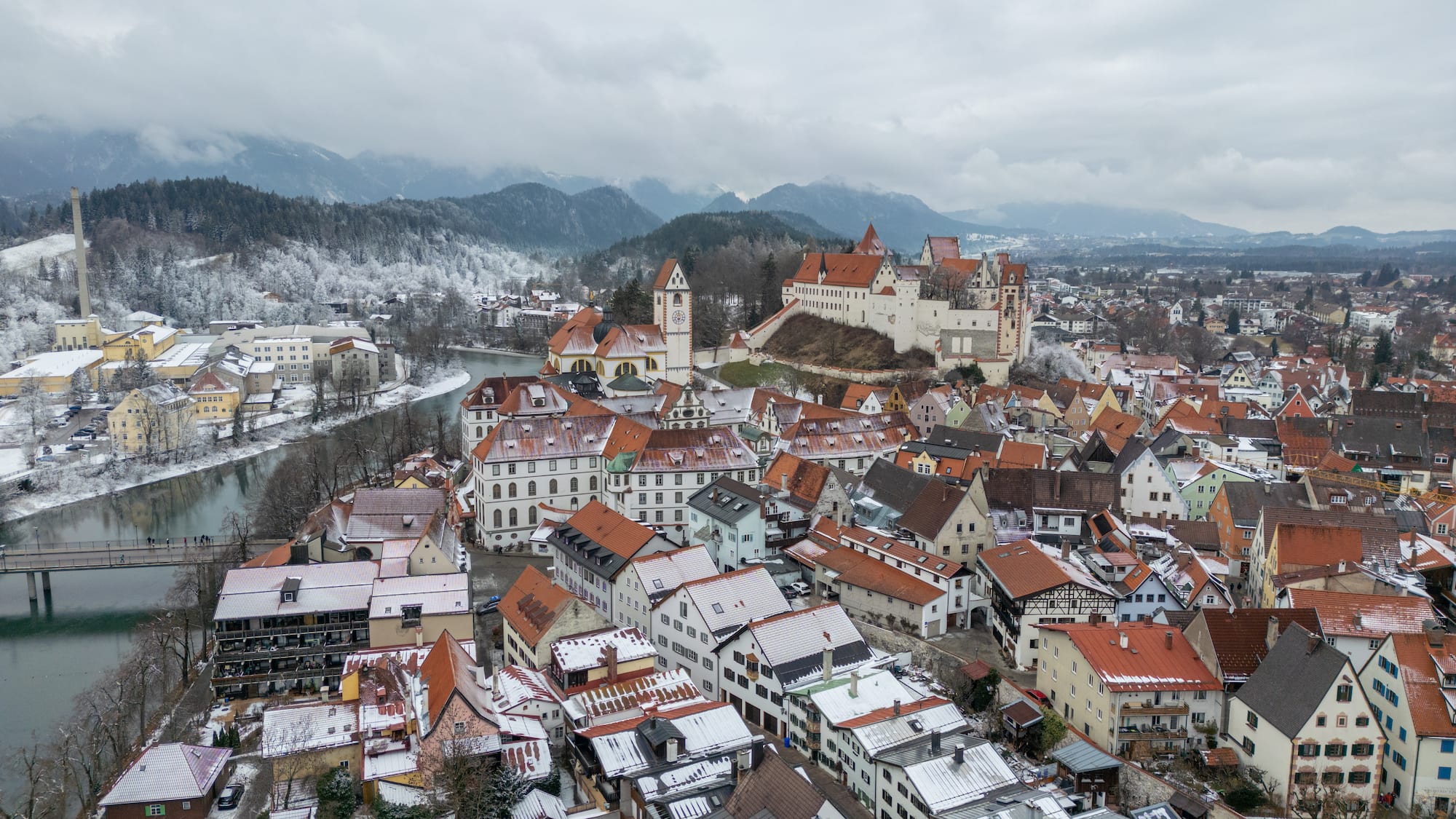
Among the main things to do in Füssen, a visit to Neuschwanstein Castle occupies a prominent place. However, reducing the city's appeal solely to this monument would mean overlooking much of its historical, cultural and landscape wealth.
Once a centre for the production of lutes and violins for centuries, tourism in Füssen combines heritage, nature and tradition in an environment of great beauty. The medieval old town, the banks of the Lech River, the Baroque churches and the alpine landscapes make up a very varied offer at a short distance from each other.
When considering what to see in Füssen, it is advisable to combine a visit to its main monuments with some of the natural spaces that surround it. Crystal-clear lakes, mountains and forests complete the experience in one of the most attractive destinations in southern Bavaria.
Dominating the skyline of the old town from the top of a hill stands the Hohes Schloss, one of the great symbols of Füssen. This former summer residence of the prince-bishops of Augsburg is one of the most representative buildings of the German late Gothic period and one of the best-preserved fortresses in Bavaria.
Its inner courtyard is probably the most outstanding part, especially because of the surprising optical illusion paintings (trompe-l'œil) that decorate it and for housing an outstanding art collection.
On the banks of the Lech River is the former Benedictine Abbey of St. Mang, whose origins date back to the 8th century, although it currently has a marked Baroque appearance as a result of the different transformations carried out over the centuries.
The complex houses the Füssen City Museum, dedicated to the historical evolution of the town and its outstanding tradition in the manufacture of lutes and violins, an activity that made the city an important craft reference in Europe.
A few kilometres from the centre of Füssen is Neuschwanstein Castle, the great architectural jewel of the region and the main tourist attraction in the area.
Considered one of the most famous castles in the world, it was built on the initiative of King Ludwig II of Bavaria in a spectacular mountainous setting and inspired by medieval ideals and the operas of Richard Wagner. Its silhouette among forests and mountains is one of the most iconic and photographed images in Germany, as well as having served as inspiration for some of the most famous castles in popular culture.
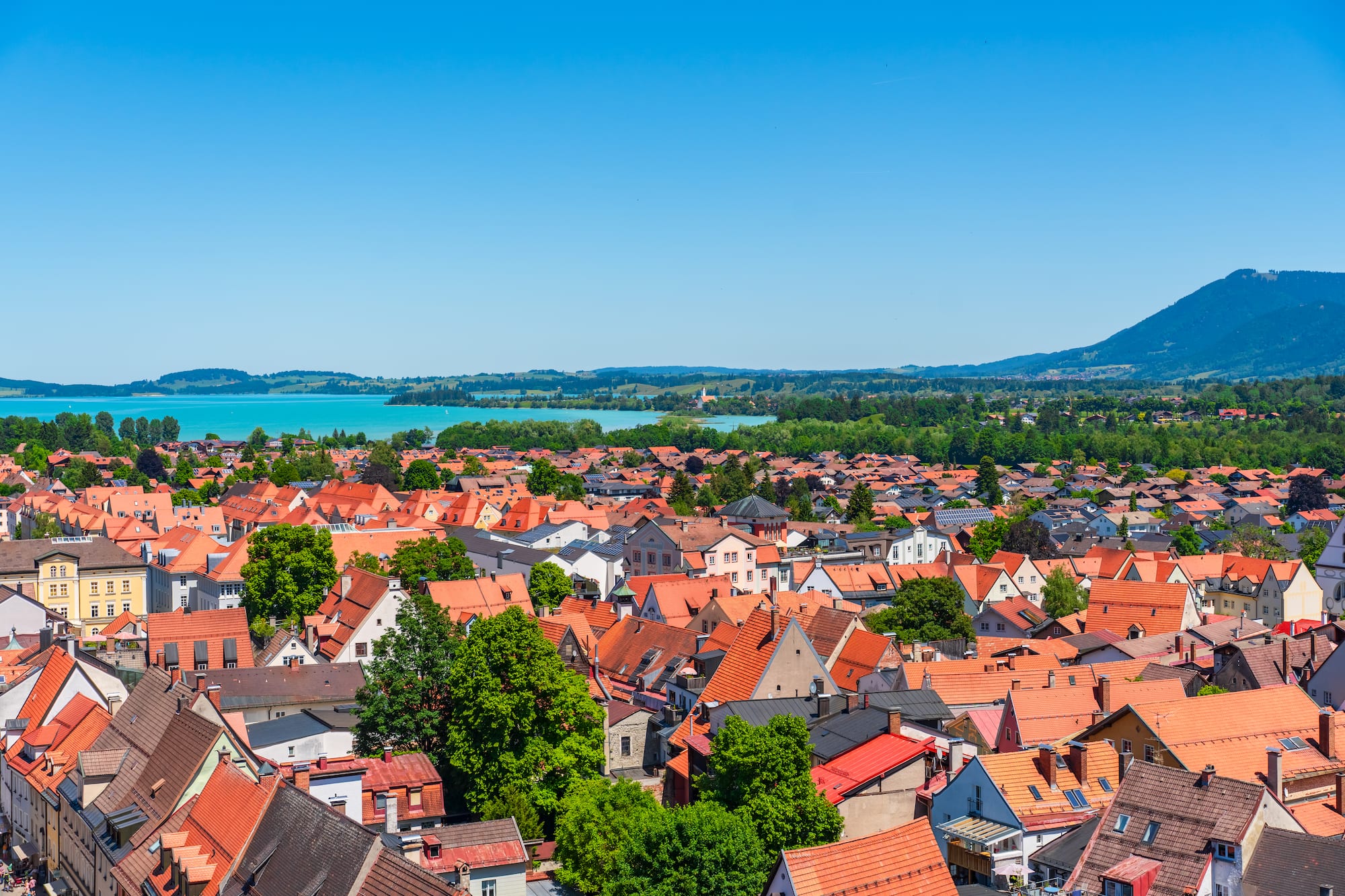
The Füssen Old Town (Altstadt) is the heart of the city. Although its dimensions are small, it concentrates a remarkable heritage wealth, with historical buildings, colourful houses crowned by gable roofs, small squares and numerous corners full of charm. Its streets allow you to discover the traditional atmosphere that characterises this Bavarian town.
Reichenstraße is the main pedestrian street in Füssen and one of the liveliest spaces in the historic centre. Its colourful facades, shops and terraces make it one of the most pleasant areas to walk around and enjoy the city's atmosphere.
It is worth paying special attention to the decorated facades, one of the hallmarks of the traditional architecture of this part of Bavaria.
Franziskanerplatz is one of the most picturesque corners of the historic centre. Located in front of the former Franciscan monastery, it offers one of the best-known perspectives of Füssen, with the city's rooftops and the Hohes Schloss dominating the horizon.
This panoramic view, known as the Quaglio View, takes its name from the Italian painter Domenico Quaglio, who immortalised this view of the city in one of his works during the 19th century.
One of the most iconic natural spaces in Füssen is the Lechfall, a spectacular waterfall located on the Lech River, where the water flows through a narrow gorge before rushing between rock formations. Its proximity to the historic centre and the force of its waters make it one of the most visited places in the city.
Considered one of the most attractive natural settings in the region, Forggensee is the largest lake in the surroundings of Füssen. During the warmer months, boat trips are available that allow you to enjoy magnificent views of the Alps and the castles of Neuschwanstein and Hohenschwangau.
The Kalvarienberg is one of the best viewpoints in the area and a common place to contemplate the landscape that surrounds Füssen. From its highest point, you can get wide panoramic views of the city, the alpine mountains and, in the distance, the castles of Neuschwanstein and Hohenschwangau.
A few kilometres from Füssen is Hohenschwangau, the small town that serves as access to the famous Neuschwanstein and Hohenschwangau castles. In addition to its historical relevance, it houses the Museum of the Bavarian Kings, dedicated to the history of the Wittelsbach dynasty and the figure of Ludwig II of Bavaria.
Located on the shores of the lake of the same name, Hopfen am See is one of the most popular destinations in the surroundings of Füssen thanks to its natural environment and panoramic views of the Alps. The town combines the traditional charm of the Allgäu with a relaxed atmosphere, making it an ideal place to stroll by the water or enjoy its gastronomic offer.
A short distance from Füssen is Steingaden, a small town closely linked to one of the most important monuments in the region: the Wieskirche. This pilgrimage church, considered one of the great masterpieces of the Bavarian Rococo, stands in a rural setting of great beauty surrounded by meadows and alpine landscapes.

The Museum der Stadt Füssen (Füssen City Museum) is located in the former St. Mang monastery and is one of the most interesting cultural spaces in the city to discover its historical evolution, from the first settlements to the present day.
To delve into the history of the Bavarian monarchy, the Museum of the Bavarian Kings, located next to the Alpsee, in Hohenschwangau, houses a comprehensive exhibition dedicated to the Wittelsbach dynasty. Its tour allows you to better understand the historical context and the figure of Ludwig II of Bavaria, closely linked to the castles in the region.
In addition to its monuments and castles, Füssen offers experiences that allow you to discover the city and its surroundings from a different perspective. These plans combine nature, culture and alpine landscapes to complete your visit beyond the usual routes.
The gastronomy of Füssen reflects the culinary tradition of Bavaria and the Allgäu region, characterised by hearty dishes, high-quality local products and recipes linked to the alpine environment.
Among the most representative specialities are Käsespätzle, a popular egg pasta preparation accompanied by melted cheese and fried onions, traditional Knödel and meat dishes as iconic as roast pork knuckle. The region is also famous for its artisanal cheeses, considered some of the most recognised products of the Allgäu.
In addition, the traditional breweries and restaurants in the historic centre are some of the best places to discover the local gastronomy and taste the well-known Bavarian beers accompanied by typical recipes from the region.
The traditions of Füssen are closely linked to Bavarian culture and the customs of the Allgäu region. Throughout the year, the city hosts different cultural, musical and popular celebrations that allow you to discover a more authentic facet of the town, beyond its main tourist attractions.
Among the most outstanding events is the Christmas Market, which every December transforms the historic centre into a festive setting. The castle courtyards and the city streets are filled with stalls selling handicrafts, traditional gastronomy and Christmas decorations, becoming one of the most popular dates on the local calendar.

Füssen is an especially attractive destination for family travel thanks to the combination of historical heritage, nature and outdoor activities it offers in its surroundings.
One of the great highlights for the little ones is Neuschwanstein Castle, whose appearance as an authentic fairytale castle has made it one of the most famous monuments in Europe. The visit can be completed with an excursion to the Walderlebniszentrum Ziegelwies, a space dedicated to nature that features themed trails, educational routes and areas designed to discover the forest in a fun and interactive way.
For those who have 48 hours in Füssen, a weekend is enough time to discover the city's old town, see some of its main monuments and explore the spectacular alpine landscapes that surround the region.
To facilitate the planning of your visit, a map with the location of the main points of interest in Füssen mentioned throughout this guide is included below.
Although Neuschwanstein Castle is the main tourist attraction in the area, Füssen offers many other attractions that deserve to be part of your visit. Its historical heritage, alpine landscapes and the proximity of lakes and mountains make the city one of the most complete destinations in southern Bavaria.
Walking through the old town, admiring its colourful facades, strolling along the Lech River or enjoying the panoramic views of the Alps allows you to discover a different facet of Füssen, where nature, history and tradition combine in an environment of great beauty.