,regionOfInterest=(2880,1920))
,regionOfInterest=(2880,1920))
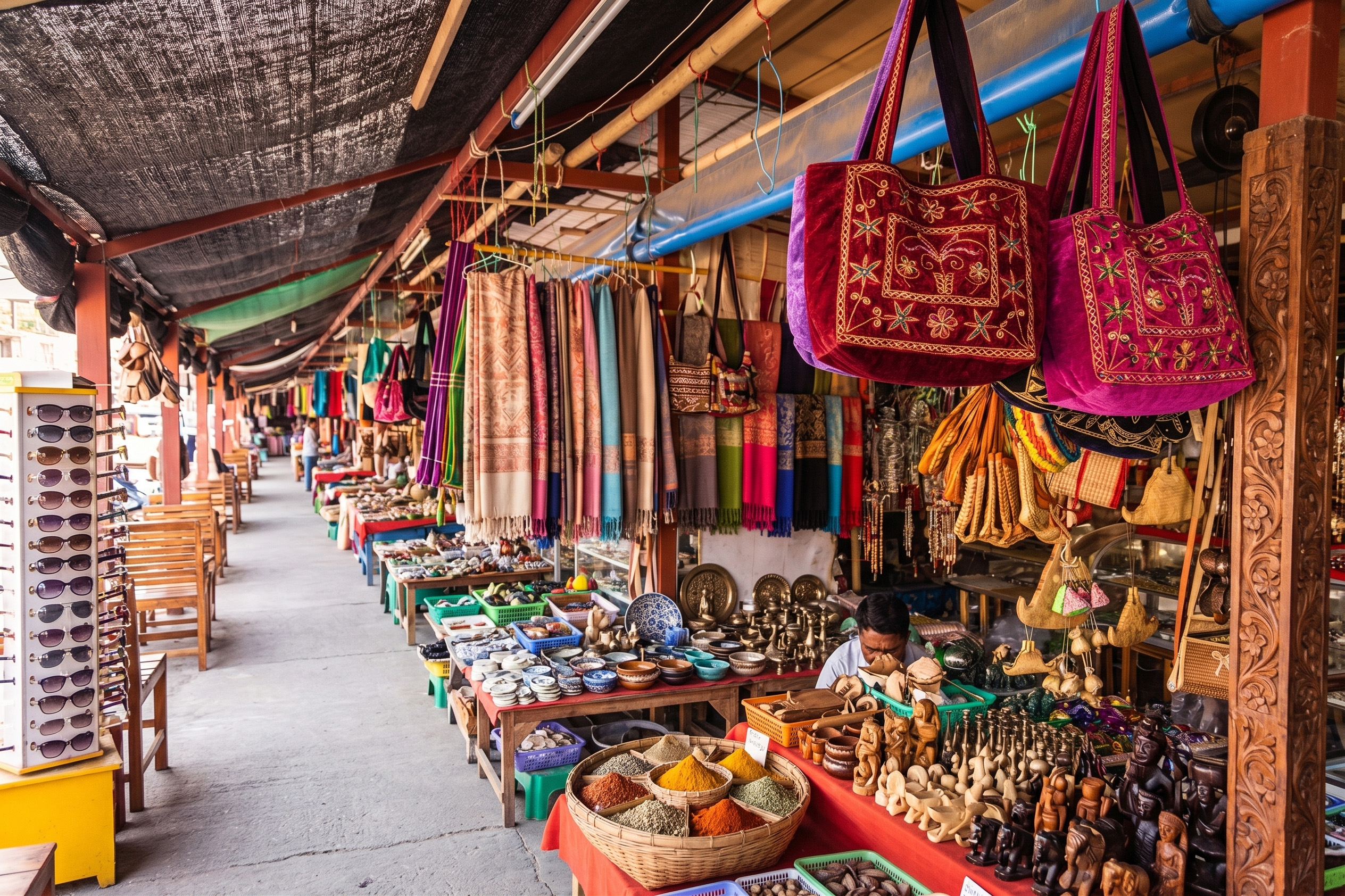
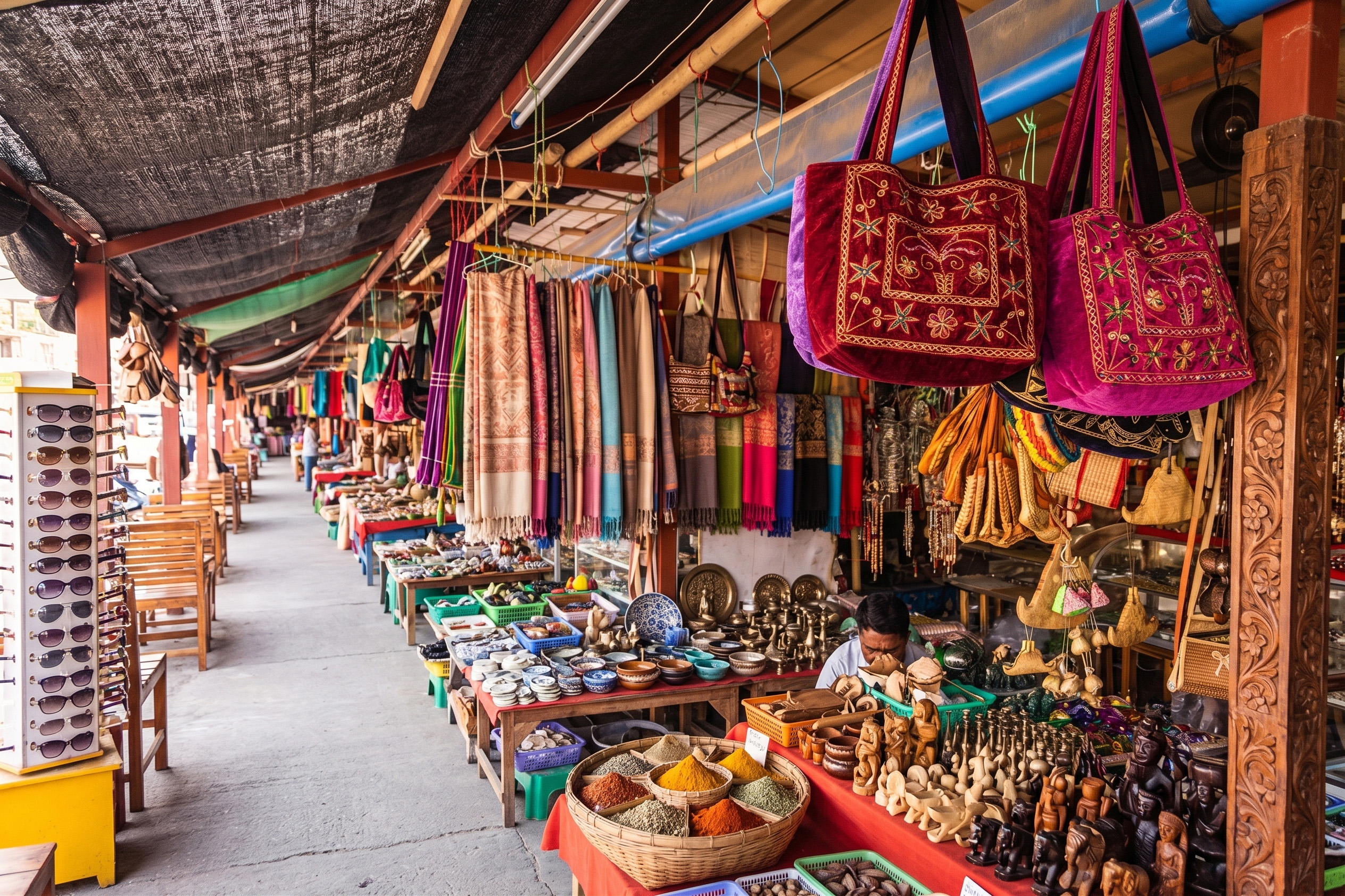
Best souvenirs to buy in Chiang Mai 2026: what to bring home
,regionOfInterest=(1264,842))
,regionOfInterest=(1264,842))
Culture
,regionOfInterest=(1750,1575))
,regionOfInterest=(1750,1575))
Culture
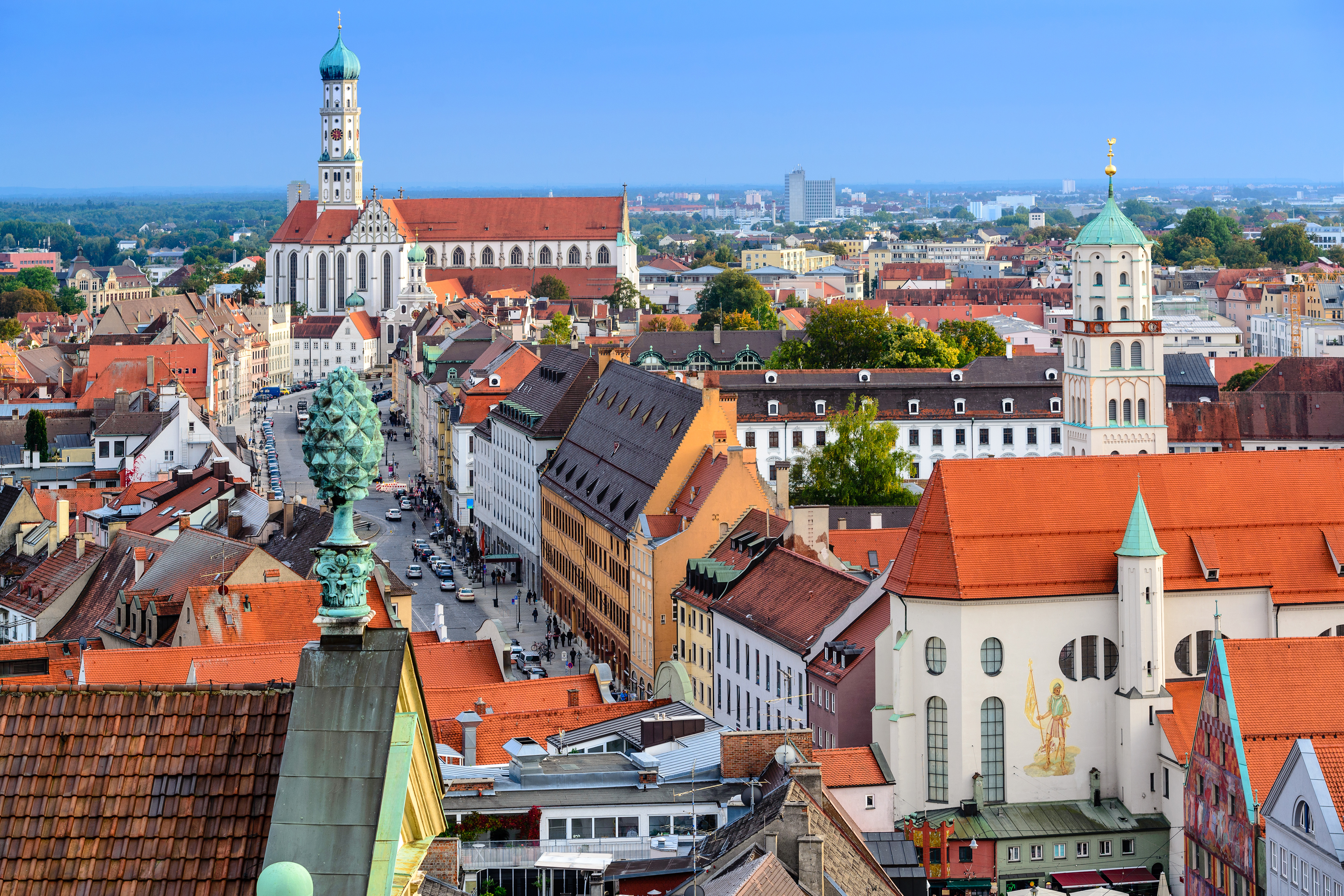
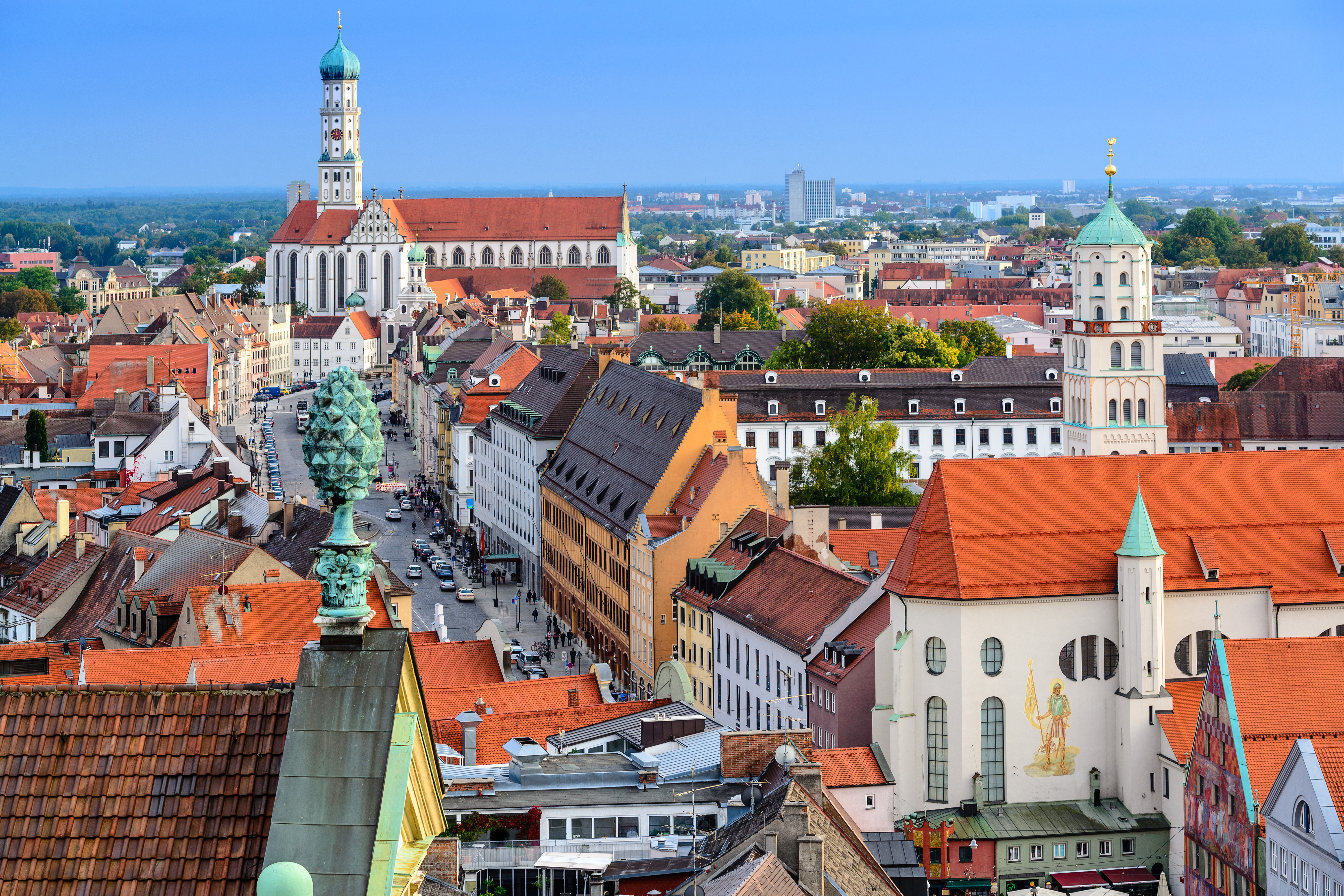
Located in the south of Germany, in the Bavarian Swabia region and crossed by the Lech and Wertach rivers, Augsburg is one of the most important historical cities in Bavaria and a key destination for understanding Germany's evolution from the Roman era to the present day.
The third largest city in the federal state of Bavaria and one of the oldest in the country, founded by the Romans in 15 BC, Augsburg reached its peak during the Renaissance thanks to the financial power of dynasties such as the Fugger and the Welser, leaving behind an exceptional architectural heritage unique in Europe. Added to this is a very special relationship with water: canals, fountains and ancient hydraulic systems are part of a complex declared a UNESCO World Heritage site since 2019.
Among the main places to see in Augsburg, the compact and easy-to-explore historical centre stands out, where some of the city's most important monuments are concentrated. Among them, the impressive Renaissance Town Hall, the Fuggerei and an outstanding collection of churches, palaces, museums and historical canals that reflect the importance the city reached over the centuries.
This guide brings together the main places to visit in Augsburg, a historical city that has managed to reinvent itself without losing the footprint of its glorious merchant past.
,regionOfInterest=(512,482))
,regionOfInterest=(512,482))
Digital marketing specialist with a passion for travel, writing, and discovering what makes every destination unique.
,regionOfInterest=(2700,1800))
,regionOfInterest=(2700,1800))
,regionOfInterest=(2388,1739.5))
,regionOfInterest=(2388,1739.5))
,regionOfInterest=(3840,2160))
,regionOfInterest=(3840,2160))
Among the main things to do in Augsburg, exploring its historical centre calmly stands out, observing the architectural richness of its buildings and the unique system of canals that cross the city.
Tourism in Augsburg is closely linked to the different chapters of its history: from its Roman origins and its stage as an imperial city to the economic prominence of the Fugger family, its religious tradition and its important industrial and cultural legacy.
These are some of the things to do in Augsburg that should not be missing from any visit:
When considering what to visit in Augsburg, it is worth noting that the main attractions can be visited in one day. However, having two or three days makes it easier to visit its museums with greater peace of mind and delve into the extraordinary hydraulic heritage that has made the city a historical reference of European engineering.
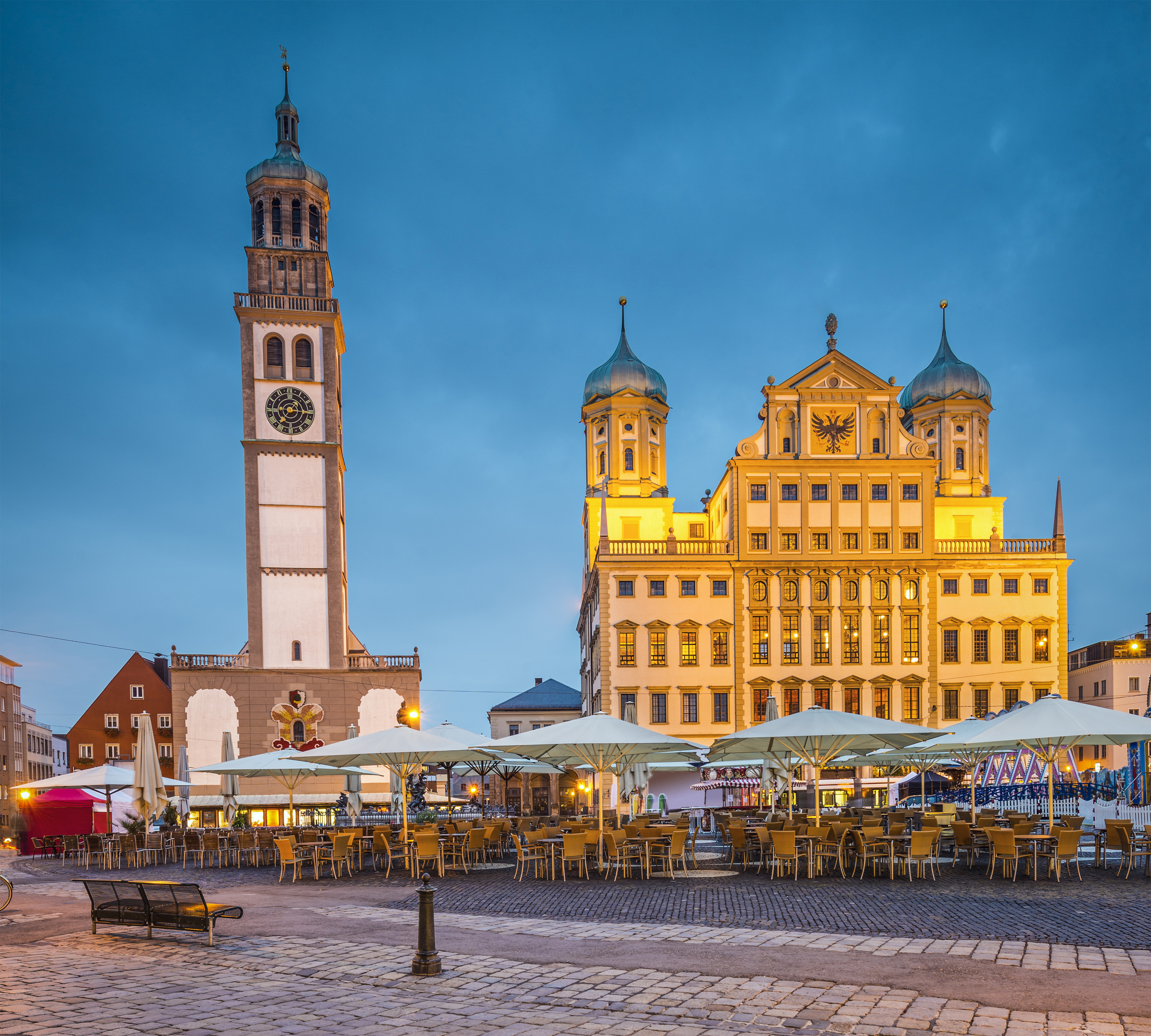
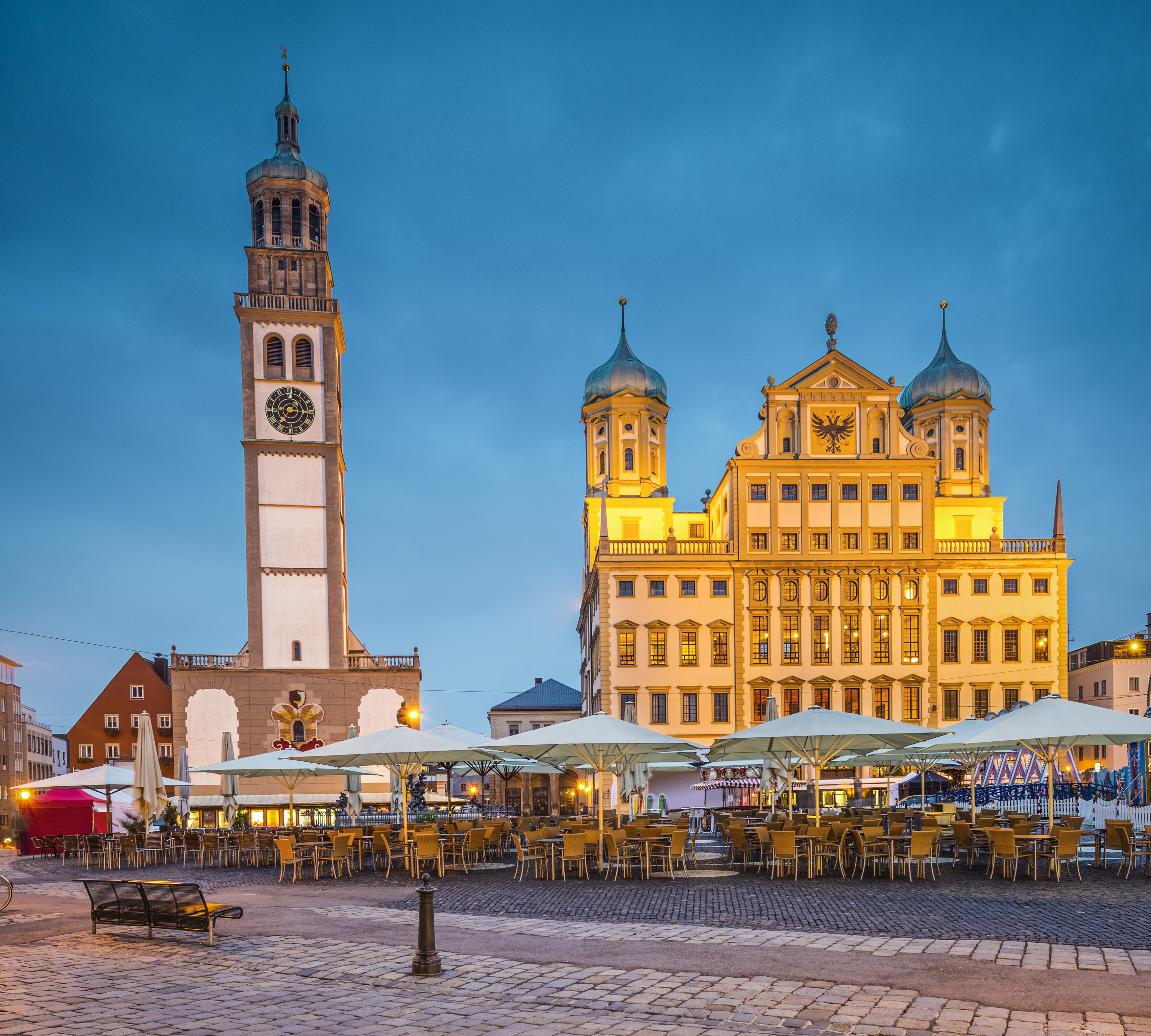
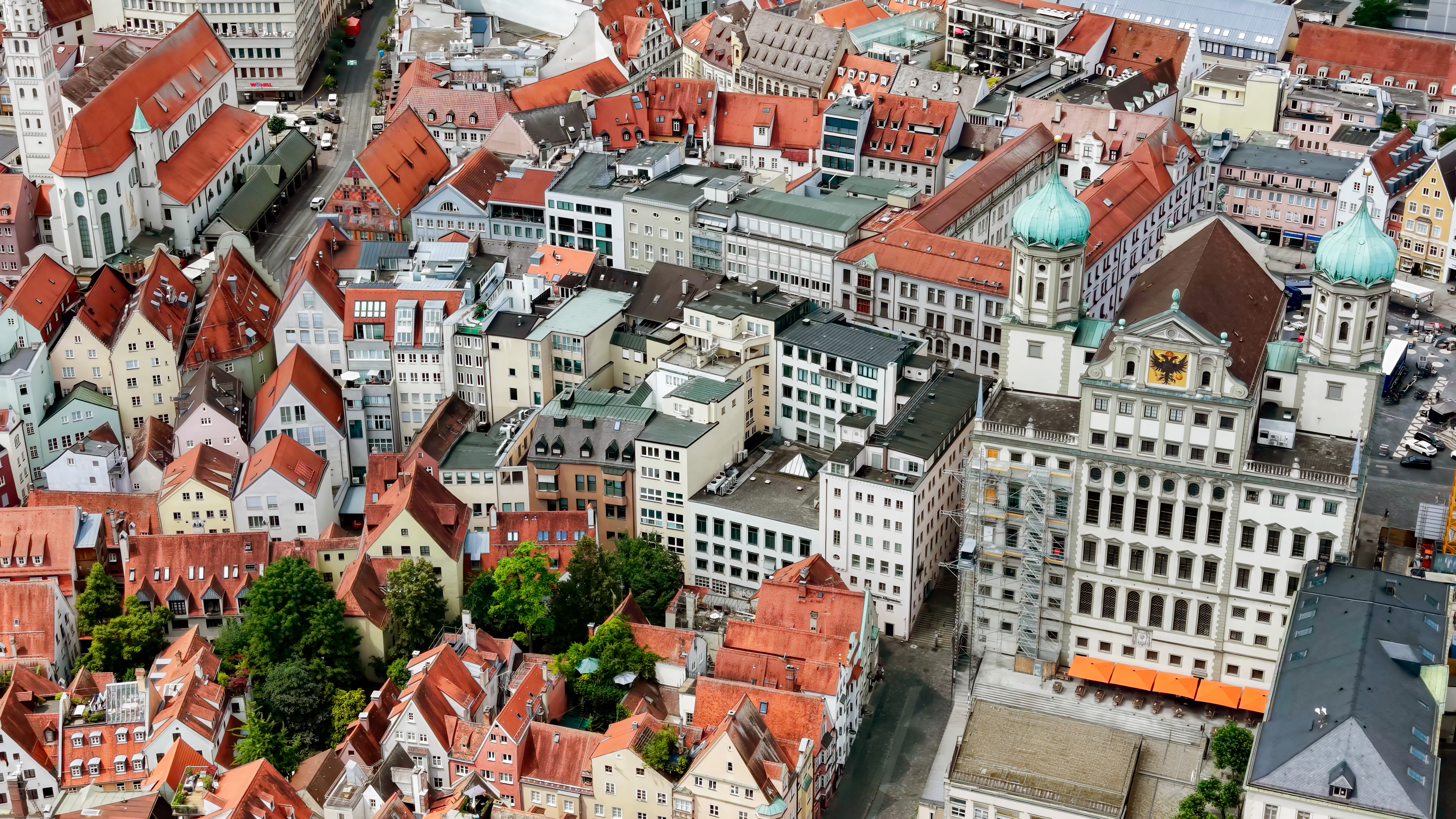
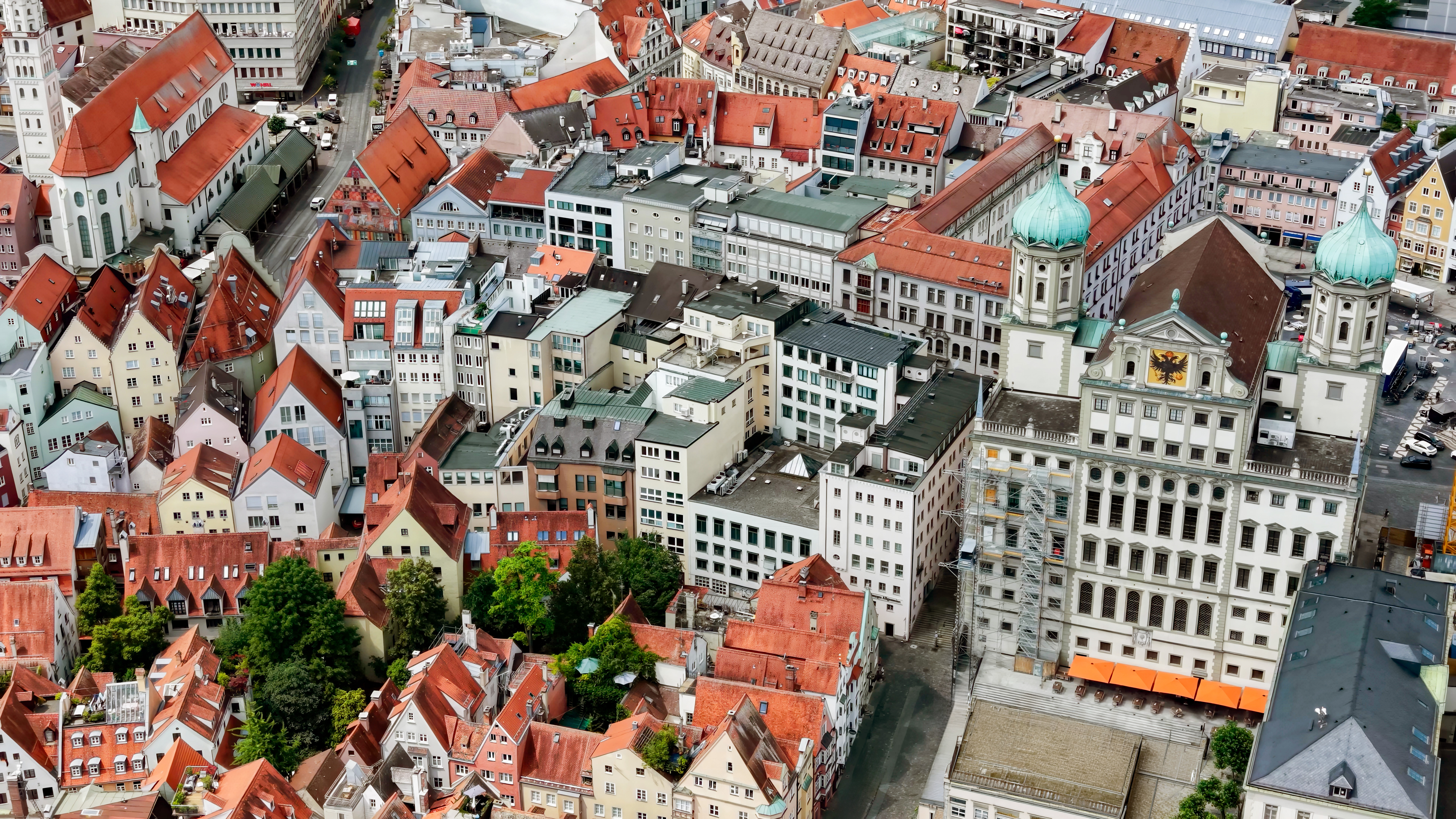
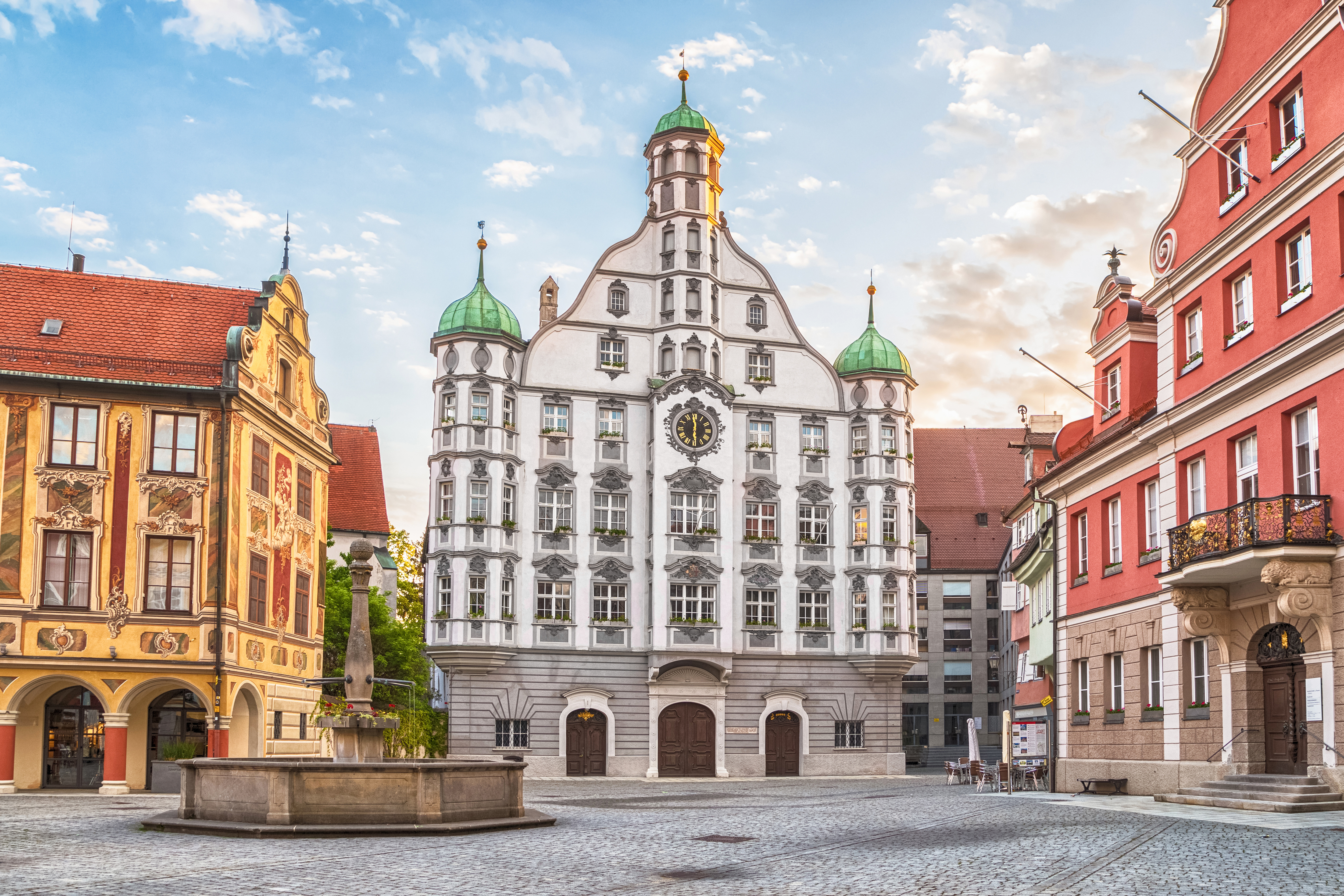
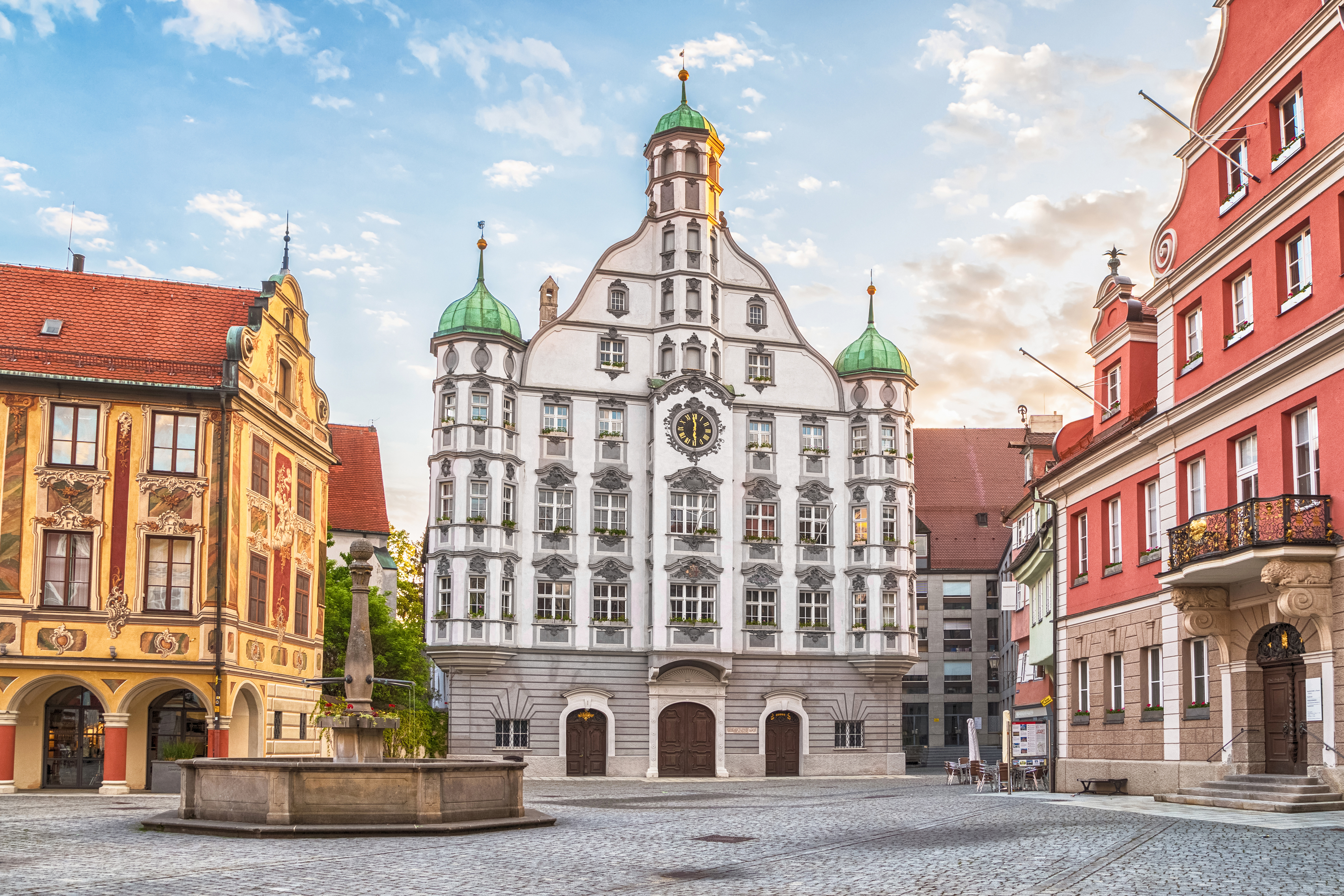
The Augsburg Town Hall is one of the great symbols of the city and one of the masterpieces of the German Renaissance. It was built between 1615 and 1620 by the architect Elias Holl and reflects the economic and political importance that Augsburg reached during its time as a Free Imperial City.
Inside is the spectacular Golden Hall, finished in 1624 and characterised by its ornate ceiling, its decorated walls and the abundance of golden elements. It is one of the most impressive historical spaces in the city and one of the main visits in the historical centre.
Just in front is the Augustus Fountain, one of the three great Renaissance fountains in Augsburg and one of the most representative elements of the Rathausplatz.
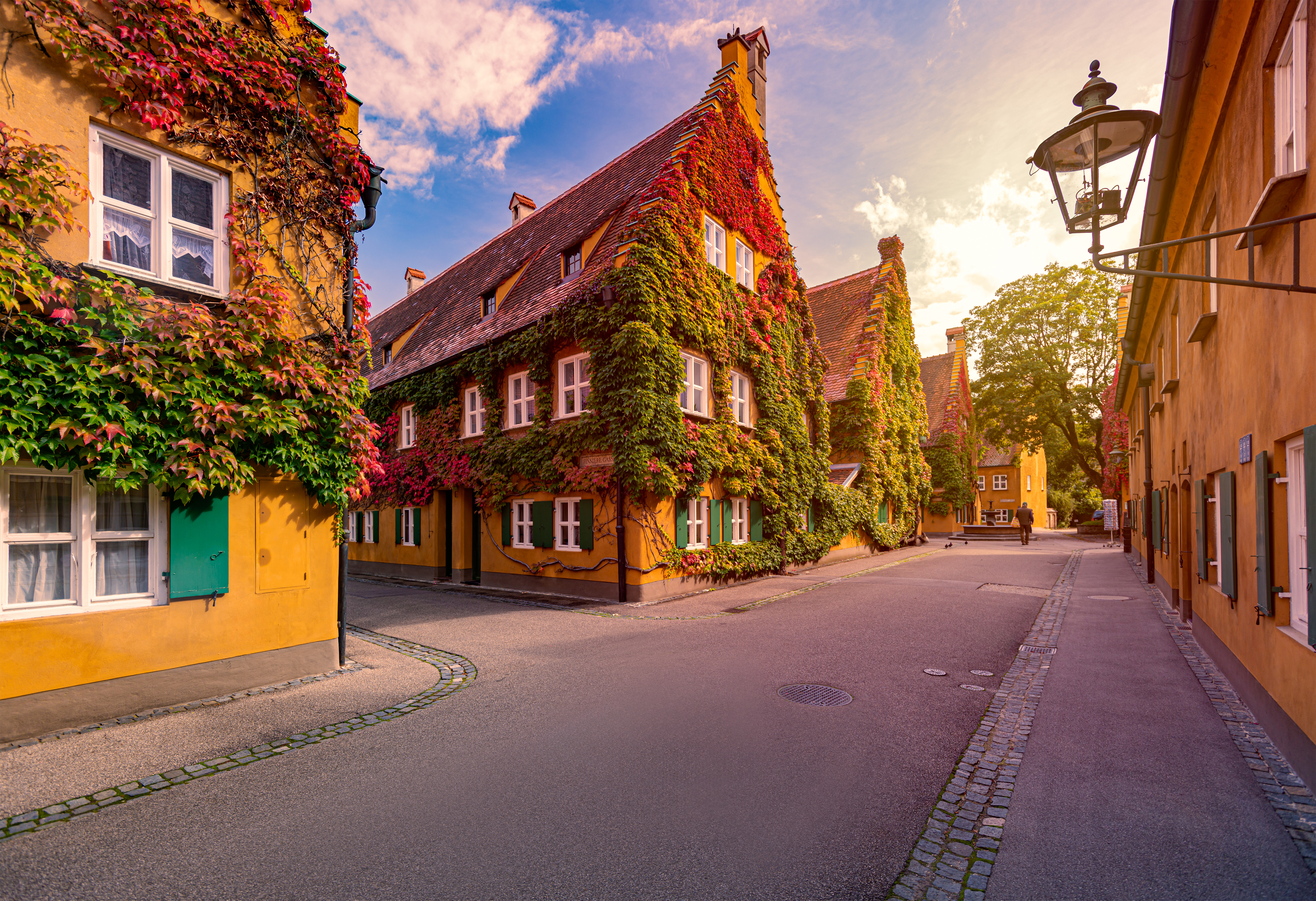
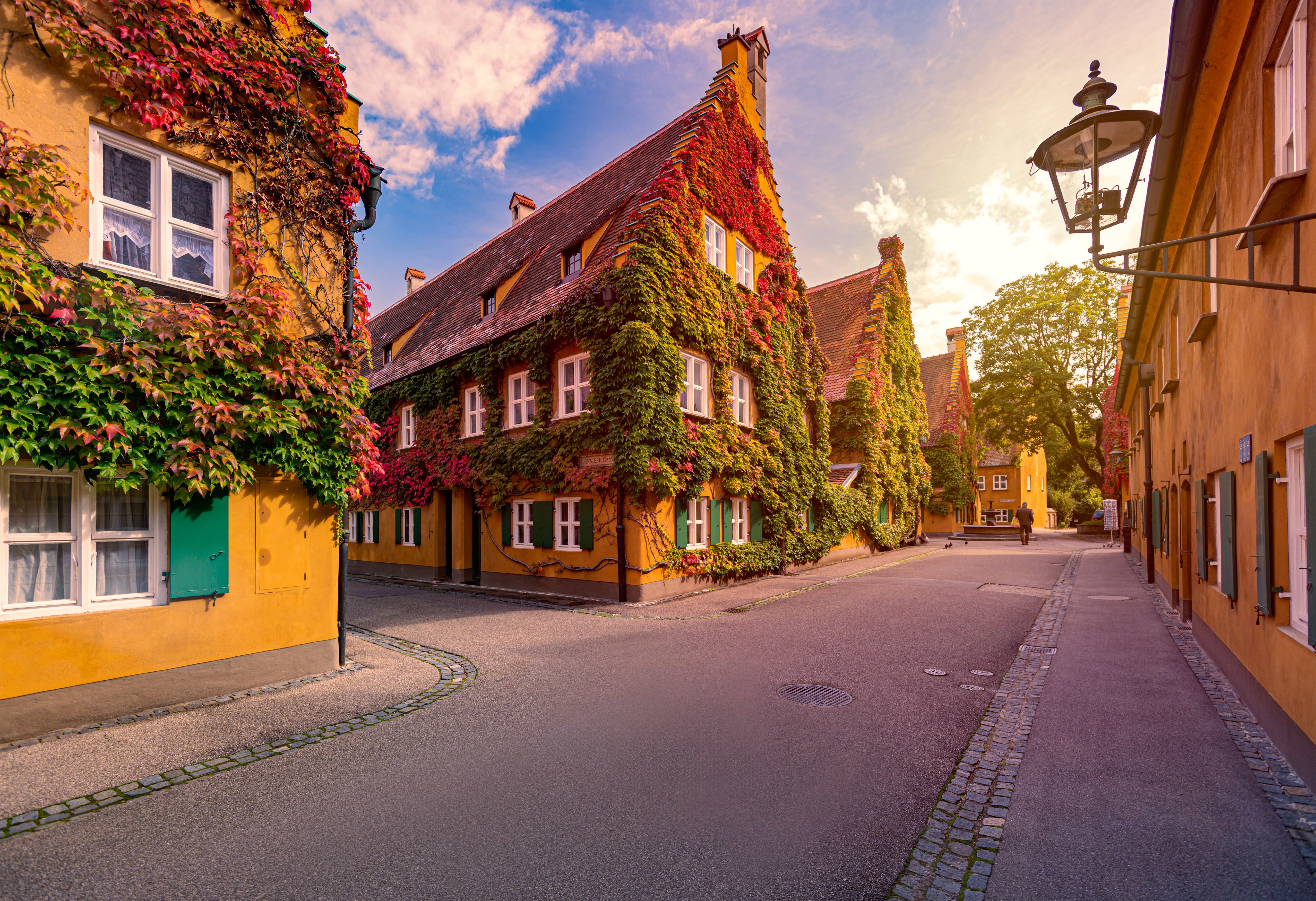
The Fuggerei is probably the most iconic place in Augsburg. Founded in 1521 by the magnate Jakob Fugger, it is considered the oldest social housing complex in the world that is still in operation.
It is a walled enclosure within the city itself formed by small terraced houses with yellow facades and quiet streets that preserve much of their original appearance. Today it is still inhabited and maintains a symbolic rental system aimed at people with limited resources.
Inside the complex, there is a historical house open to visitors, a museum dedicated to the Fugger family and a World War II air-raid shelter, spaces that help to understand the evolution of this unique social project over the centuries.
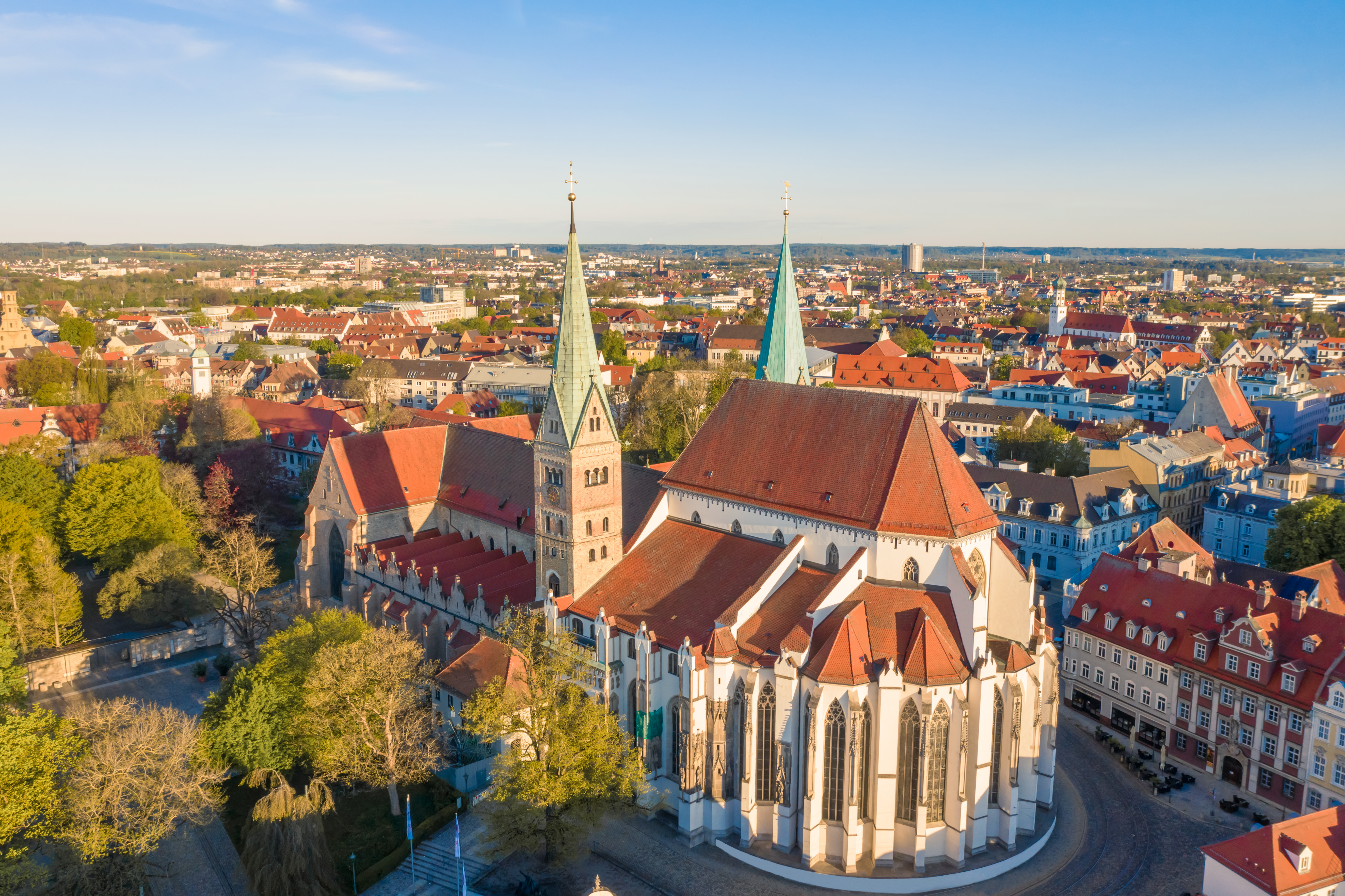
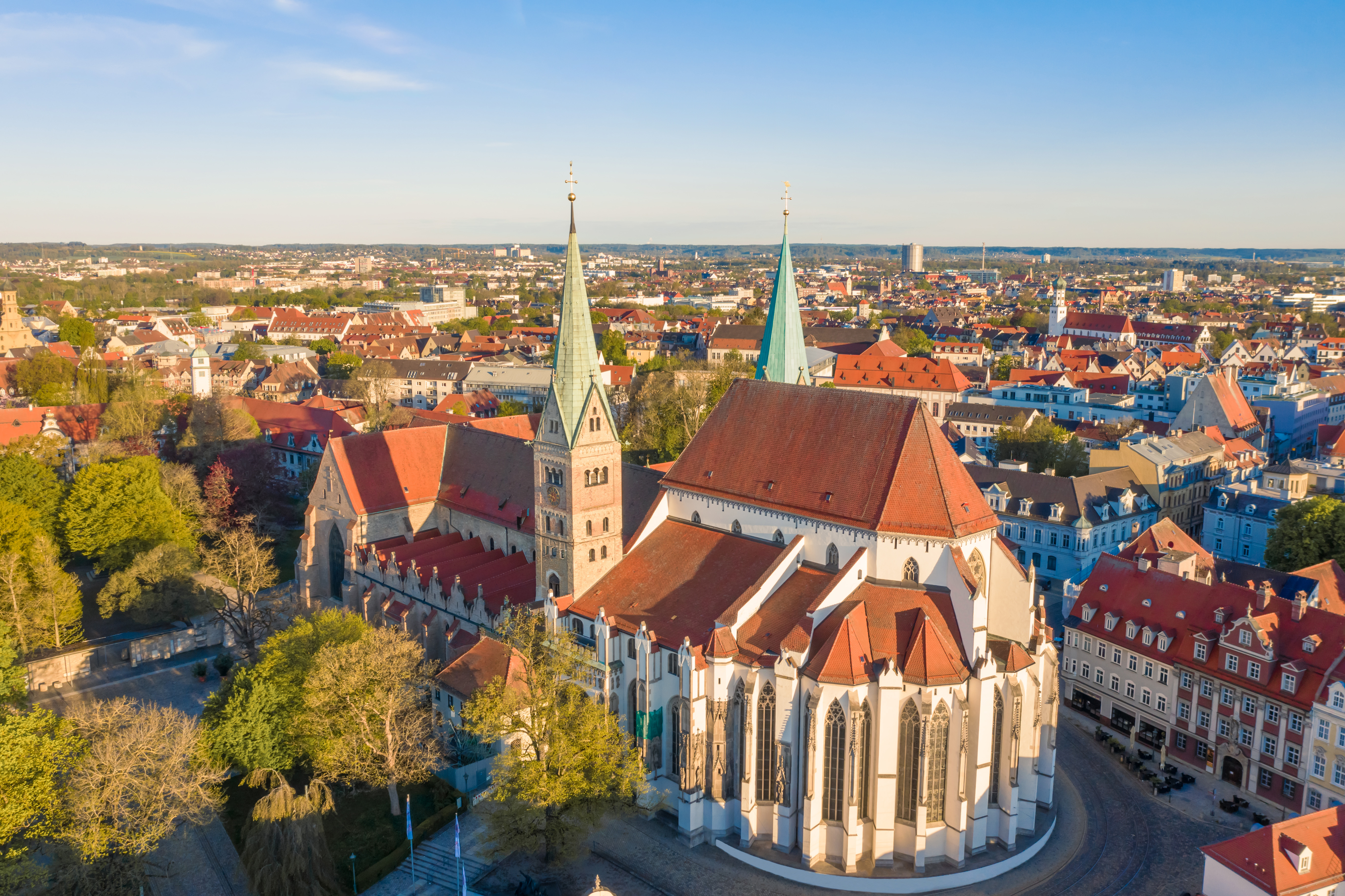
The St. Mary's Cathedral of Augsburg, also known as Augsburger Dom, is one of the most important religious buildings in the city, whose origins date back to approximately the year 1000.
The cathedral preserves elements from different eras, from the Romanesque to the Gothic, and one of its main treasures are five Romanesque stained glass windows made around 1065, considered one of the oldest sets of figurative stained glass windows that are preserved in the world.
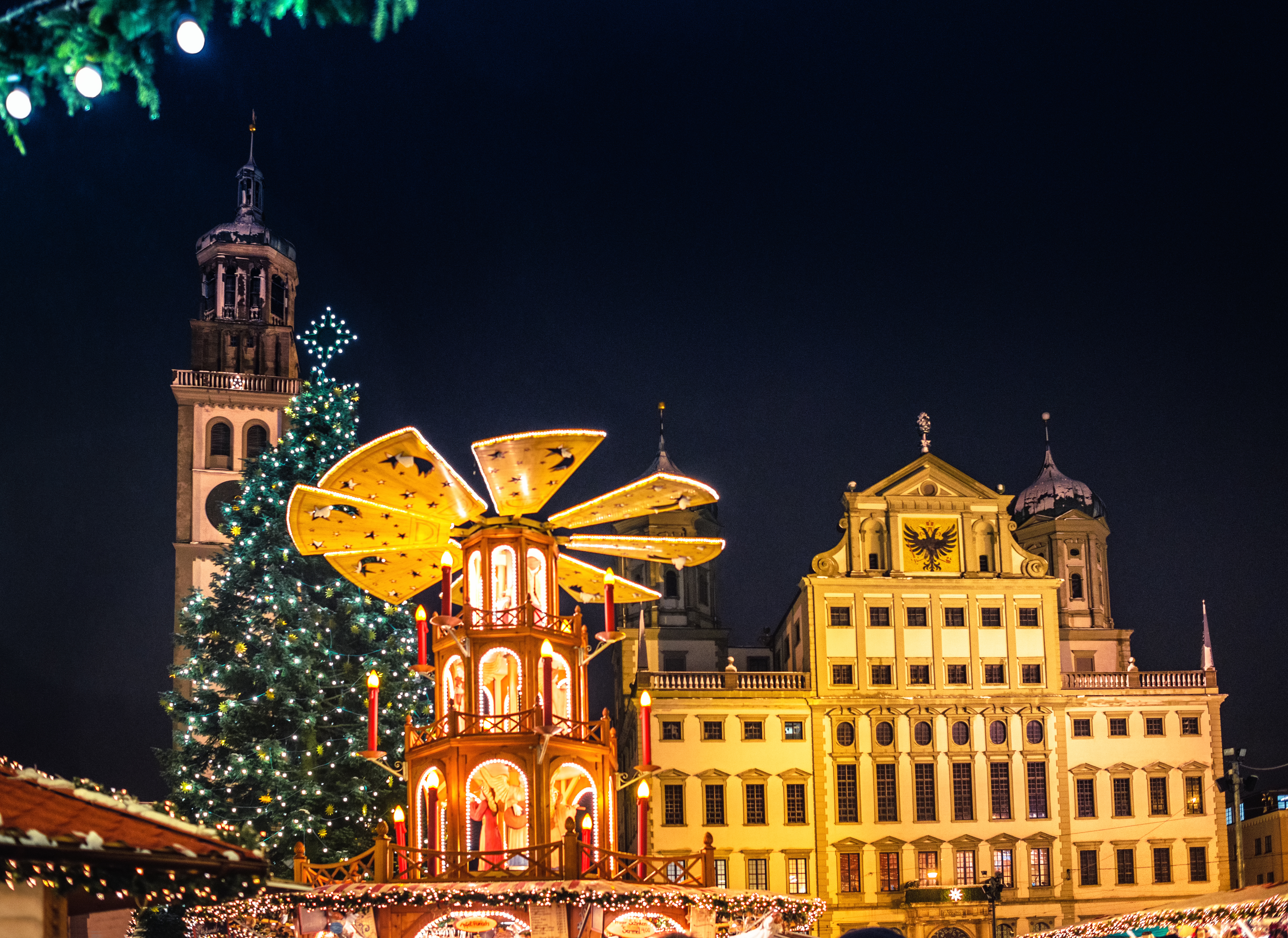
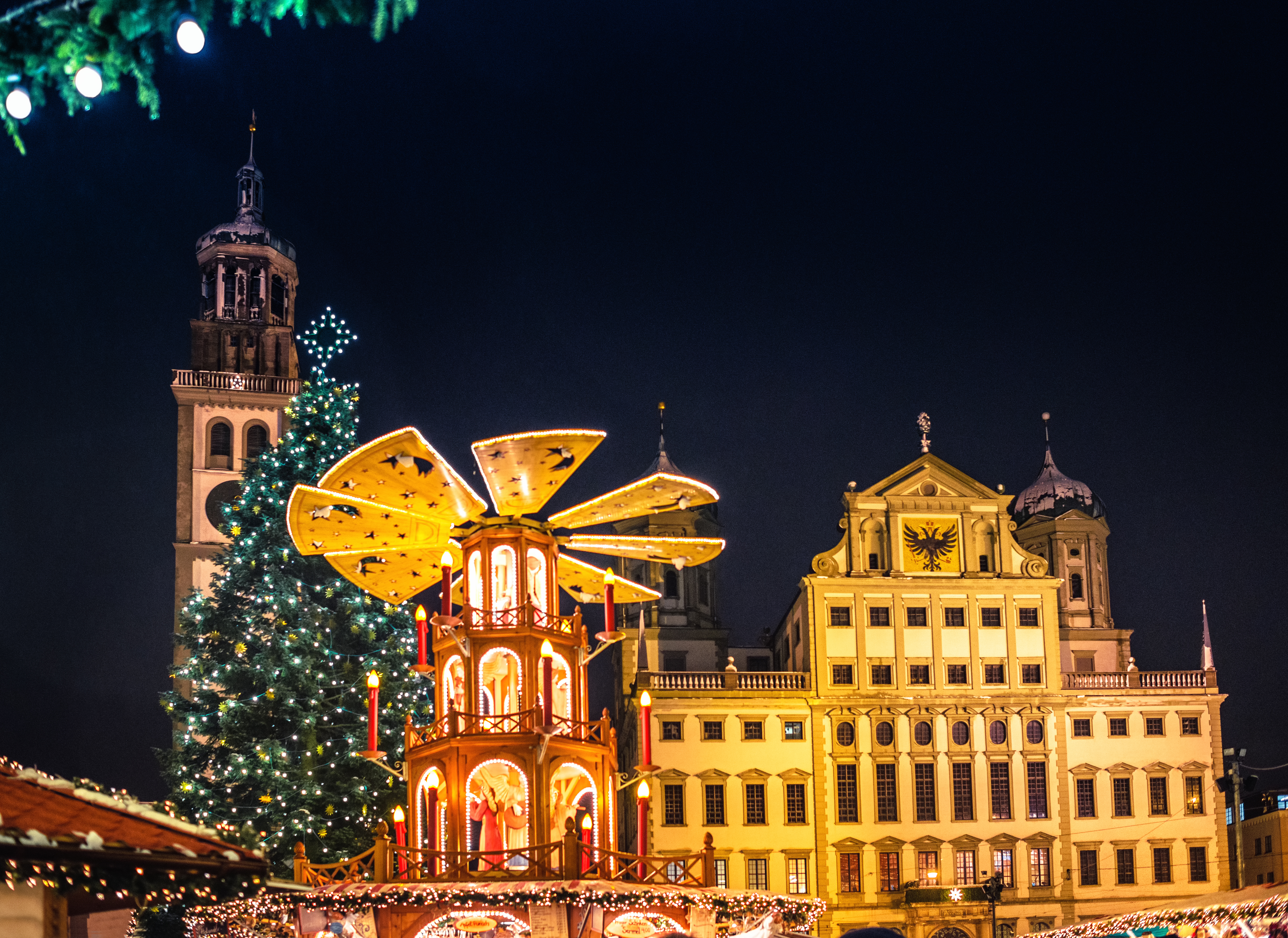
Next to the Town Hall is the Perlachturm, a tower whose lower part has its origin in the 11th century and which was transformed by Elias Holl between 1614 and 1616 to integrate it visually with the Renaissance Town Hall.
With a height of 70 metres and a large carillon composed of 35 bells, it constitutes one of the most recognisable elements of the Augsburg urban profile and one of its main historical symbols.
The Maximilianstraße is the imperial avenue par excellence of Augsburg and one of the most representative spaces in the city. Along its route, it connects some of the most important buildings and monuments in the historical centre, reflecting the prosperity that Augsburg reached during the Renaissance.
Settled on the route of the ancient Roman road Via Claudia Augusta, the avenue is flanked by palaces, churches, monumental fountains and old residences belonging to some of the most influential families in the city.
The three great sculptural groups on the street, the fountains of Augustus, Mercury and Hercules, are part of Augsburg's hydraulic heritage recognised by UNESCO.
The Rathausplatz constitutes the historical and monumental heart of Augsburg. It concentrates some of the most representative elements of the city's Renaissance identity, such as the Town Hall, the Perlachturm and the Augustus Fountain.
In addition to being one of the most prominent urban spaces in Augsburg, the square occupies a strategic position within the historical centre, connecting easily with some of the main places of interest in the city.
A former quarter of artisans, millers and tanners, the Lechviertel is a charming network of cobbled streets crossed by numerous canals from the Lech river. Popularly known as the "Little Venice" of Augsburg, it retains a marked historical character combined with small shops, galleries, artisan workshops and cosy cafes by the water.
The Fronhof is one of the most pleasant open spaces in the surroundings of the Cathedral, located next to the former episcopal residence. This corner combines historical architecture, garden areas and a quiet atmosphere that contrasts with the activity of the historical centre.
In this space, there is also a monument dedicated to Leopold Mozart and his son Wolfgang Amadeus Mozart. Leopold was born in Augsburg in 1719, a fact that explains the close bond that the city maintains with one of the most influential families in the history of classical music.
The surroundings of the Rote Tor, or Red Gate, are one of the most interesting places to discover Augsburg's close relationship with water. In this area, ancient infrastructure linked to the urban supply system is preserved, as well as canals, water towers and other heritage elements that reflect the importance that water management has had in the development of the city over the centuries.
The Schaezlerpalais garden is one of the most elegant green spaces in the historical centre. Located next to the Schaezlerpalais, on the Maximilianstraße, it offers a quiet environment that complements the visit to this outstanding Rococo palace and its art collections.
The Weberhaus is one of the most striking buildings in the centre of Augsburg thanks to its characteristic facade decorated with colourful historical motifs. The house was closely linked to the weavers' guild and constitutes a reminder of the importance that textile trades had in the city's economy for centuries.
In the heart of Maximilianstraße are the Fuggerhäuser, the old urban residences of the powerful Fugger family, considered one of the most influential in Renaissance Europe. The complex stands out for its inner courtyards and for the notable influence of Italian architecture that characterises part of Augsburg's historical heritage.
One of the most outstanding spaces is the Damenhof, an elegant Renaissance courtyard considered one of the best examples of architecture inspired by the Italian Renaissance north of the Alps.
The Rotes Tor or Red Gate is one of the old access gates to the city and one of the most representative places of Augsburg's historical heritage. Its surroundings preserve towers, walls and hydraulic installations that allow one to understand both the defensive system and the extraordinary water supply network that contributed to the development of the city.
,regionOfInterest=(2732,1820))
,regionOfInterest=(2732,1820))
Located in the heart of Maximilianstraße, the Schaezlerpalais is one of the most outstanding cultural visits in Augsburg. This elegant 18th-century Rococo palace houses the State Gallery of German Baroque Art and the Karl and Magdalene Haberstock Foundation collection, making it one of the city's main artistic centres.
Among its works are paintings by artists such as Rubens, Van Dyck and Tiepolo, as well as an important representation of masters linked to Augsburg during the 17th and 18th centuries.
The Fugger und Welser Erlebnismuseum offers an interesting approach to the economic and commercial history of Augsburg. Through interactive exhibitions, the museum explains the role played by the Fugger and Welser families in the development of European trade networks and in the economic expansion of the city during the Modern Age.
Literature also occupies a prominent place in the cultural heritage of Augsburg, the birthplace of the playwright and poet Bertolt Brecht. The Brecht-Haus, located next to one of the canals in the Lechviertel, is the house where the famous author was born.
Converted into a museum, the building houses a permanent exhibition dedicated to his life and work, with manuscripts, photographs, personal objects and various documents related to one of the most influential figures in 20th-century German literature.
The Augsburger Puppenkiste is one of the most famous puppet theatres in Germany and one of the city's most beloved cultural institutions. Located in the historic Heilig-Geist-Spital, it also has a museum dedicated to its characters, productions and the history of this iconic theatre, which has become a benchmark of German popular culture.
For those looking for things to see in Augsburg beyond the most well-known monuments, the city offers various experiences that provide a chance to discover its history, its water management system and some of its most unique corners from a different perspective:
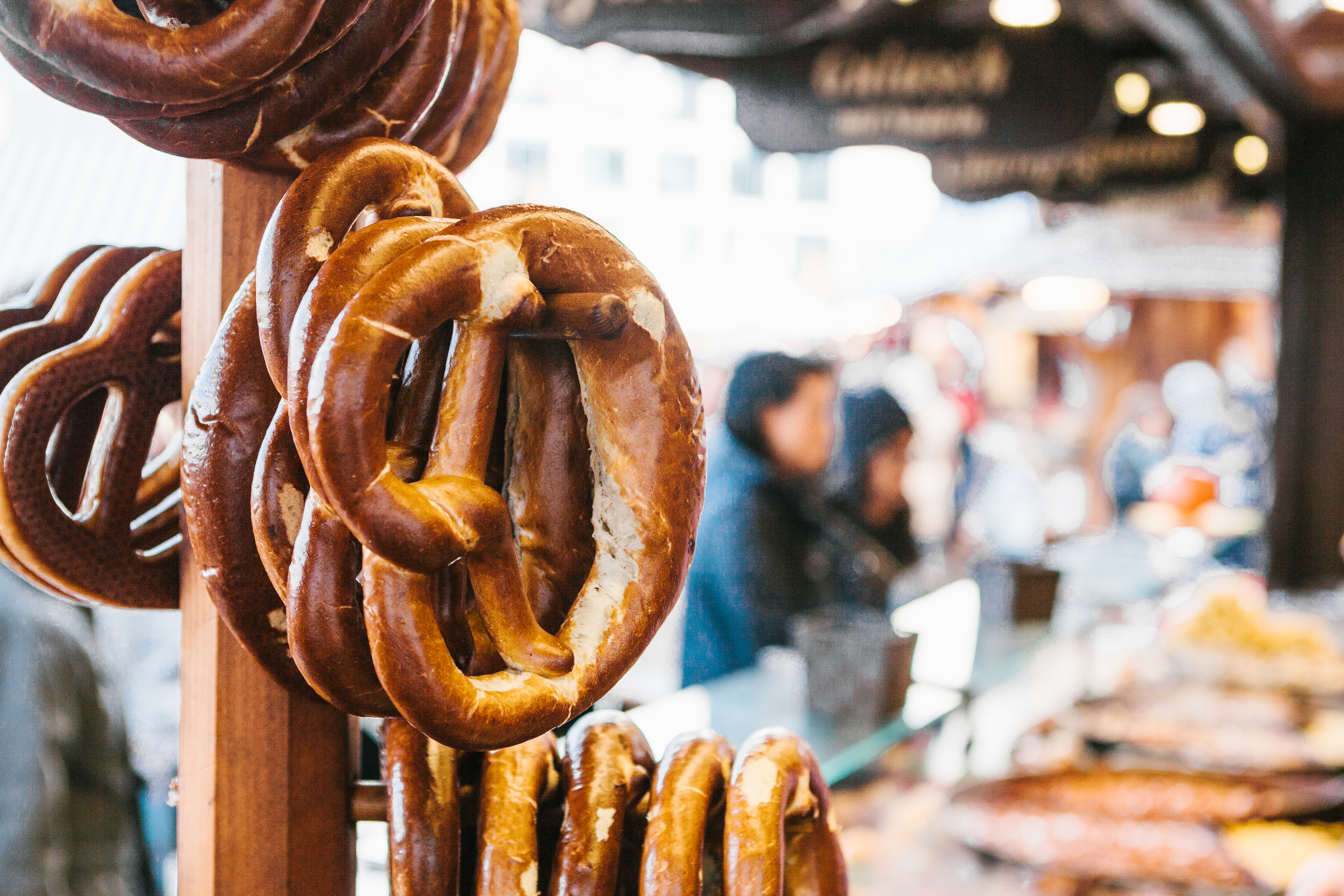
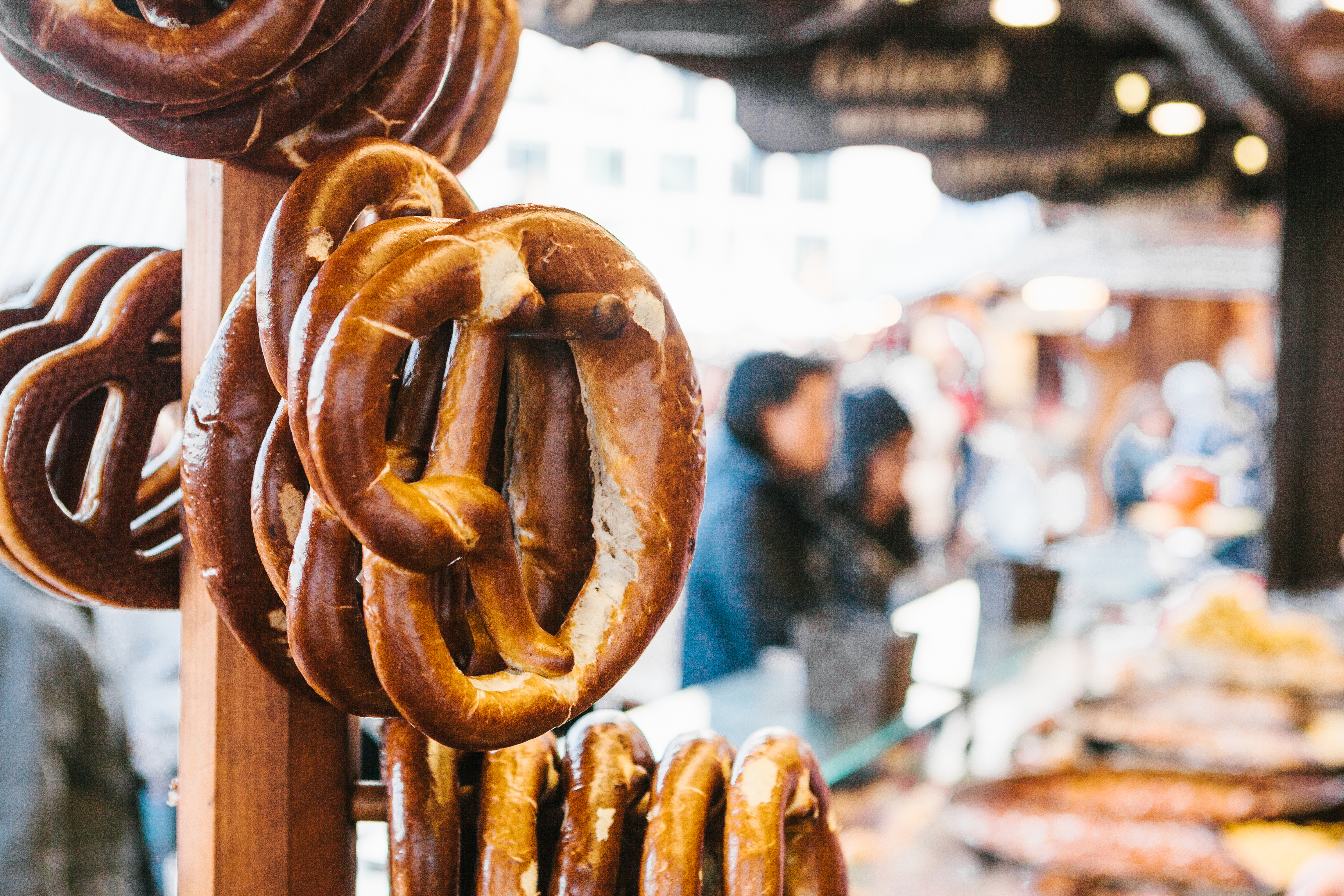
The gastronomy of Augsburg reflects the culinary tradition of Swabia and southern Germany, a cuisine characterised by hearty recipes, local products and preparations that have been passed down from generation to generation.
Among the most representative specialities are the Käsespätzle, a popular egg pasta preparation accompanied by melted cheese and fried onion, and the traditional Maultaschen, a variety of stuffed pasta considered one of the most iconic dishes of Swabian cuisine.
The local gastronomic offer also includes different preparations of sausages, roasted meats and seasonal recipes, especially present in the traditional Wirtshaus, the typical German taverns that are part of the cultural identity of the region.
Beer also occupies a prominent place within the city's gastronomic tradition. Augsburg has a long history linked to brewing, so the traditional breweries and taverns are one of the best places to discover the most characteristic flavours of Bavaria.
,regionOfInterest=(2555.5,1750))
,regionOfInterest=(2555.5,1750))
Among the most popular events on the local calendar, the Augsburger Herbstplärrer stands out, a great popular festival that brings together attractions, food stalls, breweries and activities for all audiences. Considered one of the most important popular festivals in Bavaria, it attracts thousands of visitors every year.
The festive calendar is also marked by the Christkindlesmarkt, the traditional Christmas market in Augsburg. During the Advent period, the Rathausplatz and the streets of the historical centre are filled with lights, craft stalls, gastronomic specialities and a festive atmosphere that makes the city one of the most attractive Christmas destinations in the region.
Augsburg with children offers numerous options to enjoy as a family. Its historical centre is easy to explore on foot and the city has several cultural and leisure spaces adapted for children.
One of the most popular places is the Zoo Augsburg, a zoological park that is home to hundreds of species in facilities designed to recreate their natural habitats.
Also notable is the historic Augsburger Puppenkiste, one of the most iconic puppet theatres in Germany, as well as the Siebentischwald park, a large green area with recreational areas and play spaces for the little ones.
A day in Augsburg allows you to tour the main monuments and historical spaces of the city following a comfortable itinerary through the urban centre.
To facilitate the planning of the visit, a map with the location of the main points of interest in Augsburg mentioned throughout this guide is included below.
Beyond its most well-known monuments, the appeal of Augsburg lies in the possibility of discovering the different stages of its history through its streets, inner courtyards, canals and historical buildings. Its architectural heritage and its close relationship with water make every walk through the centre an especially interesting experience.
One of the most convenient ways to organise the visit is to start the day at the Fuggerei and then continue towards the historical centre. This route allows you to combine some of the main cultural visits with a walk along the Maximilianstraße and end the day in the Rathausplatz, one of the most iconic spaces in the city.
,regionOfInterest=(2313,1542))
,regionOfInterest=(2313,1542))
,regionOfInterest=(2500,1667))
,regionOfInterest=(2500,1667))
,regionOfInterest=(2944,1656))
,regionOfInterest=(2944,1656))
,regionOfInterest=(1376,768))
,regionOfInterest=(1376,768))
,regionOfInterest=(632,423))
,regionOfInterest=(632,423))
,regionOfInterest=(1771.5,1251))
,regionOfInterest=(1771.5,1251))