,regionOfInterest=(2900.5,1949.5))
,regionOfInterest=(2900.5,1949.5))
Best Riverfront Hotels in Chiang Mai 2026: Stay Near the Ping River
,regionOfInterest=(1771.5,1181.5))
,regionOfInterest=(1771.5,1181.5))
Culture
,regionOfInterest=(688,372))
,regionOfInterest=(688,372))
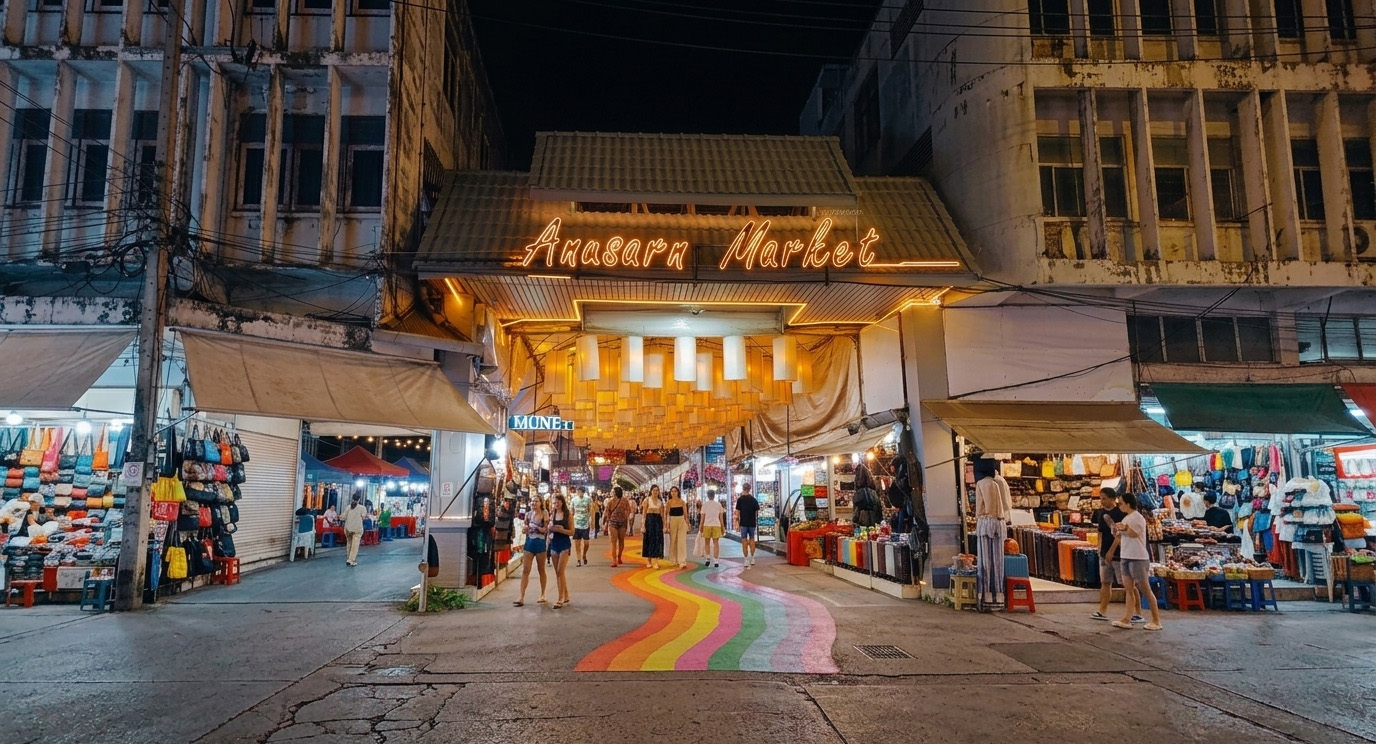
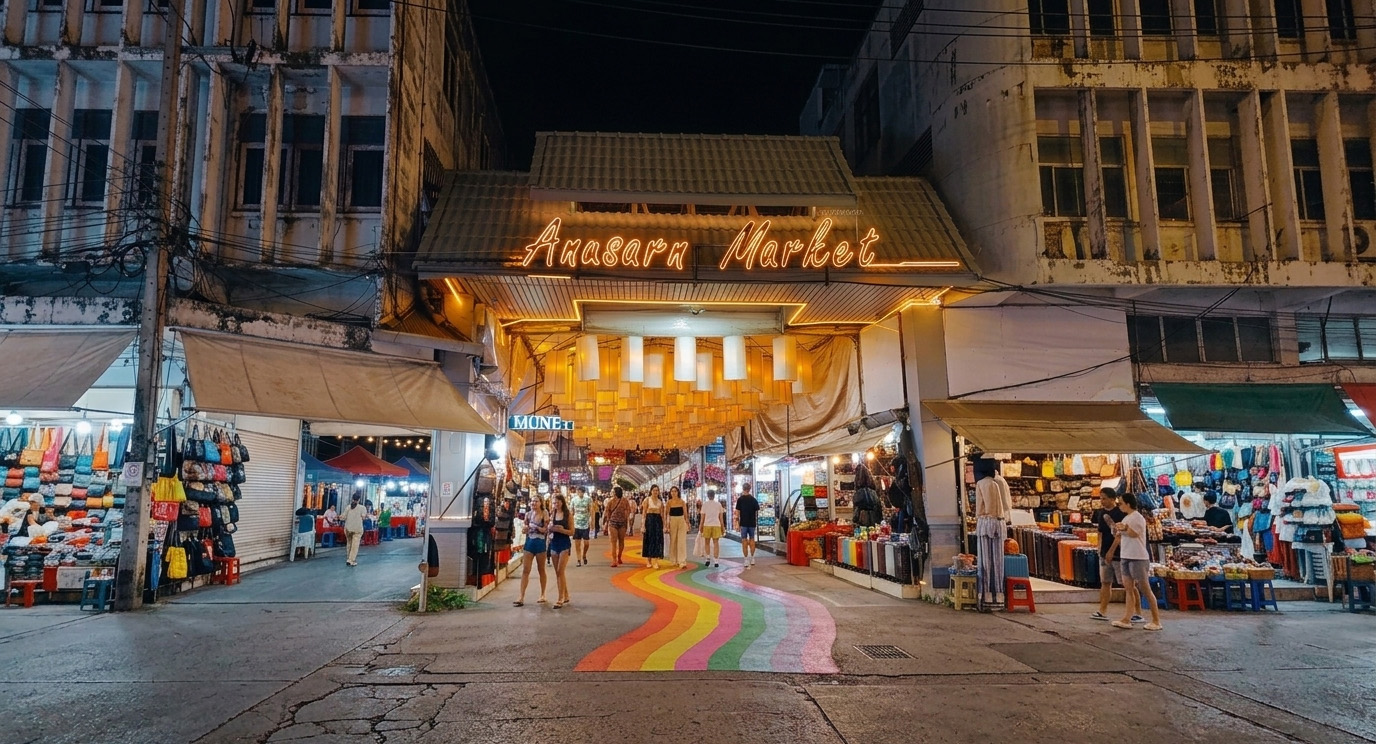
Most of Chiang Mai's Night Bazaar sprawls across open-air stalls lining the street, but Anusarn Market does things a little differently, a covered, semi-permanent complex where the food stalls alone could fill an entire evening.
Here is what to actually expect from a visit.
,regionOfInterest=(500,500))
,regionOfInterest=(500,500))
All-terrain writer specialising in tourism, fashion and trends. A curious soul, traveller, reader and sports enthusiast, keen to discover every corner of the world.
Culture
,regionOfInterest=(1376,768))
,regionOfInterest=(1376,768))
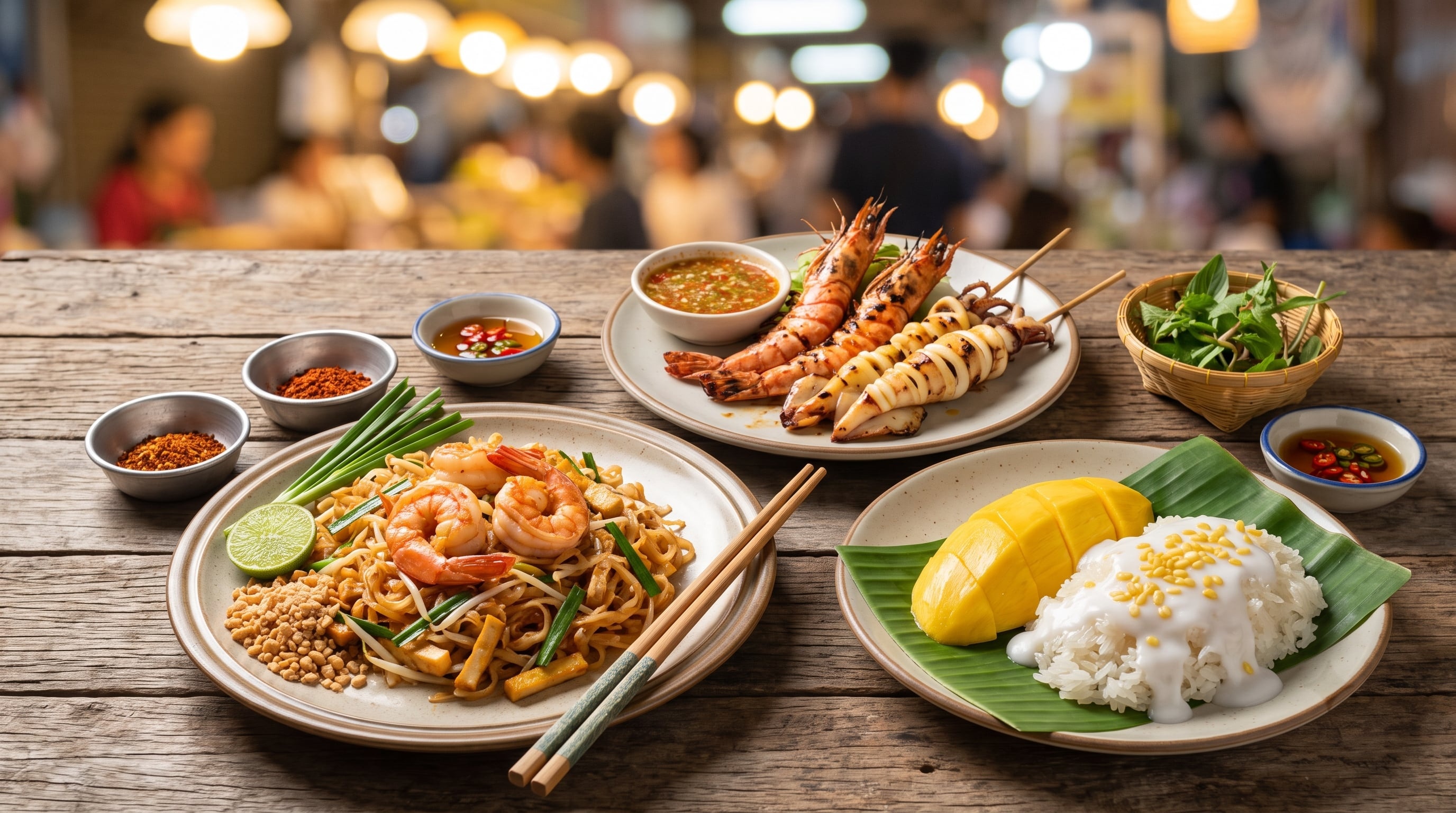
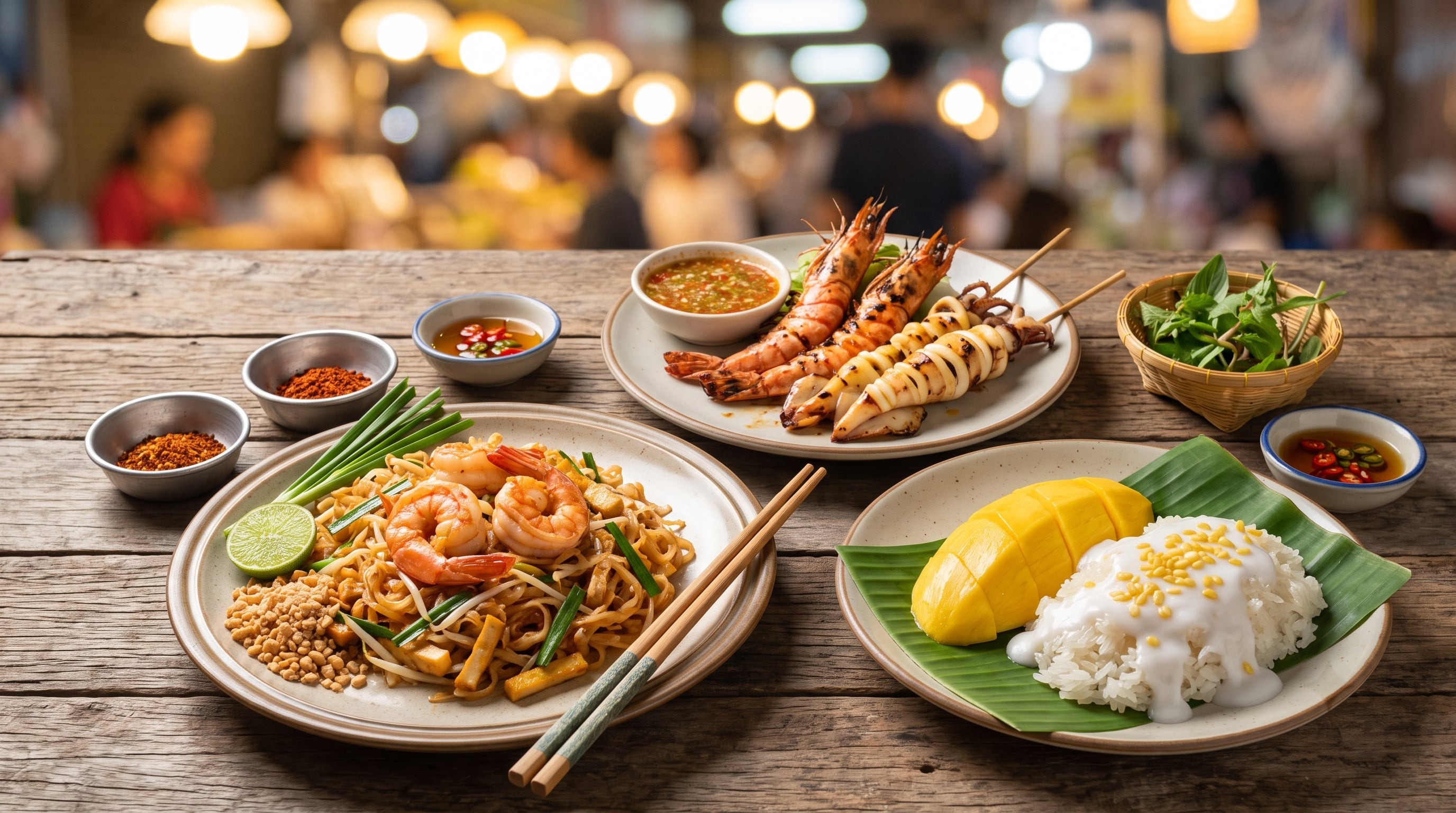
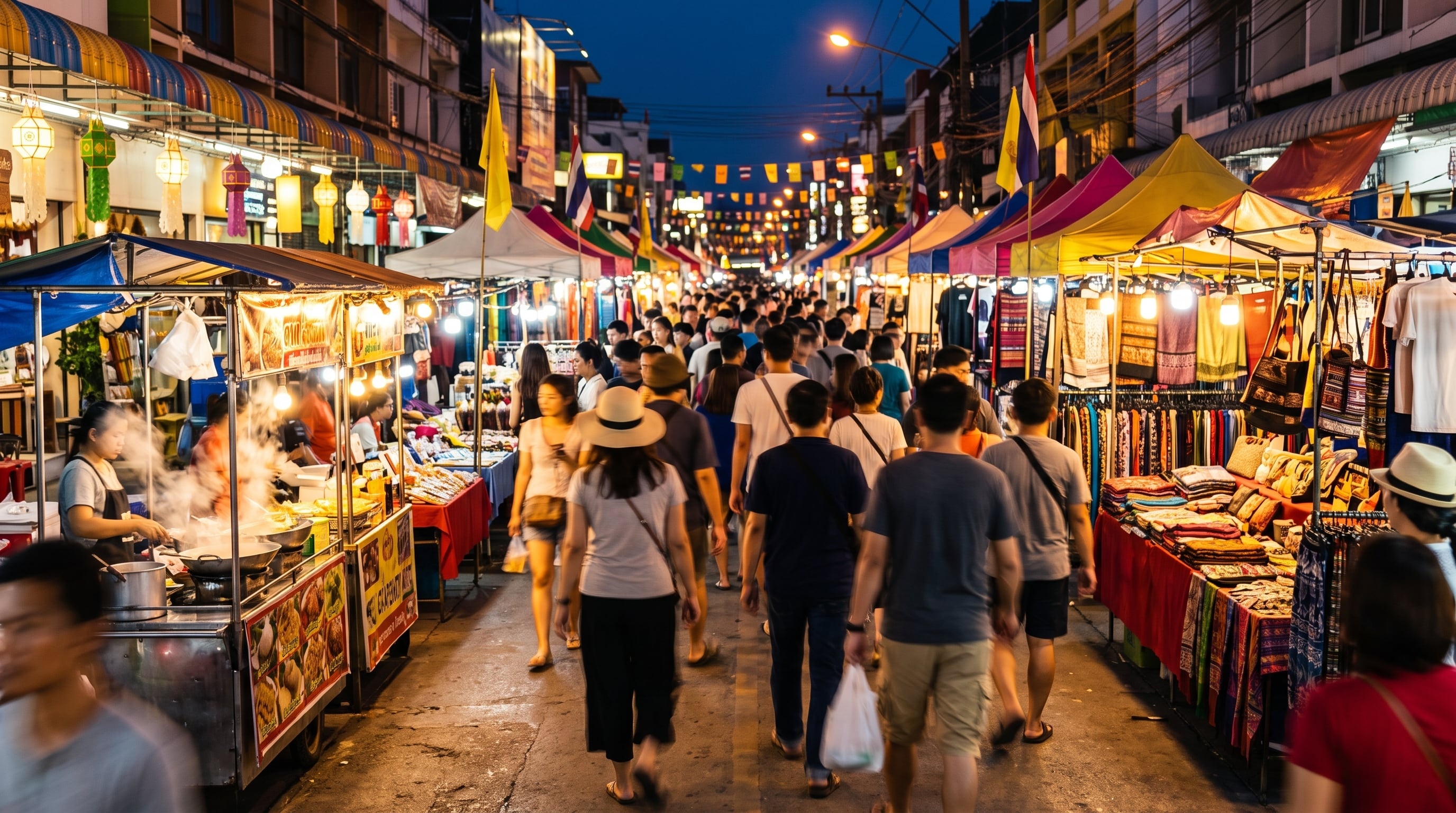
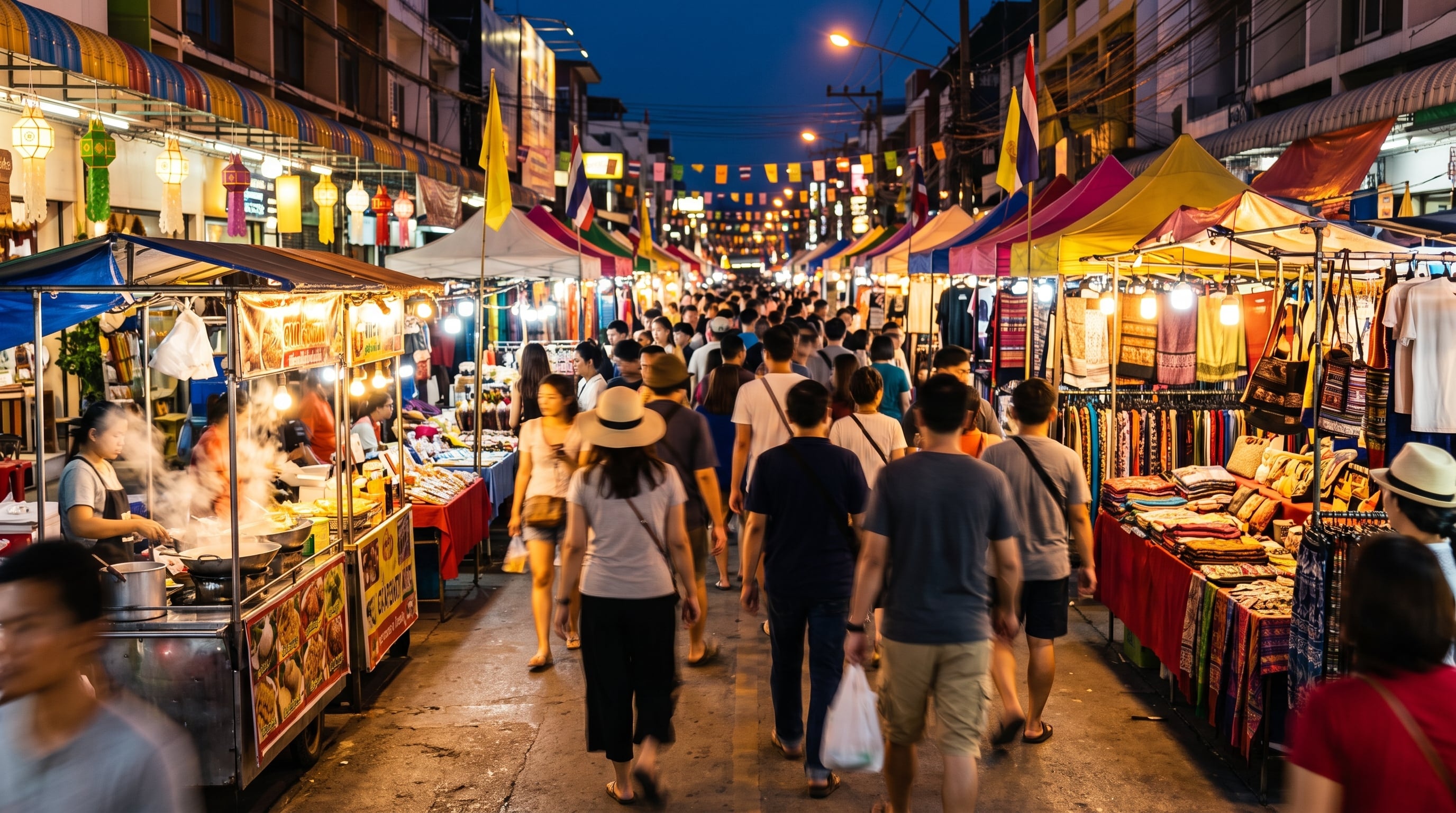
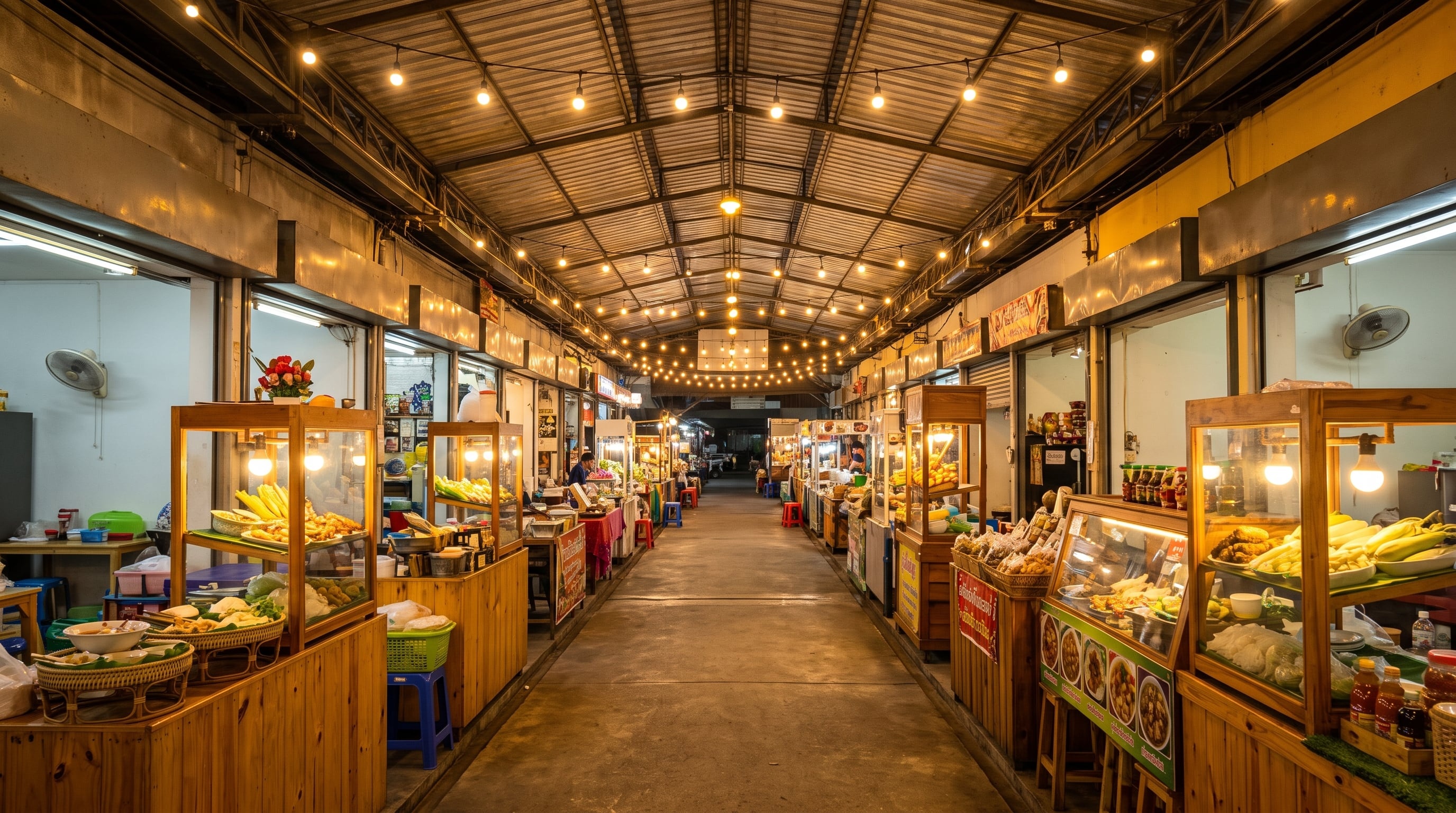
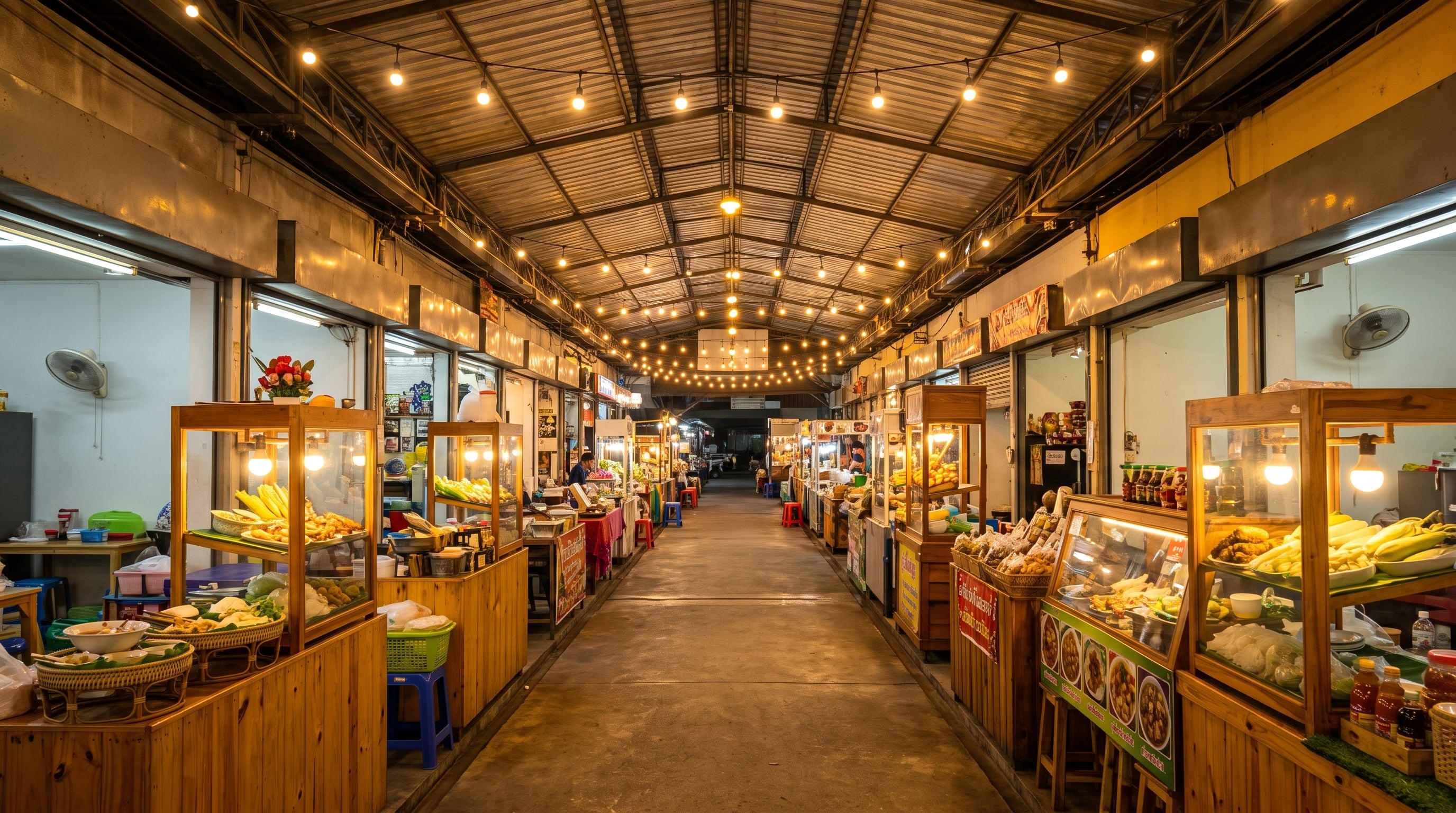
Anusarn Market is best known for its large food court, seafood and grilled dishes in particular, alongside a genuine range of clothing, handicrafts, and souvenir shopping under a semi-covered layout within the wider Night Bazaar district.
Stalls begin opening around 6:00 PM, though the market does not feel fully alive until about 8:00 PM, and it runs until midnight most nights.
Yes, particularly for the food court, which covers more ground than most other stops in the Night Bazaar district, Thai staples, seafood, and a genuinely wide spread of international options all under one roof.
Grilled seafood, pad thai, som tum papaya salad, khao soi, and mango sticky rice are among the most popular choices, alongside Japanese, Malaysian, Indonesian, and Western dishes for anyone wanting something other than Thai food that particular evening.
Yes, bargaining is a normal part of shopping at most of the stalls, though it works better as a friendly negotiation than an aggressive one, and food stalls generally keep fixed prices rather than being open to bargaining at all.
,regionOfInterest=(1376,768))
,regionOfInterest=(1376,768))
,regionOfInterest=(1376,768))
,regionOfInterest=(1376,768))
,regionOfInterest=(1376,768))
,regionOfInterest=(1376,768))
,regionOfInterest=(1064,768))
,regionOfInterest=(1064,768))
,regionOfInterest=(1376,768))
,regionOfInterest=(1376,768))
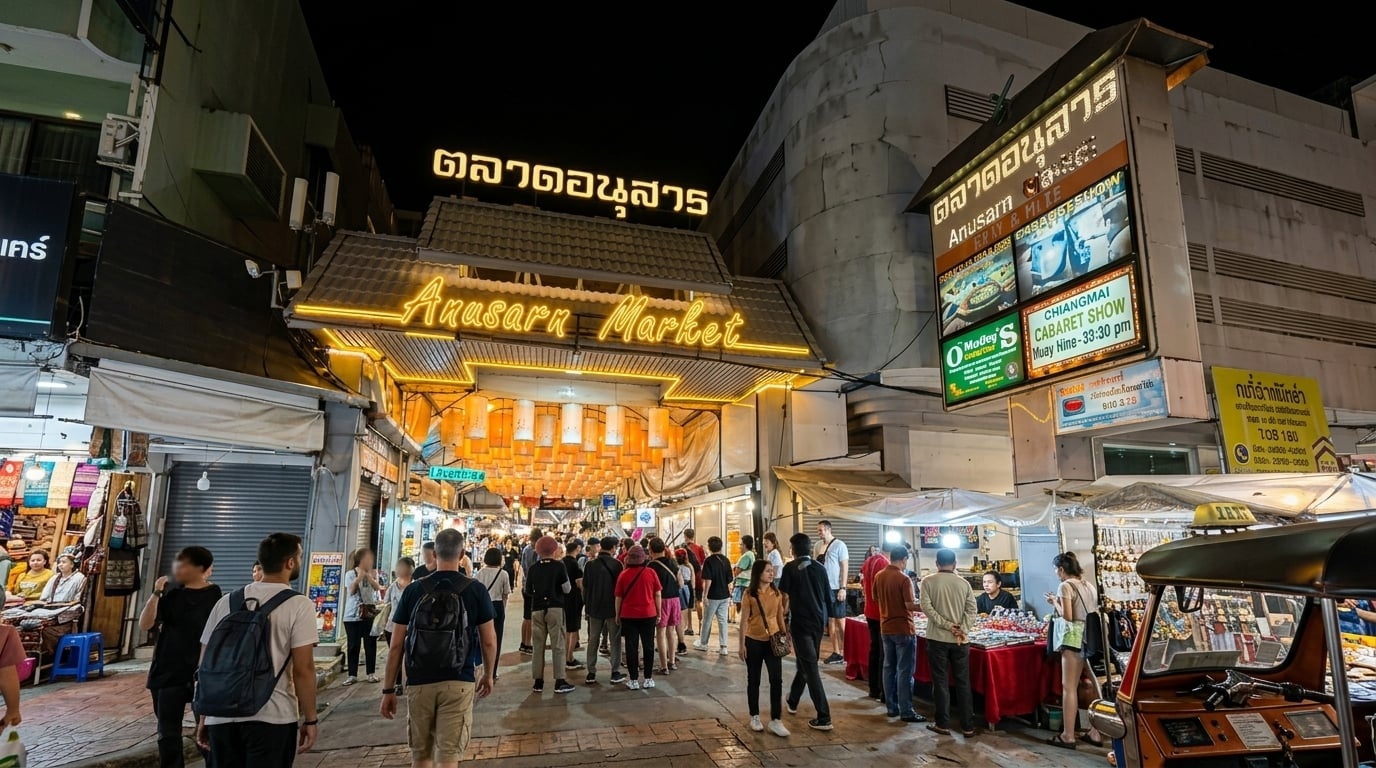
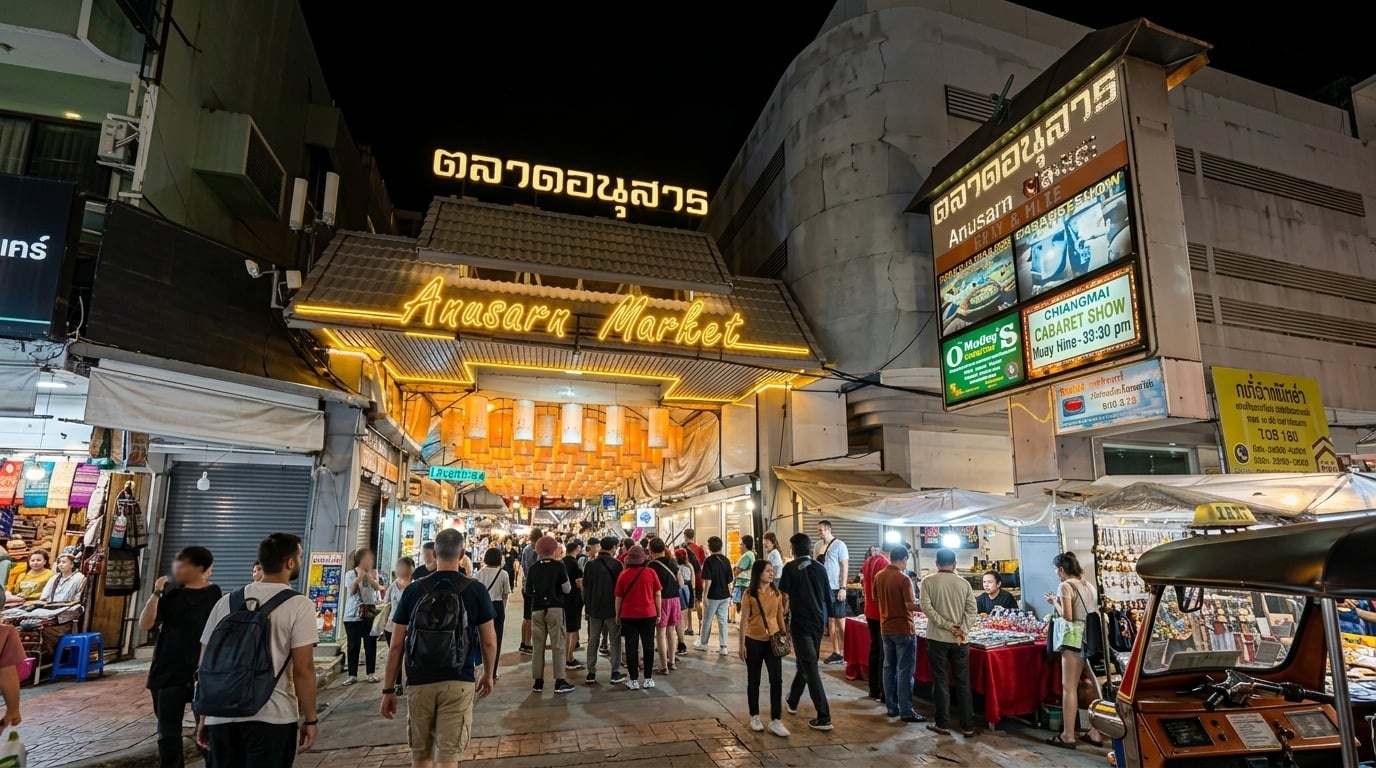
Anusarn Market sits within the broader Night Bazaar district, its own distinct pocket rather than just another row of stalls along Chang Klan Road. The market grew out of the same after-dark trading tradition that shaped the whole Night Bazaar area, markets that were once purely daytime affairs gradually extending into the evening to serve travellers and night-shift workers, until the pattern became permanent.
Over time Anusarn Market carved out its own identity within that wider district, leaning into Northern Thai goods, a genuinely large food court, and a semi-covered layout that shelters shoppers from a sudden downpour in a way the fully open-air stretches of the bazaar cannot.
That covered structure is really the market's defining feature, a mix of undercover walkways and open sections that make it comfortable to browse regardless of the weather, one of the more practical reasons it keeps coming up on any shortlist of Chiang Mai's best night markets.
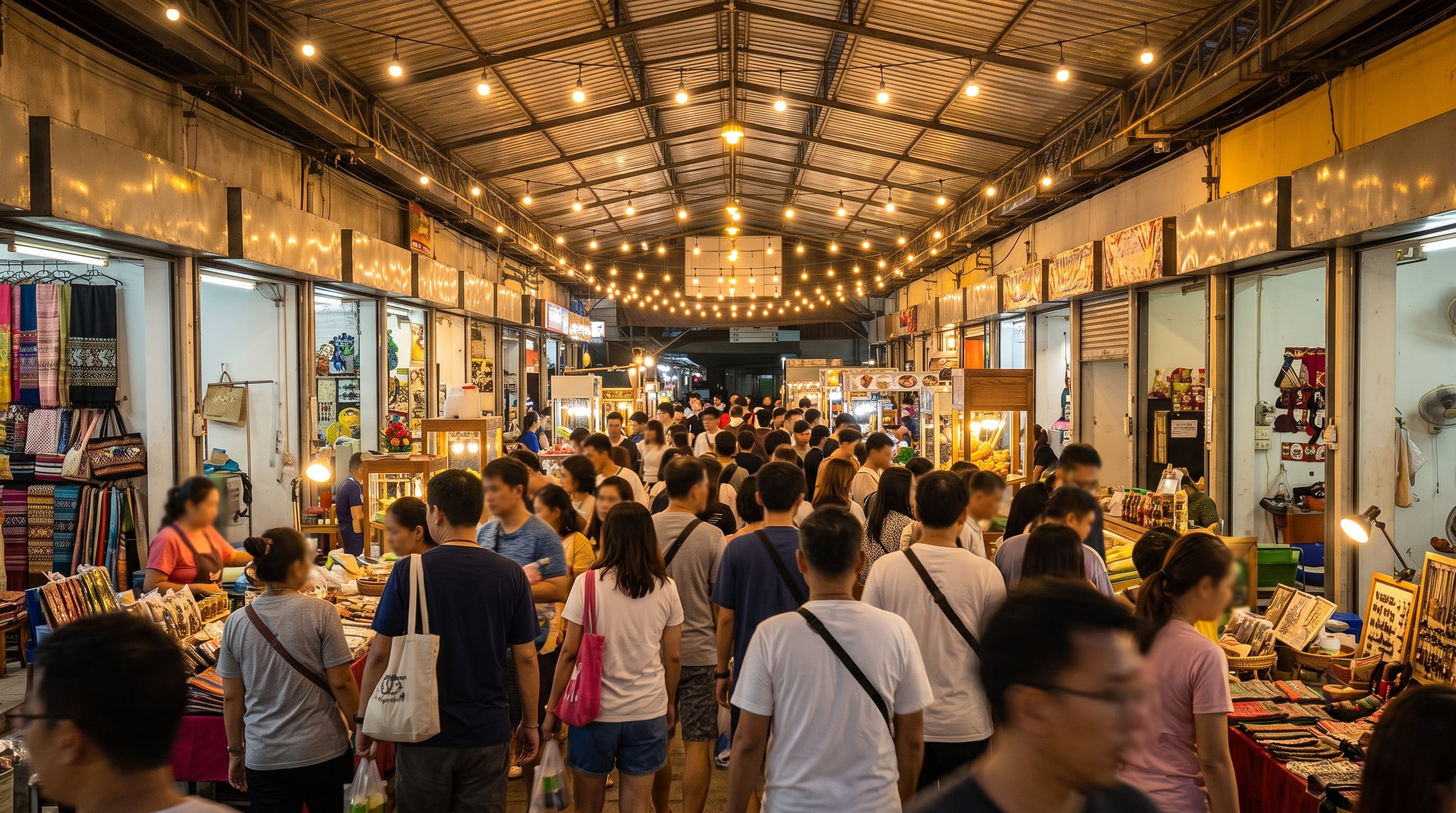
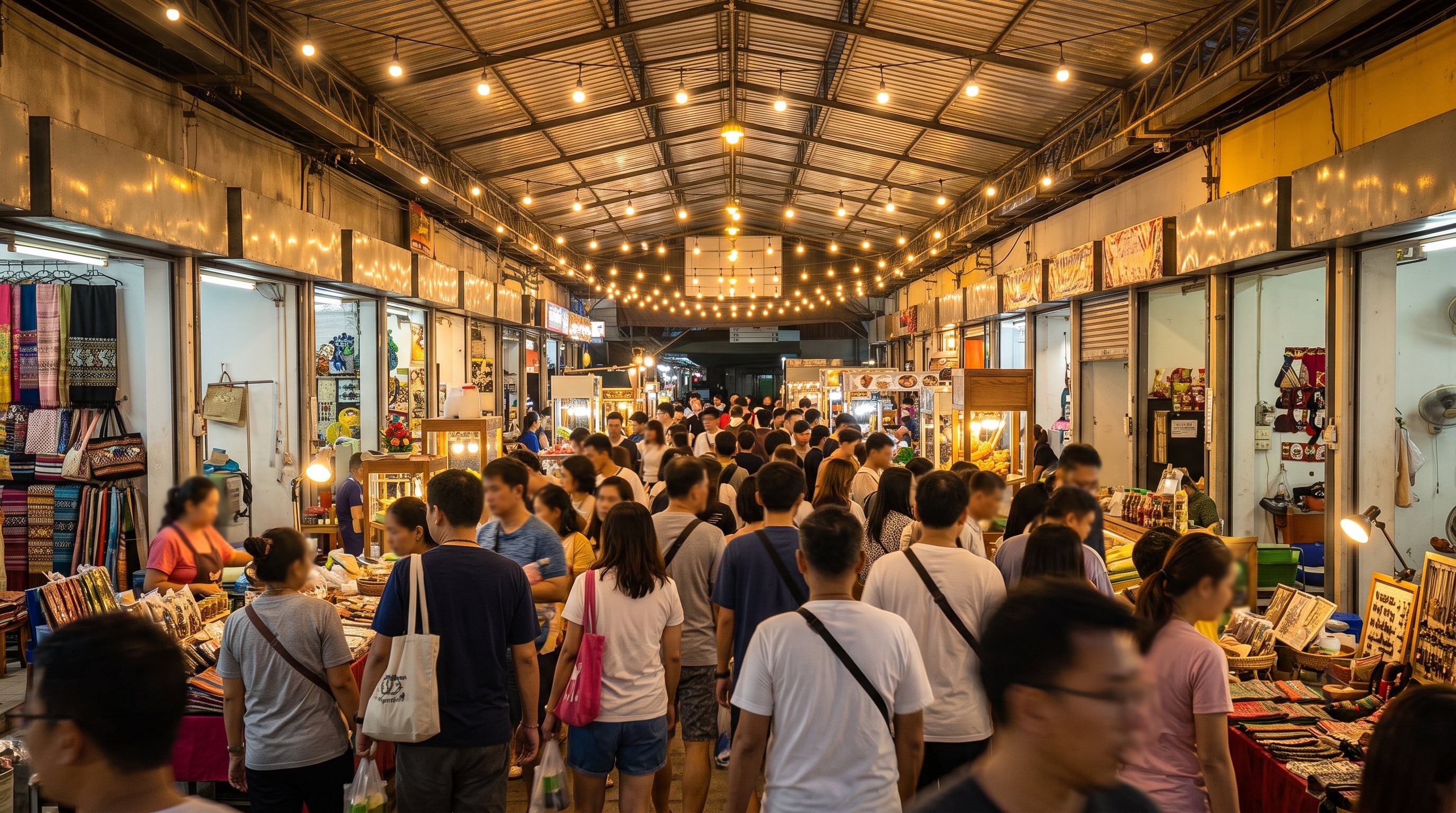
The layout is easy to get used to after one pass through: a central covered walkway runs the length of the complex, food stalls and small restaurants branching off either side, while the shopping stalls cluster mostly near the street-facing entrances. First-time visitors often expect a single row of stalls, but the market has real depth, several parallel aisles rather than one straight path.
,regionOfInterest=(688,384))
,regionOfInterest=(688,384))
Anusarn Market sits within the Night Bazaar district on Chang Klan Road, close enough to the area's other markets, Kalare and the main bazaar stalls, that a single evening can easily cover all three without much walking between them.
Most visitors staying anywhere near the Night Bazaar reach Anusarn Market on foot. For anyone based further out, a Grab ride or a songthaew covers the distance cheaply, and the market's central location within the district makes it an easy stop to fold into any Night Bazaar evening rather than a separate trip requiring its own planning.
The market has more than one entrance, a main gate facing Chang Klan Road and a smaller side entrance closer to the riverside end of the district, worth knowing if a Grab driver drops off from a different direction than expected. Either entrance leads into the same covered network of stalls within a minute or two of walking.
Drivers with their own car or rented scooter can find paid parking within the Night Bazaar district itself, though spaces fill up quickly on weekend evenings. Given how central the market sits within the district, walking or a short Grab ride remains the more relaxed option for most visitors over self-driving.
Detailed Information:
Opening Hours: Around 6:00 PM to midnight, busiest from about 8:00 PM
Location: Chang Klan Road, within the Night Bazaar district
Distance from Meliá Chiang Mai: Walking distance, within the same Night Bazaar precinct
Read more: Chiang Mai Map 2026: Top Tourist Attractions & Hotels
,regionOfInterest=(1376,768))
,regionOfInterest=(1376,768))
A visit generally falls into a natural rhythm rather than needing much planning. Early arrivals, before around 7:00 PM, catch the market only partly open, useful for a quieter first look at the shopping stalls but not the moment to expect the full food court experience yet.
By 8:00 PM most stalls are running at full capacity, vendors calling out prices, grills going at the seafood stalls, and the covered walkways filling in with both visitors and locals stopping by after work. This stretch, roughly 8:00 PM to 10:00 PM, is when the market feels most like itself.
A common pattern among visitors is to browse the shopping stalls first while there is still some daylight lingering outside, then settle into dinner once appetite and crowd energy both pick up, and finish with dessert or a short massage before heading back out to the hotel. Following that rough order avoids doubling back through the same aisles more than necessary.
Things start winding down noticeably after 11:00 PM, with a number of stalls beginning to pack up well before the official midnight close. Arriving with at least two hours to spare before that point gives enough time to actually enjoy the market rather than rushing through it, without feeling rushed through the food court or the shopping stalls at the very end of the night.
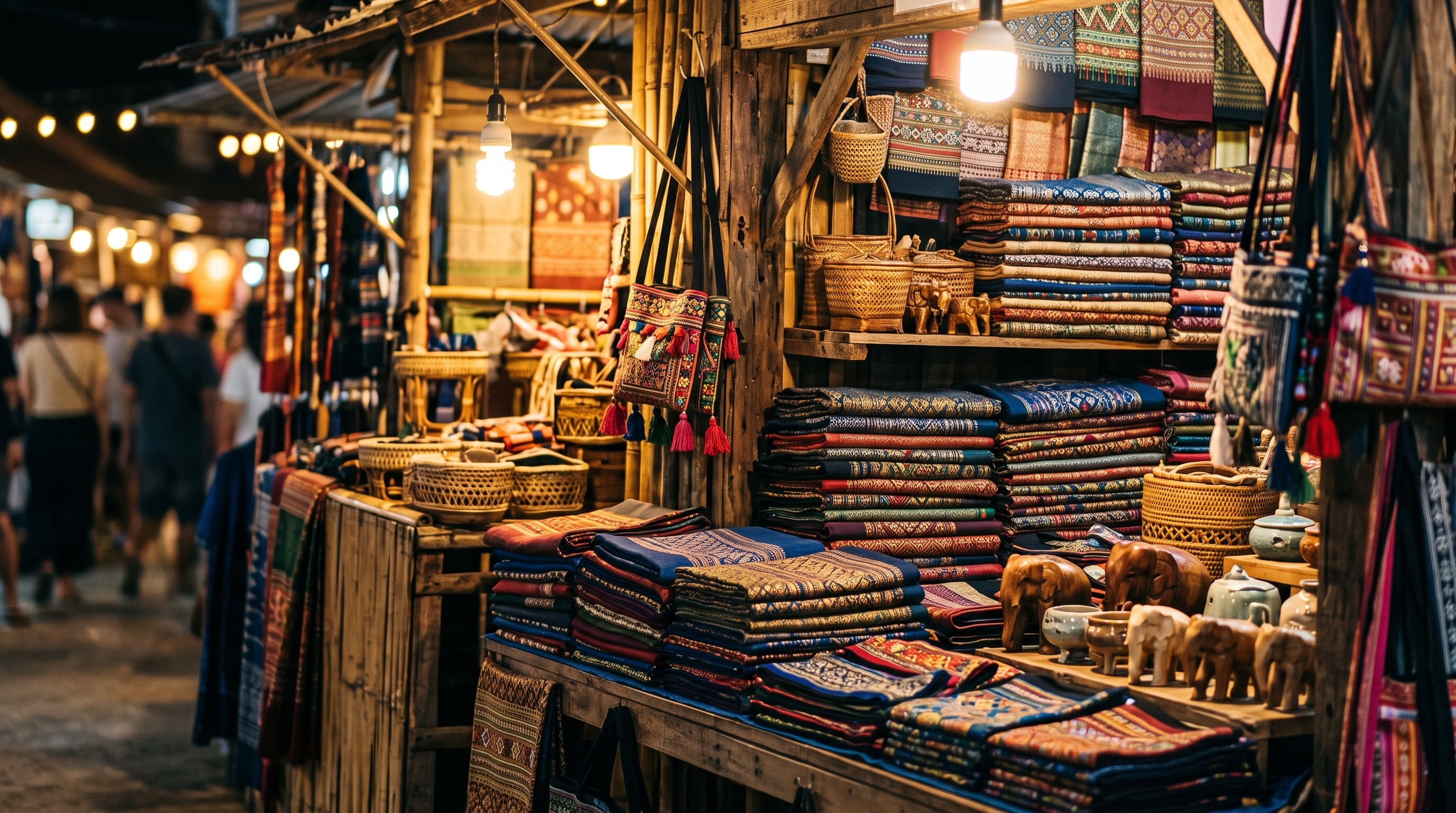
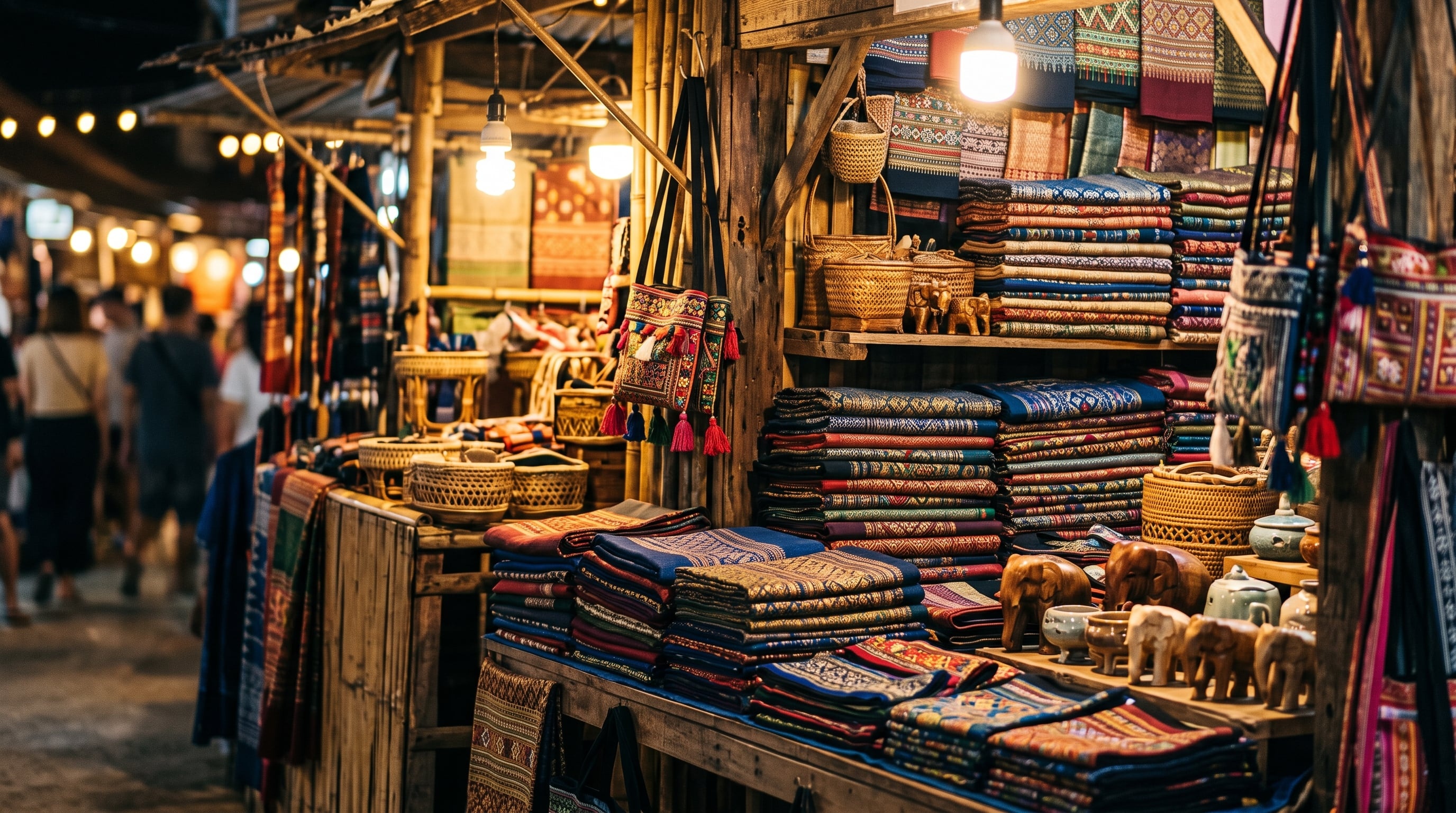
Anusarn Market's shopping side runs alongside its food stalls rather than being the sole focus, undercover vendor stalls and small shops covering a genuinely wide range of goods.
,regionOfInterest=(1376,768))
,regionOfInterest=(1376,768))
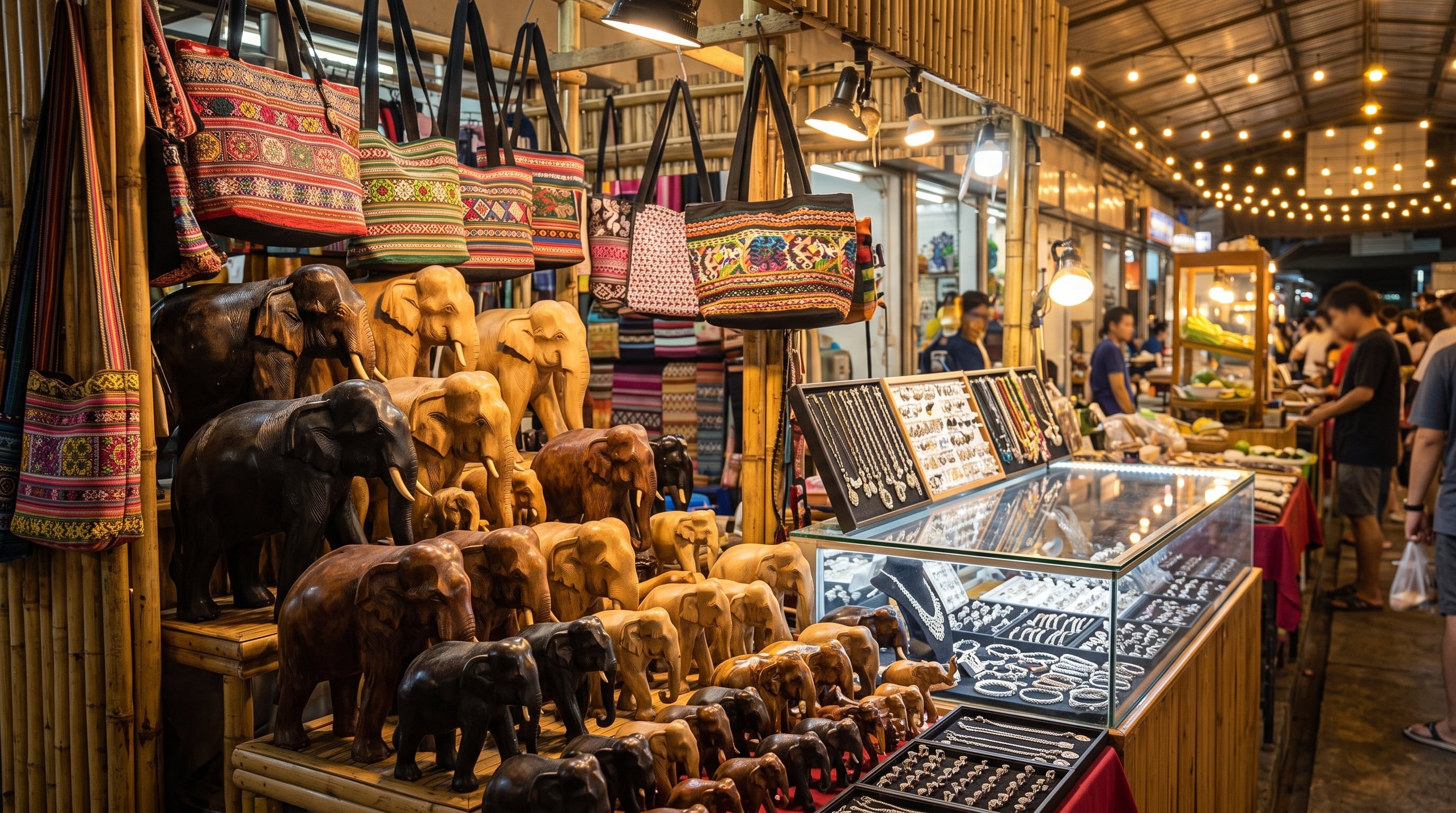
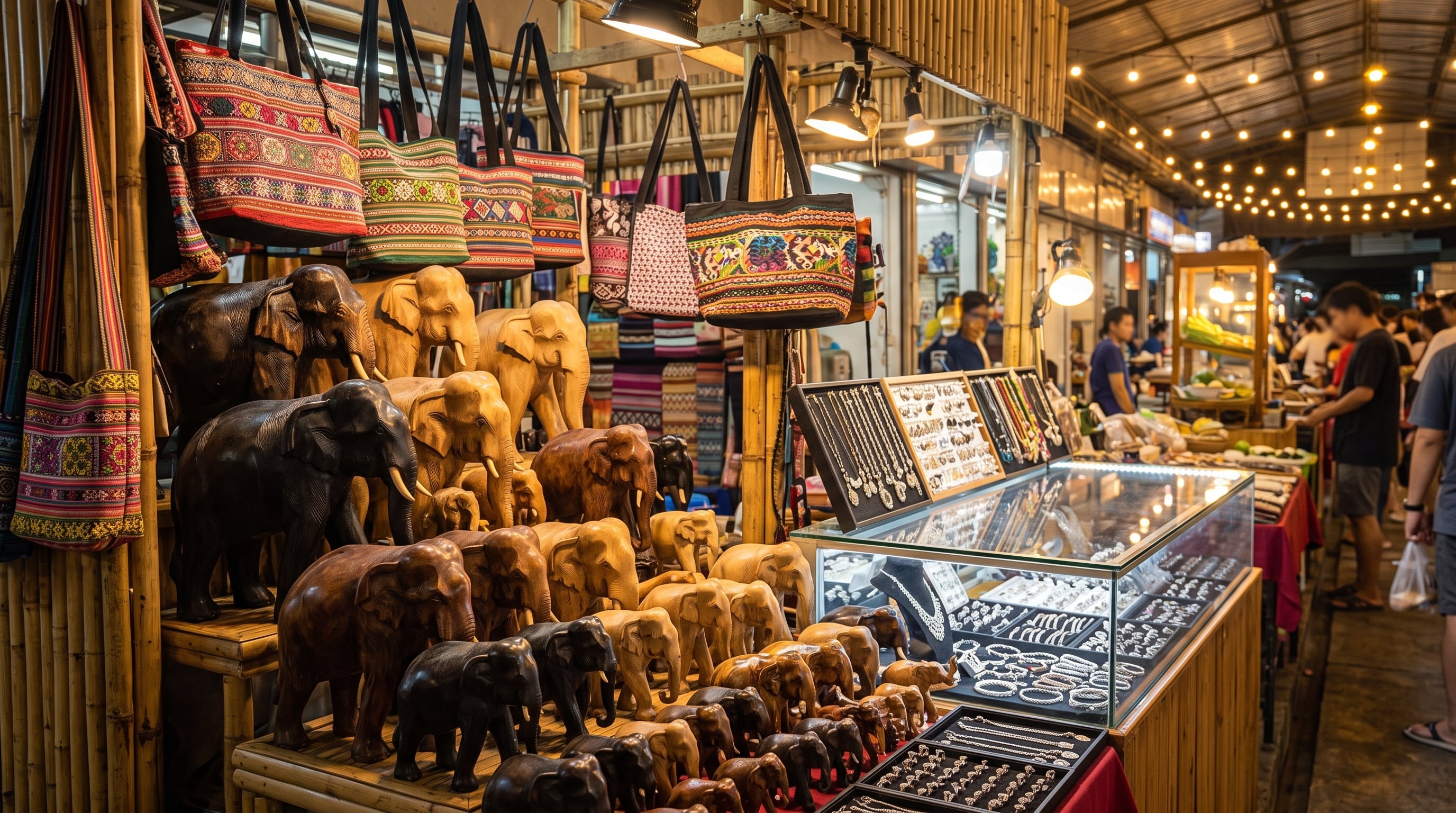
Locally made crafts turn up throughout the market, carved wooden pieces, woven bags, paintings, and jewellery among the more common finds. Prices tend to sit a little below what the same items cost at a purely tourist-facing shop elsewhere in the city, though quality varies enough between stalls that it is worth comparing two or three before committing to a purchase.
Silverwork and lacquerware are also worth looking out for specifically, Chiang Mai has a genuine local tradition in both crafts, and a handful of the market's stalls carry pieces sourced from small workshops around the city rather than mass-produced imports. A carved elephant, a lacquer bowl, or a set of silver earrings makes a more distinctive souvenir than the printed t-shirts and keychains that dominate the more generic stalls.
,regionOfInterest=(1376,768))
,regionOfInterest=(1376,768))
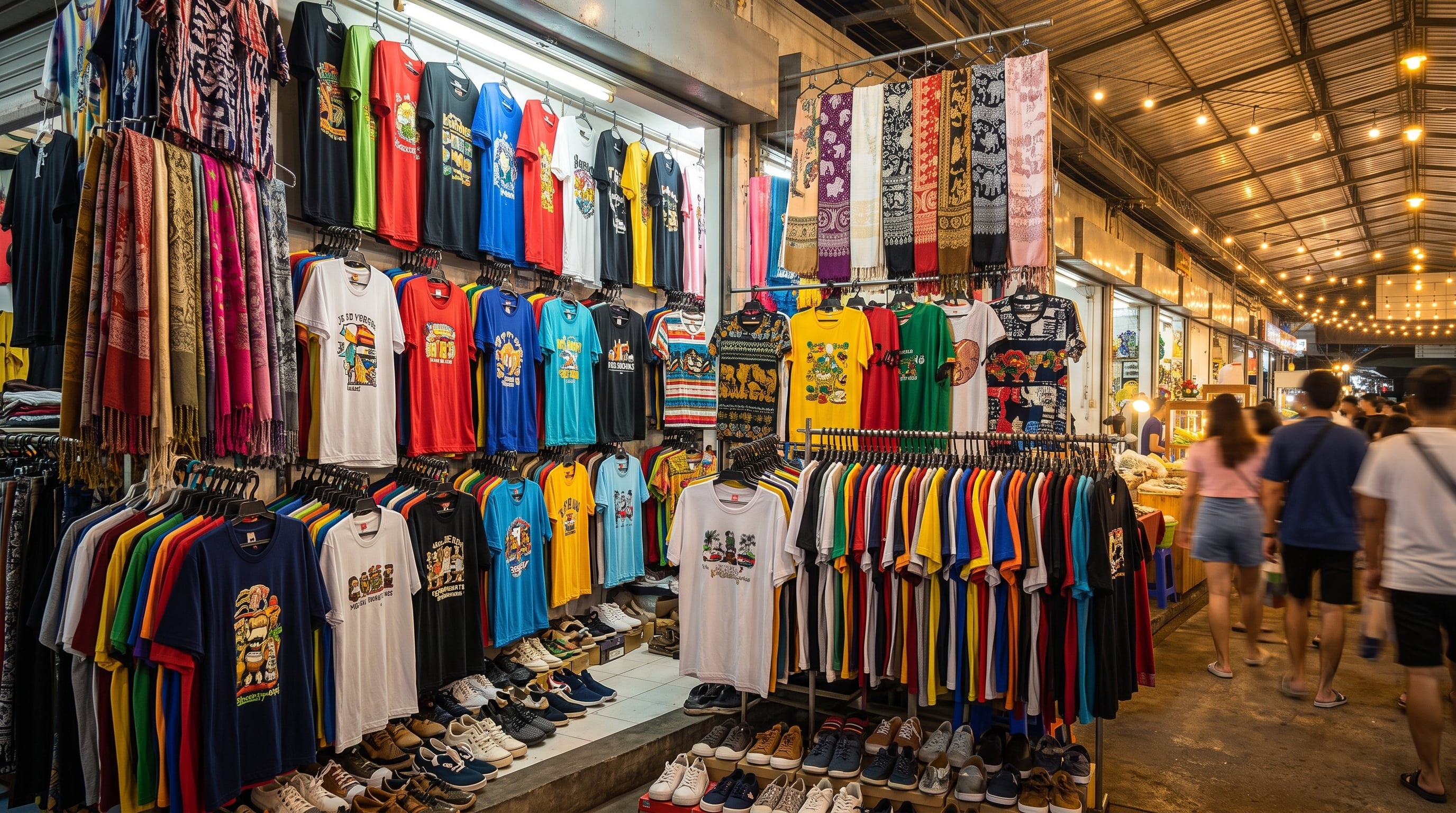
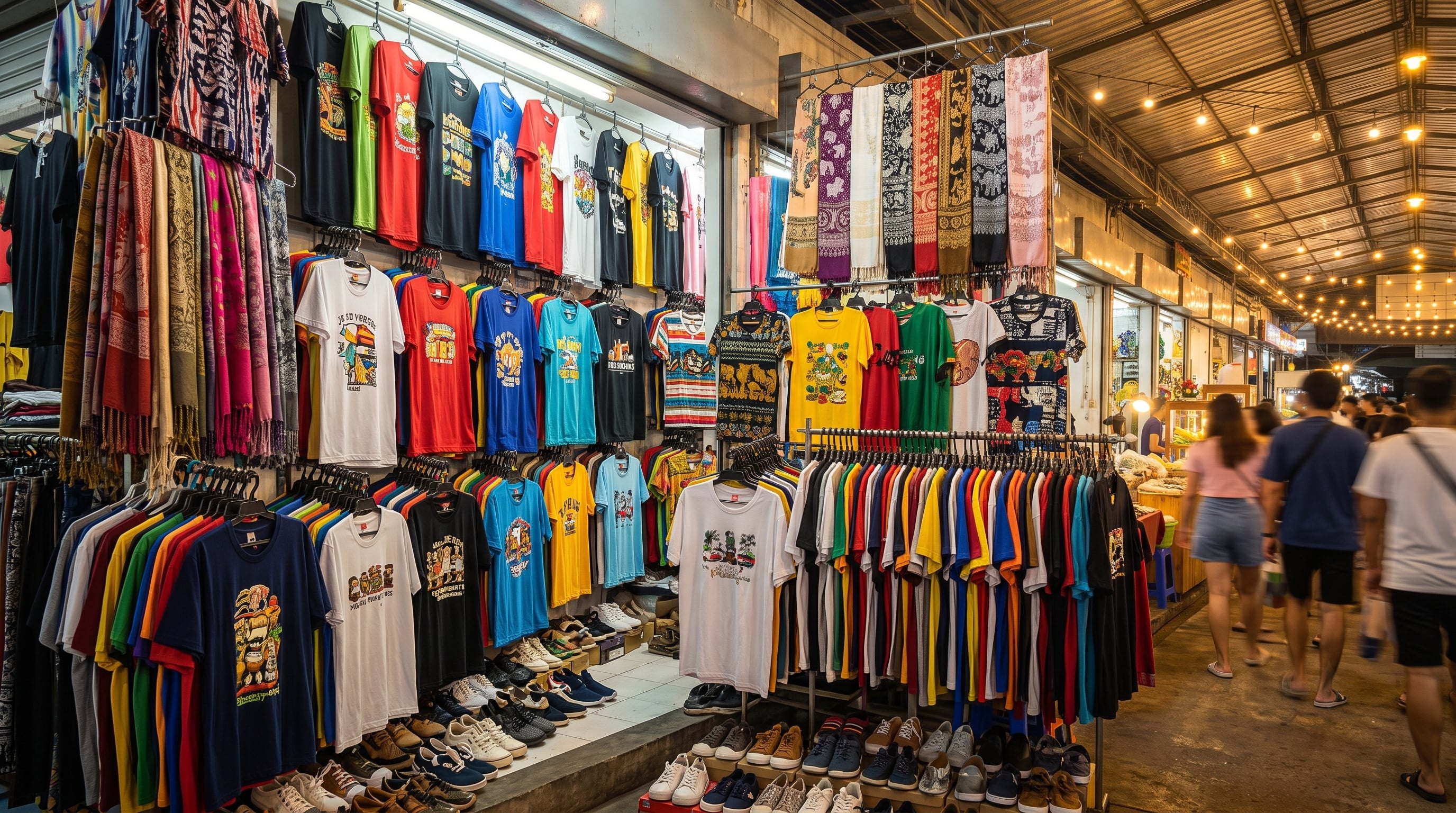
T-shirts, scarves, purses, and casual clothing fill a large share of the market's stalls, alongside shoes and bags aimed squarely at visitors rather than local everyday shopping. It is a reasonable stop for last-minute travel essentials too, a light jacket or a pair of sandals picked up cheaply rather than packed from home.
Sizing runs smaller than Western standard sizing at most stalls, worth trying a piece on rather than guessing, and a handful of vendors specifically stock looser, oversized cuts aimed at foreign visitors if a standard local size does not fit.
,regionOfInterest=(1376,768))
,regionOfInterest=(1376,768))
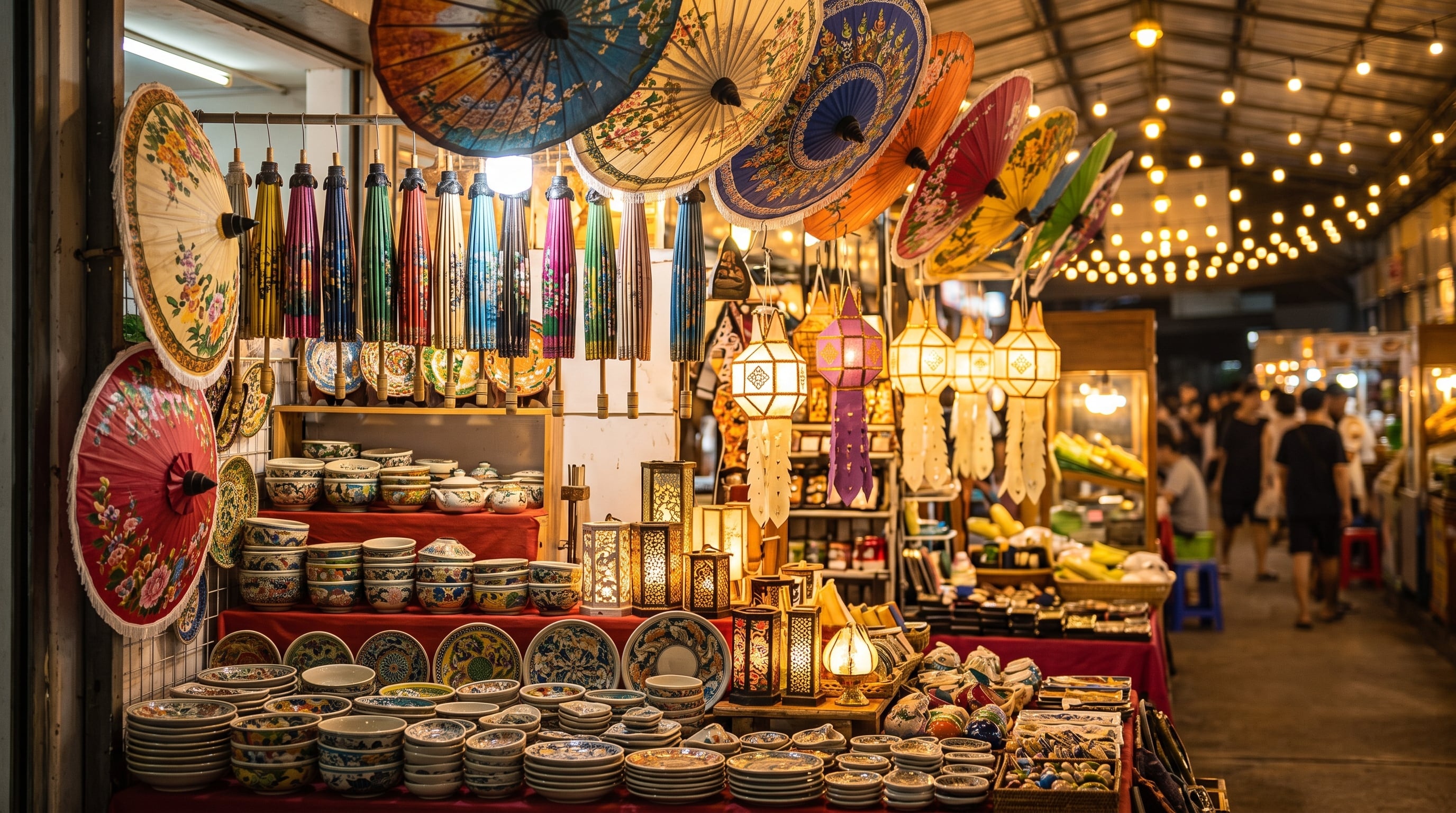
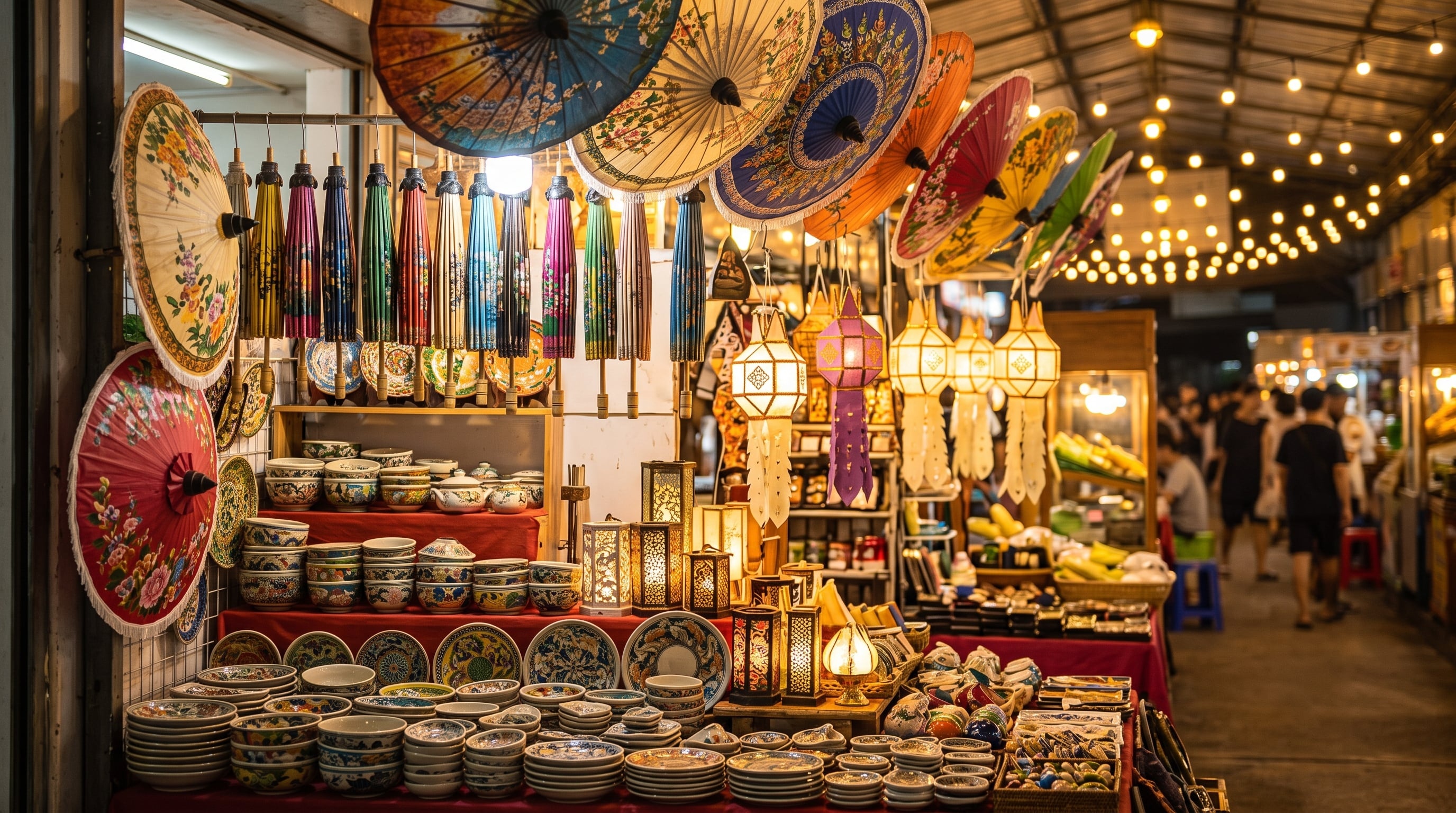
Beyond wearable souvenirs, a section of the market carries small home goods, hand-painted umbrellas, ceramic bowls, woven table mats, and decorative lanterns among the more common items. These make for lighter, more packable gifts than a larger carved piece for anyone travelling with limited luggage space.
Fridge magnets, postcards, and keychains sit at the cheaper end of the same stalls, generally 20 to 60 baht each, a practical option for bringing back several small gifts without spending much or bargaining hard over any single item.
A handful of tailoring stalls also operate within the market, custom shirts and simple garments made to order within a day or two, a reasonable option for anyone staying in Chiang Mai for more than a few nights and wanting something properly fitted rather than off the rack, particularly ahead of a formal dinner later in the trip.
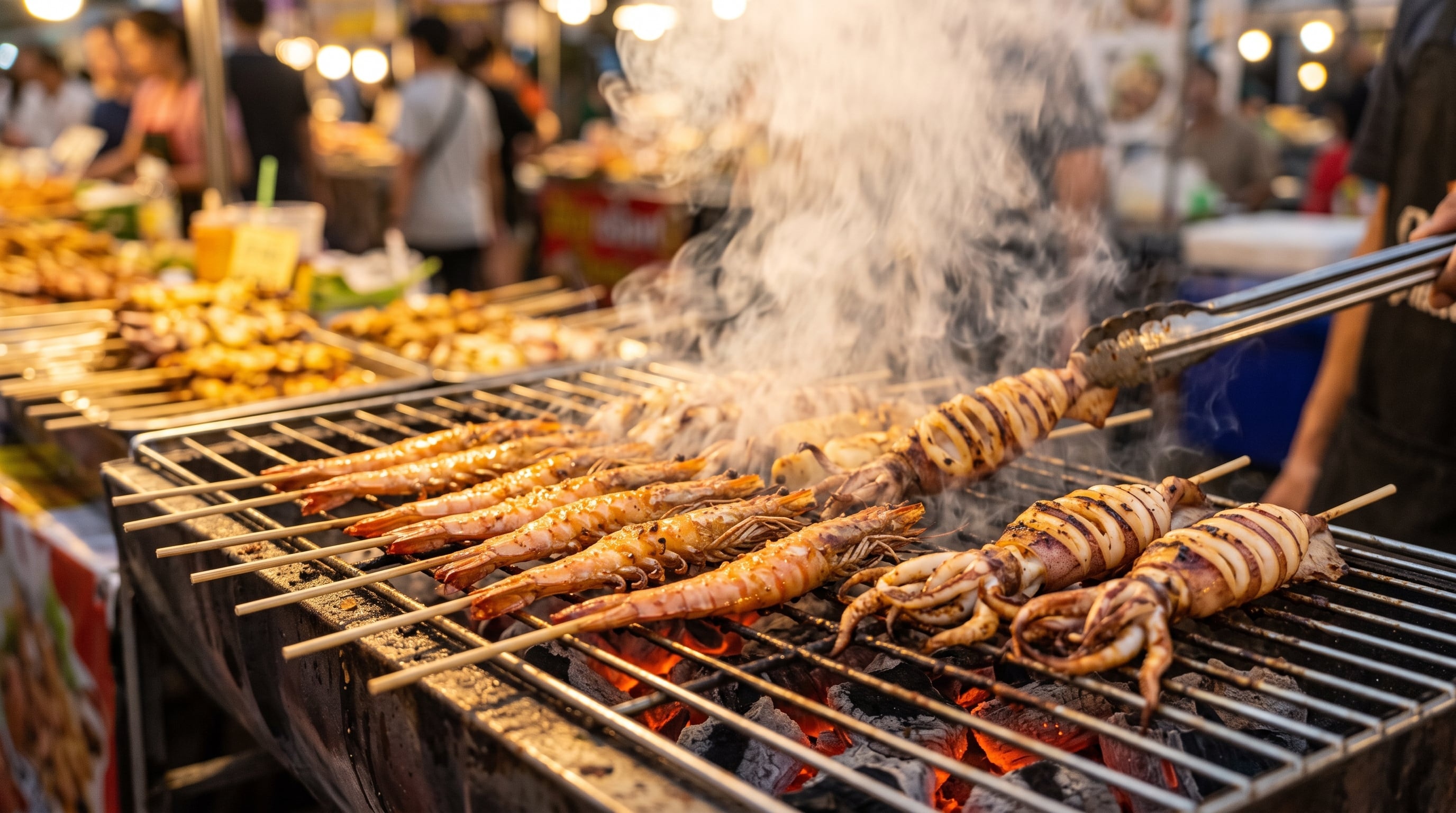
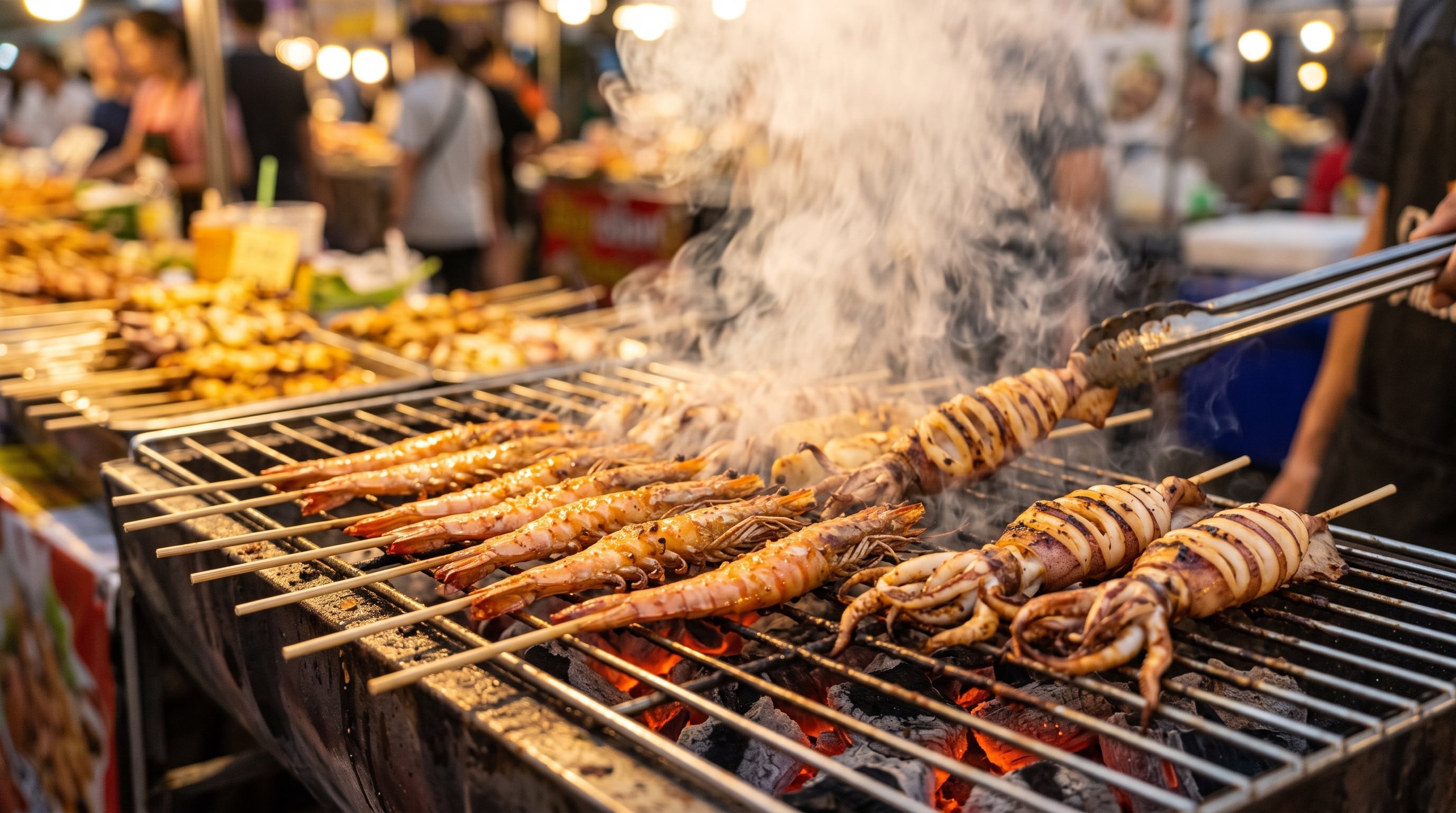
Food is really where Anusarn Market earns its reputation, a genuinely large food court alongside sit-down restaurant stalls that cover far more ground than a typical row of street carts.
Read more: What to eat in Chiang Mai: 15 local dishes you must try in 2026
,regionOfInterest=(1376,768))
,regionOfInterest=(1376,768))
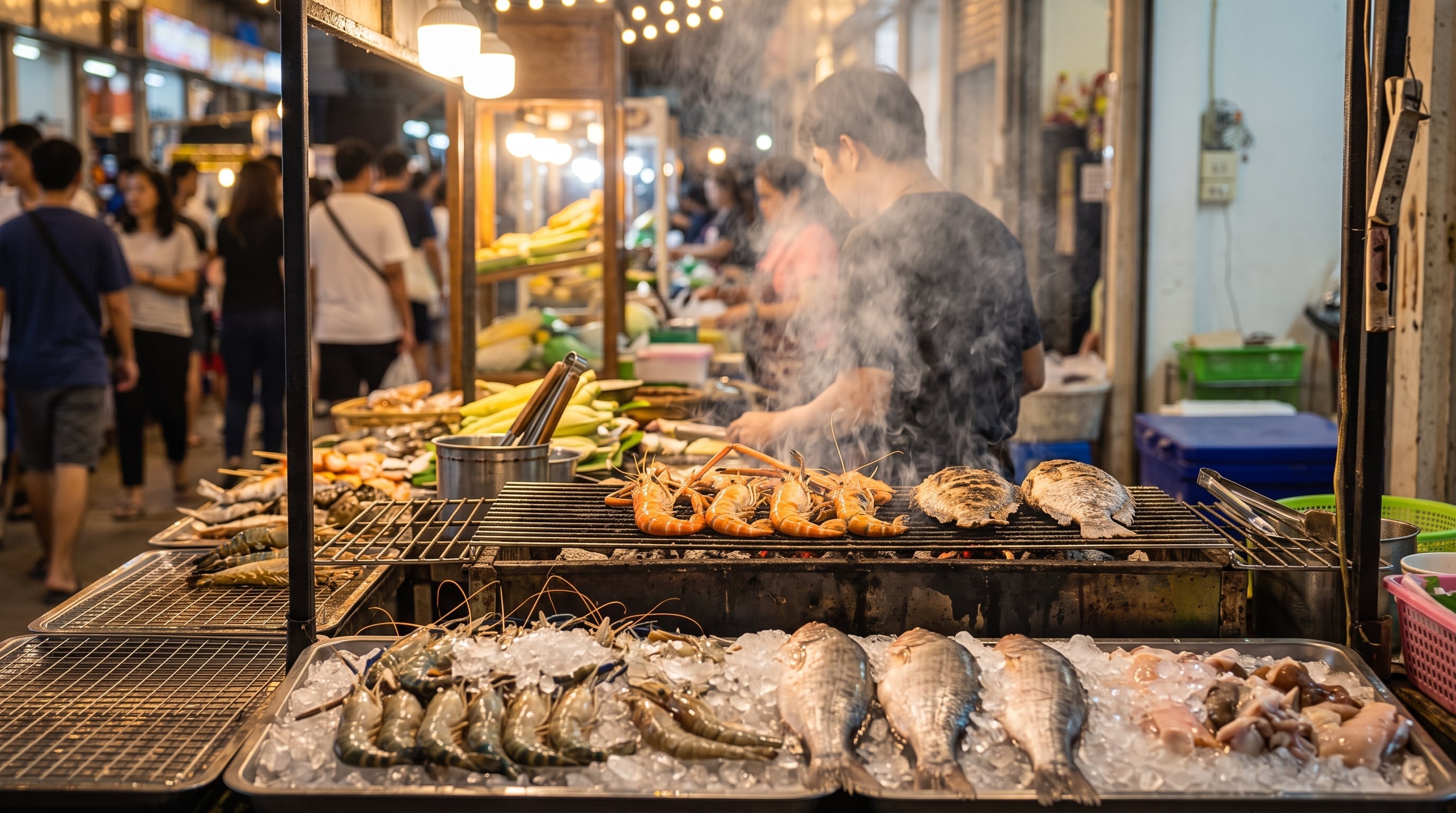
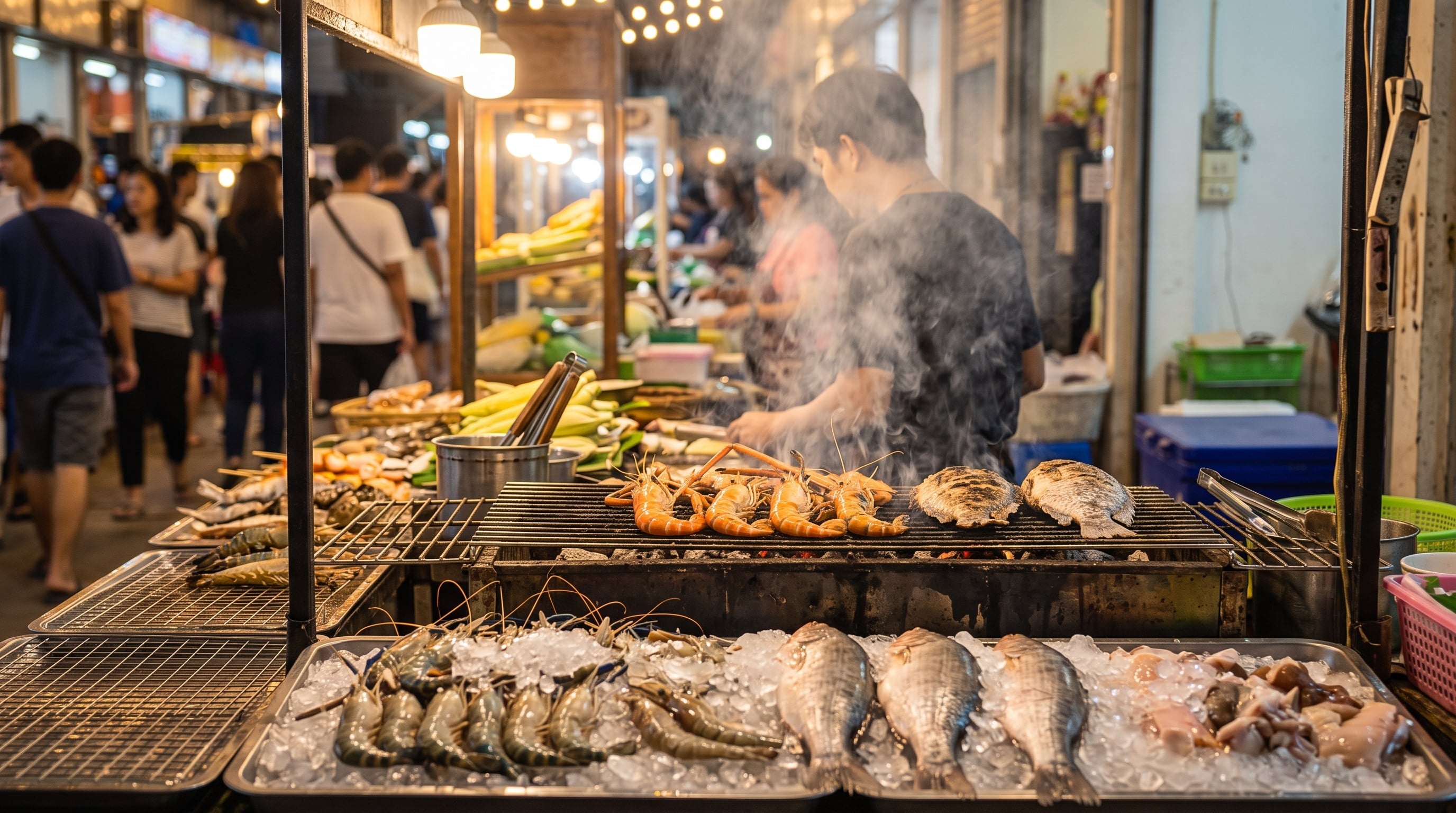
Seafood is one of the market's specific strengths, grilled prawns, fish, and squid turning up at multiple stalls rather than a single standout vendor, with a handful of dedicated seafood restaurants also operating within the complex for a slightly more sit-down experience than the open food court tables.
Several of these seafood-focused spots display the catch on ice at the front of the stall, a practical way to pick exactly what goes on the grill rather than ordering blind off a menu. It is a genuinely popular format here specifically, more so than at the open-air bazaar stalls further up the street.
Classic Thai dishes round out the savoury side, pad thai, som tum papaya salad, and khao soi, the coconut curry noodle soup Chiang Mai is best known for, most running 40 to 80 baht (roughly US$1 to US$2) per plate at the food court stalls specifically.
,regionOfInterest=(1064,768))
,regionOfInterest=(1064,768))
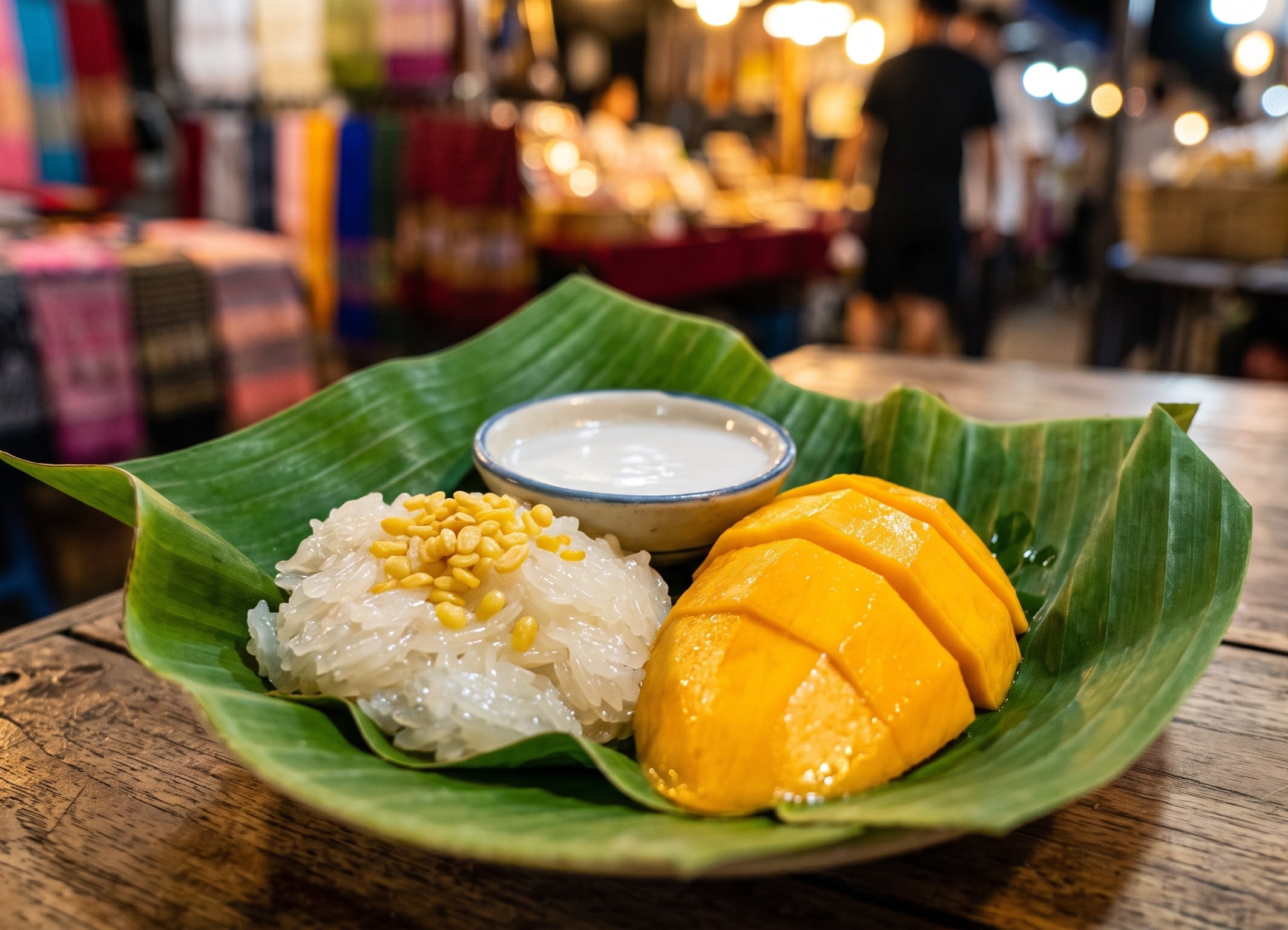
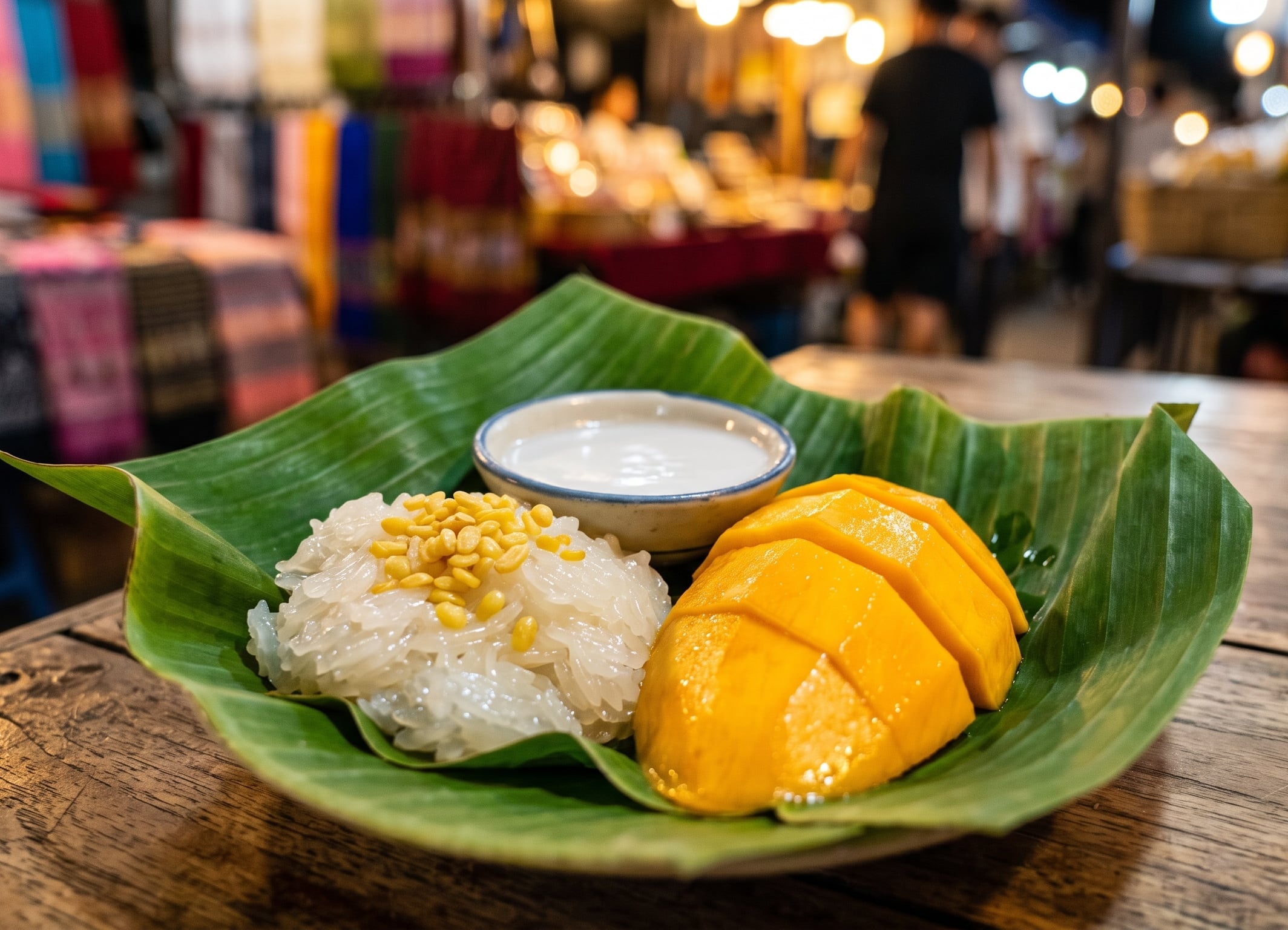
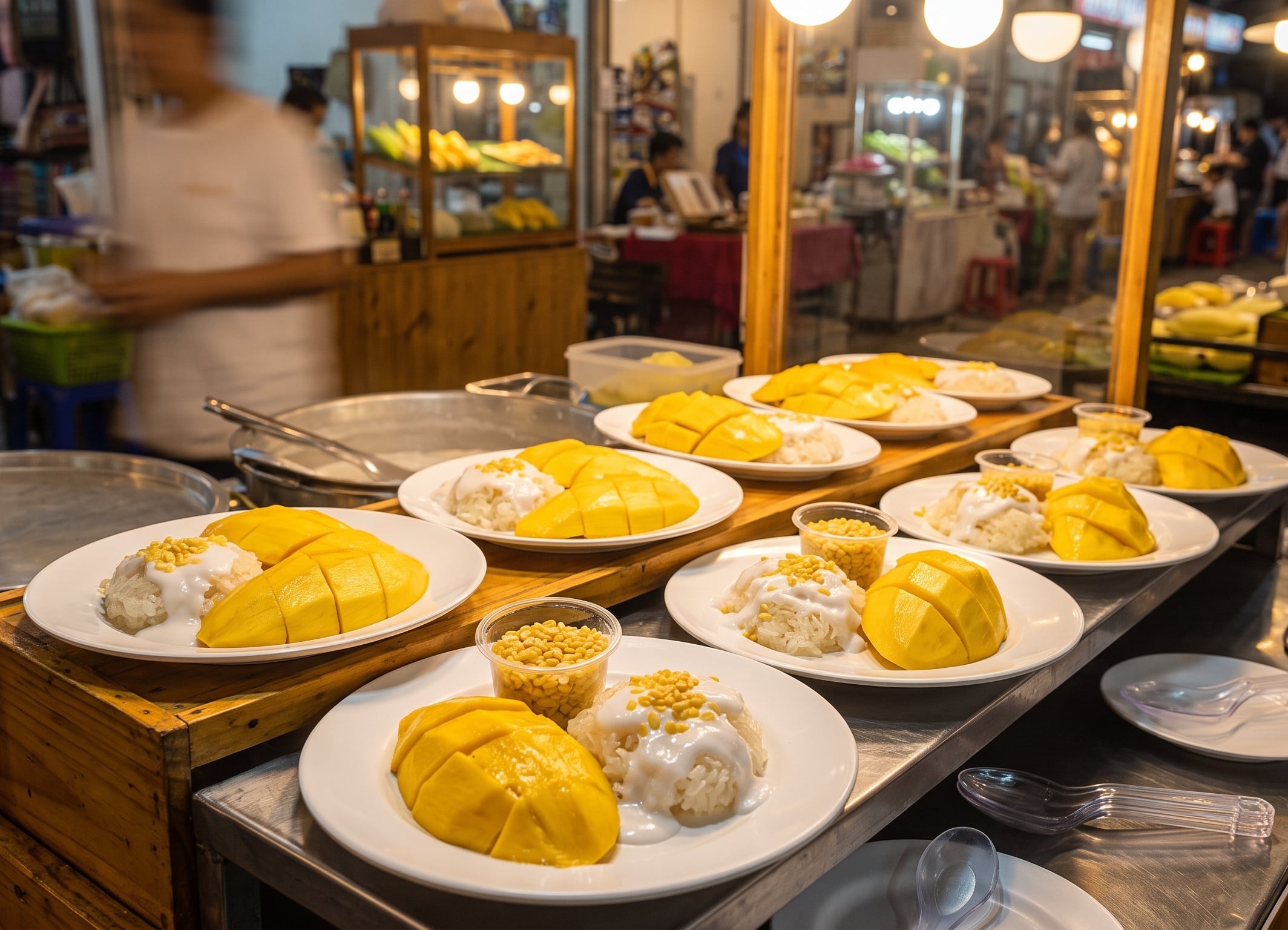
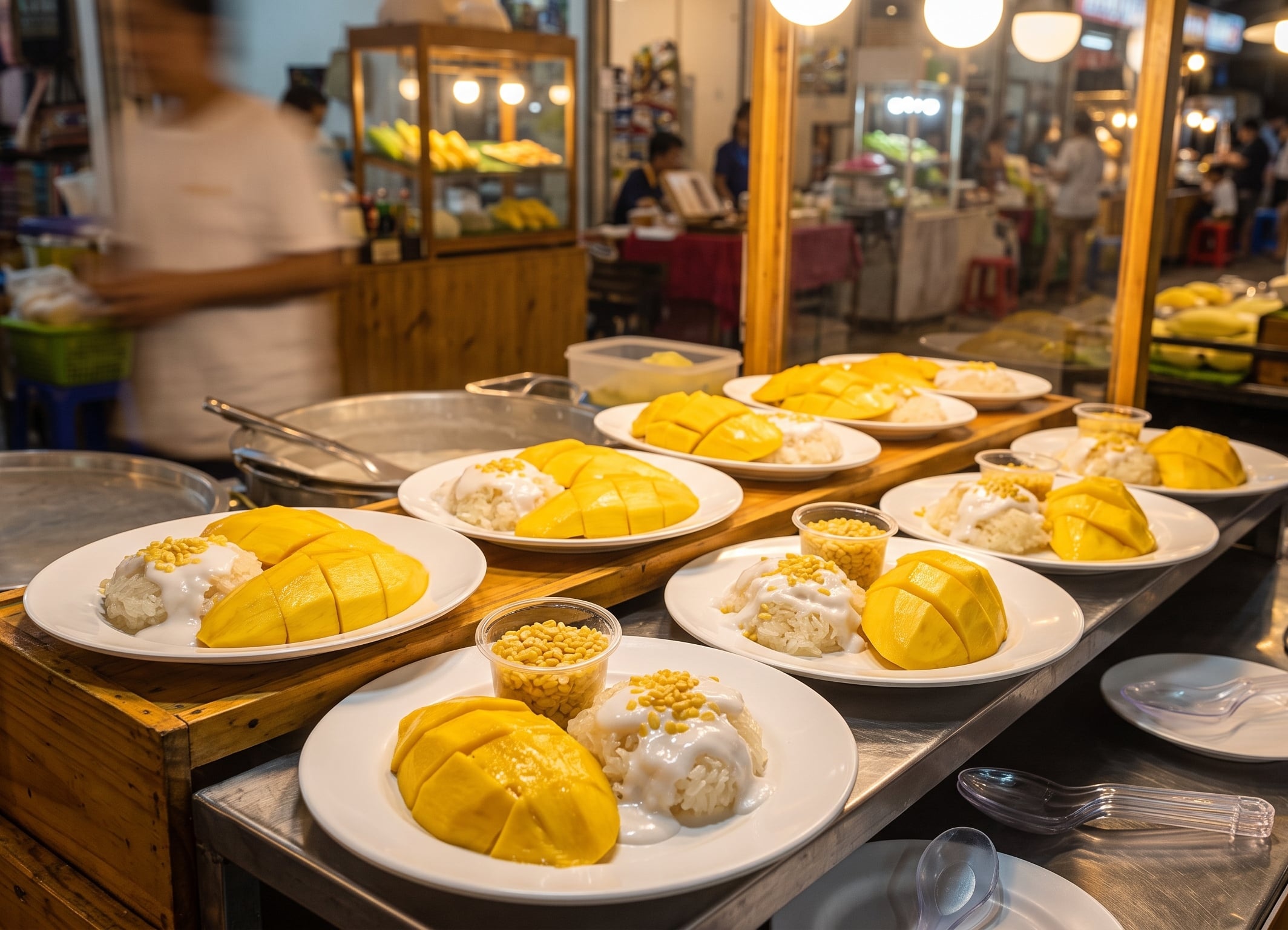
Mango sticky rice is the dessert most visitors come looking for specifically, ripe mango over sweet coconut sticky rice, widely available across several stalls rather than confined to one corner of the market.
Beyond the Thai staples, Anusarn Market's food court also covers Japanese, Malaysian, Indonesian, and Western options, a genuinely wide spread for a market of its size, useful for a group with mixed tastes that cannot agree on Thai food alone for the evening.
| Food Type | Where to Find It | Typical Price (THB) |
| Grilled seafood | Dedicated seafood stalls and restaurants | 100 to 300, priced by weight |
| Pad Thai, khao soi, som tum | Open food court stalls | 40 to 80 |
| Mango sticky rice | Multiple dessert stalls | 40 to 60 |
| Japanese, Malaysian, Western dishes | Sit-down restaurant stalls | 80 to 200 |
A handful of the sit-down seafood restaurants inside the complex, among them Best Taste Kitchen, Ping Ping Restaurant, and a Sea Food Restaurant tucked further along the same row, offer table service and printed menus for anyone who would rather sit down properly than eat standing at a food court counter. Prices at these run a little higher than the open stalls but still well below a typical hotel restaurant.
A full meal for one, a main dish plus a drink, generally lands under 100 baht (about US$3) at the food court stalls specifically, one of the more genuinely affordable ways to eat well in the Night Bazaar district for anyone not set on a sit-down restaurant experience.
,regionOfInterest=(1376,768))
,regionOfInterest=(1376,768))
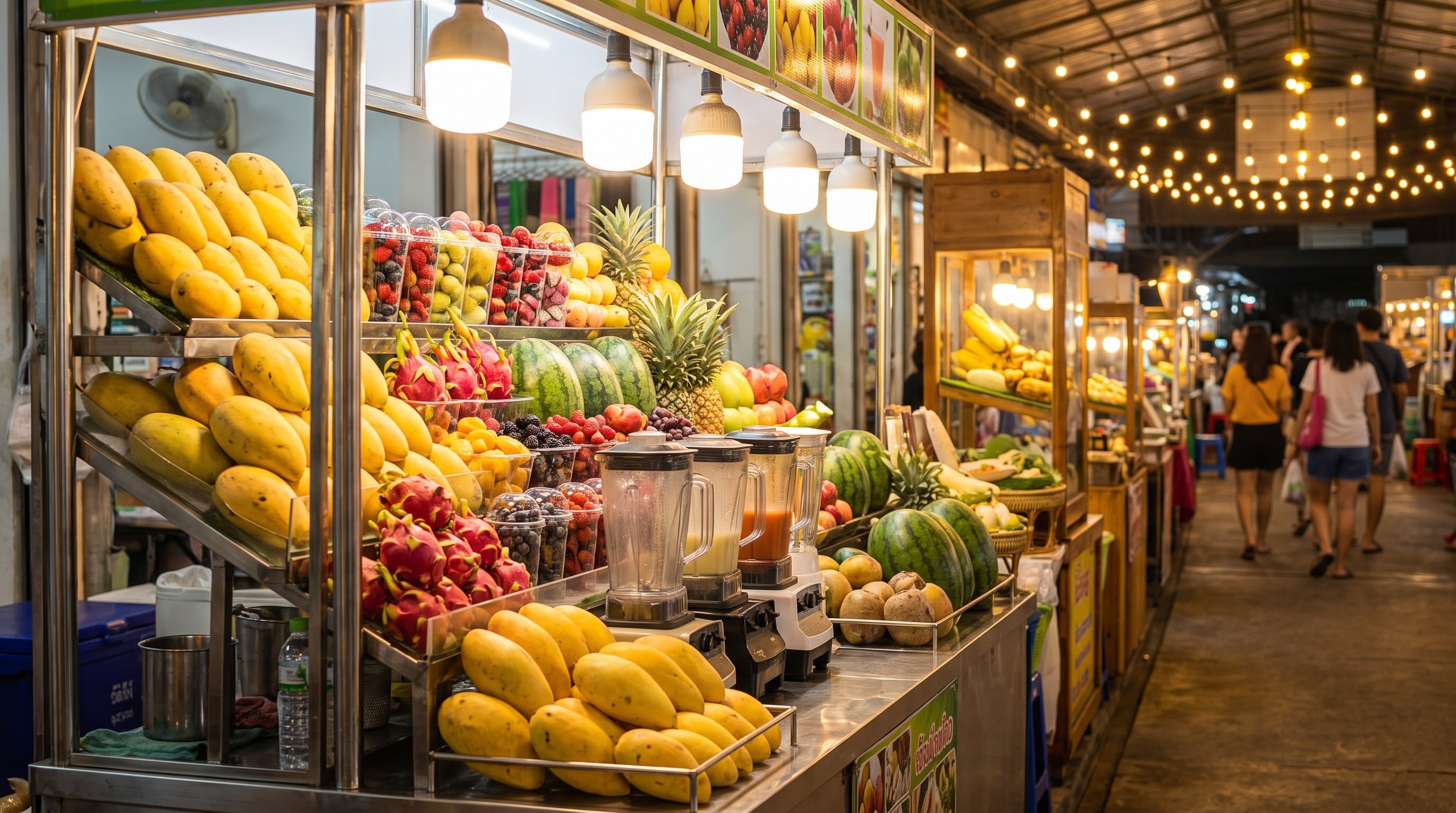
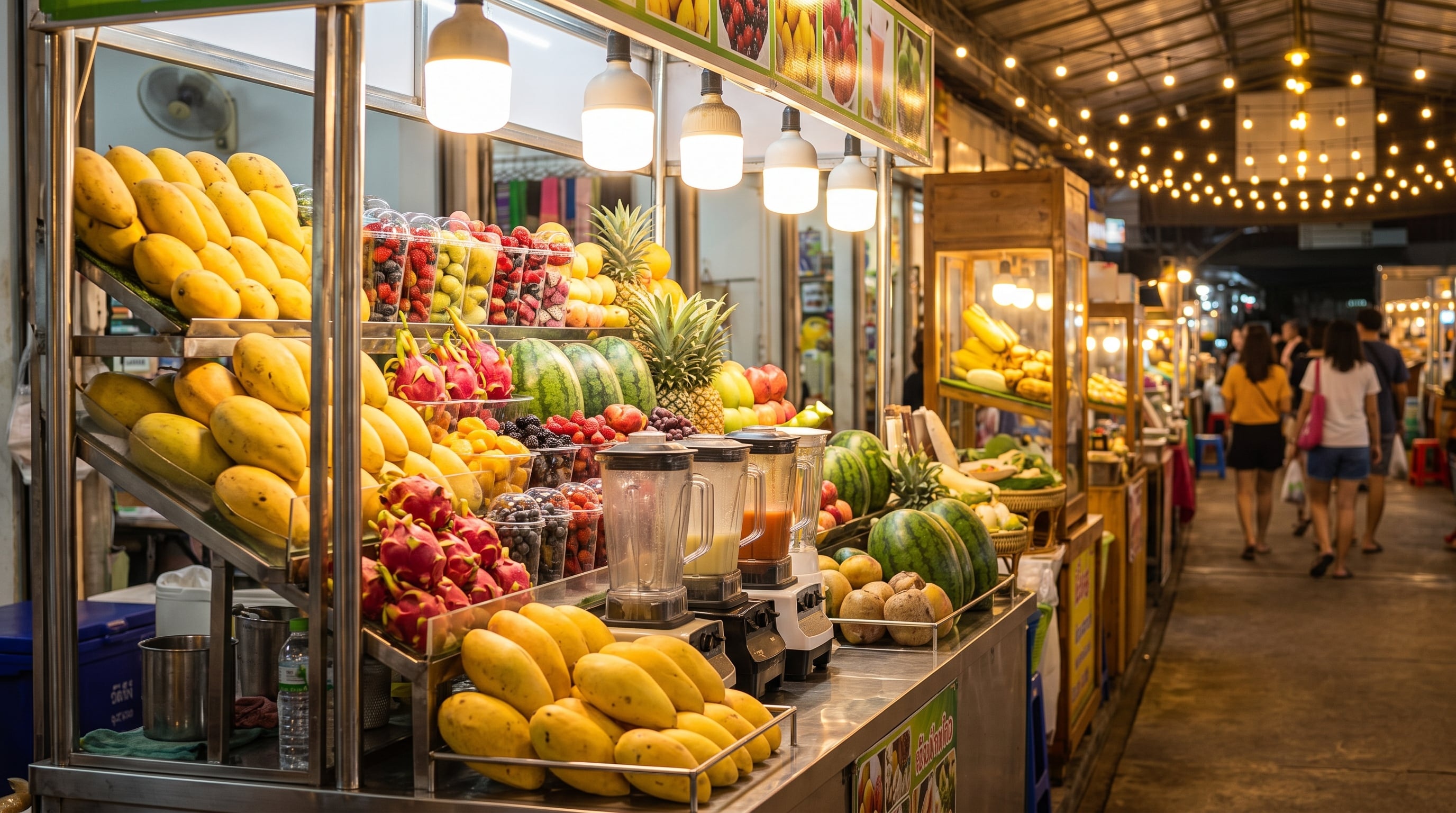
Fresh fruit shakes are sold throughout the market, mango, watermelon, and dragon fruit among the most common, a cooling option after walking through a warm, crowded food court. Thai iced tea, thick and sweet with condensed milk, is another easy, popular pick from the same drink stalls.
Local beer is widely available at the sit-down restaurants and several of the open bar-style counters scattered through the market, generally the most affordable alcoholic option compared with a hotel bar, useful context for anyone budgeting an evening out rather than committing to a single sit-down venue for drinks.
Bottled water is sold throughout the market at prices well below what a hotel minibar charges, worth picking up early in the visit given how much walking a full evening through the stalls generally involves, especially during the hotter months of the year, roughly March through May.
The market itself isn't the only reason to linger in this corner of the Night Bazaar district. A couple of things nearby are worth folding into the same evening.
,regionOfInterest=(1376,768))
,regionOfInterest=(1376,768))
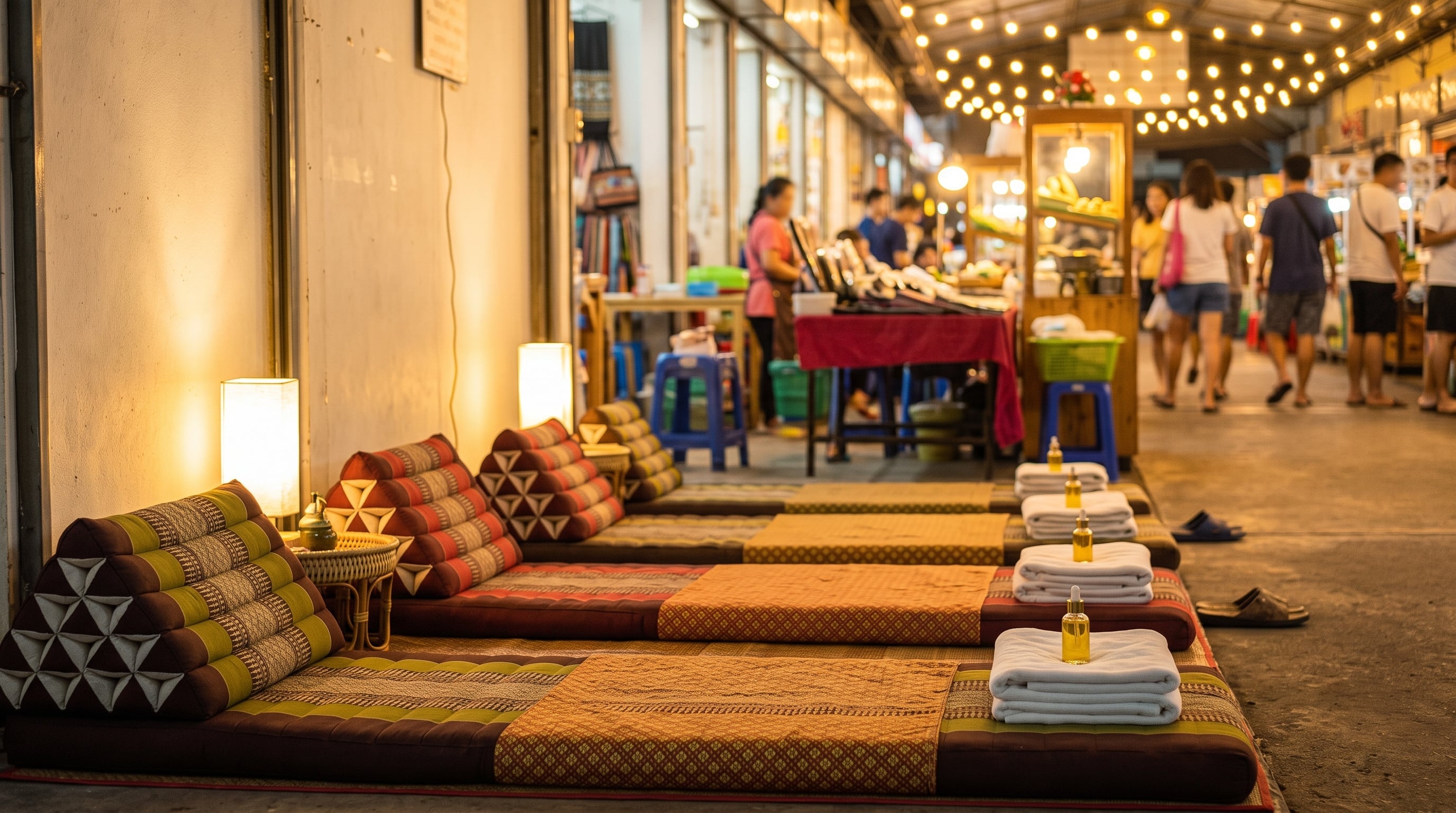
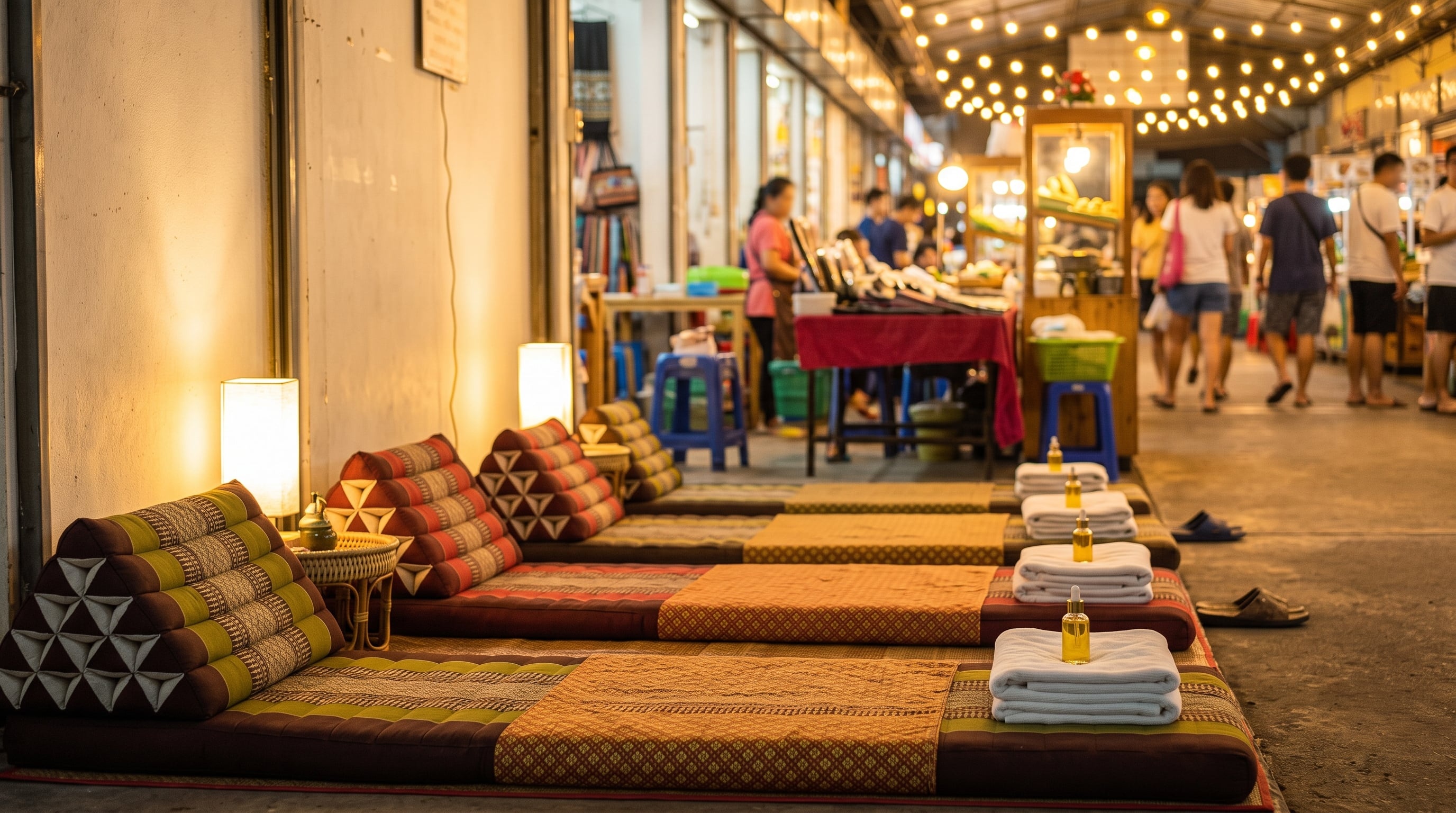
Massage studios sit throughout the market too, a foot massage or a full-body session slotted in between shopping and dinner rather than requiring a separate trip to a dedicated spa elsewhere in the city. Sessions typically run in half-hour or one-hour blocks, priced well below what the same treatment costs at a hotel spa.
,regionOfInterest=(1064,768))
,regionOfInterest=(1064,768))
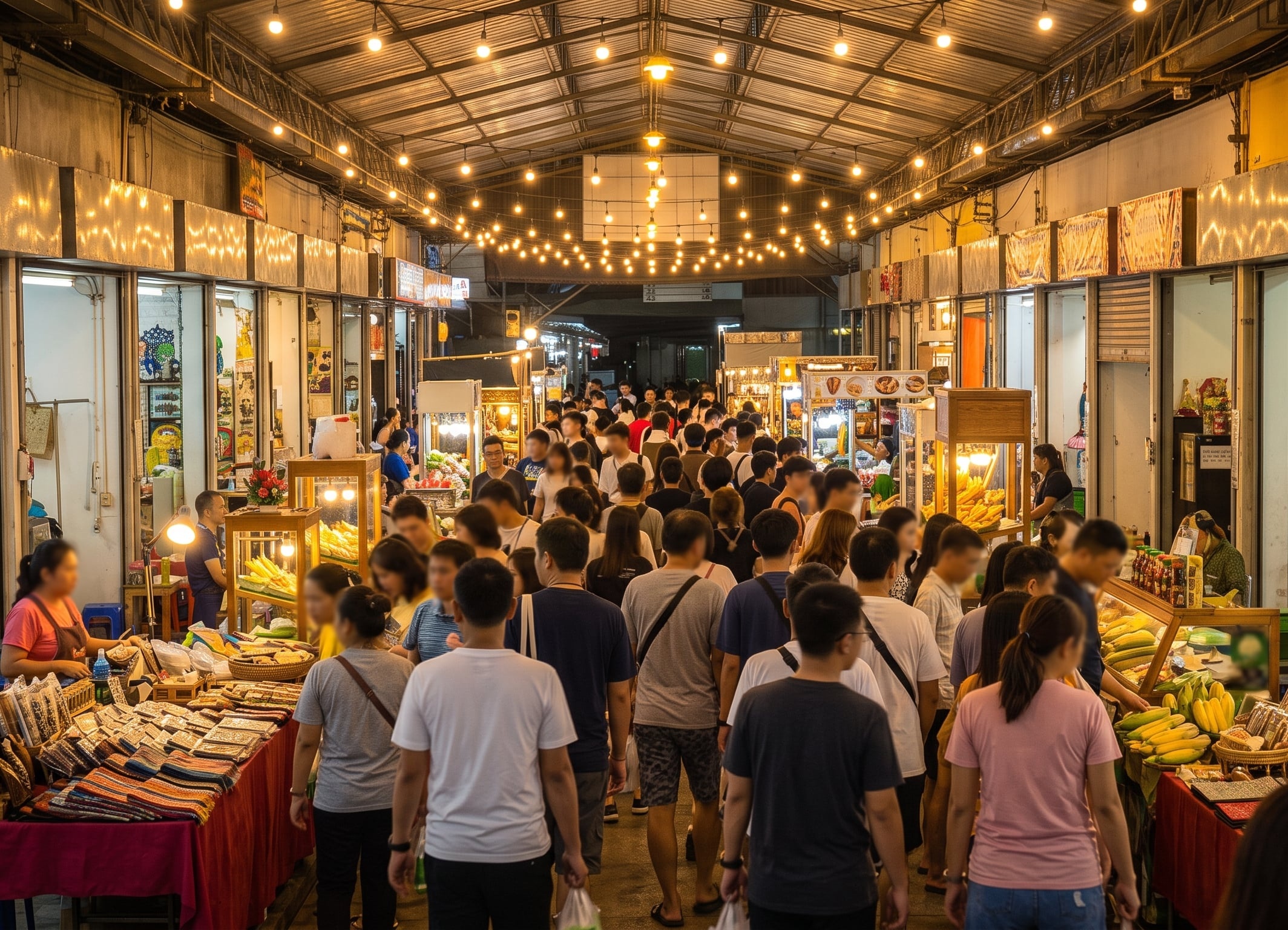
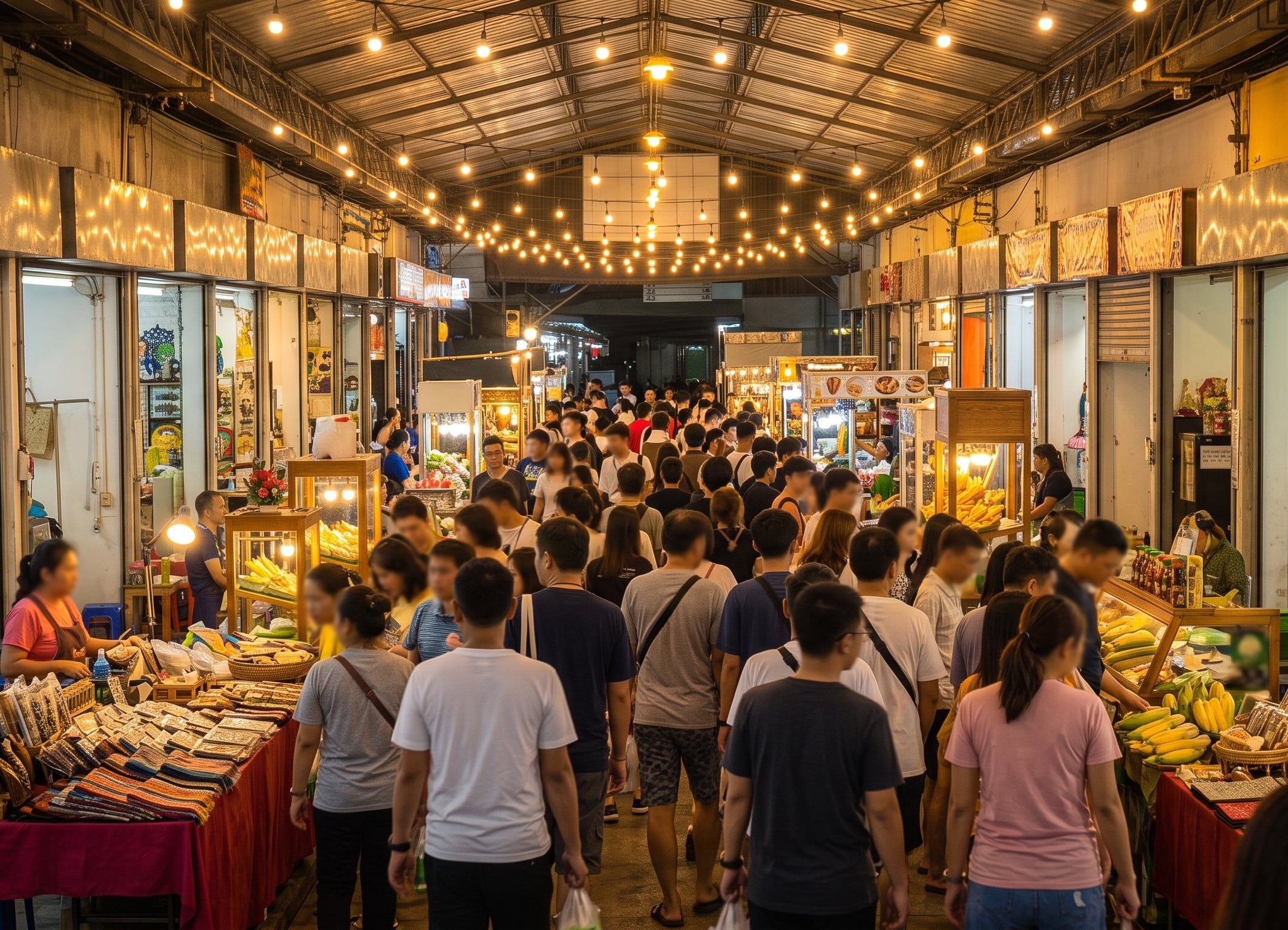
Kalare Night Bazaar and the wider Chiang Mai Night Bazaar along Chang Klan Road sit close enough to Anusarn Market that an evening can genuinely cover all three, starting with shopping at one, dinner at another, and dessert or a massage to close things out, all within a short walk of each other.
Kalare leans a little more toward cultural performances alongside its own food court, Thai dance shows on a small stage some evenings, while the open-air bazaar stalls further along Chang Klan Road run longer and more densely packed with clothing and souvenir vendors than the market's own shopping section. Treating the three as one connected precinct rather than separate destinations makes for the most efficient evening.
,regionOfInterest=(1376,768))
,regionOfInterest=(1376,768))
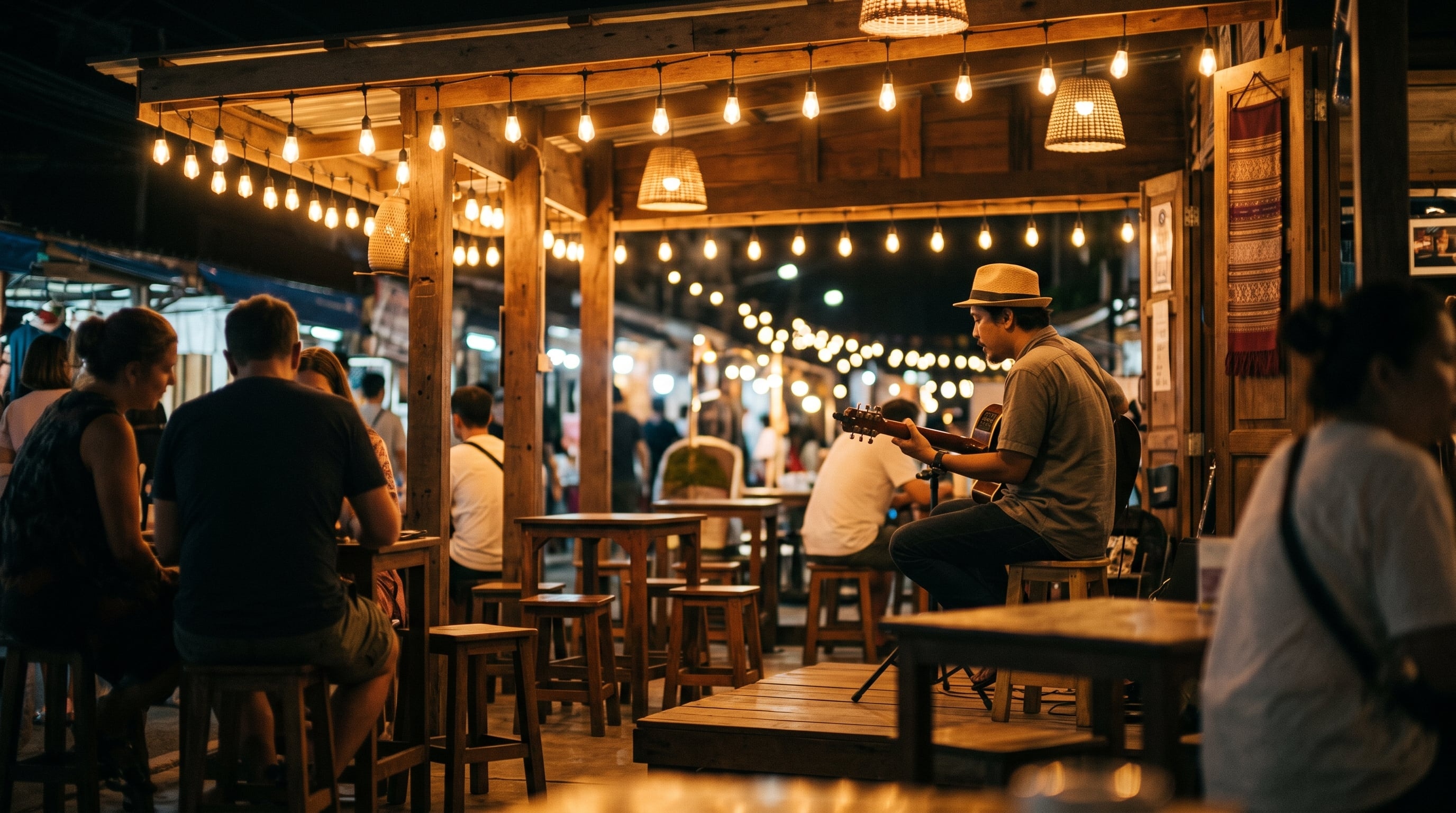
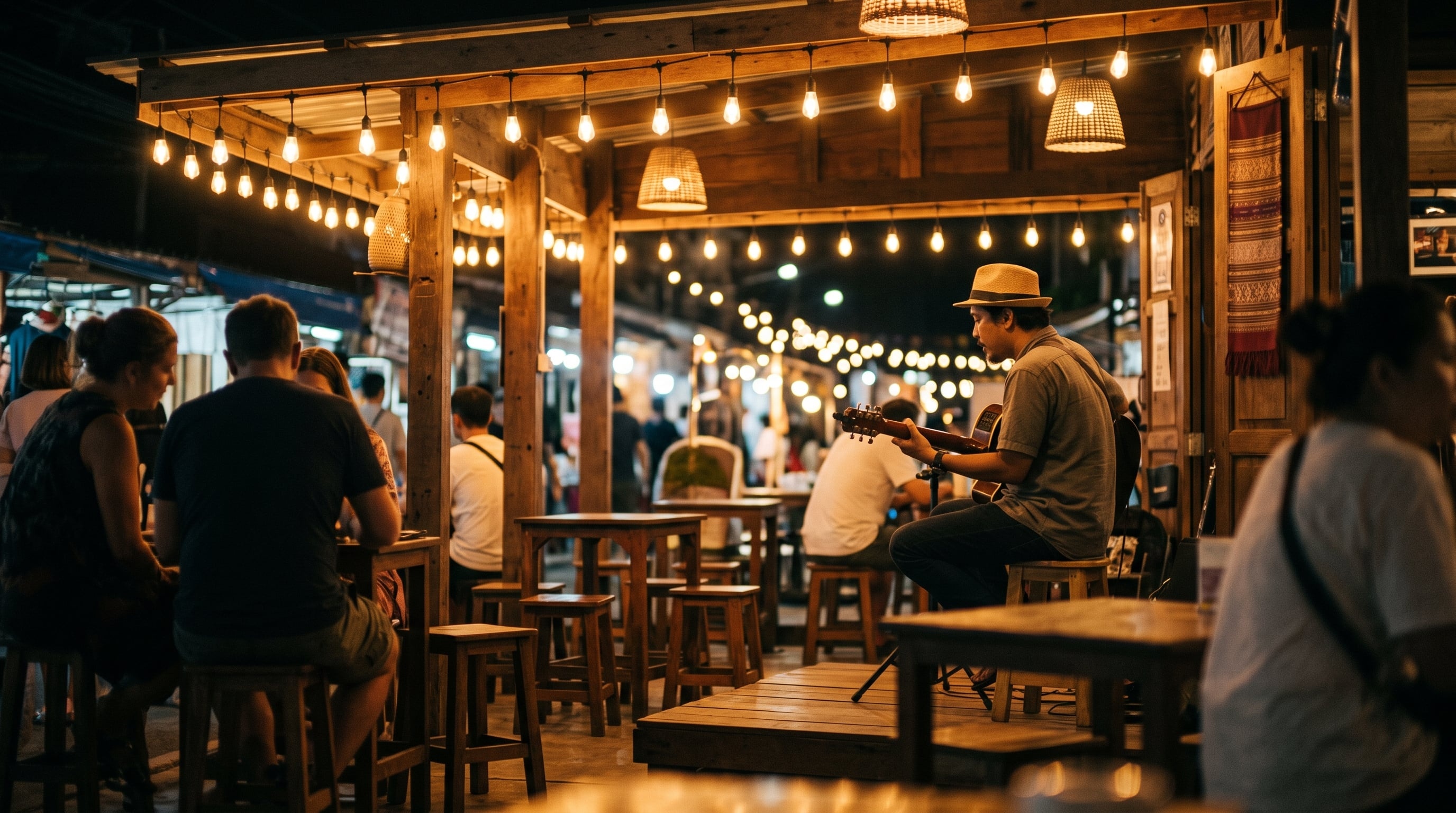
A few small bars along the edges of the district run live acoustic sets most evenings, a low-key option for a drink after dinner without heading all the way to a rooftop venue. It is a casual, low-cost way to extend the evening a little further before heading back to the hotel.
None of these extras require advance booking, worth knowing for anyone travelling without a fixed evening plan. Walking the district once and deciding on the spot which bar, massage studio, or dessert stall looks appealing is the more common approach than researching specific venues ahead of time, and it usually turns up something worth returning to on a second visit.
,regionOfInterest=(1376,768))
,regionOfInterest=(1376,768))
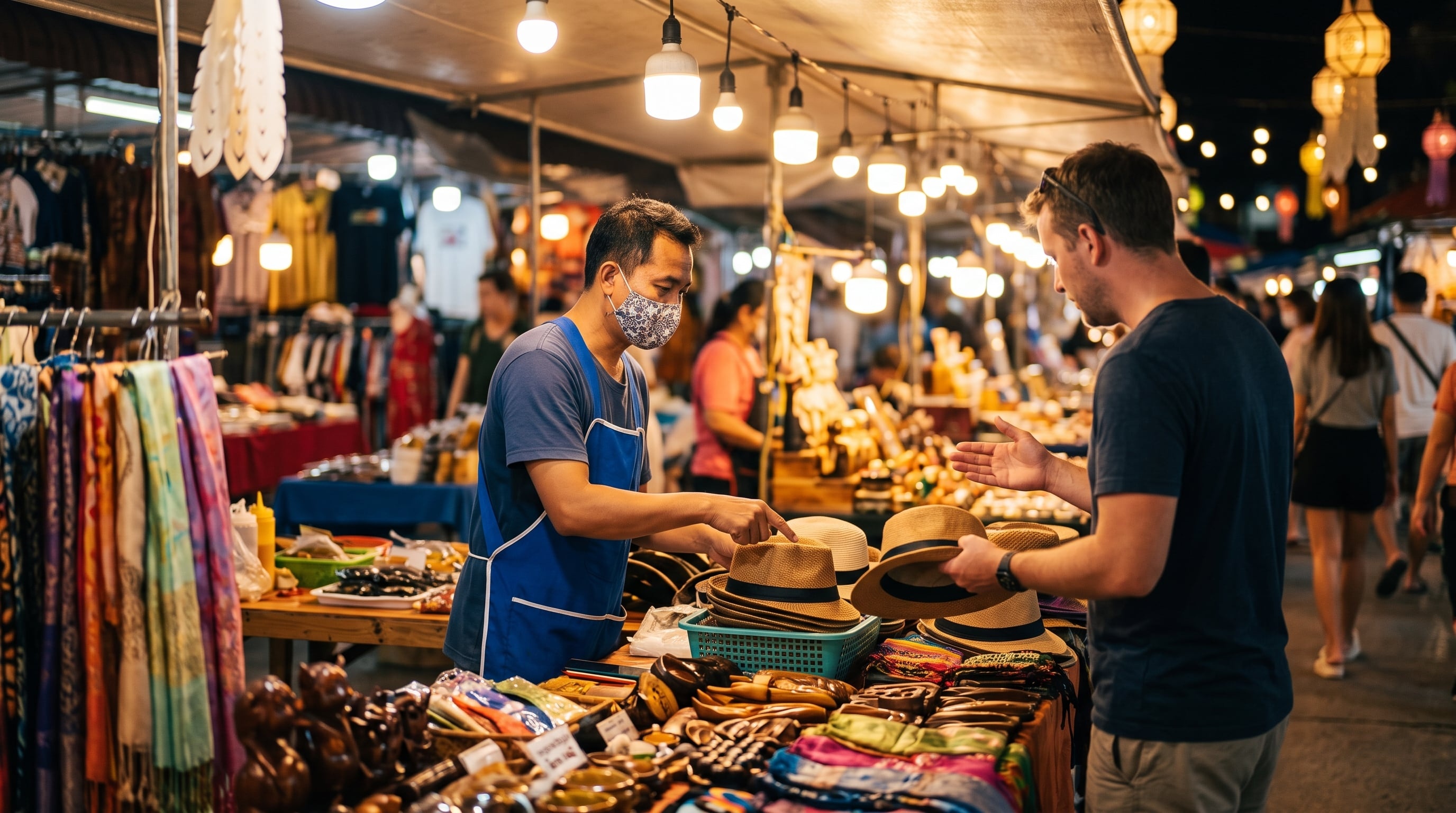
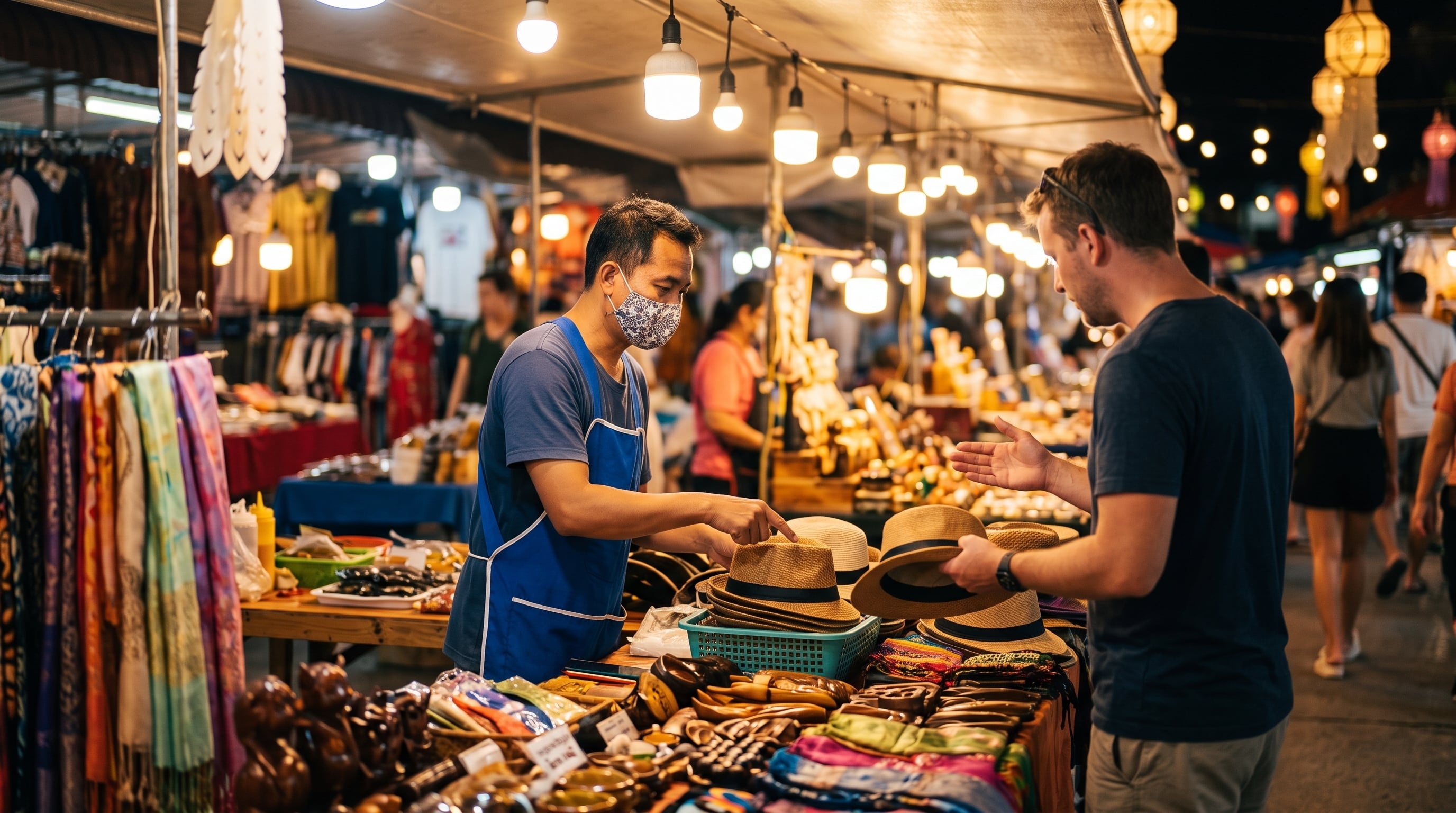
Bargaining is expected at most of Anusarn Market's shopping stalls, though it works best as a friendly back and forth rather than an aggressive negotiation, the same etiquette that applies across Chiang Mai's markets generally.
Weeknights tend to run a little quieter than weekends, worth keeping in mind for anyone who prefers browsing without shouldering through a thick crowd, though the market rarely feels genuinely empty at any point once evening properly sets in.
Weather is worth factoring in too. Chiang Mai's rainy season, roughly June through October, brings sudden evening downpours, and the market's covered walkways make it a more comfortable choice on those nights than the fully open-air stretches of the bazaar further up the road.
A handful of small details make a first visit noticeably smoother. Payment and staying connected are the two that come up most often.
,regionOfInterest=(1064,768))
,regionOfInterest=(1064,768))
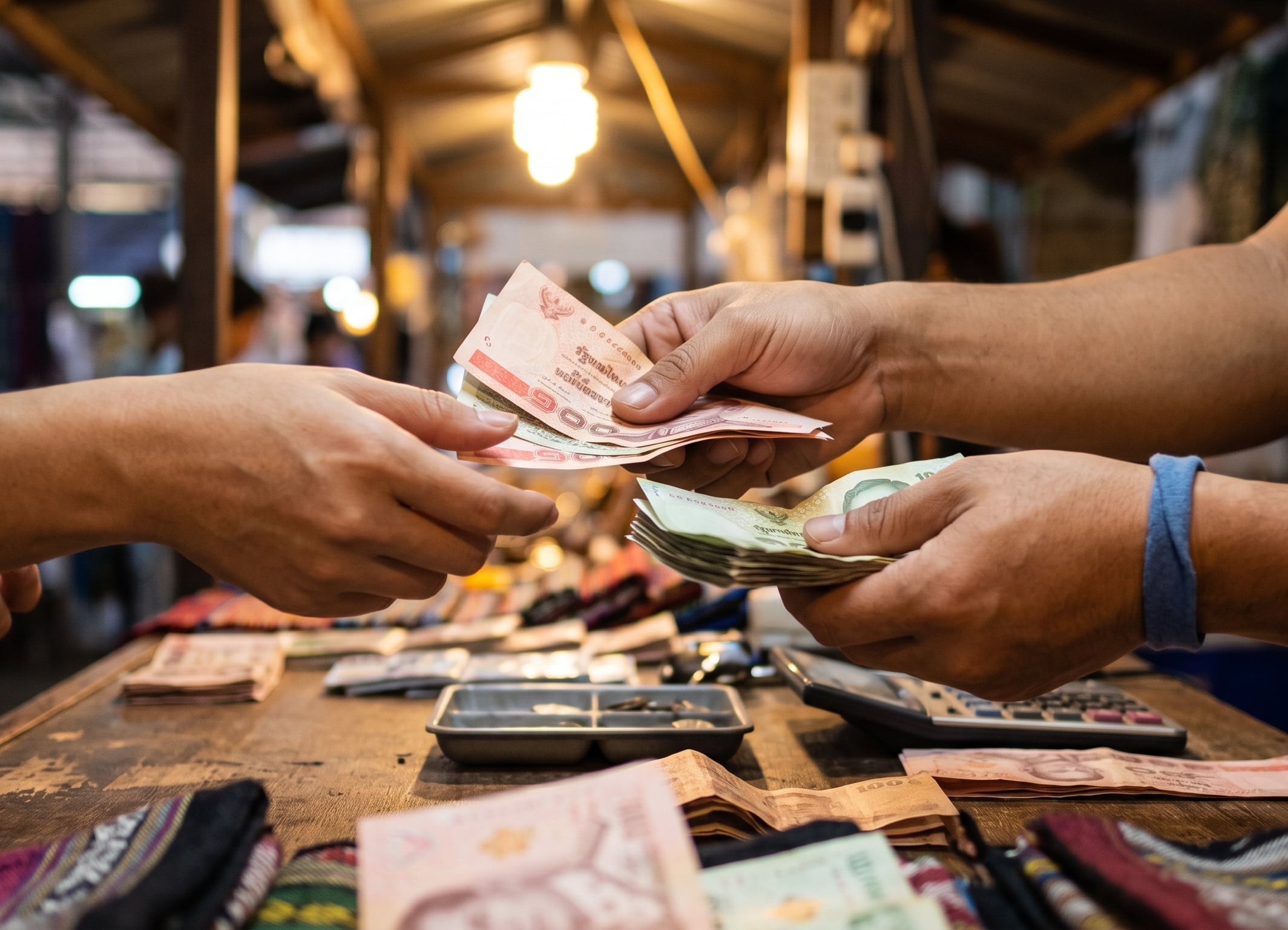
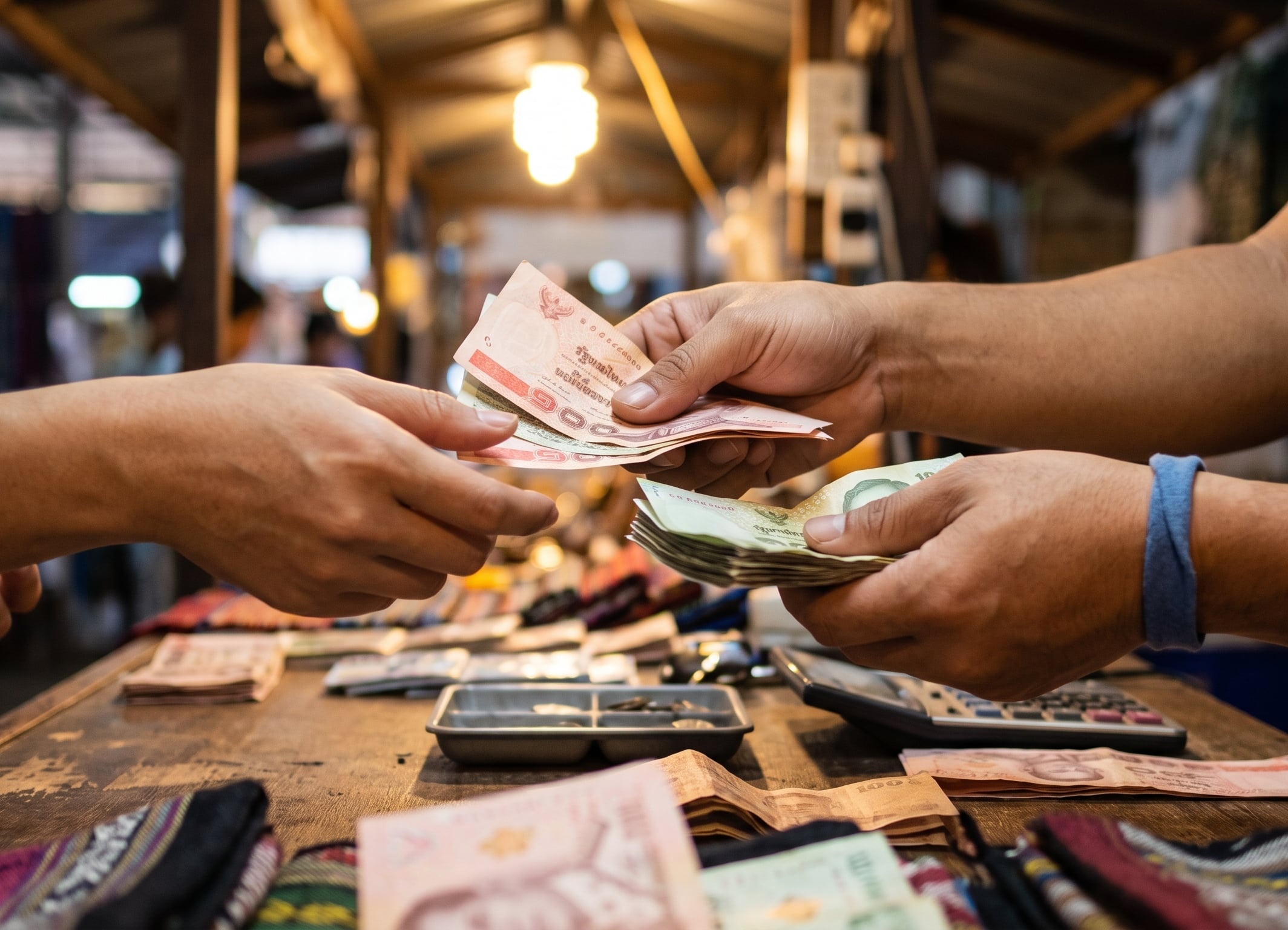
Cash is still the more reliable way to pay at most stalls, small shopping vendors and food stalls alike, though a growing number now accept mobile payment through Thai banking apps. Foreign cards are rarely an option outside the sit-down restaurants, so it is worth withdrawing enough baht before heading over rather than relying on a stall having a card reader.
The covered walkways help with crowd flow but the aisles between food stalls can still get tight during peak hours, worth keeping bags zipped and in front rather than slung loosely over one shoulder, ordinary pickpocket-prevention common sense rather than any specific risk unique to this market.
Toilets are available within the complex for a small fee, a few baht, standard practice across most Thai markets rather than anything specific to Anusarn Market. Seating at the food court is shared and communal, so it is normal to sit at a table with a dish bought from a different stall than the one a neighbouring diner ordered from.
,regionOfInterest=(1376,768))
,regionOfInterest=(1376,768))
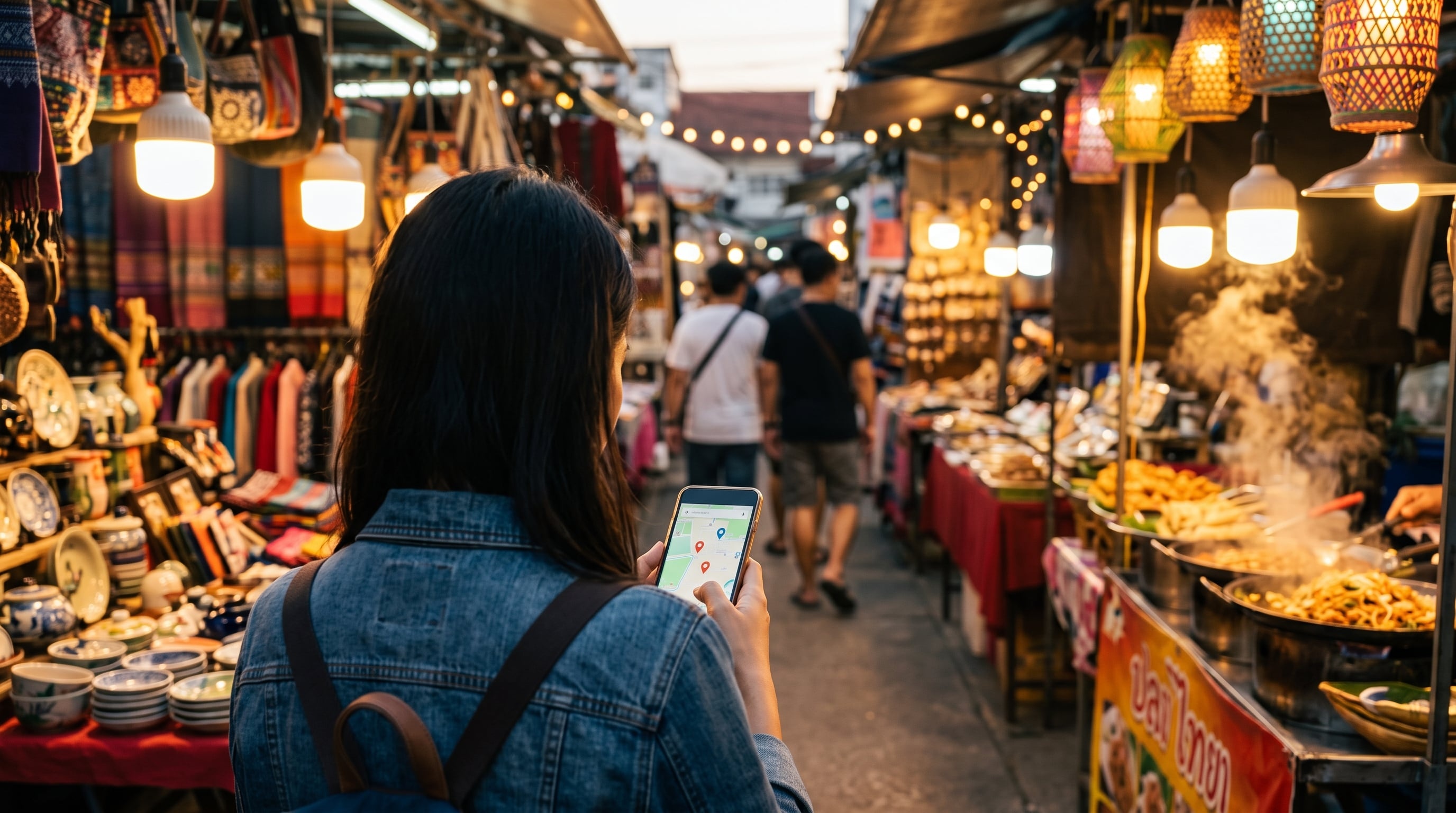
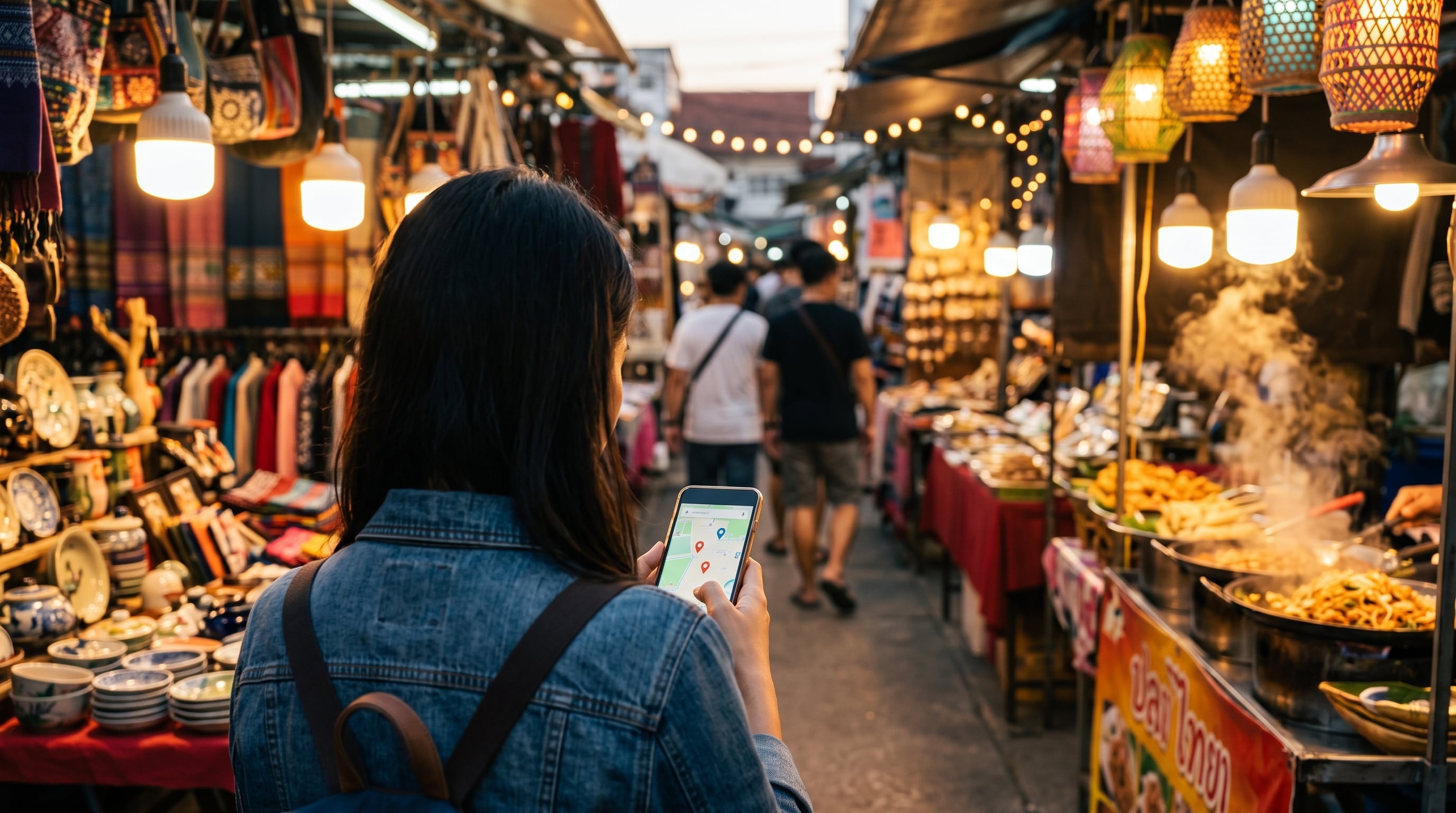
English is spoken well enough at most stalls to place an order or negotiate a price without difficulty, though pointing at a dish or item is always a reliable backup. A short list of common Thai numbers on a phone is a small extra help for anyone planning to bargain more than once or twice.
Mobile signal and free wifi both work reliably throughout the covered sections, useful for pulling up a translation app or checking a Grab fare back to the hotel once the evening winds down, though a downloaded offline map is still a sensible backup in the busier, more crowded aisles later at night.
An evening built around the market goes more smoothly with a base close enough that shopping and dinner do not require arranging transport there and back. Here is what that kind of base actually offers beyond the short walk.
,regionOfInterest=(1771.5,1162.5))
,regionOfInterest=(1771.5,1162.5))
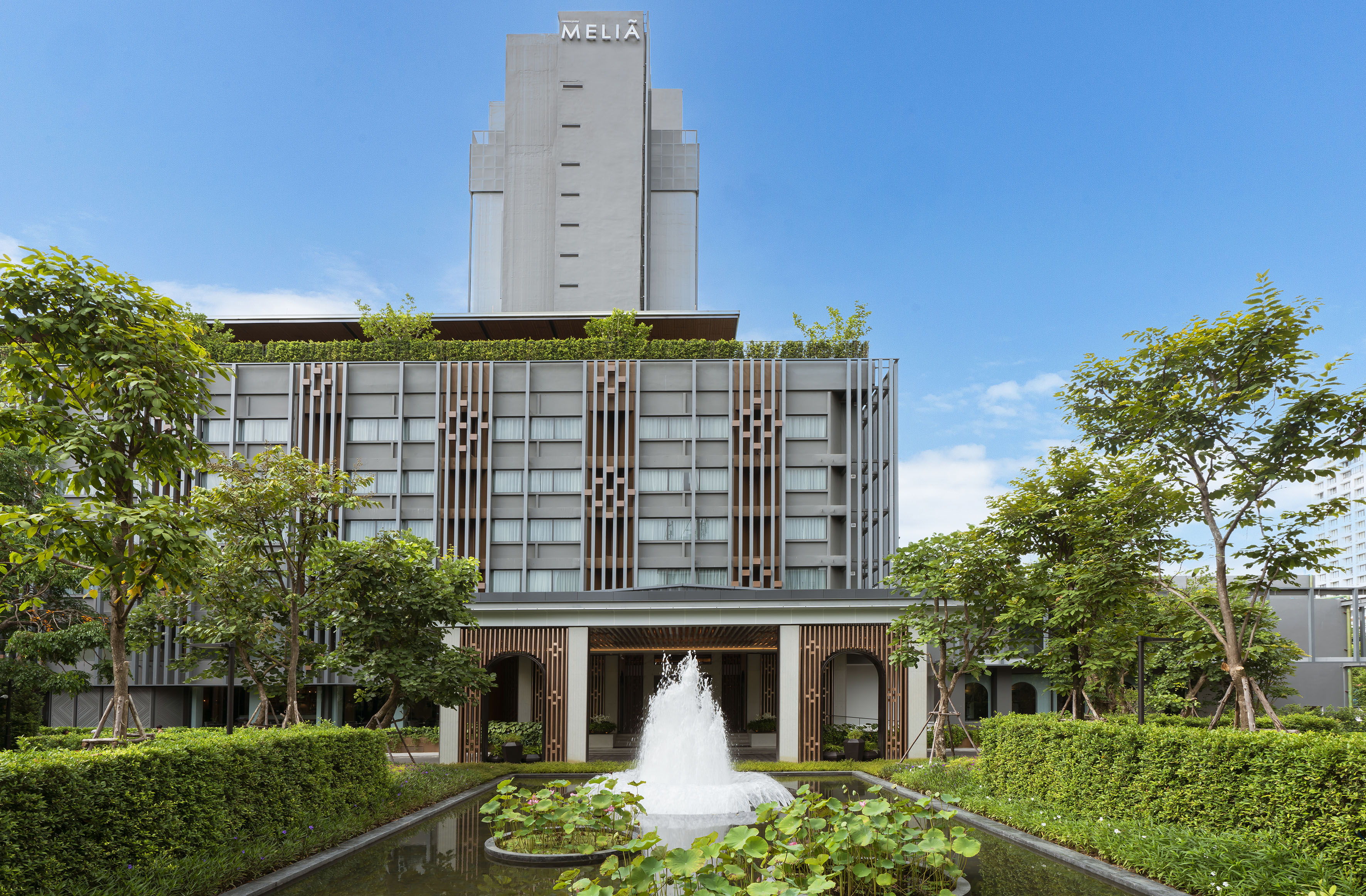
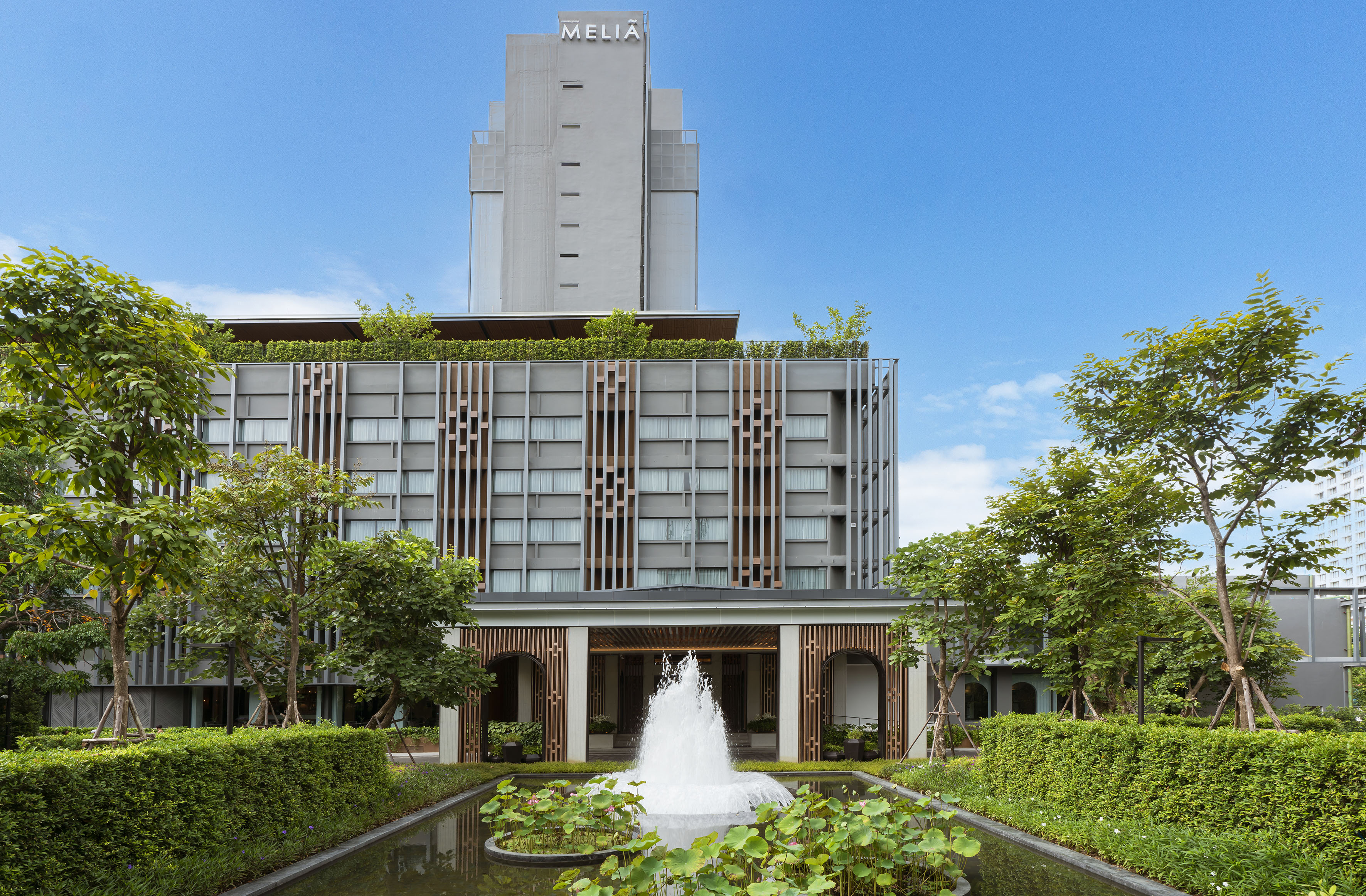
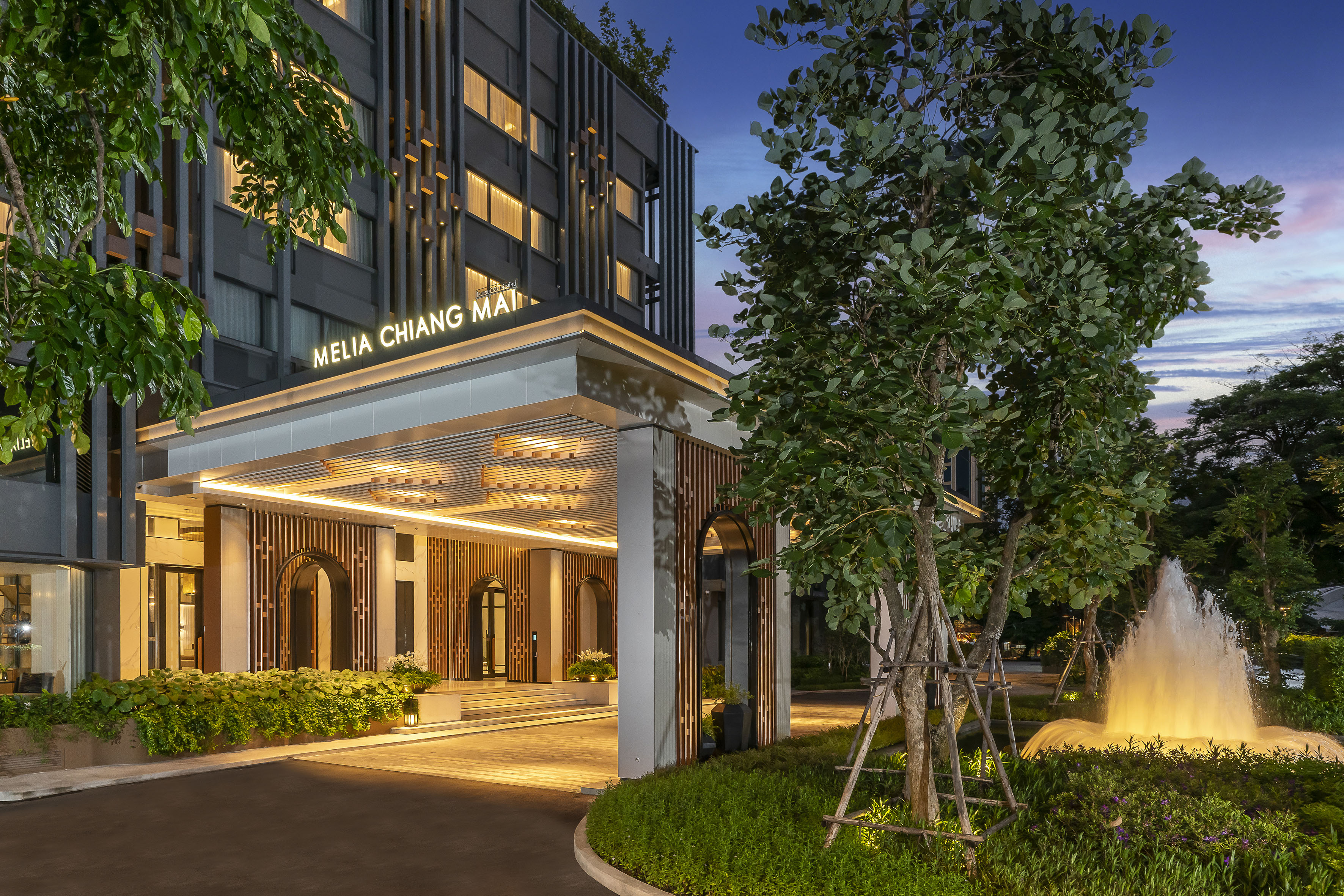
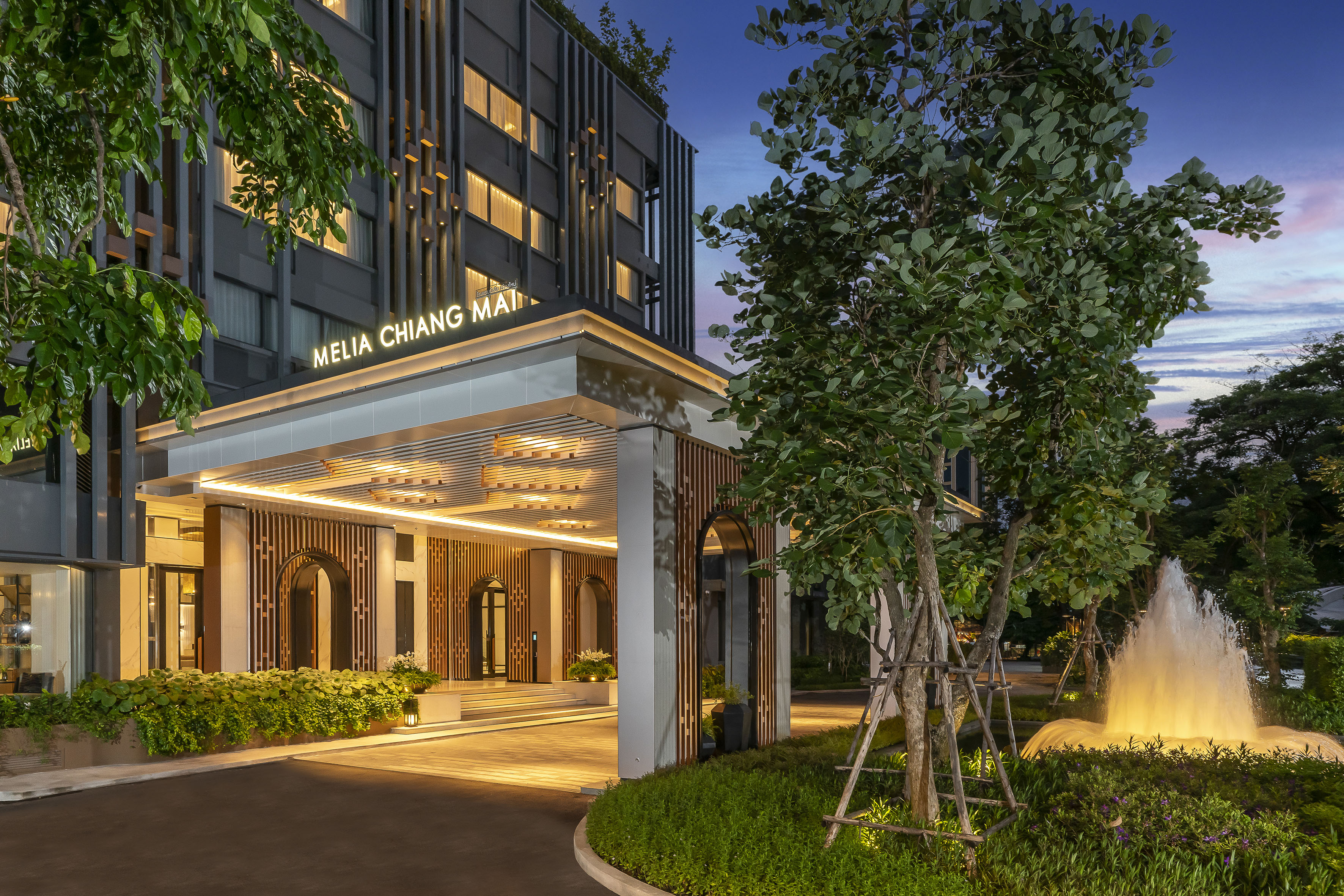
Meliá Chiang Mai blends a Spanish sensibility with a Northern Thai soul, real design language rather than a marketing line, on Charoen Prathet Road at the edge of the Night Bazaar precinct, close enough to Anusarn Market that an evening of shopping and dinner does not require arranging transport there and back.
Rooms on the higher floors of the hotel's 22-storey tower look straight down over the same market stalls a guest might spend the evening walking through, a literal preview of the night ahead before ever stepping outside.
The hotel is itself a significant local employer in the same neighbourhood the market sits in, growing from around 150 staff at opening to roughly 240 total employees, part of the same local economy that fills the district's own market stalls every evening.
,regionOfInterest=(1771.5,1181.5))
,regionOfInterest=(1771.5,1181.5))
That proximity matters more than it might sound, a guest can head down after checking in, work through the market's food stalls for dinner, and be back in the room within a short walk rather than budgeting for a songthaew ride each way.
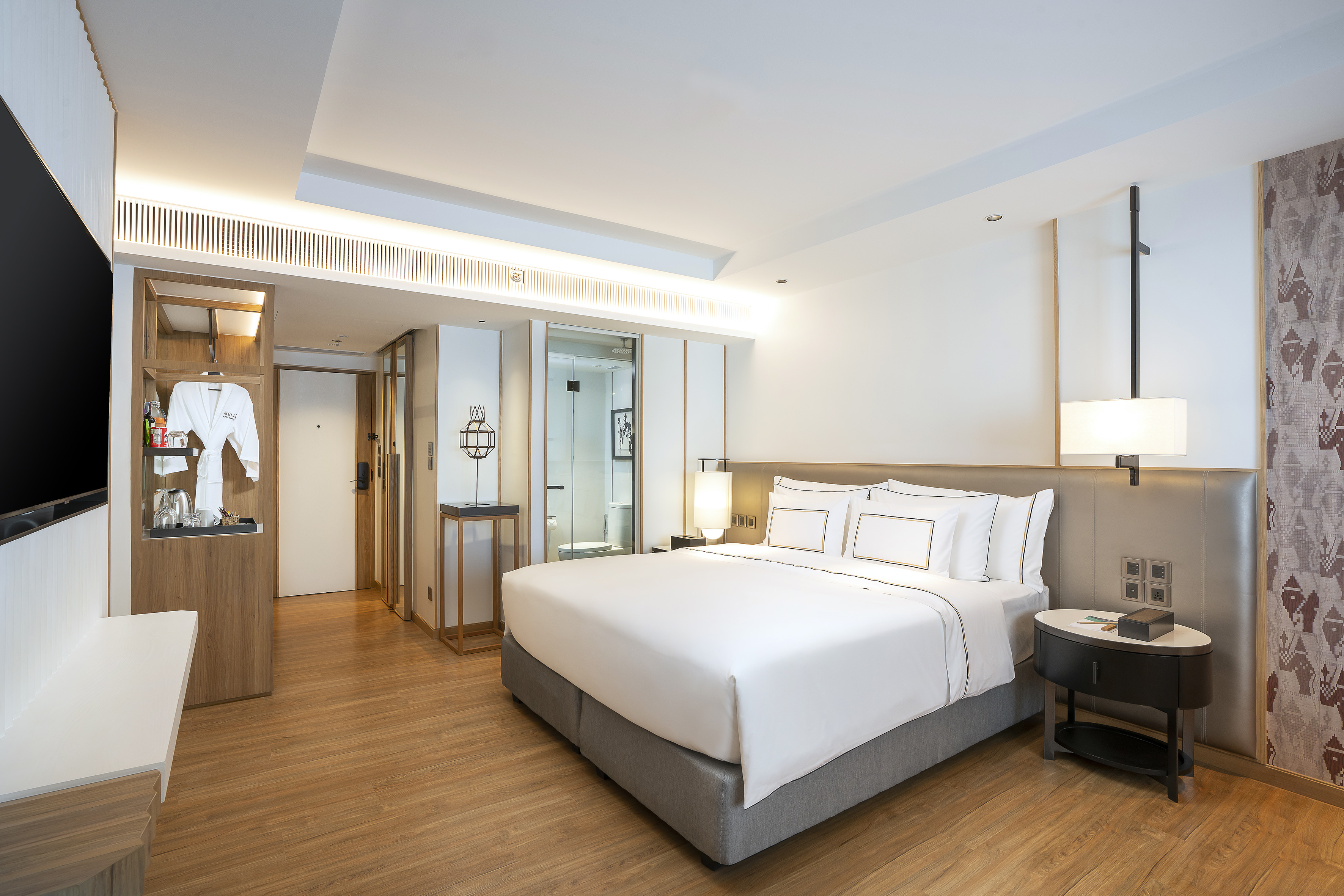
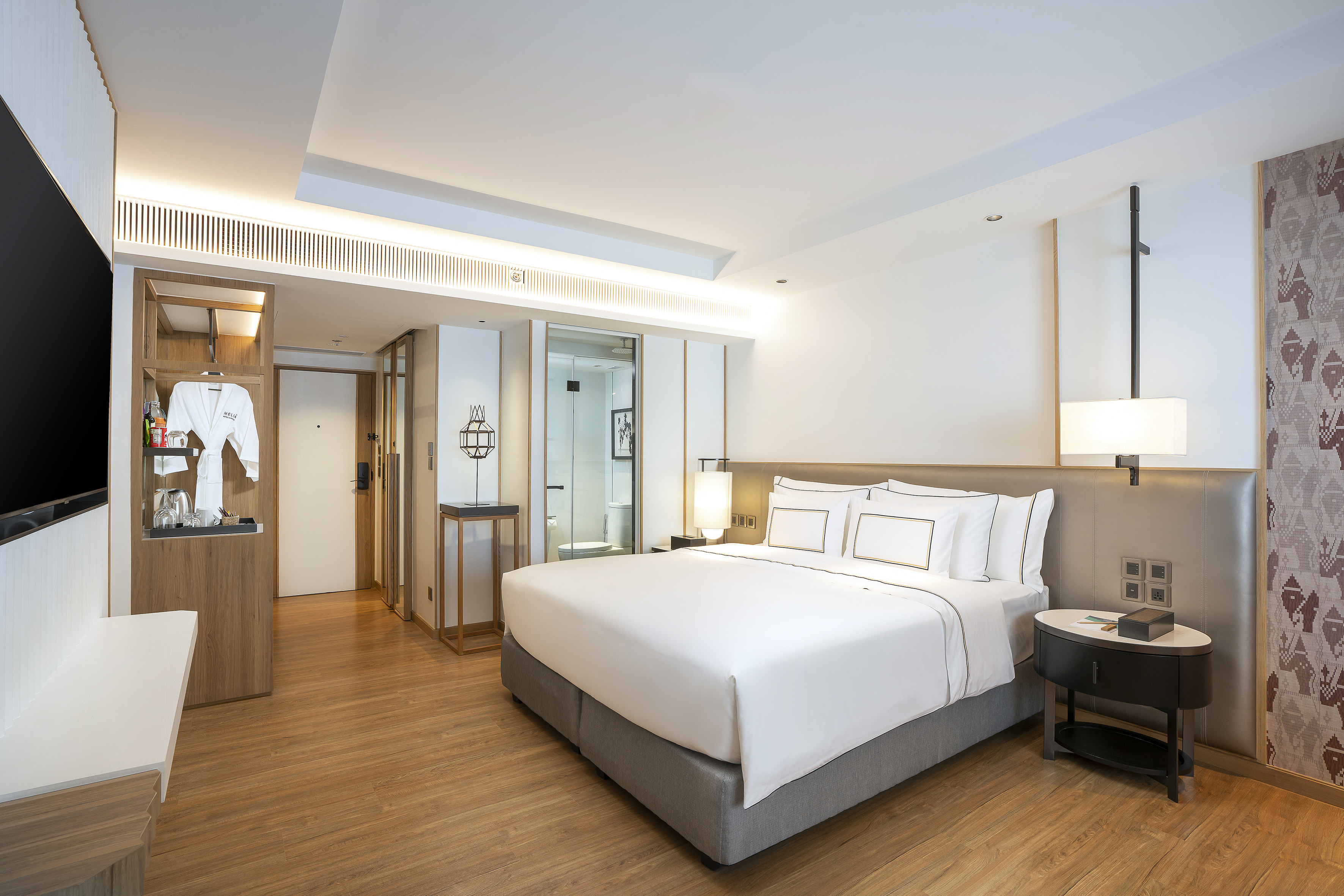
The Meliá Room, 30 square metres with a city view, and the Deluxe Room, 36 square metres with a patio view and a window-side sofa, both come with an in-room safe as standard, useful for anyone bringing back smaller purchases like jewellery rather than leaving them loose in a suitcase. The Deluxe Room's rain-shower bathroom is worth the price gap too, for anyone planning more than one evening at the market during the same trip.
Guests wanting more space after a day of walking and shopping can step up instead to the Premium Room, 44 square metres with a king or twin layout and teakwood bedside tables, which adds a larger sitting area to unwind in before heading back out for the evening.
,regionOfInterest=(1771.5,1181.5))
,regionOfInterest=(1771.5,1181.5))
Guests who want a bit more distance from the street-level buzz of the market after dark can book The Level Suite, 62 square metres on the upper floors with Thai-inspired decor and access to The Level lounge and its own private check-in.
The Level Lounge runs cocktails and canapes from 5:00 PM to 7:00 PM, a quieter alternative to the market's food stalls for anyone who wants one relaxed evening mid-trip before heading back out for a second night of browsing.
Late check-out to 2:00 PM, subject to availability, also suits a late night spent at the market's cabaret show or Muay Thai arena, since there is no rush to be out of the room early the next morning.
,regionOfInterest=(2150,1433.5))
,regionOfInterest=(2150,1433.5))
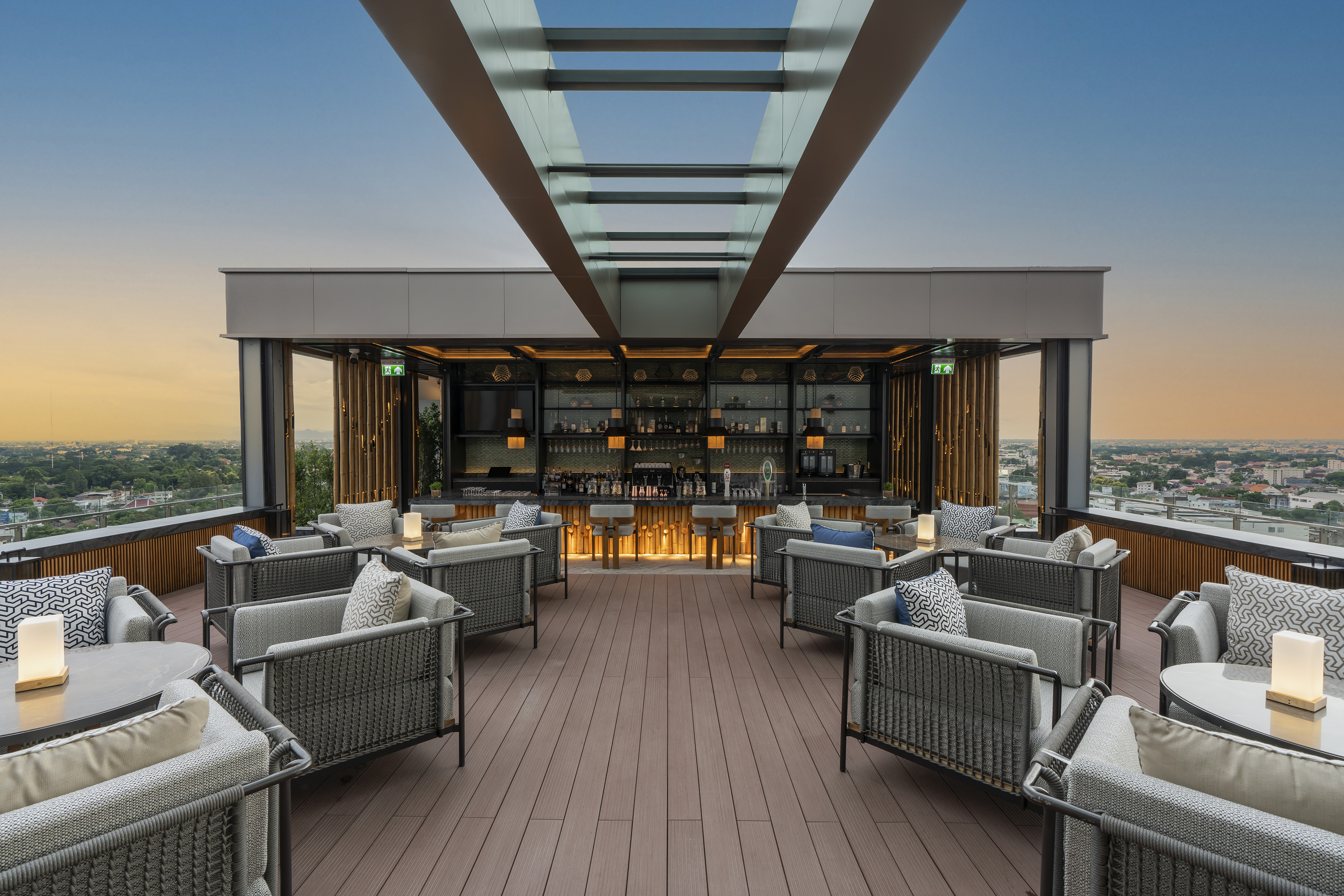
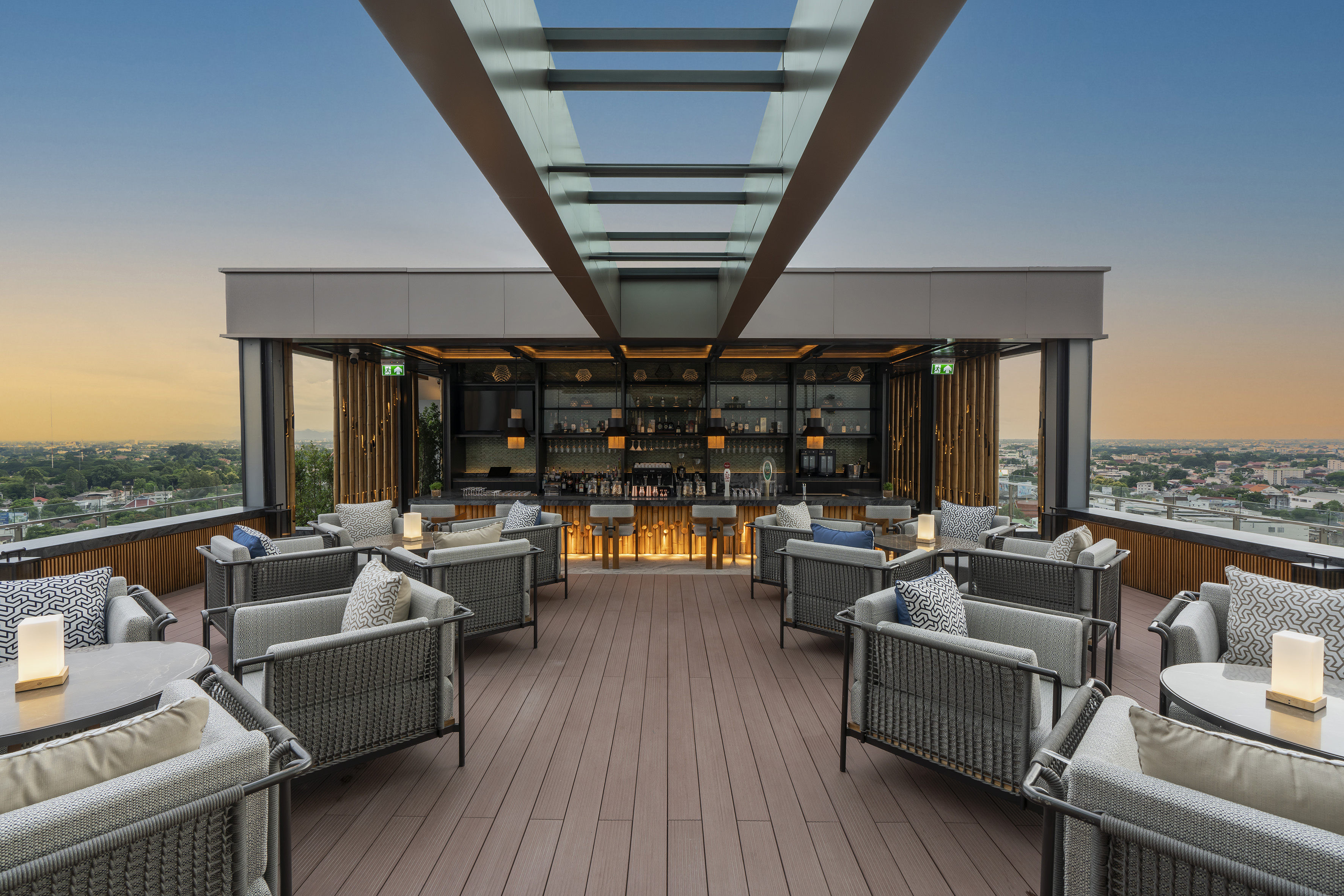
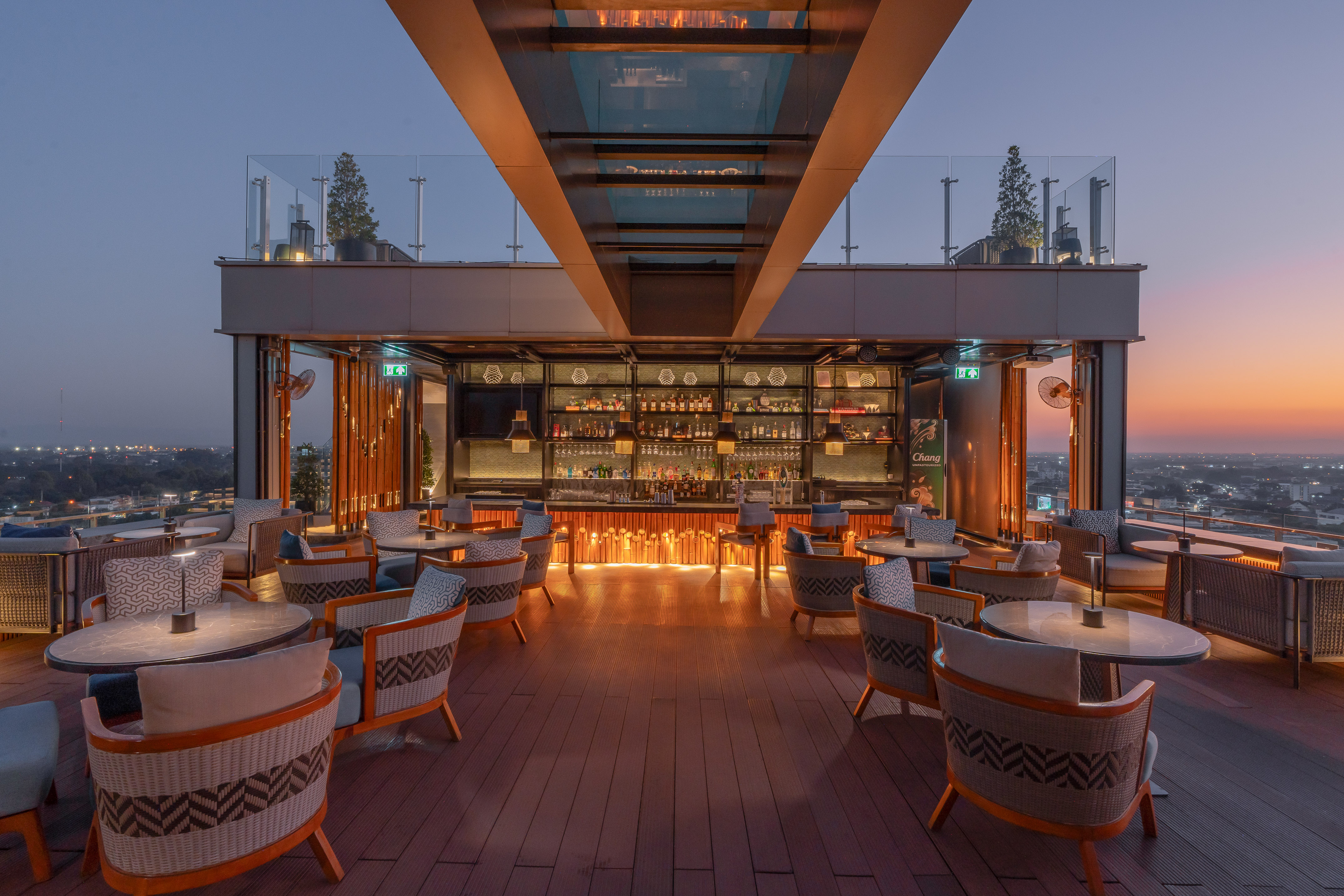
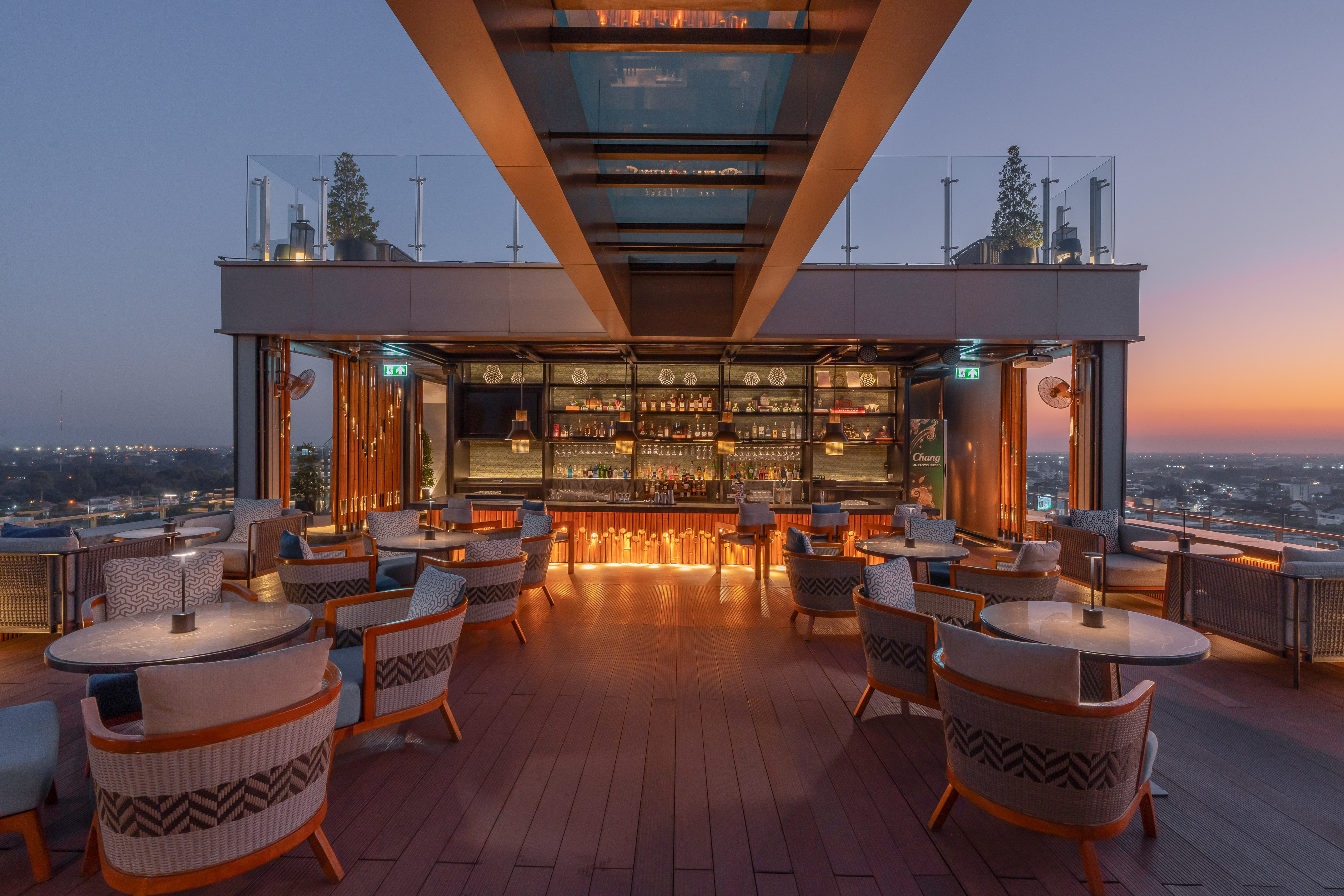
After an evening at the market, MAI The Sky Bar on the 22nd floor makes a fitting way to close things out, a rooftop cocktail with the same Night Bazaar still visible and lit up below. It is a genuinely different perspective on the district after spending the evening walking through it at street level.
The Fried Calamari, served with roasted capsicum puree and smoked paprika, or the Crispy Seafood Bomba Rice, both in the 350 THB range, work well as a light dinner-adjacent order for anyone who already ate through the market's food court and just wants a snack to go with the view.
Entry is free for hotel guests and outside visitors alike, so a stop after an evening at the market costs nothing beyond the order itself, an easy add-on rather than a separate outing that needs its own plan.
,regionOfInterest=(1771.5,1181.5))
,regionOfInterest=(1771.5,1181.5))
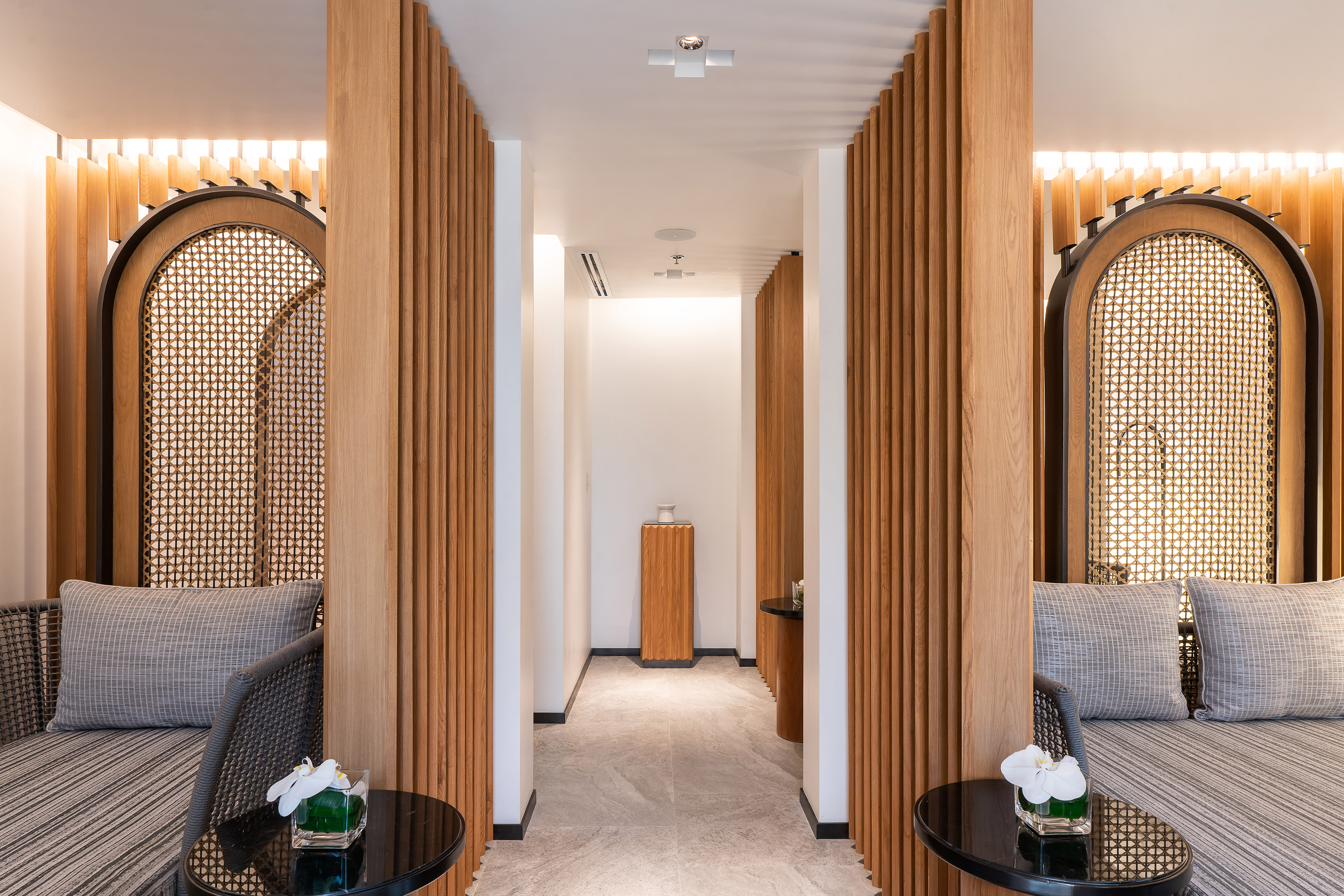
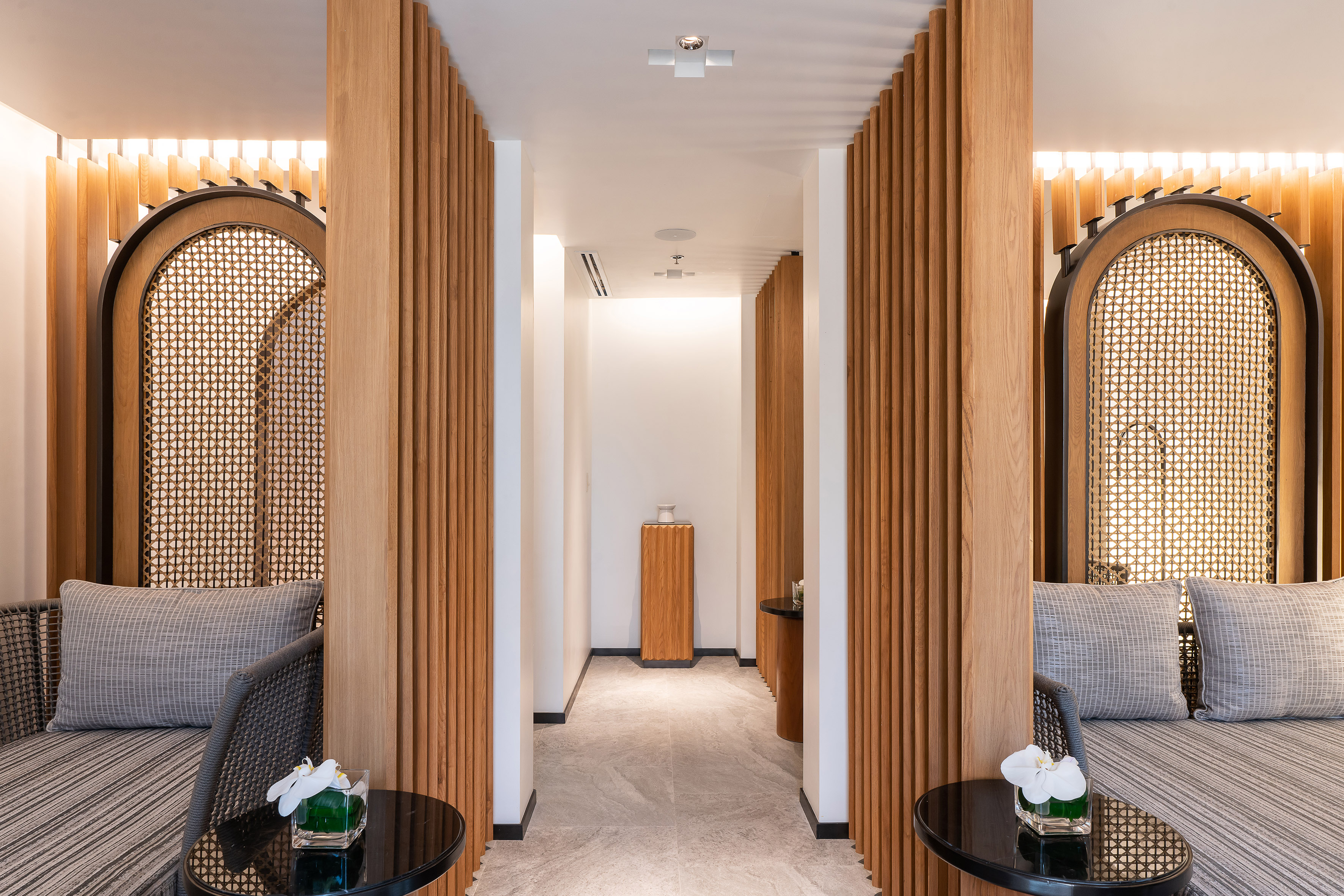
For guests who prefer to unwind before heading out rather than after, the hotel's outdoor Swimming Pool and YHI Spa are both available earlier in the day, a relaxed afternoon that leaves the evening entirely free for Anusarn Market and the rest of the Night Bazaar.
YHI Spa's seven treatment rooms carry an underwater theme, and a Traditional Thai massage booked for the late afternoon works well as a transition between a day of sightseeing and an evening of market food and shopping, loosening up legs that will be back on their feet within a couple of hours anyway.
,regionOfInterest=(1771.5,1181.5))
,regionOfInterest=(1771.5,1181.5))
Breakfast the next morning at Laan Na Kitchen is a practical way to recover before another full day of sightseeing, a wide spread that covers both Western and Thai favourites for guests who kept walking well past midnight the evening before.
Served daily from 6:00 AM to 10:30 AM, it runs early enough to fit before a temple visit or a day trip out of the city, so a late market night does not have to mean skipping breakfast entirely the next morning.
,regionOfInterest=(1771.5,1181.5))
,regionOfInterest=(1771.5,1181.5))
Between a genuinely large food court, a real range of shopping stalls, and a covered layout that works regardless of the weather, Anusarn Market covers a full evening on its own within the wider Night Bazaar district.
Book a stay at Meliá Chiang Mai, within a short walk of the market itself, and turn an evening of food and shopping into the easiest part of the trip rather than a logistics exercise.
,regionOfInterest=(2852,1899.5))
,regionOfInterest=(2852,1899.5))
,regionOfInterest=(3067,2036))
,regionOfInterest=(3067,2036))
,regionOfInterest=(3008,2008))
,regionOfInterest=(3008,2008))
,regionOfInterest=(3680,2456))
,regionOfInterest=(3680,2456))
,regionOfInterest=(1944,1296))
,regionOfInterest=(1944,1296))