Chiang Mai Gate Night Market 2026: Complete Visitor Guide


Culture

Architecture

Architectural historian, architect, content creator, DJ and presenter based in London, and the mind behind House of D’vey. With a perspective that connects architecture, design, fashion, music and popular culture, he brings the history of architecture to new audiences through accessible, entertaining content with a unique voice.




Not all design museums in London focus exclusively on designed objects. Some of the most revealing architectural experiences take place in art galleries, historic houses and converted industrial buildings.
|
Museum |
Area of London |
Main design or architectural interest |
Best for |
|
Design Museum |
Kensington |
Contemporary design and modernist adaptive reuse |
Product and contemporary design |
|
Victoria and Albert Museum |
South Kensington |
Architecture, decorative arts and historic interiors |
Design history and craftsmanship |
|
Sir John Soane's Museum |
Holborn |
Domestic architecture, spatial invention and natural light |
Architectural interiors |
|
London Transport Museum |
Covent Garden |
Transport design, typography and visual identity |
Graphic and urban design |
|
The British Museum |
Bloomsbury |
Neoclassical architecture and the Great Court |
Monumental public architecture |
|
Tate Modern |
Bankside |
Industrial conversion and contemporary interventions |
Adaptive reuse and spatial scale |
|
The Courtauld Gallery |
Strand / Somerset House |
Neoclassical interiors and gallery restoration |
Historic exhibition spaces |
The Design Museum is a natural starting point if you're interested in how design influences everyday objects, technology, communication and the built environment.
Located on Kensington High Street, the museum occupies the former Commonwealth Institute, completed in 1962 to designs by Robert Matthew Johnson-Marshall and Partners.
Its most distinctive architectural feature is the sweeping, hyperbolic paraboloid roof. The structure originally allowed the exhibition hall to accommodate large, open spaces with relatively few internal supports.
When the building became the Design Museum in 2016, its transformation brought together several architectural practices. OMA developed the wider masterplan, Allies and Morrison worked on the external refurbishment, and John Pawson designed the museum interiors.
Inside, the relationship between the preserved roof and Pawson's restrained interior design is particularly revealing. The central atrium, circulation routes and timber surfaces create a contemporary setting without concealing the original structure.
The museum's permanent and changing displays explore the decisions behind designed objects, systems and products. This makes it especially suitable for visitors interested in industrial design, creative problem-solving and the relationship between function and appearance.
Allow time to study the building itself, not just the exhibits. The museum also provides information about the architectural history of its premises, making the conversion part of the learning experience.
The Victoria and Albert Museum in South Kensington offers one of the broadest collections for understanding how architecture connects with furniture, sculpture, textiles, ceramics and other forms of design.
Unlike institutions devoted mainly to individual artworks, the V&A allows you to examine how materials, technical knowledge and decorative traditions have shaped buildings and interiors across different periods.
Its architectural holdings include models, drawings, historic rooms and architectural fragments. The Architecture Gallery, developed through the V&A and RIBA partnership, examines architectural styles, materials and building types.
The museum building is equally significant.
Its historical development produced a series of interconnected galleries, courtyards and richly decorated spaces. The monumental Cromwell Road façade, completed to designs by Aston Webb, represents one stage in this architectural evolution.
A more recent intervention is the Exhibition Road Quarter, designed by AL_A, the practice founded by Amanda Levete, and completed in 2017.
The project created a new entrance, courtyard and underground exhibition gallery while revealing previously concealed Victorian façades. It demonstrates how contemporary architecture can expand a historic institution without erasing its earlier layers.
Pay attention to the contrast between ornamental historic interiors and the geometry of the new courtyard. The transition between enclosed galleries and open public spaces also shows how architectural design affects movement through a museum.
For visitors interested in historical museums in London, the V&A provides an opportunity to study design history through both objects and buildings.
At Sir John Soane's Museum, the building is inseparable from the collection.
Located at Lincoln's Inn Fields in Holborn, the museum occupies the former home of architect Sir John Soane, who continually modified his domestic surroundings to display architectural fragments, antiquities, models, drawings and works of art.
Rather than organising these objects in conventional galleries, Soane developed an intricate sequence of rooms, passages, courts and unexpected views.
Natural light is one of the building's most important design tools. Skylights, openings and carefully arranged spaces direct light into interiors that would otherwise feel enclosed.
The Dome Area demonstrates this approach through its relationship between overhead illumination, architectural fragments and surrounding spaces.
The Picture Room offers another example of spatial ingenuity. Its movable picture planes allow a relatively small room to accommodate an unusually extensive display of paintings.
Here, architecture becomes a mechanism for arranging and revealing objects.
The museum also preserves evidence of Soane's professional practice, including an extensive collection of architectural drawings. His restored Drawing Office offers insight into the working environment of an early nineteenth-century architect, although access arrangements should be checked separately.
This museum is particularly valuable if you're interested in how proportion, daylight and carefully controlled viewpoints can transform domestic space.
Because its interiors are compact and historically sensitive, consult the museum's official visitor information before attending.
The London Transport Museum in Covent Garden demonstrates that design is not limited to buildings or individual objects. It also shapes how cities function and how people navigate them.
Its collections cover the development of London's public transport, bringing together historic vehicles, maps, posters, signs and other material connected with urban mobility.
For graphic designers, one of its strongest attractions is the visual identity associated with London's transport network.
Transport posters show how illustration, typography and composition were used to communicate destinations and encourage travel. The Underground's visual language also provides a useful case study in how coherent design can make a complicated urban system more understandable.
The museum occupies a former Victorian flower market building in Covent Garden.
This setting adds another layer of interest: a structure originally associated with urban commerce now houses collections explaining the movement of people through the same city.
Observe how large transport vehicles are displayed within the building and how their physical dimensions affect the surrounding exhibition spaces.
For anyone interested in urban planning, information design or the evolution of London's infrastructure, the museum links graphic communication with the practical design of public life.
It is also one of the most convenient choices for visitors exploring Covent Garden on foot.
The British Museum is primarily known for its collections of human history, art and material culture. For architecture enthusiasts, however, its building offers a study in how a major public institution can evolve over time.
The museum's monumental Greek Revival architecture, designed principally by Sir Robert Smirke, establishes an architectural language of columns, symmetry and classical proportions.
That historical character contrasts with the Queen Elizabeth II Great Court, designed by Foster and Partners and opened in 2000.
The intervention transformed the previously enclosed central courtyard into a covered public space surrounding the historic Reading Room.
Its glass-and-steel roof spans the irregular space between the courtyard's rectangular perimeter and the circular Reading Room. The resulting geometry creates changing patterns of structure and daylight as you move through the court.
This is what makes the museum particularly interesting from an architectural perspective: the new intervention does not imitate the old building. Instead, contemporary structural engineering establishes a relationship with the existing architecture.
The collections provide further opportunities to examine the material cultures and architectural traditions of different societies. However, the building is the main reason for including the British Museum in this particular selection.
It's especially suitable if you want to understand monumental architecture, public circulation and the interaction between historical buildings and contemporary additions.
The museum is in Bloomsbury, north of the Covent Garden and Holborn area.
Tate Modern is an important example of adaptive reuse: the transformation of an existing building for a different purpose.
The museum occupies the former Bankside Power Station, designed by Sir Giles Gilbert Scott. The conversion into a gallery for international modern and contemporary art was undertaken by Swiss architects Herzog & de Meuron.
The original power station's industrial scale remains central to the visitor experience.
Its vast Turbine Hall introduces a sense of height and volume quite different from conventional museum galleries. The retained structure makes the building's previous function legible even after its conversion into a cultural institution.
The architectural interest extends beyond the initial transformation.
Herzog & de Meuron also designed the museum's later extension, now known as the Blavatnik Building. Its perforated brick exterior establishes a visual relationship with the earlier power station while introducing a different architectural form.
The contrast between the large industrial interiors and the more contained exhibition galleries is worth examining. It illustrates how museum architecture can accommodate works at radically different scales.
The collections focus on modern and contemporary art, rather than design history specifically. Nevertheless, the building makes Tate Modern one of the most relevant art museums in London for anyone interested in architecture.
If your main interest is the transformation of industrial buildings, consider allowing time to explore the site's circulation spaces and architectural connections rather than concentrating exclusively on the artworks.
Tate Modern is on Bankside, south of the River Thames, and requires a separate excursion from the central Covent Garden museum cluster.
The Courtauld Gallery offers a different approach to understanding museum architecture. Here, historic interiors and the presentation of artworks are closely connected.
The gallery occupies part of Somerset House, the major neoclassical complex designed by Sir William Chambers in the eighteenth century.
Its collection includes paintings, drawings, sculptures and decorative arts, with particular strengths in Impressionist and Post-Impressionist painting.
For architecture enthusiasts, the central question is how the historic rooms have been adapted to the requirements of a contemporary gallery.
A major restoration and redevelopment, designed by Witherford Watson Mann with gallery design by Nissen Richards Studio, preceded the gallery's reopening in 2021.
The project improved circulation and exhibition spaces while retaining important historical architectural features.
The LVMH Great Room, originally associated with the Royal Academy's exhibitions, demonstrates how the scale and proportions of an eighteenth-century room can influence the way art is presented.
Elsewhere, the Blavatnik Fine Rooms preserve decorative details including ceilings, fireplaces and historic architectural fittings.
As you explore, consider how the proportions of each room affect the relationship between artworks and visitors. Unlike the open industrial volumes of Tate Modern, the Courtauld's galleries establish a sequence of more intimate, carefully defined spaces.
The gallery is particularly suitable for visitors interested in historic interiors, conservation and the architectural presentation of art.
Its location within Somerset House on the Strand also makes it a convenient cultural stop for anyone staying near Covent Garden.


One reason London's museums and galleries are architecturally interesting is that they reveal different approaches to the same challenge: how should a building shape the experience of its collections?
There is no single answer.
At Sir John Soane's Museum, architecture and collection developed together. The rooms, their proportions and their lighting form part of the architect's original approach to displaying objects.
By contrast, Tate Modern and the Design Museum demonstrate how an existing building can acquire a new cultural purpose.
Both projects retain important elements of their original structures. Yet their approaches differ.
At Tate Modern, industrial scale becomes a defining feature of the museum. At the Design Museum, a distinctive modernist roof is preserved while a new interior creates an environment for contemporary exhibitions.
These conversions also raise a broader architectural question: how much of an existing building should remain visible when its function changes?
Other institutions demonstrate the possibilities of designing new elements within historic settings.
The British Museum's Great Court uses a contemporary roof to connect older architectural forms and create a shared circulation space. At the V&A, the Exhibition Road Quarter opens up previously concealed architectural features while introducing new facilities.
The Courtauld Gallery offers another perspective through the restoration and adaptation of historic rooms.
Together, these examples show that architectural interventions need not follow one visual style. They can emphasise contrast, continuity, conservation or transformation.
Light and circulation are particularly useful elements to compare.
Soane uses daylight to shape the atmosphere of small interiors. The British Museum's glazed roof turns an enclosed courtyard into a naturally illuminated public space. Tate Modern uses substantial changes in scale to distinguish circulation areas from exhibition galleries.
For architecture enthusiasts, visiting these buildings provides an opportunity to observe how design decisions influence movement, perception and the relationship between people and objects.
The Holborn, Covent Garden and Strand area is particularly useful if you want to combine several cultural visits without travelling across London.
Two of the most relevant museums are Sir John Soane's Museum and the London Transport Museum.
Sir John Soane's Museum, at Lincoln's Inn Fields, is a useful choice for exploring historical domestic architecture and the manipulation of interior space.
The London Transport Museum, in Covent Garden Piazza, approaches design from a different direction, explaining how objects, visual communication and transport infrastructure contribute to the identity of a city.
Because the museums examine different aspects of design, visiting both provides complementary perspectives without repeating the same type of experience.
The area also offers opportunities to observe architecture beyond conventional museums.
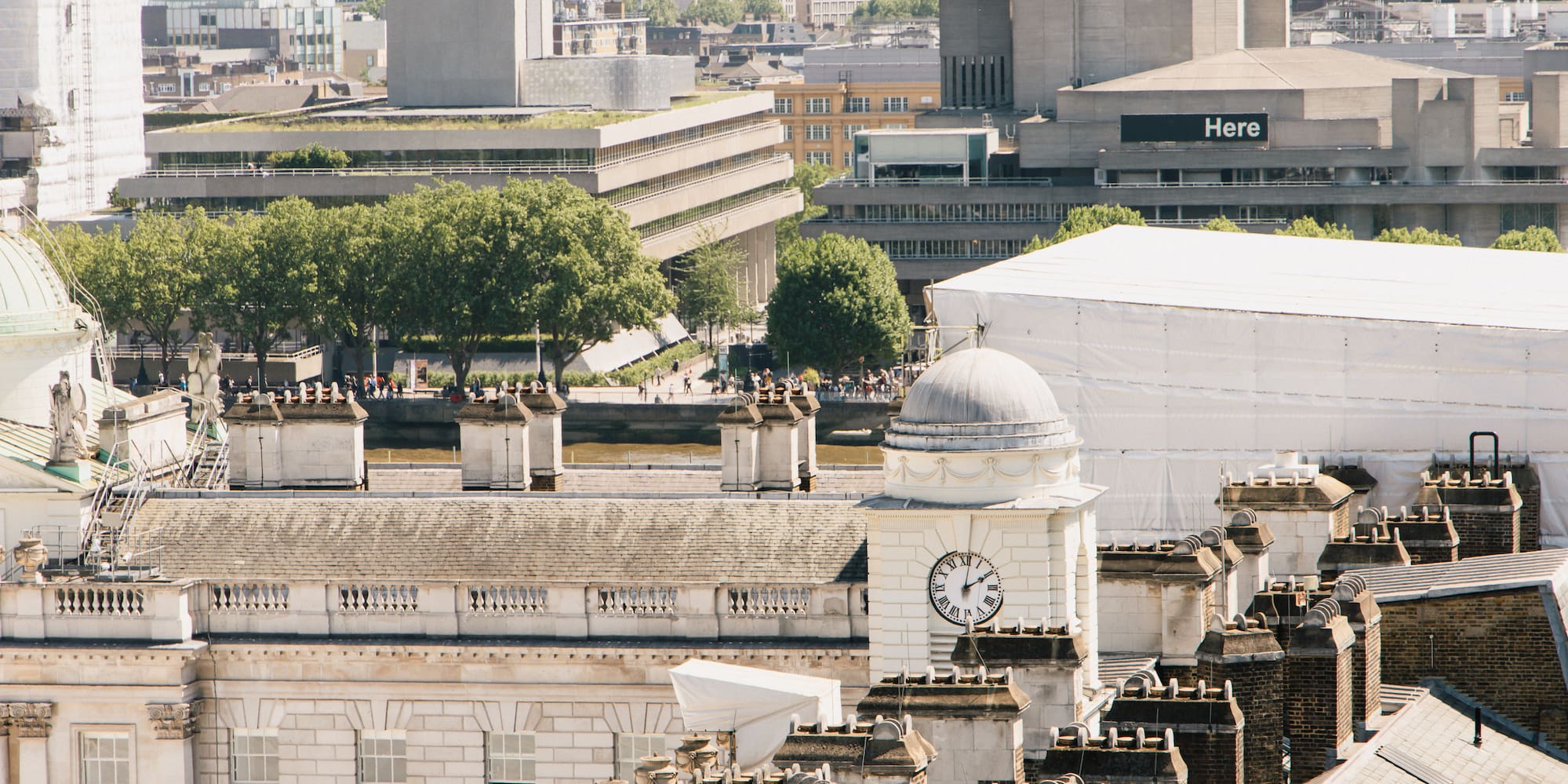
Somerset House, close to the Strand, is an important example of London's neoclassical civic architecture. Its courtyard, monumental exterior and interconnected wings are worth examining as part of the area's architectural history.
Somerset House is a wider cultural complex rather than a single museum. It hosts creative organisations and cultural programming, while the Courtauld Gallery occupies part of the building.
This distinction is useful when planning your visit: you can appreciate the architecture of Somerset House independently of choosing to visit the Courtauld's collection.
From ME London on the Strand, Covent Garden, Somerset House and the Holborn museum area are accessible on foot.
A flexible approach is to combine Sir John Soane's Museum with the London Transport Museum, then explore Somerset House or the Courtauld Gallery according to your interests and the time available.
Before organising your day, check the individual institutions' visitor information, particularly where entry arrangements or access to specialist spaces may differ.
Other museums in this selection are better treated as separate visits.
The V&A and Design Museum are in Kensington, west of central London. Tate Modern is on Bankside, across the Thames. The British Museum is in Bloomsbury, beyond the immediate Covent Garden area.
This geographical distinction can help you plan according to whether you prefer a concentrated exploration of central London or a broader programme focused on specific architectural interests.

Exploring London's design museums can make you more attentive to the architecture of the places you encounter throughout your stay.
ME London, situated on the Strand near Covent Garden and Holborn, provides an example of contemporary hotel architecture that connects with this interest.
The hotel was designed by Foster + Partners, the architectural practice also responsible for the British Museum's Great Court intervention.
One of ME London's most distinctive interior elements is its pyramidal atrium.
Its triangular geometry, marble surfaces and treatment of light create a spatial experience centred on proportion and materiality.
While the building serves a different purpose from a museum, it offers another setting in which to observe how architecture influences movement, atmosphere and the perception of interior space.
Its location also provides a practical base for exploring the surrounding cultural institutions, including Sir John Soane's Museum, the London Transport Museum and the Courtauld Gallery.
For visitors interested in design, the architectural experience therefore need not end when they leave the museum.
London offers a fascinating mix of historic architecture, contemporary design and innovative museum spaces. From Sir John Soane's carefully planned interiors to Tate Modern's industrial transformation, the city's museums reveal how buildings and design shape the way we experience art, culture and everyday life.
Discover seven design museums in London worth exploring for their architecture, collections and distinctive spaces, and find out which best match your interests.