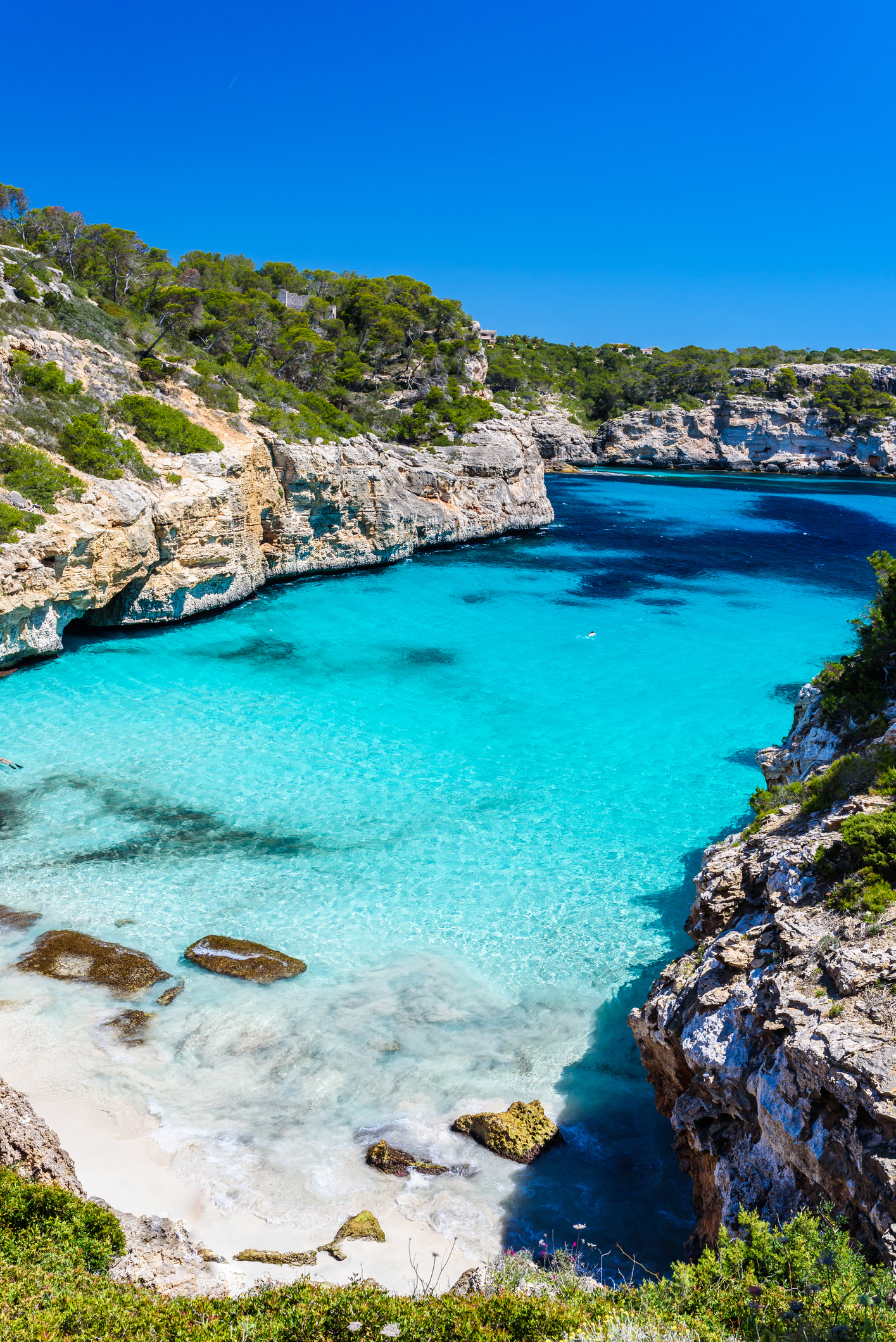
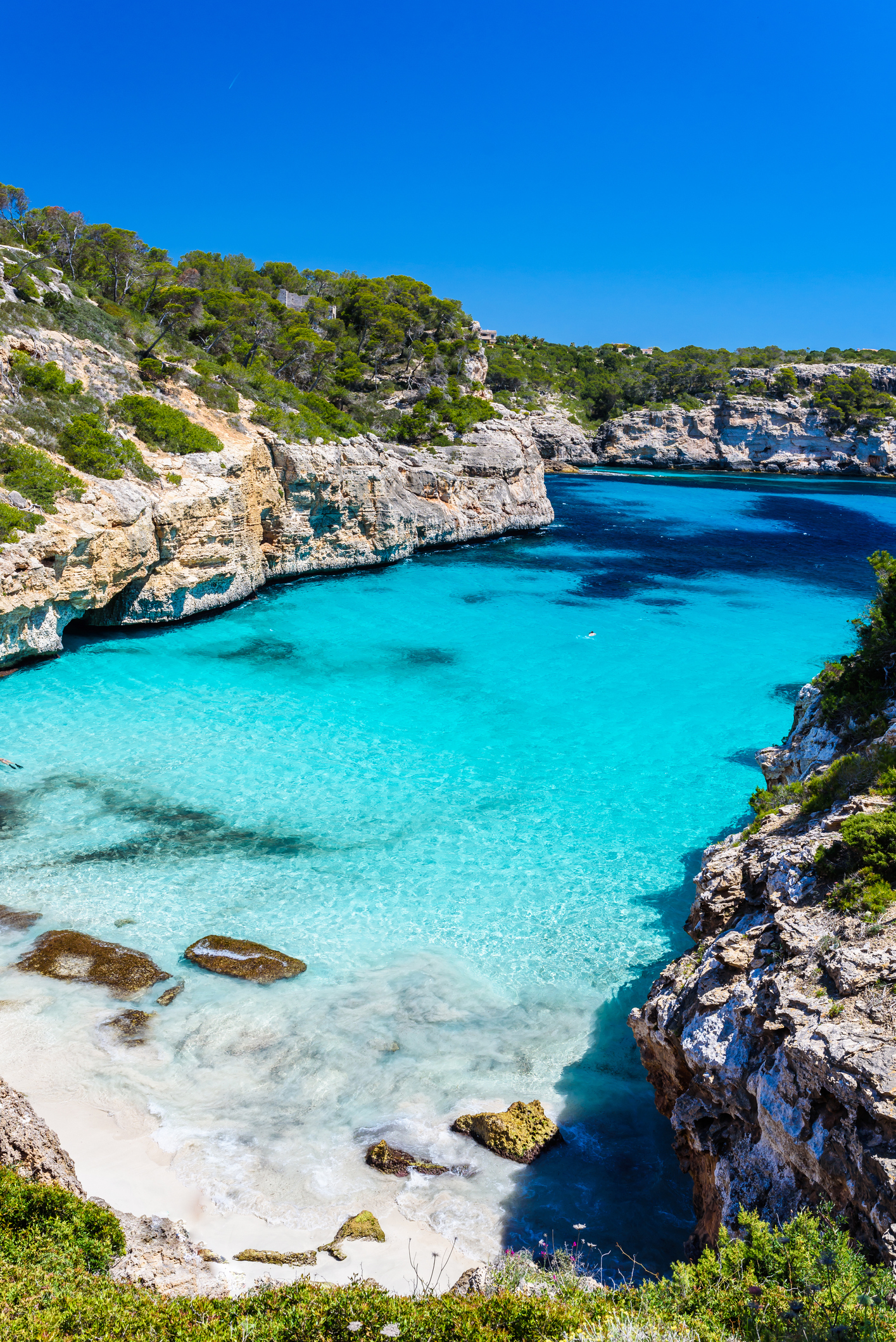
The best coves in Mallorca
,regionOfInterest=(707.5,1059.5))
,regionOfInterest=(707.5,1059.5))
Culture
,regionOfInterest=(2376,1584))
,regionOfInterest=(2376,1584))
,regionOfInterest=(1771.5,997))
,regionOfInterest=(1771.5,997))
Holidays
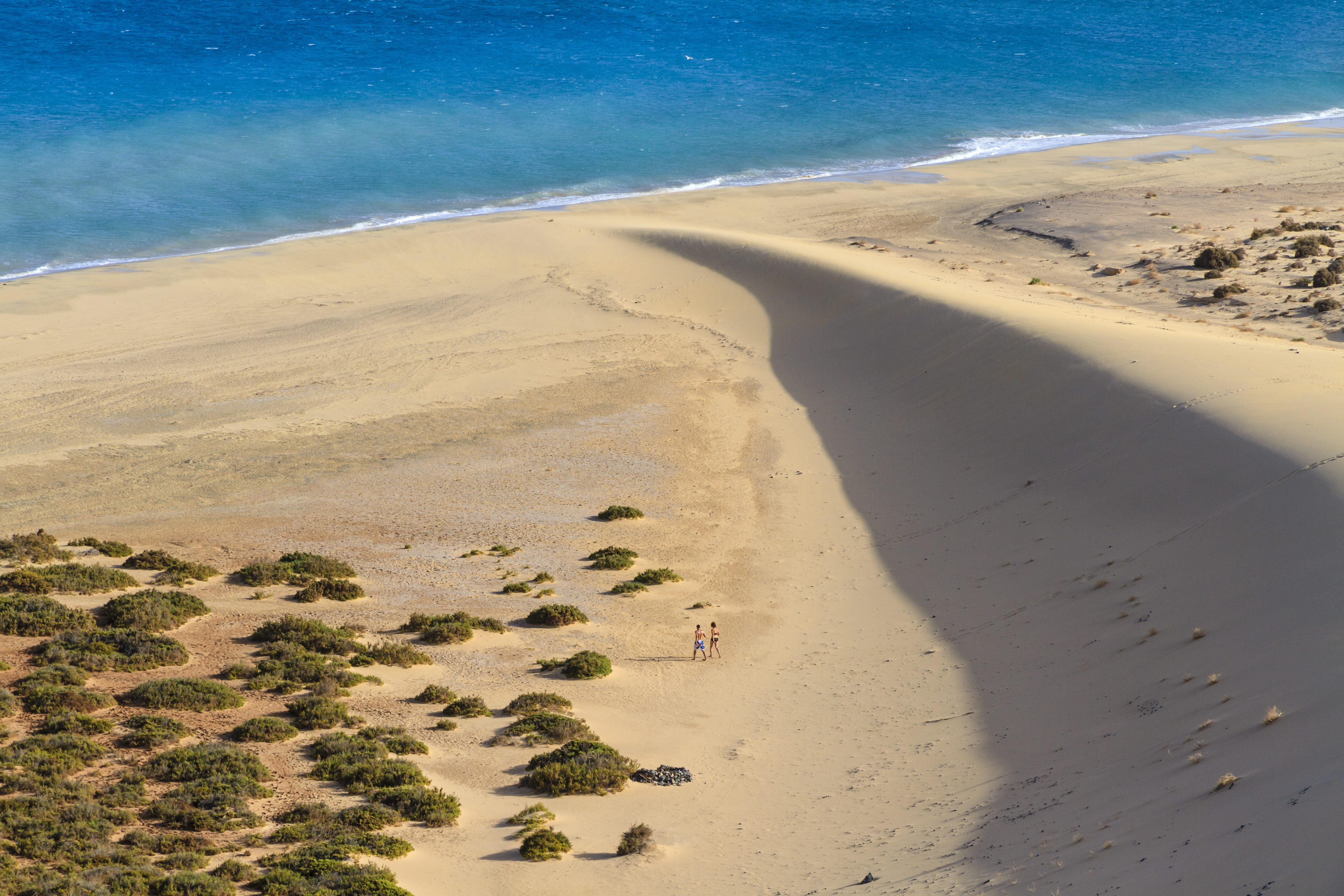
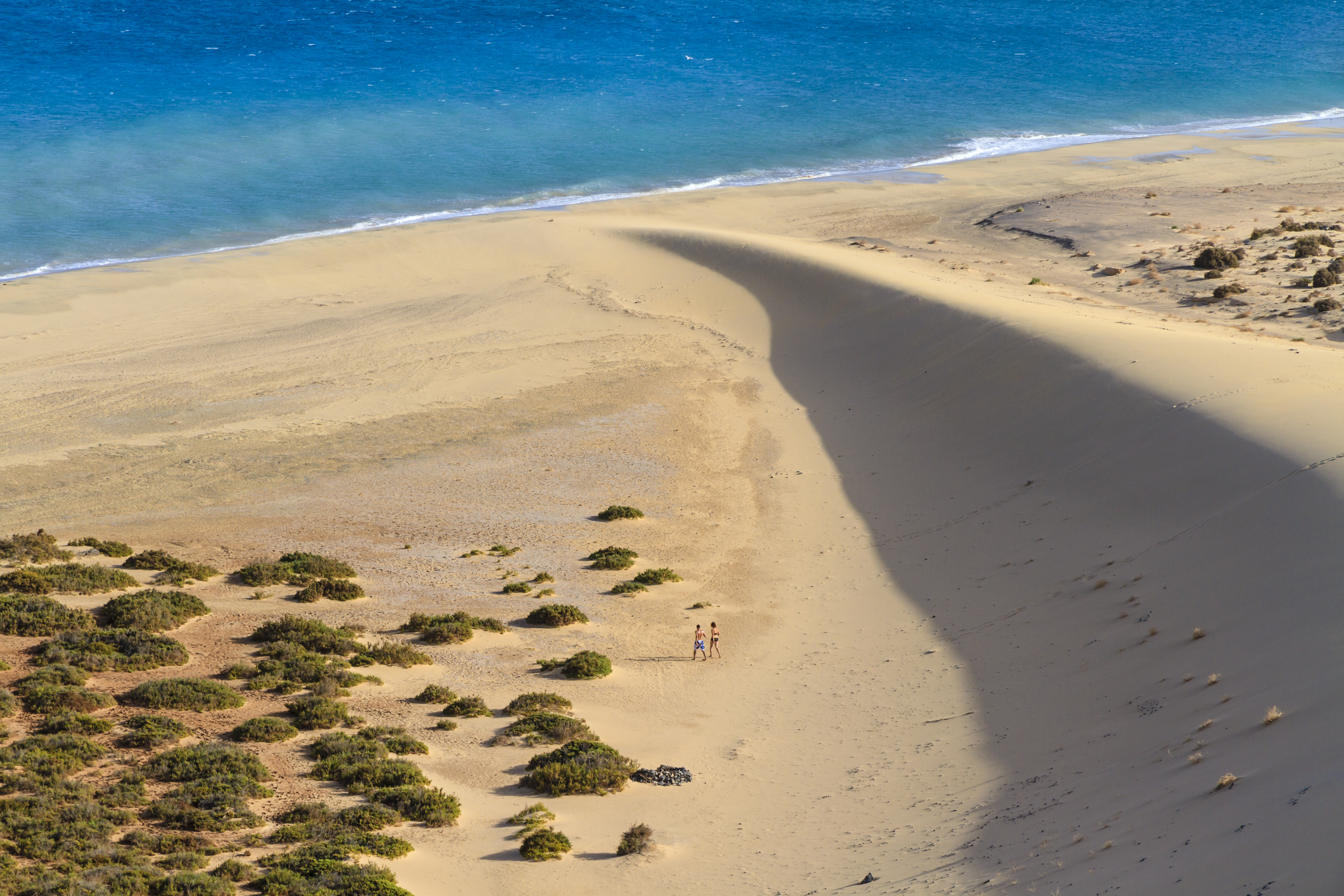
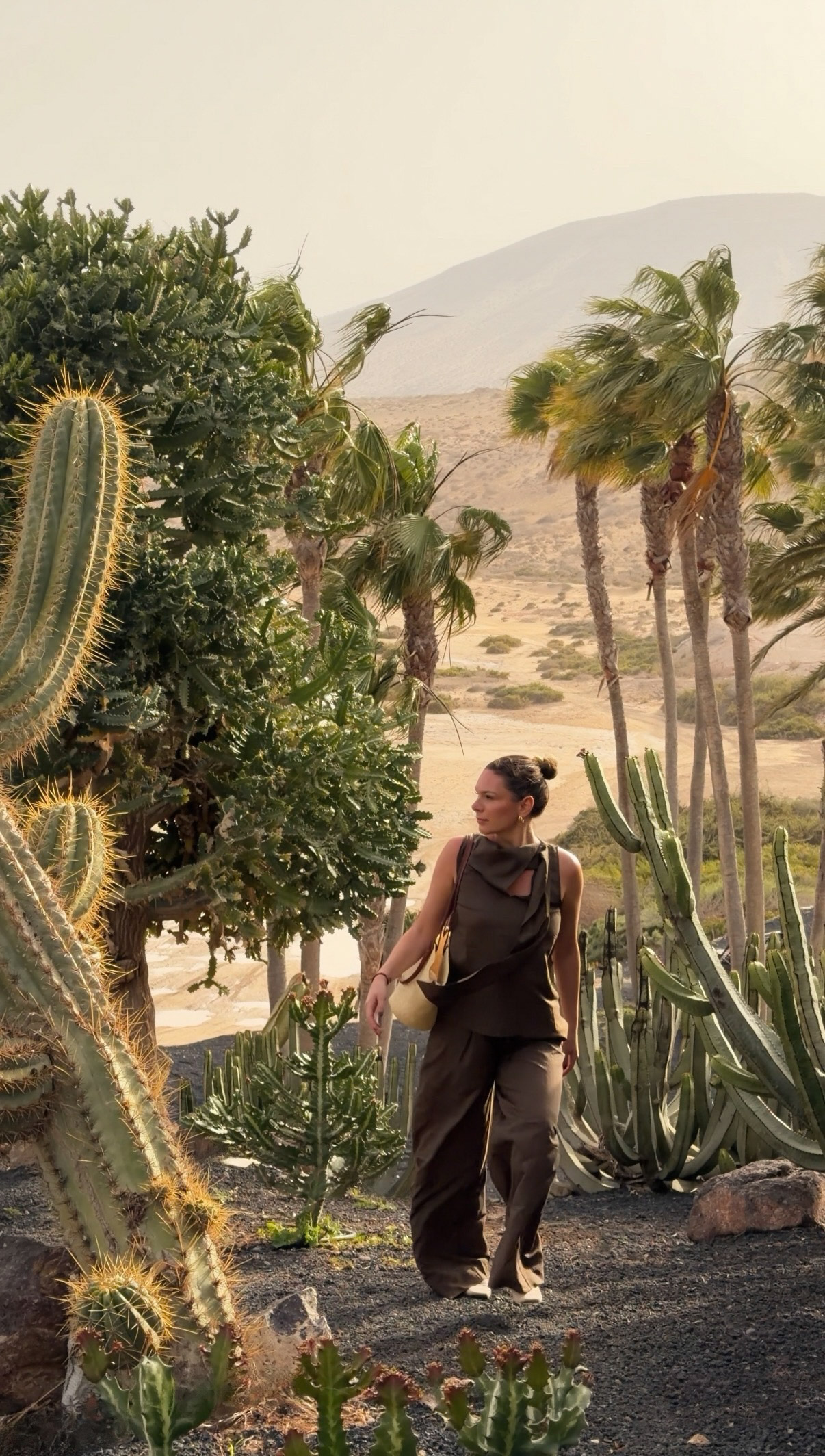
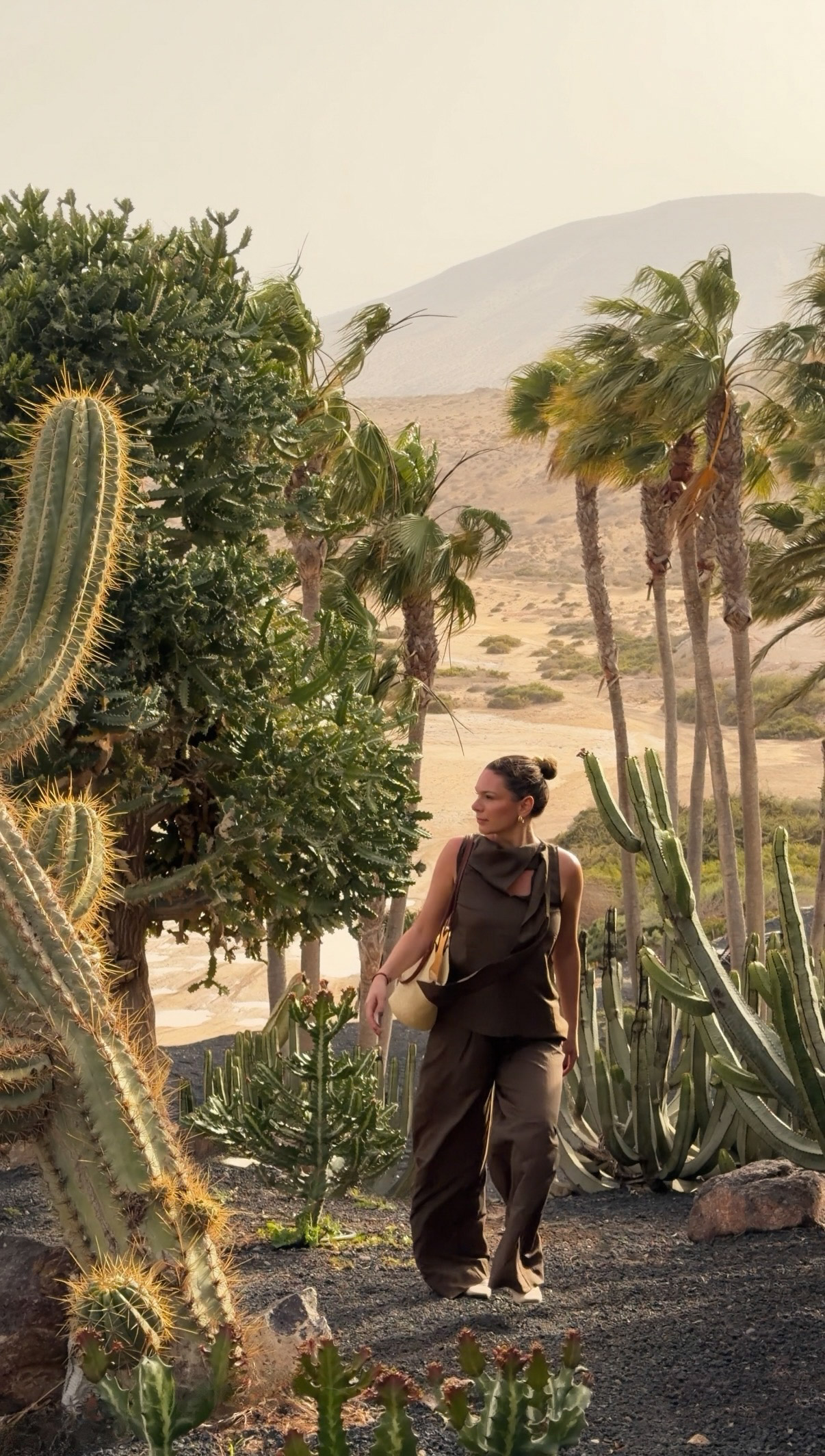
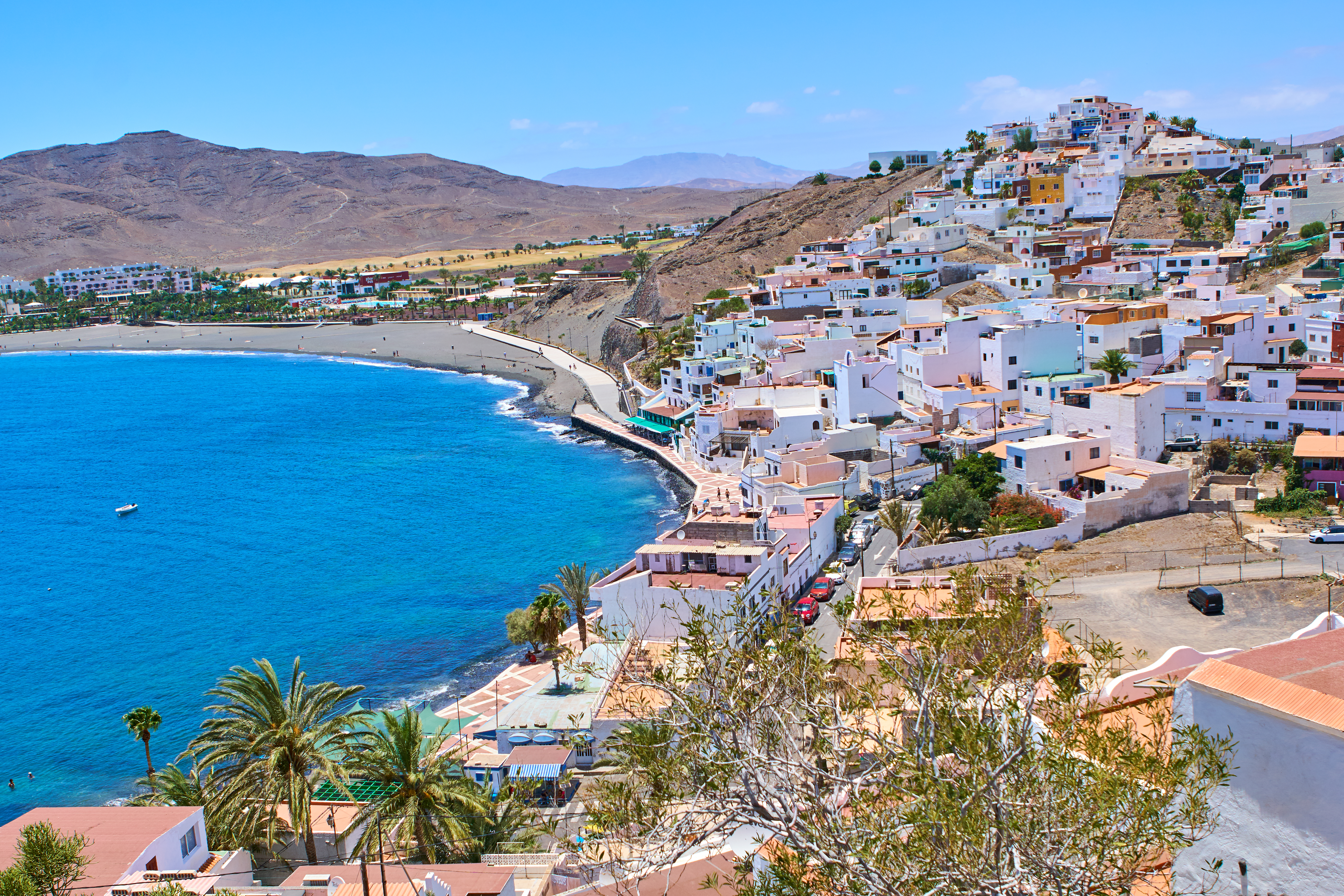
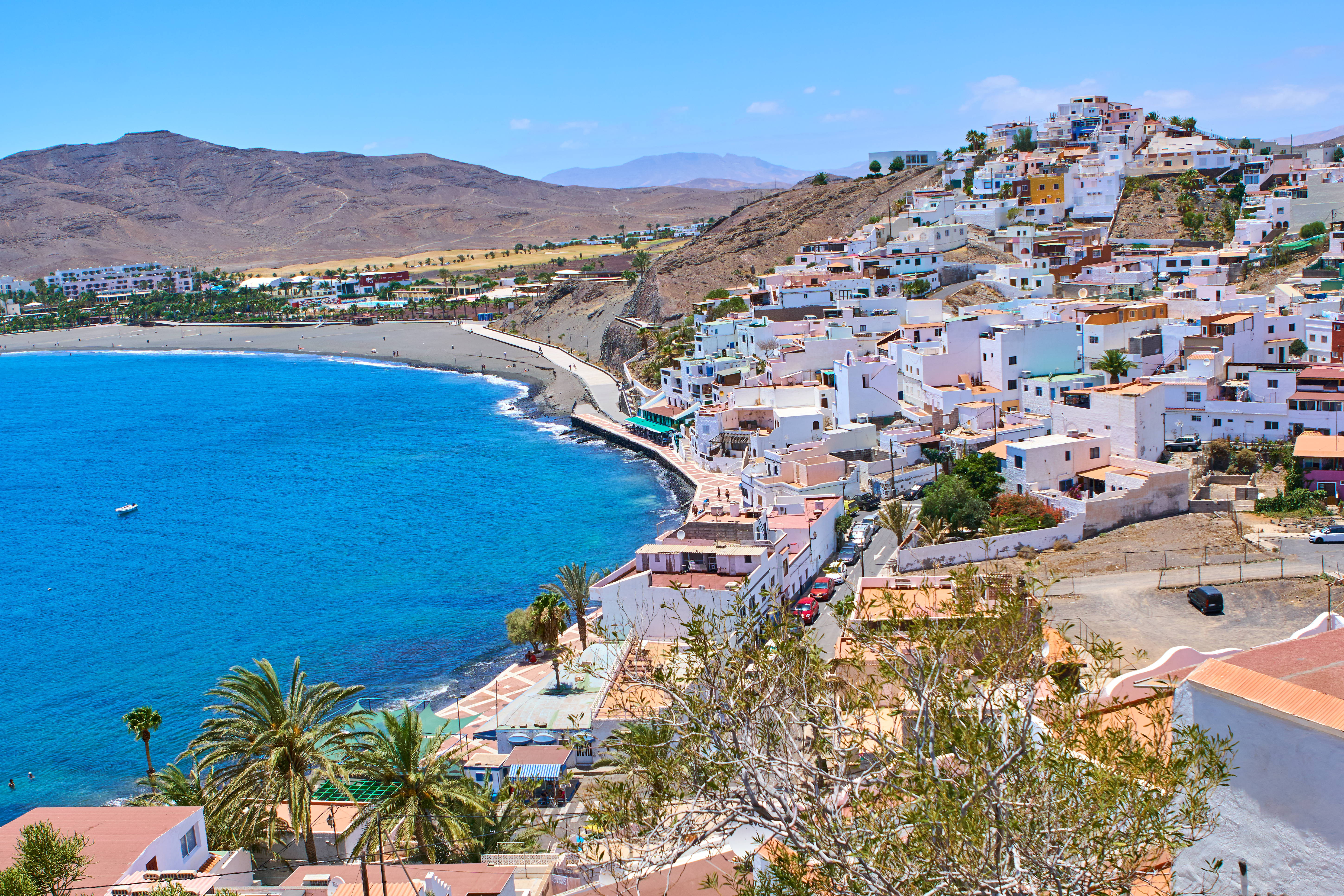
In my opinion, spending five days in Fuerteventura will allow you to make the most of your time on this island, combining moments of tranquillity and total disconnection on its beaches with routes through its volcanic landscapes.
The key to your five-day Fuerteventura itinerary is to plan each day logically and by proximity, so you can save yourself unnecessary travel and enjoy each place without rushing.
A destination of incredible contrasts, where Saharan dunes, reddish-hued mountains and fishing villages coexist in harmony with some of the best beaches in the world, in this guide I am going to tell you what to see in Fuerteventura in 5 days so that you don't miss anything and only have to worry about enjoying a well-deserved holiday.
So, if you want to have the best places to see in Fuerteventura to hand, save this guide because it will be very useful for your trip.
,regionOfInterest=(500,500))
,regionOfInterest=(500,500))
All-terrain writer specialising in tourism, fashion and trends. A curious soul, traveller, reader and sports enthusiast, keen to discover every corner of the world.
,regionOfInterest=(2400,1600))
,regionOfInterest=(2400,1600))
,regionOfInterest=(603,1064))
,regionOfInterest=(603,1064))
,regionOfInterest=(2897,1931))
,regionOfInterest=(2897,1931))
| DAY | ROUTE FOCUS | MAIN AREAS |
|---|---|---|
| Day 1 |
Sea of dunes, protected islets and fishing essence |
Corralejo Dunes, Isla de Lobos and El Cotillo |
| Day 2 |
Stately valleys, Majorero history and volcanic tubes |
Betancuria, Guise and Ayose Viewpoint and Cueva del Llano |
| Day 3 |
Fossil cliffs, traditional architecture and peaks |
Ajuy Caves, Pájara and Sicasumbre Viewpoint |
| Day 4 |
Iconic lighthouses, northern volcanoes and local atmosphere |
Entallada Lighthouse, Calderón Hondo Volcano and Puerto del Rosario |
|
Day 5 |
Turquoise lagoons, wild horizons and southern villages |
Sotavento, Cofete Beach and Morro Jable |
The first day of this proposal on what to see in Fuerteventura in 5 days will take you into the wonders of the far north, an area marked by the vastness of the white desert and the beauty of its turquoise waters.
Corralejo Dunes Natural Park
The best welcome is to start the morning walking on the infinite undulations of the Corralejo Dunes Natural Park, a desert of golden sand brought by the trade winds that merges with the blue of the sea.
Climbing to the top of its hills first thing in the morning will give you an unparalleled panorama and calm. Here you can take one of the best photographs of your trip.
From the side of the road that crosses the dunes, you will reach the port of Corralejo in just 8 minutes by car.
Boat trip to Isla de Lobos
In the port of Corralejo you can get on a small boat to cross the strait to the islet of Lobos, a completely virgin and uninhabited protected space that is worth visiting. In addition, the boat trip will be a great experience.
Walking along its lava trails to the Martiño lighthouse or immersing yourself in the crystal-clear waters of the Puertito de Lobos are some plans that I have to include in this guide on what to do in Fuerteventura in 5 days.
After disembarking back in Corralejo, take the FV-109 road towards the northwest coast on a journey of about 20 minutes by car.
El Cotillo and La Concha Beach
A place that will make you fall in love at first sight, El Cotillo maintains that traditional atmosphere of a fishing village, with its white houses with blue doors and its iconic restaurants on the cliffs.
A stone's throw from its urban centre is La Concha Beach, a stretch of sand sheltered by natural reefs that block the Atlantic swell, forming a natural pool of calm and transparent waters where bathing will be an absolute delight.
To get closer to the coves in the north of the town, drive just 10 minutes along the track that borders the coast.
Tostón Lighthouse and Los Charcos
Bordering the coastline towards the north you will reach the picturesque Tostón Lighthouse, built at the end of the 19th century, quickly recognisable by its cylindrical tower with red and white stripes. This lighthouse is in charge of watching over the dangerous Bocaina Strait, and there you can visit a small museum dedicated to traditional fishing.
At the foot of the lighthouse extend Los Charcos, a series of small coves interspersed between black lava flows that the high tide fills, forming natural pools of warm and crystal-clear water. The visual contrast between the blackness of the basalt, the whiteness of the sand and the turquoise of the water makes this landscape one of the most iconic corners of the island.
From this area, you can return comfortably by road in about 30 minutes.
Sunset and dinner at the old pier of El Cotillo
To close the first day, my recommendation is that you return to the Old Pier of El Cotillo. Located under the cliffs that shelter the old port, the pier preserves the seafaring architecture of yesteryear and has several terraces by the sea.
Sitting on one of these terraces to watch how the sun sinks into the Atlantic while you savour some wrinkled potatoes with mojo picón, a grilled Majorero cheese or fresh fish of the day (such as vieja or cherne) is, simply, an unforgettable experience.
,regionOfInterest=(1996,1371))
,regionOfInterest=(1996,1371))
This second day takes you to the geographical and historical heart of Fuerteventura, where you will tour the former capital, spectacular viewpoints and underground caves that will leave you speechless.
Historic Town of Betancuria
Located in a valley sheltered from the winds, the stately Town of Betancuria was founded in the 15th century as the first capital of the Canary Islands archipelago. Walking through its cobbled squares while admiring the architecture of its manor houses with wooden balconies, and visiting the Santa María Cathedral Church is a must during your trip.
Leaving the town along the picturesque FV-30 mountain road towards the north, you will reach the main viewpoint in just 10 minutes by car.
Guise and Ayose Viewpoint
At the top of the mountain pass stands the Guise and Ayose Viewpoint, which is presided over by two imposing bronze statues of almost four metres that represent the ancient aboriginal kings who ruled the island before the Castilian conquest.
To head to the next visit in the municipality of La Oliva, drive along the FV-20 on a pleasant 25-minute journey.
Cueva del Llano (La Oliva)
Near La Oliva is the Cueva del Llano, one of the oldest volcanic cavities in the archipelago. Through a guided tour inside the lava tube, you will be able to understand the eruption process that shaped the island and see fossils of extinct species that inhabited the place.
From the cave, you will reach the picturesque town of Lajares in just 10 minutes by road.
Lajares and its artisan workshops
The town of Lajares has become the multicultural and creative epicentre of the north of Fuerteventura. Strategically located between volcanoes and surfing areas, it attracts an international community of artisans, designers and athletes who give it a unique atmosphere.
In fact, taking a walk along its main street allows you to discover leather goods workshops, local ceramics, surf-vintage fashion shops and small independent art galleries.
It is the perfect place to take a break in the mid-afternoon, enjoy a speciality coffee with artisan pastries and take home an authentic souvenir made by hand on the island.
You can return without complications in about 15 minutes by car.
Dinner in the centre of Corralejo
As night falls, the pedestrian streets surrounding the Plaza del Muelle Chico and the Corralejo promenade fill with life and take on a very special colour, with the sea breeze as the protagonist.
It is time to sit in one of its traditional fishermen's taverns to savour local tapas: sautéed octopus Galician-style or grilled, fresh limpets dressed with green mojo, rock fish croquettes and a board of cured Majorero cheese with paprika would be what I would order.
,regionOfInterest=(3360,2240))
,regionOfInterest=(3360,2240))
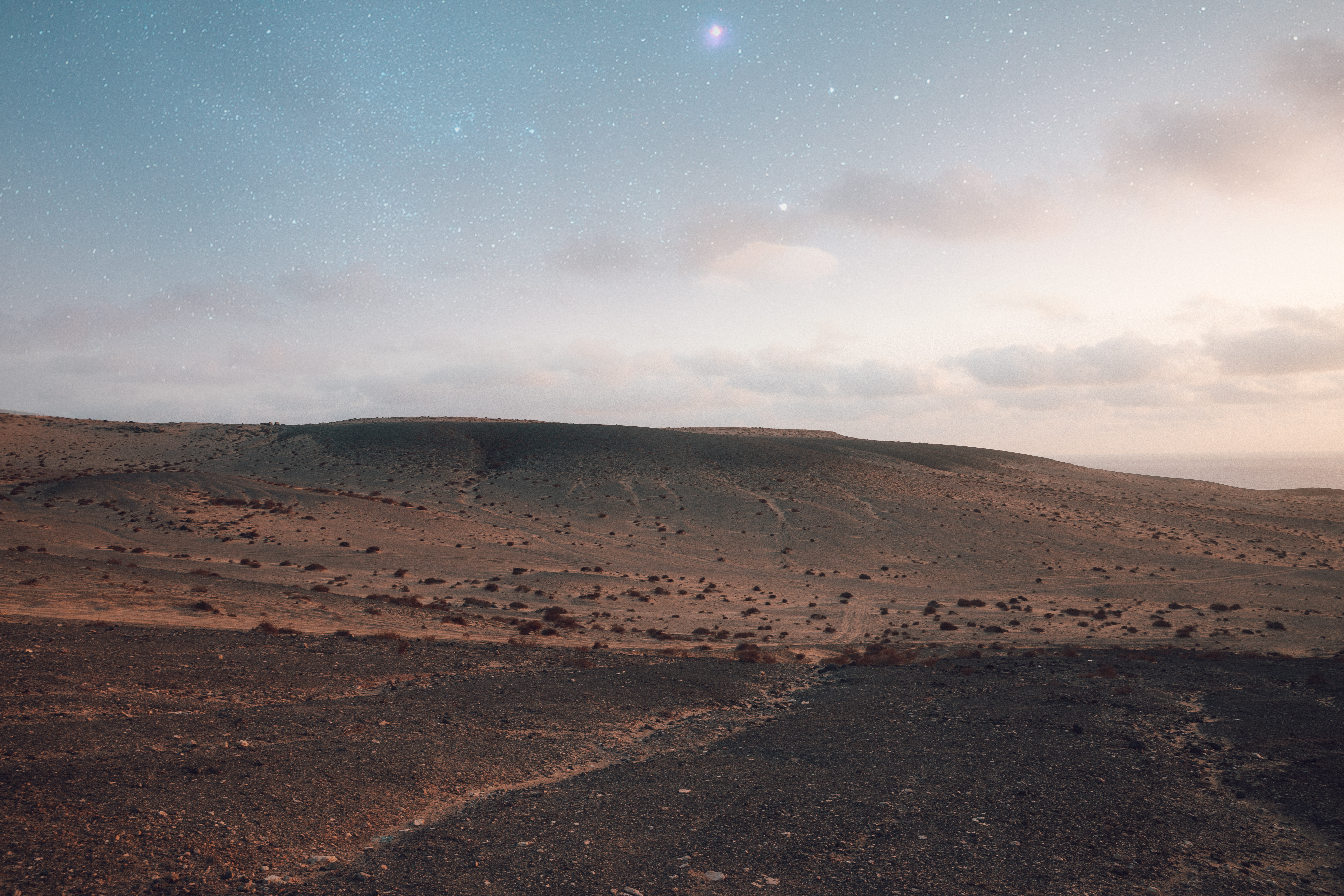
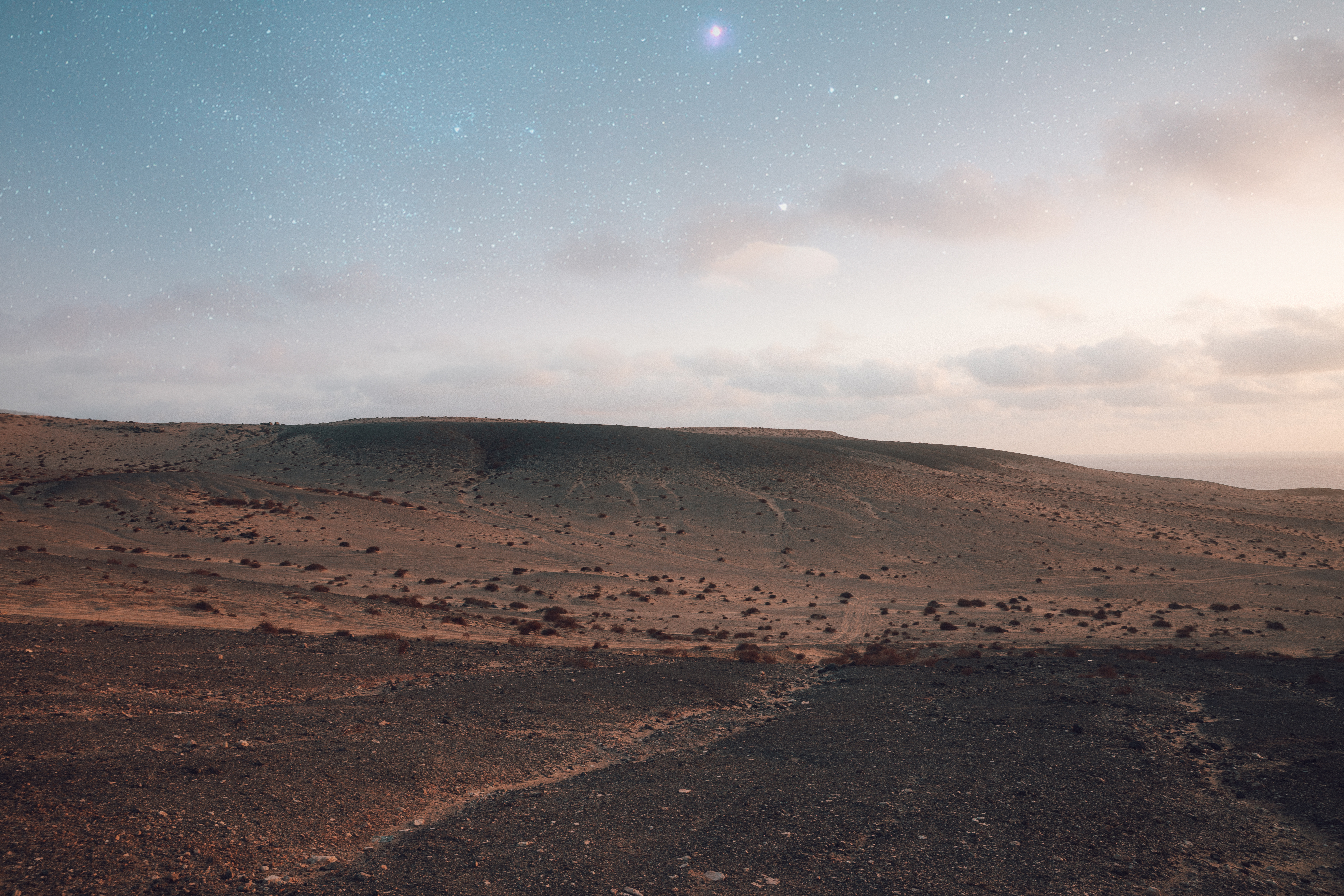
In the third stage of this route to tour Fuerteventura in 5 days you will head towards the west coast to see the primitive geological monuments and astronomical viewpoints.
Ajuy Caves Natural Monument
In the quiet fishing village of Ajuy are hidden the Ajuy Caves, one of the most important geological treasures in all of Spain. In these caves is the Basal Complex of Fuerteventura, that is, pieces of the oceanic crust and primitive marine sediments that emerged to the surface more than 100 million years ago, long before the islands themselves were formed.
The tour begins at Ajuy Beach, famous for its striking jet-black fine sand, and continues along a comfortable path carved into the cliff itself, along which you will walk over fossilised dunes while watching the waves crash against the volcanic rock.
The path ends with access to the interior of the cavities excavated by the sea, which have dark rock vaults that are impressive both for their size and their visual strength.
From the Ajuy car park, take the FV-605 road to reach the town of Pájara in 15 minutes.
Pájara and the Church of Nuestra Señora de la Regla
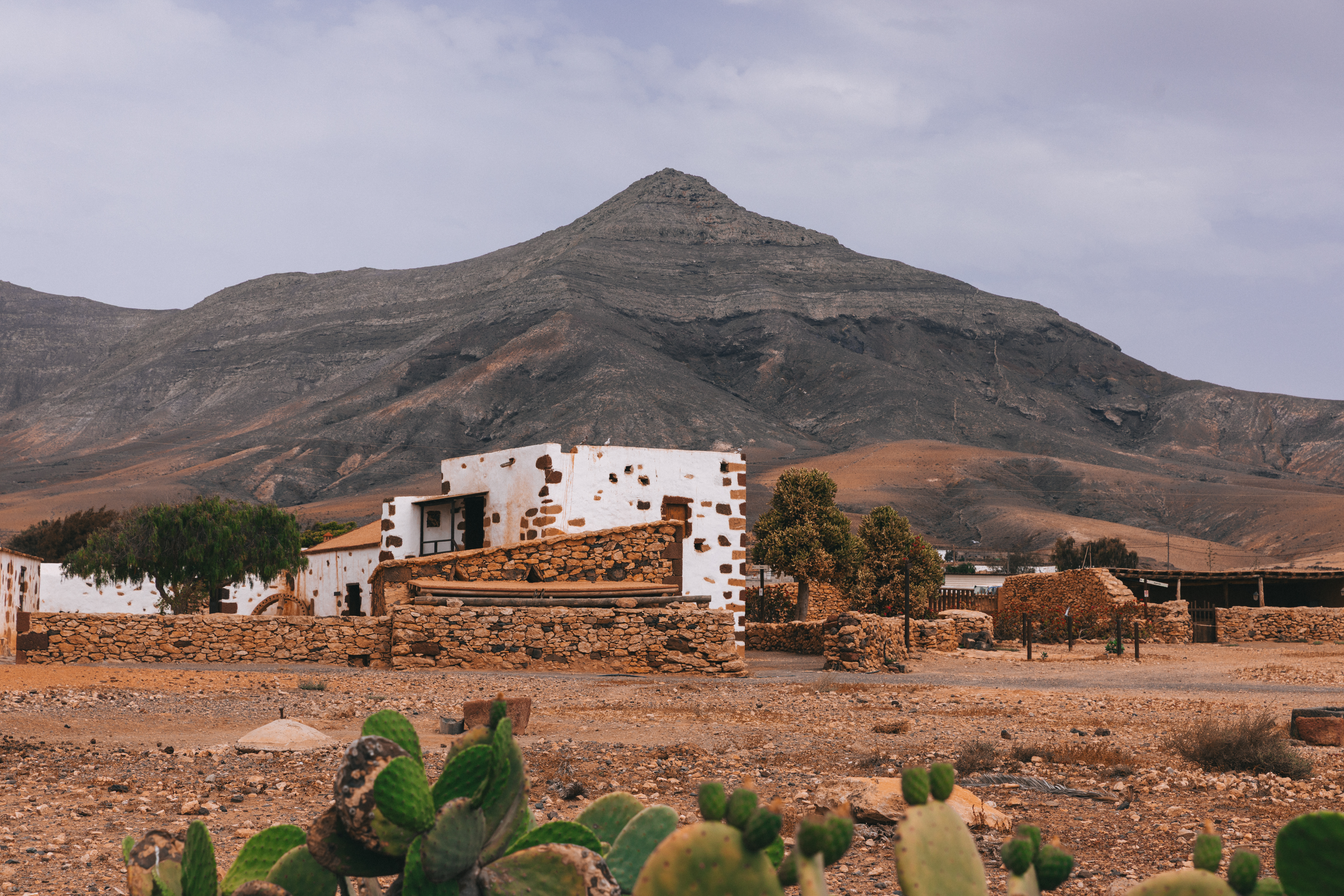
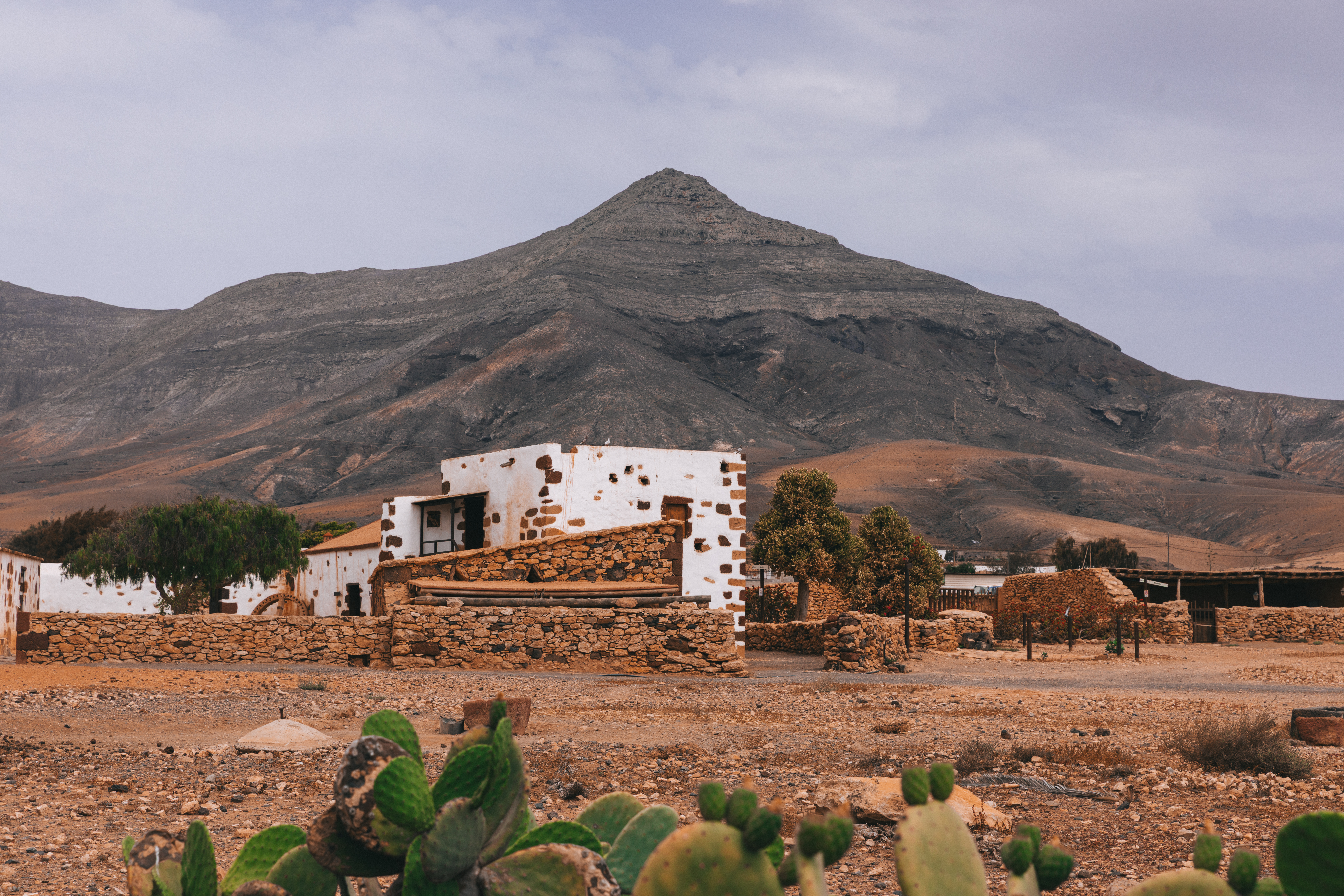
The town of Pájara is a true green oasis sheltered between mountains. Walking through its urban centre will allow you to see its bougainvilleas in bloom, its eucalyptus avenues and a historic water wheel pulled by animals that has been carefully restored.
Its great heritage jewel is the Church of Nuestra Señora de la Regla, a 17th-century temple that guards a unique architectural curiosity in the Canary Islands: its carved stonework portal has striking decorative motifs of Aztec influence such as suns, pumas, snakes and feathers, brought by artisans or Indians who returned from the missions in America.
To go up towards the southern peaks, take the FV-605 road in ascent for about 10 minutes.
Sicasumbre Viewpoint
Located at about 300 metres of altitude, Sicasumbre is an astronomical viewpoint of international reference for the observation of stars and mountain landscapes. It has educational panels, models of the solar system and supports for the installation of telescopes.
To descend towards the coast of La Pared, follow the road in a southerly direction for about 20 minutes.
La Pared Beach
Located on the windward side of the narrow isthmus of Jandía, La Pared is a coastal strip characterised by its imposing cliffs of eroded golden sandstone and the unstoppable force of the Atlantic Ocean.
It is a legendary enclave for the international surfing community due to the constant swell that breaks against its beach. Walking along the shore, watching the surfers challenge the waves and contemplating the sunset is a unique experience to disconnect in the middle of nature.
The transfer to the tourist centres of the south takes about 15 minutes.
Dinner and walk through Gran Tarajal
The town of Gran Tarajal will allow you to see first-hand how the Majoreros live, getting away from the large tourist areas.
With an extensive promenade next to a large beach of fine black sand, it is the perfect place to dine quietly on one of its terraces, where I encourage you to taste fresh grilled fish, grilled limpets with mojo and portions of fried octopus to the lullaby of the waves.
,regionOfInterest=(3096,4128))
,regionOfInterest=(3096,4128))
The fourth day combines a visit to one of the most unique buildings on the island, the ascent to a perfectly preserved volcanic crater and the cultural dynamism of the Majorero capital.
Entallada Lighthouse
Located on the top of a cliff almost 200 metres above sea level, near the town of Tuineje, the Entallada Lighthouse is a jewel of Canarian civil architecture. Designed by the architect Carlos Alcón in the 1940s, the building stands out for its red and white stonework façade, its arches of clear Moorish inspiration and its central square tower.
It is the geographical point of the Canary Islands archipelago closest to the African coast (barely 100 kilometres separate it from Cape Juby). From here you will have a striking view of the Cuchillos de Vigán, a protected landscape of sharp hills formed by ancient lava flows.
To head north for the next hiking activity, take the FV-2 on a journey of about 40 minutes by car.
Hiking to the Calderón Hondo Volcano
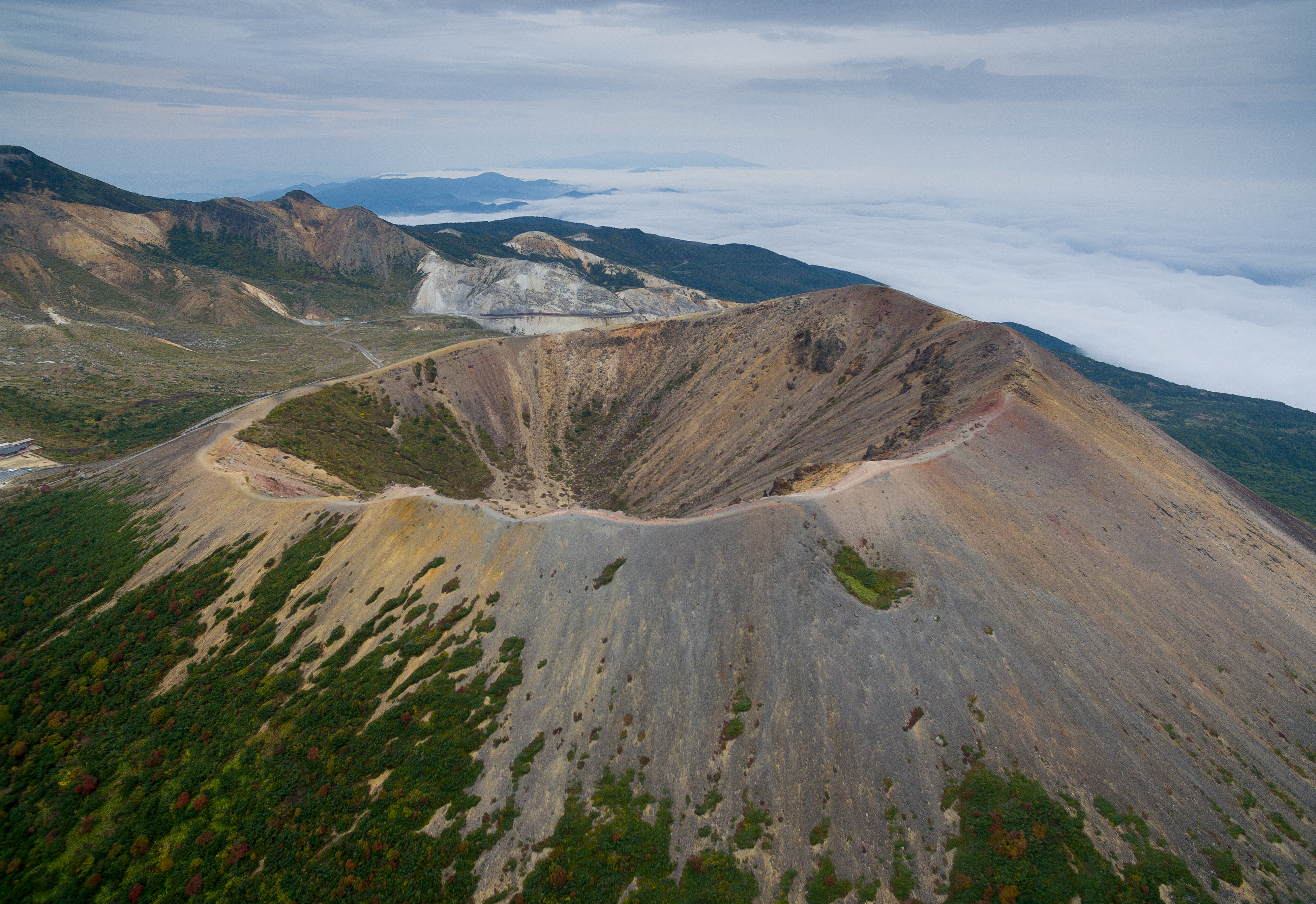
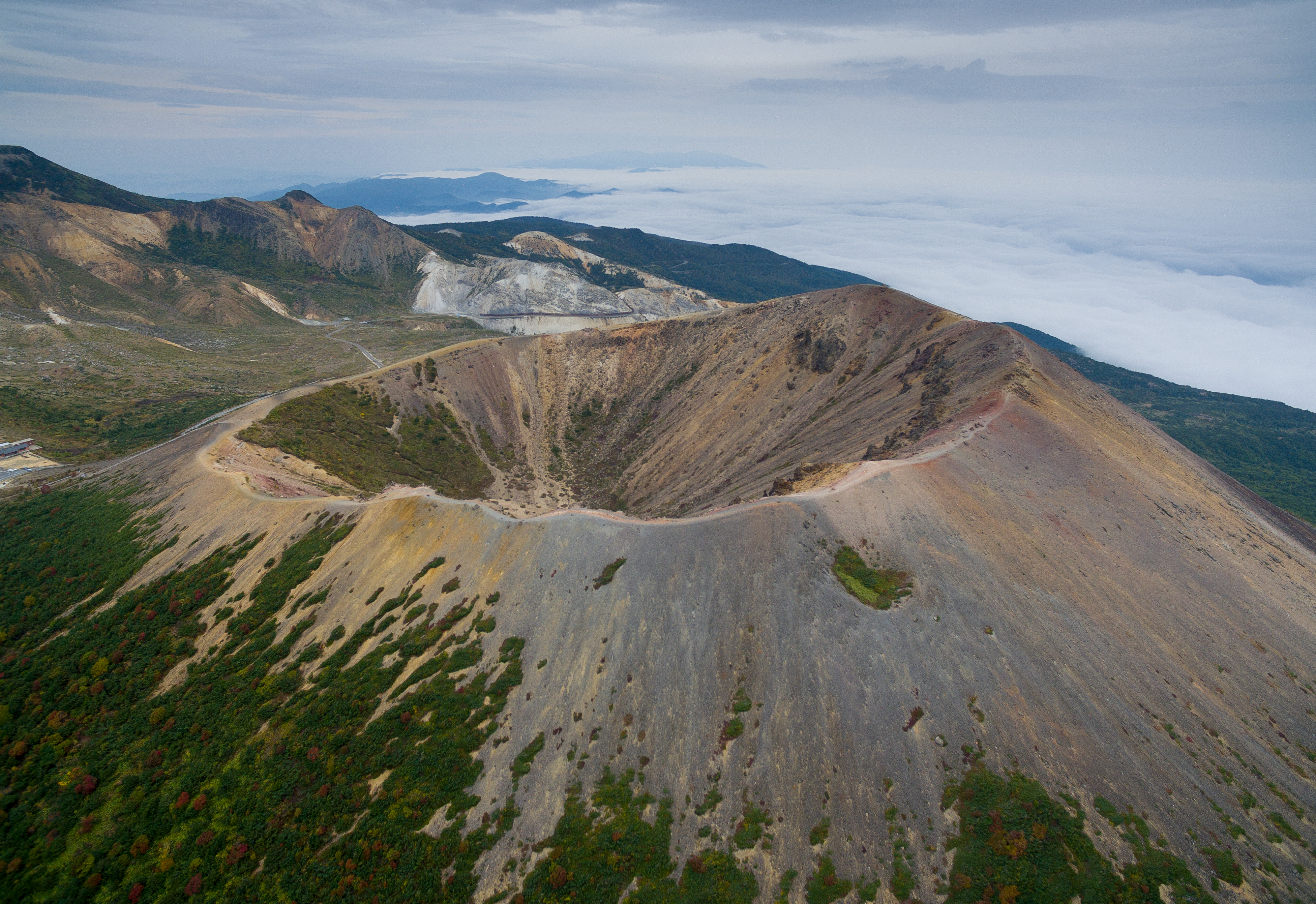
Between the towns of Lajares and Villaverde, Calderón Hondo is one of the best-preserved volcanoes in the aligned chain of volcanoes that emerged about 50,000 years ago.
The route on foot to its summit is a well-signposted and accessible circular path of approximately 45 minutes of walking. Upon reaching the top, a viewpoint will allow you to look into its large crater more than 70 metres deep.
From the volcano car park, you can reach Puerto del Rosario in about 25 minutes by car.
Puerto del Rosario and the Sculpture Route
The capital of the island, Puerto del Rosario, has undergone an enormous cultural transformation in recent years. Without a doubt, its greatest urban attraction is the Sculpture Route, a true open-air museum made up of more than 100 works of art distributed throughout squares, roundabouts and pedestrian streets.
You can take a walk starting on its promenade, visit the Miguel de Unamuno House-Museum (where a large part of the furniture and writings of the famous author during his exile on the island in 1924 are preserved) and disconnect on the central Los Pozos Beach, a cove with calm waters ideal for a swim in the mid-afternoon.
A few minutes' walk from the urban beach is the commercial area of the capital.
Las Peñitas Beach
If you prefer a nature alternative for the last hour of the afternoon, go to the Las Peñitas Ravine, near Vega de Río Palmas. A short path between palm trees will take you to the famous Las Peñitas Arch, a natural stone arch sculpted by wind erosion from where you can contemplate a unique sunset.
The return to the accommodation is done directly in about 20 minutes by road.
Dinner in the capital's port
To end the day, in the area of the fishing port and the pedestrian street Primero de Mayo in Puerto del Rosario you will find a multitude of taverns and restaurants where you can try contemporary Canarian cuisine: carne de fiesta (marinated sautéed pork), Padrón peppers with sea salt from the island, montaditos of cured Majorero cheese with cactus jam and wines with the Canary Islands Designation of Origin.
,regionOfInterest=(3360,2240))
,regionOfInterest=(3360,2240))
The final touch for this Fuerteventura in 5 days tour is reserved for the impressive Jandía Peninsula, at the southern tip.
Sotavento Beach and Risco del Paso
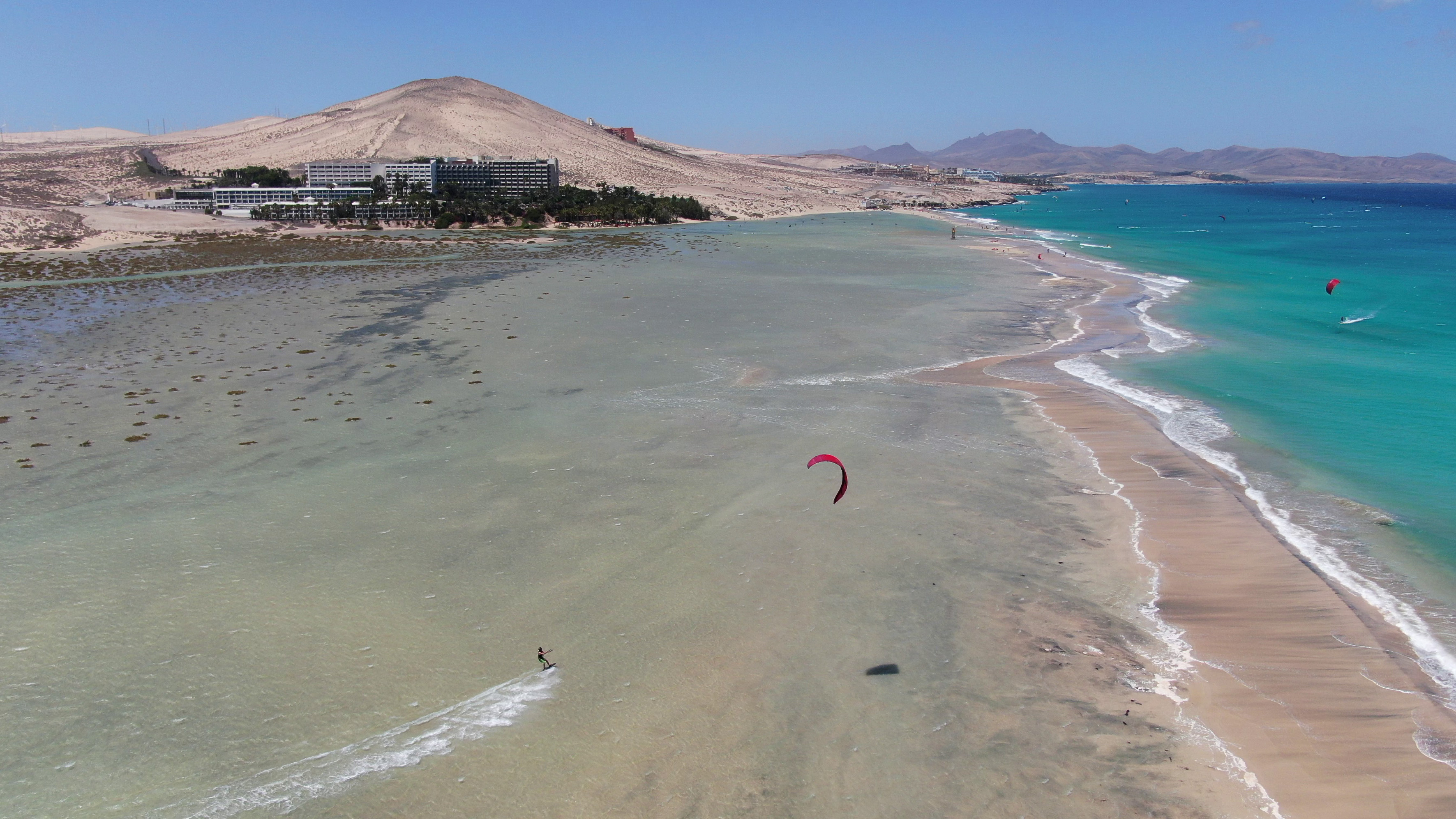
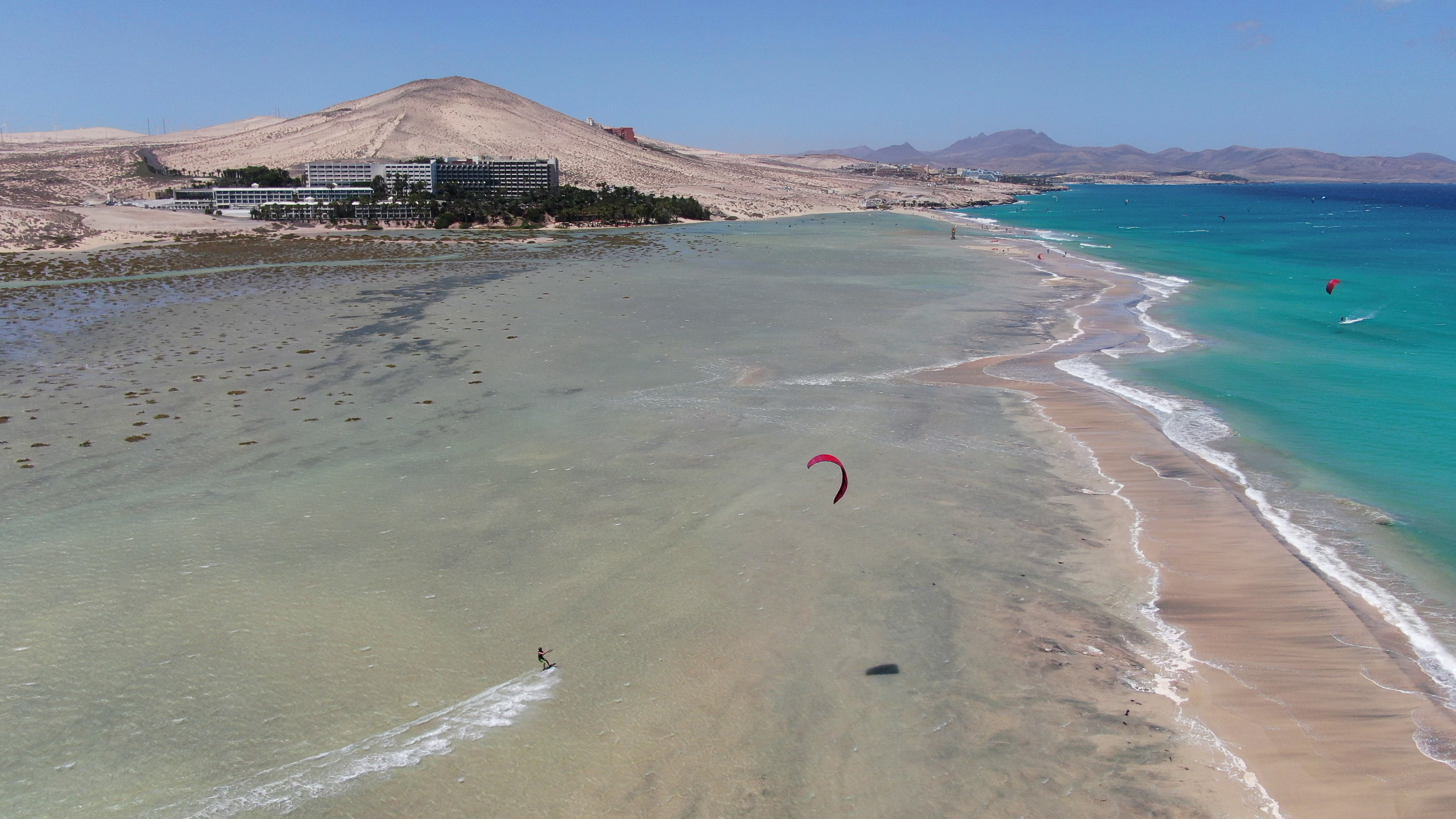
Sotavento Beach is one of the most famous postcards of the Canary Islands in the entire world that you will never forget. Over its almost nine kilometres in length, a unique natural phenomenon occurs.
When the tide changes, a sandbar retains the seawater, forming a shallow lagoon, flanked by golden sands and turquoise waters. Contemplating this chromatic spectacle from the Risco del Paso viewpoint is an experience that is 100% recommended.
To enter the Jandía Natural Park, drive towards Morro Jable and take the dirt track towards Cofete on a journey of about 45 minutes by car.
Cofete Beach and Villa Winter
One of the jewels of the Canary Islands, Cofete beach is an impressive stretch of sand over 12 kilometres long protected by the colossal mountains of the Jandía massif, whose highest peaks are usually covered by clouds. Walking along this infinite beach listening to the sound of the waves will offer you an unparalleled feeling of freedom and disconnection.
In addition, on the mountainside is the legendary Villa Winter, a large house built in the 1940s by the German engineer Gustav Winter, still shrouded today in legends about Nazi submarines and 20th-century mysteries.
Retrace the dirt track back towards the town of Morro Jable in about 40 minutes of leisurely driving.
Morro Jable and Matorral Beach
The town of Morro Jable combines the flavour of its old fishing quarter with a complete tourist and gastronomic avenue.
Its large Matorral Beach is presided over by the tall Jandía Lighthouse, and in front of the beach extends the Jandía Saladillar Site of Scientific Interest, a protected ecosystem that is periodically flooded by high tides and is home to plant species resistant to salt. Its calm and crystal-clear waters are perfect for the last swim of the trip.
From the promenade, walk up about 10 minutes towards the old town.
Morro Jable Church Viewpoint
I encourage you to say goodbye to the last afternoon by going up to the Morro Jable Church Viewpoint, located next to the parish church of Nuestra Señora del Carmen, which is found at the top of the cliff that overlooks the old fishing port.
The views from here encompass the entire coastal strip of El Matorral and the vastness of the ocean, offering an incomparable setting to watch the ships setting sail for Gran Canaria.
The descent to the promenade for dinner is done on foot in less than 5 minutes.
Farewell dinner in Morro Jable
End your trip on the lively terraces of the fishing town of Morro Jable. For this last night, treat yourself to an unforgettable gastronomic dinner based on baifo (traditional Majorero-style roast kid), grilled limpets with homemade green mojo, mixed seafood grill and a piece of gofio mousse. All accompanied by the soft sound of the waves breaking on the shore.
,regionOfInterest=(3052,2034.5))
,regionOfInterest=(3052,2034.5))
If you want to be able to follow this five-day Fuerteventura itinerary without complications, here are these maps with each of the stops, to make it even easier for you:
I think five full days in Fuerteventura is the perfect time to fall in love with the island, enjoy its contrasts without rushing and be able to assimilate the tranquilito (relaxed) pace of Majorero life.
With this 5-day route in Fuerteventura, you will leave the island having known its main attractions and enjoyed its best experiences, but also having renewed your energy thanks to the peace transmitted by a destination to which you will always want to return.
,regionOfInterest=(3976,2652))
,regionOfInterest=(3976,2652))
,regionOfInterest=(2880,1920))
,regionOfInterest=(2880,1920))
,regionOfInterest=(1619.5,1121))
,regionOfInterest=(1619.5,1121))
,regionOfInterest=(1476.5,634.5))
,regionOfInterest=(1476.5,634.5))
,regionOfInterest=(2273,1523))
,regionOfInterest=(2273,1523))
,regionOfInterest=(1564,1200))
,regionOfInterest=(1564,1200))