Visiting Munich and enjoying the Oktoberfest in person is a great experience in itself, but while you’re at it, enjoy the sightseeing. Bavaria is home to stunning destinations less than two hours away by train, such as Neuschwanstein Castle, Linderhof Palace or Lake Tegernsee, among others. And if you have more time, you can even visit the beautiful city of Salzburg which takes just an hour and a half away.Xavi Fornés
How to be one of the others at the Oktoberfest
12 tempo di lettura minimo
,regionOfInterest=(2653.0,1747.0))
,regionOfInterest=(218.5,236.0))
Da Xavi Fornés
Journalist with a travelers soul. He is passionate about discovering new destinations and understanding how people live in every corner of the world. Writing is her way of sharing stories that are born on the journey: stories with essence and emotion from the eyes of people who always want to know more.
Tradition, Bavarian pride, music, typical costumes and lots of beer. Oktoberfest is the most popular festival in Germany and one of the most important in the world. Millions of people visit Munich to enjoy the drink in person, although some do not make it past the second jug. There are no half measures here: or dance on the benches singing in German (even if you have no idea what you’re saying) or look like a typical tourist who came to take their photo and then went to sleep.
Oktoberfest is the biggest popular festival in the world ... and also the easiest one to get labeled as a tourist if you don’t know what to do. This guide tells you how to join the Wiesn (as the locals call it) and enjoy life as if it were a true Bavarian.
,regionOfInterest=(1750.0,1167.5))
,regionOfInterest=(2313.0,1542.0))
,regionOfInterest=(2880.0,1920.0))
,regionOfInterest=(1728.0,1152.0))
,regionOfInterest=(1800.0,1200.0))
Oktoberfest traditions in Munich
Oktoberfest is not just any normal festival. It’s a festival with centuries of history and a handful of traditions that you should know about and celebrate. The best thing will be that you let us see you from minute one.
It all starts with a parade by the Wiesnwirte (carp owners) which takes place through the city streets on the morning of the first day. This is a very colorful show, with live music, in which the hosts arrive at their marquees with barrels of beer in horse-drawn coaching.
You will have to watch over them until they reach Theresienwiese (the Oktoberfest venue) where the opening ceremony takes place. The event is held at 12 midday in the oldest marquee in Schottenhamel. The mayor of the city (Oberbürgermeister) is in charge of opening the first keg of beer with a wooden mallet. This generates great excitement to see how many taps it takes to open the keg, and is always reported in the local press.
"O'zapft is!" means "it’s already open" and are the words used by the mayor to open the festival. The music starts to play right after the yell, and only then can the beer be served.
,regionOfInterest=(2326.0,3485.0))
How to enter an Oktoberfest marquee
The marquees are 'the place to be', where everything happens: music, liters of beer and improvised dances that never end. Many people think that just getting there is enough, but the reality is that getting into a marquee can be complicated. The 2024 edition received 6.7 million visitors, so you get an idea.
Book a table or arrive really early
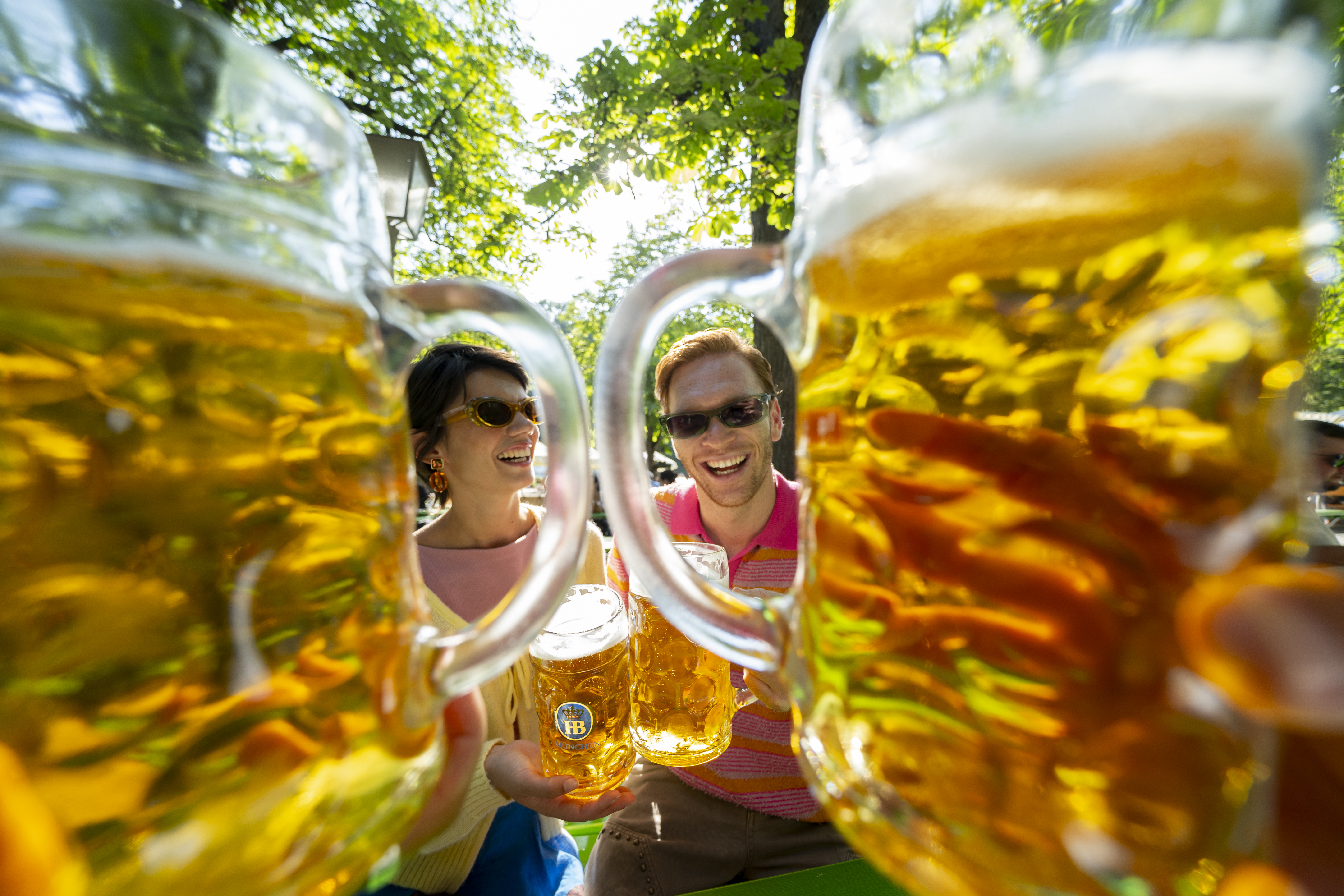
Your first option has to be to book. Bear in mind that reservations open for marquees months in advance and that local people come out of them like crazy. But don’t lose hope if you couldn’t book. What you can do is get there first thing in the morning (especially during the week), try your luck in the smaller marquees (everyone wants to visit Hofbräu or Schottenhamel, but there are less famous marquees which are just as fun) or share a table. If you see a space, don’t shy away from asking "Ist hier frei?" (“Are you free?”). The response is usually positive, and within a minute you’ll be toasting yourself with your new Bavarian friends.
Bear in mind that there are marquees for all ages: traditional, for modern families or for youngsters. Each of them with its own particularities, but always in tune with the Bavarian spirit.
,regionOfInterest=(2834.5,1889.5))
The biggest popular festival in the world
Beer, the Bavarian queen
She is the real star, and the numbers show it: more than 7 million liters of beer are consumed in each edition (yes, millions, and in just two weeks). Each “Maß” (jug) weighs more than 2 kilos full, making the waiters and hostesses huge athletes as they are able to transport up to 10 kilos at a time.
And we’re not talking about just any beer. Only six beer halls in Munich have the honor of serving the Oktoberfest: Augustiner, Paulaner, Spaten, Löwanbräu, Hofbräu and Hacker-Pschorr.
Types of beer available
And if you thought that Oktoberfest was the perfect chance to try a wide range of German beers, you’re wrong! They all make a special edition for Oktoberfest. The "Oktoberfestbier” is prepared following the Reinheitsgebot (German Purity Law of 1516) and using only four ingredients: water, malt, hops and yeast. The result is a full-bodied beer with dense foam and an intense golden colour. It is drinks in one-litre jugs and has a alcohol content of between 5.8% and 6.3% (stronger than a normal lager), although it is also very tasty. In fact, it has less bitterness than other German lagers.
How to order beer like a local
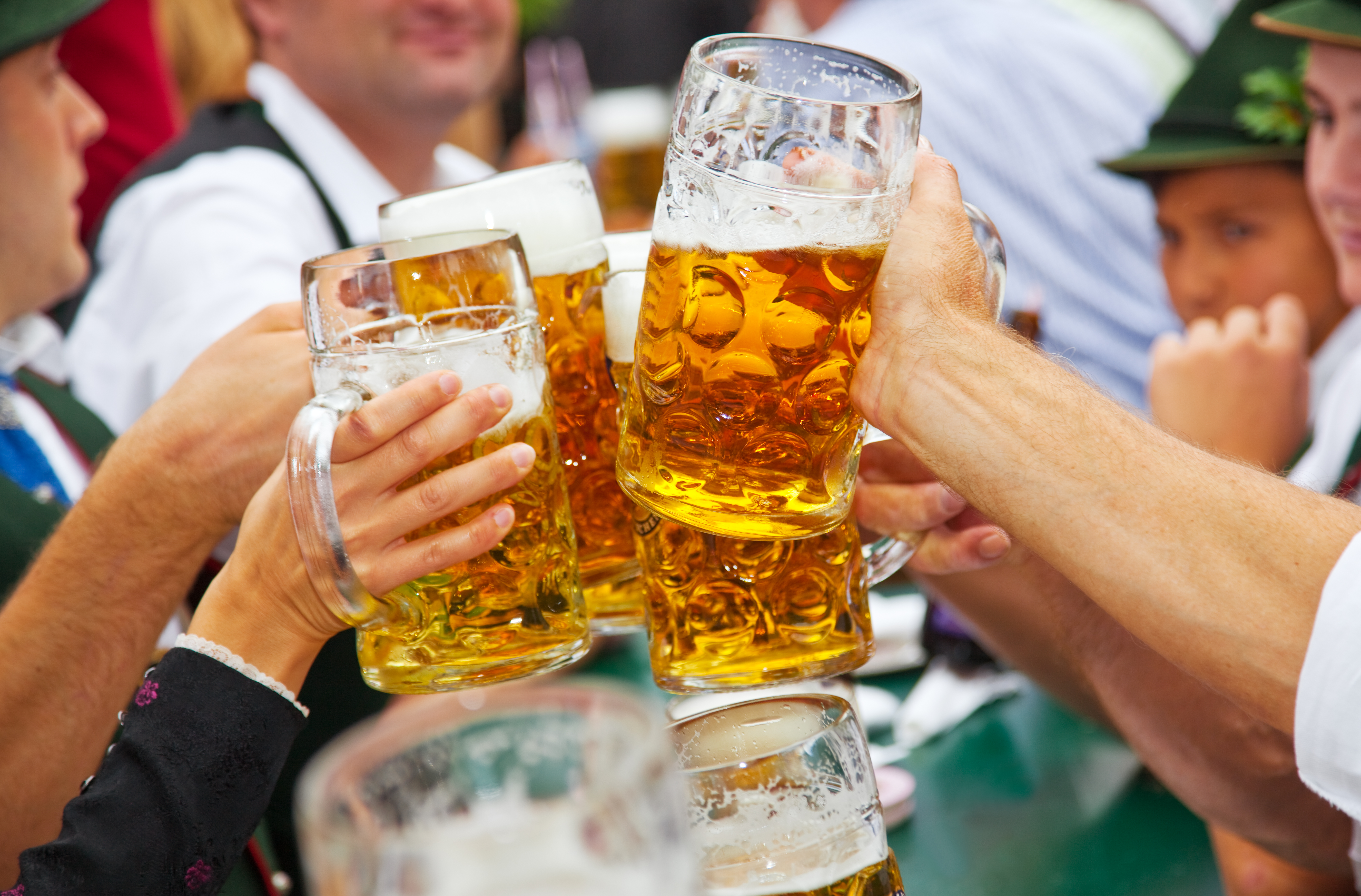
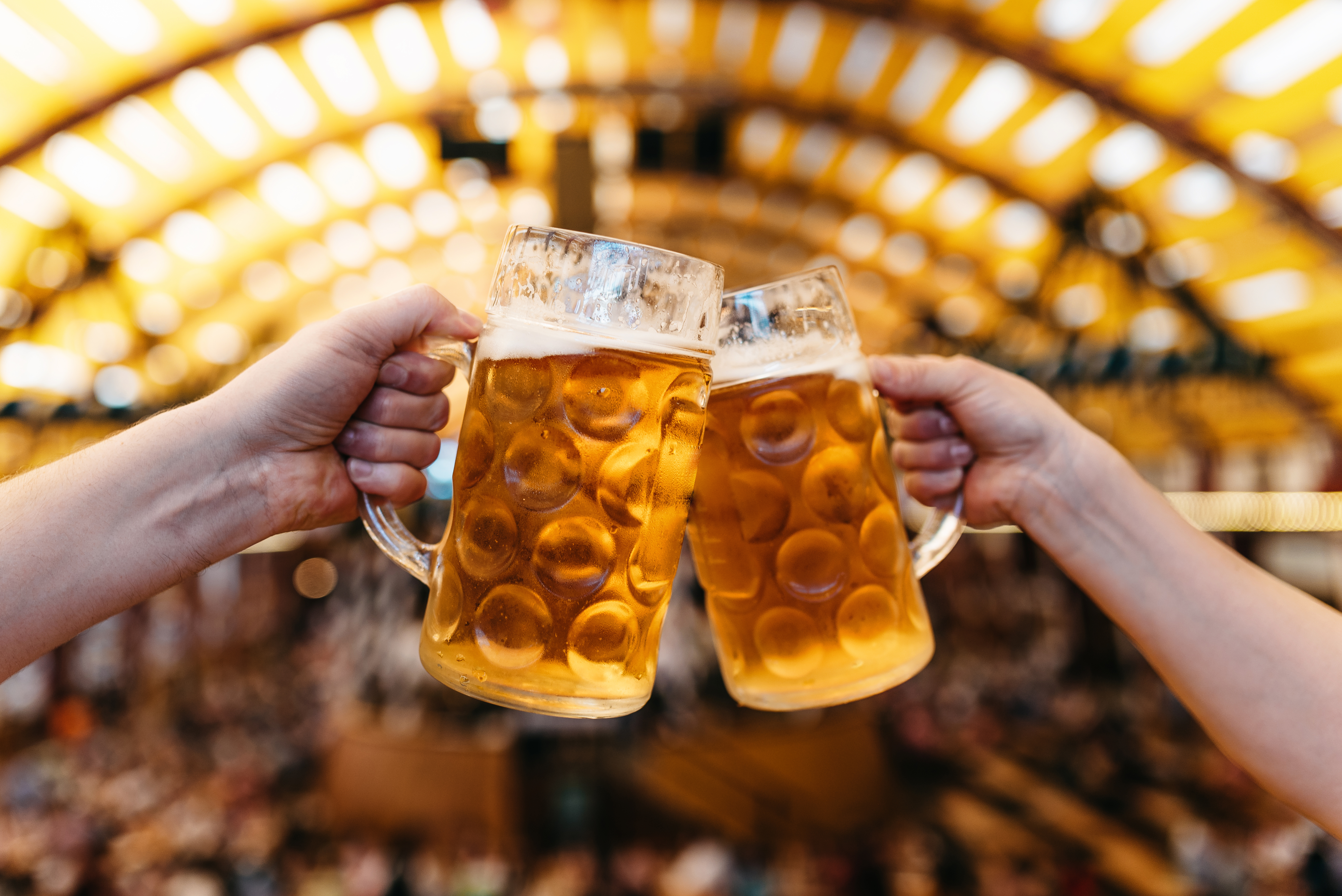
The rules are clear: the minimum unit is the litre. There are no pints, pints or half measures. Just say "eine Maß, bitte" (one litre, please) or "Noch eine!" (another!), which is the most used by local residents. And if you don’t feel confident about putting your German into practice, just smile and make eye contact, always with an empty jug in your hand. Oh, and don’t be surprised by how sudden the waiters are! The ritual also includes placing the jug on the table with a firm thud.
,regionOfInterest=(3008.0,2008.0))
This is how you drink at Oktoberfest
It may seem obvious to you, but it really is not. The first thing you need to know is how to hold the jug. This must be done firmly, by the handle, and with one hand (without touching the table). Second, don’t even think about starting to drink without making a toast and yelling “Prost! Important: making eye contact is mandatory as it is considered a show of respect and good luck.
We recommend you drink slowly, sip by sip, leaving some foam until the end. This helps keep the wine cold for longer and preserves the flavour.
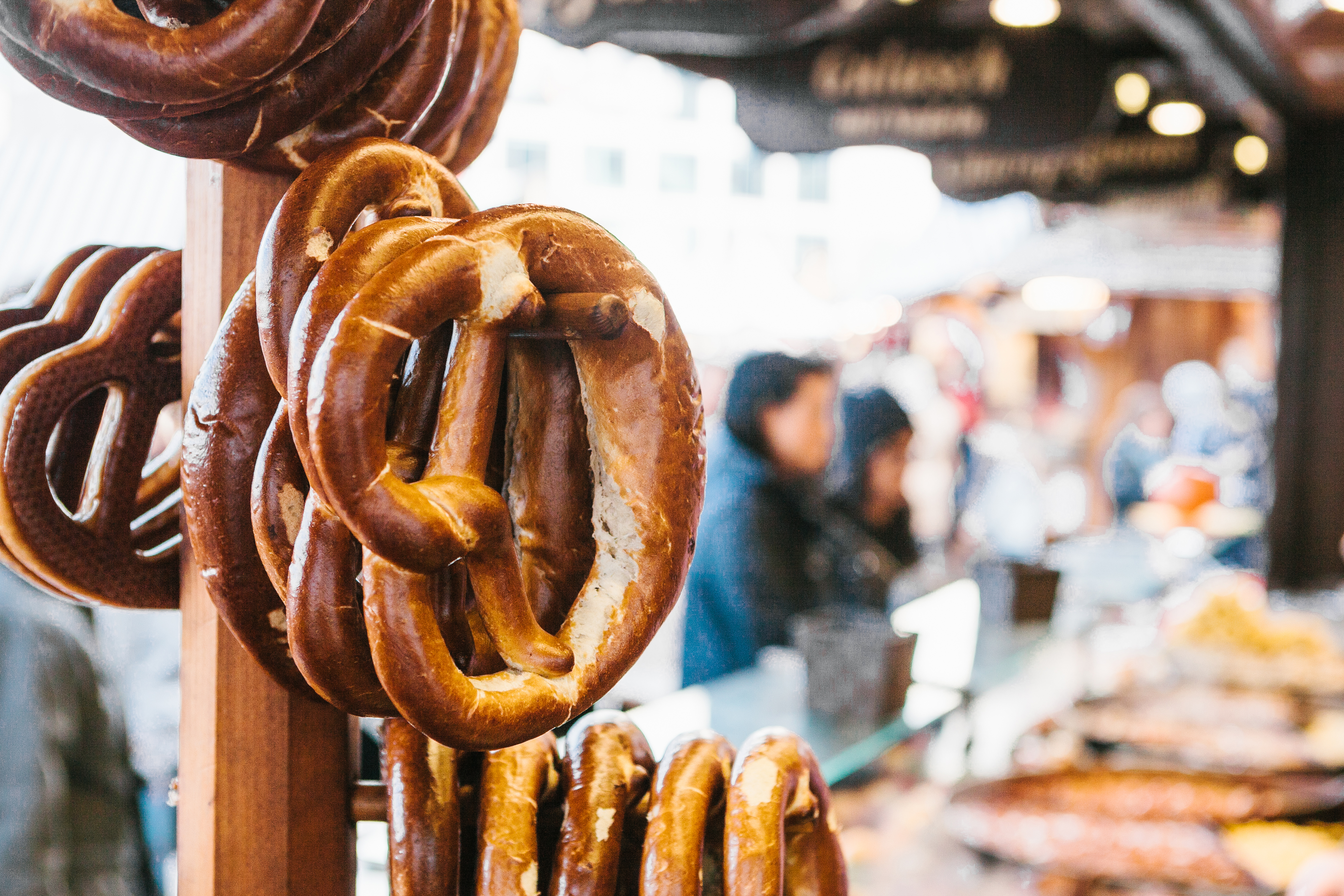
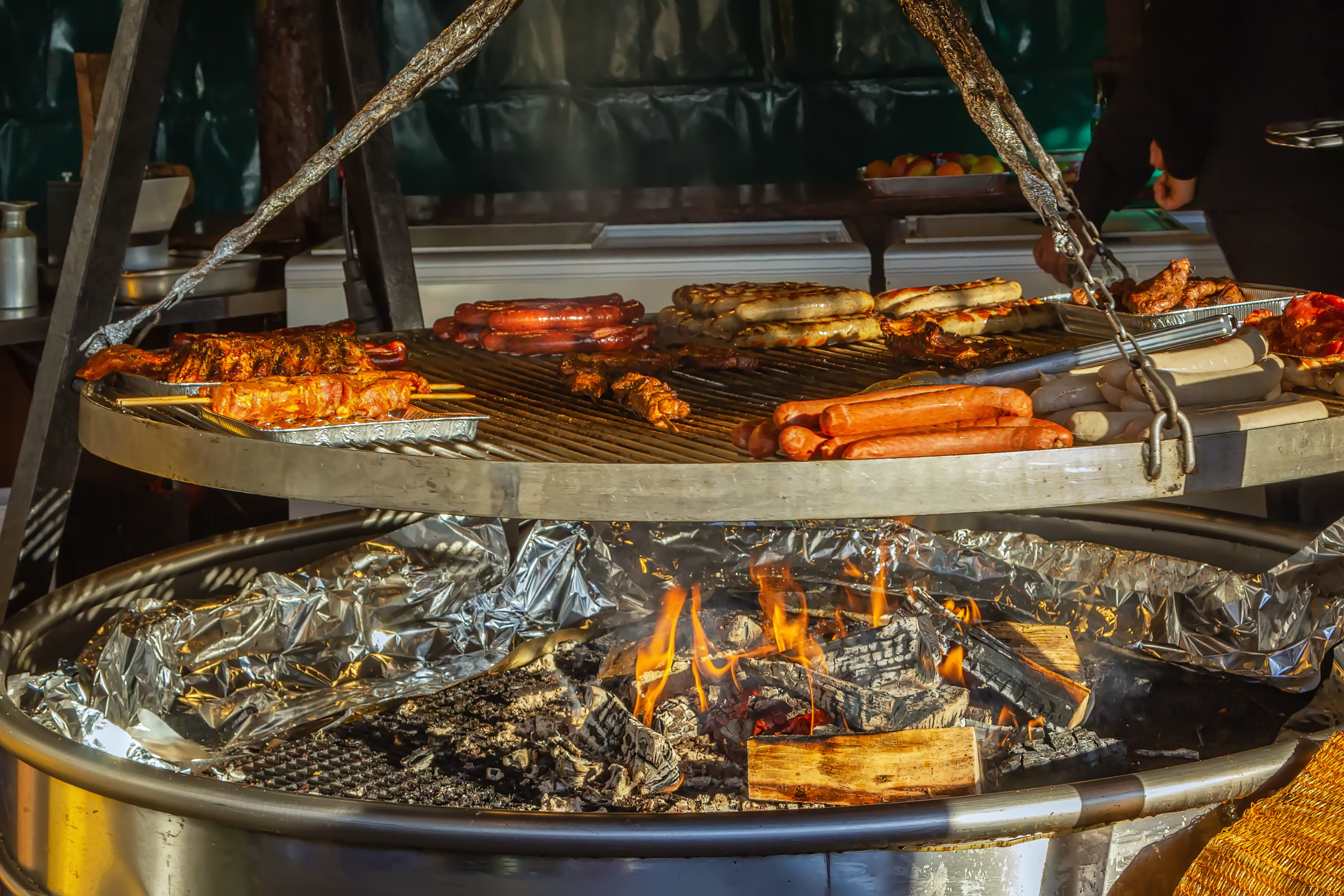
It is usually accompanied by typical dishes such as pretzels, roast chicken, ham hock or sausages to help mitigate the effect of the alcohol.
Sing with them: most popular songs
At Oktoberfest, it’s not enough to just drink, you also have to sing! 90% of the repertoire are very easy to learn, so you don't need a B2 to be able to sing them. The most important thing is not to stay quiet, raise your jug and, at least, yell "lalalá" in the correct rhythm. Here enthusiasm is worth more than conversations.
“Ein Prosit, ein Prosit der Gemütlichkeit. Oans. Zwoa. G'suffa!" (A toast, a toast to the good times. One, two, up!). This is the official toast song. It is repeated every few minutes and the words are as short as they are easy to sing.
Sweet caroline, Country Roads or even Viva Coloniato come on . Don't ask why, just raise your glass and sing out loud.
,regionOfInterest=(2067.0,1378.5))
When is Oktoberfest held?
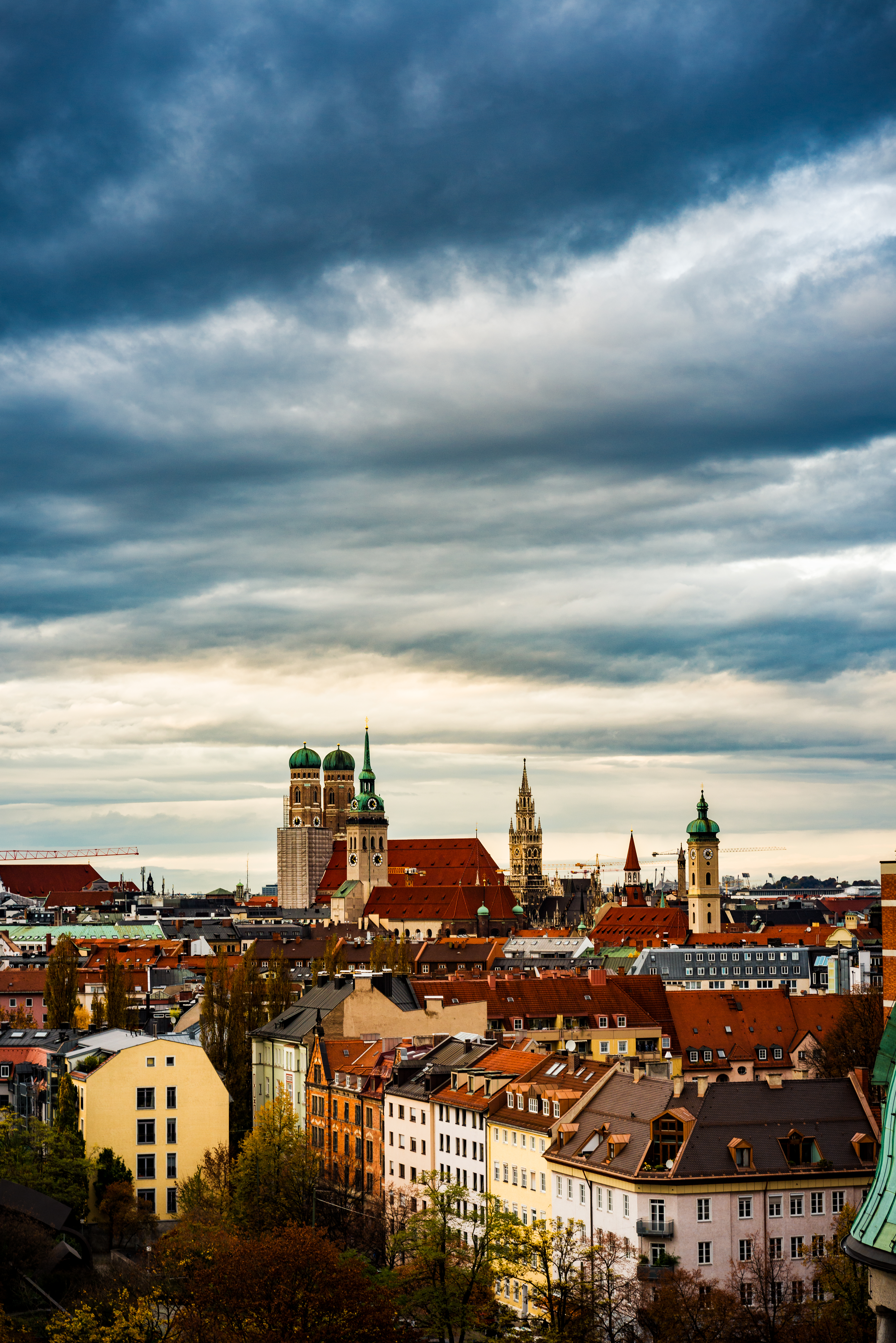
By now you’ll be wondering when the Munich Oktoberfest is in 2025. Well, strangely enough, the party starts on Saturday, September 20 and ends on Sunday, October 5. It is held in Theresienwiese Park, to the west of the city centre, and entrance is free.
The 46-hectare enclosure is open from 10am until after midnight, although some marquees close earlier. Remember that you must have a seat to enjoy a beer and that our reservation is recommended. Prices of beer for a liter range between €12 and €15.
Public transport
You can get to Theresienwiese by using both the metro (U-Bahn) and train (S-Bahn). There are two metro stations on each side of the park. The Theresienwiese connecting lines 2, 4 and 5 and the Goetheplatz connecting lines 3 and 6. Both are just over a five-minute walk away, and the München Hauptbahnhof (central train station) is about 20 minutes on foot.
The best hotels in Munich
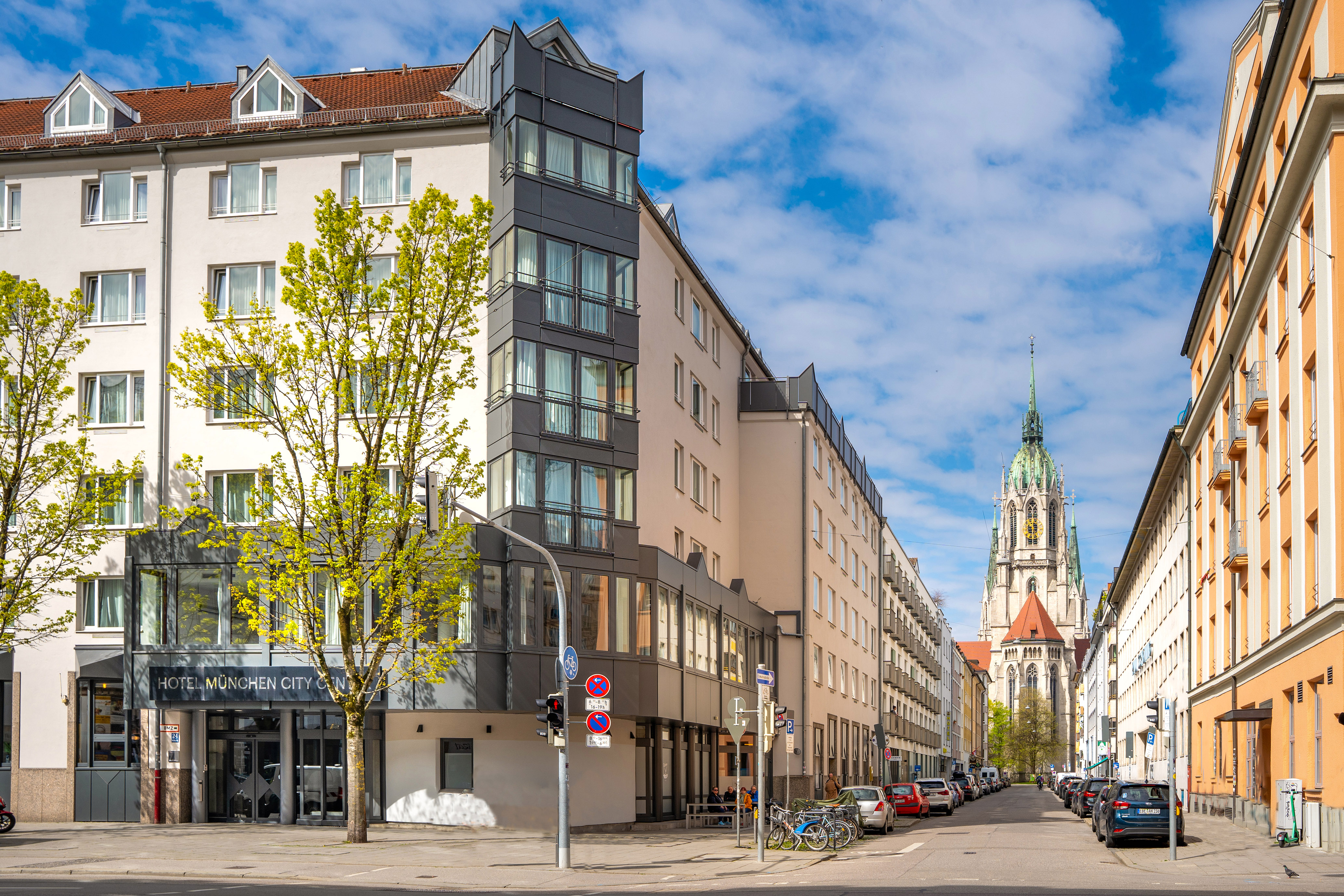
If you are looking for a hotel in Munich near the Oktoberfest, the Hotel München City Center Affiliated by Meliá is your best option, only a 10-minute walk from Theresienwiese. Another option is the INNSiDE München Parkstadt Schwabing hotel, a little further away but very well connected by public transport.
Dining: What to eat to not satisfy yourself
As I mentioned, there are numerous dining options. In fact, you can try almost all the specialties of German cuisine, with the pork knuckle (Schweinshaxe), roast sausages (Bratwurst) and roast chicken (Hendl) being the most popular dishes. There are also skewers of beef, duck with potato balls and red cabbage and Steckerlfisch, a grilled fish (mackerel, char or platica) served on a skewer. There are also pretzels and vegan options such as obatzda (mixed spicy cheeses), pumpkin or potato soups and all kinds of Knödel, meatballs seasoned with onion, parsley and nutmeg.
Beyond the beer: attractions
It’s common to think that Oktoberfest is all about beer, but nothing could be further from the truth. There is also a major Volksfest for all the family, with both classic and modern attractions that are all part of Bavarian tradition.
The carousel (Krinoline) has been around for almost 100 years and one of the oldest Oktoberfest attractions. The toboggan slide is another classic attraction and may be the most enjoyable attraction of all. It’s a wooden slide, but the biggest attraction is the conveyor belt you have to ride to get to the top. Balance is required to ensure laughs from the audience. The Riesenrad is iconic and allows views of the entire Theresienwiese, the carps and the city from the top. Don’t miss the Schichtl, a peculiar music hall that has been going on since 1869 featuring spicy humour, political satire and local jokes. The star show is the guillotine, in which he "executs" a spectator with such theatrical and exaggerated style that it ends in laughter. The language barrier is significant here, but you can enjoy this latest issue without having to understand what they are saying.
Dress in Bavarian fur
Not everyone wears traditional Bavarian costume, but most do. So, if you want to go unnoticed, your best bet is to get one. First and most important of all, it is not just a costume, but rather a symbol of your identity. The local team wears the dress with great pride, and the dress is so well known that many people visit the offices dressed in national style. For the Oktoberfest days, of course.
Dirndl is the name of the costume worn by women. It is a form-fitting dress with a bustle, white shirt and wide skirt to the knees. On top of that, she wears an apron that, fun fact, also acts as a sentimental traffic light: if the ribbon is on the left, it means you’re single; on the right married, engaged or "don’t even try"; and behind them, a widow or housekeeper. The most typical accessories are a collar or “Kropfband”, which is a velvet band fitted around the neck; heart-shaped bag, wool jacket or flower crowns, all very popular with young people.
The official dress for men is the "Lederhosen", consisting of short leather trousers or knee-length trousers, suspenders and a checked shirt (the color will be up to the customer, although it is usually red or green). Completed with long wool stockings, leather shoes and, if you want to earn points, a Bavarian hat with a feather, known as a “Tirolerhut”.
The trick to make sure you don’t fail is to avoid suits from cheap brands or from online stores that look like they’ve been taken from a stag do. Believe me, the locals will notice right away. No need to worry! In Munich there are plenty of shops where you can buy quality suits (from €150 for the lower-end products) or even rent suits for a couple of days.
Being just another member of the Oktoberfest team doesn’t mean drinking until you lose balance. It means understanding its rituals, joining in its songs and enjoying all the Bavarian joy… jug in hand, of course.
,regionOfInterest=(2013.5,1510.5))
,regionOfInterest=(2280.0,1520.0))
,regionOfInterest=(1424.0,2128.0))
,regionOfInterest=(2592.0,1728.0))
,regionOfInterest=(2131.5,1418.0))
,regionOfInterest=(2240.0,1493.5))