,regionOfInterest=(2900.5,1949.5))
,regionOfInterest=(2900.5,1949.5))
The best coves in Mallorca
,regionOfInterest=(707.5,1059.5))
,regionOfInterest=(707.5,1059.5))
Culture
,regionOfInterest=(2150,1433.5))
,regionOfInterest=(2150,1433.5))
Culture
,regionOfInterest=(500,500))
,regionOfInterest=(500,500))
All-terrain writer specialising in tourism, fashion and trends. A curious soul, traveller, reader and sports enthusiast, keen to discover every corner of the world.
If you asked anyone in Chiang Mai where to find the best Thai food, they would probably point you towards a market stall, a family-run shophouse, or a khao soi restaurant that has been serving locals for generations. They would not be wrong. Northern Thai cooking built its reputation in exactly those places.
Up on the 21st floor of Meliá Chiang Mai, that same Northern Thai tradition gets a different kind of attention: an executive chef with decades in professional kitchens, ingredients sourced within a short drive of the city, and a room built around watching it all happen. What follows is a closer look at why this kitchen has become a serious answer to anyone asking about the best Thai restaurant in Chiang Mai.
,regionOfInterest=(1771.5,1181.5))
,regionOfInterest=(1771.5,1181.5))
,regionOfInterest=(1771.5,1181.5))
,regionOfInterest=(1771.5,1181.5))
,regionOfInterest=(1771.5,1181.5))
,regionOfInterest=(1771.5,1181.5))
,regionOfInterest=(1771.5,1181.5))
,regionOfInterest=(1771.5,1181.5))
,regionOfInterest=(340,226.5))
,regionOfInterest=(340,226.5))
Lanna was its own kingdom long before it became part of Thailand in the 19th century, and its food developed on a different track as a result. Sitting close to Burma, Laos, and Yunnan in southern China, Chiang Mai's cooking absorbed influence from all three, while the cooler mountain climate shaped a diet built around warming spices and slow-cooked pork.
Chiang Mai itself sits in a river valley more than 300 metres above sea level, ringed by mountains including Doi Suthep, which keeps the air noticeably cooler than Bangkok's flat central plains for much of the year. That climate is part of why the food leans on ginger, garlic, and long-simmered pork rather than the coconut-heavy, sweeter cooking found further south.
Sticky rice, not jasmine rice, anchors most meals here, alongside herbs like galangal, lemongrass, and kaffir lime that turn up across the region's best known dishes, from Sai Oua sausage to Gaeng Hang Lay curry. The result reads as rustic on the surface and considerably more layered underneath: savoury, sour, and only sometimes sweet.
Fermentation does a lot of the work behind that flavour. Nam phrik chili pastes, fermented soybean paste known as tua nao, and fermented fish add a depth that central Thai cooking rarely reaches for, and it shows in a dish like Gaeng Hang Lay, which skips coconut milk entirely in favour of a thinner, more gravy-like curry built on those same fermented notes.
Sticky rice also comes with its own eating ritual: rolled into small balls by hand and dipped into a family of chili pastes called nam prik, ranging from nam prik noom, a roasted green chili dip, to the tomato and pork based nam prik ong that Mai Restaurant & Bar reworks under its own name. Knowing that family helps explain why a dish built around a humble dip earns a place on a fine dining menu rather than staying a side note.
Most visitors arrive in Thailand already knowing pad thai, tom yum goong, and green curry, all of which come from the central plains rather than the north. Chiang Mai's food surprises people for exactly that reason: it is milder in sugar, heavier on herbs, and built around a completely different set of curries and dips that rarely make it onto a menu outside the region.
That is the tradition Mai Restaurant & Bar draws its cooking from, translated through a kitchen that finishes each course a la minute rather than holding it under a heat lamp. It is one reason the restaurant keeps coming up in conversations about the best Thai restaurant in Chiang Mai among visitors who already know the street-level version well.
,regionOfInterest=(2150,1433))
,regionOfInterest=(2150,1433))
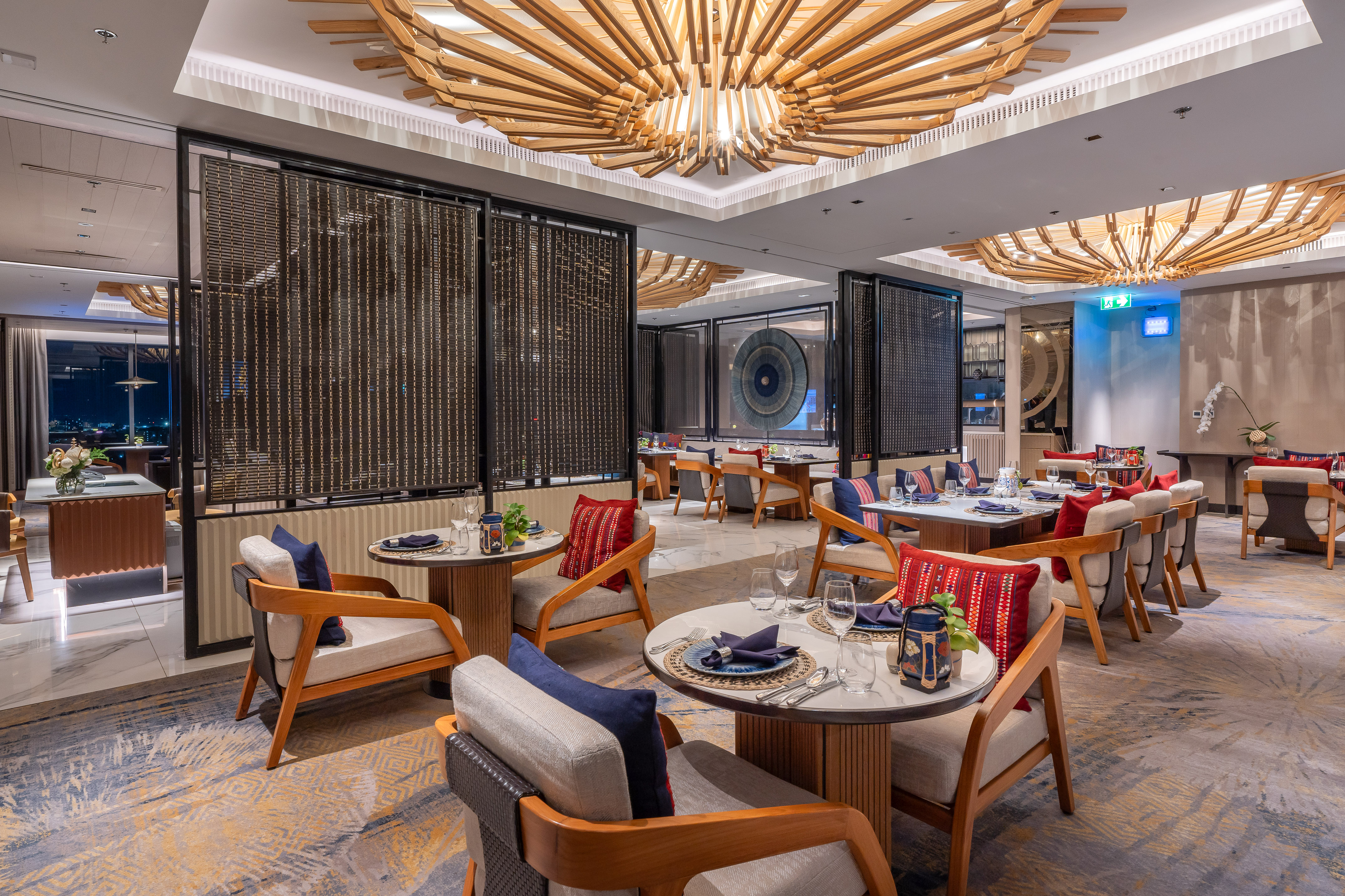
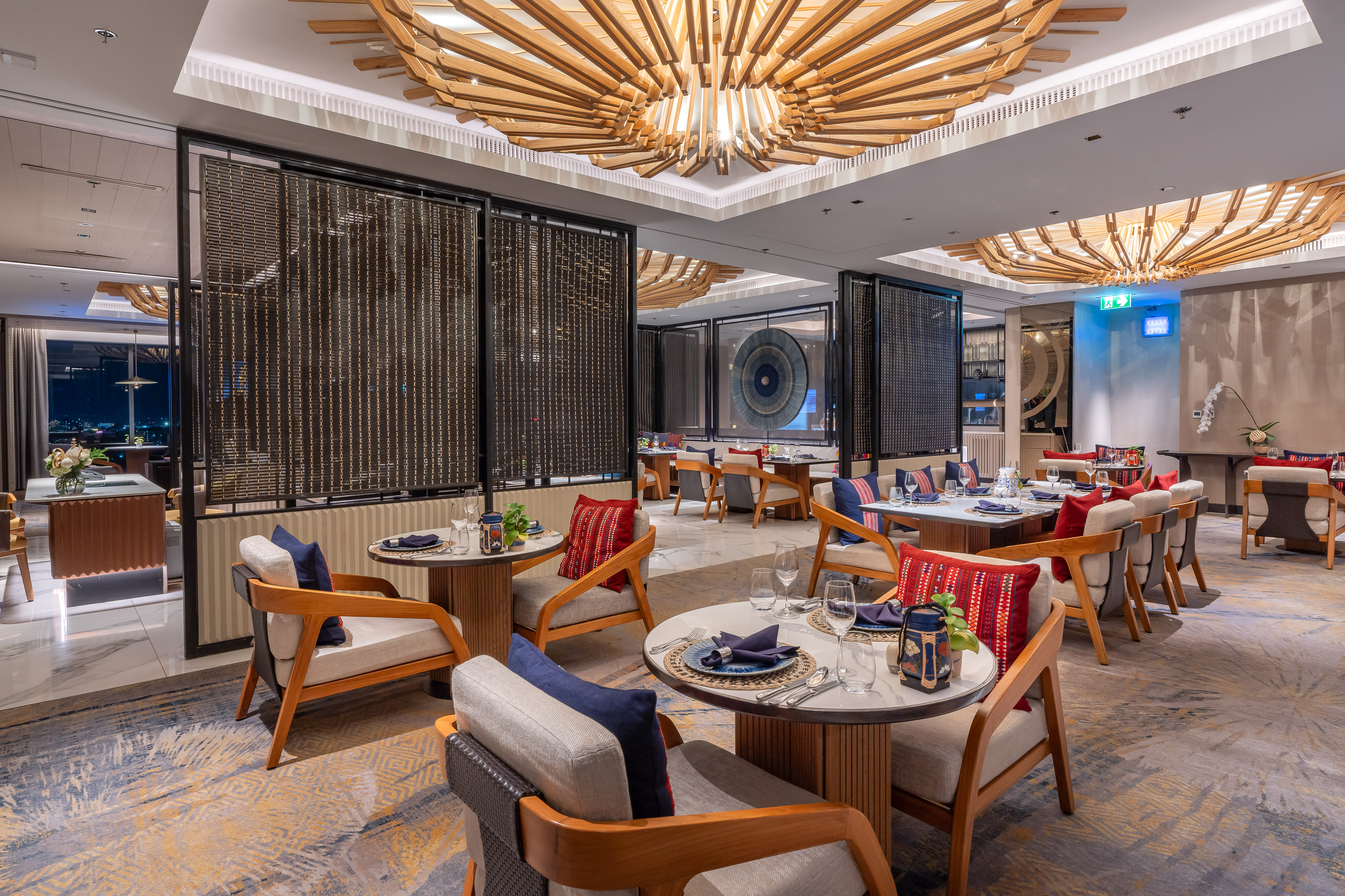
Mai Restaurant & Bar opened on the 21st floor when Meliá Chiang Mai itself opened in April 2022, tucked directly under the hotel's rooftop bar and next door to the executive lounge. It is the restaurant most closely tied to the hotel's claim on Northern Thai cooking, and the one guests are pointed to first when they ask about the best Thai restaurant in Chiang Mai.
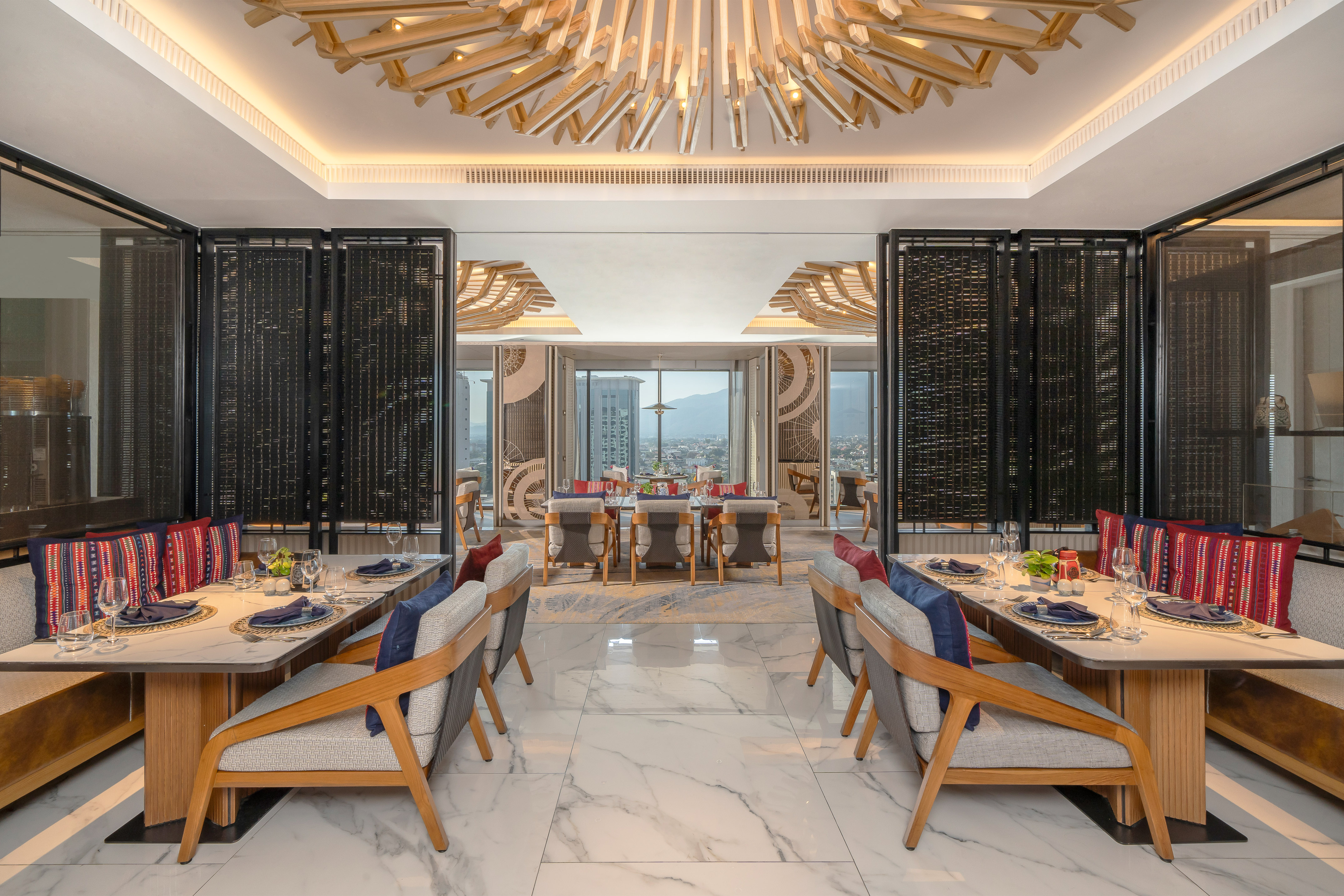
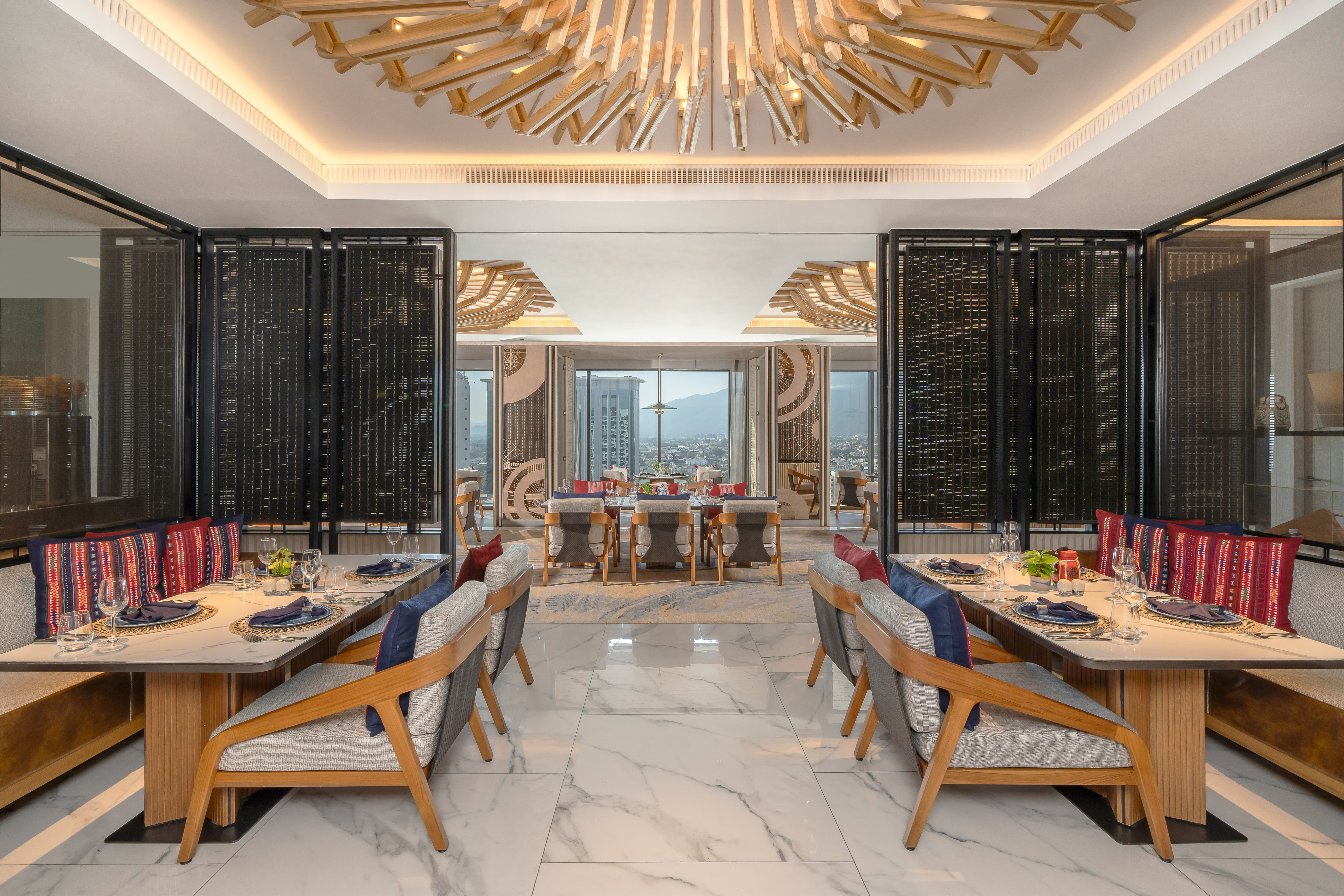
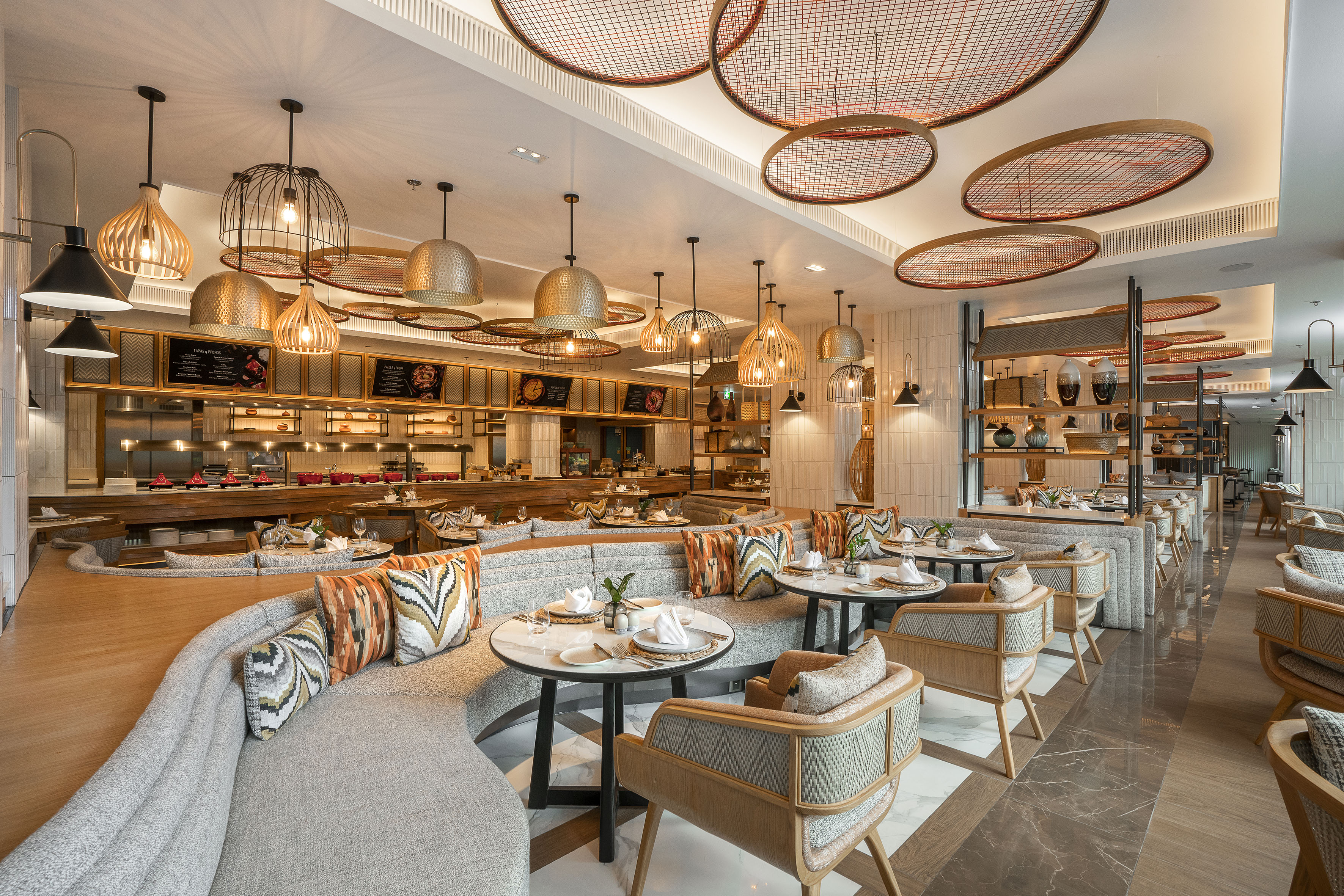
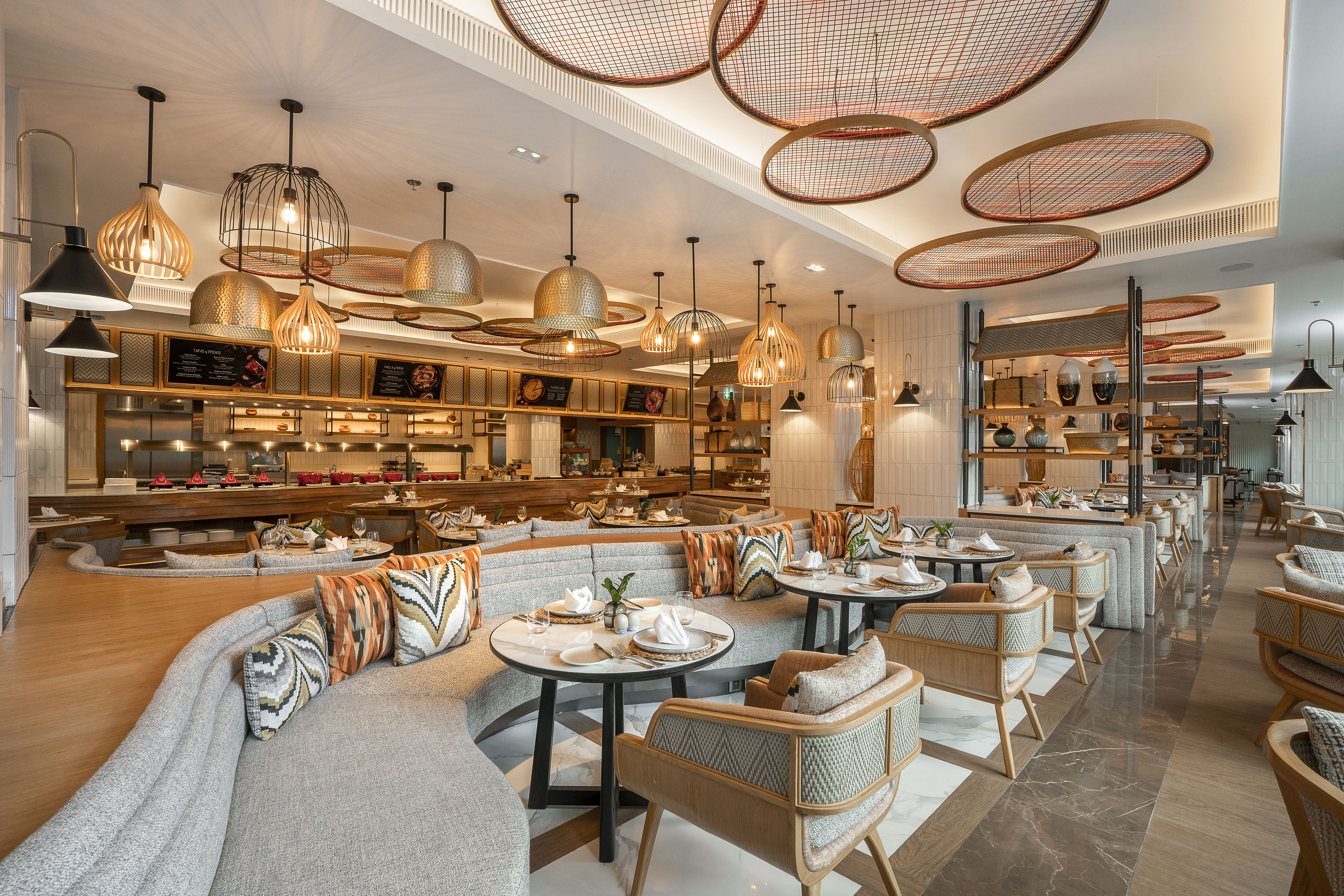
The room seats 43, small enough that the open kitchen at one end stays within sight and earshot of every table rather than becoming a distant backdrop. That scale is deliberate: it keeps a seasonal, a la minute menu manageable for the kitchen while still giving every table the same unobstructed view over the city.
Meliá Chiang Mai calls it a signature restaurant for a reason: where Laan Na Kitchen handles the all-day, more casual side of the property, Mai Restaurant & Bar is the one booking reserved for a single, considered dinner rather than a quick meal between activities.
The kitchen treats Lanna cooking as a living style rather than a museum piece, pairing traditional technique with a Mediterranean sensibility that reflects Meliá's Spanish roots. Dishes still start from the same base of galangal, lemongrass, and chili that any Chiang Mai cook would recognise, they just arrive plated with a different sense of composition.
That approach keeps the fermented, herbal backbone of Lanna cooking intact rather than smoothing it out for a broader audience, then builds the plating and pacing around it. The spicing and the sourness stay where a Chiang Mai cook would put them, which is precisely what gives the menu its edge.
,regionOfInterest=(340,226.5))
,regionOfInterest=(340,226.5))
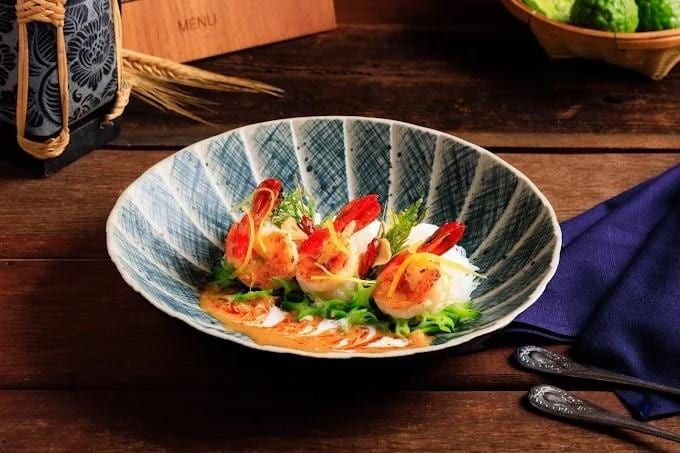
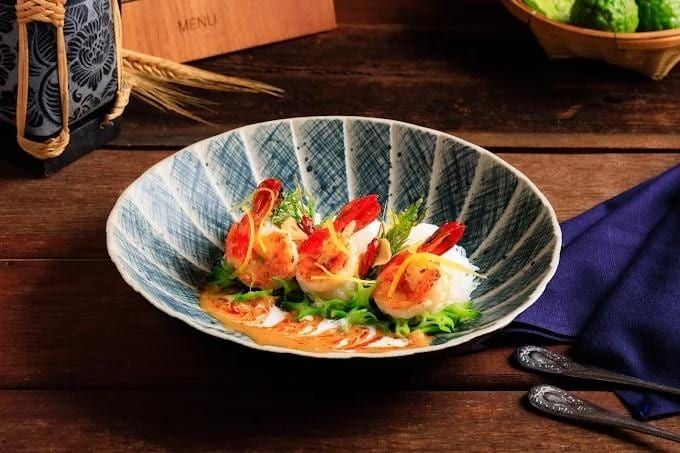
The three dishes below were not picked at random. Between them they cover a soup, a salad, and a dip reworked into a main course, which is as good a cross-section of Lanna cooking as a first-time visitor could ask for in three plates.
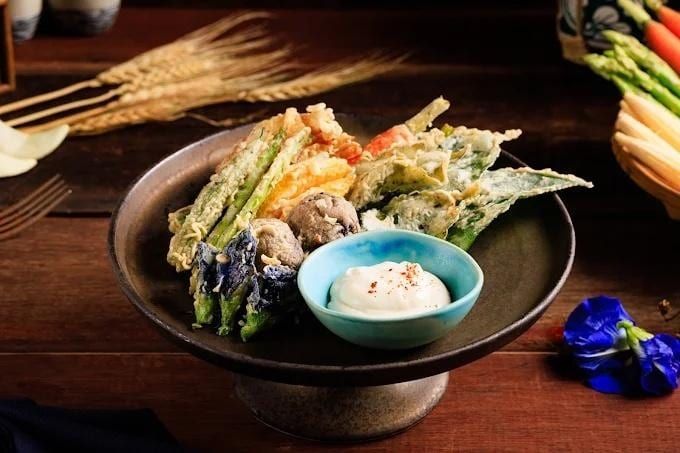
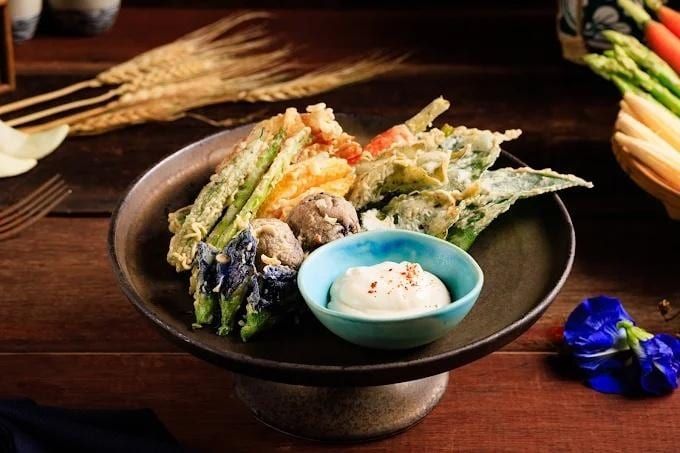
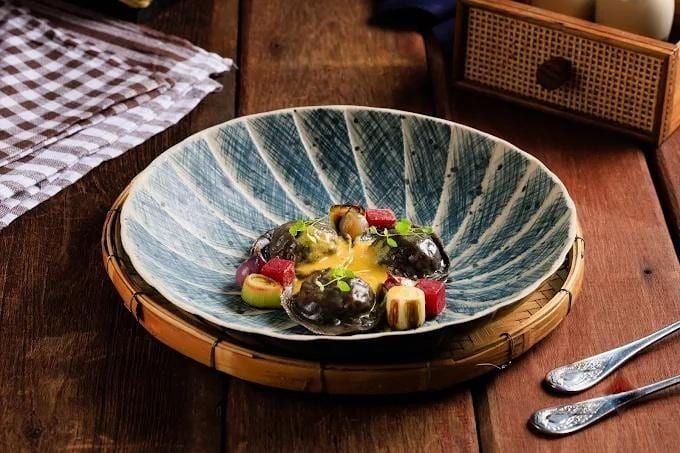
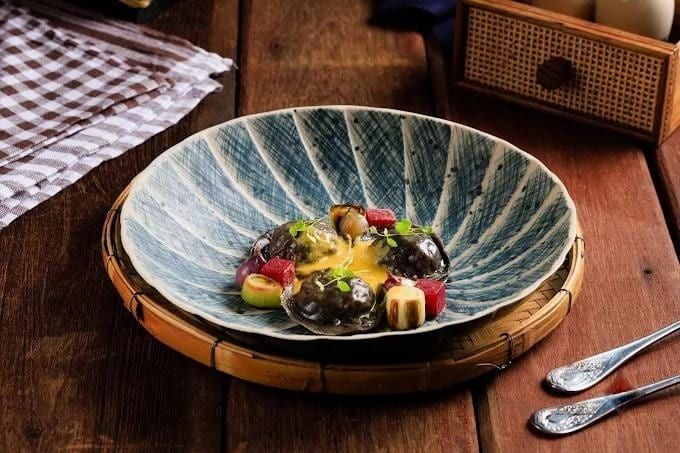
The Khao Soi Salad takes the city's single most famous dish, the curried egg noodle soup found at nearly every market stall in town, and reworks it as a composed plate: khao soi dressing over Tai Lue tofu, wheat, and cage-free egg, with the coconut curry flavour intact but the format entirely different. The Tai Lue name is not decoration either, it points to one of the ethnic communities settled around Chiang Mai and Chiang Rai whose home cooking still shapes what counts as authentic Northern Thai food today. It is a deliberate choice, proof the kitchen respects the original enough to reinterpret it rather than simplify it, and part of why this dish keeps coming up whenever someone asks about the best thai restaurant in Chiang Mai.
Tom Kha Gai stays closer to tradition: coconut cream steeped with galangal, built around tender chicken and wild chili paste, finished with young coconut meat. It rewards a kitchen willing to let the galangal and lemongrass at its base actually infuse rather than rushing the pot. Traditionally the kind of dish a family shares from one shared pot at the centre of the table, here it arrives portioned for one, without losing the sense that it was made slowly.
Nham Prik Oung started life as a Northern Thai dip, ground pork and tomato pounded with chili and shallot and eaten with sticky rice and raw vegetables, one member of the wider nam prik family alongside the roasted green chili version known as nam prik noom. At Mai Restaurant & Bar it reappears inside the Salmon Nham Prik Oung, where a baked salmon fillet sits under a Northern Thai tomato confit built on that same flavour base, alongside sauteed gurmar leaves, pickled garlic, and steamed pandan rice, part of the four-course Mai's Sampler tasting menu.
Ordering all three together, rather than picking one, is the closest thing to a tasting flight of what makes this kitchen's take on the best thai restaurant in Chiang Mai question worth taking seriously: a soup built on patience, a salad that respects the dish it reinvents, and a dip turned into a main course without losing what made the original work. None of the three needs a translated menu note to justify itself, which says something about how confident the kitchen is in the source material.
Every dish here operates inside Meliá Chiang Mai's 360° Cuisine programme, which sources organic produce from farms a short drive from the city and returns food waste to those same farms as compost. It is less a marketing label than a working kitchen routine that shapes which vegetables show up on a given week's menu.
Some of that produce comes from Hug Rong Khum Farm, organic gourmet farm, a sustainable growing partnership in San Pa Tong district that supplies organic vegetables, and herbs for the hotel's kitchens. Knowing a dish's vegetables travelled from a named farm in the same district rather than an unspecified supplier is part of what makes the seasonal claim credible rather than decorative.
Mai Restaurant & Bar has held the Chiang Mai Green Kitchen certificate for four consecutive years, recognition from a city-wide sustainability project rather than an internal award. That is a track record that carries real weight for anyone comparing the best Thai restaurant in Chiang Mai on more than flavour alone.
The programme also runs the other way, teaching rather than just sourcing. Culinary students from Chiang Mai University, Suan Dusit University's Lampang campus, and Rajamangala University of Technology Lanna Tak spend time in the kitchen and out on partner farms such as Seed and Rong Khum, learning the same organic growing methods the restaurant relies on for its own produce.
,regionOfInterest=(800,534.5))
,regionOfInterest=(800,534.5))
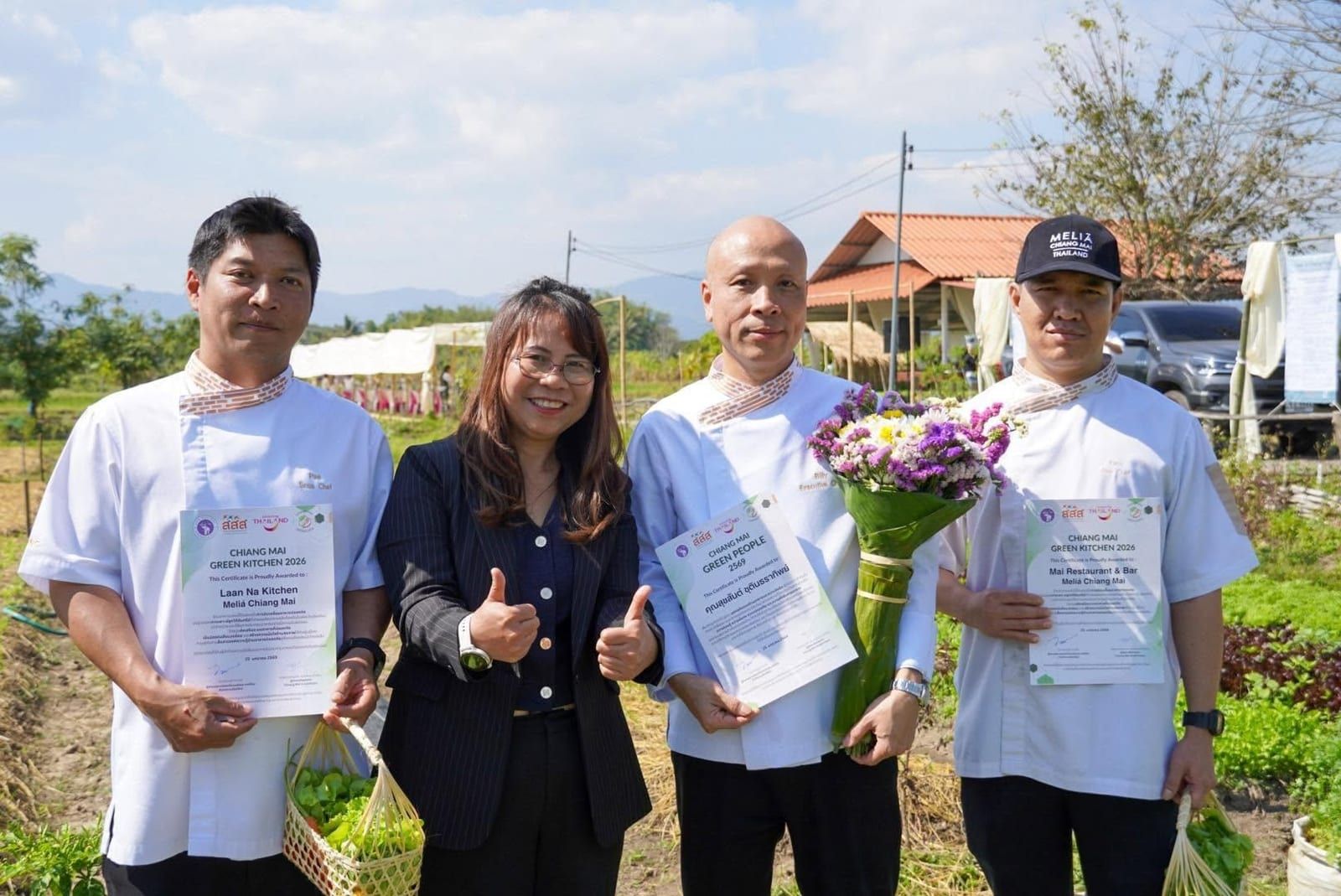
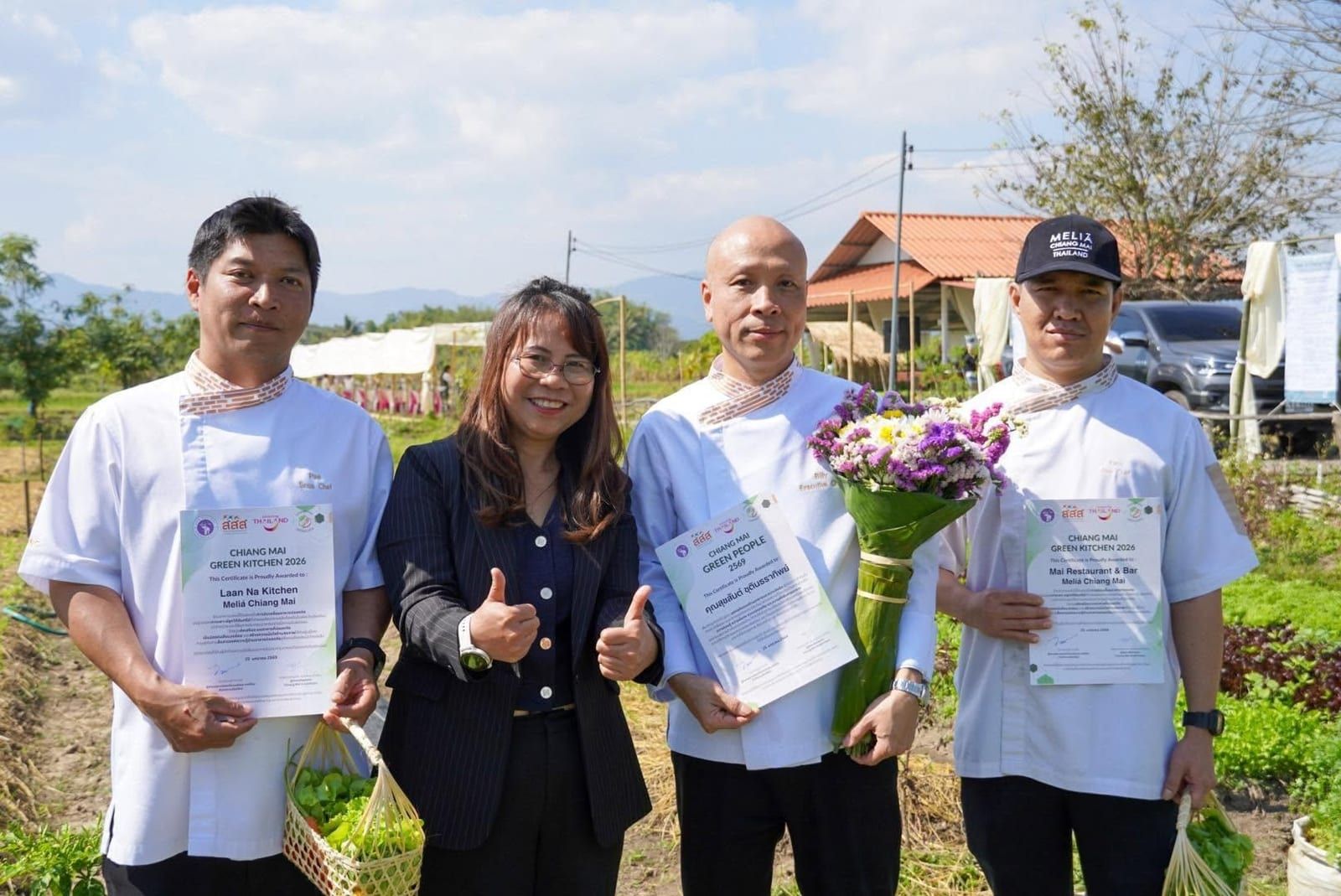
Executive chef Suksant Chutinthratip, known in the kitchen as Chef Billy, has spent more than 27 years in professional kitchens, starting out at The Ambassador Hotel and Convention Centre in Bangkok before working his way to Meliá Chiang Mai.
He holds the Chiang Mai Green Kitchen Green People Award for his work building closer ties between local farmers, chefs, and the wider community, a credential that matters to anyone weighing claims about the best Thai restaurant in Chiang Mai on more than a menu description.
That recognition reached a new milestone in 2026, when Mai Restaurant & Bar received the Chiang Mai Green Kitchen Certificate for the fourth consecutive year, alongside the special Green People Award presented to Chef Billy in recognition of his key role in driving the Chiang Mai Green Kitchen initiative since its very first year.
The Green People Award itself sits inside a wider Chiang Mai Green Kitchen project backed by the Tourism Authority of Thailand and the Thai Health Promotion Foundation, with academic input from Chiang Mai University's environmental engineering faculty.
Recipients are judged on sourcing, waste reduction, and community engagement rather than on cooking alone, which is part of why the award carries weight beyond a typical culinary prize handed out for a single tasting menu.
He runs the kitchen alongside sous chef Karn Phojun, whose own career includes stints at Bangkok's Michelin Guide-listed Baan Suriyasai Royal Thai Restaurant and Saneh Jaan, and a head chef posting at Michelin Guide restaurant Patara in Switzerland, after starting out in 1993 as a chef de partie at Mahanaga Thai Fusion Restaurant. Between the two of them, the kitchen has a leadership team with a genuinely international frame of reference for what a serious Northern Thai menu should look like.
Chef Billy's role extends past his own kitchen too. When culinary students visit through the university partnerships, he is the one walking them through real case studies rather than handing them a textbook, tying the 360° Cuisine philosophy back to how the next generation of Chiang Mai cooks will end up running their own kitchens.
The two chefs bring different strengths to the same pass. Chef Billy's background is in sustainable sourcing and community farming relationships, while Chef Karn's Michelin-restaurant training shows up in technique, in how a dish like the Khao Soi Salad gets composed rather than simply plated. The menu reads like the product of both approaches rather than either one working alone.
,regionOfInterest=(2150,1433.5))
,regionOfInterest=(2150,1433.5))
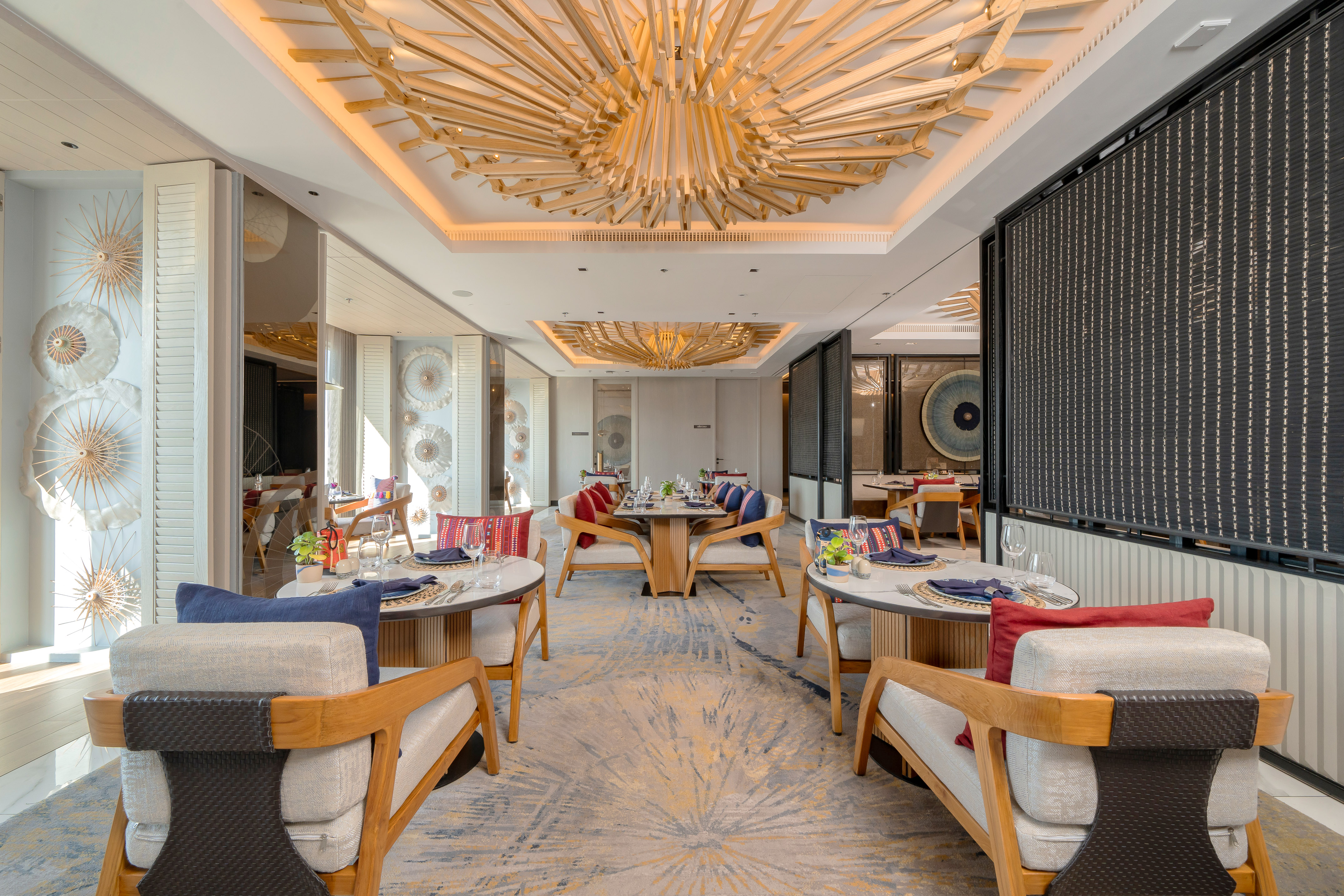
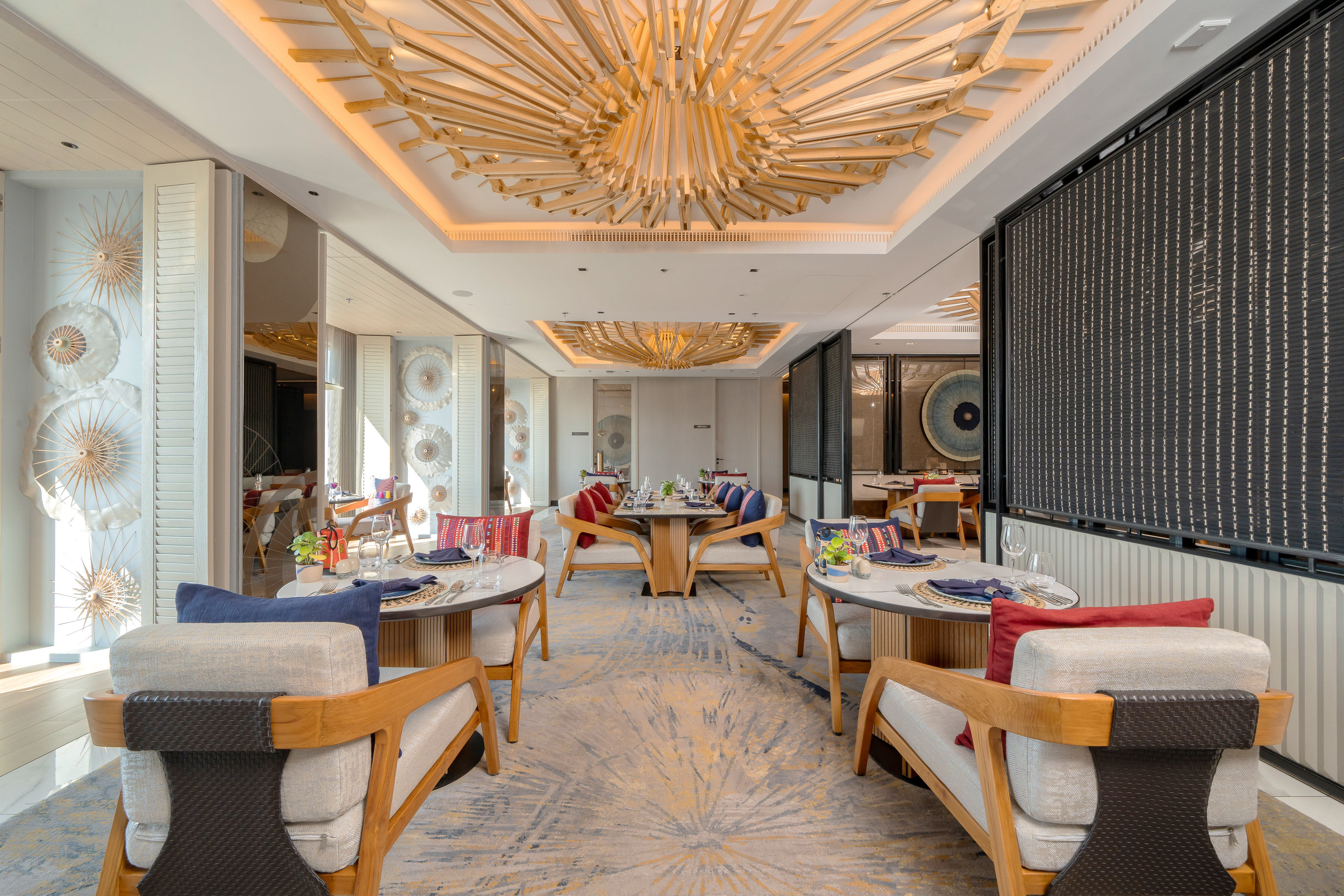
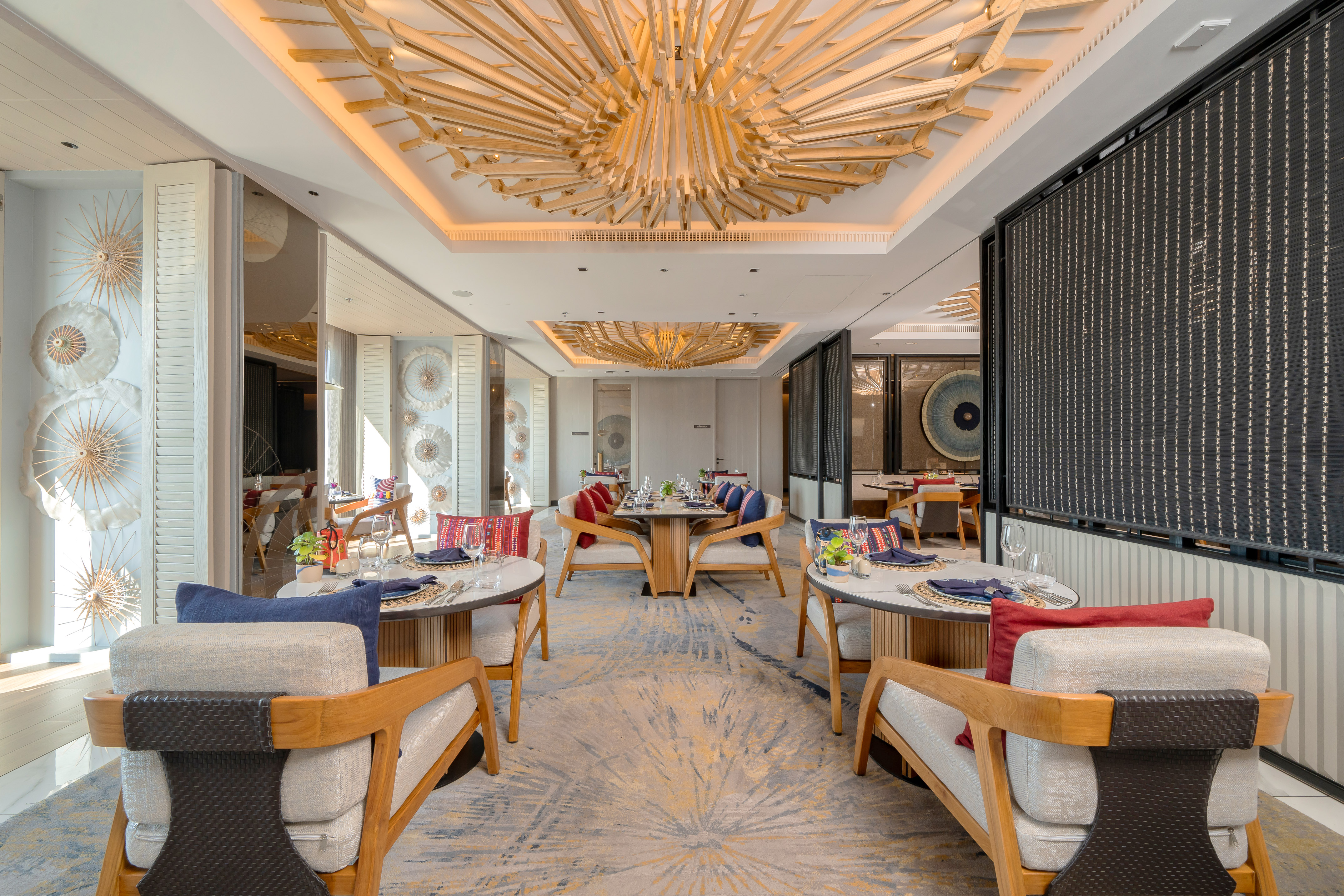
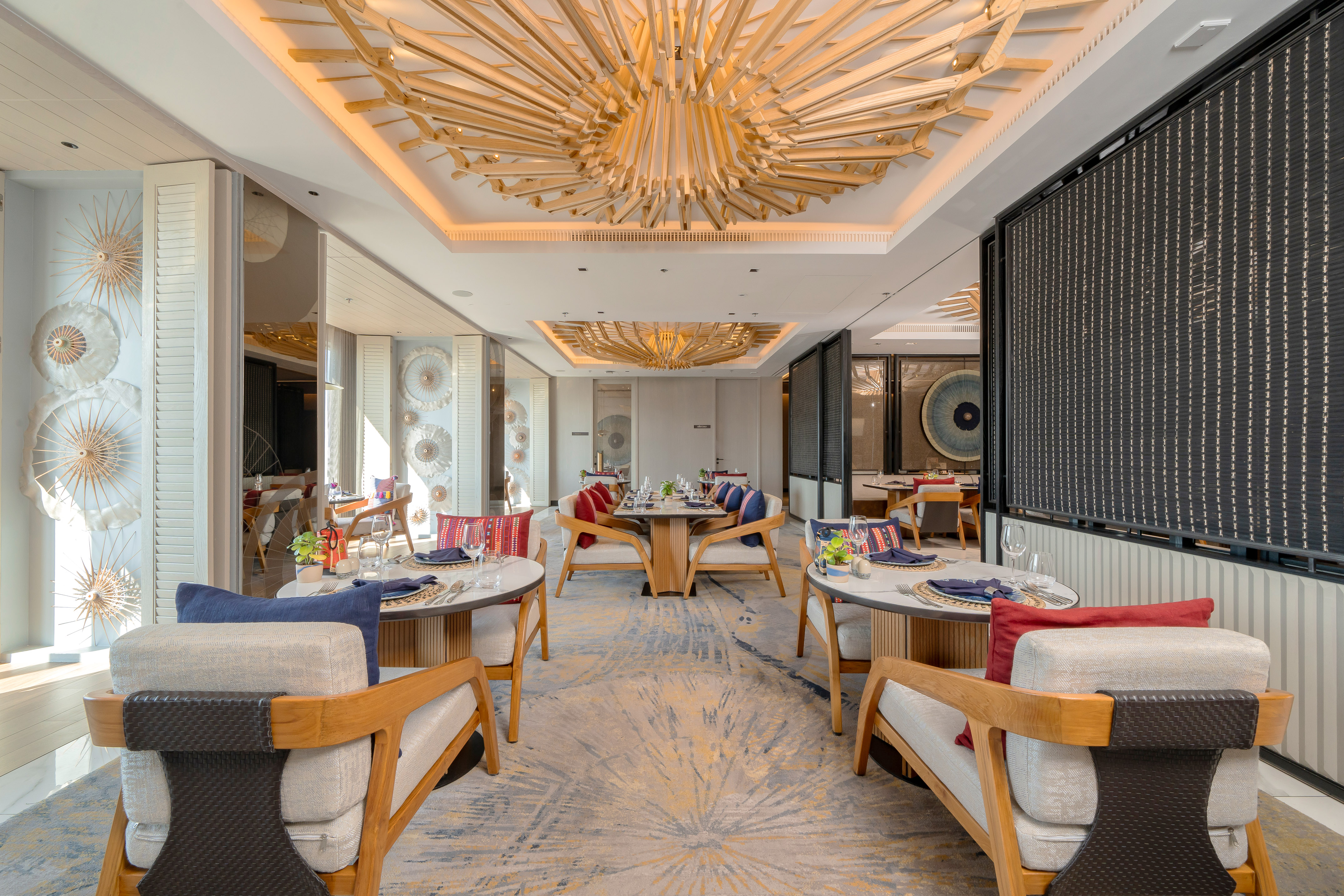
The room takes its design cues from Chiang Mai's Bo Sang Umbrella Village: lit umbrella-rib installations hang from the ceiling, and the carpet's concentric pattern echoes an umbrella top in grey, periwinkle, and soft amber. A temple arch frames part of the dining room, a quiet nod to the neighbourhood outside the windows.
Tables by the glass look straight toward Doi Suthep, so a dinner reservation timed for early evening also buys a sunset. Service leans formal without turning stiff: dishes tend to arrive with a short explanation from the person serving them, which suits a menu built around ingredients most first time visitors will not recognise on sight, and it is part of what separates this from a quick meal on the way to somewhere else.
The bar built into the same floor gives the room a second gear once dinner winds down, a place to hold a table a little longer over a last drink instead of heading straight for the lift. It keeps the evening from feeling like it has a hard stop the moment the plates are cleared, which matters for a dinner that is meant to be lingered over rather than rushed.
A dinner booked for early evening tends to move through its own natural arc: daylight over the mountains through the first courses, the sky changing colour by the mains, and the city's lights taking over by dessert. None of that is scheduled by the restaurant, but the timing of a 6pm booking makes it happen most nights anyway, which is worth knowing when picking a reservation slot.
,regionOfInterest=(2150,1433.5))
,regionOfInterest=(2150,1433.5))
Mai Restaurant & Bar serves dinner daily, from 6pm to 11pm, under a smart casual dress code that rules out sportswear, swimwear, and beach sandals. A la carte dishes run from about 170 to 980 Thai baht, roughly US$5 to US$30, and the four-course Mai's Sampler dinner set offers a fixed-format alternative to ordering individually.
Reservations go through the restaurant directly on +66 52 090 603 or by email at mairestaurant@meliachiangmai.com, and guests should plan to arrive within 15 minutes of their booked time. The restaurant is open to non-hotel guests as well as those staying upstairs, worth knowing for anyone comparing the best Thai restaurant in Chiang Mai without already having a room booked.
The full Mai Restaurant & Bar menu is worth a browse ahead of time, useful for anyone deciding between a la carte and the tasting menus before booking.
Because seating is limited to one floor rather than an all-day dining room's worth of tables, larger groups and window seats specifically are worth requesting a few days ahead rather than on the day. Mentioning a dietary restriction at the time of booking also gives the kitchen time to adjust a dish rather than improvise one on the spot.
First-timers unsure whether to order a la carte or commit to Mai's Sampler can treat it as a question of time and appetite. A la carte suits a shorter dinner built around one or two dishes that already sound interesting, while the sampler suits a night with no other plans and a genuine appetite for whatever the kitchen wants to show off that particular week.
Detailed Information:
,regionOfInterest=(340,226.5))
,regionOfInterest=(340,226.5))
Mai Restaurant & Bar earns its place in any conversation about the best Thai restaurant in Chiang Mai by treating Northern Thai cooking with the same craft as any fine dining cuisine, not a simplified version for a hotel audience.
Book ahead, especially on weekends and during the cool season from November to February, and mention any dietary needs or a preferred window seat when reserving. Reach out to mairestaurant@melia.com or call +66 (0) 52 090 603 to arrange dinner, whether that means a quick a la carte visit or the full four-course Mai's Sampler.
,regionOfInterest=(1771.5,1181.5))
,regionOfInterest=(1771.5,1181.5))
Contemporary Northern Thai cuisine takes the traditional Lanna pantry, sticky rice, galangal, lemongrass, fermented chili pastes, and pork-forward cooking, and plates it with fine dining technique and presentation rather than serving it family style at a market table. Mai Restaurant & Bar's menu is one clear example of the best Thai restaurant in Chiang Mai approach, reworking a dish like Khao Soi into a composed salad rather than a soup while keeping the original's flavour intact.
Yes. Mai Restaurant & Bar welcomes outside diners as well as hotel guests, with no requirement to be staying at Meliá Chiang Mai to book a table, and reservations can be made directly with the restaurant by phone or email rather than through the hotel's main line.
The Khao Soi Salad, Tom Kha Gai, and Salmon Nham Prik Oung are the dishes most associated with the restaurant, alongside the four-course Thai contemporary dinner set for guests who want a broader introduction in one sitting rather than ordering a la carte dish by dish.
A la carte dishes run from about 170 to 980 Thai baht, roughly US$5 to US$30 per dish. The four-course dinner set is priced as a fixed set rather than per dish, and it is worth asking about specifically when booking a table, since it is not listed alongside the regular a la carte prices on the menu.
,regionOfInterest=(2880,1920))
,regionOfInterest=(2880,1920))
,regionOfInterest=(1619.5,1121))
,regionOfInterest=(1619.5,1121))
,regionOfInterest=(1476.5,634.5))
,regionOfInterest=(1476.5,634.5))
,regionOfInterest=(2273,1523))
,regionOfInterest=(2273,1523))
,regionOfInterest=(1564,1200))
,regionOfInterest=(1564,1200))