Las mejores calas de Mallorca
,regionOfInterest=(707.5,1059.5))
,regionOfInterest=(707.5,1059.5))
Cultura
,regionOfInterest=(1023,575.5))
,regionOfInterest=(1023,575.5))
,regionOfInterest=(2900.5,1949.5))
,regionOfInterest=(2900.5,1949.5))
La región montañosa que rodea Chiang Mai alberga decenas de pequeñas aldeas situadas a una o dos horas de la ciudad. Desde comunidades cafeteras en las montañas hasta pueblos donde la elaboración artesanal de paraguas sigue formando parte de la vida cotidiana, estos lugares ofrecen una visión diferente del norte de Tailandia. La mayoría pueden visitarse en una excursión de un día y, pese a su interés cultural, rara vez forman parte de los itinerarios más habituales centrados en templos y mercados.
Esta guía reúne las aldeas de Chiang Mai que realmente justifican una excursión de un día: comunidades de montaña, pueblos artesanales y pequeñas localidades agrícolas donde aún perviven tradiciones profundamente arraigadas. También ofrece información sobre cómo visitarlas de forma responsable y respetuosa, así como una idea más clara de lo que espera una vez que la carretera abandona la llanura y el ritmo de la ciudad queda atrás.
Cultura
,regionOfInterest=(512,482))
,regionOfInterest=(512,482))
Especialista en marketing digital y apasionada de viajar, escribir y descubrir lo que hace único a cada destino.
,regionOfInterest=(800,446.5))
,regionOfInterest=(800,446.5))
,regionOfInterest=(800,446.5))
,regionOfInterest=(800,446.5))
,regionOfInterest=(800,446.5))
,regionOfInterest=(800,446.5))
,regionOfInterest=(800,446.5))
,regionOfInterest=(800,446.5))
La ciudad se mueve a un ritmo muy distinto al de las colinas que la rodean. Pasar medio día o una jornada completa en alguna de las pequeñas aldeas de la provincia de Chiang Mai permite descubrir una faceta más tranquila y auténtica de la región, lejos de las multitudes y con mayores oportunidades de conocer de cerca la vida cotidiana de sus habitantes. Es una experiencia que complementa a la perfección las visitas a templos y mercados, mostrando un lado menos visible del norte de Tailandia.
Entre estas comunidades se encuentran aldeas cafeteras surgidas gracias a proyectos de desarrollo impulsados hace décadas, pueblos donde los tradicionales paraguas de papel siguen elaborándose a mano con técnicas transmitidas de generación en generación y asentamientos de grupos étnicos de montaña establecidos en la zona desde hace siglos. Cada uno ofrece una perspectiva diferente de la riqueza cultural y humana que caracteriza a la región de Chiang Mai.
,regionOfInterest=(1023,575.5))
,regionOfInterest=(1023,575.5))
Cinco de los principales grupos étnicos de montaña tienen presencia en las montañas que rodean Chiang Mai, cada uno con una identidad cultural propia, tradiciones artesanales distintivas e historias ligadas a la región desde hace generaciones. A continuación se presenta una introducción a estas comunidades, las aldeas que reciben visitantes y algunas de las artesanías más representativas que pueden encontrarse durante la visita.
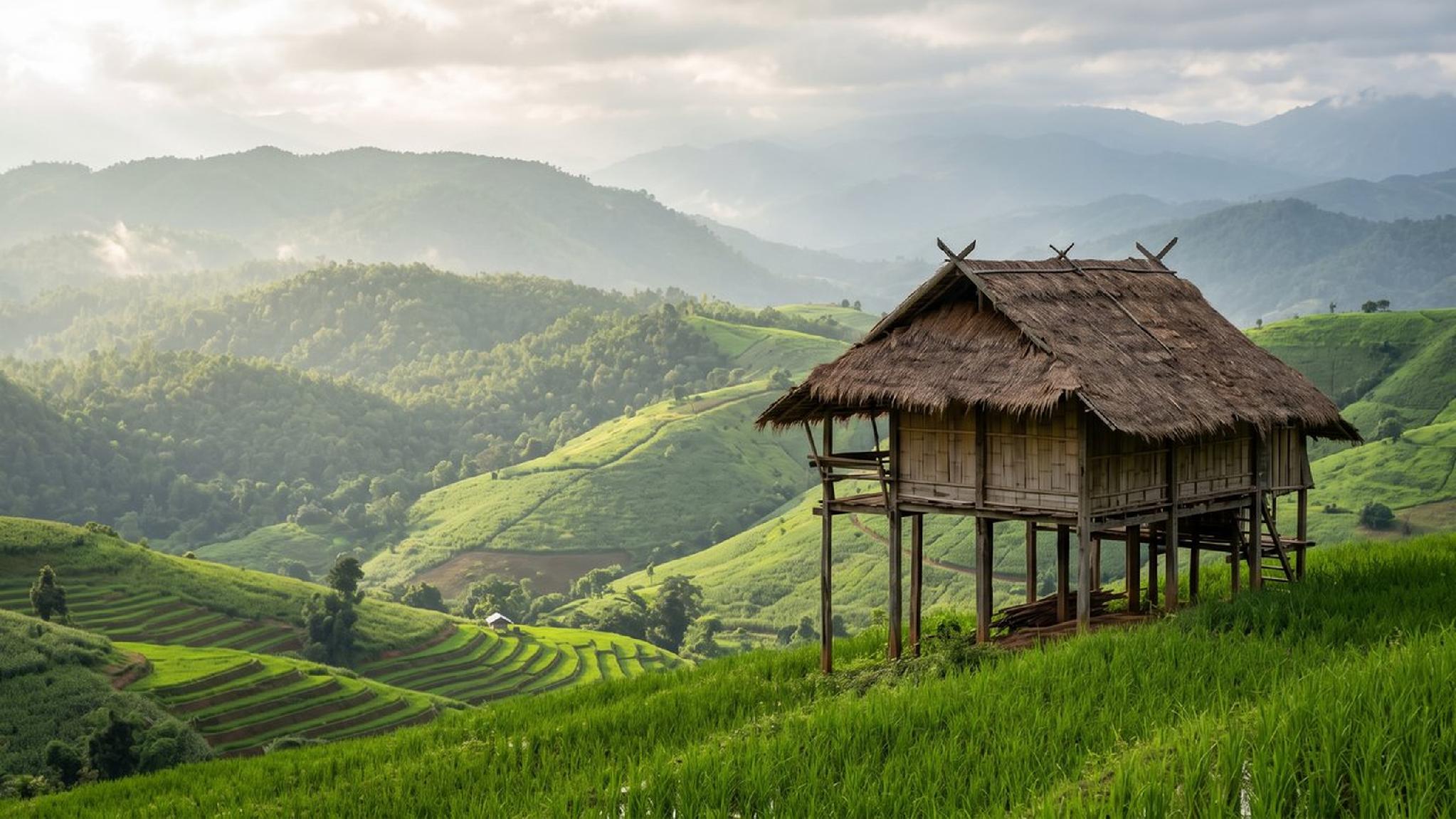
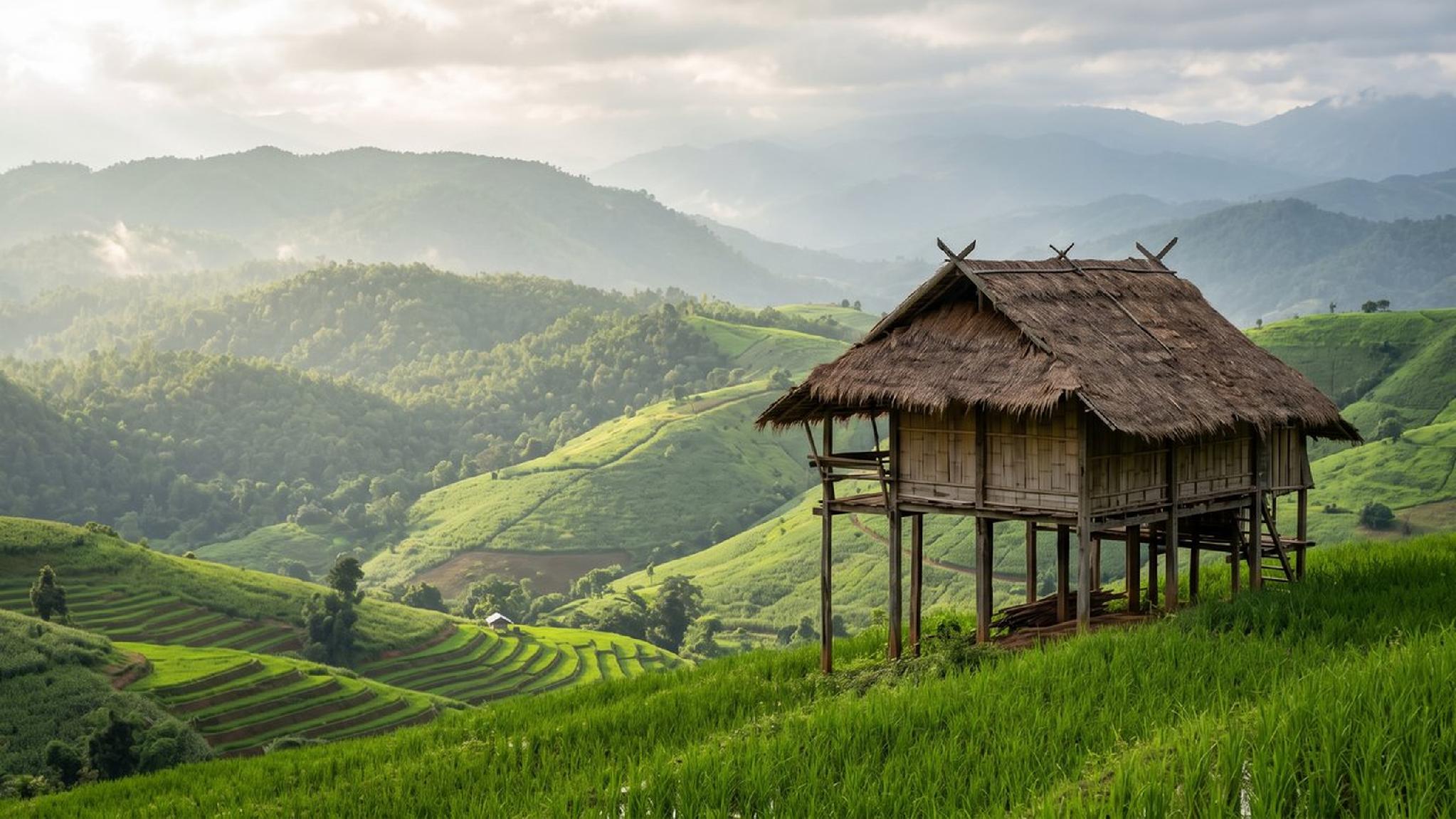
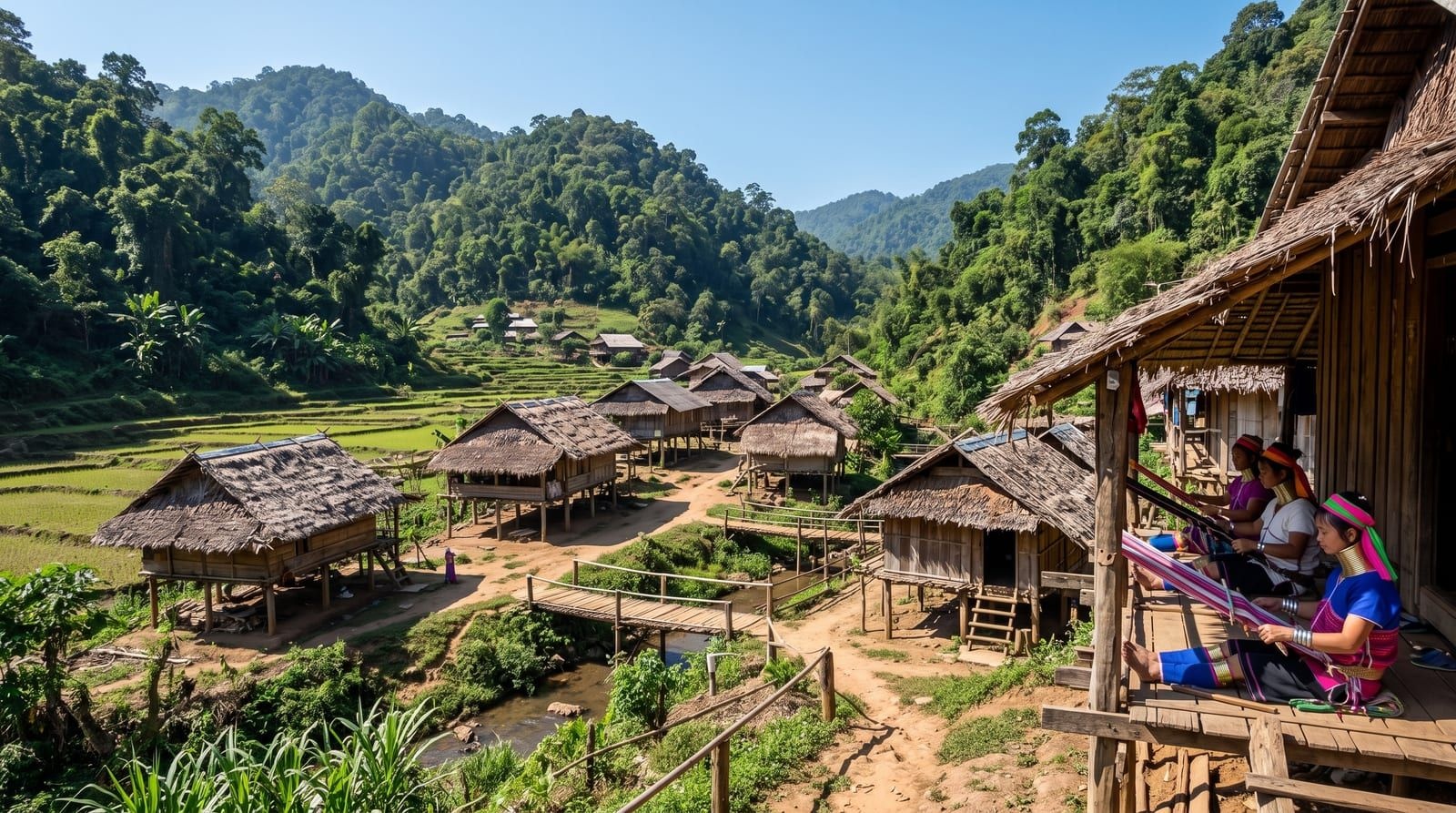
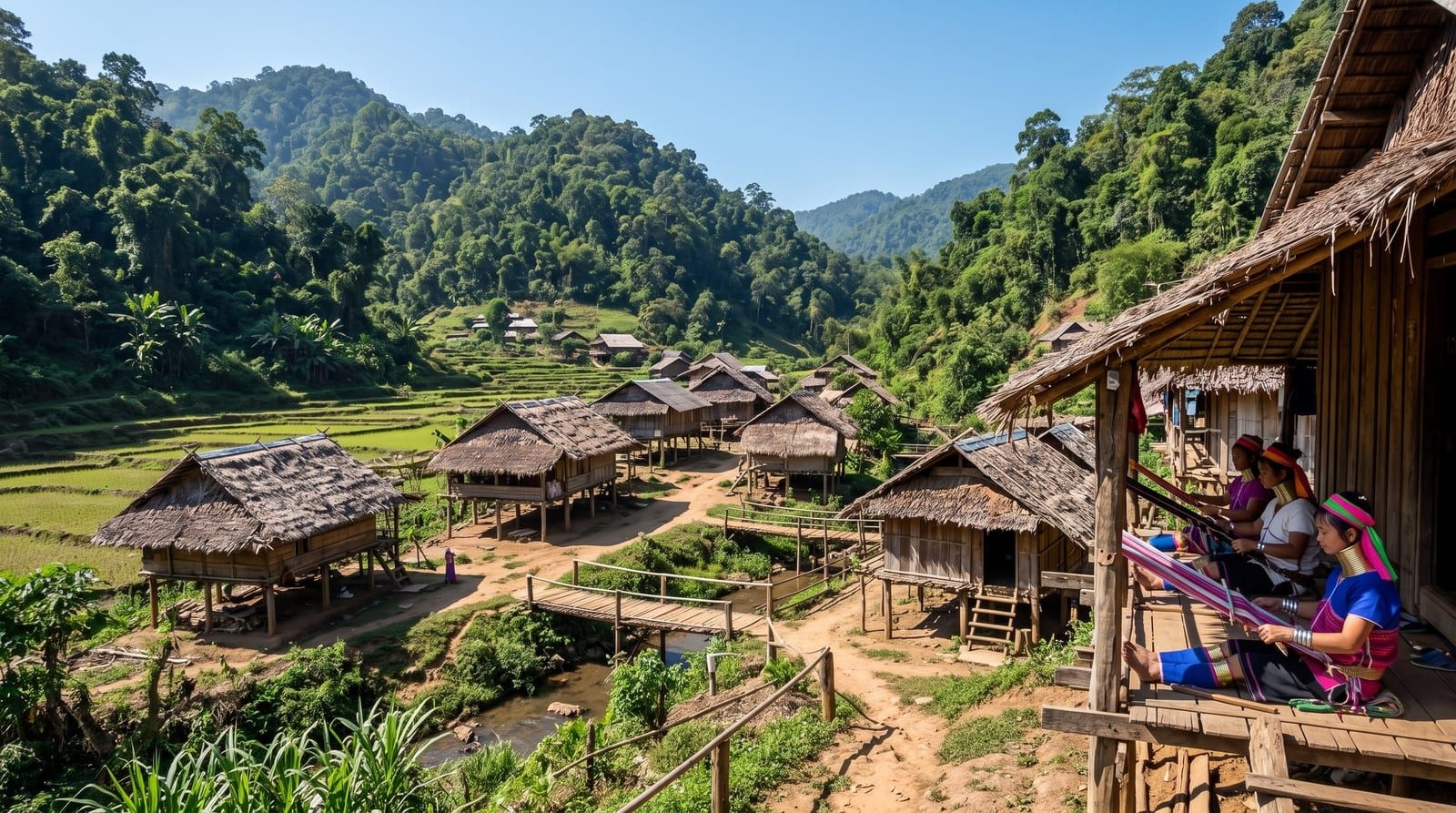
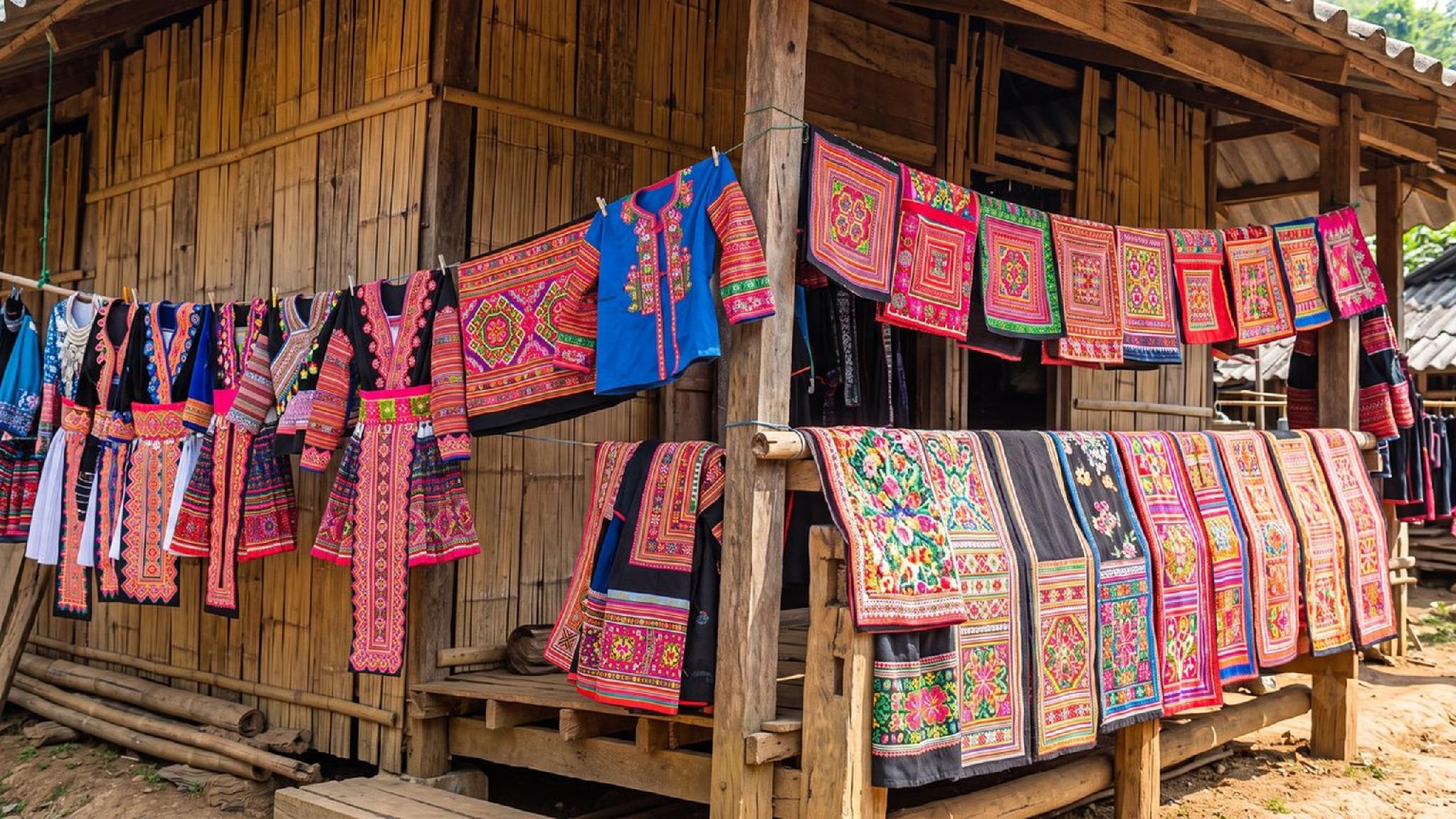
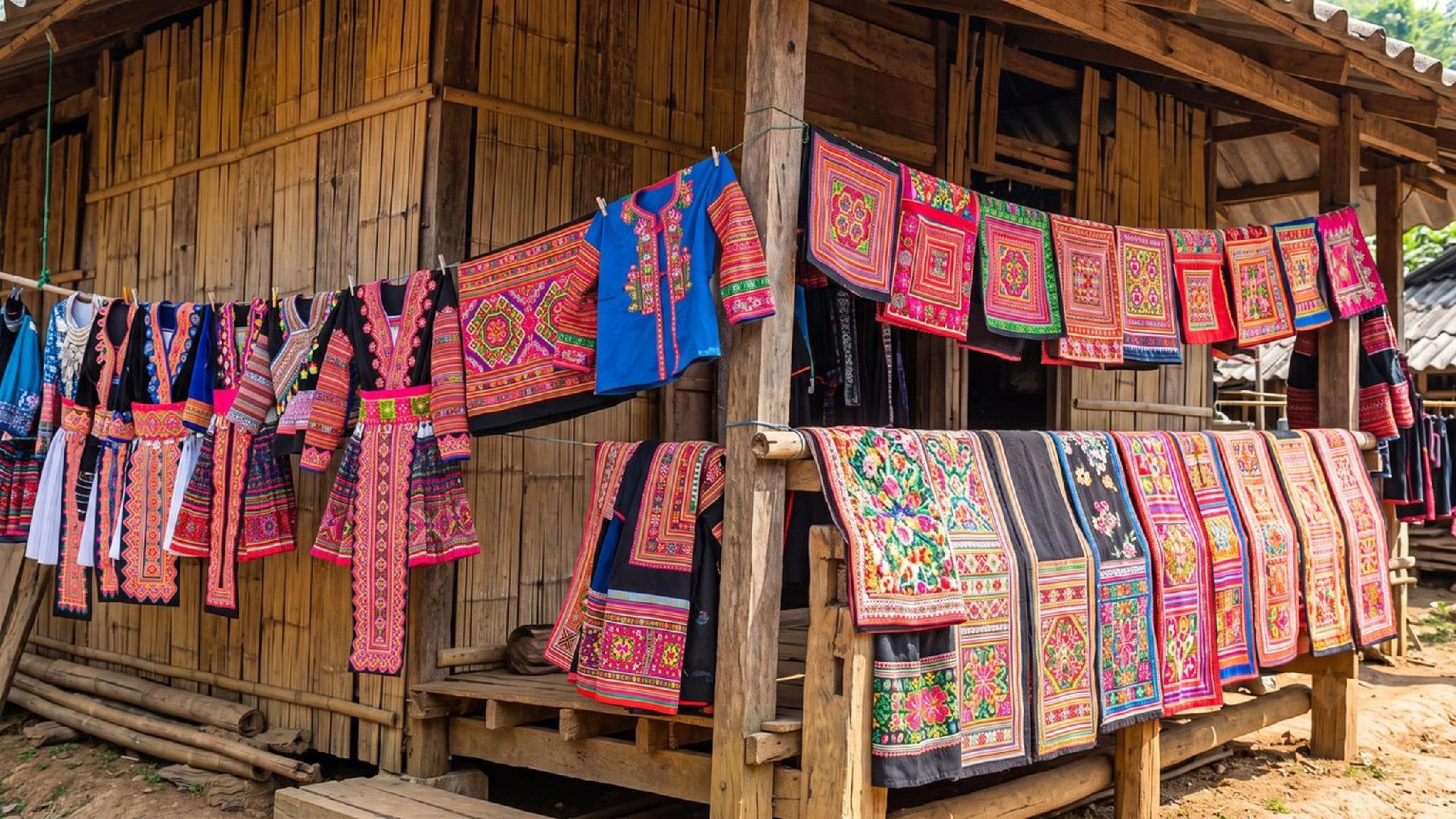
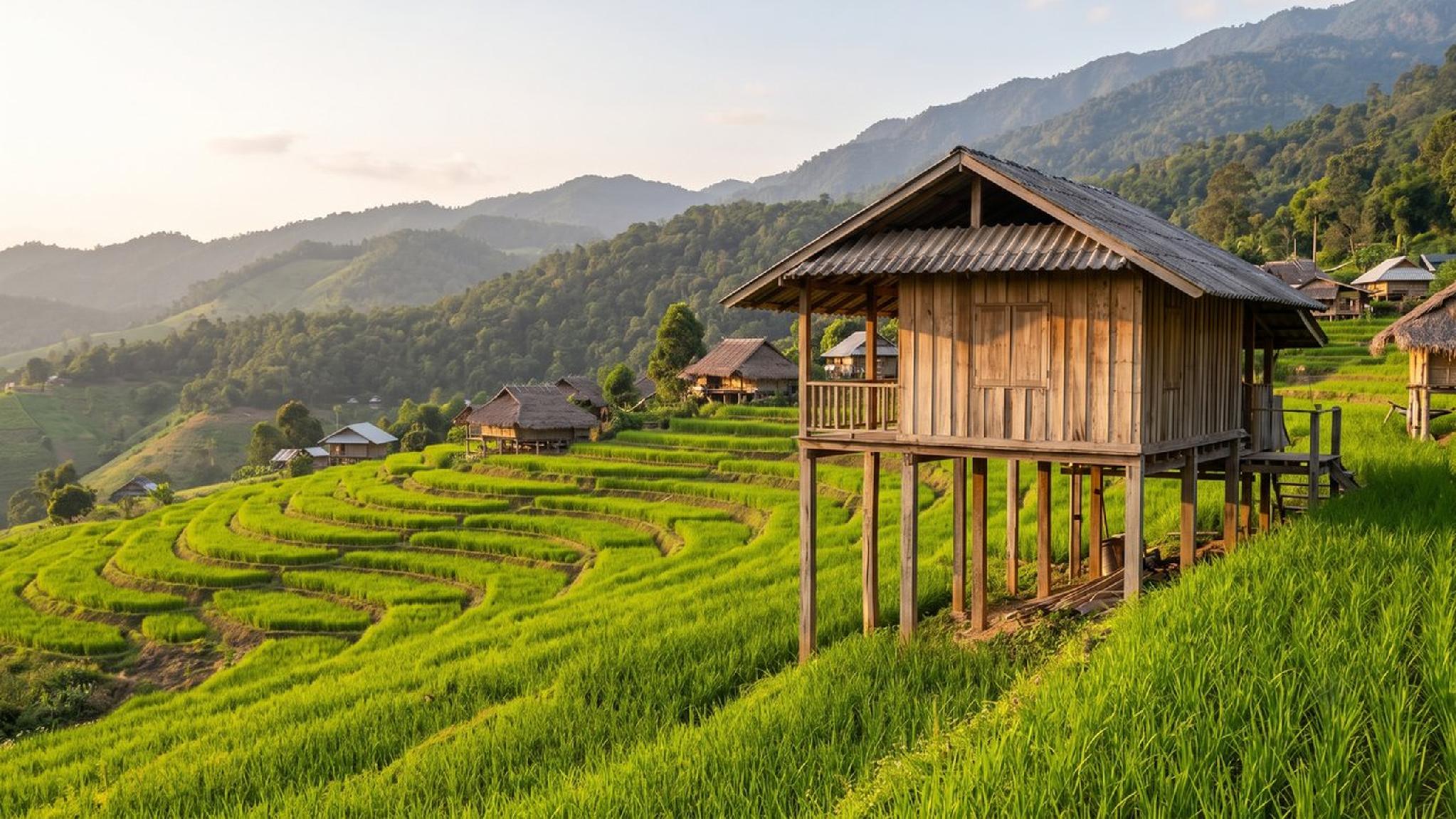
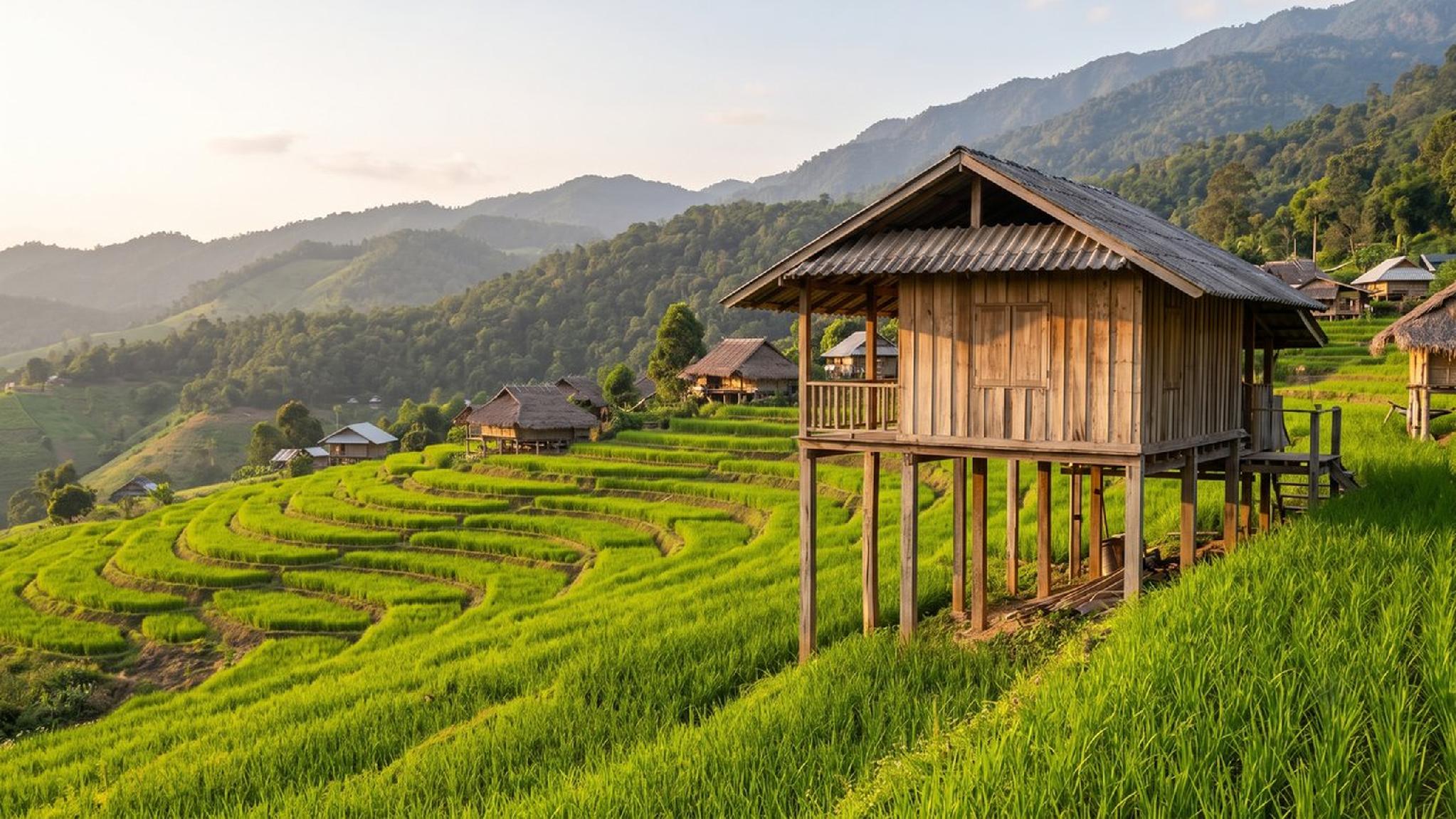
Las comunidades Karen, Hmong, Lahu, Lisu y Akha se establecieron en las montañas que rodean Chiang Mai durante los últimos dos siglos, desarrollando tradiciones culturales y formas de vida adaptadas al entorno montañoso. Cada grupo mantiene una identidad propia, visible tanto en sus artesanías como en su vestimenta y costumbres. Las aldeas Karen son especialmente conocidas por sus tejidos y por las casas elevadas sobre pilotes, diseñadas para afrontar la temporada de lluvias. Las comunidades Hmong destacan por el trabajo con tela de cáñamo, las técnicas de teñido batik y la elaboración de joyas de plata, mientras que los Lahu conservan una rica tradición artesanal reflejada en sus prendas de tonos oscuros, decoradas con llamativos bordados de colores. Los Lisu, por su parte, son reconocidos por sus coloridos trajes festivos y sus danzas tradicionales.
Las comunidades Akha suelen encontrarse a mayor altitud que el resto y destacan por sus elaborados tocados adornados con plata, utilizados tradicionalmente por las mujeres casadas. También es característico de sus aldeas el denominado «portal espiritual», una estructura situada en la entrada que marca el límite simbólico de la comunidad y posee un importante significado cultural. Entre las aldeas de montaña de la provincia de Chiang Mai, las comunidades Akha suelen encontrarse más alejadas de las rutas turísticas habituales, lo que contribuye a que reciban menos visitantes que otros grupos de la región.
,regionOfInterest=(1023,575.5))
,regionOfInterest=(1023,575.5))
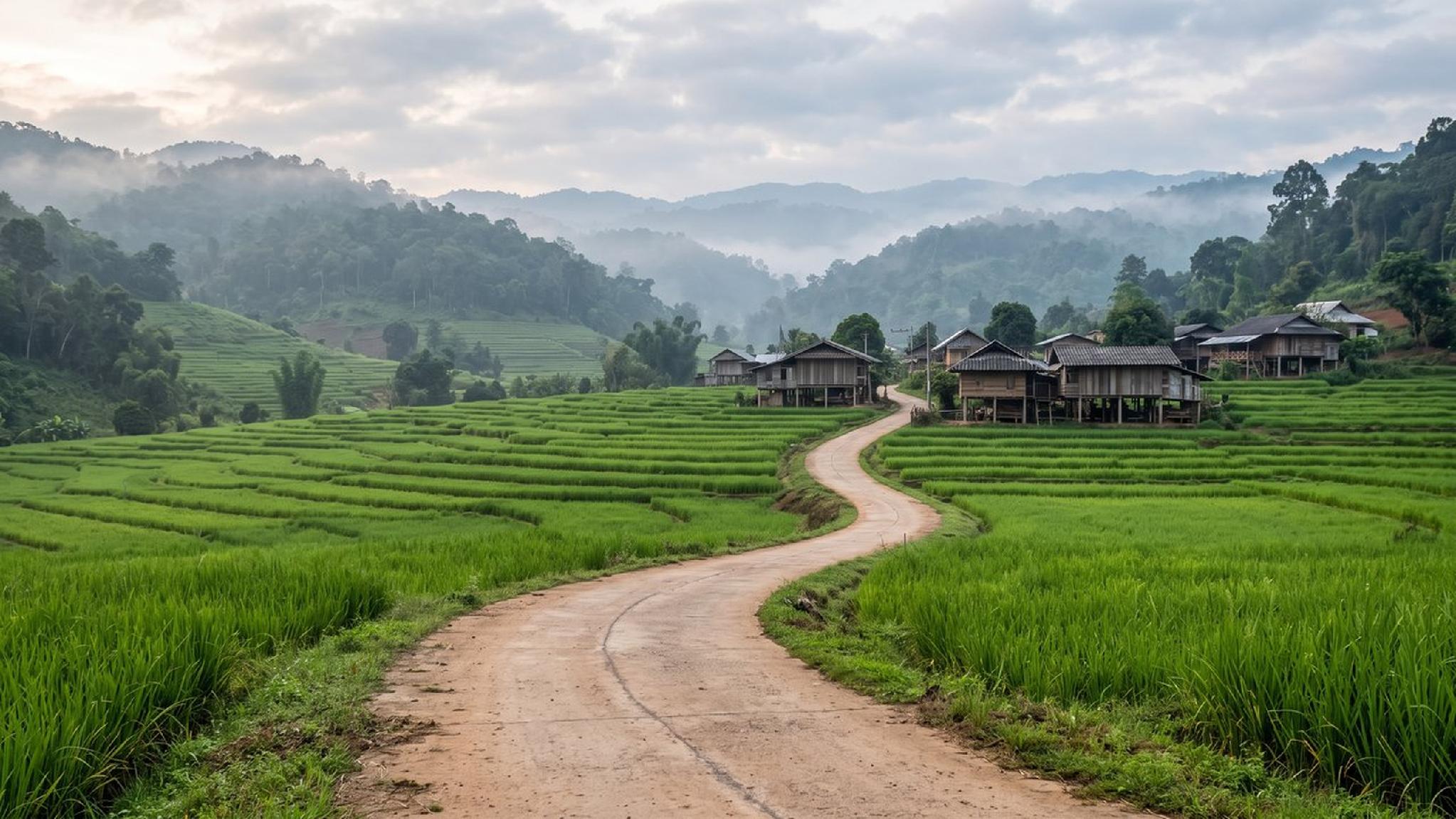
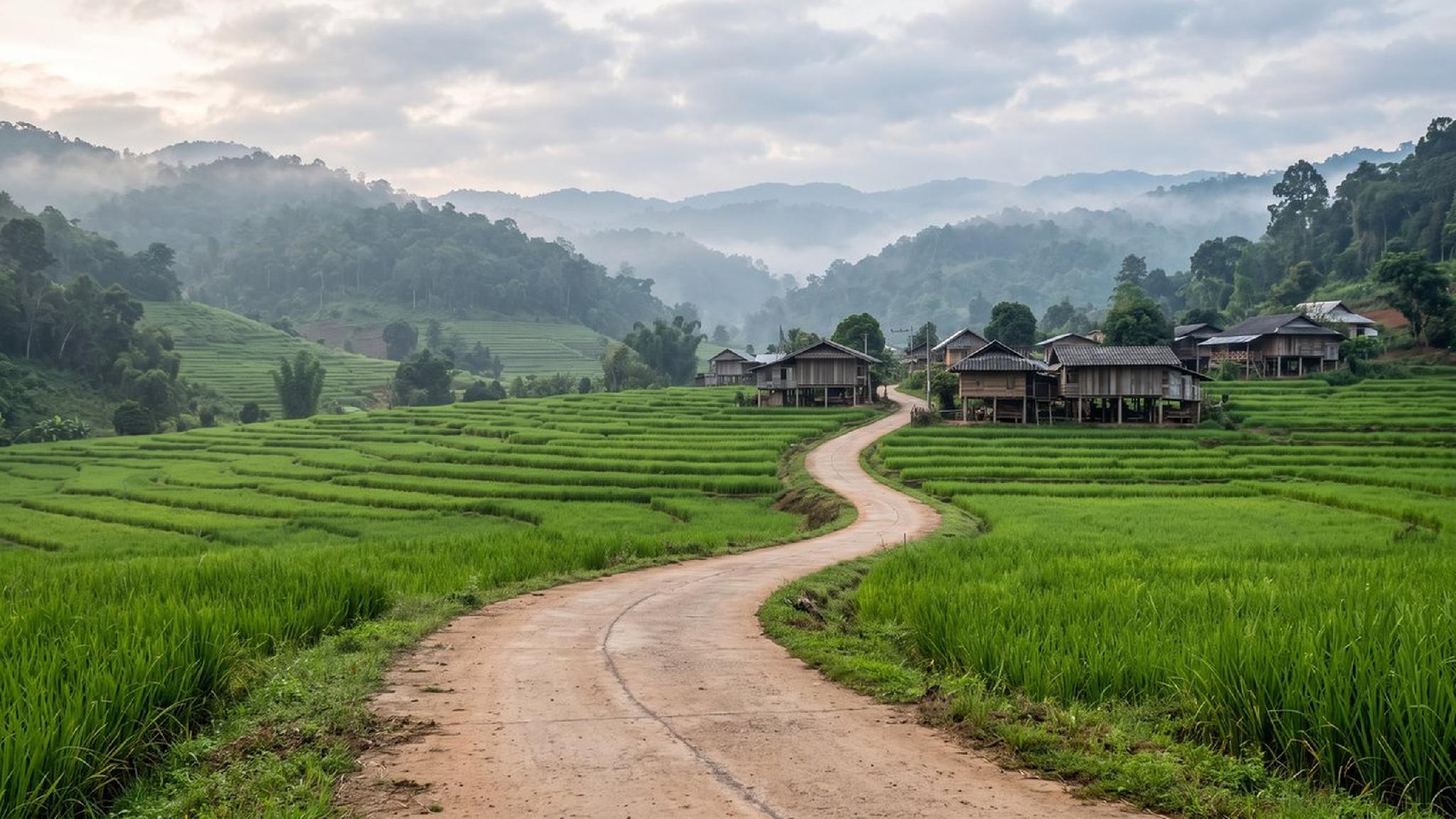
Ban Huay Khao Lip y Ban Pratu Muang, dos comunidades karen situadas en el distrito de Mae Wang, aproximadamente a hora y media al sur de Chiang Mai, junto con Ban Mae Klang Luang, una aldea karen ubicada dentro del Parque Nacional Doi Inthanon, se encuentran entre los mejores ejemplos de turismo comunitario de la región. En todos los casos, las actividades y experiencias se desarrollan con la participación directa de los habitantes de la aldea, lo que permite que los beneficios generados permanezcan en la propia comunidad.
Una visita de un día o una estancia de una noche suele incluir comidas preparadas por familias locales, paseos por arrozales en terrazas o plantaciones de café en producción y talleres de tejido u otras artesanías tradicionales. Más que seguir un programa turístico rígido, estas experiencias suelen adaptarse al ritmo cotidiano de la comunidad, ofreciendo una visión más cercana y auténtica de la vida en las montañas del norte de Tailandia.
,regionOfInterest=(1023,575.5))
,regionOfInterest=(1023,575.5))
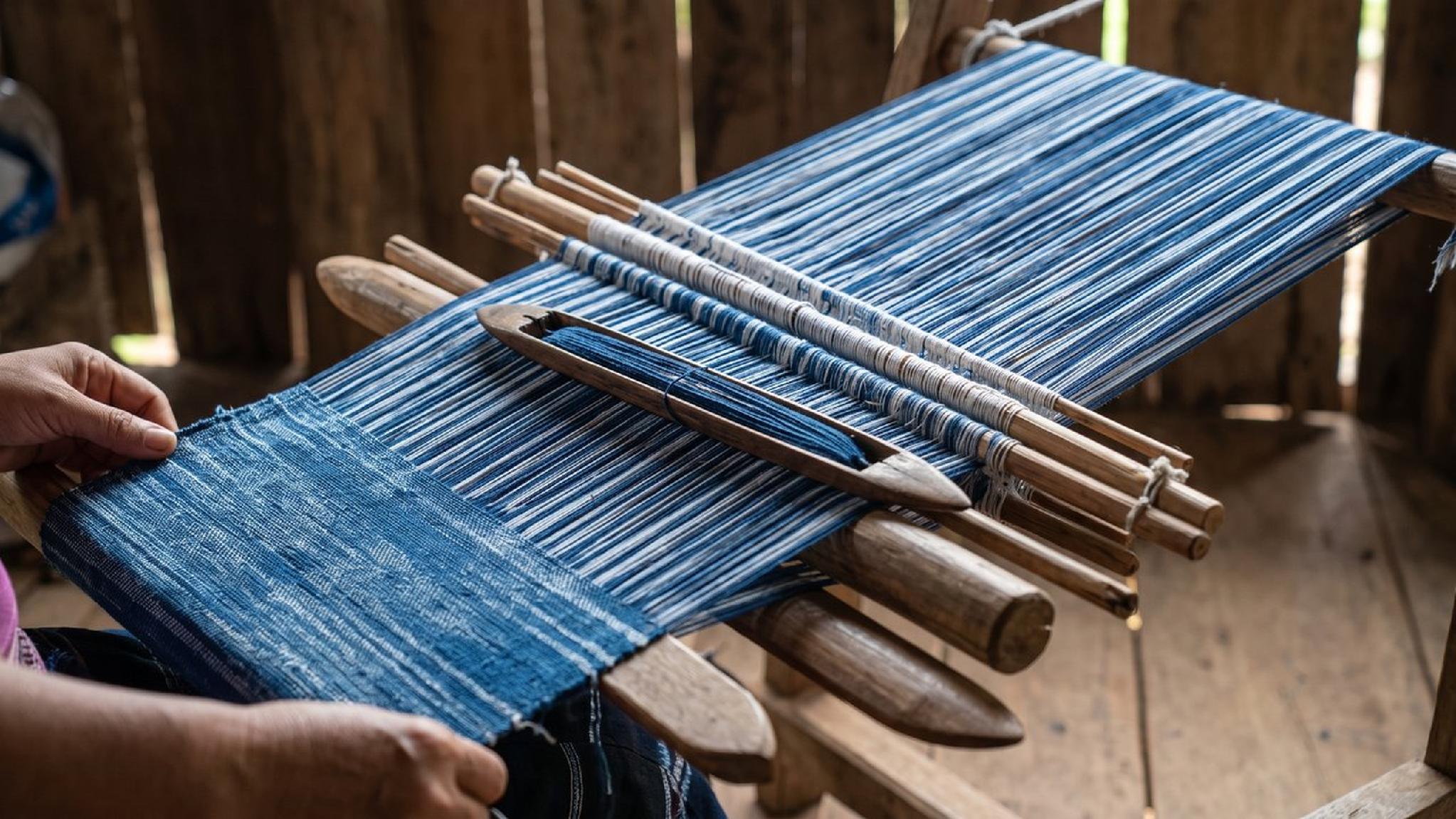
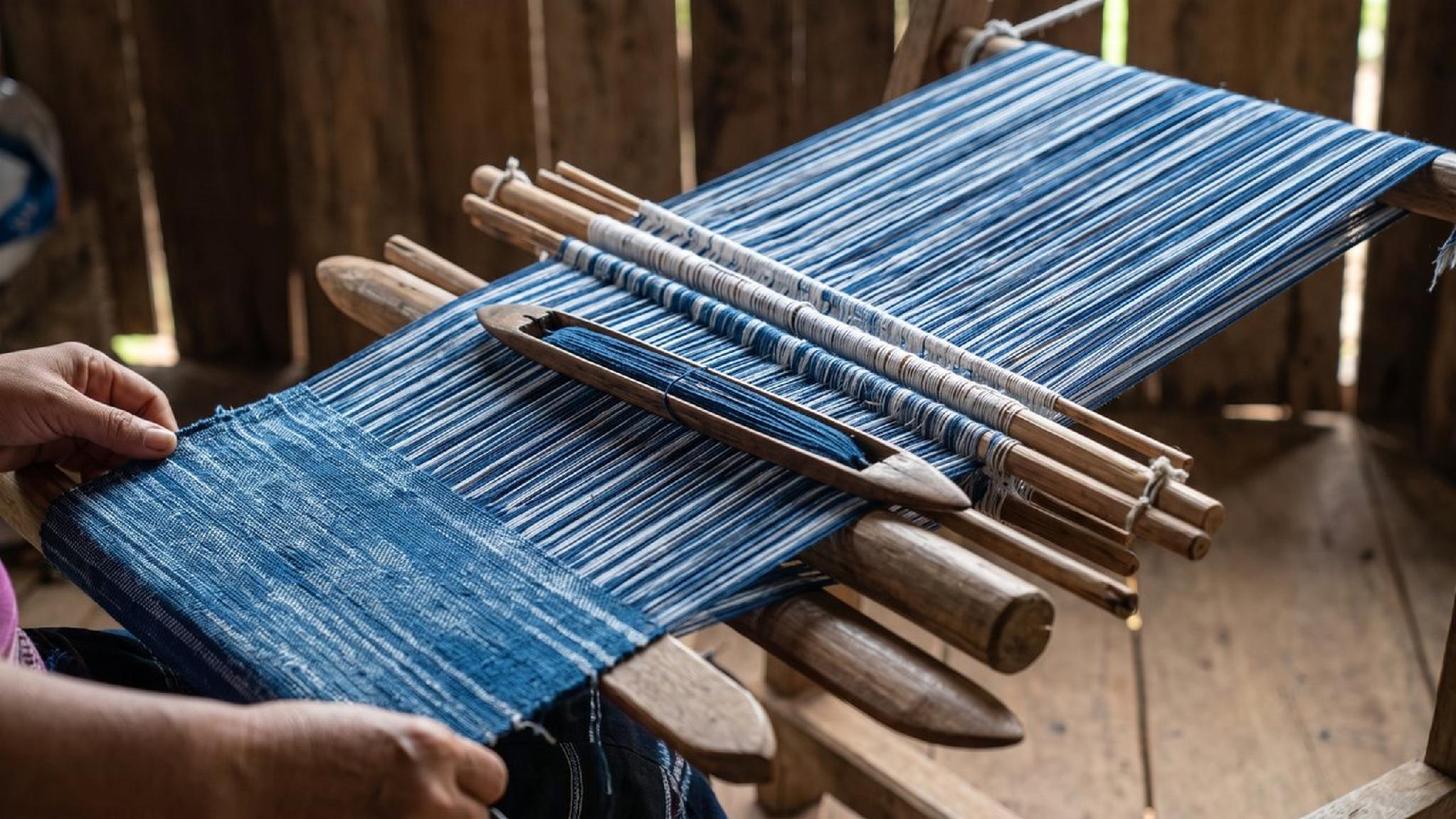
El tejido karen merece observarse de cerca y no limitarse únicamente a la compra de las piezas terminadas. El proceso comienza con el cultivo del algodón, que posteriormente se hila y se tiñe con pigmentos naturales, especialmente índigo. Después, el tejido se elabora en un sencillo telar de cintura, una herramienta que la artesana mantiene tensa con su propio cuerpo en lugar de utilizar una estructura fija. Se trata de una técnica transmitida de generación en generación dentro de las familias, más que aprendida en un entorno formal.
El batik hmong comparte ese carácter artesanal y familiar, aunque emplea un método completamente distinto. Los diseños se crean aplicando cera caliente sobre la tela con una herramienta metálica antes del teñido. Una vez finalizado el proceso, la cera se retira mediante ebullición, dejando al descubierto los intrincados patrones que han permanecido protegidos durante el teñido.
Ninguna aldea de la región montañosa de Chiang Mai es exactamente igual a otra, ni siquiera dentro del mismo grupo étnico. Factores como la altitud, la cercanía a la ciudad o la trayectoria de cada comunidad en el ámbito del turismo influyen en la experiencia y hacen que cada visita tenga un carácter propio.
,regionOfInterest=(1023,575.5))
,regionOfInterest=(1023,575.5))
Dos aldeas situadas al este de Chiang Mai conservan algunas de las tradiciones artesanales más conocidas de la región. Una se ha desarrollado en torno a un único oficio, mientras que la otra destaca por la variedad de sus artesanías. A continuación, se detallan ambas y aquello que las hace únicas.
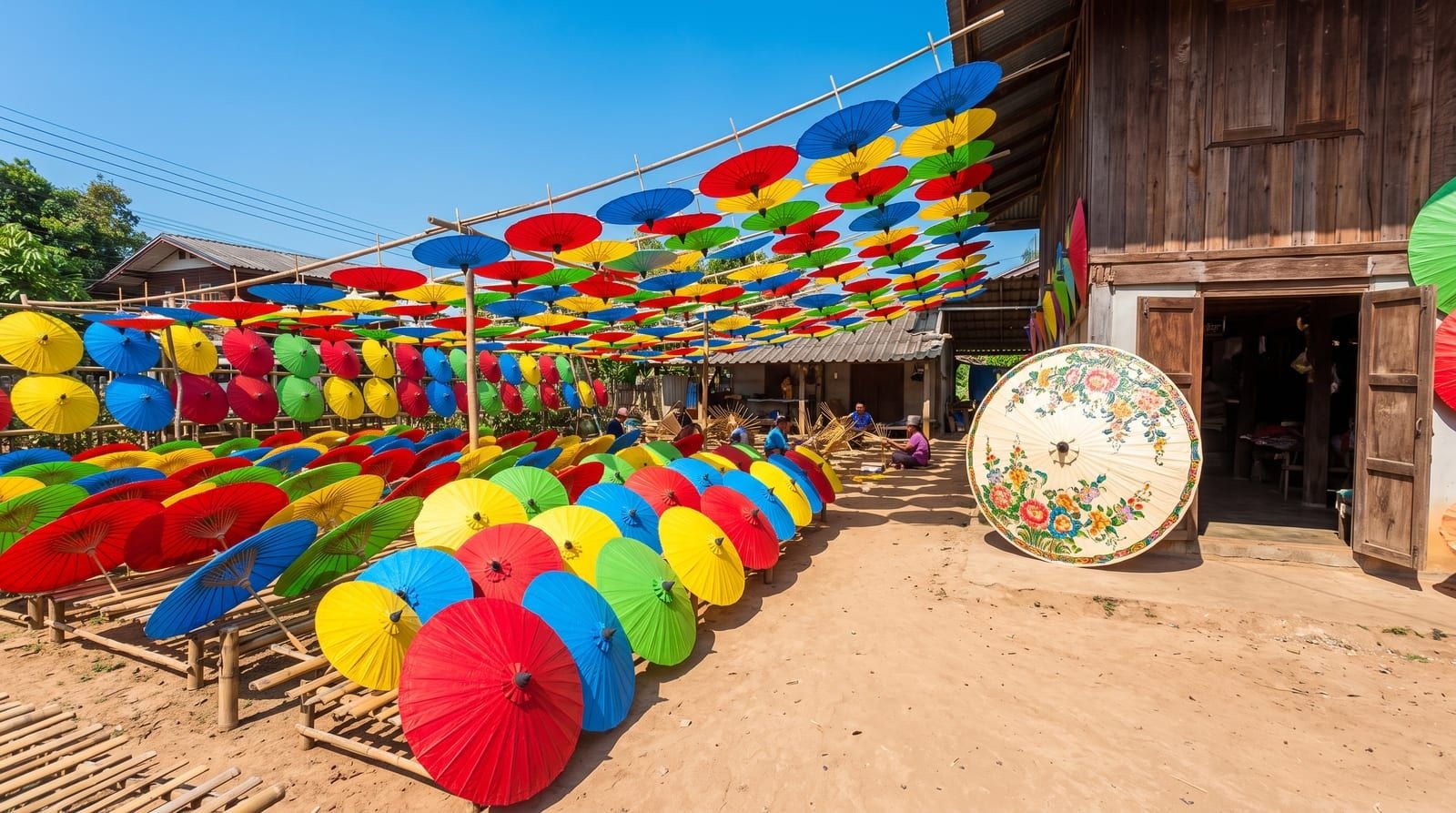
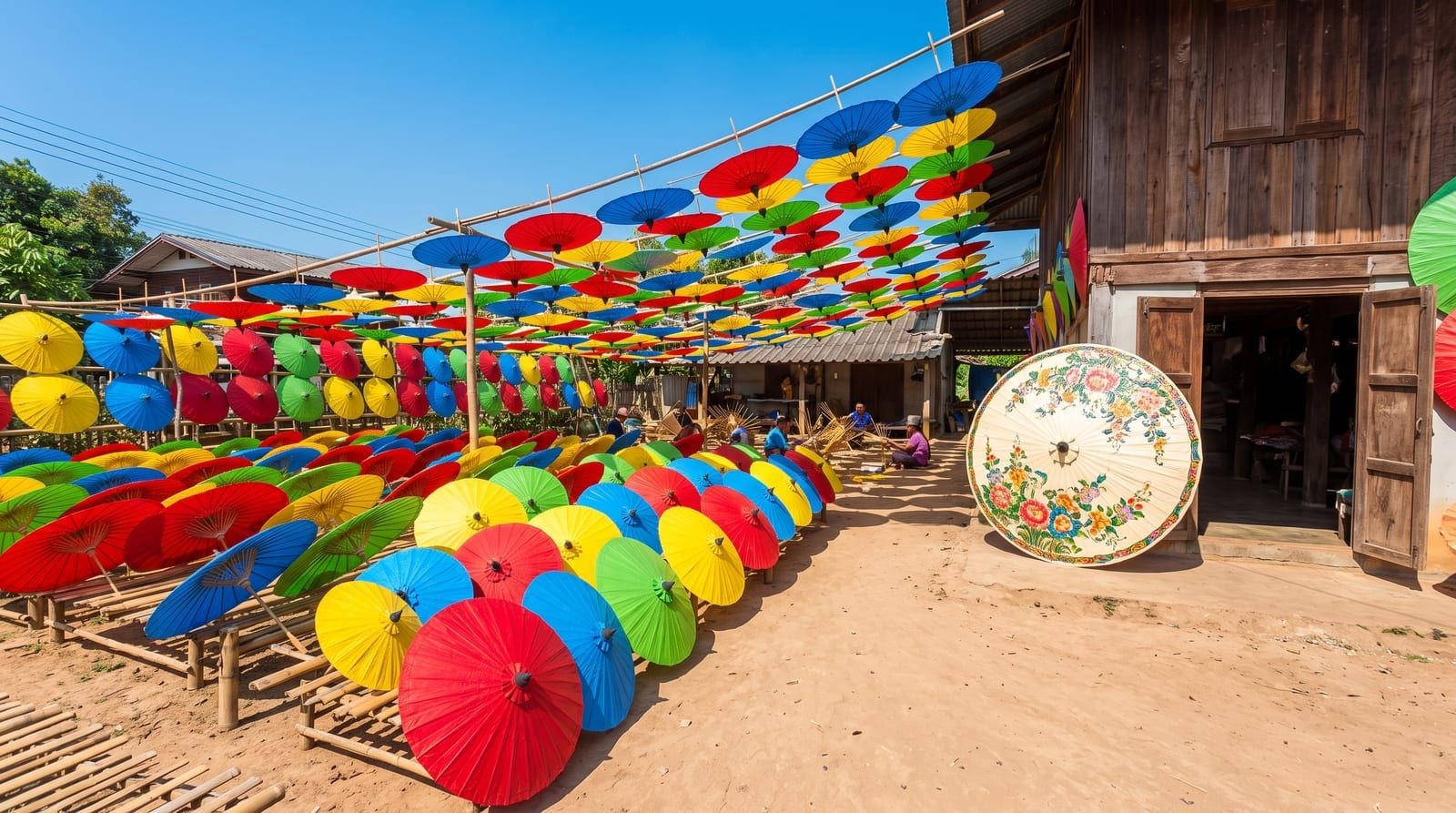
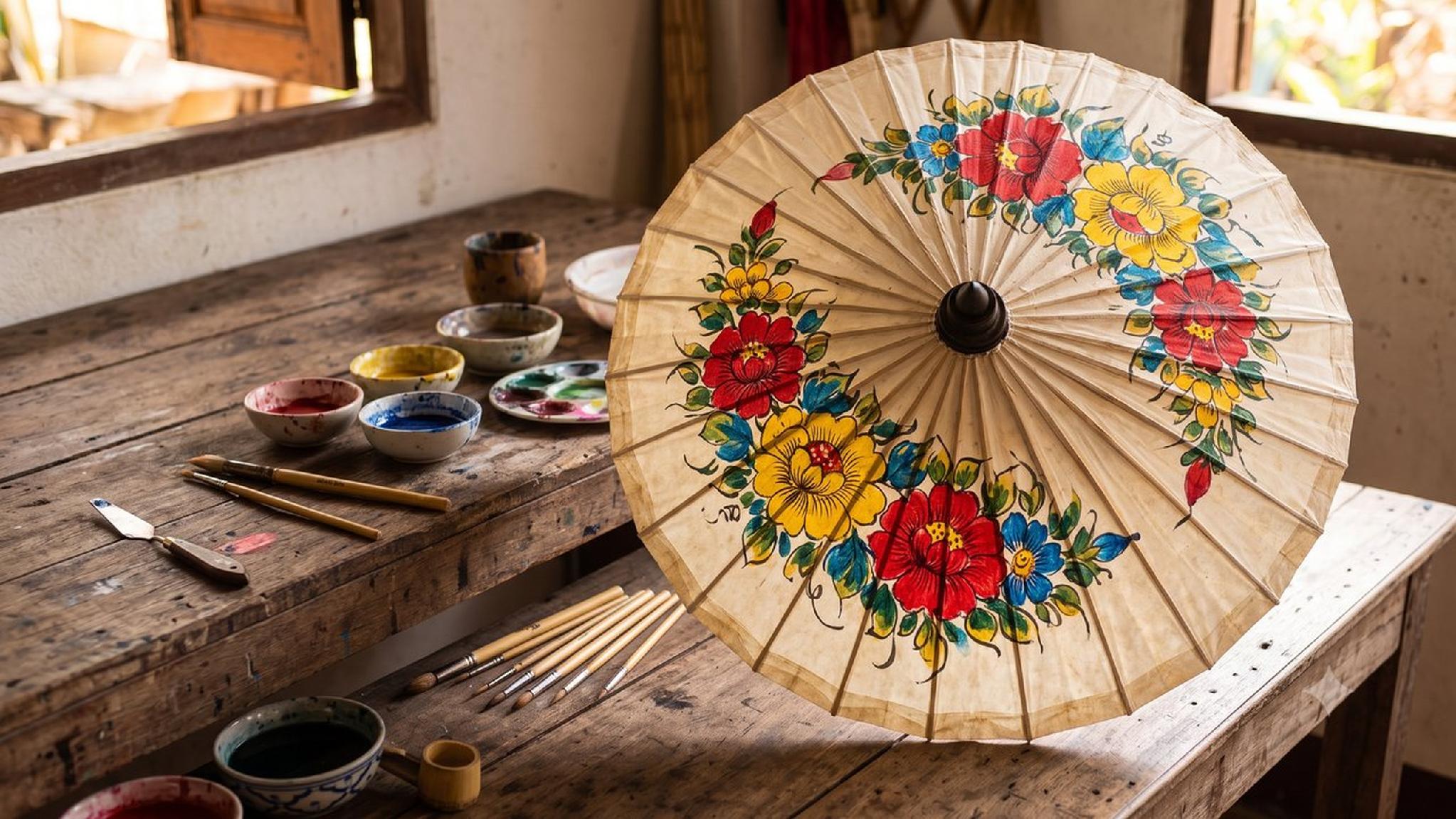
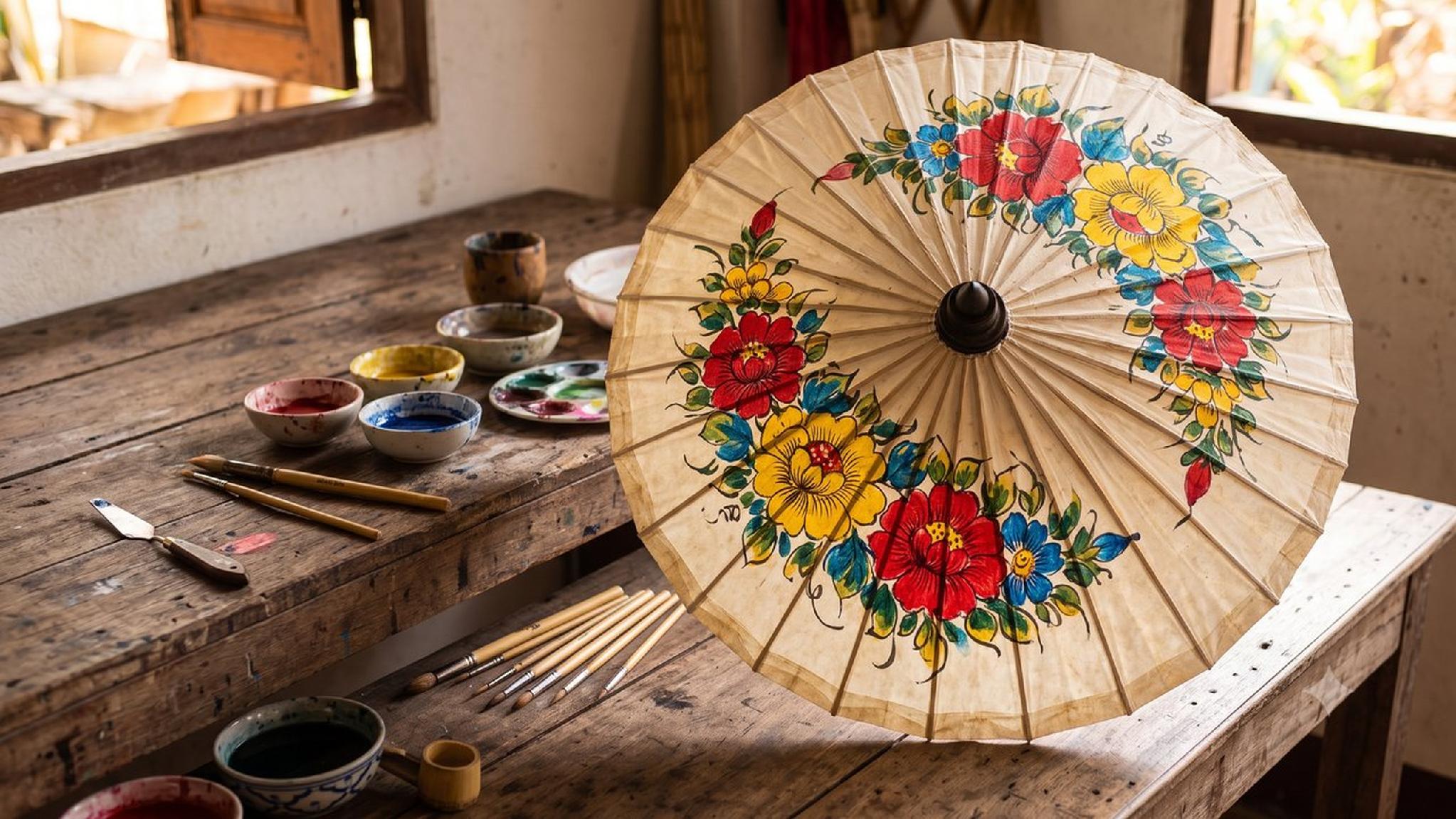
Situada a unos nueve kilómetros al este del Casco Antiguo, Bo Sang lleva más de un siglo vinculada a la fabricación de paraguas artesanales. Según la tradición local, todo comenzó con el monje Luang Por Inthaa, quien recibió un paraguas decorado procedente de Birmania y descubrió que los materiales necesarios para producirlo también podían encontrarse en su propia aldea. Con el tiempo, este oficio se convirtió en una actividad comunitaria organizada. En 1941 se creó la Cooperativa de Fabricación de Paraguas de Bo Sang, que repartía las distintas tareas, desde la elaboración del papel hasta el montaje de los marcos, la pintura y el control de calidad, entre diferentes familias de la localidad.
El característico papel saa se obtiene a partir de la corteza de la morera, que se remoja, se tritura hasta convertirla en pulpa y se prensa en finas láminas antes de montarse sobre una estructura de bambú. Hoy en día, la calle principal de Bo Sang sigue concentrando numerosos talleres familiares que mantienen este proceso artesanal. La mayoría están abiertos al público sin coste de entrada ni necesidad de reserva, lo que permite observar todas las fases de producción, desde la materia prima hasta el paraguas terminado y pintado a mano.
Información práctica:
,regionOfInterest=(1023,575.5))
,regionOfInterest=(1023,575.5))
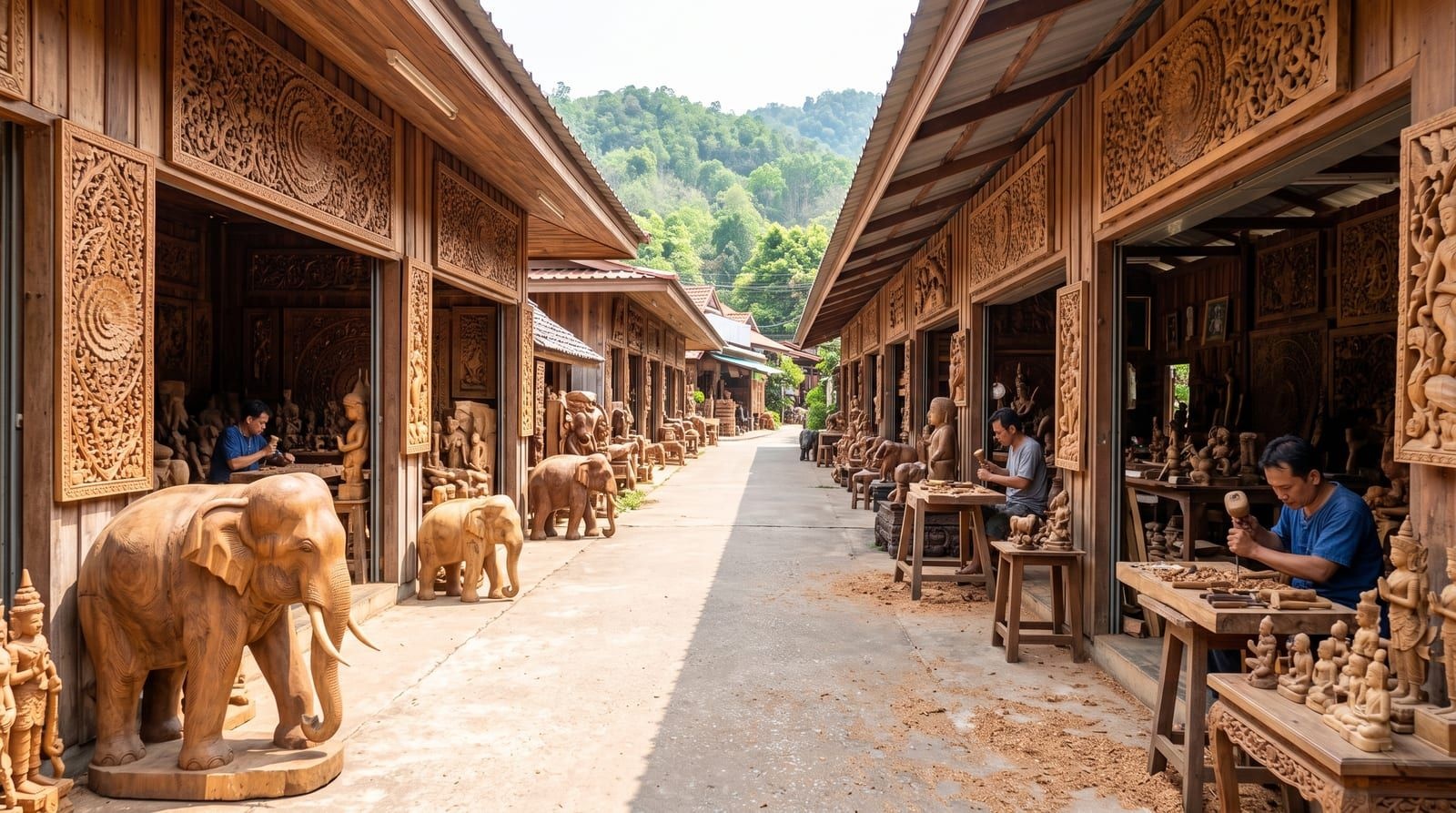
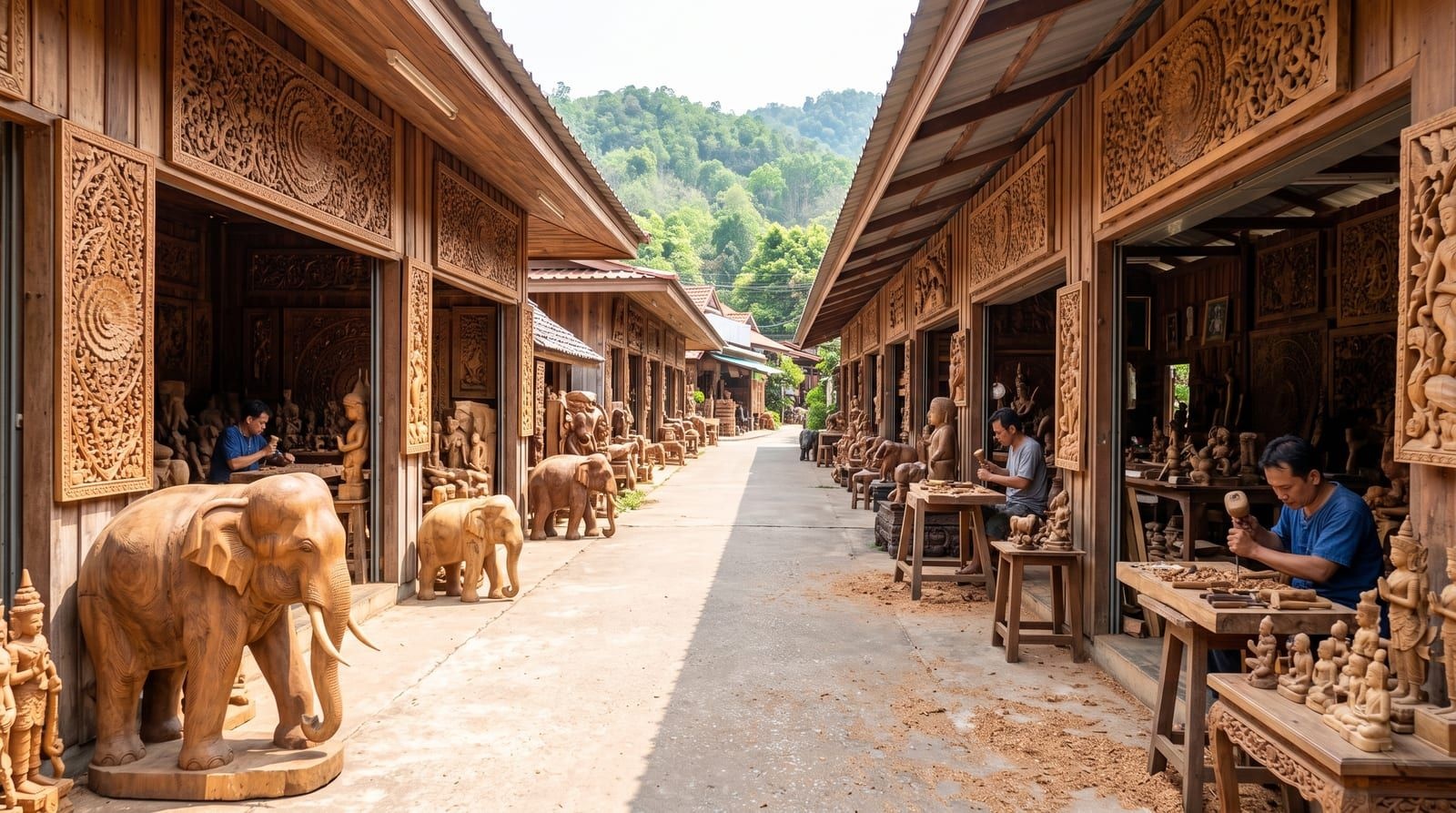
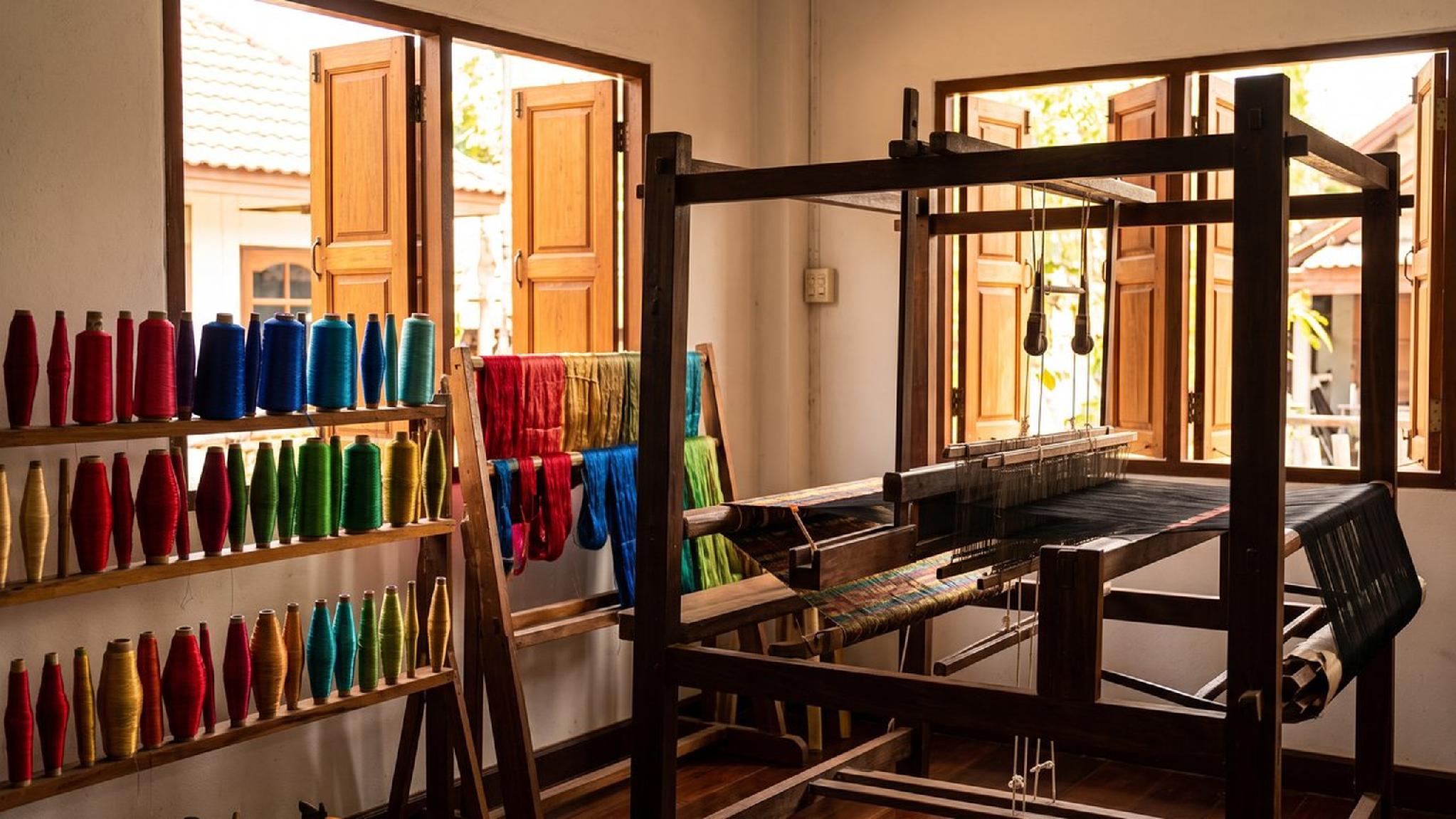
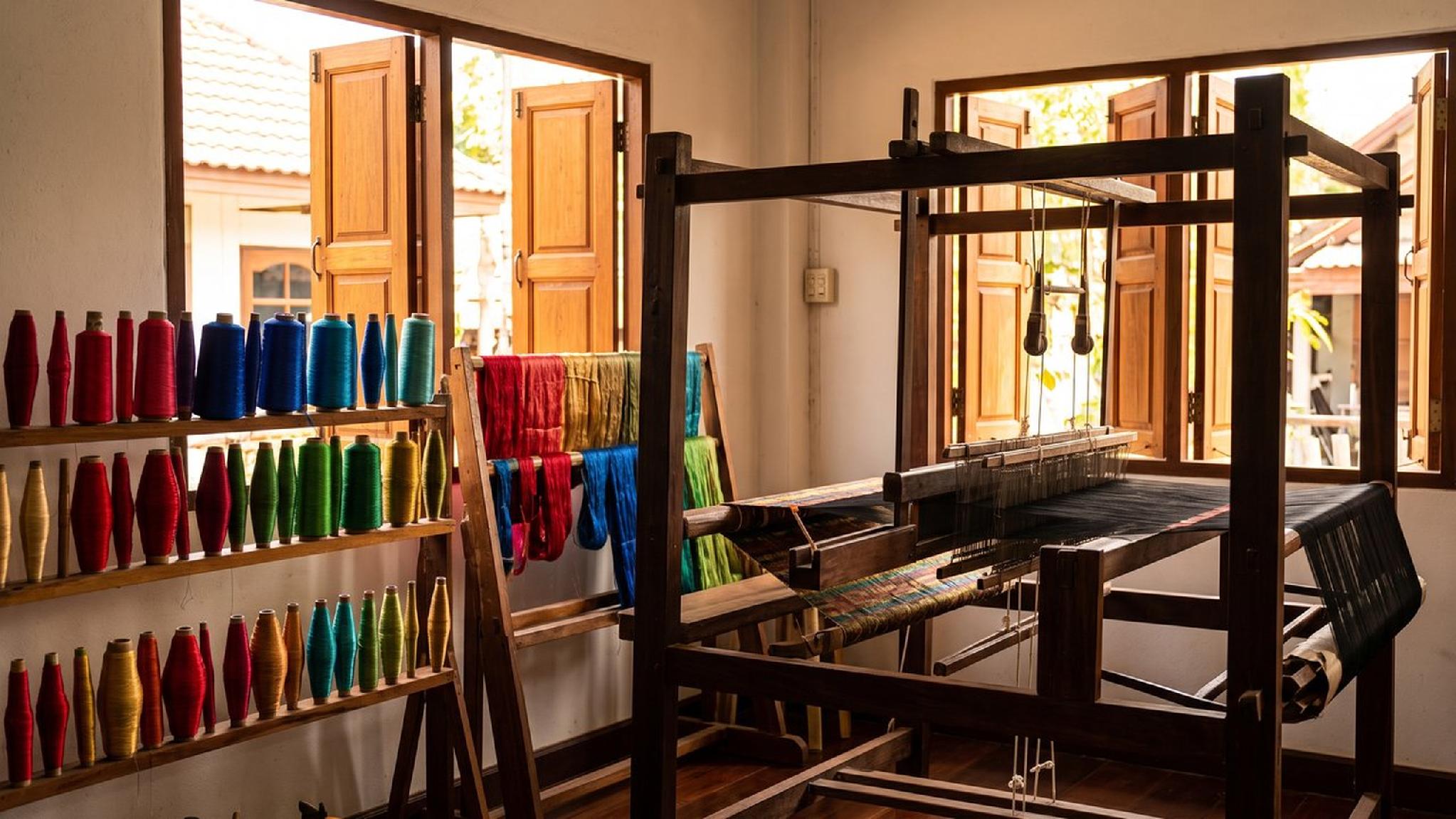
Un poco más adelante, por la misma carretera, San Kamphaeng amplía la oferta artesanal con una gran variedad de oficios tradicionales, entre ellos el tejido de seda y algodón, la talla en madera, la cerámica celadón y los trabajos de laca. Cada actividad se concentra en distintas zonas de lo que popularmente se conoce como la «carretera de la artesanía».
Los talleres textiles siguen utilizando métodos tradicionales, incluyendo el teñido manual de los hilos y el uso de telares mecánicos. Muchos permiten observar el proceso completo de elaboración, más allá de la simple exposición de los productos terminados.
La producción de objetos lacados también conserva técnicas artesanales complejas. Las piezas se construyen sobre una estructura de bambú o madera recubierta con sucesivas capas de resina, que se secan y pulen antes de aplicar la siguiente. El acabado final puede incluir pan de oro o delicadas incrustaciones de nácar.
San Kamphaeng también es conocida por su cerámica celadón, caracterizada por su distintivo esmalte verde pálido. Este tipo de cerámica se cuece a temperaturas especialmente altas, lo que contribuye a su resistencia y durabilidad.
Tanto Bo Sang como San Kamphaeng celebran festivales artesanales anuales que atraen a numerosos visitantes. Sin embargo, una visita en un día laborable suele ofrecer una mejor oportunidad para observar el trabajo cotidiano de los artesanos y conocer de cerca los procesos de producción.
Información práctica:
,regionOfInterest=(1023,575.5))
,regionOfInterest=(1023,575.5))
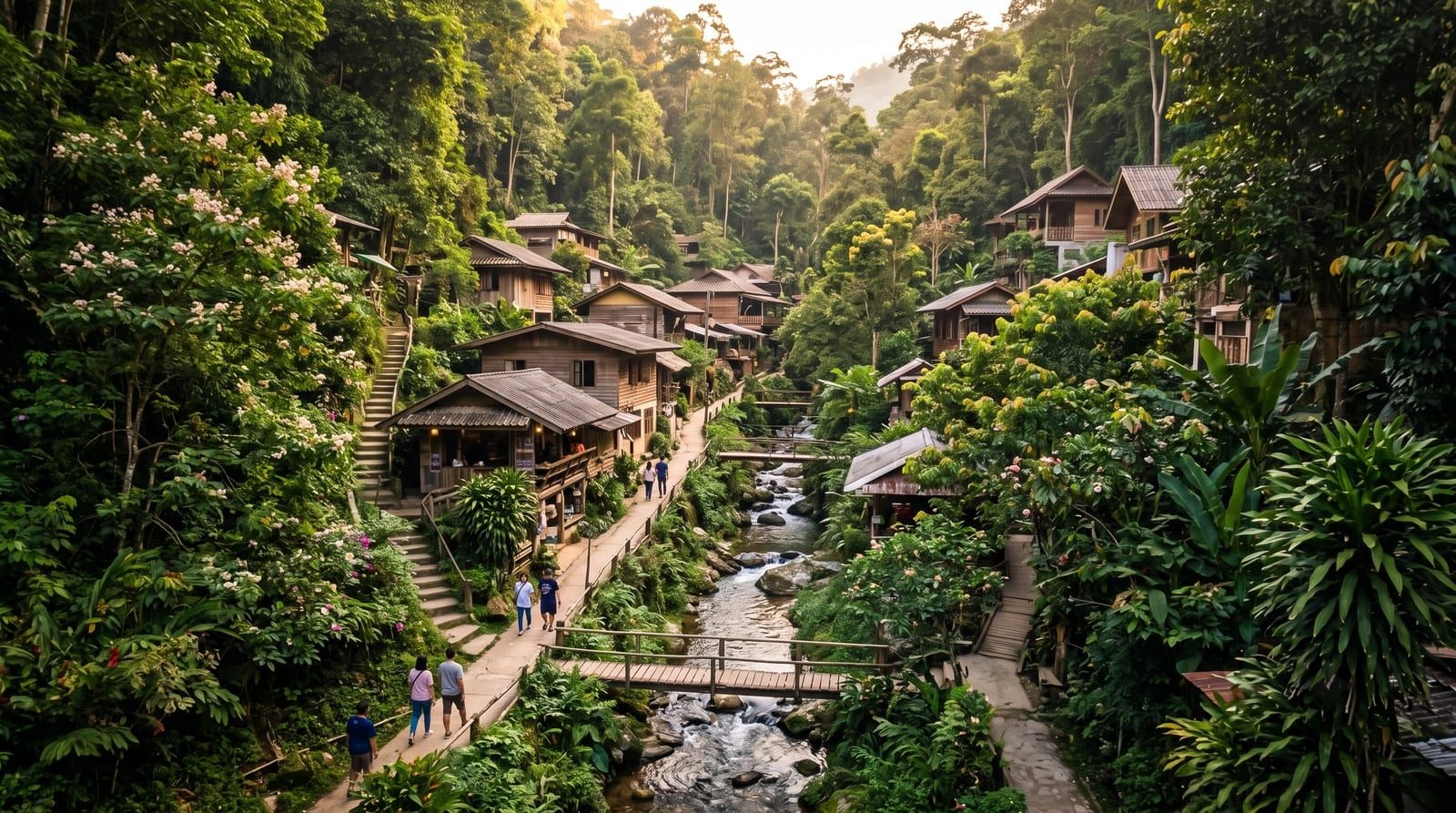
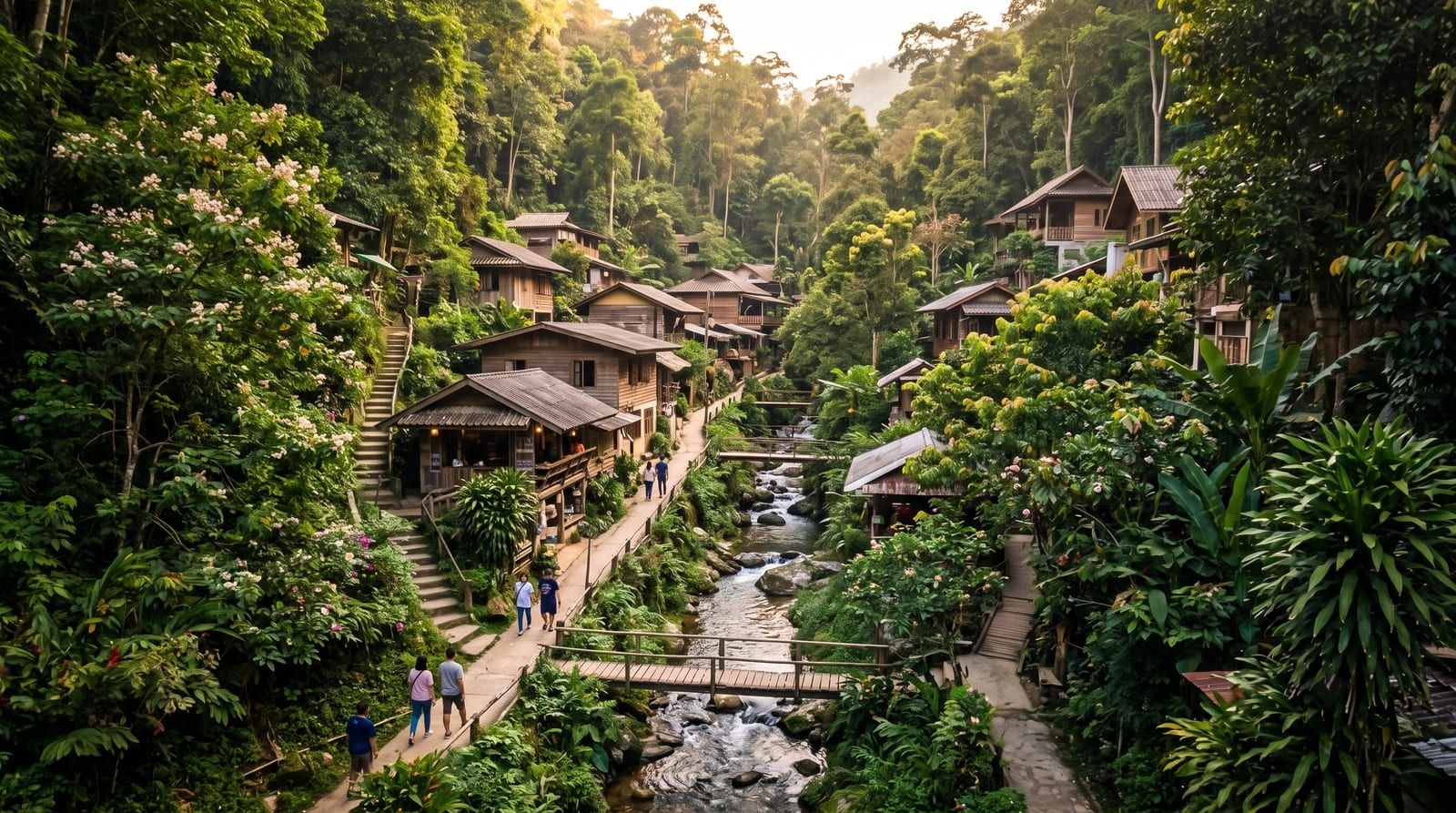
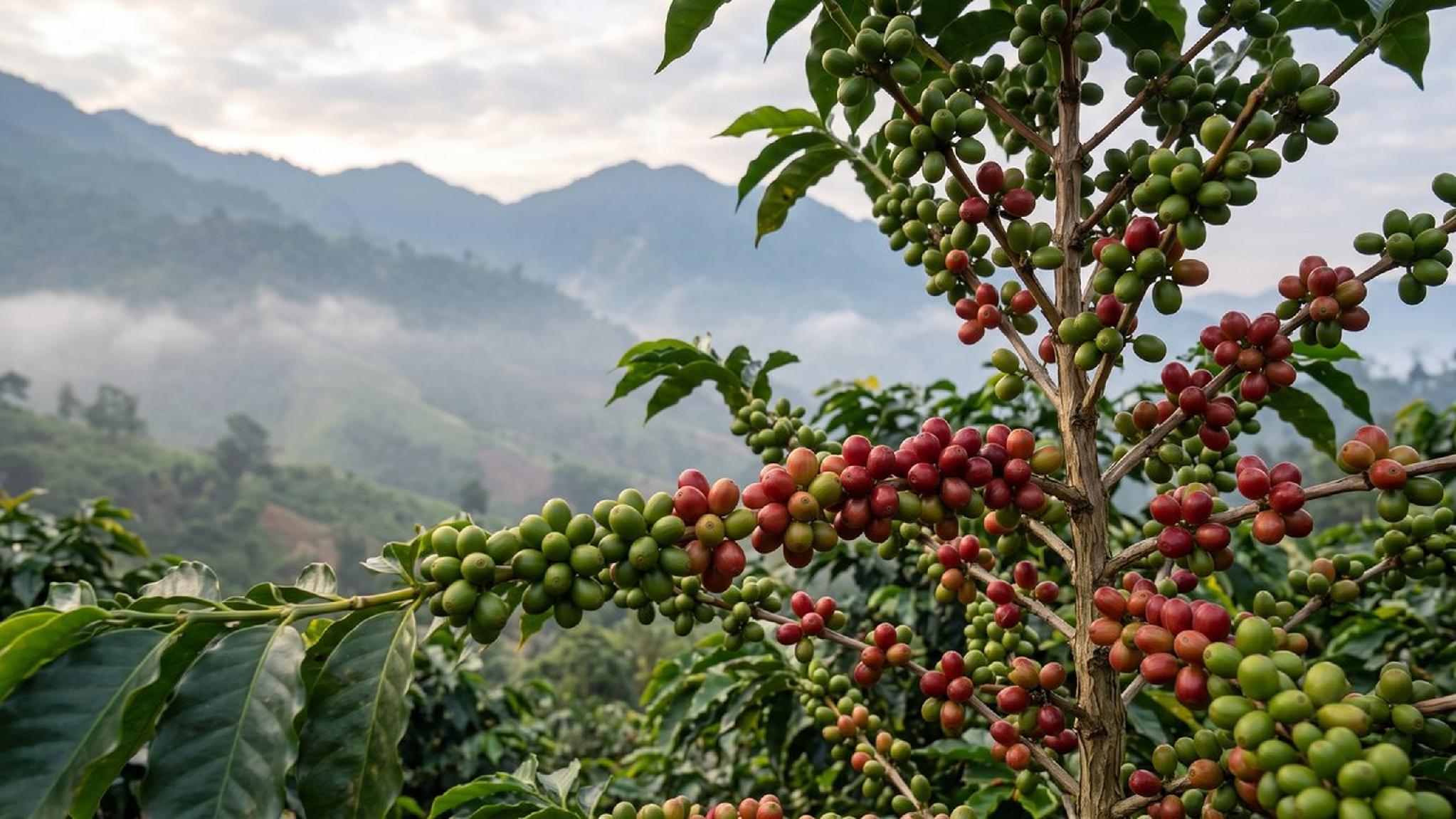
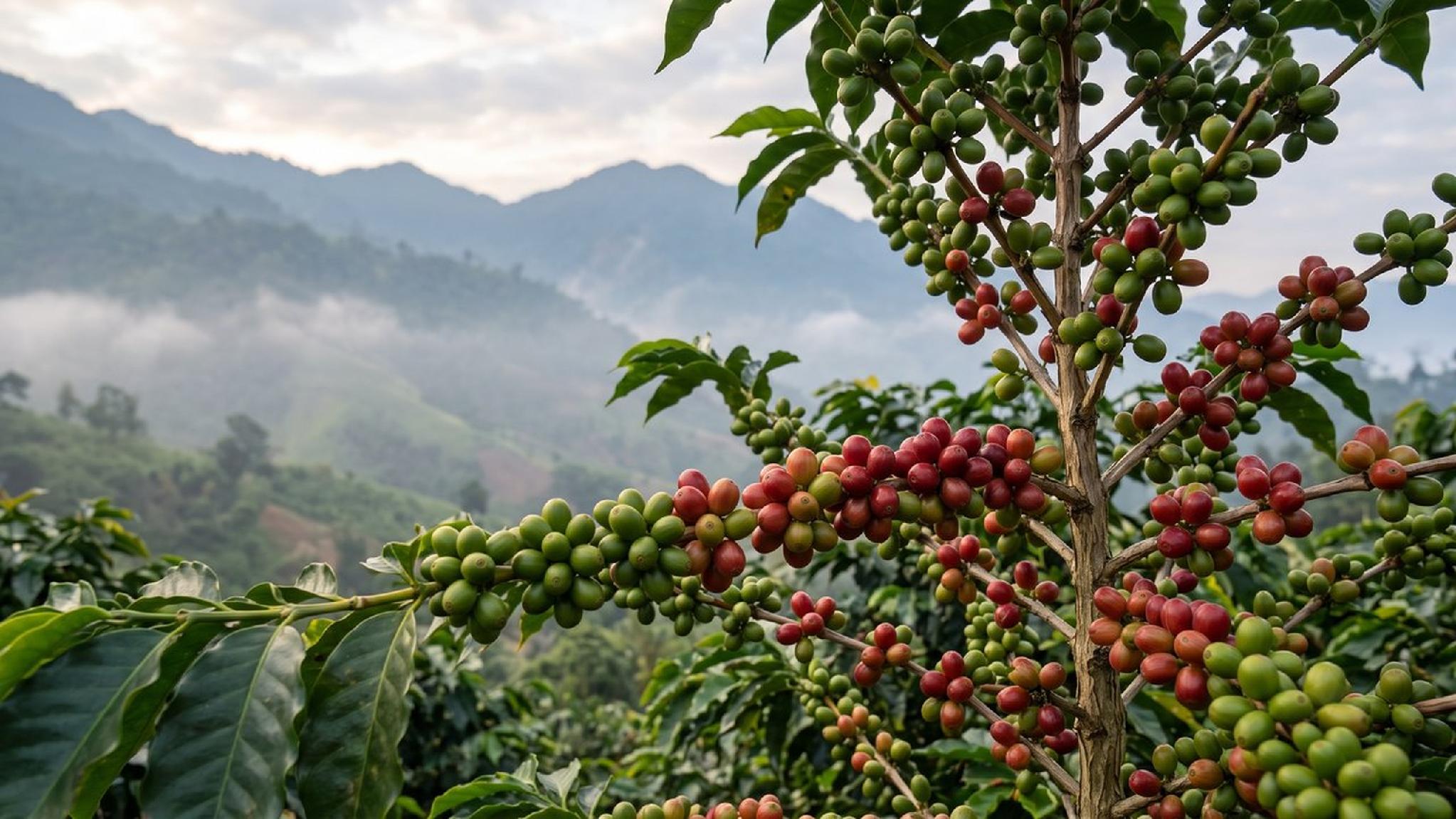
Mae Kampong es una pequeña aldea situada a unos 50 kilómetros al este de Chiang Mai, en el distrito de Mae On. Desde la década de 1990 se ha consolidado como uno de los ejemplos más conocidos de ecoturismo comunitario de Tailandia, en torno a un cultivo de café introducido gracias a un proyecto de desarrollo real impulsado años antes. El café producido en las laderas que rodean la aldea se procesa localmente y se sirve en los pequeños cafés del pueblo, donde visitantes y residentes comparten los mismos espacios.
Actualmente, más de veinte casas locales ofrecen alojamiento a los viajeros. Su crecimiento está regulado por las autoridades turísticas para preservar el carácter de la comunidad y evitar un desarrollo excesivo. Una cascada de siete niveles situada al final de la aldea invita además a recorrer a pie todo el asentamiento y disfrutar de su entorno natural.
Los ingresos procedentes del turismo se gestionan a través de una cooperativa local que reinvierte los beneficios en la propia comunidad. Este modelo ha contribuido a que Mae Kampong conserve su identidad como una aldea habitada y activa, en lugar de convertirse en un destino orientado exclusivamente al turismo.
Una estancia de una noche suele costar entre 500 y 1.000 baht por persona e incluye normalmente cena y desayuno con la familia anfitriona. Además de ofrecer una experiencia diferente a la de un hotel convencional, permite conocer de cerca la vida cotidiana de la comunidad.
Entre las aldeas de Chiang Mai vinculadas a la agricultura, Mae Kampong destaca por la estrecha relación entre visitantes y producción local. Los recorridos por los cafetales, el proceso de elaboración del café y la posibilidad de degustarlo en el mismo lugar donde se cultiva forman parte fundamental de la experiencia.
Para facilitar la comparación, este es un resumen de algunas de las aldeas más interesantes de la provincia de Chiang Mai:
|
Aldea o área |
Tipo |
Destaca por |
|
Ban Huay Khao Lip / Ban Pratu Muang |
Comunidad karen, Mae Wang |
Senderismo y alojamientos gestionados por la comunidad |
|
Ban Mae Klang Luang |
Comunidad karen, Doi Inthanon |
Arrozales en terrazas y estancias en la montaña |
|
Bo Sang |
Aldea artesanal |
Paraguas de papel saa pintados a mano |
|
San Kamphaeng |
Aldea artesanal |
Tejido de seda, lacados y cerámica celadón |
|
Mae Kampong |
Aldea agrícola y de ecoturismo |
Café del Proyecto Real y cascada de montaña |
,regionOfInterest=(1023,575.5))
,regionOfInterest=(1023,575.5))
No todas las experiencias relacionadas con las tribus de las colinas cerca de Chiang Mai funcionan de la misma manera, por lo que conviene conocer las diferencias antes de reservar una visita. Algunas aldeas se han convertido en paradas turísticas centradas principalmente en las fotografías, con grupos organizados que llegan, recorren el lugar en poco tiempo y se marchan sin que una parte significativa de los ingresos llegue realmente a la comunidad local.
El turismo comunitario ofrece un enfoque diferente. En este modelo, los guías suelen pertenecer a la propia aldea, los alojamientos están gestionados por familias locales y las actividades se desarrollan en torno al ritmo cotidiano de la comunidad, en lugar de seguir un programa diseñado exclusivamente para los visitantes.
El tamaño de los grupos también influye considerablemente en la experiencia. Las visitas reducidas y las estancias en pequeños grupos suelen integrarse mejor en la vida local, mientras que los grupos numerosos tienden a alterar la dinámica de la comunidad y transforman la visita en una experiencia menos auténtica, independientemente de las buenas intenciones de los organizadores.
Por este motivo, optar por operadores locales o por iniciativas de turismo comunitario, incluso cuando el coste sea algo superior, suele ser una forma más eficaz de apoyar a las aldeas que priorizan la conservación de su cultura y el bienestar de sus habitantes.
También resulta recomendable preguntar de forma transparente cómo se distribuyen los ingresos de la visita o la estancia. Las comunidades que gestionan directamente sus proyectos turísticos suelen explicar con claridad cómo se utilizan esos fondos y qué parte revierte en las familias y en el desarrollo de la propia aldea. La transparencia es, a menudo, uno de los mejores indicadores de un proyecto turístico responsable y sostenible.
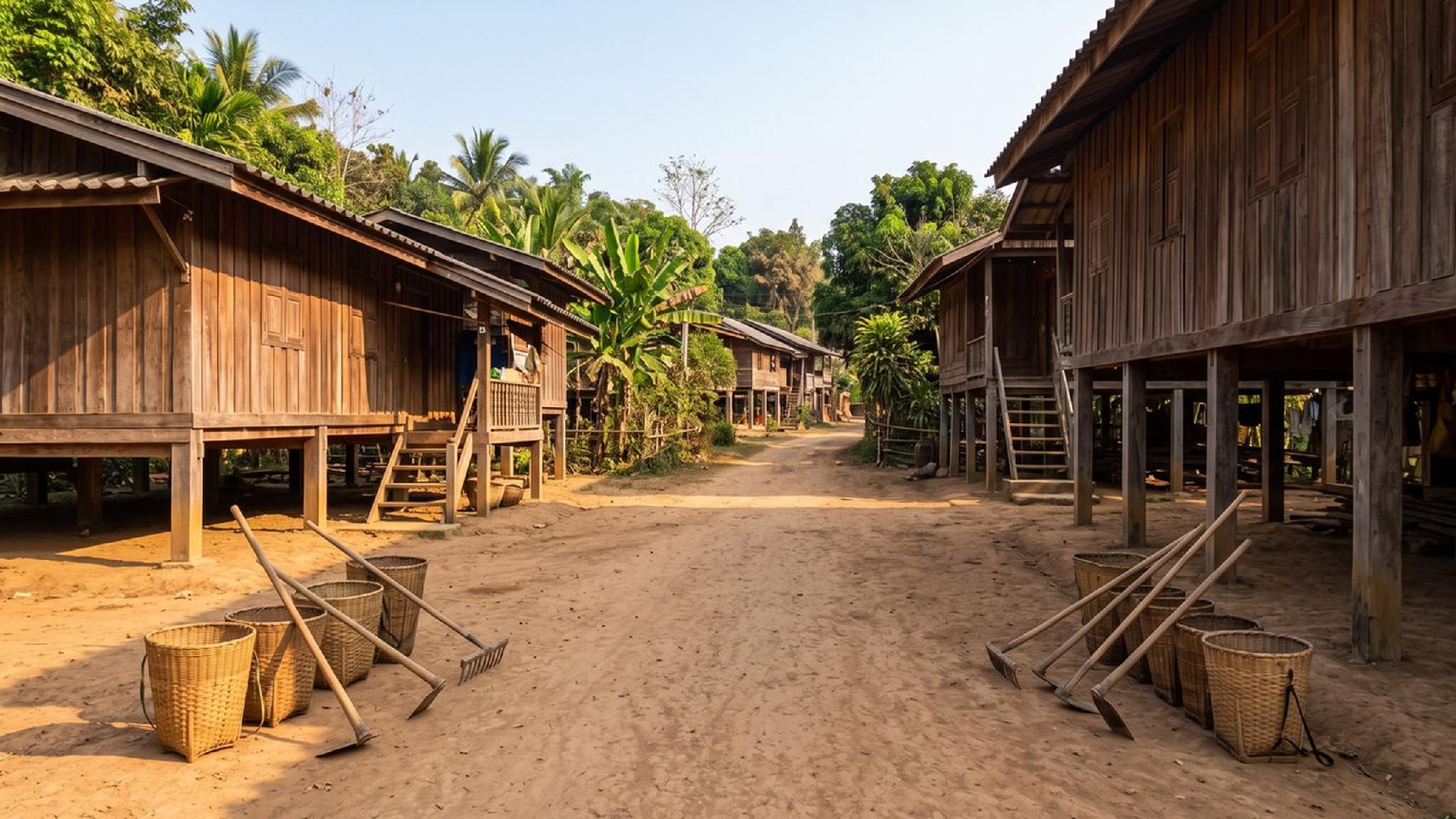,regionOfInterest=(1023,575.5))
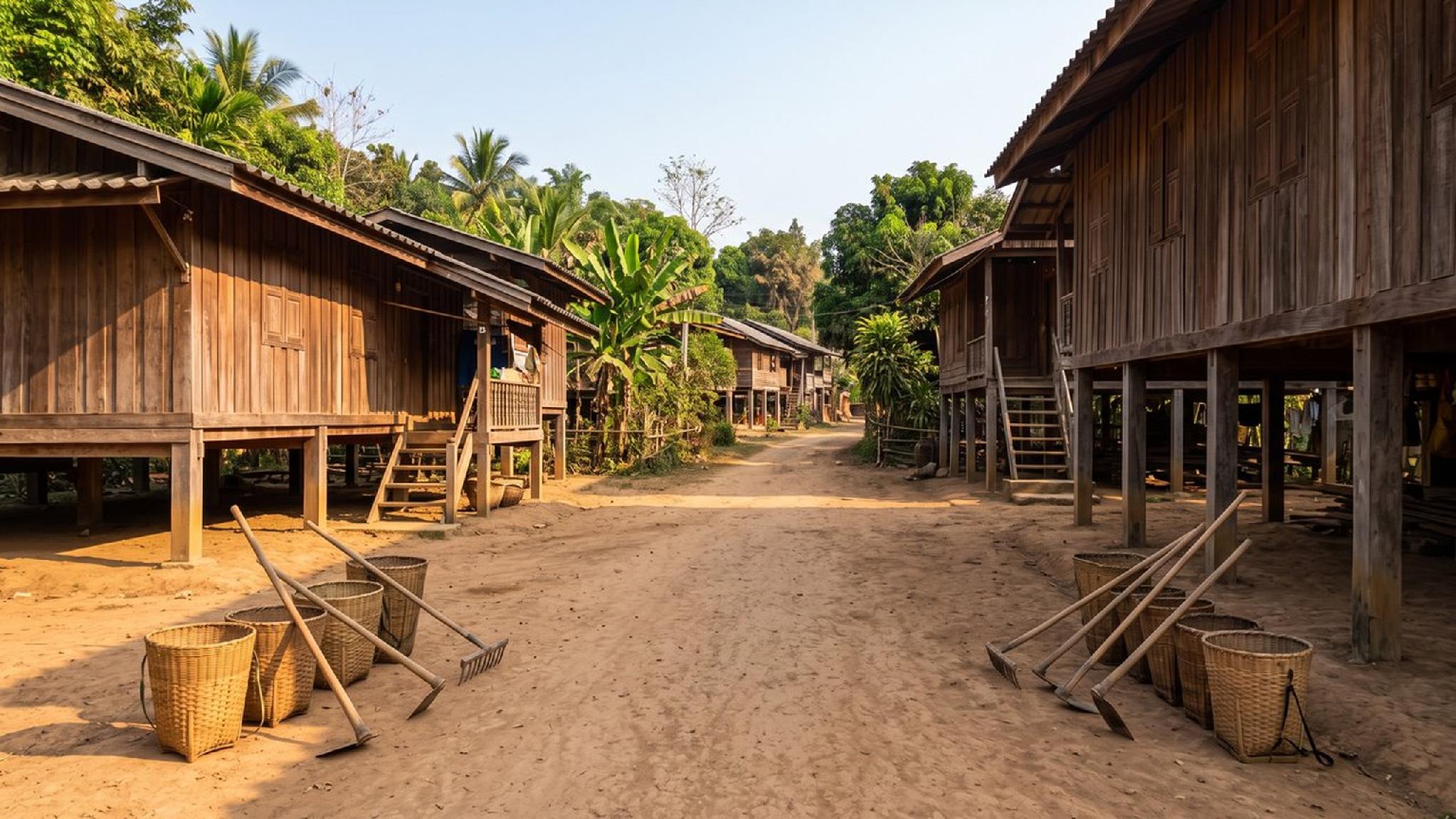,regionOfInterest=(1023,575.5))
Bo Sang y San Kamphaeng se encuentran lo suficientemente cerca de Chiang Mai como para visitarlos fácilmente por cuenta propia. Un scooter de alquiler, un servicio de transporte por aplicación o un songthaew permiten llegar sin necesidad de reservar una excursión organizada. En cambio, Mae Kampong y las aldeas de montaña de Mae Wang y Doi Inthanon se encuentran a mayor distancia y requieren recorrer carreteras sinuosas de montaña, por lo que suele resultar más práctico contratar un conductor privado o unirse a un tour en grupo reducido, especialmente si no se conoce la ruta.
|
Aldea o zona |
Distancia desde la ciudad |
Mejor forma de llegar |
|
Bo Sang |
Aproximadamente 9 km |
Scooter, transporte por aplicación o songthaew |
|
San Kamphaeng |
Aproximadamente 13 km |
Scooter, transporte por aplicación o songthaew |
|
Mae Kampong |
Aproximadamente 50 km |
Conductor privado o tour en grupo reducido |
|
Aldeas de Mae Wang |
Entre 60 y 70 km |
Conductor privado o tour en grupo reducido |
|
Ban Mae Klang Luang |
Aproximadamente 80 km (dentro de Doi Inthanon) |
Conductor privado o excursión de un día completo |
Las estancias en casas locales de las aldeas agrícolas y comunidades de montaña suelen requerir reserva previa, preferiblemente con varios días de antelación. El número limitado de huéspedes forma parte del modelo que permite preservar el carácter y el funcionamiento cotidiano de estas comunidades.
Una visita a Bo Sang y San Kamphaeng puede realizarse cómodamente en medio día y apenas requiere planificación. En cambio, las experiencias en aldeas de montaña resultan más satisfactorias cuando se reservan directamente con la comunidad o a través de operadores pequeños y transparentes, especialmente durante la temporada fresca, entre noviembre y febrero, cuando la demanda suele ser mayor.
Durante la estación lluviosa, aproximadamente de junio a octubre, los desplazamientos a las aldeas más remotas pueden alargarse debido al estado de las carreteras. Aunque los cortes por deslizamientos de tierra no son habituales, pueden producirse tras episodios de lluvias intensas, por lo que conviene comprobar las condiciones de la ruta antes de emprender el viaje.
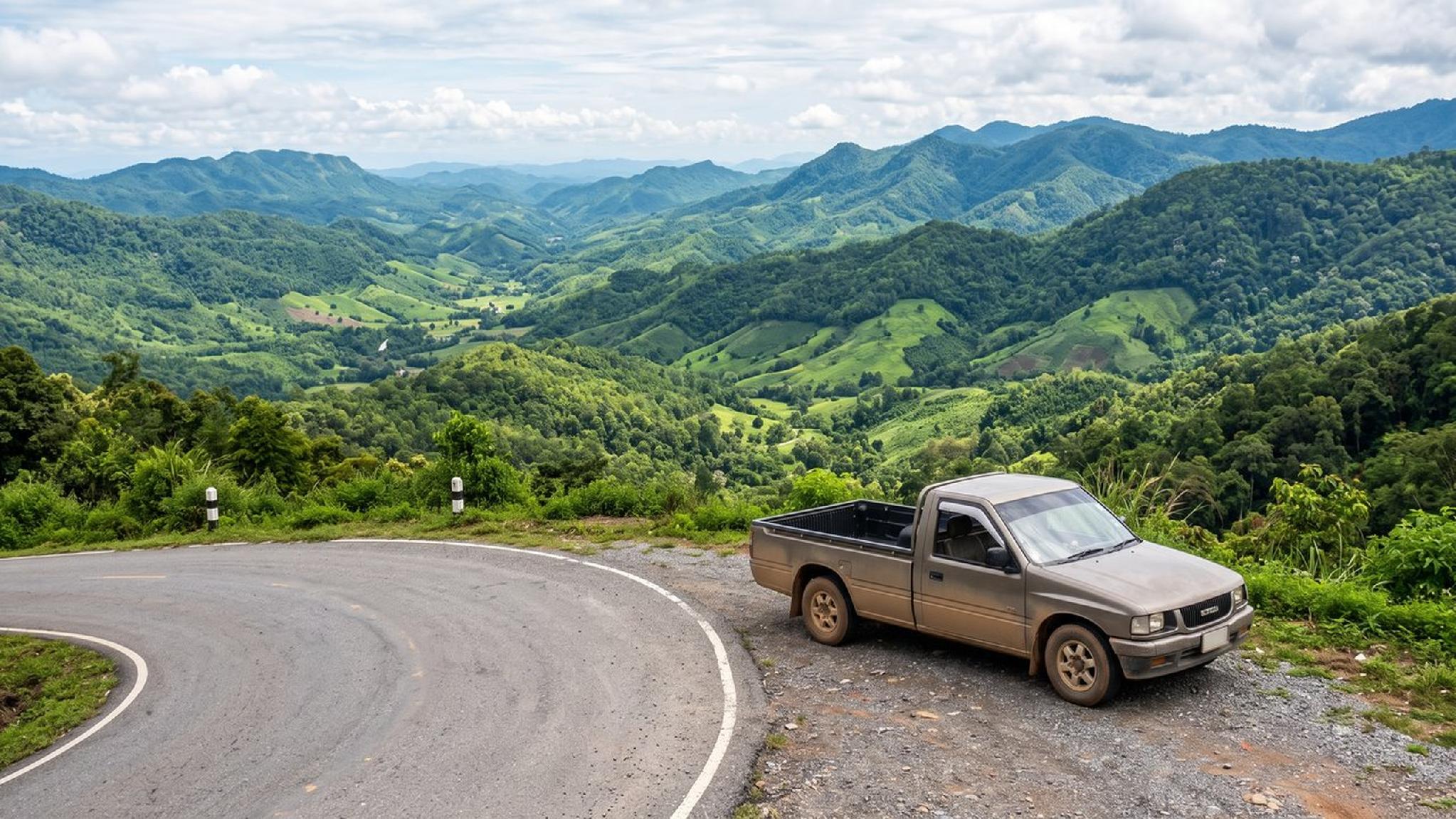,regionOfInterest=(1023,575.5))
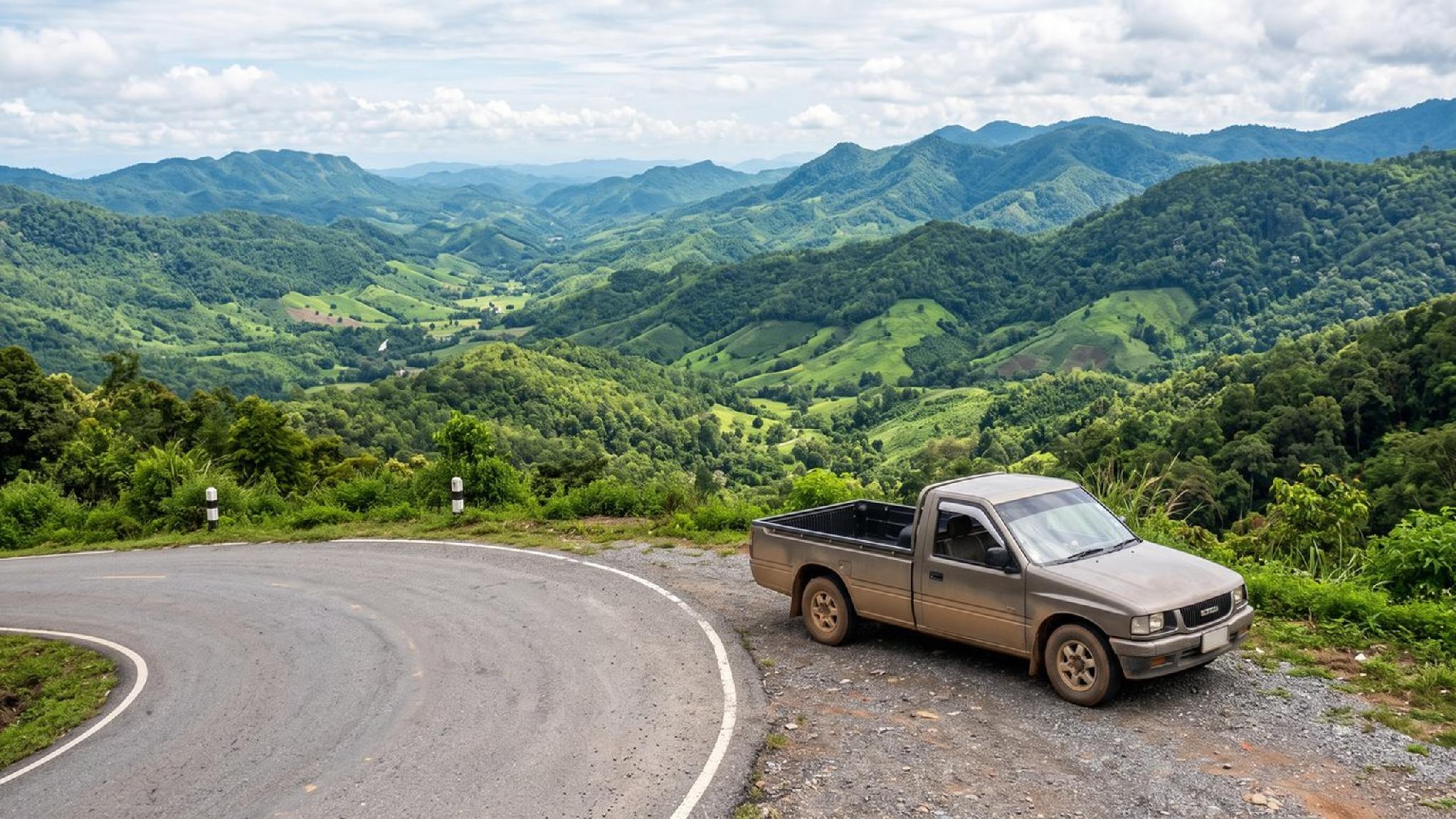,regionOfInterest=(1023,575.5))
Una serie de hábitos sencillos suele contribuir más a una visita respetuosa que cualquier planificación previa.
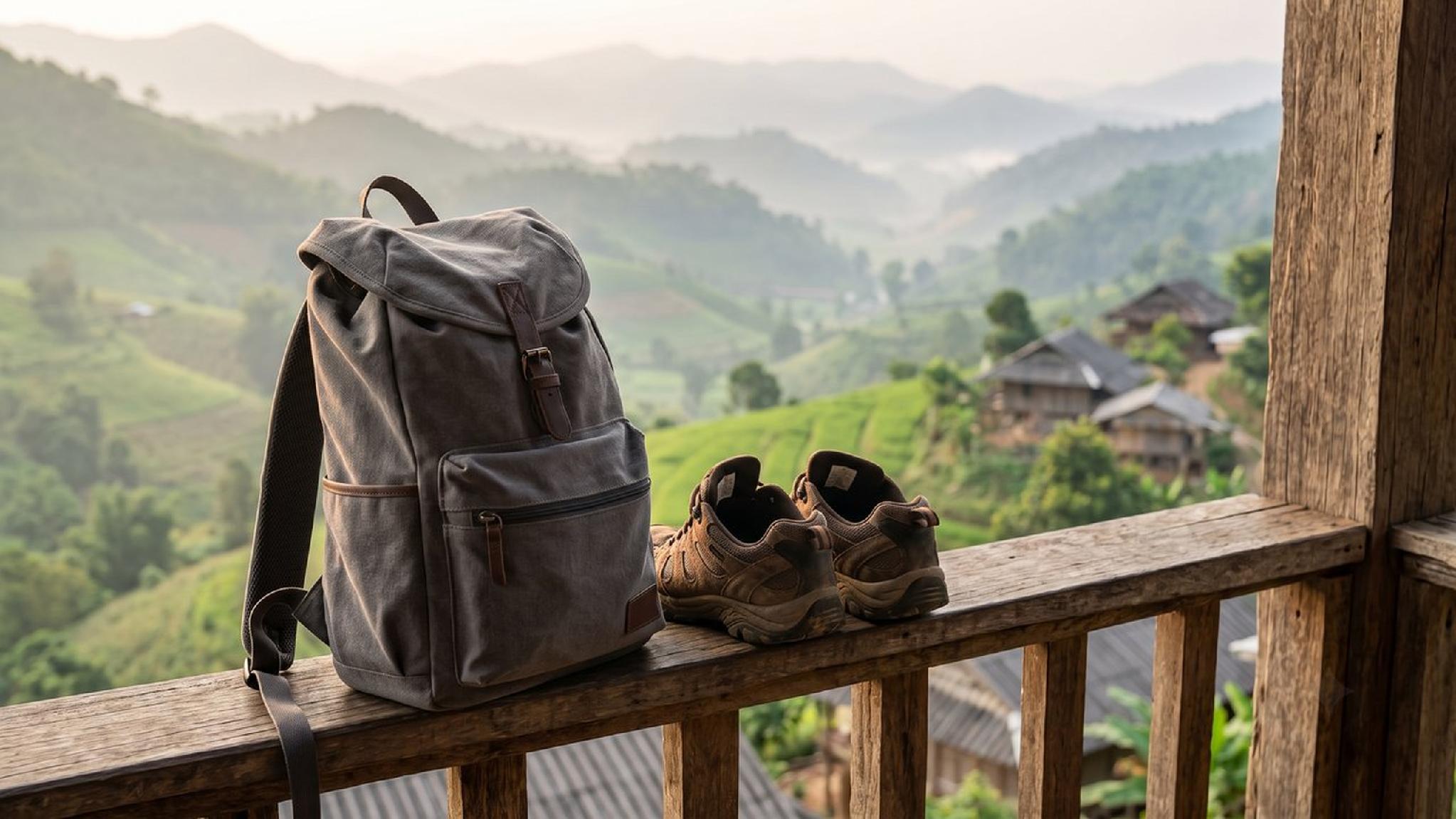
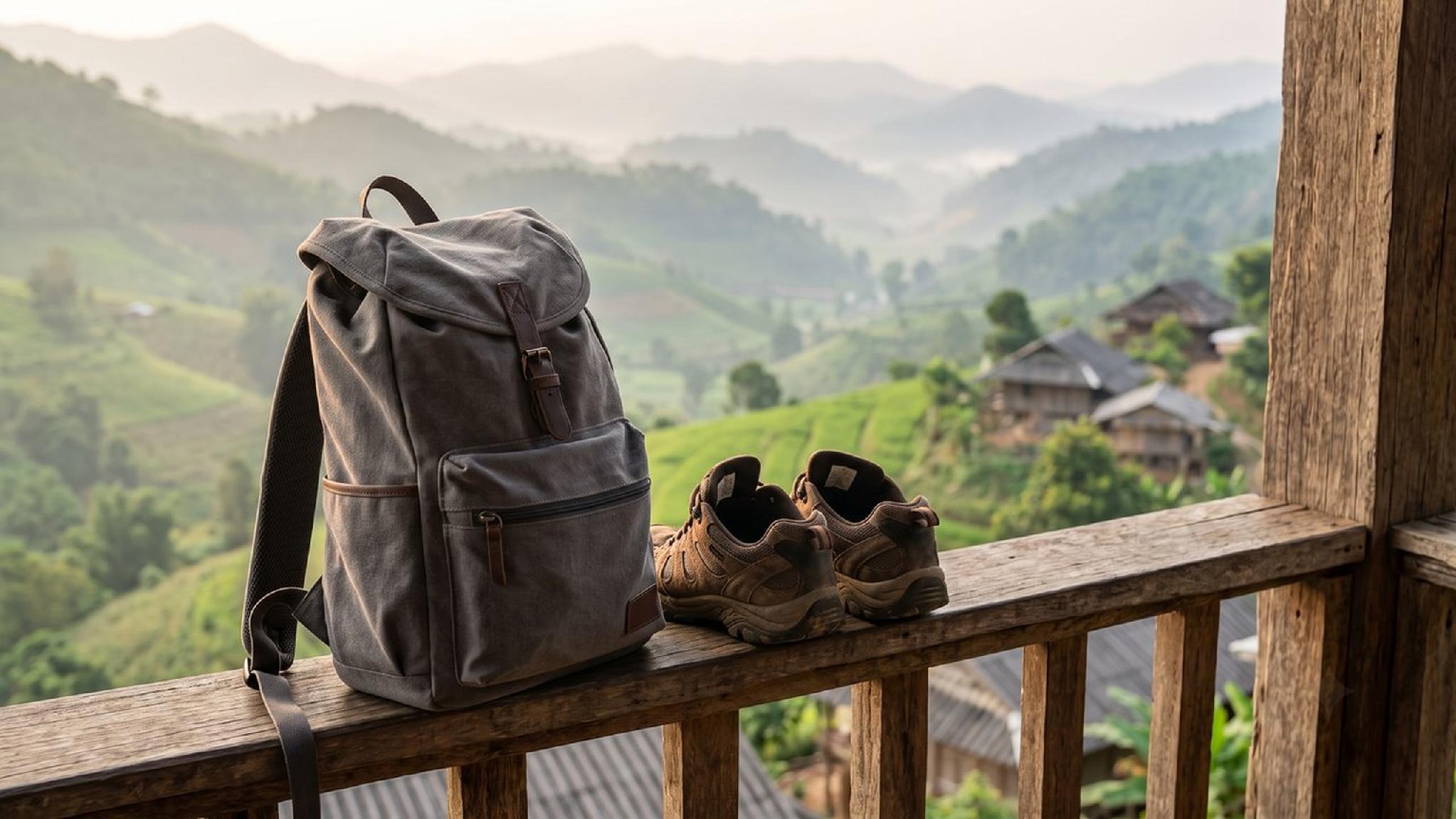
Además de los elementos básicos, una linterna, una chaqueta ligera para la lluvia durante la temporada húmeda y un calzado cerrado y cómodo suelen ser suficientes para la mayoría de las excursiones de un día y estancias de una noche.
El conocimiento de algunas expresiones básicas en tailandés, incluso saludos y agradecimientos sencillos, suele ser bien recibido por las comunidades locales. Más allá de su utilidad práctica, refleja interés por la cultura local y favorece una interacción más cercana y respetuosa con las familias anfitrionas.
,regionOfInterest=(1023,575.5))
,regionOfInterest=(1023,575.5))
Después de una jornada entre carreteras de montaña, arrozales y talleres artesanales, disponer de un lugar cómodo para descansar suele marcar la diferencia. Situado en Charoen Prathet Road, Meliá Chiang Mai ofrece una ubicación práctica para regresar a la ciudad tras una excursión a las aldeas de los alrededores, con fácil acceso tanto al Night Bazaar como al Casco Antiguo.
La The Level Suite, con 62 m2 y una decoración inspirada en la tradición tailandesa, es una opción especialmente adecuada tras un día de exploración. El servicio de check-in privado agiliza la llegada, mientras que el acceso a The Level Lounge, en la planta 21, permite disfrutar de una bebida o un aperitivo en un ambiente tranquilo sin necesidad de volver a salir del hotel.
Tras varias horas de desplazamientos, caminatas o actividades al aire libre, YHI Spa ofrece una oportunidad para recuperarse y relajarse. Los tratamientos y masajes ayudan a aliviar la fatiga acumulada después de un día recorriendo senderos, plantaciones de café o aldeas de montaña, permitiendo afrontar con mayor comodidad la jornada siguiente.
La experiencia puede completarse en Laan Na Kitchen, cuyo menú de inspiración mediterránea con influencias españolas constituye una alternativa agradable después de un día dedicado a descubrir la vida rural del norte de Tailandia. Una cena tranquila en un entorno cómodo suele resultar especialmente bienvenida tras varias horas fuera de la ciudad.
Nada de ello sustituye al atractivo de las aldeas ni a las experiencias que ofrecen, pero disponer de una base confortable y bien ubicada facilita los desplazamientos y añade comodidad al viaje. De hecho, combinar una o dos noches en una comunidad local con el resto de la estancia en Chiang Mai permite disfrutar tanto de la autenticidad del entorno rural como de los servicios y la comodidad de la ciudad.
,regionOfInterest=(1771.5,1181.5))
,regionOfInterest=(1771.5,1181.5))
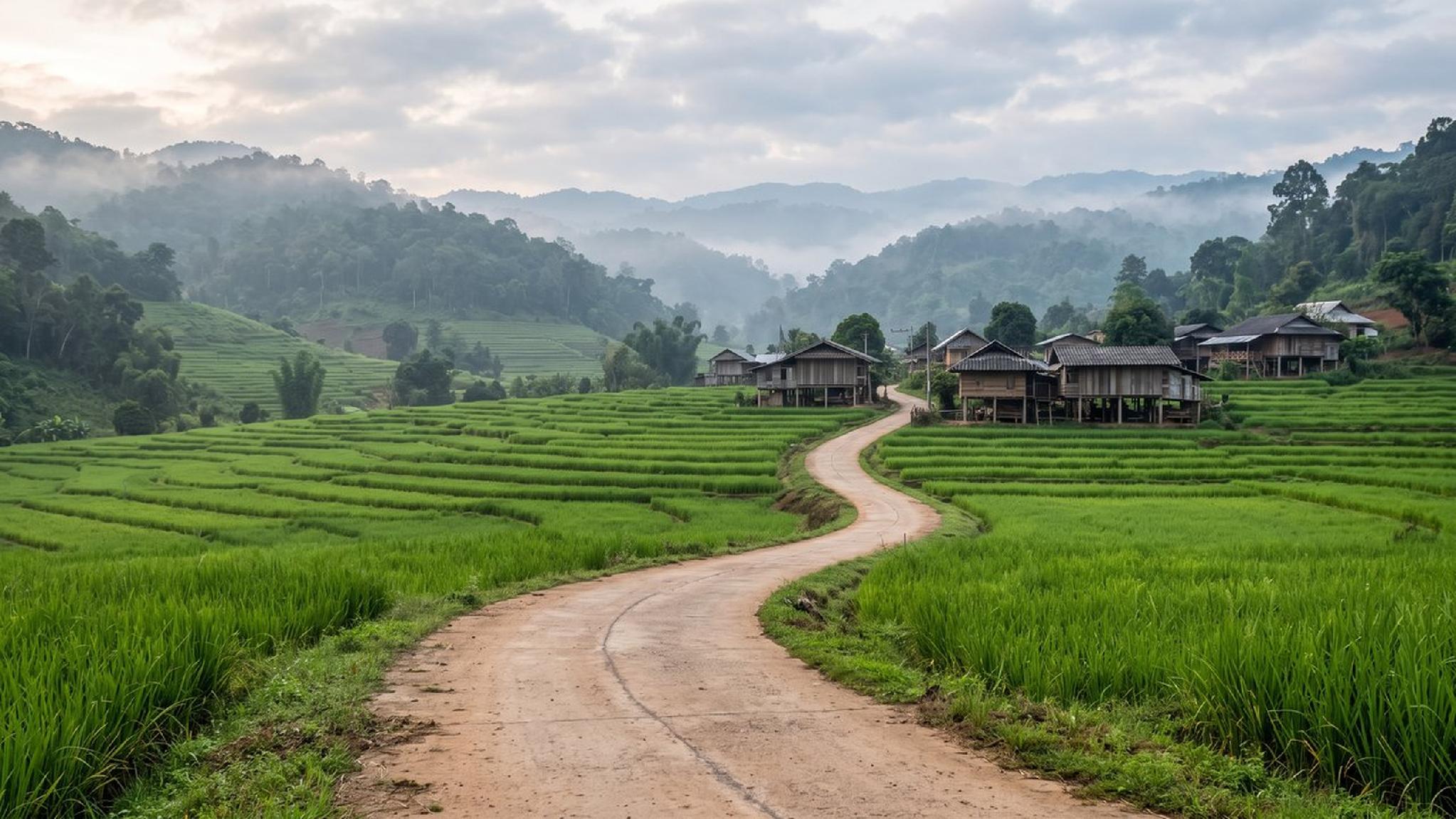
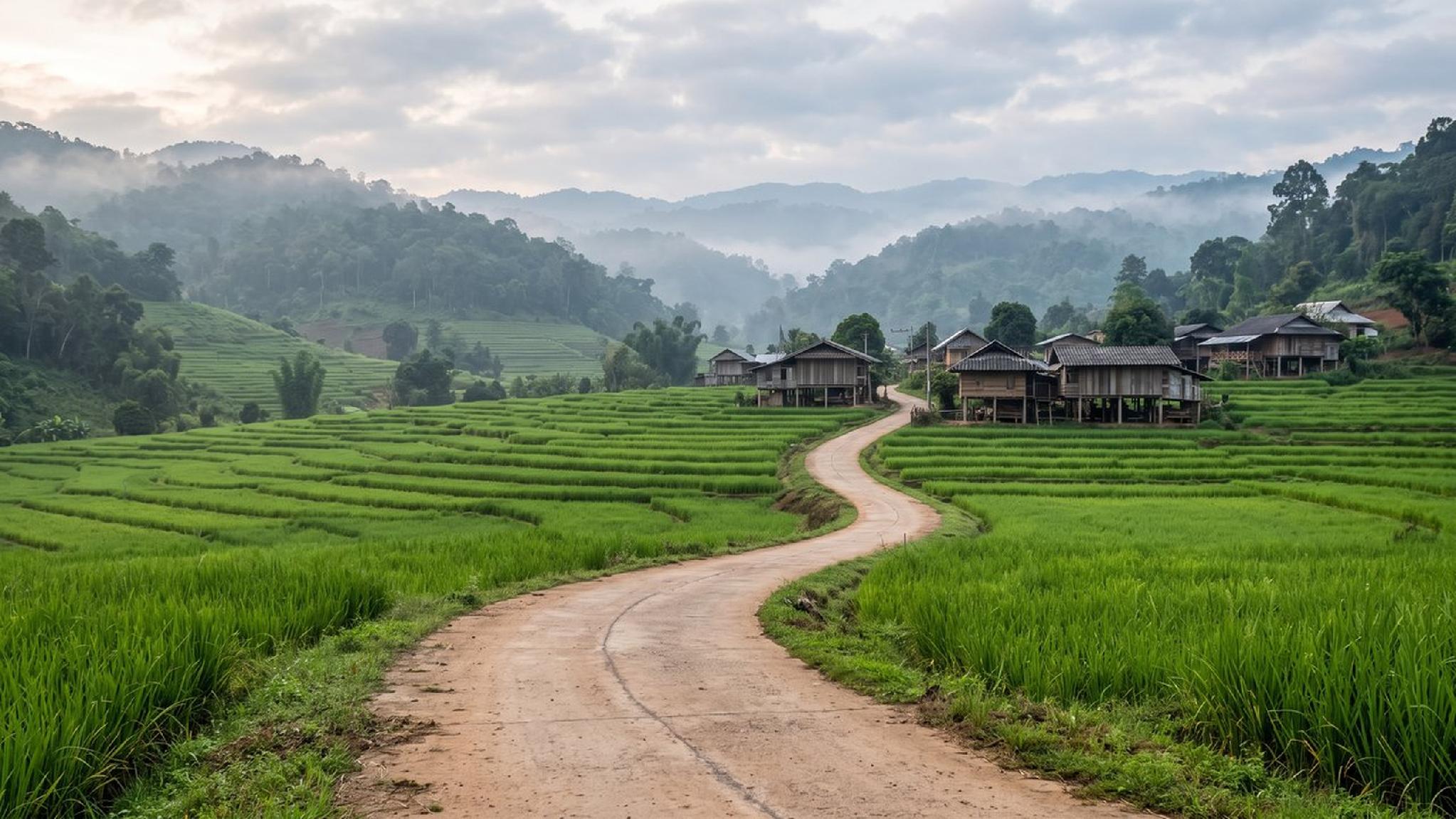
Las comunidades de montaña, las aldeas artesanales y los pueblos cafeteros de los alrededores de Chiang Mai ofrecen una perspectiva diferente de la región, más allá de los templos y los mercados más conocidos. Cada una de estas visitas resulta aún más valiosa cuando los beneficios generados contribuyen directamente a las personas que viven y trabajan en ellas.
Siempre que sea posible, conviene priorizar los alojamientos gestionados por la propia comunidad, adquirir artesanías directamente de sus creadores y optar por experiencias centradas en la vida cotidiana local en lugar de propuestas concebidas únicamente como atracciones turísticas. De este modo, las aldeas de Chiang Mai dejan de ser una simple parada en el itinerario para convertirse en algunas de las experiencias más enriquecedoras del viaje.
Tampoco es necesario concentrar todas las visitas en una sola jornada. Combinar una excursión a una aldea artesanal cercana con una estancia de una noche en alguna comunidad de montaña permite descubrir distintas facetas de la región y obtener una visión mucho más completa de la diversidad cultural y rural que caracteriza al norte de Tailandia.
,regionOfInterest=(1023,575.5))
,regionOfInterest=(1023,575.5))
¿Qué tribus de las colinas viven cerca de Chiang Mai?
Las montañas que rodean Chiang Mai están habitadas por diversas comunidades étnicas, entre las que destacan los Karen, Hmong, Lahu, Lisu y Akha. Cada grupo conserva tradiciones propias, visibles en su vestimenta, artesanía, arquitectura y modo de vida, desde los textiles y las casas sobre pilotes de los Karen hasta el batik y la orfebrería de plata característicos de los Hmong.
¿Son éticas las visitas a las aldeas de Chiang Mai?
Depende del tipo de experiencia. Las iniciativas de turismo comunitario, gestionadas con la participación directa de los habitantes locales y con beneficios que revierten en la propia comunidad, suelen considerarse la opción más responsable. En cambio, algunas aldeas desarrolladas principalmente como atracciones turísticas han sido objeto de críticas por priorizar el espectáculo sobre el bienestar y la cultura de sus residentes.
¿Cómo se llega a las aldeas de los alrededores de Chiang Mai?
Bo Sang y San Kamphaeng se encuentran muy cerca de la ciudad y pueden visitarse fácilmente en scooter, songthaew o mediante aplicaciones de transporte. Mae Kampong y las aldeas de montaña de Mae Wang o Doi Inthanon están más alejadas y suelen visitarse con conductor privado o a través de excursiones en grupos reducidos, especialmente debido a las carreteras de montaña que conducen hasta ellas.
¿Qué se puede comprar en las aldeas artesanales de Chiang Mai?
Bo Sang es conocida por sus tradicionales paraguas de papel saa pintados a mano. San Kamphaeng, por su parte, ofrece una mayor variedad de artesanías, incluyendo tejidos de seda y algodón, cerámica celadón, tallas de madera y objetos lacados. En muchos casos, las piezas se venden directamente en los talleres donde son elaboradas.
,regionOfInterest=(2880,1920))
,regionOfInterest=(2880,1920))
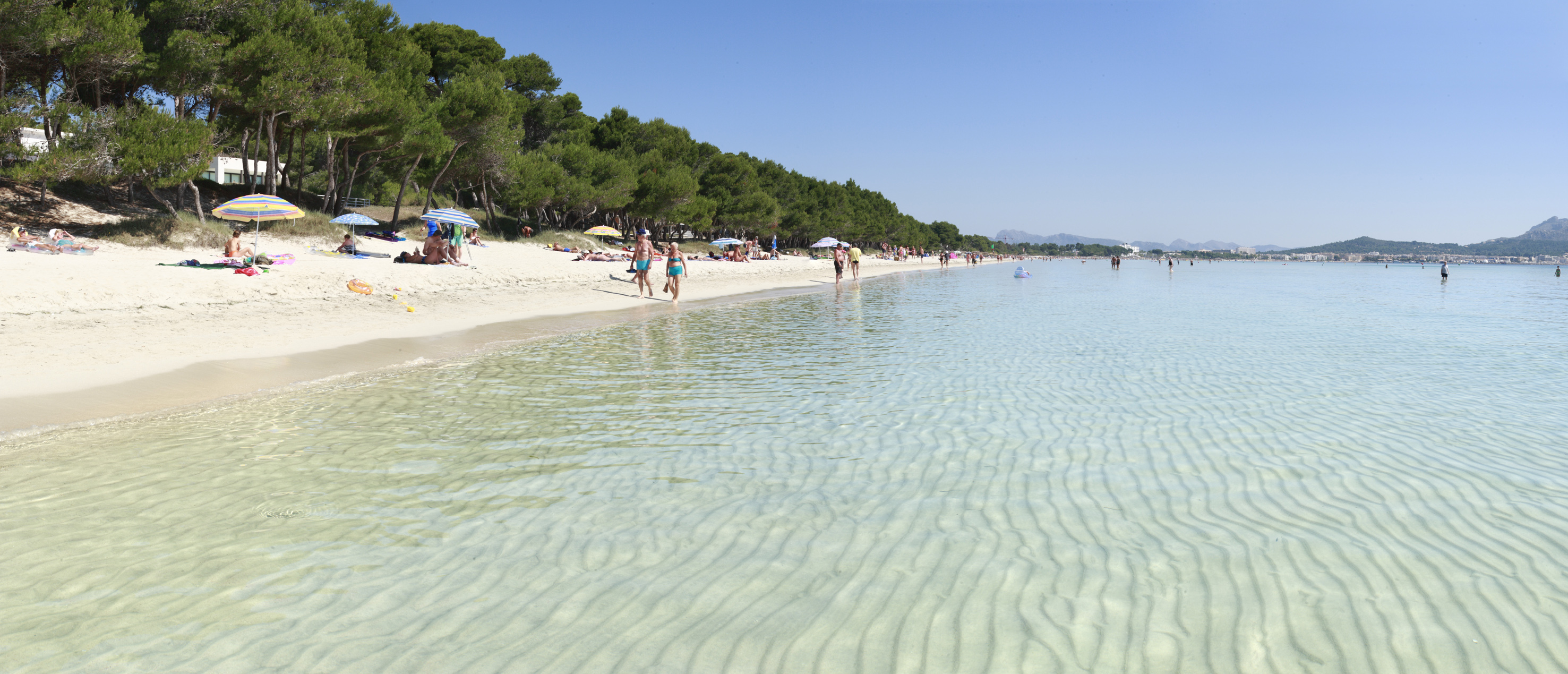,regionOfInterest=(1476.5,634.5))
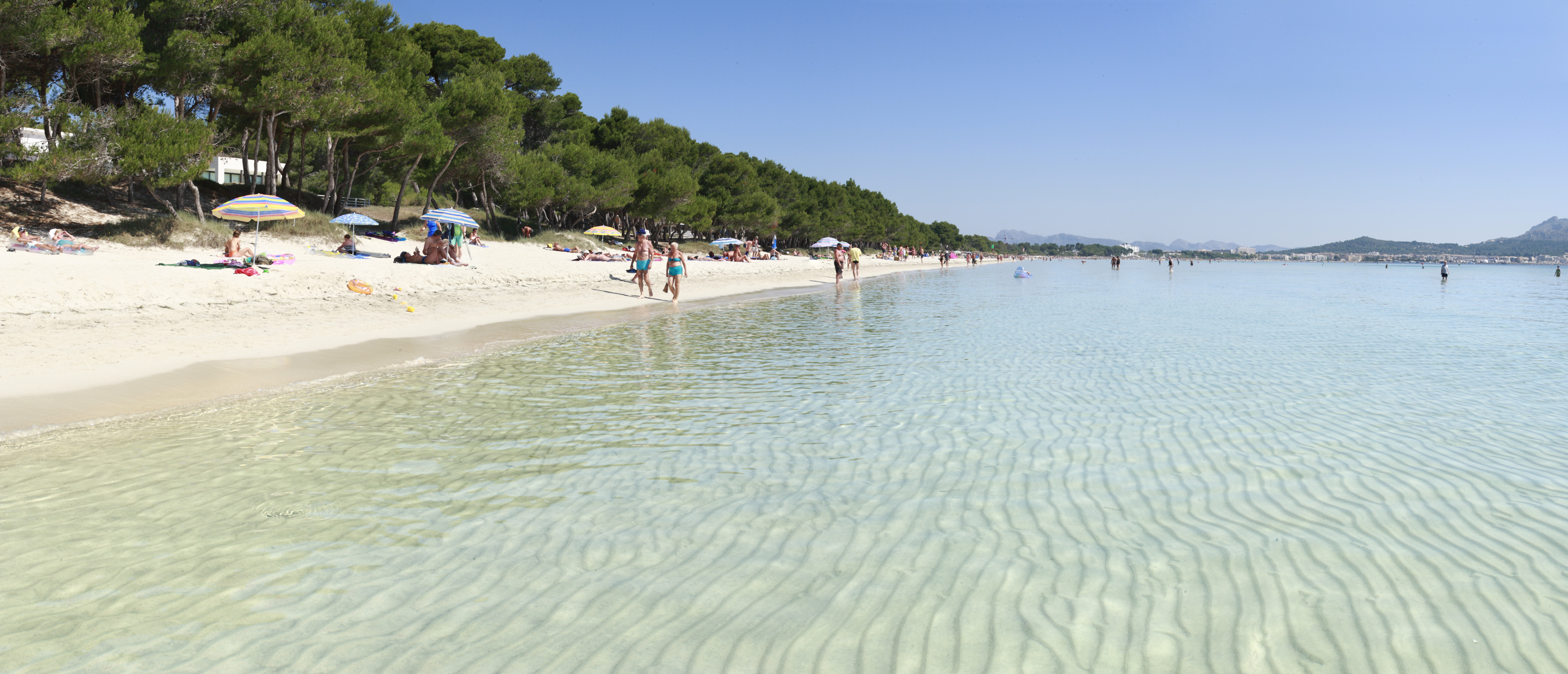,regionOfInterest=(1476.5,634.5))
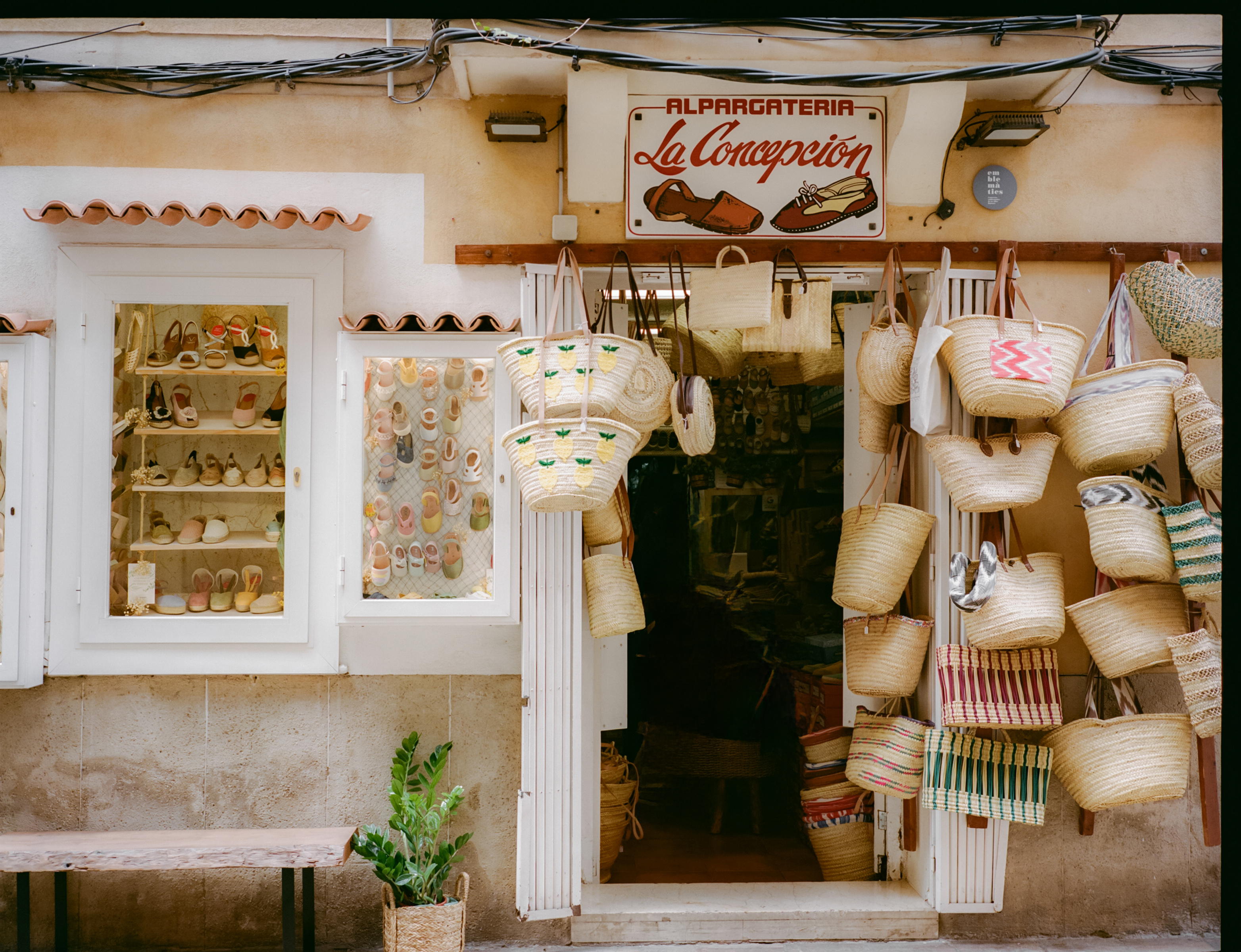,regionOfInterest=(1564,1200))
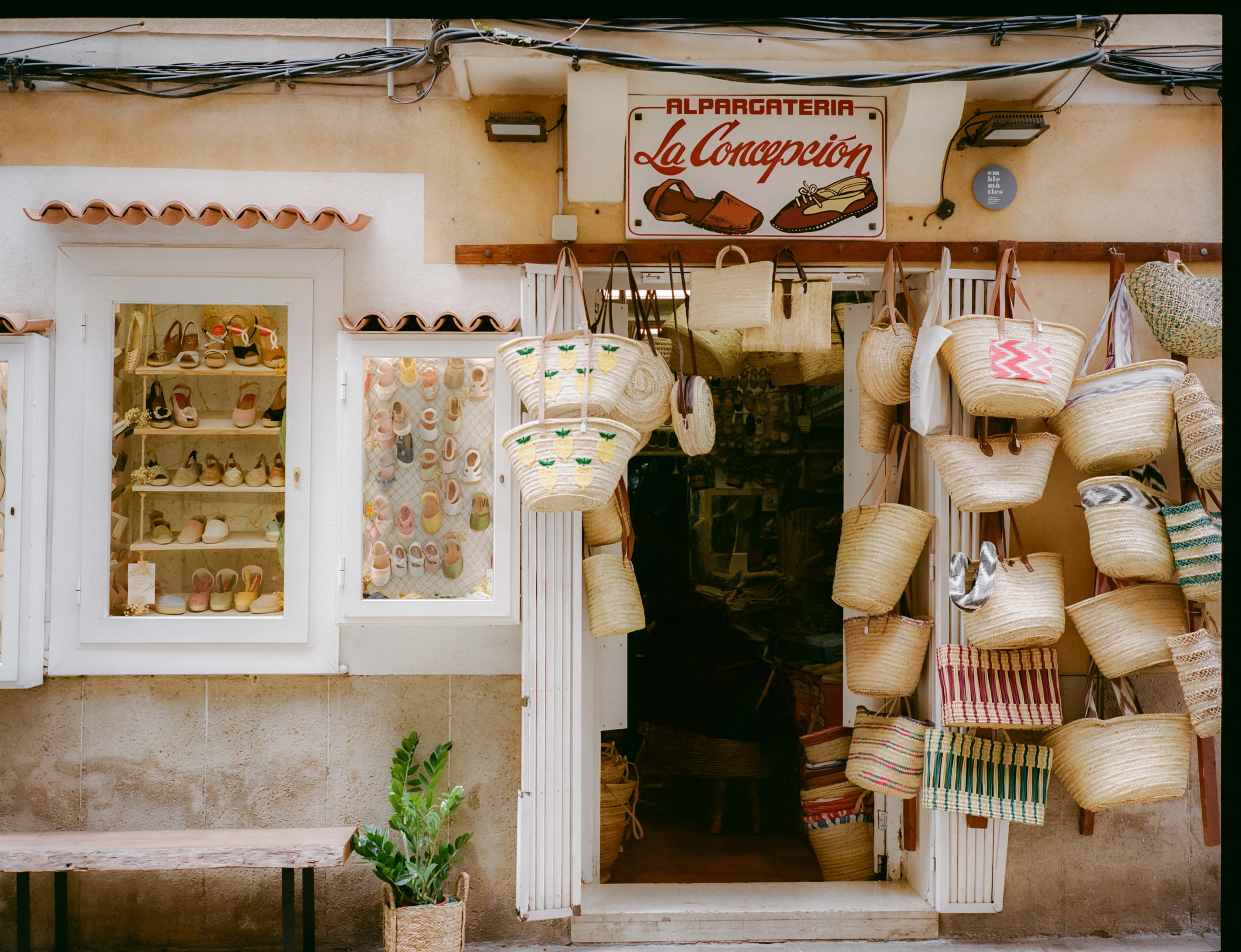,regionOfInterest=(1564,1200))
,regionOfInterest=(1619.5,1121))
,regionOfInterest=(1619.5,1121))
,regionOfInterest=(2273,1523))
,regionOfInterest=(2273,1523))