What to see in Andorra

Culture

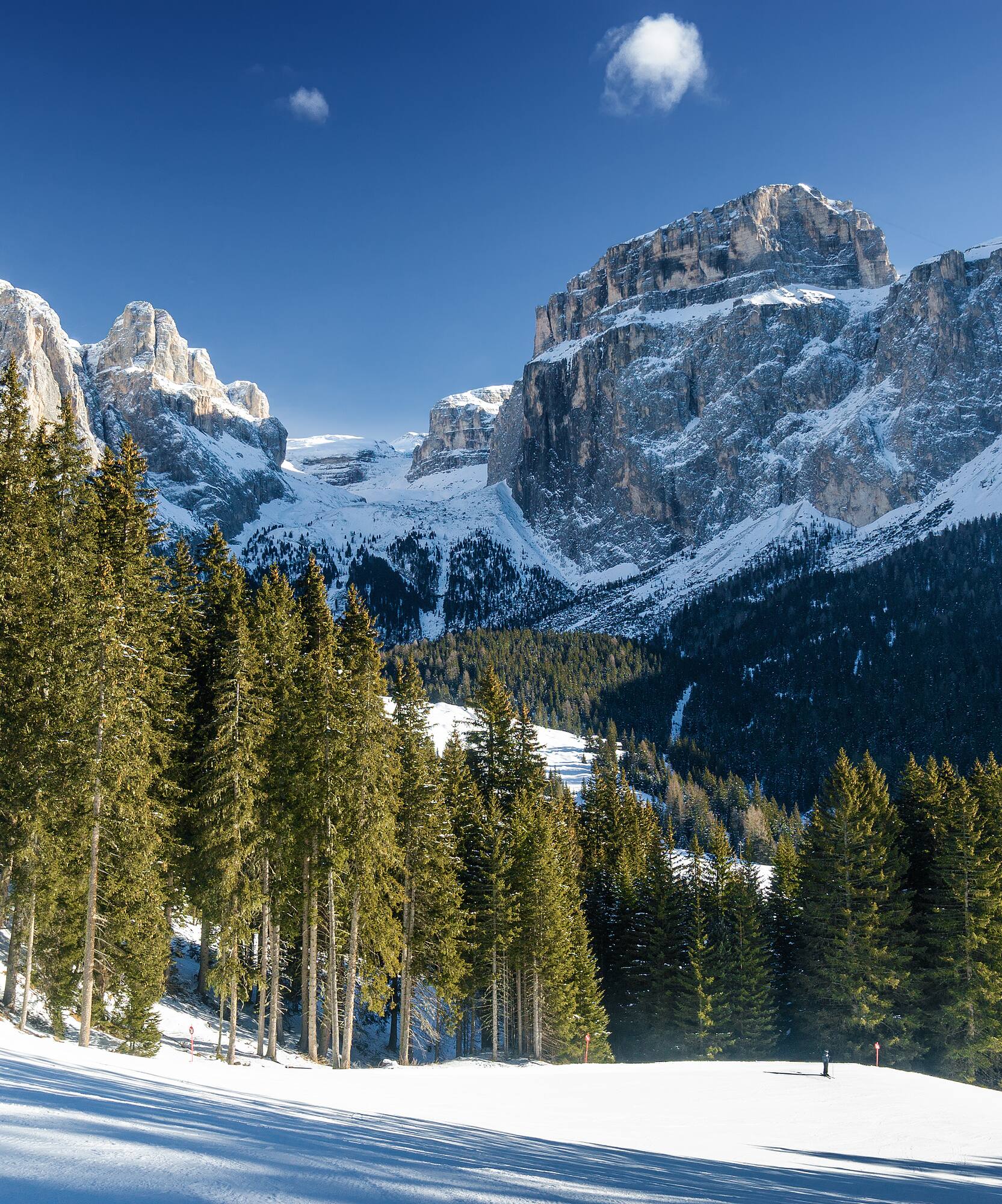
The Dolomites, located in the north-east of Italy, form one of the most spectacular mountain landscapes in Europe. This range of the Italian Alps, recognised as a UNESCO World Heritage Site since 2009, combines clear rock peaks, alpine lakes, forests, villages with Ladin traditions and extensive ski areas. Among the must-visit places to see in the Dolomites are the Tre Cime di Lavaredo, Lago di Braies, Seceda, Alpe di Siusi, the Marmolada and Lago di Carezza.
If you are wondering what to visit in the Dolomites, it is worth knowing that this is not a single town, but a mountainous territory that extends across different Italian provinces. Its most notable areas include Val di Fassa, Val Gardena, Alta Badia, Cortina d'Ampezzo and Cadore, each with different landscapes, villages and activities. Therefore, to enjoy tourism in the Dolomites, it is best to organise your trip by valleys and areas, rather than trying to cover the entire mountain range in a single day. In addition to discovering its mountains and lakes, there are numerous things to do in the Dolomites all year round. Winter is especially attractive for skiing, exploring snowy landscapes and enjoying mountain activities, while summer and early autumn allow for hiking routes, visiting viewpoints and getting to know traditional villages. This Dolomites tourist guide brings together the main places of interest, activities, accommodation recommendations and a tourist map to help you organise your trip.
Culture

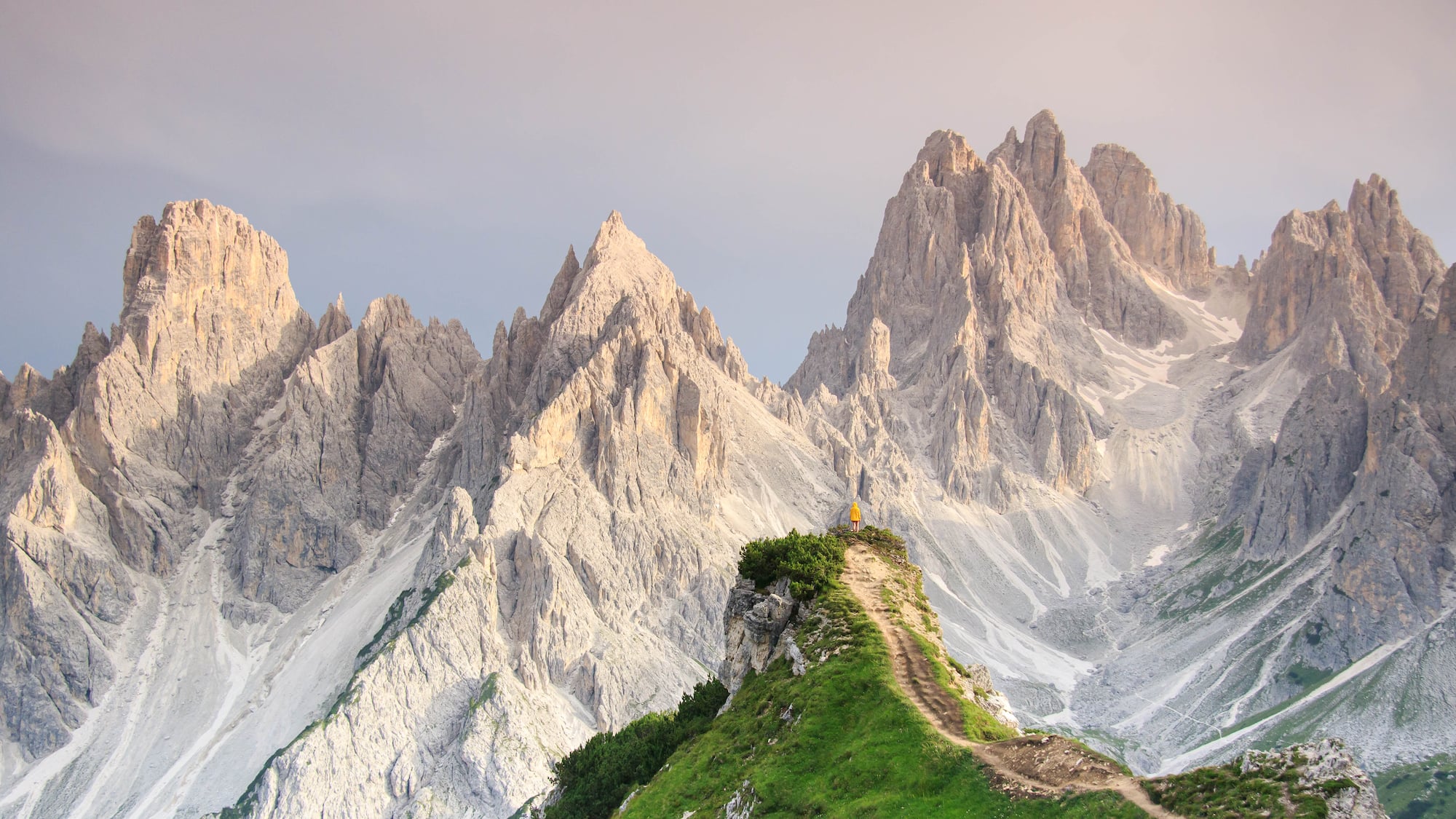

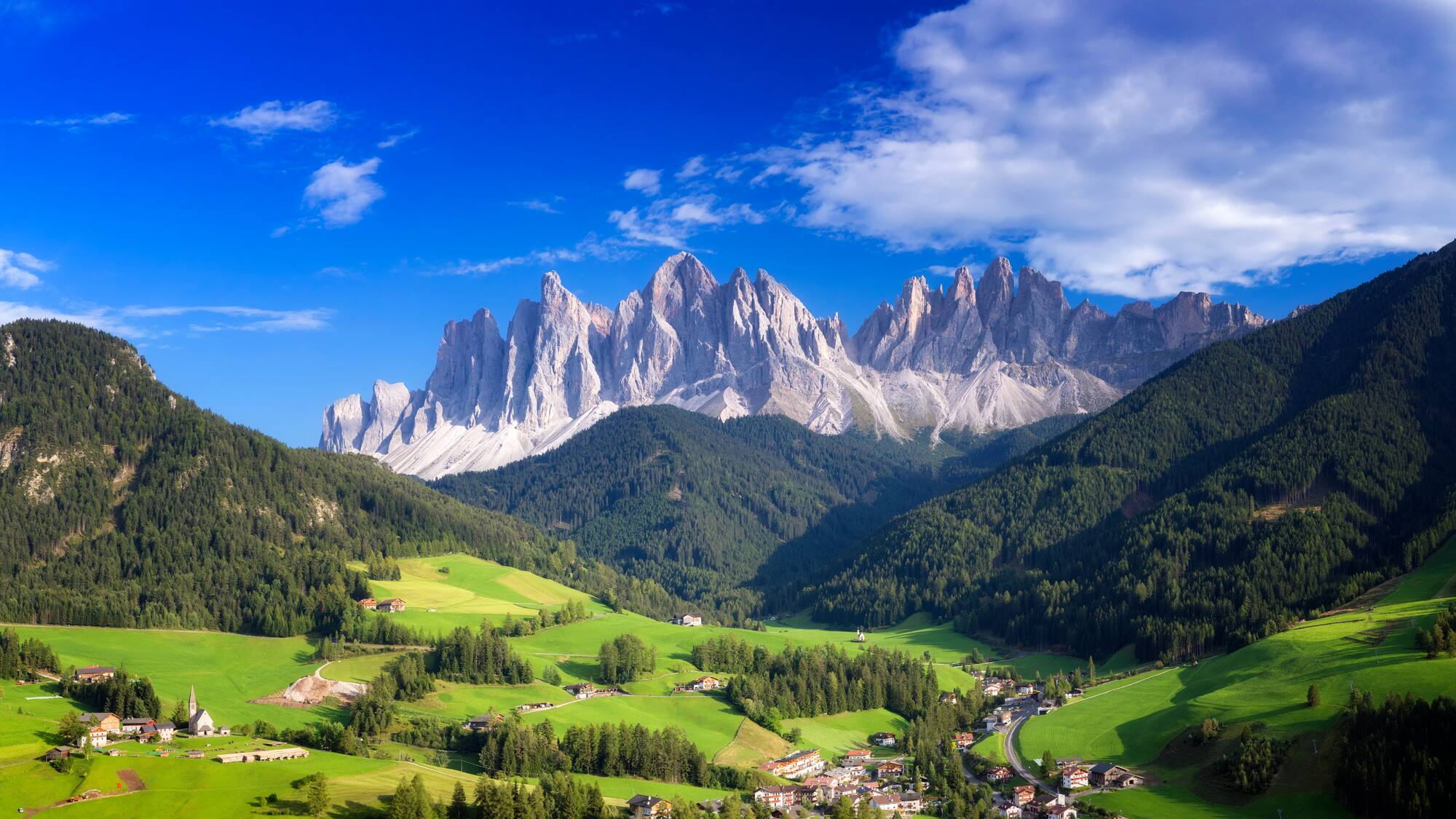

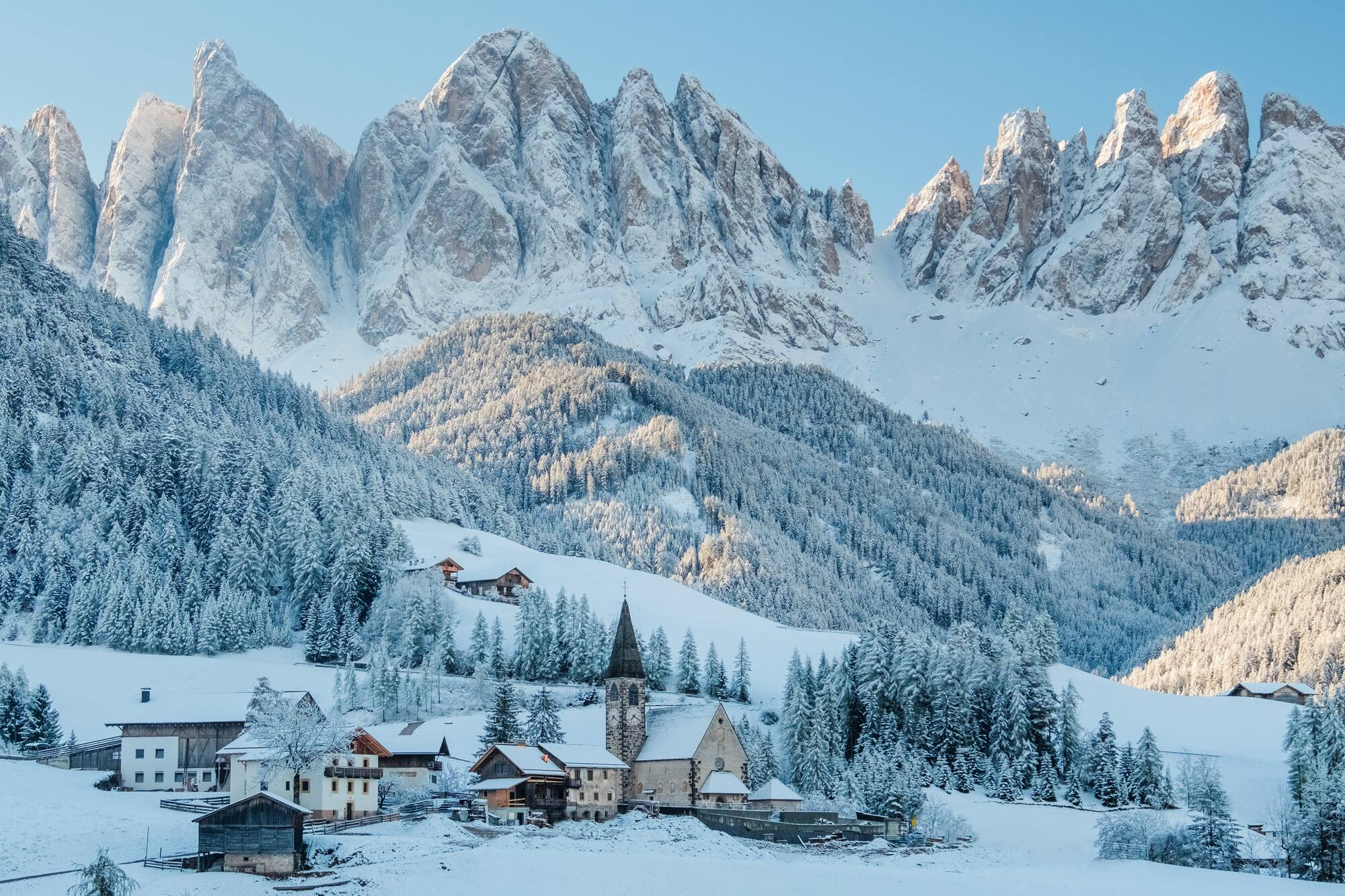
The Dolomites belong to the eastern sector of the Alps and cover territories of Trentino-Alto Adige, Veneto and Friuli-Venezia Giulia. Their name comes from the French geologist Déodat de Dolomieu, who studied the composition of the dolomitic rocks at the end of the 18th century. One of their most characteristic natural phenomena is the enrosadira, the change in hue that some mountains experience at sunrise and sunset. The rock acquires pink, orange and reddish colours due to sunlight. This particularity helps to understand why many travellers look for viewpoints facing the peaks to contemplate the last lights of the day. Unlike other alpine destinations, the trip here is organised around different valleys, each with its own personality:
If you have few days, it is advisable to choose one or two nearby areas. Mountain roads, alpine passes and weather conditions can make journeys take longer than expected, especially in winter.
The Tre Cime di Lavaredo, also known as Drei Zinnen, are probably one of the most recognisable images of the Dolomites. These are three large rock towers: Cima Grande, Cima Ovest and Cima Piccola, located on the border between the provinces of Belluno and Bolzano. Their silhouette became a symbol of European mountaineering during the 19th century. The ascent of Cima Grande in 1869 marked one of the first great milestones in the exploration of these mountains. Decades later, the surroundings were also the scene of combat during the First World War, the vestiges of which are still part of the history of the territory. The best-known experience consists of contemplating the three peaks from the paths near Rifugio Auronzo, Rifugio Lavaredo and Rifugio Locatelli. During the hiking season, the circuit allows you to observe the walls from different perspectives, crossing landscapes of rock, meadows and old military positions. In winter, conditions change radically. Snow, ice and the risk of avalanches mean that the usual summer routes should not be considered accessible walks. To enjoy the views at this time, it is preferable to choose authorised viewpoints and activities according to mountain conditions.
The Seceda mountain, located above Val Gardena, stands out for a rock ridge that descends sharply towards one of its sides. The succession of peaks of the Odle group, also called Geisler, creates a particularly recognisable landscape. From the Ortisei area, ski lifts allow access to the top when they are operational. Once at the top, the views extend towards alpine meadows, rock walls and other Dolomites massifs. Seceda is of special interest for understanding the contrast between high-altitude pastures and the geological formations of the mountain range. During the months without snow, its paths allow you to approach different viewpoints and mountain huts. In winter, the area is part of the Val Gardena ski areas. It is important to check access conditions before planning your visit, as the ski lifts may close temporarily between seasons or due to weather.
Alpe di Siusi, known in German as Seiser Alm, is an extensive high plateau of alpine meadows located next to the Sassolungo and Sciliar massifs. Its landscape is different from the large vertical walls that characterise other areas of the Dolomites. Here, pastures, small traditional mountain buildings and open panoramas predominate. Livestock farming has helped shape this territory for generations, creating a cultural landscape where nature and agricultural use coexist. In summer, the area is known for its walks between meadows and huts. In winter, it transforms into a space for alpine skiing, cross-country skiing and other snow activities. One of the practical aspects to take into account is the regulation of private traffic in the accesses to the plateau. It is advisable to check the current conditions and use the enabled means of transport.
The Marmolada reaches 3,343 metres at Punta Penia, the highest peak in the Dolomites. Its profile, with large rock walls and glacial areas, distinguishes it from other massifs in the mountain range. In addition to its geographical importance, the mountain preserves a deep historical memory. During the First World War, the Italian and Austro-Hungarian armies built positions and huts in this extreme environment. The so-called mountain war left traces that are interpreted today in spaces dedicated to its history. The best-known tourist access is from the Malga Ciapela area, using ski lift facilities that allow you to approach high altitudes when conditions permit. From there, you can see some of the most extensive panoramas in the eastern Alps. The Marmolada also recalls the fragility of the alpine environment. The glacial retreat and the landslide that occurred in 2022 show that this is a high-mountain environment where safety and weather conditions must prevail over any tourist itinerary.
Lago di Braies, or Pragser Wildsee, is located in the Braies valley, within the territory of the Fanes-Senes-Braies Nature Park. Its waters, surrounded by forests and dominated by the Croda del Becco wall, have made this enclave one of the most photographed places in the Dolomites. Beyond its visual appeal, the lake is associated with local traditions and legends. One of them relates it to an ancient access to the underground kingdom of the Fanes, a legendary people of Ladin tradition. In the mild months, the path that surrounds the lake allows you to discover different perspectives of the mountains and its shores. The route can have irregular sections and changing conditions, so it is advisable to assess its state before doing it. During winter, the landscape takes on a completely different look. The lake may freeze and become covered in snow, but that appearance should not be interpreted as a guarantee of safety for walking on the ice. Due to its popularity, access to the valley may be regulated at certain times of the year.
Lago di Carezza, called Karersee in German, is located near Nova Levante, in the Val d'Ega area. Its main characteristic is the changing colour of the water, which reflects the forests and the needles of the Latemar massif. Local tradition knows it as the rainbow lake. According to a legend, a sorcerer tried to attract a nymph using a rainbow of colours that ended up falling into the water. This story is part of the narrative heritage of the region and explains its popular name. The lake offers a relatively short visit from the enabled accesses. The viewpoints allow you to observe the surface of the water and the forest that surrounds it without the need to go on a high-mountain excursion. Its appearance changes considerably depending on the season and rainfall. In winter it may be covered in snow or ice, while at other times its green and bluish tones stand out. It is important to stay on the authorised paths to protect the shores.
Cortina d'Ampezzo, located in the province of Belluno, is one of the best-known towns in the Italian Alps. Surrounded by massifs such as the Tofane, Cristallo and Pomagagnon, it combines an urban centre of alpine tradition with a long history linked to tourism and winter sports. The town gained international projection during the development of mountaineering in the 19th century and, especially, with the celebration of the 1956 Winter Olympic Games. It was also one of the venues for the Milan-Cortina 2026 Winter Olympic Games. Walking along Corso Italia, observing the bell tower of the Basilica of Saints Philip and James and discovering the traditional buildings allows you to get to know a facet of the Dolomites that goes beyond natural landscapes. Cortina also constitutes a base for exploring mountain passes, lakes and ski areas. Its position makes it easy to combine cultural visits with excursions around the area, although high-mountain access must be planned according to the season.

The villages of the Dolomites preserve a unique mix of Italian, German-speaking and Ladin alpine traditions. This diversity is seen in the architecture, gastronomy, place names and languages that are still spoken in different valleys.
Ortisei, or Urtijëi in Ladin, is one of the main centres of Val Gardena. Its history is closely linked to wood carving, an artisanal activity that reached great importance in the local economy from the Modern Age. This tradition is still present in workshops, sculptures and establishments dedicated to craftsmanship. The town also preserves a well-kept urban environment, with alpine buildings and pedestrian streets that allow you to get to know the cultural identity of the valley. Ortisei is especially interesting because it combines the life of a mountain village with access to Seceda and Alpe di Siusi. You can spend part of the day touring the centre and reserve the rest to enjoy the high-altitude landscapes.
Canazei is located in the upper part of Val di Fassa, surrounded by mountains such as the Sassolungo, the Sella and the Marmolada. Its tourist development is linked to winter sports and mountain routes, but it also preserves elements of Ladin culture. In the valley, this identity is manifested in the language, traditional celebrations and wooden architecture. The villages of Val di Fassa share a cultural heritage that differentiates them from other areas of the Italian Alps. From Canazei it is possible to explore some of the best-known mountain passes in the region and access ski areas connected to the Sellaronda circuit. In summer, the town also serves as a starting point for excursions to huts and viewpoints.
Corvara in Badia is one of the most representative centres of Alta Badia, a valley where Ladin culture maintains a prominent presence. Its landscape is dominated by mountains such as the Sassongher and the Sella group. The town went from being a community linked to livestock and mountain agriculture to becoming a centre of alpine tourism. That transformation can be seen in the coexistence between traditional buildings, accommodation and services related to winter sports. Corvara is interesting for getting to know the cultural landscape of Alta Badia and for accessing the ski areas connected to Sellaronda. During the mild months, the routes allow you to approach meadows, huts and viewpoints of the nearby massifs.
Auronzo di Cadore is located in the Ansiei river valley, in the province of Belluno. Unlike the large ski centres, it preserves an identity very linked to the landscape of Cadore, its forests and traditional mountain life. One of its most characteristic spaces is Lago di Santa Caterina, a reservoir surrounded by mountains and located next to the urban centre. The water and the buildings of the town form a landscape different from that of the high-mountain rock peaks. Auronzo also allows you to discover the history of the Cadore communities, a region marked by forestry and communications between alpine valleys. Its surroundings constitute a geographical base to get to know Misurina and the accesses to the Tre Cime di Lavaredo, provided that road conditions allow it.

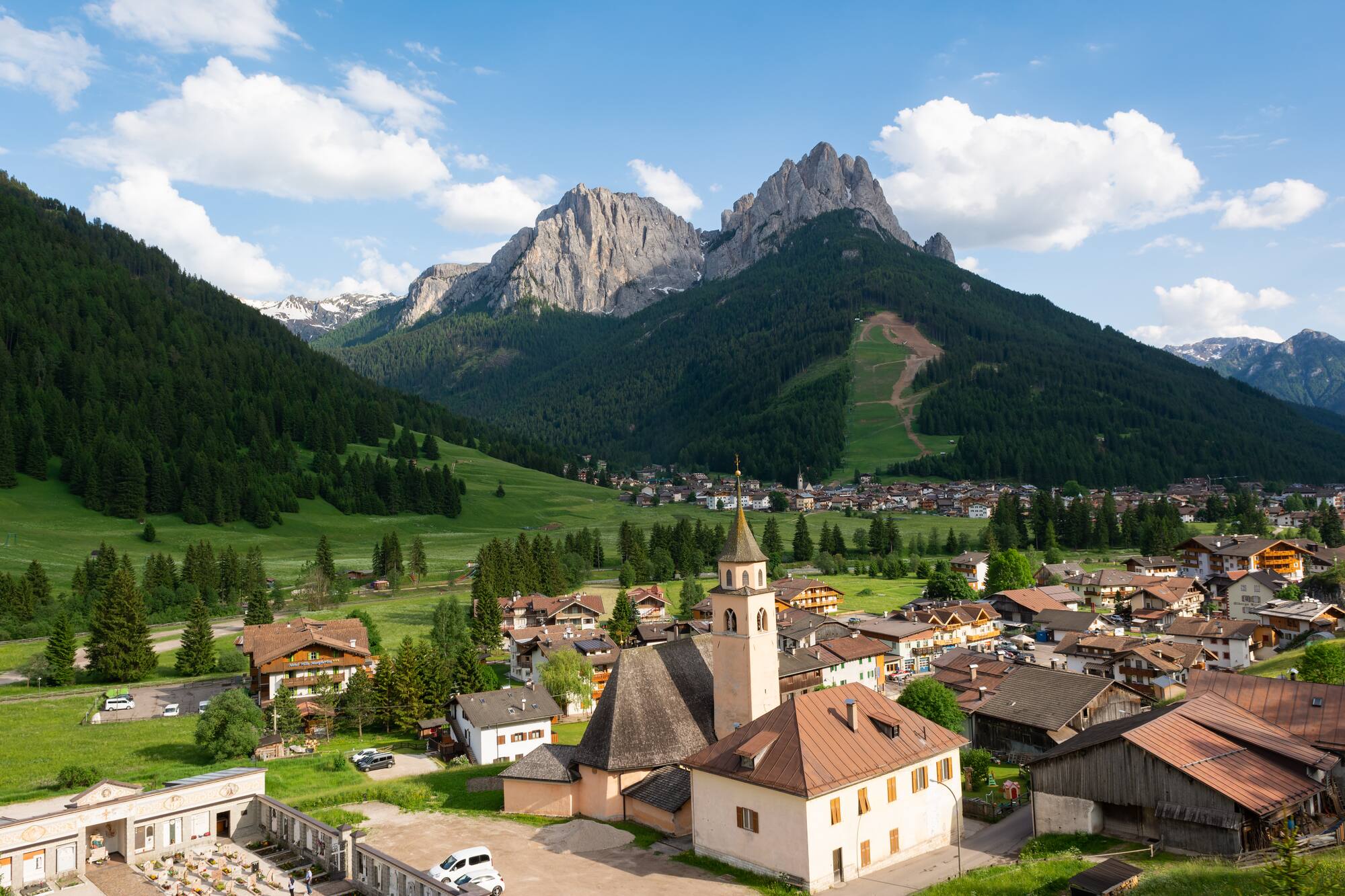
In addition to the best-known places, there are other landscapes that help to understand the geographical diversity of the mountain range. Some stand out for their panoramic views and others for their relationship with old mountain paths.
The Passo Gardena, or Grödner Joch, connects Val Gardena with Alta Badia and is located at an altitude of over 2,100 metres. It is one of the most characteristic mountain passes in the Dolomites. Its importance is not only scenic. Alpine passes have historically served as communication routes between communities that, for a good part of the year, remained conditioned by snow and terrain. From the surroundings of the pass you can contemplate the Sella group, the Sassolungo and the mountains that surround Alta Badia. During the mild months, different paths allow you to explore its surroundings. In winter, the pass is part of the ski resort landscape, but road traffic depends on weather conditions and current restrictions.
The Passo Sella connects Val di Fassa with Val Gardena and is located at the foot of some of the most recognisable mountains in the region. Among them, the Sassolungo stands out, whose vertical silhouette dominates a good part of the landscape. The pass is known for its panoramas and its relationship with hiking, cycling and skiing. During the summer, the roads that cross it are part of some of the best-known mountain cycling routes in the Alps. From its viewpoints you can appreciate the difference between the rock walls of the massifs and the pastures that occupy the lower areas. This contrast is one of the most characteristic features of the Dolomite landscape. If you visit the area in winter, it is important to check the state of the road and access conditions beforehand.
Lago di Misurina is located near Auronzo di Cadore, at an altitude of about 1,750 metres. It is surrounded by mountains such as the Sorapiss, the Tre Cime di Lavaredo and the Cristallo. The town of Misurina developed as a mountain destination thanks to its landscape and its position between some of the great massifs of the eastern Dolomites. Its lake is one of the elements that best represent that tourist tradition. The walk along the shores allows you to contemplate the reflection of the mountains and discover different perspectives of the surroundings. It is a visit that can be combined with Cortina d'Ampezzo or Auronzo di Cadore, taking into account the travel. During winter, the lake can freeze and the landscape is frequently covered in snow. It is necessary to respect local indications and not access the frozen surface without express authorisation.
The Passo Giau, located between Cortina d'Ampezzo and the Livinallongo valley, is especially known for the silhouette of the Ra Gusela, a large rock formation that rises above the alpine meadows. The pass also has an important relationship with mountain cycling and the Giro d'Italia, which has included its demanding slopes in different editions. For those looking for high-mountain landscapes, the pass allows you to enjoy open views without having to reach a summit. During the summer, its surroundings offer different possibilities for hiking. In winter, the snowy landscape is very different, and road access can be affected by the weather. It is advisable to check conditions before adding it to your itinerary.
Although the Dolomites are a prominent destination for winter sports, their appeal does not disappear when the snow season ends. Late spring, summer and autumn offer other ways to discover the landscapes and culture of the region.
Hiking in the Dolomites allows you to get to know places that are not accessible from the roads. There are routes of varying difficulty, from walks through meadows to multi-day crossings between huts. Among the best-known itineraries are the routes of the Tre Cime di Lavaredo, the paths of Val Gardena and the trails that cross the pastures of Alpe di Siusi. Alpine huts are part of the history of European mountaineering. Many were born as resting places for hikers and mountaineers, and continue to play an important role in mountain culture. Before starting a route, it is necessary to check for residual snow, the state of the paths and weather conditions. In the high mountains, summer does not guarantee the absence of storms or sudden changes in temperature.
Autumn offers an especially interesting experience in the forests of the Dolomites. Larches, one of the characteristic conifers of the region, acquire golden tones before losing their needles. The contrast between these trees, the meadows and the rock walls creates landscapes very different from those of summer. Valleys such as Val Gardena, Alta Badia and Cadore allow you to observe this seasonal change. It is an appropriate time to travel through villages and enjoy the landscapes from the valleys, although some ski lifts, huts and tourist services may be closed between seasons.
Cycling is part of the sporting identity of the Dolomites. Passes such as Passo Sella, Passo Gardena and Passo Giau are known for their slopes and for the competitions that have crossed these mountains. Road routes allow you to connect valleys and contemplate changing landscapes, while mountain bikes are used on specifically authorised itineraries. There are also events that reserve certain roads for cycling use on specific dates. If you wish to participate, it is advisable to check the official calendars and traffic restrictions.

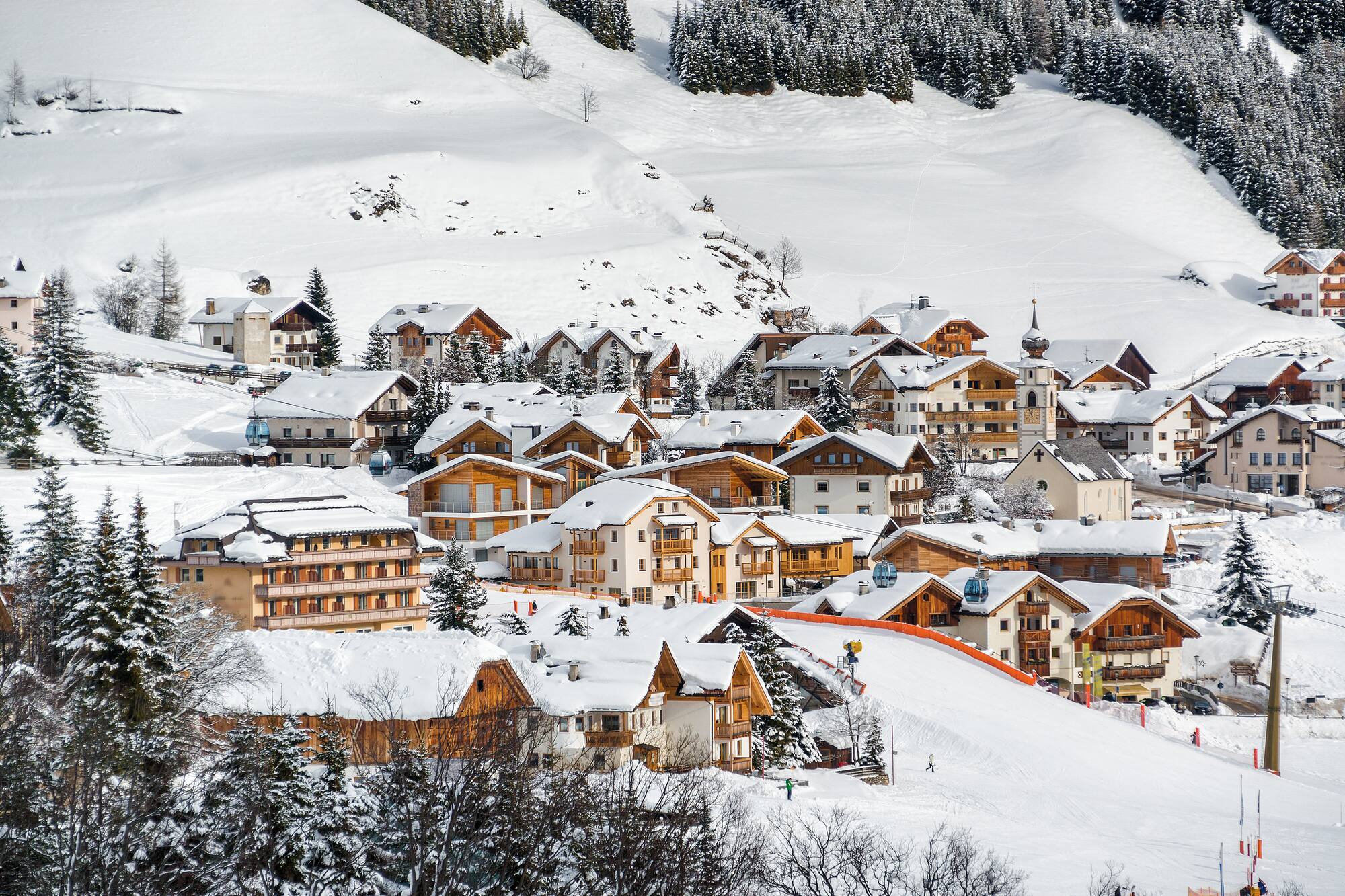
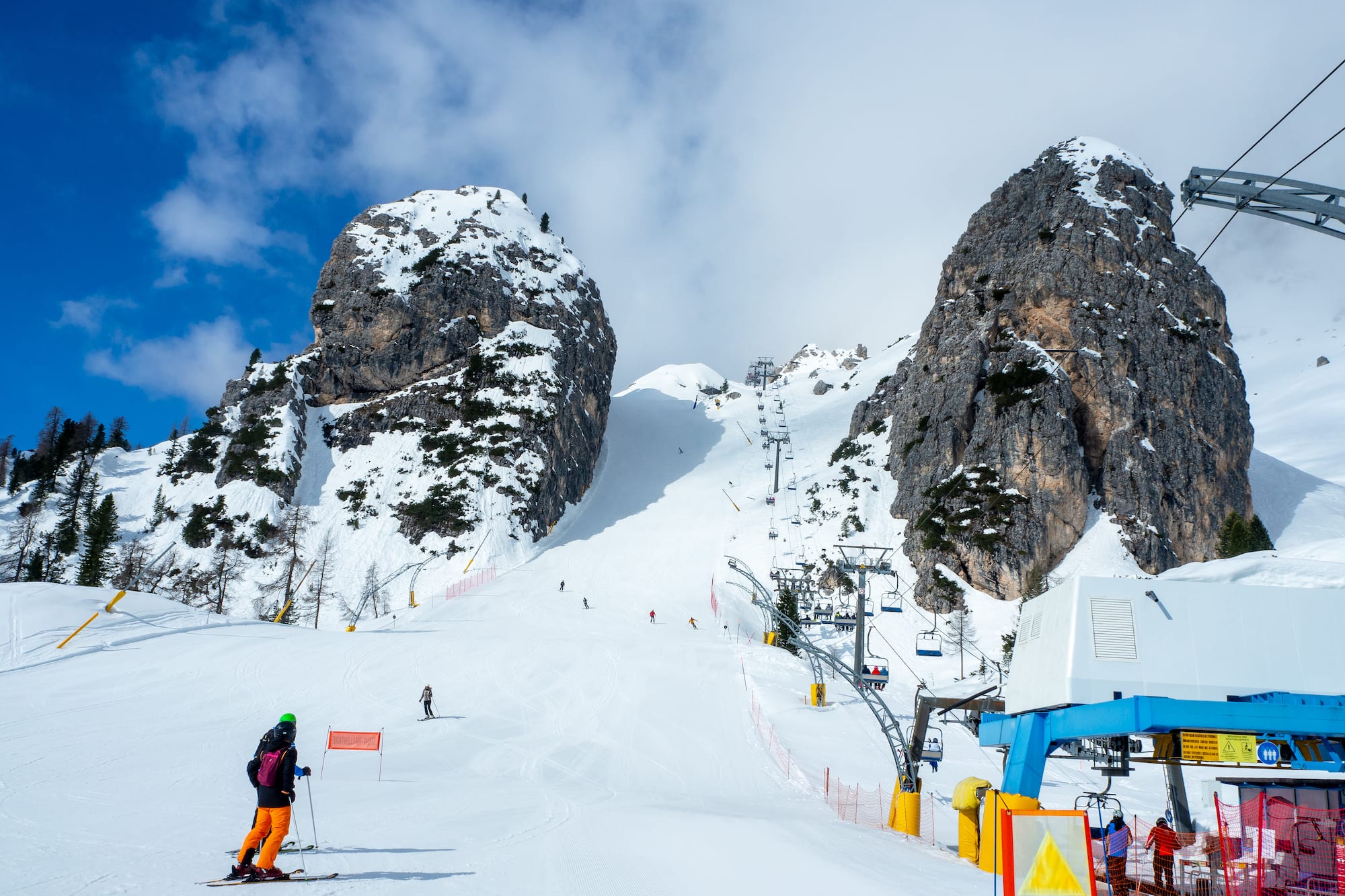
Winter transforms the Dolomites into one of the great European destinations for snow sports. The mountains that attract hikers and climbers during the summer become the scene of ski resorts, cross-country circuits, snowshoe walks and experiences related to alpine culture. One of the region's particularities is the existence of different ski areas connected by ski lifts and slopes, although not all areas are physically joined. Therefore, before organising a day, it is advisable to distinguish between the resorts, the valleys and the available connections.
Dolomiti Superski groups twelve ski areas of the eastern Italian Alps. Among them are Val Gardena, Alta Badia, Val di Fassa, Cortina d'Ampezzo and Arabba-Marmolada. Its main attraction is the diversity of landscapes that can be covered: slopes between forests, descents under large rock walls and open areas with views of some of the best-known massifs of the Dolomites. To choose where to ski, it is advisable to take into account the level of experience and the location of the accommodation. Val Gardena and Alta Badia allow you to combine different sectors, while other areas offer independent routes with their own personality. Opening conditions, ski lift operation and ski passes change depending on the season. Before travelling, it is advisable to check the updated information of the resorts.
The Sellaronda is one of the best-known ski routes in the Dolomites. It surrounds the Sella massif and connects sectors of Val Gardena, Alta Badia, Arabba and Val di Fassa. Its uniqueness lies in the possibility of carrying out a circular itinerary crossing different valleys without necessarily repeating the same descents. The route can be done in two directions, traditionally identified by colour signalling. In addition to the sporting experience, the route allows you to observe how the landscape changes between the different slopes of the Sella. Rock walls, alpine passes and valley villages are part of the experience. It is not an excursion to be done without planning. It is necessary to check the operational connections, the level of the slopes, the weather and the time necessary to complete the circuit and return to the starting point.
Snowshoes allow you to get to know a quieter facet of the Dolomites, far from the alpine ski slopes. There are signposted itineraries in areas such as Alpe di Siusi, Val di Funes and different sectors of Val Gardena. Walking through a snowy forest allows you to observe details that usually go unnoticed during other seasons: animal tracks, the shapes of the trees under the snow and the silence of the mountain landscapes. The experience is especially interesting for those who wish to enjoy the natural environment without alpine skiing. However, snowshoes do not eliminate the risks of the winter mountain. It is important to choose enabled routes, check the danger of avalanches and avoid high-mountain itineraries without preparation.
Cross-country skiing has an important tradition in the Dolomites. Unlike alpine skiing, it is practised on prepared circuits that cross generally softer terrain, forests and plateaus. Among the areas known for this modality are Alpe di Siusi and the surroundings of Dobbiaco, where the valley landscapes favour long-distance routes. Sledding rides are also part of the winter culture of some alpine towns. In certain places there are prepared slopes for recreational descents and organised experiences. If you are travelling with children, it is advisable to check which activities are adapted to their age and distinguish between authorised recreational areas and unconditioned natural terrain.
Après-ski is the set of social and rest activities that take place after a day in the snow. In the Dolomites it can take very different forms depending on the valley. In towns such as Canazei, Selva di Val Gardena and Corvara, there are establishments and meeting spaces linked to the life of the resorts. In other villages, the experience revolves around regional gastronomy, huts and local traditions. It is also common to combine mountain activities with wellness spaces, saunas and alpine-inspired treatments. This alternative is interesting when weather conditions do not allow you to enjoy the slopes or when you are looking for a day of rest.

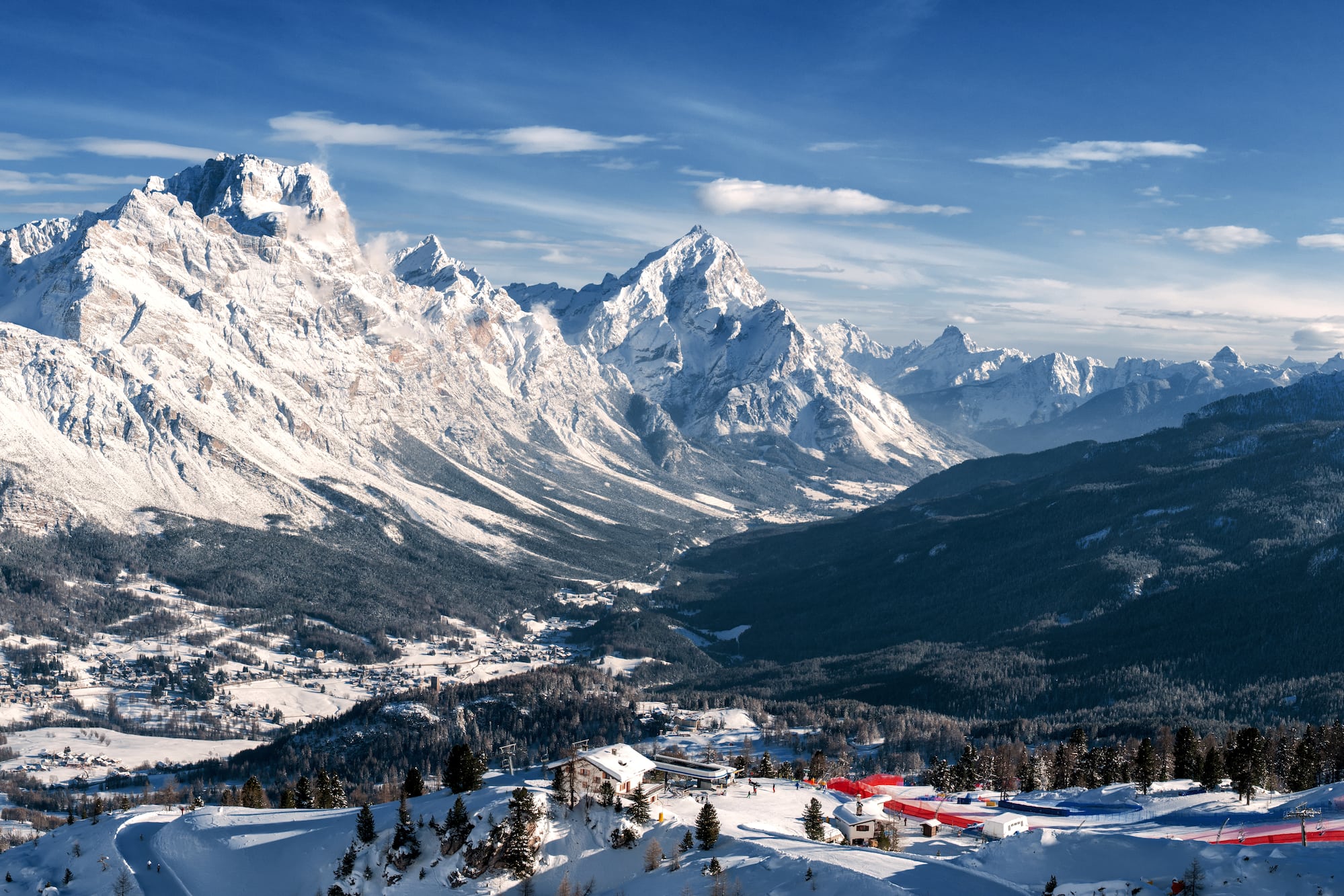
The choice of accommodation in the Dolomites depends mainly on the places you wish to visit. As it is an extensive region, it is advisable to select a town close to the planned activities to reduce travel between valleys. In Val di Fassa, one of the options is the Hotel Trento Dolomites Affiliated by Meliá, located in Pozza di Fassa. Its location allows you to take this area of the valley as a reference to explore the surroundings of the Catinaccio, Buffaure and other landscapes of the western Dolomites. It is important not to confuse its name with a location in the city of Trento, as the establishment is located in Val di Fassa, within the province of Trento. In the eastern area is the Hotel Auronzo Dolomites Affiliated by Meliá, located in Auronzo di Cadore, next to Lago di Santa Caterina. From this town you can organise visits to different places in Cadore and, when access conditions allow it, to the surroundings of Misurina and the Tre Cime di Lavaredo.
|
Hotel |
Location |
Area of interest |
|---|---|---|
|
Hotel Trento Dolomites Affiliated by Meliá |
Pozza di Fassa, Val di Fassa |
Catinaccio, Buffaure and western Dolomites |
|
Hotel Auronzo Dolomites Affiliated by Meliá |
Auronzo di Cadore, next to Lago di Santa Caterina |
Cadore, Misurina and Tre Cime di Lavaredo |
In the case of the latter establishment, availability during the winter season must be confirmed directly with Meliá. Its opening during all the months of snow should not be taken for granted. Both locations correspond to different sectors of the Dolomites, so it is advisable to choose according to the places you want to see.
To help you organise your trip, here is a tourist map of the Dolomites with all the points of interest mentioned in this guide. You will be able to check the location of the main lakes, villages, viewpoints and natural spaces, and plan travel between the different areas of the mountain range. The highlighted places are distributed across different valleys, so it is advisable to use the map to identify the areas and organise travel, rather than interpreting all the points as a route that must be completed in a single day.
Route 1. Val Gardena and Val di Fassa
Ortisei, Seceda, Alpe di Siusi, Passo Gardena, Passo Sella, Canazei, Lago di Carezza and Marmolada.
Route 2. Alta Badia and Cortina
Corvara in Badia, Passo Giau, Cortina d'Ampezzo and Lago di Braies.
Route 3. Eastern Dolomites and Cadore
Cortina d'Ampezzo, Lago di Misurina, Tre Cime di Lavaredo and Auronzo di Cadore.
These routes allow you to check the itineraries on Google Maps, but roads and access must be checked according to the season. Some high-mountain places require ski lifts or walks and are not directly accessible by vehicle.
The Dolomites offer much more than a succession of spectacular landscapes: each valley reveals a different way of experiencing the mountain, from villages with Ladin traditions to alpine lakes and large peaks. Its natural and cultural wealth makes this region of the Italian Alps an attractive destination all year round, both to enjoy skiing in winter and hiking in summer. The combination of nature, history, gastronomy and alpine traditions means that each visit allows you to discover a new facet of this territory.


All-terrain writer specialising in tourism, fashion and trends. A curious soul, traveller, reader and sports enthusiast, keen to discover every corner of the world.